
The biggest myth about surgical robotics is that interest alone will get you into the robot room. It will not. Access to real OR experience around robotics is structured, political, and fiercely gatekept—and you need a playbook, not vibes.
You want to go from “I like the Da Vinci videos on YouTube” to “I scrubbed on 15 robotic cases, helped collect data, and have my name on an abstract.” That is absolutely possible. But it is not random. The people who get there run a repeatable process, whether they realize it or not.
This is that process.
1. Get Clear on What “Real OR Robotics Experience” Actually Means
You cannot hit a target you have not defined. “Robotics interest” is fluffy. Let’s turn it into concrete outcomes you can actually pursue.
At the student / early trainee level, realistic robotics outcomes look like:
- Observing live robotic cases (from console feed and bedside)
- Doing real bedside assistant tasks (retraction, suction, cutting sutures, docking/undocking)
- Participating in robotic skills labs and simulation
- Joining or starting a robotics-focused research project
- Getting your name on:
- A poster or abstract at SAGES, AAGL, AUA, etc.
- A small retrospective study on robotic outcomes, learning curves, or ergonomics
- Building a mentor relationship with a surgeon who regularly uses robotics
- Being known by name by the OR charge nurse and robotics coordinator
Your long-term robotics goals might be:
- Competing for robotics-heavy residency programs or fellowships
- Being the “robot person” in your residency class
- Helping implement or optimize a robotics program at a hospital
Translate your interest into 2–3 12-month targets. For example:
- “Observe 25+ robotic cases and bedside-assist at least 5.”
- “Complete one robotics research project and submit to a national meeting.”
- “Develop a basic robotic skills portfolio (simulator scores, dry lab tasks).”
Write those down. You will reverse-engineer from them.
2. Map Your Environment: Where Are the Robots and Who Owns Them?
Robotics access is hyper local. The playbook changes depending on where you are.
Start with a blunt situational scan:
Does your institution actually have robots?
- Types: Da Vinci Xi/X, Si, SP, Mako (ortho), ROSA, Mazor, Hugo, VELYS, etc.
- Locations: main hospital, outpatient surgery center, cancer center.
Which services use them consistently?
- Common high-volume robotic services:
- Urology (prostatectomy, partial nephrectomy)
- General surgery (cholecystectomy, hernia, colectomy)
- Gynecology (hysterectomy, endometriosis)
- Colorectal, thoracic, bariatrics in some centers
- Common high-volume robotic services:
Who are the true “robot champions”?
- Attending surgeons who:
- Proctor others
- Run robotics CME courses
- Have robotics in their email signature or bios
- Are listed as “Director of Robotic Surgery” or similar
- Attending surgeons who:
Who controls OR access?
- OR charge nurses
- Robotics program coordinator / robotics team lead
- Department admins and schedulers
- Simulation center manager (for robotic sims)
Build a simple map. Names, roles, and where they intersect robotics.
| Role | Why They Matter |
|---|---|
| Robotic surgeon champion | Mentorship, cases, research |
| Robotics program director | Policy, credentialing, opportunities |
| OR charge nurse | Day-to-day room access |
| Robotics coordinator | Case schedules, team logistics |
| Sim center director | Access to robotic simulators/labs |
Now you know who to approach instead of blindly emailing “To whom it may concern” into the void.
3. Build Baseline Credibility Before You Ever Step in the OR
The fastest way to get blocked from robotics is to show up unprepared and underfoot. The team will remember you as “that student who touched a blue sterile drape.”
You fix that up front.
A. Learn OR culture and rules cold
If you have not been in the OR before, you do not start with robotics. You start with any OR exposure to learn:
- Sterile vs non-sterile zones
- How to move without contaminating fields
- How to enter/exit a room without chaos
- How to position yourself so:
- You see
- You do not get in the way
- Nobody has to babysit you
Do a few standard laparoscopic or open cases in:
- General surgery
- OB/GYN
- Ortho
Your goal: have a nurse or resident say, “They know how to behave.”
B. Understand the robot as a system, not a toy
Before you ever ask to observe a robotic case, know the basics well enough to not ask embarrassingly simple questions mid-case.
At minimum:
- Watch 5–10 high-quality explainer videos:
- “How the Da Vinci Xi system works”
- “Docking for robotic prostatectomy / hysterectomy / hernia repair”
- Read your hospital’s robotics program webpage or internal documents if accessible.
- Learn the robot vocabulary:
- Console vs bedside assistant
- Docking, undocking, port placement
- Patient cart, vision cart, boom
- Instruments: fenestrated bipolar, prograsp, needle drivers, etc.
Do not ask in the middle of a case: “So what robot is this?” when it is literally printed on the cart.
C. Basic skills you can quietly demonstrate
- Stand still without leaning on anything
- Anticipate when the team needs space (docking, undocking, patient positioning)
- Use a pen and paper, not your phone, to take notes
- Close your mouth and watch when something tense happens
Credibility in robotics is 60% technical familiarity and 40% not being a liability.
4. The Script: How to Turn Interest into Access
You will not get into robotic cases by saying, “I’m interested in robotics.” Everyone says that. Most never follow through.
You need specific, respectful asks.
A. Start with a targeted email
Pick one high-volume robotic surgeon or the robotics director. Send a short, specific email:
Subject: Medical student seeking structured robotic OR exposure
Dear Dr. [Name],
My name is [You], a [MS2/MS3/Pre-clinical student] at [Institution]. I am strongly interested in minimally invasive and robotic surgery and would like to build structured experience in the OR that is helpful, not disruptive, to your team.
I have completed [X] general surgery cases as an observer/assistant and understand basic OR etiquette and sterile field awareness. I have also completed [robotics intro module / watched your recent talk / reviewed our institutional robotics guidelines].
Would you be open to my:
- Observing a few of your robotic cases, and
- Asking your guidance on how a student can be genuinely useful in the robotic environment (including research or QI projects)?
I am happy to adapt to your schedule and to start with observation only.
Thank you for considering this,
[Name]
[Year]
[Cell]
This tells them:
- You know what you are asking.
- You respect their time.
- You already have some OR experience.
- You are not asking to sit at the console.
B. Use the OR charge nurse / coordinator angle
Sometimes surgeons ignore email. The OR does not.
Go to the OR front desk between cases. Ask:
“Hi, I am [Name], a [role]. I am working with Dr. [X] and very interested in robotics. Would it be possible to observe one of the upcoming robotic cases just to watch, assuming the team is comfortable?”
If they say yes:
- Ask what time you should show up.
- Ask about dress code and badge access.
- Show up early and check in with the circulating nurse and anesthesiologist before the patient rolls back.
If they say no:
- Ask politely, “Is there someone who usually coordinates student involvement with robotics that I could reach out to?”
You are looking for the robotics coordinator or educator. That person is gold.
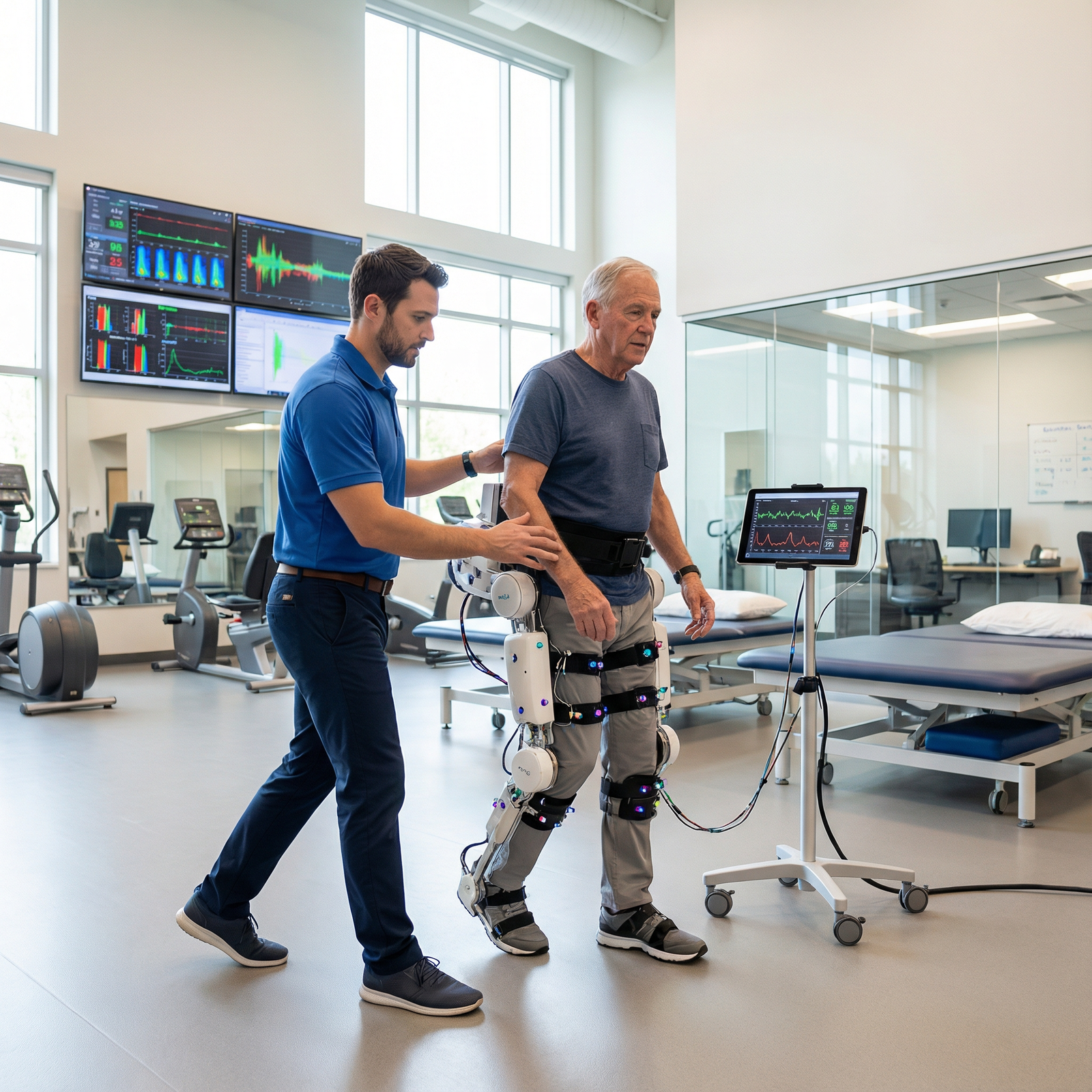
5. Behave in the Robot Room Like Someone They Want Back
Once you get in, you are now auditioning. Every minute.
Here is how you do it right.
A. Where to stand and what to do
- Ask the circulating nurse: “Where would you like me to stand so I am not in anyone’s way?”
- Assume you are not sterile unless asked to scrub.
- Keep one shoulder against a wall or equipment tower if space is tight.
- Watch:
- Port placement
- Docking
- Instrument changes
- Communication patterns between console surgeon and bedside
Do not:
- Touch the robot
- Touch the sterile drapes
- Cross between the anesthesiologist and patient head
- Crowd the scrub nurse during counts
B. When and how to ask questions
Good times:
- While the patient is being prepped and draped (lightly)
- During docking if they are teaching-mode
- After the case while closing or in the workroom
Bad times:
- Induction and intubation
- Critical dissection moments
- Unexpected bleeding or conversions to open
Use one high-yield question per phase:
- Before: “What are the main advantages of using the robot for this procedure at our institution?”
- During docking: “What are the most common docking errors learners make?”
- After: “For a student or early trainee, what would you consider a realistic bedside role to work toward safely?”
And then shut up and listen.
C. Convert one good impression into ongoing involvement
At the end of the first case where things went well, say to the attending:
“Thanks for letting me observe today. I am very interested in building more structured experience in robotic surgery. If you think I fit with your team, I would love to come back for more cases, and even help with data collection or projects if that is useful to you.”
Then follow up with a thank-you email that same day with 2–3 key things you learned. Do not overdo it. You are not writing a novel.
6. Progression: From Observer to Bedside Assistant
You will not start at the bedside. You earn that.
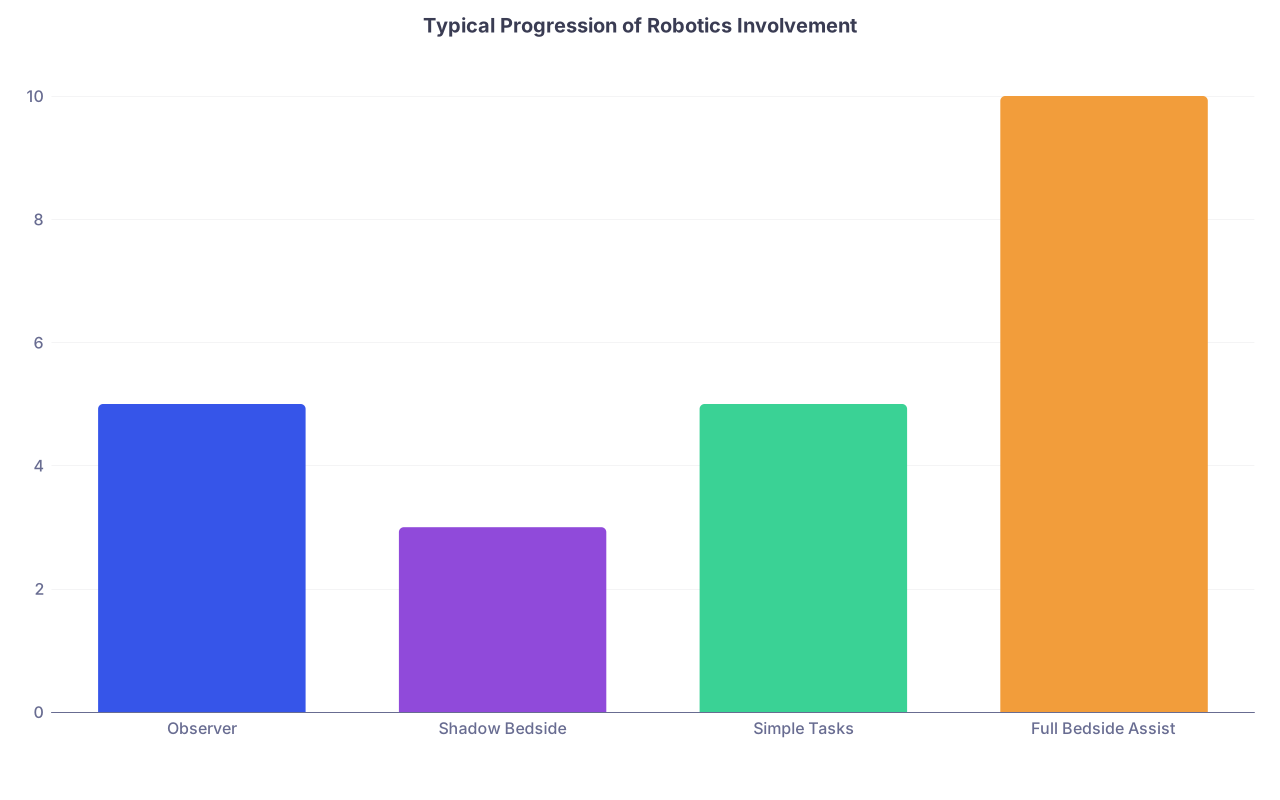
| Category | Value |
|---|---|
| Observer | 5 |
| Shadow Bedside | 3 |
| Simple Tasks | 5 |
| Full Bedside Assist | 10 |
Those numbers are rough case counts I have actually seen: 5+ pure observation cases, a few “shadow bedside,” then very small tasks, gradually building.
Stage 1 – Pure observer
Goal: understand flow, not touch anything.
You’re learning:
- Room layout
- Docking choreography
- Instrument names
- Where errors and delays happen
Stage 2 – Shadow the bedside assistant
Ask the attending or resident:
“If it is acceptable and safe today, I would love to stand a bit closer just to watch how the bedside assistant works.”
You stay non-sterile, but move closer. Watch exactly:
- How they hold camera ports stable during docking
- How they manage suction and retraction
- How they anticipate the console surgeon’s needs
Stage 3 – Low-risk, supervised tasks
Once someone says “You seem comfortable, want to help with something small?” jump on it. Common first tasks:
- Cutting sutures after knots
- Holding the camera (in some setups)
- Holding a retractor during docking
- Helping with external marking or positioning pre-drape
Ask for feedback after:
“Was my positioning OK? Anything I should change next time to be more helpful?”
Stage 4 – True bedside assistant responsibilities
Not every institution will let a student do this, but many will if:
- You are trusted
- You are consistent
- There is not a shortage of residents
Potential tasks:
- Assisting with port placement
- Exchanging instruments under direction
- Suction/irrigation at critical points
- Stapler or clip applier handling (under direct supervision)
You never, ever “wing it.” If you are not 100% sure, you ask.
7. Use Simulation and Labs to Cement Your Role
Robotic simulators are where you can build technical credibility without patient risk. Most people underuse them badly.
A. Find and access the simulator
Ask the sim center:
- “Do we have any robotic simulators (Da Vinci Xi simulator, Mimic, virtual console)?”
- “What is the process for students/residents to book time?”
- “Is there a skills progression or checklist I can follow?”
Then actually book recurring sessions.
B. Focus on reproducible metrics
Do not just “play around” on the robot sim. Treat it like training.
Common basic tasks:
- Ring and rail
- Needle driving
- Energy dissection
- Peg transfer
Track:
- Time to completion
- Error counts
- Economy of motion
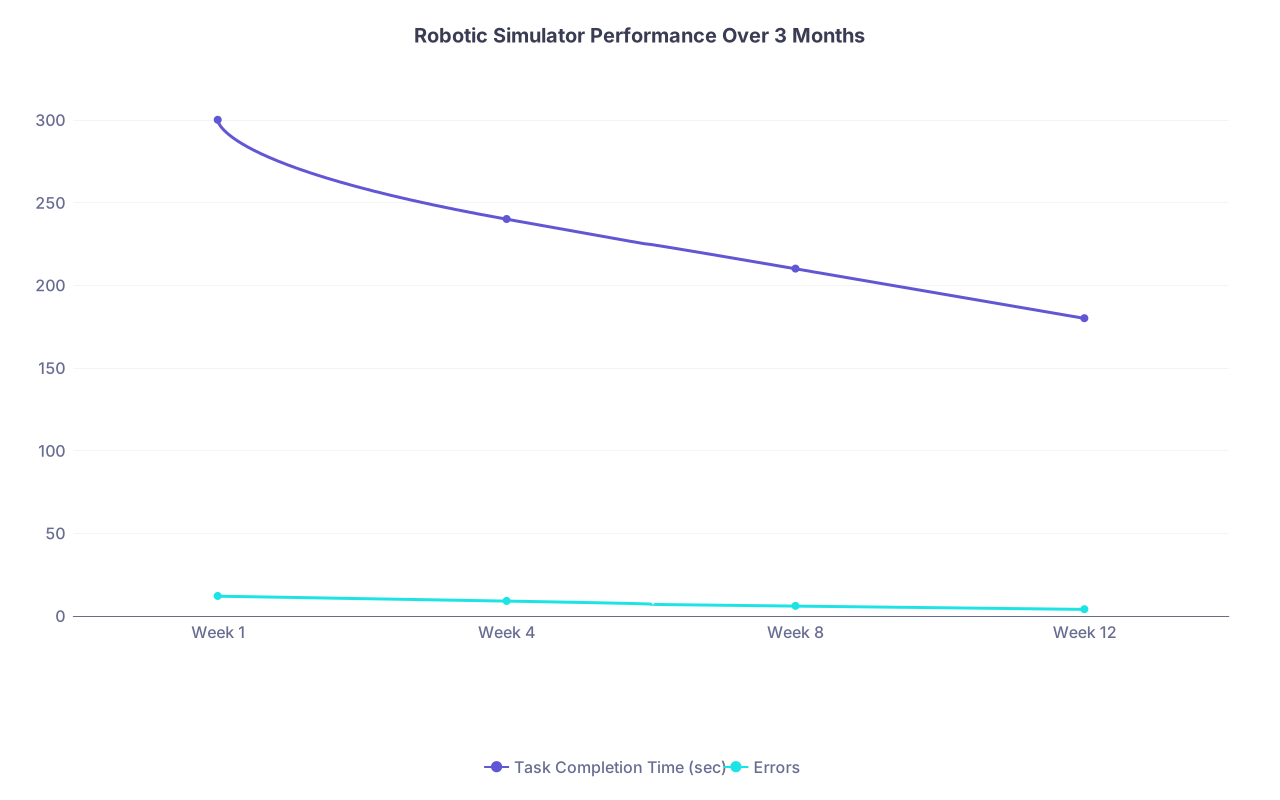
| Category | Task Completion Time (sec) | Errors |
|---|---|---|
| Week 1 | 300 | 12 |
| Week 4 | 240 | 9 |
| Week 8 | 210 | 6 |
| Week 12 | 180 | 4 |
Being able to say to a surgeon:
“I have logged 15 hours on the Xi simulator and my basic peg transfer times have gone from 5 minutes to under 3 with minimal errors.”
That gets attention. It signals seriousness, not just curiosity.
8. Robotics Research: The Fastest Way to Become “One of Us”
If you want durable access, you get involved in projects. OR doors open wide for the people pulling data, generating abstracts, and helping write manuscripts.
A. Identify the lowest-friction project types
You do not need to be a robotics genius. You need something tractable.
High-yield project categories:
- Retrospective chart reviews:
- Outcomes of robotic vs laparoscopic [procedure] at your institution
- Learning curve analysis of a surgeon group adopting robotics
- Workflow / efficiency:
- Case times before vs after a standardized docking protocol
- Impact of dedicated robotics team vs mixed staffing
- Ergonomics / human factors:
- Surgeon ergonomic scores pre/post robotics training
- Staff perceptions of robotics implementation

B. How to pitch yourself to a robotics surgeon for research
During or after a case, when the attending is not rushed:
“Dr. [X], I am interested in not only observing but also contributing to your robotics work. Are there any ongoing projects or data questions where an extra set of hands for chart review, data cleaning, or basic stats would genuinely help you?”
Then you follow through. Aggressively.
Be the person who:
- Gets IRB forms drafted
- Shows up to data meetings on time
- Sends cleaned spreadsheets early
- Learns enough basic stats / R / SPSS to not be dead weight
C. Turn OR observation into publishable work
Examples I have literally seen:
- Student notices frequent docking delays → proposes “Docking Time Reduction QI Project” → measures baseline, helps implement checklist, measures post-intervention → poster at SAGES.
- Student tracks console vs bedside learning curves by case count → co-authors “Learning curve for robotic [procedure] at an academic center” → regional conference presentation.
- Student helps collect surgeon-reported outcomes on fatigue and ergonomics → small publication in a surgical education journal.
You just have to be the one who says, “I will do the grunt work.”
9. No Home Robot? Here Is How You Still Get Real Experience
Not every hospital has a robot. That is reality. It is not game over.
You have three levers: away rotations, industry, and simulation / conferences.
A. Plan targeted away rotations
If you are:
- A late medical student → sub-I / visiting rotations at robotics-heavy programs
- A resident → elective time at a high-volume robotic center
Choose programs with:
- Named robotic fellowships
- High robotic case volume in your field of interest
- Surgeons who publish robotics outcomes
B. Use industry—strategically
Robotics companies (Intuitive, Stryker, Medtronic, Zimmer Biomet, etc.) run:
- Skills labs
- Cadaver courses
- Demo days at hospitals
- Regional training events
You do not need to become a shill, but you can:
- Ask reps if students/residents are allowed to attend educational events.
- Use those events to practice docking, instrument changes, and ergonomics.
- Get familiar with multiple platforms, not just one.
C. Conferences and hands-on labs
Pick 1–2 meetings that actually offer structure, not just talks:
- SAGES (for gen surg)
- AAGL (for GYN)
- AUA (for urology)
- Specialty-specific robotic consortia
Many have:
- Robotics skills labs for trainees
- Simulator competitions
- Industry-sponsored “intro to robotics” sessions
You will meet the people who can invite you into their ORs.

| Step | Description |
|---|---|
| Step 1 | No Robot at Home Institution |
| Step 2 | Away Rotation |
| Step 3 | Industry Courses |
| Step 4 | Conferences and Labs |
| Step 5 | High Volume Robotic Center |
| Step 6 | Hands On Robot Labs |
| Step 7 | Networking With Robotic Surgeons |
10. Package Your Robotics Experience for the Future
Experience that is not documented basically did not happen. You want a robotics mini-portfolio you can hand to a PD, mentor, or future employer.
Core components:
-
- Number of robotic cases observed
- Number where you had bedside responsibilities
- Types of procedures
Simulator log
- Hours logged
- Key tasks and performance metrics
- Any certificates or completed curricula
Projects and output
- Titles of QI / research projects
- Abstracts, posters, manuscripts
- Your role in each (data, writing, analysis)
Mentor letters
- At least one surgeon who can say:
- You consistently showed up
- You were safe in the OR
- You added value to robotics work
- At least one surgeon who can say:
When someone asks in an interview, “Tell me about your interest in robotics,” you do not say, “I think it is cool.”
You say:
- “I have observed about 30 robotic cases including [procedures].”
- “I have 20 hours of simulator time with documented performance improvement.”
- “I co-authored a poster on docking workflow optimization at SAGES.”
- “I assisted with bedside tasks under direct supervision in [X] cases.”
That is the difference between a generic interest and a credible trajectory.
11. Common Ways Students Blow This (And How Not to)
I have watched a lot of people tank their robotics opportunities. The mistakes are boringly predictable.
- Being a tourist – Showing up once, posting a photo on Instagram, and disappearing. Solution: Commit to one attending or team long enough for them to learn your name.
- Over-asking, under-delivering – Volunteering for projects and then ghosting. That will follow you for years. Take less, finish it.
- Pushing for console time as a student – You look naive and unsafe. Console time is a long-game goal, not a starting point. Focus on bedside, workflow, and simulation.
- Ignoring the non-surgeon power players – OR nurses, techs, and robotics coordinators can block or boost you. Treat them like supervisors, because functionally, they are.
- Treating robotics like a brand, not a skill – Wearing “robotic surgery” like a buzzword on your CV instead of doing real, measurable work.
Do the opposite of these, and you are already ahead of 80% of your peers.
12. Turn This into a 90-Day Robotics Action Plan
Ambition without a concrete plan just creates anxiety. Let us compress this into a three-month sprint you can actually run.
Weeks 1–2: Recon and on-ramp
- Identify:
- 2–3 robotic surgeons
- Robotics program director
- OR charge nurse & robotics coordinator
- Send 1–2 targeted emails requesting observation.
- Shadow any OR cases to polish your OR etiquette if you are green.
- Spend 2 hours learning:
- Names of robot components
- Docking basics for 1–2 key procedures
Weeks 3–6: Initial access and trust-building
- Observe at least 3–5 robotic cases.
- Ask for:
- Best place to stand
- Feedback on your presence
- Log every case in your personal spreadsheet.
- Book simulator time 1–2 hours per week.
- After each case, send a 3–4 sentence thank-you / follow-up with one pointed question or insight.
Weeks 7–12: Expand role and secure a project
- Ask an attending or fellow:
- “Is there a project where my help with data or analysis would be valuable?”
- Start:
- One clear QI or research question.
- IRB / data pull with guidance.
- In the OR:
- Progress from observer → shadow bedside → small tasks if permitted.
- Keep building simulator metrics and document improvement.
If you execute that 90-day plan, you will be in the top tier of robotics-engaged students at your level, even at large academic centers.
Open your calendar right now and block two 1-hour chunks next week: one labeled “Robotics Recon” and one labeled “Email Surgeon / OR Coordinator.” Until those blocks exist, your “interest” is just a hobby.