

The fastest way for a good physician to become dangerous is to ignore scope-of-practice when systems collapse.
You won’t feel reckless. You’ll feel “necessary,” “last resort,” “no one else is available.” That’s exactly when people get hurt—patients, colleagues, and you.
Let’s walk through the scope-of-practice errors MDs repeatedly make in disaster zones, pandemics, conflict areas, and failed systems. These are predictable. Avoidable. And career-ending (or life-ending) if you get them wrong.
1. Confusing “No System” With “No Standards”
When the hospital is out of oxygen, the lab is down, there’s no CT, and the power is flickering, it’s very tempting to believe the rules have evaporated too.
They haven’t.
Medical ethics doesn’t shut off when Wi‑Fi does. But physicians routinely make one fundamental mistake: equating operational breakdown with ethical free‑for‑all.
Common versions of this:
- “There was no surgeon, so I had to operate.”
- “There was no psychiatrist, so I started antipsychotics based on a 5‑minute conversation.”
- “No anesthetist came, and the child needed surgery, so I intubated and ran the anesthesia alone.”
That mindset is how well-meaning doctors end up doing chest tubes they barely learned in residency, or prescribing chemotherapy in remote clinics because “no oncologist exists here.”
The reality is sharper: scarcity raises the ethical bar; it doesn’t lower it. Every high-risk step you take outside your training when systems are thin has less backup, less supervision, and less capacity to rescue you when you’re wrong.
Red flag question you must ask yourself
Not “Can I technically do this?”
But: “Can I safely take responsibility for the consequences of doing this in this environment, right now, with this backup?”
If the honest answer is no, stopped pretending the crisis magically changes that.
2. Acting Like Your Training Is Global Currency
I’ve watched Western-trained MDs walk into low-resource settings like walking into their old residency hospital—assuming their authority transfers 1:1.
It doesn’t.
A simple example: A US-trained internal medicine physician in a rural African district hospital where clinical officers and nurses routinely perform procedures that would be “physician only” back home.
The two classic mistakes:
- Overstepping upward – taking on specialist roles you’re not trained for because “I’m the only doctor here.”
- Under-respecting sideways – ignoring or overruling local non‑physician clinicians who actually have more practical competence for that context than you do.
Here’s the ugly truth: being an MD doesn’t make you the best person in the room to:
- Perform emergency C‑sections in a hospital where midwives have done hundreds.
- Manage ventilators in an ICU you’ve never set foot in before.
- Run public health campaigns in a culture you barely understand.

The protective move is counterintuitive: explicitly downgrade your assumed authority when you enter a new system. Ask:
- “Who here actually does this most often?”
- “What’s the local protocol?”
- “Who do you call when this goes bad?”
Don’t make the arrogant error of believing your home-country scope automatically expands in crisis. Often it should narrow until you actually understand the environment.
3. Turning Crisis Triage Into Individual Heroics
In mass casualty, epidemic peaks, or active conflict, I’ve seen doctors quietly throw away triage principles and replace them with personal judgment.
They don’t say it out loud, but you hear:
- “I fought for my patient to get the last ICU bed.”
- “I pushed the ventilator allocation committee because I knew this guy would walk out.”
- “I skipped triage categories because it was chaotic; I just treated whoever seemed sickest.”
That feels moral in the moment. It’s not. It’s ethically sloppy and usually biased.
Triage is a system-level tool to keep your personal scope-of-practice from drifting into emotional decision-making. When you ignore it, three things happen:
- You start practicing beyond your role, making allocation decisions that belong to an agreed structure.
- You create unequal treatment: “savvy” patients, those who speak your language, or those who remind you of your family get more.
- You erode trust among staff: nurses and other physicians see that rules are only for when it’s quiet.
In global health crises, especially, triage must be explicit, documented, and applied consistently. If there’s no formal system, that doesn’t mean you improvise heroically. It means you urgently help create minimal triage rules and stick to them.
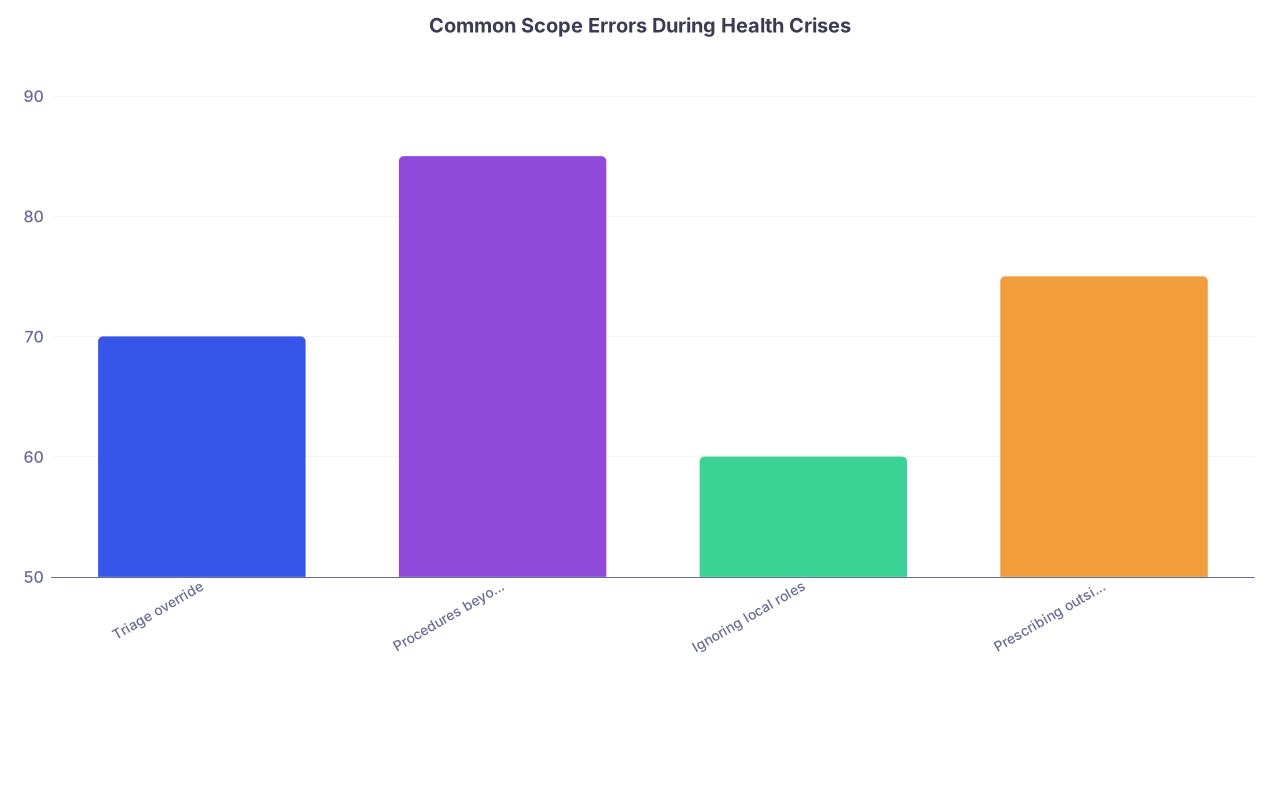
| Category | Value |
|---|---|
| Triage override | 70 |
| Procedures beyond training | 85 |
| Ignoring local roles | 60 |
| Prescribing outside expertise | 75 |
If you find yourself “making exceptions” often, that’s not you being compassionate. That’s you quietly abandoning structure because it’s uncomfortable.
4. Procedural Overreach: “I Saw This Once in Residency…”
This is the classic scope-of-practice landmine in collapsed systems.
The pattern looks like this:
- There’s no surgeon.
- There’s a crashing patient.
- You vaguely remember the slide deck or the supervised procedure from years ago.
- You convince yourself that “a chance is better than no chance,” and you do the procedure.
What MDs underestimate:
- How much of safety comes from repetition, not theoretical knowledge.
- How much of a procedure’s success depends on the team (nurse, tech, anesthetist, post-op care), not just “hands.”
- How different things look when you don’t have imaging, labs, blood products, ICU backup.
Examples I’ve seen or heard directly:
- Generalist doctors doing emergent laparotomies with no perioperative antibiotics or blood bank.
- Internists inserting central lines in septic shock with no ultrasound and no nursing capacity to maintain the line.
- Pediatricians doing emergency intubations but no one trained to manage the ventilator afterward.
The ethical anchor shouldn’t be “Is there anyone else to do this?” but:
- “Have I done this recently?”
- “Do I have the staff and supplies to manage the complication profile?”
- “If this goes badly, was it a defensible choice or a panicked overreach?”
If you answer “no” to the first two, you are no longer doing emergency medicine; you’re experimenting on a desperate human being.
5. Silent Scope Creep in Telemedicine and Remote Guidance
This one has exploded quietly with global telehealth, especially during crises like COVID or in conflict zones.
Here’s the trap:
You’re sitting safely at home, on a Zoom call. A clinician from a collapsing system shows you photos, X‑rays (if any), maybe a low‑resolution ultrasound. They ask:
- “What should I do?”
- “Can I give this?”
- “Can I operate?”
You feel pressure to be “useful,” especially when they say, “You’re the only specialist we have.” So you drift from consultation (“Here’s my differential; here’s what I’d try”) into direct orders that you yourself would never accept without seeing the patient.
That’s scope-of-practice creep in disguise:
- You’re practicing beyond your local licensure jurisdiction.
- You’re bypassing the clinical judgment of the onsite provider.
- You’re making decisions based on incomplete, often distorted data.
The more desperate the situation, the more inflated your belief becomes that your remote brain is better than their in‑person judgment. That’s not always true.
Protective boundaries you should not cross:
- Don’t prescribe or dictate high-risk interventions remotely if you wouldn’t do them personally with this level of information.
- Don’t override local guidelines unless there’s clear, documented justification.
- Don’t assume your medico-legal and ethical responsibilities vanish just because it’s “advice from abroad.”
If you catch yourself saying “Just go ahead and…” from thousands of miles away, stop. Shift back to: “Here are the risks and options as I see them; you are there and you decide.”
6. Ignoring Local Legal and Cultural Scope Boundaries
When systems collapse, formal regulation usually weakens. That’s exactly when ethical self-regulation matters more.
I’ve seen physicians in crisis zones:
- Sign death certificates when they are not legally permitted to, because “no one else is here.”
- Perform forensic exams in sexual violence cases without the required training/documentation, compromising legal cases.
- Participate in interrogations or “health checks” of detainees under security forces, believing they’re just “assessing fitness.”
Global health doesn’t exist in a legal vacuum. Even when the courts barely function, what you do can follow patients—and you—for years.
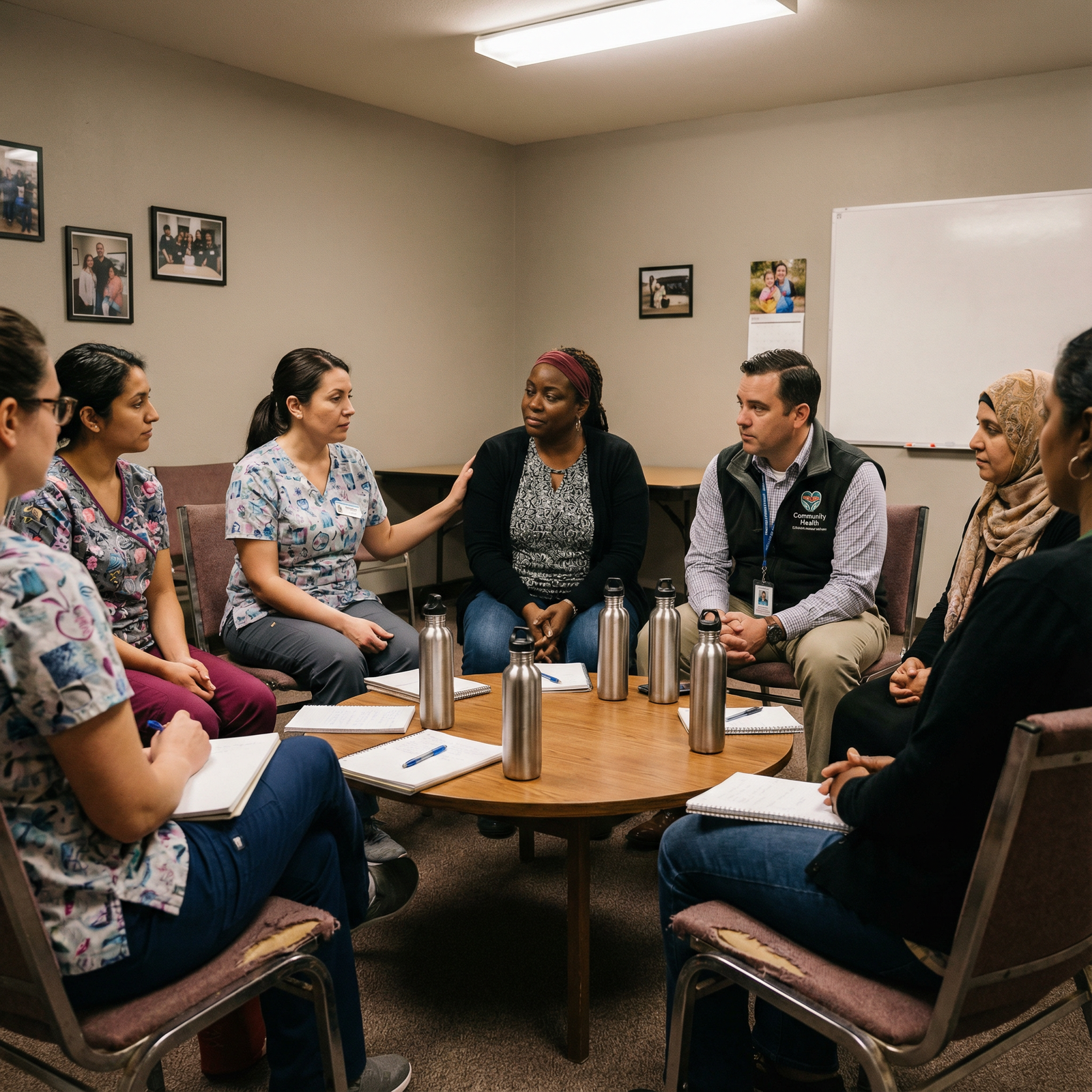
Ask blunt questions when you arrive in a new system:
- “Who is allowed to sign what?”
- “Who is allowed to declare death?”
- “Who handles medico-legal exams?”
- “What are the local rules about consent, minors, sexual violence, prisoners?”
If no one knows, that is your first clinical risk: ignorance of the system you’re operating in. Don’t assume that because the ward is chaotic, laws and cultural norms disappeared.
7. Ethical Drift: Exploiting Power Gaps With “Good Intentions”
This is less about procedures and more about personal behavior when systems crumble.
Power asymmetry in crises is brutal. You’re the MD. Patients are displaced, poor, terrified, or in detention. The mistake many doctors make isn’t dramatic; it’s incremental boundary erosion that they justify with “I was helping.”
Things I’ve seen or heard about directly:
- Accepting “gifts” (food, favors, money) from families vying for limited beds or transfers.
- Developing “special” relationships with particular patients or staff in exchange for preferential care.
- Crossing professional boundaries—emotional or sexual—with patients or junior staff who are dependent on your decisions.
You might think, “I would never do that.” Good. Keep it that way by being explicit with yourself now. In prolonged crises, when you’re exhausted and lonely and morally injured, boundaries fray. Scope-of-practice isn’t just about clinical acts; it’s also about staying within the ethical role of physician rather than savior, rescuer, or intimate partner.
Your internal warning sign: when you start thinking of a patient or staff member as “different from the others” in a way that justifies extra favors or secrecy.
8. Failing to Use Task-Sharing Intelligently
One of the worst mistakes MDs make in global crises is clinging to old-school ownership of tasks that should be shared—then, paradoxically, overstepping into tasks they shouldn’t touch at all.
You end up in this absurd situation:
- The doctor insists on personally doing every lumbar puncture because “I’m the doctor.”
- The same doctor starts managing complex mechanical ventilation settings they’ve never actually handled in their life.
That’s backwards.
In fragile systems, your job is to optimize the match between task and competence, not between task and title.
Here’s what smart scope-of-practice looks like:
| Task | Safer Lead Role | Risky Misstep |
|---|---|---|
| Basic wound care | Trained nurses / CHWs | MD hoards it and neglects oversight |
| Emergency laparotomy | Experienced surgeon or none | Generalist MD “tries it once” |
| Ventilator fine-tuning | ICU nurse / resp therapist | Never-vented MD presses random buttons |
| C-section in high-volume unit | Local midwife / GP surgeon | Short-term visitor MD “takes over” |
| Triage system design | Multidisciplinary team | One MD improvises alone |
Your two constant questions:
- Who here can safely own this task after I leave or when I crash?
- Am I hogging low-risk tasks while dabbling in high-risk ones out of ego?
Do not make the mistake of equating “busy” with “appropriate.” A doctor who is frantically doing the wrong mix of tasks is more dangerous than a calmer one doing less but doing it right.
9. Documentation Collapse: Practicing Without a Trace
In a crisis, charts become an afterthought. People scribble on scraps of paper, or don’t write at all. That’s where another scope-of-practice mistake sneaks in: acting outside your normal domain with zero documentation.
If you’re going to stretch your scope—slightly, thoughtfully, and with justification—you must leave a clear trail:
- What you did.
- Why you did it.
- Who was present.
- What alternatives were unavailable.
Not because you’re trying to cover yourself (though that matters), but because the next clinician needs to understand the state you left the patient in and what risks you took.
When MDs operate in documentation silence, they make it impossible for colleagues to catch and correct their overreach. In global health programs, this directly undermines future training, research, and system improvement.
If you hear yourself saying, “We didn’t have time to write anything,” translate that to: “We accepted operating blind for the next team.” That’s negligence disguised as urgency.
10. Not Building Personal Red Lines Before the Crisis
The worst moment to decide your scope limits is when a child is gasping in front of you and everyone is shouting.
If you haven’t pre‑decided your non‑negotiables, you will overextend. You’ll rationalize it as “one time only.” Then it becomes two. Then ten.
You need personal “red lines” and you need them before deployment, before pandemic peaks, before conflict zones.
Examples:
- “I will not initiate chemotherapy without oncology support, even if there is no oncologist here.”
- “I will not perform major surgeries I’ve never done as primary operator, even if I’ve seen them.”
- “I will not participate in any activity that blurs medical care with security forces’ agendas (interrogation, clearance for torture, etc.).”
- “I will not accept gifts or personal favors in exchange for care or preferential access.”
Write them down. Share them with a trusted colleague or supervisor. If your employer or mission leadership finds those red lines unreasonable, that’s a huge warning sign about the mission itself.

| Step | Description |
|---|---|
| Step 1 | Clinical Need Identified |
| Step 2 | Support them instead of leading |
| Step 3 | Defer, advocate for resources |
| Step 4 | Proceed within scope |
| Step 5 | Do not attempt, provide comfort care |
| Step 6 | Consider last resort with clear documentation |
| Step 7 | Within my recent training? |
| Step 8 | Is there a safer qualified person? |
| Step 9 | System and supplies adequate? |
| Step 10 | Life threatening and no alternative? |
You will still face gray zones. But you’ll be much less likely to stumble blindly into black-and-white violations.
How to Protect Yourself and Your Patients When Systems Collapse
Let me condense this to what actually keeps you out of trouble—ethically, clinically, legally—when everything is on fire.
- Name your scope out loud. To yourself, to your team, to local partners: “I am not a surgeon. I have done X, but not Y.” That honesty saves lives.
- Respect local competence aggressively. Assume the nurse, midwife, or clinical officer has critical context you lack. Make them partners, not assistants.
- Let triage and protocols carry some of the moral weight. Stop rewriting rules every time you feel strongly about a case.
- Document your edge decisions. If you have to stretch your role, leave a clear, honest record of why.
- Build and defend your red lines. You are allowed to say “I won’t do that.” In some situations, you’re ethically required to say it.
You won’t be perfect. No one is. But if you avoid the big scope-of-practice errors, you dramatically reduce the chance that your “help” becomes harm.
FAQ
1. Is it ever ethically acceptable to work outside my usual scope in a crisis?
Yes, but only in tightly defined circumstances: when the situation is truly life-threatening, no more qualified person is reasonably available, you have at least some relevant training/experience, basic safety conditions exist, and you clearly document your reasoning. “It was busy” or “no one else wanted to” doesn’t qualify.
2. What if local providers routinely do things considered “beyond scope” in my home country?
Then your job is to understand their system, not impose yours. If local clinicians safely and competently perform tasks you don’t, you support, learn from, and defer to them rather than trying to re-center authority on yourself. Challenge practices only when there’s clear evidence of harm, and do it collaboratively.
3. How do I push back if an organization pressures me to exceed my scope?
Be explicit and calm. “This is outside my training and experience; I cannot responsibly take this on.” Put it in writing if needed. Propose safer alternatives (e.g., remote specialist input, task-sharing with experienced local staff, transfer if possible). If the pressure continues or you see systemic disregard for safe practice, that’s a signal to reconsider working with that organization at all.


