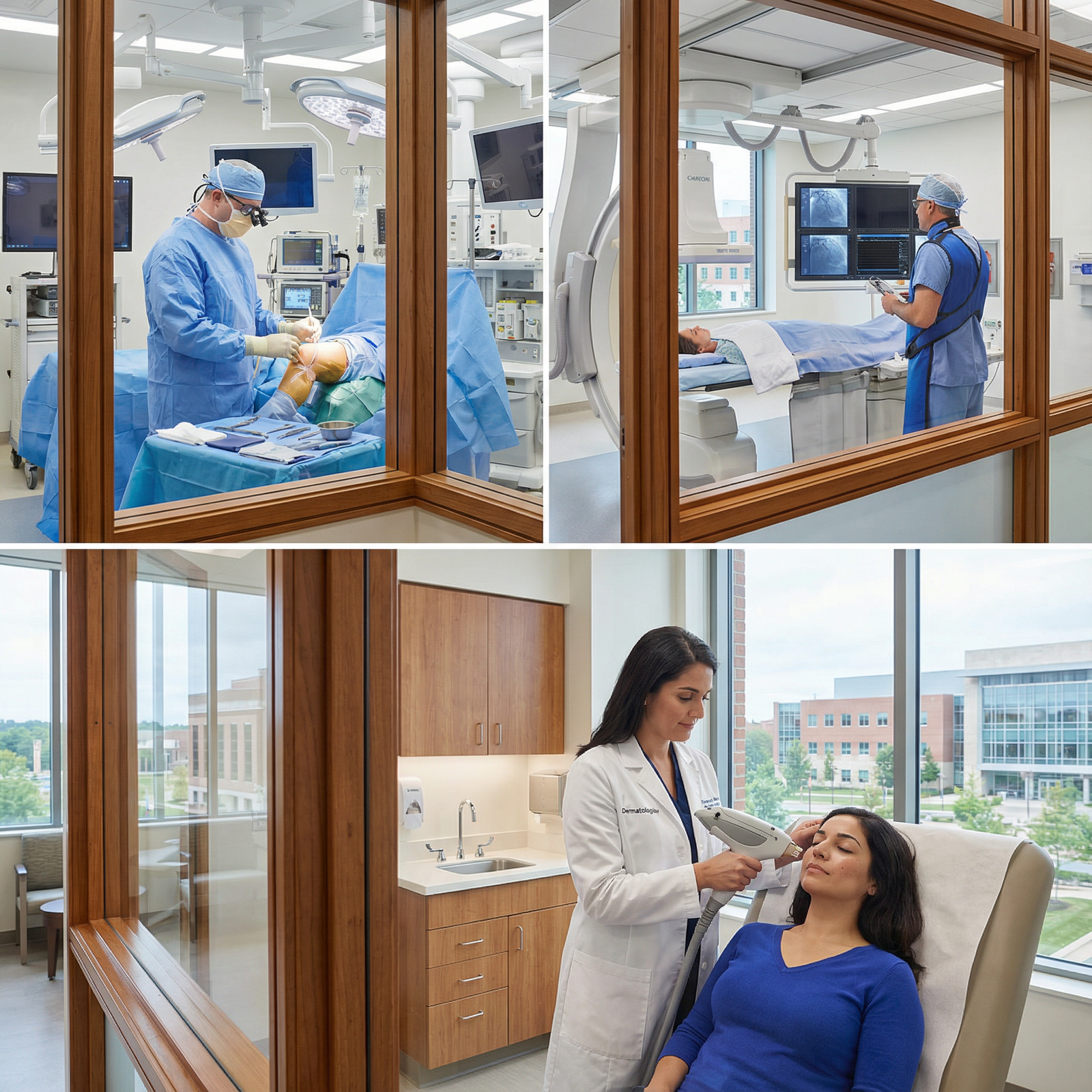
You’re an international medical graduate, sitting with a spreadsheet open: dermatology, radiology, orthopedics, anesthesiology, maybe plastics. You’ve Googled “highest paid specialties” more times than you’ll admit. You know the brutal truth: you’re an IMG, the US system is biased, and the specialties that pay the most are exactly the ones that are hardest to get into.
You’re asking the right question: not “Is it possible?” but “What is the actual strategy if I don’t want to waste 5 years chasing a fantasy?”
This guide is that strategy. No sugarcoating. If you’re an IMG aiming for high-earning specialties, here’s how to think, plan, and act.
1. First, Face the Numbers (And What They Mean For You)
Let’s start with reality, not vibes.
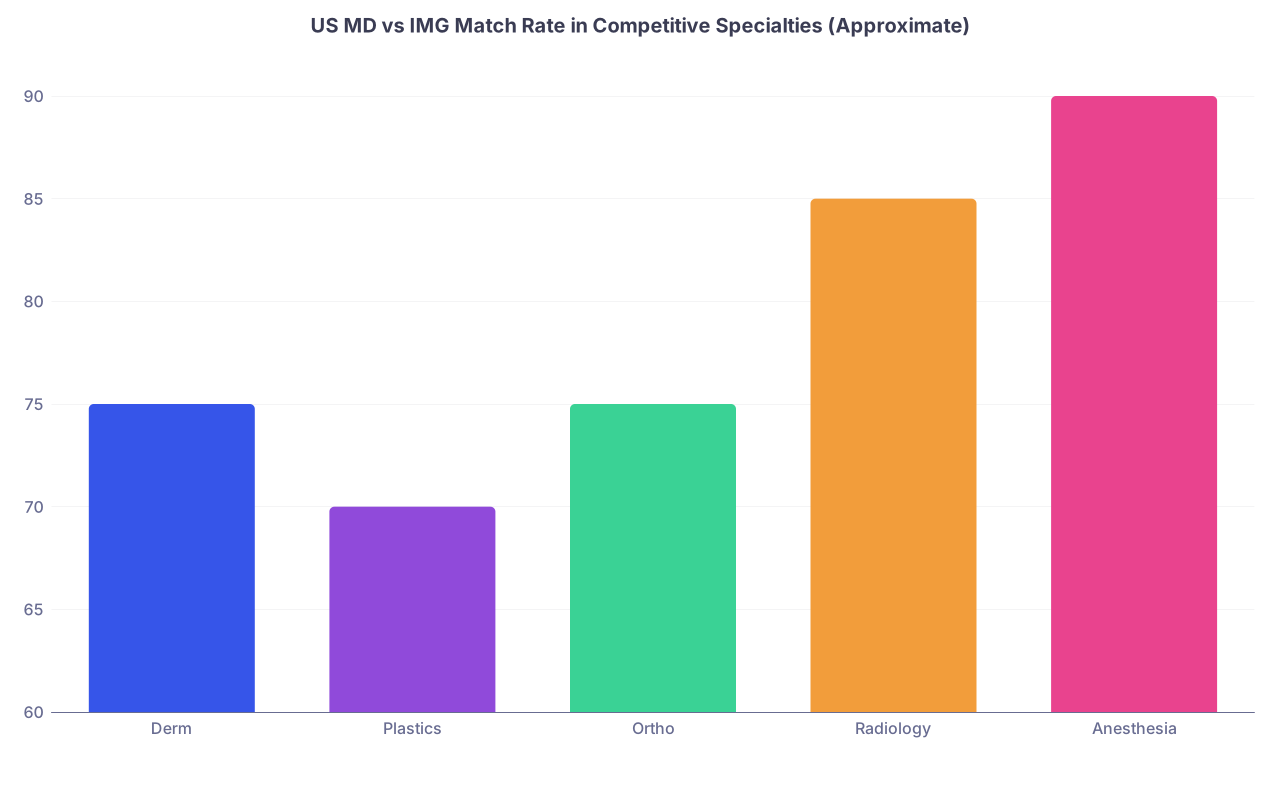
| Category | Value |
|---|---|
| Derm | 75 |
| Plastics | 70 |
| Ortho | 75 |
| Radiology | 85 |
| Anesthesia | 90 |
Those bars? Rough idea of US MD match rates in these specialties at decent programs. For IMGs, drop those by a lot, especially in derm, plastics, ortho.
Here’s what that means if you’re an IMG:
Dermatology, plastic surgery, orthopedic surgery:
Extremely limited spots for IMGs. Most that match:- Did US med schools originally (so not true IMGs), or
- Have insane research + US mentors + often US citizenship.
Radiology and anesthesiology:
Historically more open, more IMG-friendly, especially at community and mid-tier university programs. Still competitive, but actually reachable if you are strategic and ruthless about your profile.High-income alternatives via path switching or fellowship:
- Internal medicine → cardiology, GI, heme/onc
- General surgery → vascular, surgical oncology, trauma/critical care
- Family med → sports medicine, urgent care, procedural-heavy jobs
So your first big decision:
Are you chasing
- a high-paying specialty DIRECTLY (rads, anesthesia, maybe ortho/uro in rare cases), or
- a high-paying endpoint via a more open core specialty (IM → cardiology)?
Many IMGs waste years pretending they’re US MDs with perfect applications. You’re not. You need a different playbook.
2. Decide Your Route: Direct vs Indirect to High Income
Let me be blunt: if you’re an IMG with mid-tier scores and no green card, chasing dermatology is wasted oxygen. But that doesn’t mean you can’t end up in a high-earning practice.
Direct High-Earning Path (Most realistic IMGs: Radiology, Anesthesia)
Choose this if:
- You have or can get:
- Strong USMLE (or Step 2) scores
- US clinical experience
- At least some research/US letters
- You can apply broadly and are okay moving anywhere in the US.
- You’re ready to hustle early (before you graduate if possible).
Pros:
- You start in the high-earning field from day one after training.
- Lifestyle in rads/anesthesia can be solid, especially post-residency.
Cons:
- Competitive; you will likely land at mid-tier or IMG-heavy programs, not Harvard.
- Delayed if you miscalculate and don’t have a backup.
Indirect High-Earning Path (Internal Medicine → Fellowship, etc.)
Choose this if:
- Your scores are average or slightly below average.
- You’re late to the game on research and don’t have specialty-specific mentors.
- You want more “safety net” while still aiming high long-term.
Example: IM → Cardiology or GI. High pay, huge demand, and easier to get IM as an IMG than jump straight into radiology at a strong program with a weak file.
Pros:
- Higher chance of matching somewhere on the first try (IM, FM, peds, prelim surgery, etc.).
- You can still end up with a $400k+ job through fellowship.
Cons:
- Longer timeline (3 years IM + 3 cardiology, etc.).
- You need to keep grinding after matching, not just relax and coast.
For many IMGs, Route 2 is smarter even if it hurts your ego. For a smaller subset—high scores, strong English, aggressive networking—Route 1 (radiology/anesthesia) is absolutely possible.
3. Score Reality Check: Where Do You Actually Fit?
You need to stop guessing and benchmark yourself.
| Profile Level | Best Direct Targets | Safer Core Options | Long-Term High-Pay Potential |
|---|---|---|---|
| Elite (Step 2 ≥ 255, strong US research) | Radiology, Anesthesia, maybe Ortho/Uro | IM | Cards, GI, high-end Rads |
| Solid (Step 2 245–254, some USCE) | Radiology, Anesthesia | IM, FM | Cards, GI, Heme/Onc, Pain |
| Borderline (Step 2 230–244) | Very few Rads/Anes spots | IM, FM, Peds | Cards (community), Endo, Hospitalist+moonlighting |
| Low (Step 2 < 230 or failures) | Rads/Anes unlikely | FM, IM (community), Prelim | Urgent care, hospitalist, procedural FM |
If you don’t know your Step 2 yet, plan as if it will land one tier lower than your dream. Then work like crazy to push it up one tier.
Your next step here, realistically:
- If you have scores: decide your tier and adjust your expectations.
- If you don’t: your entire life is Step 2 until you crush it.
4. Strategy If You’re Aiming for Radiology or Anesthesiology as an IMG
You want a direct shot at a high-earning specialty that’s actually somewhat open to IMGs. Good. Let’s talk tactics.
Core Principles
- You must look less risky than the average IMG on paper.
- You must show real, documented commitment to the specialty.
- You must be strategic with program selection and networking.
Build a Specialty-Specific CV
Bare minimum:
- Step 2: Aim 245+ if you want to be taken seriously.
- At least 1–2 US letters from radiologists/anesthesiologists.
- Some research or scholarly activity with US faculty:
- Retrospective studies
- Case reports
- QI projects
- Educational posters
I’ve seen an IMG with a 242 match anesthesia at a mid-tier university purely because he had:
- 2 US anesthesia letters from well-known attendings
- A QI project he presented at ASA
- A clear story in his personal statement: anesthesia from early in med school, shadowing, electives.
You don’t need a Nature paper. You do need receipts that you’re serious.
Clinical Experience and Electives
Best situation:
- You’re still in med school and can do US electives.
- Aim for 1–2 rotations in your target specialty.
- Show up early, read, ask to help with projects, be visible but not annoying.
If you’ve already graduated:
- Get observerships/externships in the US in rads/anesthesia if at all possible.
- If not possible, at least do USCE in IM or surgery at hospitals that also have rads/anesthesia programs—then angle for cross-specialty introductions.

| Step | Description |
|---|---|
| Step 1 | IMG decides on high-earning specialty |
| Step 2 | Target Rads/Anes directly |
| Step 3 | Apply Rads/Anes + IM backup |
| Step 4 | Focus on IM/FM, consider future fellowship |
| Step 5 | Get USCE in specialty |
| Step 6 | Specialty-specific research |
| Step 7 | Network with US faculty |
| Step 8 | Apply broadly including IMG-friendly programs |
| Step 9 | Step 2 score |
Program Targeting: Where IMGs Actually Match
You can’t fix bias, but you can go where doors are open.
Filter programs by:
- Past IMGs in the residency (check current residents on website/LinkedIn).
- Location less popular with US grads (Midwest, South, smaller cities).
- Community-based or hybrid university-community programs.
Top 10 programs? Forget them. You’re playing the “get in, then thrive” game, not the “brand name on badge” game.
5. Strategy If You Choose the Indirect High-Earning Route (IM, FM → Fellowship/Job)
You decide: “OK, I’ll do Internal Medicine now, but I want high pay later.” Smart move for many IMGs.
Here’s how not to screw that up.
Pick the Right Core Specialty
- If you want cardiology, GI, heme/onc → Internal Medicine.
- If you want pain medicine, sports, high-volume urgent care → FM or PM&R can work.
- If you dream of surgery-adjacent high income but can’t get general surgery → some start in IM, then critical care/pulmonology.
Do not just match “somewhere” and hope it works out. Your core specialty determines what fellowships are even open to you.
During Residency: Act Like a Future Subspecialist From PGY-1
If you land IM:
- Day 1, pick your lane (e.g., cardiology).
- Ask your PD:
“Which attendings are most involved in cardiology fellowship selection?” - Get on their radar. You want:
- Projects with those attendings.
- Letters from them.
- To be the resident they think of when a case or opportunity comes up.
This is how IMGs end up matching cards/GI from unknown community programs. They become “the cardiology person” in their residency.
If you land FM:
Lean into:
- Procedures (joint injections, skin biopsies, IUDs, etc.).
- Urgent care shifts.
- Sports med or pain med mentors if available.
Then position yourself for:
- Sports medicine fellowship, or
- Pain fellowship (hard, but possible with strong backing), or
- A job that pays more by volume/procedures.
6. Visas, Citizenship, and How They Affect High-Earning Plans
You want money. Visa issues directly affect how fast you can get there.
You Without a Green Card
J-1:
- Often easier to get.
- Requires a J-1 waiver job after residency/fellowship (typically 3 years in underserved area).
- Those waiver jobs can pay extremely well (rural cardiology, GI, hospitalist).
H-1B:
- Harder to get in competitive specialties (especially for IMGs).
- Some academic centers prefer J-1 for control and easier processing.
If you’re set on radiology/anesthesia and on a visa, target programs that:
- Explicitly state “H-1B eligible” if you want that, or
- Have a track record of taking J-1s and placing them into good waiver jobs.
Do not ignore this. It’s the difference between a clean career path and being stuck in immigration limbo.
7. Money Reality: Specialty vs How You Use It
Let’s be honest: income is not just “what specialty did you match into?” It’s:
- Where you practice (rural vs urban).
- How much you work (0.8 FTE vs 1.2 FTE plus moonlighting).
- What side skills you build (procedures, business sense, telemedicine, locums).
I’ve seen:
- A community cardiologist making $700k+ in the Midwest as an IMG.
- A dermatology grad in a saturated city struggling to build a panel and making far less initially.
- Hospitalists with multiple telemedicine gigs clearing serious money.
So yes, aim for a high-paying specialty. But also understand: being a sharp, efficient, procedure-heavy internist in the right setting can out-earn a lazy anesthesiologist in an oversupplied market.
8. Timeline: If You’re 0–3 Years From Application
Here’s a rough realistic structure if you’re serious.
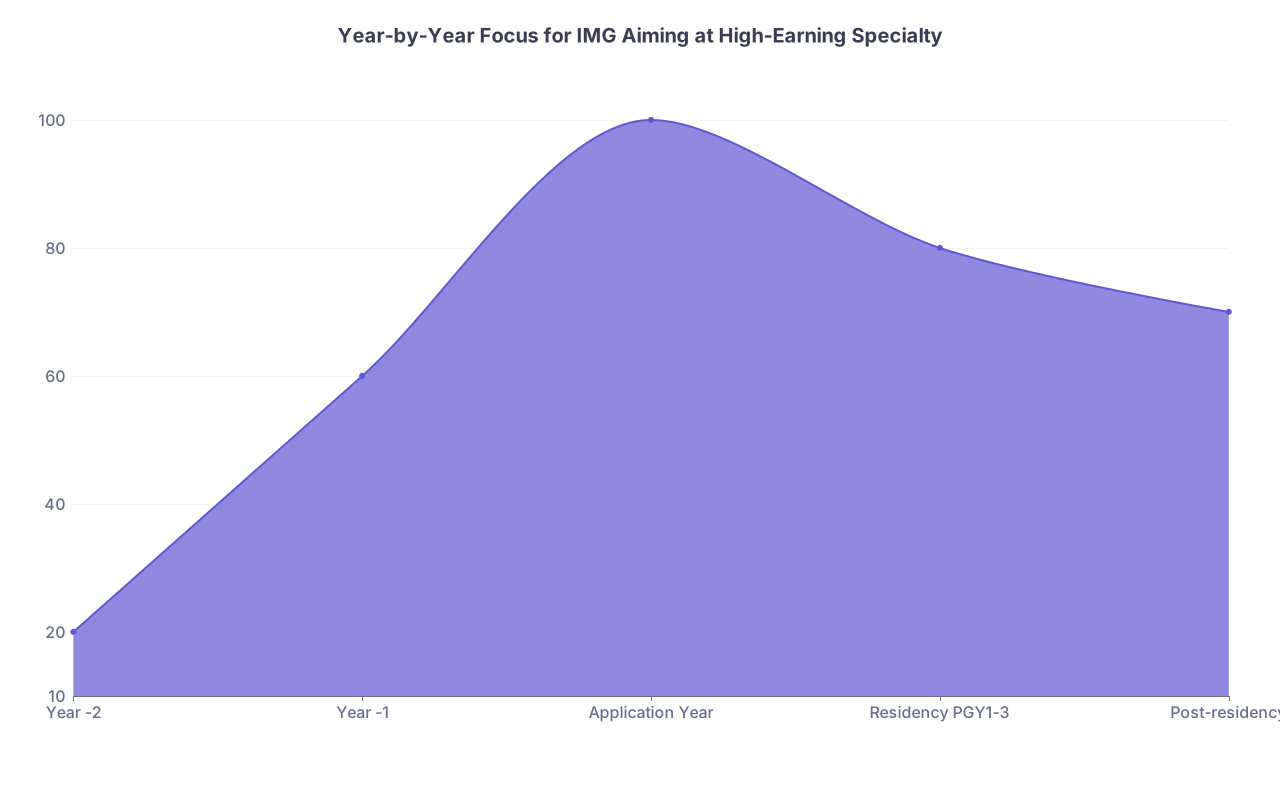
| Category | Value |
|---|---|
| Year -2 | 20 |
| Year -1 | 60 |
| Application Year | 100 |
| Residency PGY1-3 | 80 |
| Post-residency | 70 |
Interpretation:
- Year -2: moderate intensity (building basics, scores, beginnings of CV).
- Year -1: heavy intensity (research, USCE, networking).
- Application year: max intensity (apps, interviews, backup pathways).
- Residency: still high (positioning for fellowships or better jobs).
- Post-residency: intensity shifts toward negotiation, career building.
Concrete breakdown:
2 years before ERAS:
- Crush Step 2.
- Start/continue research, ideally with US collaborators.
- Plan US electives/observerships strategically.
1 year before ERAS:
- Get into USCE in your target or adjacent specialty.
- Lock in at least 2 strong US letters.
- Identify 10–15 programs where IMGs actually match.
Application year:
- Apply broadly.
- Have a backup plan:
- Direct: Rads/Anes + IM/FM backup.
- Indirect: IM as main target; build future fellowship story already.
9. Common Dumb Mistakes IMGs Make Chasing High-Paying Specialties
Let me just call these out, because I see them nonstop:
“Derm or nothing.”
Then they end up with…nothing. For years. Do not do this.No backup specialty.
You can love anesthesia and still apply to IM or FM as backup.Zero research, but targeting ultra-competitive specialties.
If you’re IMG + no research + no US letters in the field → that’s not ambition, it’s denial.Vague letters from non-US physicians only.
Nice, but US programs trust US attendings more. You need both if possible.Poor English or communication skills.
You cannot hide this in rads or anesthesia. Or anywhere. Fix it early.Waiting for “perfect” conditions to start.
You won’t have perfect anything. Start where you are: case report, email a mentor, join a QI project.
10. Your Next Concrete Moves (Pick Based on Where You Are)
Let’s end with what you should literally do next, today.
If you have not taken Step 2:
- Open your calendar.
- Block daily 4–6 hour study windows for the next 3 months.
- Make Step 2 your absolute top priority. Your ceiling depends on it.
If you already have scores and they’re competitive (say ≥245):
- Pick 1–2 specialties to focus on (e.g., radiology primary, IM backup).
- Email 5–10 potential US mentors in that field asking about:
- Observerships
- Remote research contributions
- QI or chart-review projects
If you’re about to apply this cycle:
- Build 3 lists of programs for your main target:
- “Reach but possible with IMGs”
- “Realistic”
- “Safety/IMG-heavy”
- Do the same for your backup specialty.
- Start pre-writing specialty-specific personal statements: one for high-earning target, one for backup.
If you’re already in residency (IM or FM) and worried you “missed” the high-earning boat:
- Identify one attending in a high-pay subspecialty or with a strong procedural practice.
- Ask them directly:
“I’m an IMG and I want to work toward [cardiology, GI, pain, sports]. What specific steps can I take in this program in the next 6–12 months to be competitive?” - Then actually do exactly what they say.
FAQ (exactly 4 questions)
1. I’m an IMG with a Step 2 score below 230. Is any high-paying path still realistic for me?
Yes, but not via derm/plastics/rads/anesthesia in almost all cases. Your better plays:
- Match FM or IM at an IMG-friendly program.
- Become procedure-heavy (ultrasound, joint injections, skin procedures, endoscopy if possible).
- Target high-demand, high-volume jobs (rural hospitalist, urgent care chains, telemedicine add-ons).
You can still make strong money through volume and smart job selection, even without a flashy specialty.
2. How many research projects do I need to be taken seriously for radiology or anesthesia as an IMG?
There’s no magic number, but:
- 2–3 real items (posters, abstracts, case reports, or a paper) with your name and preferably a US institution attached already puts you above many IMGs who have zero.
- Quality and relevance matter more than raw count.
- One solid project with a US mentor who will write you a strong letter is better than 7 random low-quality posters no one cares about.
3. Should I do a non-ACGME research fellowship in the US before applying?
It can help a lot if:
- It’s in your target field (radiology/anesthesia/IM cardiology track, etc.).
- You’re at a place with an actual residency program that knows your name.
- You’ll get strong letters and at least a few publications.
It’s often a waste if you’re just doing busy work with no output, no mentorship, and no connection to a residency program that might rank you.
4. Is it worth applying to super top programs “just in case” as an IMG?
One or two? Fine, if your fees and time allow. But sending 20+ applications to programs that:
- Have never taken IMGs
- Are in super desirable cities
- Explicitly or implicitly filter by US MD/DO
…is just burning money. Most IMGs should focus on IMG-friendly programs where they’ve seen people like you actually match.
Open your own CV right now and write three headings at the top:
“Scores”, “USCE/Letters”, “Research in Target Field”.
Under each, write exactly where you stand today in one honest sentence. Then circle the weakest one and decide one concrete action you’ll complete this week to move it a notch higher.