
What do you do when you’re staring at $350k+ in loans, two kids’ daycare bills, and you’re supposed to “follow your passion” into a specialty that might never dig you out?
Let’s be blunt: once you add massive student debt and dependents into the equation, the “just do what you love” advice becomes half-useful at best and financially reckless at worst. You cannot ignore the money. You also cannot pick purely by salary and pretend lifestyle, burnout, and family sanity don’t matter.
This is the situation: you’re in med school or early residency, you have (or soon will have) a family, and you’re trying to choose between the highest-paying specialties so you can survive, pay loans, and still see your kids grow up.
Here’s how to think about it like an adult who has bills, not like an idealized brochure version of a doctor.
1. First Reality Check: What “High-Paid” Actually Buys You
Before we talk about ortho vs anesthesia vs derm, you need to understand the gap between headline income and actual freedom when you’ve got huge loans and a family.
| Category | Value |
|---|---|
| Hospitalist | 210 |
| Radiology | 260 |
| Anesthesia | 260 |
| Ortho | 320 |
| Derm | 280 |
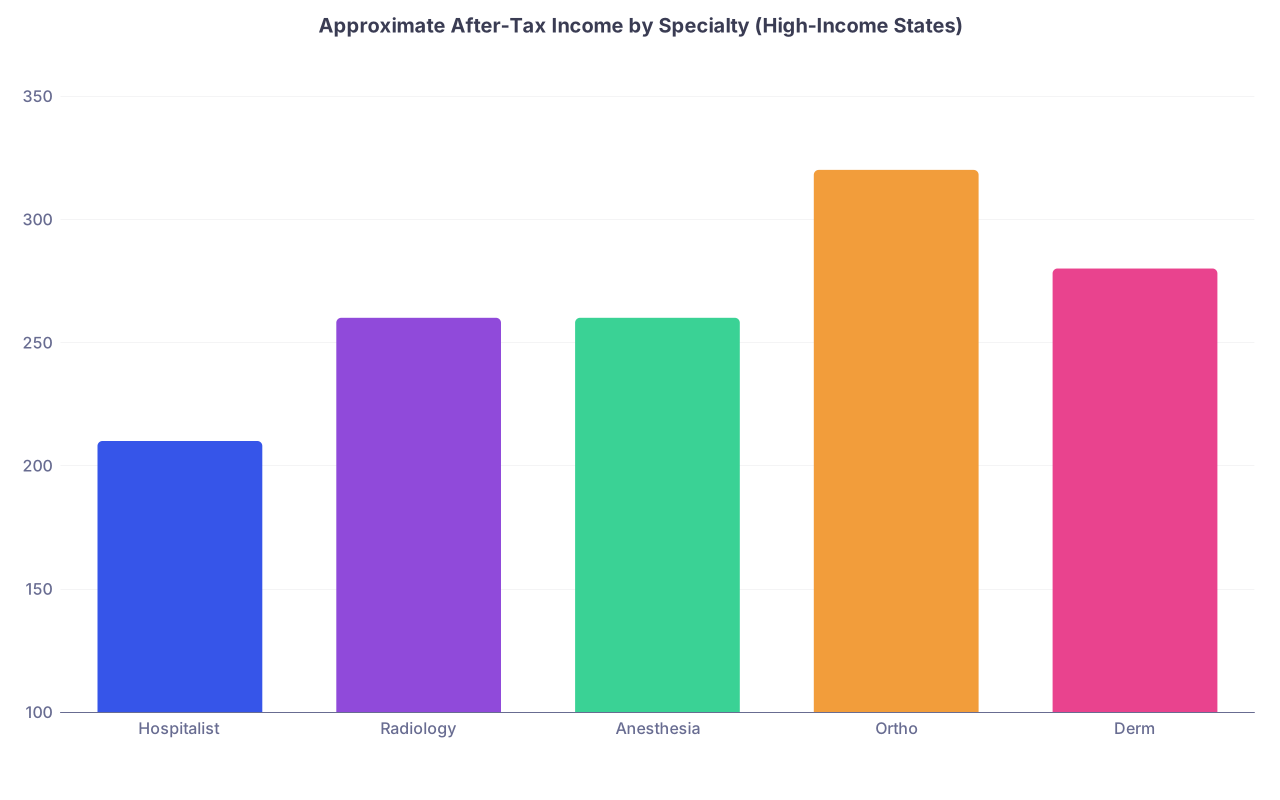
Rough ballpark of take-home (after tax, before loans/retirement) in a high-tax state, per year:
- Hospitalist making $300k → maybe ~$210k take-home
- Radiologist/anesthesiologist at $400k → maybe ~$260k
- Ortho at $500k+ → maybe ~$320k
- Derm at $450k → maybe ~$280k
Now subtract:
- $3–5k/month in loan payments if you’re not using PSLF or an aggressive IDR strategy
- $1.5–3k/month in daycare or aftercare (more with multiple kids)
- Rent/mortgage in any decently safe area near a hospital
The jump from, say, $300k to $450k gross can easily be the difference between:
- Barely treading water while loans hang over you for 20+ years
vs - Crushing your loans in 5–7 years, building savings, and not losing your mind every time the car needs repairs
So yes, the specialty choice matters financially. A lot.
But here’s the catch: not all high-paying specialties are equal for someone with a family.
2. Understand Your Constraints Before Chasing the Top Dollar
You can’t choose a specialty in a vacuum. You have a life structure already forming.
Ask yourself these questions honestly (no Instagram delusions, just reality):
How old are you, and how many years of training are you realistically willing to tolerate?
- Ortho, neurosurgery, plastics: 5–7 years plus possible fellowship
- Anesthesia, radiology: 4 years plus optional fellowship
- Derm: 3 years after intern year, but very competitive and often involves a research year
How anchored is your family to a specific location?
- If your partner has a serious career tied to one city or kids have strong family support nearby, that can kill certain ultra-competitive fields where you go wherever you match.
What is your true tolerance for:
- Call (nights, weekends, getting called in emergently)
- Risk (malpractice exposure, high-stakes decisions fast)
- Boredom (yes, some fields are more repetitive; some people hate that, others love it)
How critical is schedule predictability for your family?
- Do you have a partner who can flex and cover?
- Or are you basically the key stable parent while your spouse works irregular hours or not at all?
Once you answer those honestly, certain “high-paid” options may disappear immediately—not because you’re not capable, but because they’d wreck your actual life.
3. What You’re Actually Choosing Between (High-Paid Fields, Family Version)
Here’s the stripped-down version of how several high-income fields look when you overlay:
- massive student debt
- spouse/kids
- need for relative stability
| Specialty | Training Length* | Typical Gross Range | Call Intensity | Schedule Predictability |
|---|---|---|---|---|
| Ortho | 5–6+ yrs | $500k–$800k+ | High | Moderate |
| Neurosurg | 7+ yrs | $600k–$1M+ | Brutal | Low |
| Anesthesia | 4–5 yrs | $400k–$600k | Moderate | Moderate–High |
| Radiology | 5–6 yrs | $400k–$600k | Low–Mod (ER) | High (esp. outpatient) |
| Derm | 4–5 yrs | $400k–$600k+ | Very Low | Very High |
| Cards (IC) | 6–7 yrs | $500k–$800k | High | Low–Mod |
| GI | 6 yrs | $500k–$700k | Moderate | Moderate |
*Training length = residency + common fellowship
Now we’ll talk about how to think through them by situation.
4. Scenario 1: You’re Older, Already Have Kids, and Debt Is Huge
You’re 32–36 by the time you’re picking a specialty. You’ve got a partner, one or two kids, maybe another on the way, and $300k–$500k in loans.
You do not have unlimited years to “just train a bit longer.”
What usually makes sense here:
Relatively shorter training, still high-paying, strong job market:
- Anesthesiology
- 4-year residency, optional 1-year fellowship.
- Can hit high incomes quickly, especially if you’re willing to work extra shifts or locums.
- Mix of shift work and call; some groups are brutal, some are civilized.
- Can be very family-compatible if you choose your group carefully.
- Radiology
- 4-year residency + 1-year fellowship.
- High income, scaling up with telerad and rural needs.
- Call exists, but it’s not the same as trauma surgeon getting called in; a lot is from home.
- Very good for people who want to be present at home in the evenings, especially in certain practice setups.
- Derm (if you can get in)
- Training relatively short, lifestyle famously excellent, income very strong.
- But: extremely competitive, often requires research years or connections, which is harder with a family and debt.
- If you’re already on a derm track, great. If not, don’t burn two extra years chasing it if your situation is financially tight.
Fields I’d be cautious about in this scenario:
- Neurosurgery, CT surgery, long surgical subspecialties
You’re adding 7+ years of training with brutal hours during the years your kids are tiny and your spouse is probably drowning. The money at the end is huge, but your family and your own sanity may not survive that just to get to the payoff. - Lengthy, lower-paying IM subspecialties (e.g., endocrinology)
You’re adding years of lower-paid fellowship without a big jump at the end. That’s a poor tradeoff when loans + kids are in play.
If you’re in this bucket, the balance usually leans toward:
High-paying, moderate training length, reasonably controllable lifestyle.
That often lands you in: anesthesia, rads, possibly GI or interventional if you really want procedural life.
5. Scenario 2: You’re Younger, Family on the Horizon, Debt Massive but Time Is on Your Side
You’re 24–28, maybe engaged or newly married, maybe first kid coming during training. Loans are still terrifying, but you’ve got more career years to amortize them.
Here, you can tolerate an extra 2–3 years of training if it significantly boosts long-term income. Now big-earning surgical or procedural fields become more reasonable:
- Orthopedics
- 5 years residency, maybe 1-year fellowship.
- Money is very, very good. Private practice ortho can obliterate loans.
- Early years with call are rough; later you can be choosy about practice and call burden.
- Cardiology (especially interventional)
- IM (3) + Cards (3) + often IC (1).
- High-income but call heavy; your life will revolve around STEMIs for a while.
- Gastroenterology
- IM + GI.
- Very solid procedural income, moderate call, more predictable than some others. Good compromise choice.
If you’re younger, it’s more defensible to spend 6–7 years in training for a true top-tier income. But you still have to remember:
- Those are the exact years you’ll likely be having children and establishing your relationship.
- You’ll be absent a lot.
- Your spouse must be on board, fully. I’ve seen marriages blow up halfway through ortho or neurosurg because ‘we didn’t understand what this would be like.’
So ask: Does my partner actually know what this path means day-to-day?
Sit down and spell it out:
“No, I will not be home for dinner most nights. Yes, I will miss some birthdays. Yes, maternity leave/paternity leave may basically mean you alone with a baby while I’m on trauma call.”
If they still say yes and you’re all aligned—fine. Then you make a deliberate decision.
6. Scenario 3: You Need Location Stability for Family Support
Another huge constraint: your family support network.
If you have parents or in-laws nearby who provide childcare, emotional support, and backup, your options explode. If you’re isolated in a city far from everyone, every hour of your call schedule hits differently.
Fields with more geographic flexibility at high pay:
- Anesthesia – demand is almost everywhere, including smaller cities with lower COL.
- Radiology – telerad means you can technically live near family and work for a group states away.
- Derm – in-demand almost everywhere, plus potential for building your own practice eventually.
- Ortho – also widely needed, though starting jobs can be more constrained.
Fields with more limited geographic flexibility at top-end pay:
- Sub-subspecialty surgery (peds ortho, neurosurg niche fields)
- Academic-only niches that cluster at major centers
- Some procedural subspecialties that only exist in big referral hospitals
If your spouse relies on your in-laws for free or cheap childcare, but your dream subspecialty will likely send you three states away where you pay $3k/month for daycare and have no backup…your “higher income” may actually put you in a worse position for years.
Run the numbers on that. Do not fantasize it away.
7. What About PSLF and Lower-Paid “Nice” Specialties?
You might be thinking: “What if I just do peds or psych and use PSLF?”
Fair question. Let’s be honest about it.
If you are:
- 100% committed to working for a qualifying non-profit for 10+ years
- Comfortable betting on government programs staying intact
- Willing to accept a generally lower salary ceiling long-term
Then yes, PSLF can make a modest specialty workable even with big debt.
But I’ve watched people do this:
- They choose a lower-paid, “nice” field planning PSLF.
- Life happens, they want to move, need flexibility, or want private practice.
- Suddenly they’re stuck: big loans still there, but no PSLF because they left the non-profit track.
For someone with massive debt AND a family, my bias is:
- If you go low-paid, you should have a rock-solid loan strategy (PSLF, spousal income that’s strong, or extreme geographic arbitrage with low COL).
- Or you choose a middle/high-earning specialty so you’re not chained to PSLF or a specific employer.
PSLF can work. But it shouldn’t be the only thin thread holding your life plan together.
8. How to Actually Decide Between Two or Three High-Paid Options
Let’s say you’ve narrowed it to something like:
- Anesthesia vs Ortho
- Radiology vs Derm vs GI
- Cards vs GI vs Anesthesia
Here’s how to be systematic, not emotional.
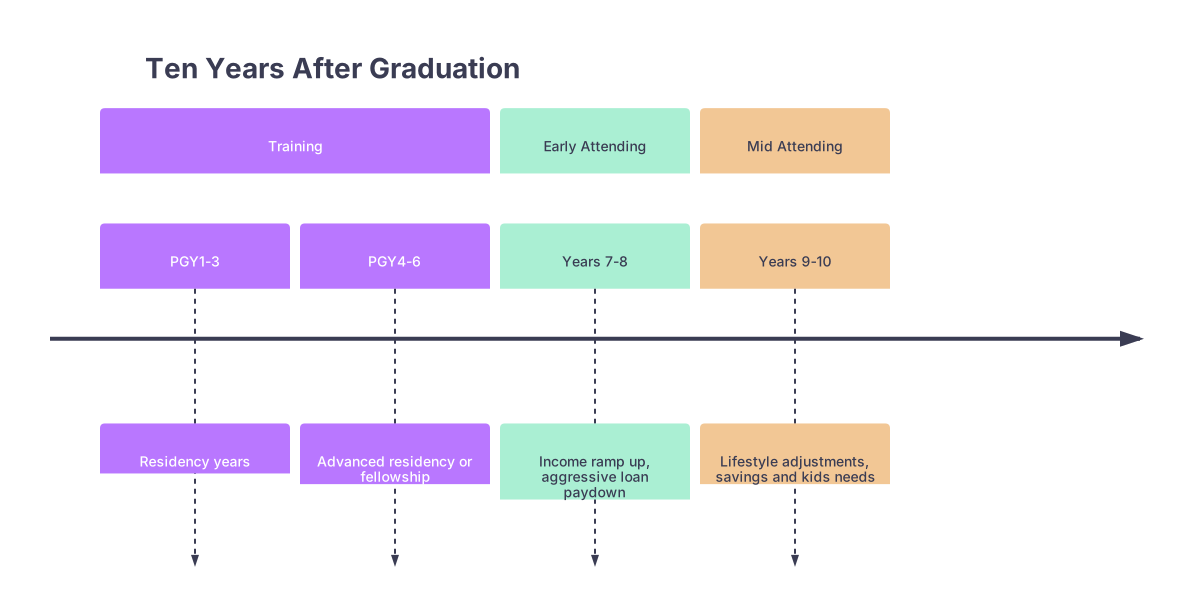
Step 1: Build a simple 10-year timeline
| Period | Event |
|---|---|
| Training - PGY1-3 | Residency years |
| Training - PGY4-6 | Advanced residency or fellowship |
| Early Attending - Years 7-8 | Income ramp up, aggressive loan paydown |
| Mid Attending - Years 9-10 | Lifestyle adjustments, savings and kids needs |
Year 0 = starting residency. Map:
- What year are you finished training?
- What is your likely starting income? (real numbers from actual attendings, not salary surveys only)
- What is your likely loan payment strategy and payoff year?
If Option A gets you attending in 4 years with $400k and Option B in 7 years with $600k, run the math. Sometimes the “lower” paid field with earlier attending years wins.
Step 2: Stress-test with worst reasonable case
For each specialty you’re considering, ask:
- What if I land a mediocre job in this field—still okay but not ideal?
- What if I end up in a less desirable city?
- What if my spouse can’t find local work and we live on my income alone?
If the “bad but realistic” version of a specialty still allows:
- decent family time
- acceptable financial progress
- mental health
then that specialty is robust.
If the “bad but realistic” version looks like unlimited call, $350k in a high-COL city, or constant malpractice fear you can’t handle—you have your answer.
Step 3: Talk to 3–5 attendings…with kids
Not the single star fellow bragging about cases. You want:
- 40–50-year-old attendings in your candidate fields
- Who have 1–3 kids
- Who are not trying to recruit you or sell their specialty
Ask them:
- What did you underestimate about this field once you had kids?
- If your child got really sick for 6 months, how would your specialty handle that?
- How does your specialty reward or punish dialing back hours?
The pattern of their answers will be more useful than any brochure or article (including this one).
9. Time vs Money vs Presence: The Core Tradeoff
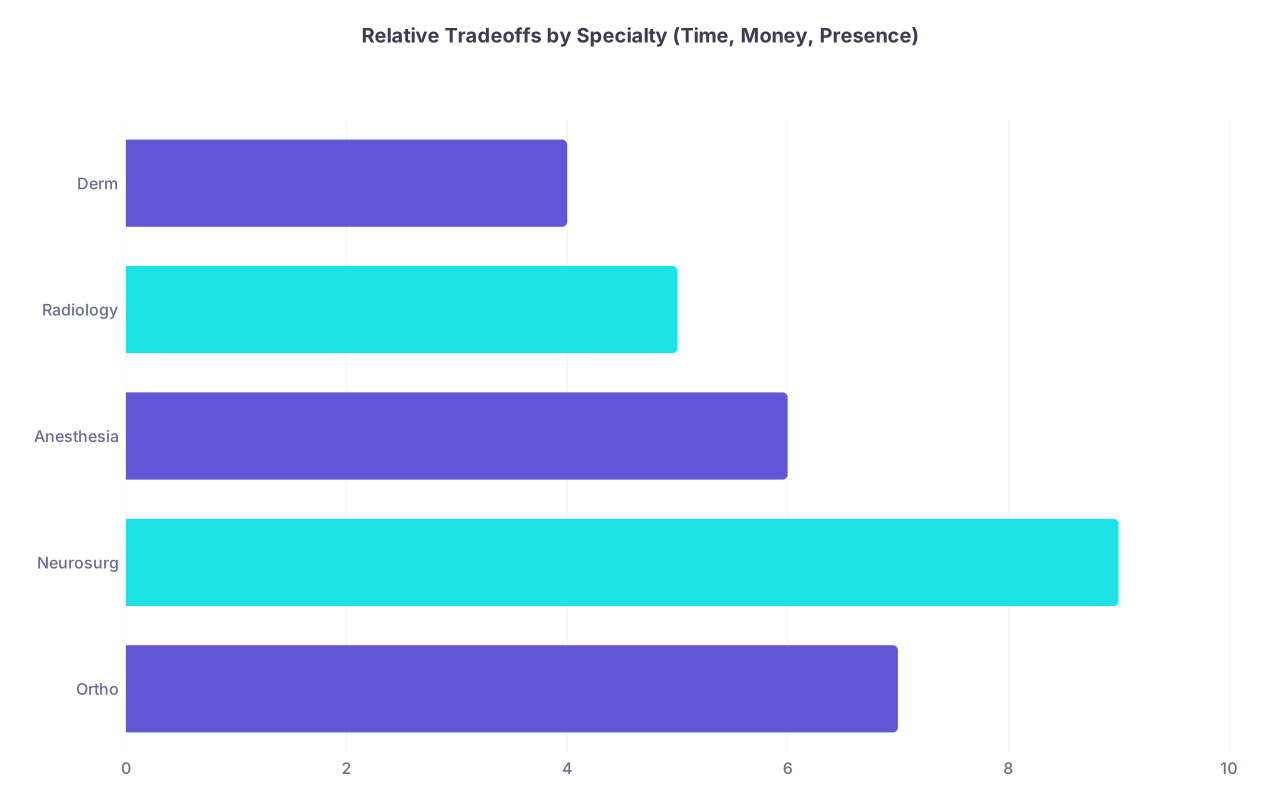
Look at these three axes:
| Category | Value |
|---|---|
| Ortho | 7 |
| Neurosurg | 9 |
| Anesthesia | 6 |
| Radiology | 5 |
| Derm | 4 |
Imagine a triangle:
- Money
- Time (off)
- Presence (predictability, ability to be mentally/emotionally present)
You can’t max all three. High-paid specialties give you a shot at better money, but they still split into two flavors:
High-money, high-intensity, lower control
- Ortho, neurosurg, IC cardiology, CT surgery
- Great if you can stomach years of chaos, and your family is built for that ride.
High-money, moderate-intensity, high control potential
- Derm, radiology, anesthesia (in the right practice), GI
- More realistic for people who absolutely need to be home for kids regularly.
When you factor in huge loans, here’s the harsh truth:
- If you choose a high-intensity surgical field, you should be doing it because you absolutely love the work itself. The money is your reward, but it won’t compensate if you hate the day-to-day grind.
- If you’re mostly drawn to the income, you’re usually better off in a procedural or diagnostic field with fewer lifestyle landmines.
10. What I’d Actually Do in Your Shoes
Let me stick my neck out and give concrete advice by situation.
If I had:
- $350k+ debt
- Spouse + 1–2 kids or plans for them soon
- No guaranteed family financial backup
I would:
- Rule out the ultra-long, ultra-brutal training paths unless I already knew from rotations I was obsessed with that field (neurosurg, CT, some complex ortho subspecialties).
- Focus on:
- Anesthesia
- Radiology
- GI
- Cards (if personality and family tolerance fit)
- Derm (if realistic for my CV and I could get in without burning years of my life on research).
- Talk to attendings in those fields who have 2–3 kids, and pay attention to how many of them say, “If I were you, with your debt and family, I’d pick X.”
- Run a 10-year financial projection for top 2–3 choices:
- year finished training
- year loans paid off under a realistic payment scenario
- expected saving/investing rate once loans gone.
- Use that, plus my spouse’s clear input on schedule/call tolerance, to make the call.
No magic trick. Just grown-up tradeoffs.
11. The Bottom Line
You’re not choosing “which specialty is highest paid?” You’re choosing:
- How many years until I’m an attending with a real income?
- How punishing will training be on my family?
- Once I’m there, can this specialty give me the combination of money + stability I need to be present for my kids and crush my loans?
High-level takeaways:
- Massive debt + family pushes you toward high-paying, moderate-length, controllable-lifestyle specialties (anesthesia, radiology, derm, GI, cards for the right person).
- Do not chase extreme-income fields if you don’t love the actual work. Money will not save you from hating your life for 30 years.
- Run the numbers and reality-test the lifestyle with attendings who have kids. Ignore the slogan advice and make a decision that your future self—and your family—can actually live with.