The biggest mistake rural-born future specialists make is assuming they have to “escape to the city” to make real money. That is exactly backwards.
If you grew up rural and you want big-city subspecialty pay, your geography is not a handicap. It is the cheat code—if you use it correctly.
Let’s talk about how.
Step 1: Understand the Geography–Money Equation
You cannot game something you do not understand. So here’s the ugly, direct truth about pay and geography.
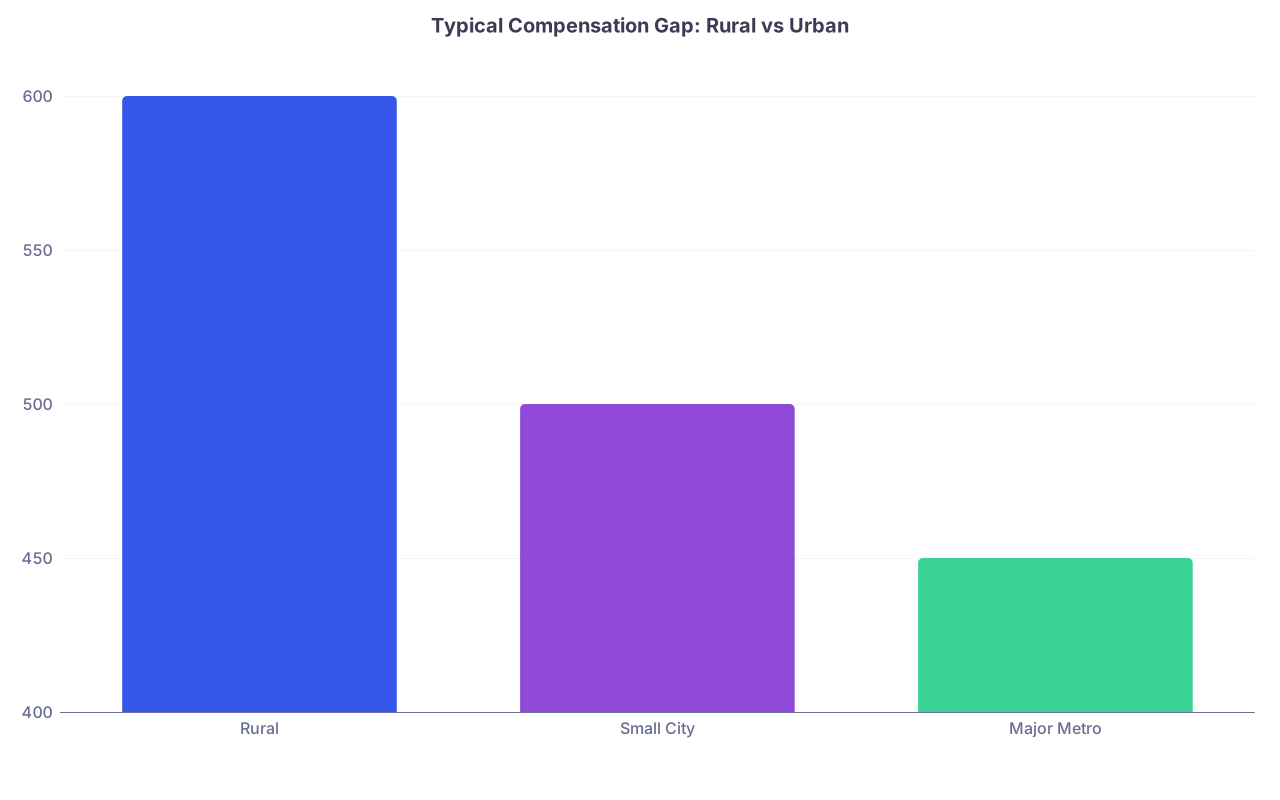
| Category | Value |
|---|---|
| Rural | 600 |
| Small City | 500 |
| Major Metro | 450 |
Think of those numbers as “normalized” to a high-earning specialty (Cards, GI, Ortho) in thousands per year. Real ranges vary, but the pattern does not:
- Rural and micropolitan: highest pay, most leverage, worst lifestyle flexibility.
- Mid-size cities / regional hubs: strong pay, better balance, still decent leverage.
- Major metros: more prestige, more competition, lower pay relative to RVUs, better lifestyle options outside work.
Where your rural background comes in: credibility.
You are instantly more believable when you say, “I’d be happy in a town of 20k if the job is right,” compared to a classmate who’s only ever lived in NYC or LA and talks about “maybe trying rural for a few years.”
Hospitals, groups, and recruiters know who actually stays.
Use that.
How training location feeds into this
There’s a simple geographic flow I’ve seen dozens of times:
- Rural kid → State college → State med school → “Big” city academic residency → Fellowship in larger metro → Practice in mid-size city or back to home-ish region on very strong terms.
The mistake is thinking you must train rural to work rural. You do not. In fact, for high-paying subspecialties, you often should not.
You want academic or high-volume training in urban centers to build marketable skills—then you cash those skills out somewhere slightly smaller than your training city, usually closer to your roots.
So no, you do not stay where you trained just because the hospital dangled an offer. You strategically step “down” in population and “up” in pay and leverage.
Step 2: Pick Specialties Where Geography Actually Moves the Needle
Some specialties get huge geographic pay spreads. Others… not enough to justify living where Walmart is the only evening activity.
If you’re playing the “rural upbringing, urban training, max pay” game, prioritize specialties where geography makes a real difference.
| Specialty | Rural Pay Edge vs Major Metro | Notes |
|---|---|---|
| Orthopedic Surgery | Very High | Strong rural demand, limited supply |
| Cardiology | High | Especially invasive + EP |
| Gastroenterology | High | Procedures + call leverage |
| Anesthesiology | High | OR coverage + stipends |
| Radiology | Moderate–High | Telerad + local shortage |
| General Surgery | High | Bread-and-butter, call heavy |
If your goal is “highest paid specialties,” and you’ve got a rural background, the smartest play is:
- Train in a high-powered urban program.
- Choose a procedure-heavy, revenue-dense field.
- Then sell those skills to a smaller market with real need.
I’ll be blunt: picking something like derm or ophtho for geographic leverage is less efficient. They already pay well, but geographic spread is not as dramatic compared to ortho, GI, cards, gas, or general surgery.
Step 3: Use Your Rural Upbringing To Get Into the Right Training
Do not undersell your geography in your applications. It is an asset.
Programs in big cities like hearing: “I’ve worked hard, came from a small farming town, I’ve seen lack of access, I want high-level skills so I can bring them back to underserved areas.”
Direct translation in faculty brains: motivated, grounded, less entitled, might actually work hard, may be a pipeline to outreach / satellites.
You should:
- Explicitly mention rural background in ERAS personal statement and interviews.
- Tie it to resilience and patient communication, not just “I like cows and quiet.”
- Frame your long-term vision as: “I want academic-grade skills, but I know I likely won’t live in Manhattan forever. I see myself eventually in a mid-size or smaller community.”
That gives you two advantages:
- Urban academics like the mission talk.
- Future rural / regional employers see you as “one of us,” not a flight risk.
You don’t have to tattoo “I’m coming back rural” on your forehead. You just have to be believable that you’re open to it long-term.
Step 4: Train Urban, Practice Smaller—But Don’t Jump Too Small Too Fast
Here’s where people screw this up:
- They finish fellowship in a major metro.
- A recruiter calls with some town of 7,000 in the middle of nowhere offering insane money.
- They sign a 5-year contract with terrible call, no partners, and no exit strategy.
Do not do that.
Instead, think in stages.

| Step | Description |
|---|---|
| Step 1 | MS4 |
| Step 2 | Residency in major metro |
| Step 3 | Fellowship in strong program |
| Step 4 | 1st job in regional hub or mid-size city |
| Step 5 | Stay and build equity |
| Step 6 | Leverage experience to negotiate rural or semi-rural job on better terms |
| Step 7 | Happy and well paid |
Stage 1: Big-city training
You go where the volume and complexity are. That’s usually academic medical centers or big private groups in metros.
Stage 2: First job in a regional hub / mid-size city
Population maybe 100k–500k. This is the sweet spot.
Why?
- Pay is significantly better than the major metro.
- You’re still close enough to airports, schools, and some “life.”
- After a few years, you have actual private practice or employed track record and real RVU numbers.
Stage 3: Decide: stay in that mid-size place, or push more rural
Here’s the trick: once you’ve proven you can produce, you’re no longer an untested fellow. You can then step into a smaller market (if you want) with much better leverage.
You say things like:
“I’m not signing 5 years with no partnership track and unlimited call. Here are my numbers from the last 2 years. This is what I generate. Here’s what I need.”
That’s how you use geography instead of letting geography use you.
Step 5: Negotiate Like Someone Who Can Actually Live There
If you grew up in a town of 3,000, you have a card no one else can play: you’re not bluffing when you say you’d live in a town of 30k.
Recruiters can smell bluffing.
Most residents from urban backgrounds say, “I’m open to smaller communities.” Then they ask about 5-star restaurants and international schools. They’re not staying. Employers know.
You, on the other hand, can say:
“I grew up in a town of 5,000. I know what I’m getting into. I’m fine with a smaller community—if the job respects my time and pays appropriately.”
Then you negotiate from there.
Here are the levers to pull in rural or semi-rural offers:
- Base salary and guarantees: Push hard. You’re solving a serious access problem for them.
- Call structure: Don’t accept open-ended “shared call” with no numbers. Ask: “How many nights per month? How many weekends?”
- Exit ramp: Shorter initial contract or a reasonable out (2–3 years, not 5–7 tethered with massive clawbacks).
- Support: Are there APPs? Other specialists? Or are you a lone wolf doing everything?
- Community fit: If you’re the only specialist in your field within 100 miles, you must vet this carefully. You will drown if the system is broken.
Your rural upbringing lets you honestly say, “I’m not terrified of a Walmart-and-Tractor-Supply social life.” That alone can translate into $50–150k more per year versus someone requiring downtown living within 15 minutes of a Whole Foods.
Use that to get both money and terms that protect you.
Step 6: Target Regions Strategically, Not Sentimentally
Here’s where a lot of rural-born students mess up: they try to go back to their exact hometown or tiny region right away. Emotionally understandable. Financially and professionally limiting.
Being “from the country” is portable.
You can sell that to:
- Rural Midwest even if you grew up in rural Appalachia.
- Central Valley, CA even if you grew up in rural Texas.
- Semi-rural Pacific Northwest even if you’re from rural Georgia.
Your pitch is the same:
“I understand small-town culture. I don’t need a nightclub. I do need a good practice environment and fair compensation.”
Where you should be picky is:
- Hospital / group stability: Avoid the 25-bed hospital that’s on its third ownership in five years.
- Proximity to a real airport: Two hours to a decent airport is fine. Four-plus hours gets old.
- Spouse / family situation: If your partner hates rural life, do not lie to yourself. It will blow up.
Instead of laser-focusing on your exact home county, think in bands:
- “Within 2–4 hours of a major metro.”
- “Within 1–2 hours of an academic center I can refer to.”
- “Inside a state with no income tax” if you really want to squeeze every dollar (Texas, Florida, Tennessee, etc.).
Your rural upbringing makes you credible in any of those small-town or mid-size regions, not just your home ZIP code.
Step 7: Use Telemedicine, Outreach, and Hybrid Models To Get Urban Perks With Rural Pay
This is where things really tilt in your favor now compared to 20 years ago.
Lots of high-paying specialties now function in hybrid geographic models:
- Teleradiology.
- Tele-ICU.
- Virtual follow-ups for cards / GI / endo.
- Outreach clinics 1–2 days a week in smaller towns with procedures done back in the hub.
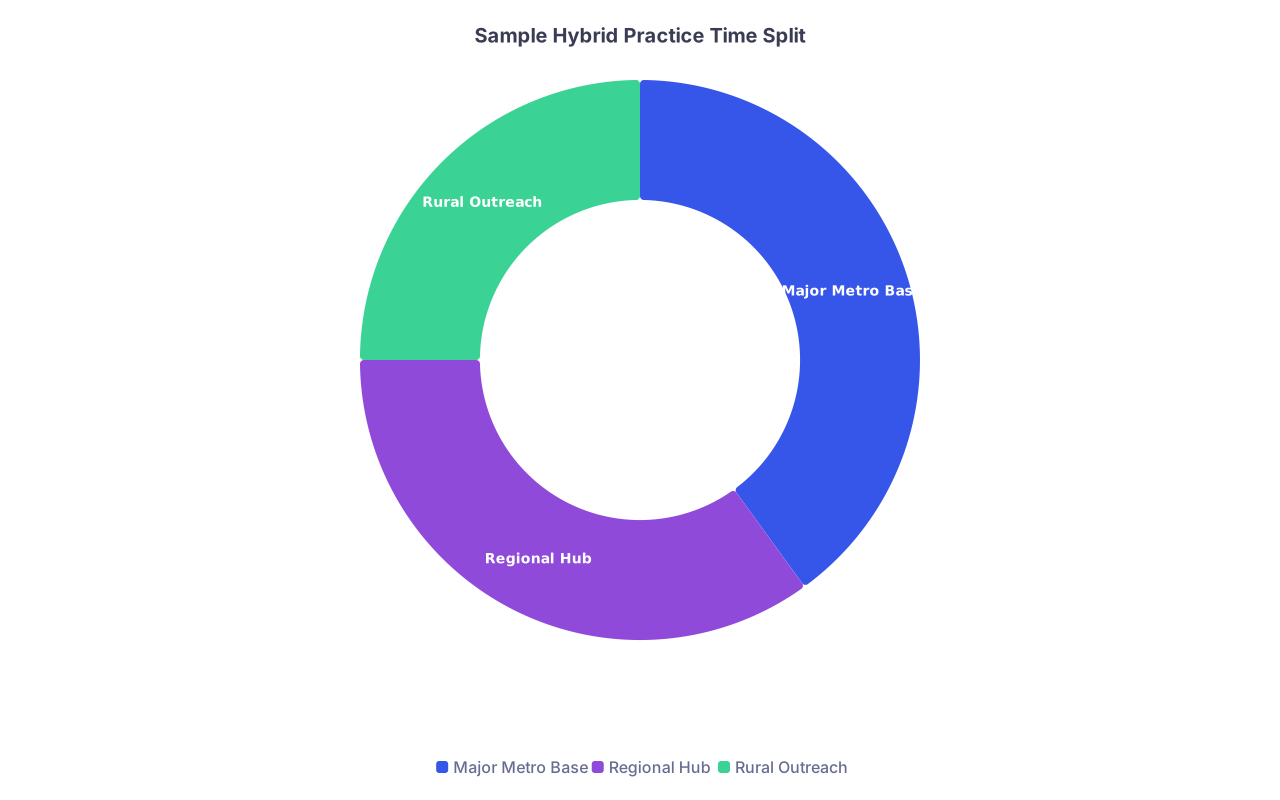
| Category | Value |
|---|---|
| Major Metro Base | 40 |
| Regional Hub | 35 |
| Rural Outreach | 25 |
If you train in a big city fellowship and join a major group, you can sometimes angle into roles like:
- Living in a mid-size city but covering a rural satellite for 1–2 days per week. The rural time is where the group makes outsized profit, which can justify higher comp.
- Doing outreach clinics in your home region periodically while maintaining a high-resource practice base in a larger town or city.
- For radiology, living basically wherever you want and reading for a group that covers rural hospitals with high volumes and decent pay.
How your rural background helps:
- You already understand the travel, the culture, and the expectations.
- You can pitch yourself as “the person who can build and maintain those outreach relationships,” which is valuable to big city-based groups.
Step 8: Start Aligning Your CV With This Strategy Now
You’re not going to magically convince people you’re serious about rural or semi-rural life if your CV screams “Manhattan or bust.”
You do not need to overdo this. You just need some consistent signals.
Things that help:
- Clinical rotations at rural or critical access hospitals during med school or residency.
- A short rural elective in residency, even if you know you’ll train fellowship in a city.
- QI or research projects about access to specialty care in rural communities.
- Talks or presentations on transfer patterns, delays in care, or procedural access for rural patients.
None of that locks you into working rural forever. But when a recruiter asks, “Why here?” you’re not stuck saying, “Uh, the money is good.” You can say:
“I’ve seen first-hand what happens when patients drive 2–3 hours for [cardiology / GI / ortho]. I trained in a high-volume center so I could bring that level of care to a place like this—with better access and outcomes.”
That hits completely differently.
Step 9: Watch the Lifestyle Tradeoffs With Clear Eyes
I’m not going to romanticize rural or semi-rural practice. Sometimes it’s lucrative and fulfilling. Sometimes it’s a pressure cooker with no backup.
You must ask brutally concrete questions before you sign anything:
- Who is on call with me? Names. Not just “three other surgeons.”
- What happens if I want to leave? Non-compete radius? Tail coverage costs?
- Do you actually have the patient volume they’re quoting? Can I see real numbers?
- How many docs have left in the last 5 years, and why?

Your rural background might make you more tolerant of quiet towns. That doesn’t mean you should tolerate bad contracts, abusive call, or dysfunctional systems.
The ideal setup if you want max pay using geography:
- You live in a mid-size city or large town your family can actually enjoy.
- You work in a high-need market with above-average comp.
- You either:
- Stay there long-term and build equity, or
- Use that as a springboard to negotiate a truly top-dollar role that is even more rural but on your terms.
Step 10: Example Paths That Actually Work
Let me spell out a few realistic, money-maximizing paths for someone with rural roots and urban ambitions.
Example 1: Rural-born → Cards
- Grew up in rural Iowa.
- Med school at University of Iowa.
- IM residency at a big urban academic center (say, Chicago).
- Cards fellowship at another major academic brand.
- First job: invasive non-interventional or interventional in a 250k-population city, strong hospital system.
- Pay: Already significantly higher than the city you trained in.
- After 3–5 years: Recruiters from smaller towns in Iowa / surrounding states come calling with $100k+ more per year, leadership roles, and better call structure. Now you choose from a position of strength.
Example 2: Rural-born → Ortho
- Grew up in small-town Alabama.
- Med school at UAB.
- Ortho residency in a big city.
- Sports or joints fellowship in a major metro with strong volume.
- First job: Private group in a regional hub (population 300k–500k), building your case log, patient base, reputation.
- Salary + bonus: very strong.
- Long-term: Either become partner in that group or spin off to a smaller market nearby with a screaming need for joints or trauma coverage, using your background to reassure them you won’t bolt.
Example 3: Rural-born → Radiology, Tele-heavy
- Grew up in rural New Mexico.
- Med school at UNM.
- DR residency in a city.
- Fellowship in body or neuro at a top program.
- First job: Large telerad / hybrid group covering rural hospitals across multiple states.
- Live in a mid-sized city with reasonable COL, get paid well for night / high-need coverage.
- Use your comfort with rural hospitals to become the go-to person for those accounts, and negotiate for better shifts and comp.
In all of these, geography is not just “where you happen to end up.” It’s something you weaponize.
When You Should Not Play the Rural Card For Pay
A few scenarios where chasing rural dollars is dumb:
- Your partner or kids are absolutely miserable outside cities.
- You strongly prefer a subspecialty that barely exists outside large metros (e.g., very niche academic stuff).
- You know deep down you hate small-town dynamics—gossip, being recognized everywhere, no anonymity.
If that’s you, stop fantasizing that you’ll gut it out “for the money.” You probably won’t. Or you’ll burn out fast and then take a worse job later just to escape.
In that case, your play is different:
- Train in a high-pay specialty.
- Choose a moderate-cost-of-living city.
- Maximize within-urban geography (e.g., suburbs vs city-center, hospital-employed vs private group) instead of jumping to true rural.
Short Version: How to Actually Use Geography as a Rural-Born Future Specialist

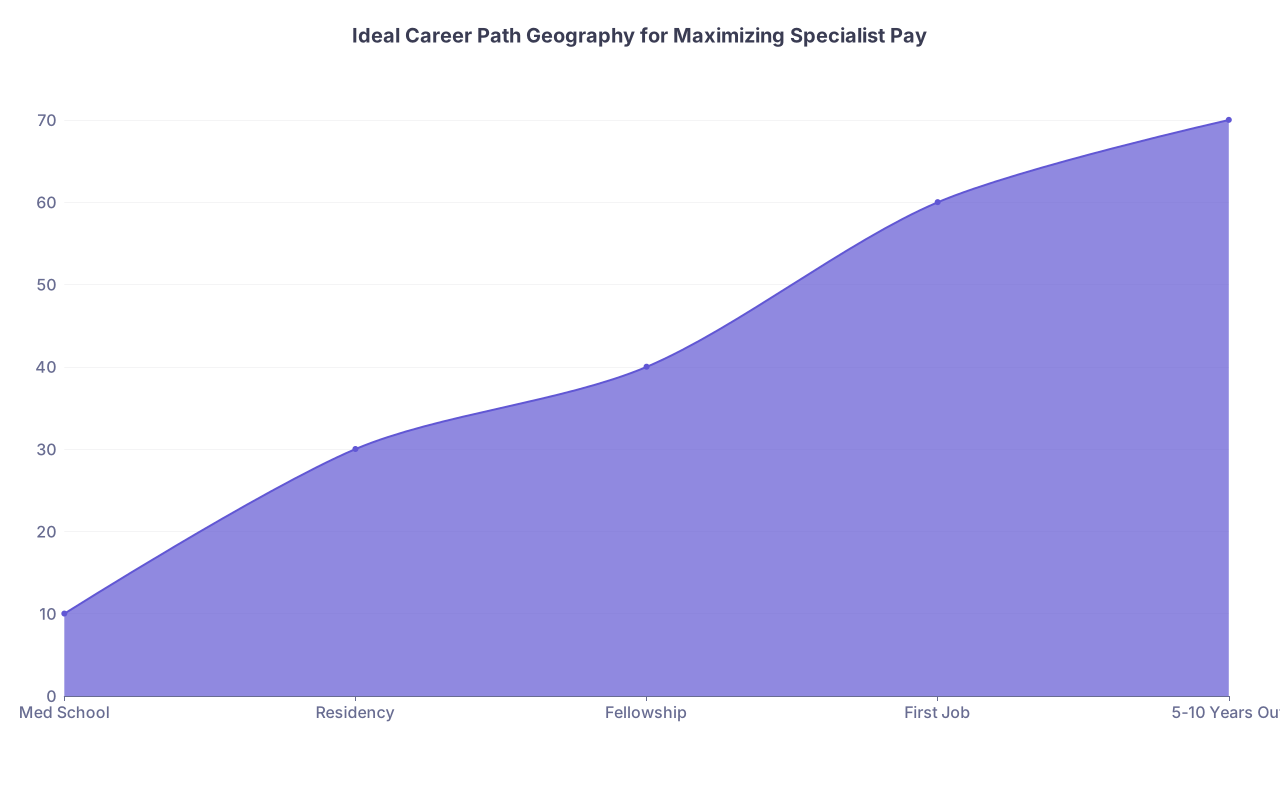
| Category | Value |
|---|---|
| Med School | 10 |
| Residency | 30 |
| Fellowship | 40 |
| First Job | 60 |
| 5-10 Years Out | 70 |
Two to three key points to walk away with:
Train big, practice smaller. Use major metro residencies and fellowships to become a high-skill specialist. Then cash that skill set out in a regional hub or semi-rural area where your rural background makes you believable and your pay jumps.
Leverage, don’t chase. Don’t panic-sign the first tiny-town megabucks offer. Build experience in a mid-size market, get real numbers, and then negotiate from strength—especially on call, contract length, and exit options.
Your rural story is currency. Use it openly in applications, interviews, and job talks. It tells programs and employers you’re resilient, grounded, and genuinely open to smaller markets. That story, paired with a high-earning specialty, is how you turn “rural upbringing, urban goals” into top-tier specialist pay instead of just nostalgia.