

It’s 1:30 a.m. You just finished a brutal call, you’re eating cold leftovers in the resident lounge, and your co-resident casually says: “Honestly, in 10 years, half of what radiologists do is going to be automated.”
You’re planning on applying to radiology. Or derm. Or anesthesia. Or ortho. One of the “highest paid specialties” that everyone talks about on SDN and Reddit like they’re lottery tickets. And now your brain is spiraling:
“What if I spend a decade training for this… and by the time I’m attending, AI reads the scans, writes the notes, does the billing, and I’m just… there? What if the income that made this specialty ‘worth it’ disappears?”
You’re not crazy for thinking this. You’re not the only one either. I’ve watched people drop radiology because of AI fear. I’ve heard anesthesia applicants say, “CRNAs and machines are going to replace us.” I’ve heard dermatology hopefuls worry about apps that diagnose rashes better than humans.
Let’s walk straight into the nightmare scenario you’re imagining and actually pull it apart.
Where AI Is Actually Coming for High-Pay Specialties (And Where It’s Not)
The scary part is that the threat isn’t made up. There is real tech pressure on the highest paid specialties.
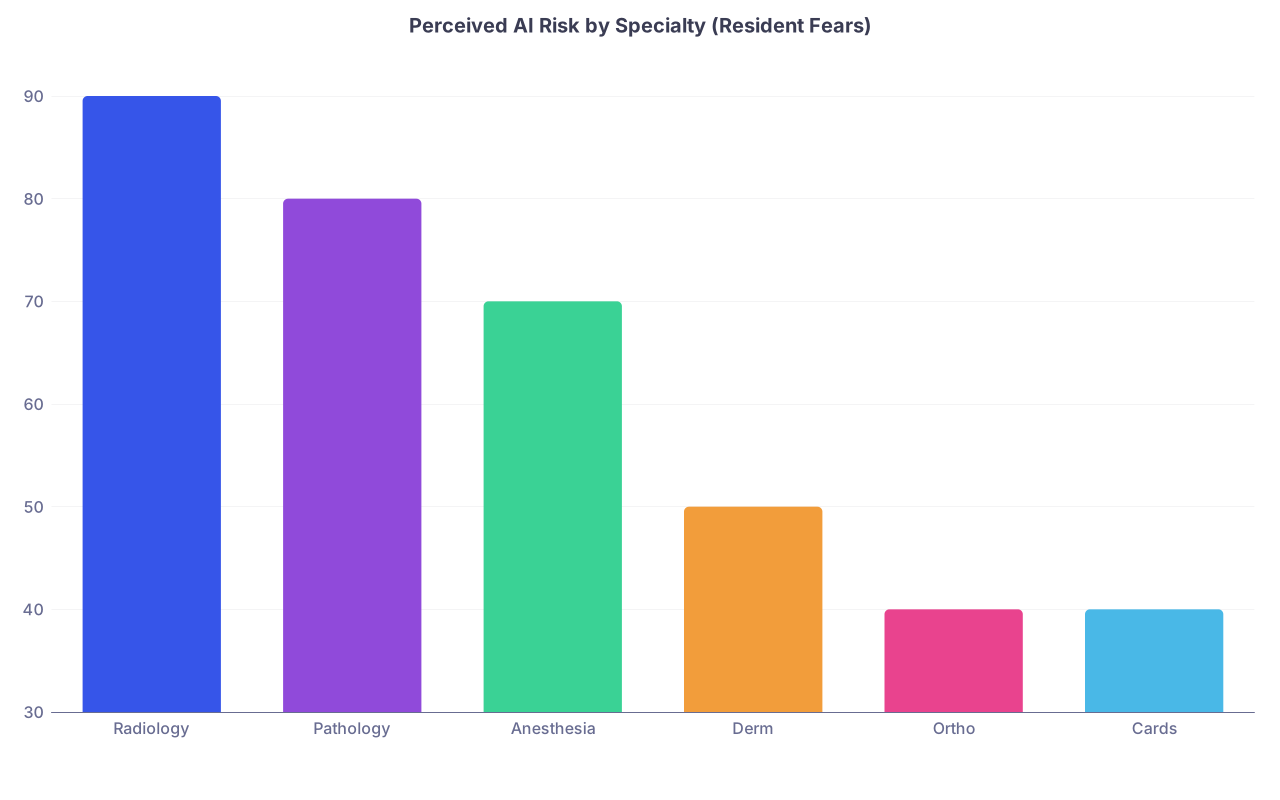
| Category | Value |
|---|---|
| Radiology | 90 |
| Pathology | 80 |
| Anesthesia | 70 |
| Derm | 50 |
| Ortho | 40 |
| Cards | 40 |
These aren’t exact numbers from a study; this is basically what you hear over and over in call rooms and Reddit threads.
Here’s the rough reality:
Radiology
Everyone says: “AI will read all the scans.”
Reality: AI is very, very good at narrow tasks: detecting nodules, flagging bleeds, measuring volumes. What it’s not good at yet is:
- owning the final integrated read for messy, complex patients
- deciding what follow-up is appropriate
- handling medico-legal risk and communicating with the team
Programs are already shifting training to emphasize being the doctor of imaging, not “human OCR for CTs.” But yeah, radiology will absolutely change.
Pathology
Slide scanners, digital pathology, AI detection of malignancy – it’s all exploding. Path is going to get more centralized. But when a case is ambiguous, or the AI output conflicts with the clinical story, someone needs to decide what actually goes in the report. That “someone” still has an MD and a board cert.
Anesthesia
Machine-controlled sedation, better monitors, decision-support tools, expanding CRNA scope – it’s all real. But in every real disaster story I’ve heard (unanticipated airway, catastrophic hemorrhage, bizarre reaction in the OR), it’s an anesthesiologist who stabilized the situation, not step 3 in a flowchart.
Derm
There are apps that can flag suspicious lesions. Telederm is growing. But:
- Liability still lands on a human
- Cosmetics, procedures, complex rashes, systemic disease… not exactly a selfie-app domain
Income mix might shift: maybe less volume of low-level visits, more complexity and procedures.
Ortho, Cards, GI, etc.
Robots, advanced imaging, fancy decision-support. But these fields are inherently procedural plus judgment-heavy. Tech tends to augment the person doing the work more than erase them.
Here’s the painful part: none of this means “no risk.” It means the risk is different from your catastrophic brain version. Less “you’re suddenly unemployed.” More “the easy, repetitive, high-RVU stuff gets automated or devalued.”
The Actual Nightmare You’re Afraid Of
Let’s say the worst-case in your head plays out:
You match into some ultra-competitive, high-paying specialty because you’re chasing both passion and financial security. You grind for a decade. Loans pile up. You finally become an attending and then:
- Reimbursement changes bash your bread-and-butter codes
- AI eats the simple cases that used to pad the schedule and income
- Hospital systems consolidate and use tech to squeeze physician pay
- Midlevels plus decision-support tools take on a bigger and bigger chunk of what used to be “your” work
So now you’re standing there at 40 with $350k in loans and suddenly the “radiologist making 600–800k reading high-volume plain films and basic CTs” model doesn’t exist in your area anymore. Or the “anesthesia attending doing straightforward cases in a care team and racking up hours” is now 70% CRNAs + algorithms with one supervising MD on-site.
That’s the nightmare, right? Not “no job,” but “you anchored your entire life and debt on a salary level that shifts under your feet.”
You’re not crazy to worry about this. The system already does this without AI. Tech just accelerates the chaos.
What Tech Historically Does to High-Pay Work (Honest Version)
AI feels “new,” but the pattern isn’t.
Think about what’s already happened:
- Interventional cardiology changed with better stents, imaging, and non-invasive testing. Cath labs didn’t vanish; their case mix changed.
- Laparoscopic and robotic surgery didn’t erase surgeons. It changed what counted as “standard” vs “specialized.”
- EMRs… okay, they mostly just made everyone miserable. But they shifted who could do what documentation and how billing works.
Tech almost never says, “Everyone go home, the robot’s got it.” It quietly does this:
- Automates the low-skill, high-volume, predictable tasks
- Compresses reimbursement where “anyone with the tool” can do the job
- Increases productivity expectations (“Now you can read 2x the scans, right?”)
- Expands the playing field so less-trained people + tech can cover more of the easy ground
- Leaves a smaller but more specialized, more responsibility-heavy, more risk-heavy core for physicians
That’s… not fun. But it’s different from “you picked radiology so now you’re extinct.”
The Hard Question: Are You Choosing a Field or a Paycheck?
This is where I’m going to be a little blunt.
If the only reason you’re picking a high-paid specialty is the income graph you saw on Medscape, then yes – AI and tech should terrify you. Because income rankings can and do shuffle. Dermatology, orthopedics, radiology, anesthesia, GI, cards – any of them could take a relative hit.
But if you’re picking a field because:
- You actually like the type of thinking it requires
- You don’t hate the daily grind you’ve seen on rotations
- You’re okay with evolving how you practice over the next 30 years
Then tech becomes a problem to manage, not a reason to bail.
The worst situation I’ve seen in real people:
Someone picks a field they don’t enjoy, only for money. Tech and policy changes cut the upside. Now they’re stuck in a job they don’t like that doesn’t even pay what they were bargaining for. That’s the real trap.
How to Future-Proof Yourself Inside a High-Pay Specialty (As Much As You Can)
You can’t totally “future-proof” anything. But you’re not helpless either. There are parts of each specialty that are much harder to commoditize or automate.
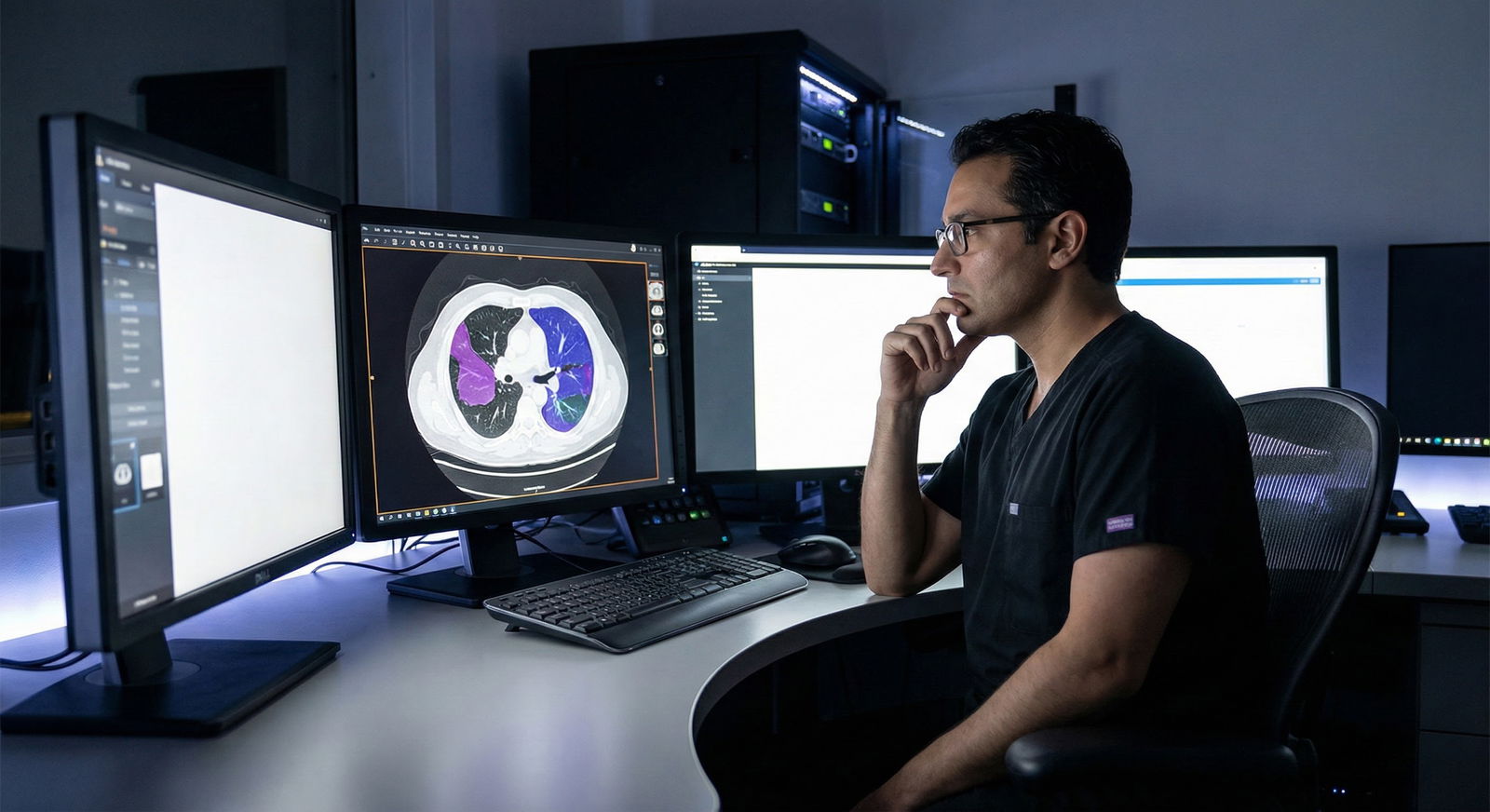
Let me walk through the pattern you should be looking for, not just for one field but across the “highest paid” ones.
1. Within your dream specialty, aim for the least automatable niches
Rough examples (not exhaustive, but you get the idea):
| Specialty | Harder to Automate | Easier to Automate |
|---|---|---|
| Radiology | Complex oncologic imaging, IR, tumor boards | Simple CXRs, screening mammograms |
| Anesthesia | High-risk cardiac, transplant, ICU integration | Routine outpatient MAC cases |
| Derm | Complex derm-rheum, procedural/cosmetic | Basic acne/rash refills and telederm |
| Pathology | Complex heme path, molecular diagnostics | Routine biopsies, screening cases |
You don’t have to decide your micro-niche in MS3. But be aware: if all your imagined income comes from the easiest, most repetitive stuff, that’s exactly what tech will target first.
2. Become the person who works with the tech, not against it
This sounds like cheesy LinkedIn advice, but it’s real. Programs are already noticing which residents:
- Learn how AI tools actually work instead of dismissing them
- Can sanity-check an algorithm instead of blindly accepting it
- Can explain AI output to colleagues and patients in actual human language
I’ve seen departments informally route complex or AI-flagged cases to attendings they trust to understand the tool and its limits. You want to be that person one day.
3. Don’t rely on “RVU treadmill + nothing else”
Everyone in high-paying fields talks a big game about side gigs and “multiple income streams.” Most never do anything because they’re drowning in work. But you don’t have to build an empire to give yourself a safety cushion.
Inside your specialty, there are “non-RVU” lanes that matter:
- Admin roles (chief of service, medical director, quality lead)
- Program development (starting a new service line, clinic, or procedure offering)
- Teaching, curriculum design, or fellowship leadership
- Clinical informatics, workflow design, or AI integration work
- Research with real funding ties to industry or institutions
People doing those things are harder to squeeze out. They’re also the ones in the room when leadership makes annoying decisions.
Cold Financial Reality: What If Pay Just… Drops?
Let’s punch you in the fear center and then pull back.
What if:
- Radiology drops from “average 500–600k” in your region to “300–350k” over 15–20 years because of AI + reimbursement cuts?
- Anesthesia shifts more work to CRNAs and algorithms, and the MD compensation band narrows?
- High-end derm profits get dented by telemedicine and commoditized cosmetic chains?
That sounds awful when you’re doing the mental math against 300–400k of loans.
But compare that to:
Primary care jobs at 200–250k with 20-minute visit slots, or academic pediatrics at 170–220k with extra research and admin demands.
I’m not saying “don’t worry, you’ll always be rich.” I am saying a couple things out loud:
- The spread between specialties might narrow, but the highly trained, complexity-handling specialist isn’t becoming minimum wage.
- Your personal spending and debt choices will matter way more than the difference between 350k and 550k in many cases.
- The real catastrophe is training a decade for something you hate, not losing the top 20–30% of hypothetical future income.
If your brain is stuck on “what if it goes down,” sit with the more honest version:
“Can I still have a stable, upper-middle or upper income, pay my loans, and not feel utterly miserable in this field even if it’s less lucrative than it is right now?”
If your answer is “yes, I’d still rather do this than something else” – that’s a strong sign.
Actionable Stuff You Can Actually Do Now (While You’re Freaking Out)
You can’t control CMS policy or venture capital in the AI-health space. Here’s what you can do during med school / early residency:
During electives, watch what attendings actually complain about
Listen for: “This used to pay more,” “Now admin wants us to use this tool,” “We’re getting squeezed on X.” That’s where the system is already shifting.Ask them bluntly: “If you were me, would you go into this specialty again, knowing tech is changing things?”
Some will say “no.” Take that seriously. Ask why. Is it tech, burnout, admin, or something else?Learn at least the basics of how clinical AI/automation actually works
Enough to know when someone is overselling its capabilities. There’s a huge difference between “model performance on a curated dataset” and “real-life messy patients at 3 a.m.”Build a tiny bit of optionality
Not a second career. Just options. That could be:- Basic exposure to informatics or QI
- Some familiarity with your specialty’s business side
- One or two mentors who think about the future, not just reminisce about the 1990s RVU glory days
Mentally separate “field is evolving” from “I made a mistake”
Every specialty is going to change. If your criterion is “find a field that doesn’t change,” you’re going to be paralyzed forever.
The Part You Don’t Want to Hear But Need To
If you need a 100% guarantee that your dream field will still pay top 5 in 20–30 years, you will never pick a specialty. There is no guarantee.
Medicine in general is moving toward:
- More control by big systems
- More tech and “decision support” in everything
- More pressure to see more, do more, document more
- More squeezing of anything that looks like “easy money”
Going into a high-paying field is not “risky” compared to the rest of medicine. It’s just more visible risk because the numbers are bigger and the fall sounds scarier.
The real decision is uglier and simpler:
“Am I willing to spend the next 30 years doing this kind of work, with these kinds of patients, in a system I know will keep changing – even if the pay is good-but-not-insane instead of insane?”
If that answer is no, walk away. If that answer is yes but you’re stuck in the doom-scroll of “what if AI ruins everything,” then you’re not facing a tech problem. You’re facing anxiety that wants a perfect certainty you’ll never get.
FAQ: The Six Questions Everyone Is Too Afraid to Ask Out Loud
1. Should I avoid radiology or anesthesia specifically because of AI?
No, not automatically. Avoid them if you don’t like the core work: staring at images for hours, or living in the OR with unpredictable hours and high-stress moments. If you like the work, choose programs that are actually engaging with AI and system changes instead of pretending they don’t exist.
2. Is it safer to pick a lower-paid specialty that “AI can’t replace”?
“Safe” is fake. Primary care is being eaten by telemedicine, retail clinics, and midlevel expansion. Psych has tele-psych and digital therapeutics creeping in. There’s no specialty immune to disruption. Don’t pick based on fear. Pick based on what you can tolerate doing day after day, then be intentional about how you practice within that field.
3. What if I’m already in residency and realizing my field might get squeezed by tech?
You’re not trapped. You have options even then: subspecialize into harder-to-automate niches, get involved in admin/leadership, lean into skills that tech doesn’t replicate well (communication, complex decision-making, system-level thinking). In extreme cases, people do retrain, but that’s last-resort. Usually the answer is to pivot within your field, not flee it entirely.
4. Will AI actually take physician jobs, or just change our jobs?
It’ll mostly change them. Some roles may shrink: fewer pure film-readers, fewer humans doing routine pattern-recognition tasks. But medicine is full of ambiguity, risk, and human factors. The physician becomes the one responsible for using and interpreting the AI, not competing with it click-for-click. That’s still a job. A big one.
5. How much should salary factor into my specialty choice given all this uncertainty?
It should factor in, but not dominate. You’re allowed to care about money. You have debt. You want a life. But if you’re choosing between “field I hate that currently pays 500k” and “field I can tolerate that pays 300k,” pick the second. Because tech, policy, and burnout can easily erase that 200k gap, and you’re the one who has to live inside the job.
6. What’s one concrete thing I can do this month to feel less anxious about AI and my dream specialty?
Set up one 30-minute conversation with an attending or fellow in your dream field and ask three things:
- How do you see AI/tech changing your day-to-day work?
- If you were choosing a specialty again as an MS3 today, what would you do?
- What kind of resident or fellow is going to be safest in this field 10–15 years from now?
Write their answers down. You’ll either feel validated in your fear (which gives you clear things to address) or realize your brain has been amplifying half-understood Twitter takes into some apocalyptic fantasy.
Open whatever note app you use and write this sentence at the top:
“Why would I still choose this specialty even if it paid less than it does now?”
Force yourself to answer that honestly today. If you can’t come up with anything beyond money, that’s your real problem to solve, not AI.


