
The honest answer: Observerships rarely generate truly strong LORs on their own—but they can produce usable, helpful letters if you play them right.
Let me walk you through what that actually means and what you should do about it.
The core issue: what makes a “strong” LOR?
Programs don’t care that you have a letter. They care what the letter says and who says it.
A strong US clinical LOR usually has:
Specific, behavior-based examples
“She independently prepared thorough presentations on our inpatient cases, consistently came early to pre-round, and followed up on test results without being asked.”Direct observation over time
The writer saw you work with patients, staff, other learners…not just stand in the corner for two weeks.Meaningful comparison
“Among the 40 trainees I’ve worked with in the last 3 years, he is in the top 10% for clinical reasoning and professionalism.”Credible, relevant signer
A US attending (ideally in your target specialty), program director, clerkship director, or someone recognizable in academic circles.
Here’s the problem: most observerships don’t give the attending enough data to write that kind of letter.
They see you:
- For a short time
- With no real clinical responsibility
- Often in passive, shadowing-like roles
Result: generic LOR.
What observership LORs usually look like (and how PDs read them)
Let me be blunt: many PDs can spot a “pure observership letter” in 10 seconds.
Typical observership-only LOR phrases:
- “Dr. X observed on our service for four weeks.”
- “Due to hospital policy, Dr. X did not provide direct patient care.”
- “She is very enthusiastic and eager to learn.”
- “He will be an asset to any residency program.”
No specific cases. No concrete achievements. No sense of how you work under pressure.
How PDs translate that:
- “I barely know this person.”
- “I’m saying nice but safe, generic things.”
- “I can’t truly vouch for their clinical performance.”
Does that mean the letter is useless? Not necessarily.
Does it mean that letter alone will carry your application? No.
Pros: What observership-based LORs can do for you
Let’s be fair. Observership LORs have real value when used correctly.
1. They prove US clinical exposure
For IMGs, some programs basically require evidence that you’ve seen US medicine:
- US documentation style
- Interdisciplinary rounds
- EMR use
- Patient-centered communication norms
Even a generic observership letter:
- Confirms dates
- Confirms specialty
- Confirms a real US hospital attachment
For some community programs, that’s enough to clear the “USCE” checkbox.
2. They can show professionalism and work ethic
If you’re intentional, an attending can still comment on:
- Your punctuality
- Your preparation for rounds
- How you read about patients overnight
- How you interacted with staff, nurses, and other learners
That’s not trivial. Professionalism red flags are a huge concern for PDs. A letter saying “no red flags, very dependable” does have weight.
3. They can help in less competitive specialties and programs
For:
- Community internal medicine programs
- Some family medicine programs
- Some prelim/TY spots
A decent observership LOR from a US attending is far better than:
- A weak letter from your home institution
- A non-clinical letter that says nothing meaningful
Is it enough to match at MGH or Mayo? Not by itself. But it can get you on the rank list at a decent community program.
4. They can be a door opener for the next step
Strong observership behavior →
Attending trusts you →
They recommend you for:
- A hands-on externship
- A research position
- A sub-I-like experience
Those later experiences can generate the truly strong letters you need. The observership is the first brick, not the whole wall.
Cons: Why observerships alone usually can’t generate powerful LORs
Let’s talk about the limitations that almost every observership faces.
1. Limited responsibility = limited content
Most observership policies:
- No orders
- No notes
- No direct patient care
- No independent decision-making
So what can the letter writer say?
- You watched
- You asked questions
- You were “interested”
That’s not the same as:
- Managing a panel of patients
- Presenting on rounds
- Calling consults
- Writing assessments and plans
Programs know the difference.
2. Short duration and low exposure
Four weeks is not a lot of time. Sometimes you’re split across clinics or teams, or the attending isn’t there every day.
Result:
- Fragmented impression
- No sustained performance
- Not much chance to prove growth
Many LOR templates ask: “How long and in what capacity have you known the applicant?”
“Four weeks observership, no direct patient care” is not a strong answer.
3. Many letters end up sounding identical
PDs read hundreds of IMG letters. The language starts to blur:
- “Hard-working”
- “Very enthusiastic”
- “Motivated to learn”
- “Pleasure to have on the team”
If your letter sounds like the other 80 they read that day, it doesn’t help you stand out.
4. Some programs simply discount observership LORs
A lot of PDs I’ve talked to put observership-only letters in a mental “low evidence” category:
- Useful as a tie-breaker
- Fine as LOR #3 or #4
- Weak as your primary letter backing your specialty choice
Some programs even say it explicitly on their website:
“We prefer letters based on hands-on clinical experience.”
When can an observership actually produce a strong LOR?
It can happen, but you have to engineer it. Here’s when I’ve seen observership LORs actually be impressive:
Longer duration (8–12 weeks) with the same attending or team
Enough time to:- See your consistency
- Watch your growth
- Trust your judgment on low-risk tasks
You act like a sub-I even if you’re not officially one
Without breaking hospital rules, you:- Pre-read charts before rounds
- Prepare your own assessment and plan
- Volunteer to present literature on a case
- Follow up labs and imaging and bring them to the team
Attending sees real clinical reasoning, not just passive presence.
You own a niche or project during the observership
Examples:- You create a concise handout on a guideline that the team actually uses
- You help standardize a checklist for clinic flow
- You help with a small QI project or case report
Now the letter can say:
“She initiated and completed a QI project on X during her observership, demonstrating initiative and follow-through.”You build a real relationship with the writer
You:
- Ask for feedback weekly
- Adjust your behavior based on that feedback
- Tell them your story and goals (why IM, why FM, why neuro)
- Let them see your trajectory, not just your CV
Then when they write the letter, they’re not just describing what they saw. They’re advocating for a person they believe in.
How to squeeze the most LOR value out of an observership
If observerships are what you have access to, fine. Then you need to optimize them.
1. Pick observerships that maximize interaction
Stronger potential for letters:
- Smaller teams
- Outpatient clinics where the same attending sees you daily
- Community hospitals where attendings have more time
Weaker:
- Huge academic teams with rotating attendings
- Highly subspecialized services where you’re invisible
- Super high-volume services with zero bandwidth to teach
2. Behave like a resident from day 1 (within policy limits)
Concrete things to do:
- Show up early, stay a bit late
- Pre-review patient charts and make your own notes (even if they’re unofficial)
- After rounds, pick 1–2 patient issues, read about them, and come back with a brief, focused summary the next day
- Help with non-clinical tasks: organizing sign-outs, cleaning up lists, prepping teaching material
Your goal:
Make the attending think, “If this person had a license, I’d trust them tomorrow.”
3. Make it easy for them to write specifically about you
Near the end of your observership:
Ask explicitly:
“Based on what you’ve seen, would you feel comfortable writing me a strong letter of recommendation for internal medicine residency?”If they hesitate, respect it. Better a weaker writer you don’t use than a lukewarm letter in ERAS.
If they agree, help them:
- Send your CV and personal statement
- Send a brief bullet list: 4–6 specific things you did with them (cases you presented, teaching topics, feedback you incorporated, QI/research efforts)
You’re not writing your own letter—you’re jogging their memory.
Where observership letters fit in a smart IMG LOR strategy
Most competitive IMG applicants end up with something like this:
| LOR # | Source Type | Strength Goal |
|---|---|---|
| 1 | US hands-on clinical | Strongest |
| 2 | US hands-on or hybrid | Strong |
| 3 | US observership | Supportive/Neutral |
| 4 | Home institution or research | Supplemental |
If all three or four of your letters are pure observership, non-hands-on, short duration, generic…you’ll struggle, especially in competitive specialties or locations.
But if:
- You pair 1–2 observership letters with
- At least 1 strong hands-on USCE or research letter
Then yes, observership LORs can absolutely be part of a successful match story.
How PDs actually weigh IMG observership LORs
Here’s the mental model a lot of PDs use, even if they never say it this bluntly:
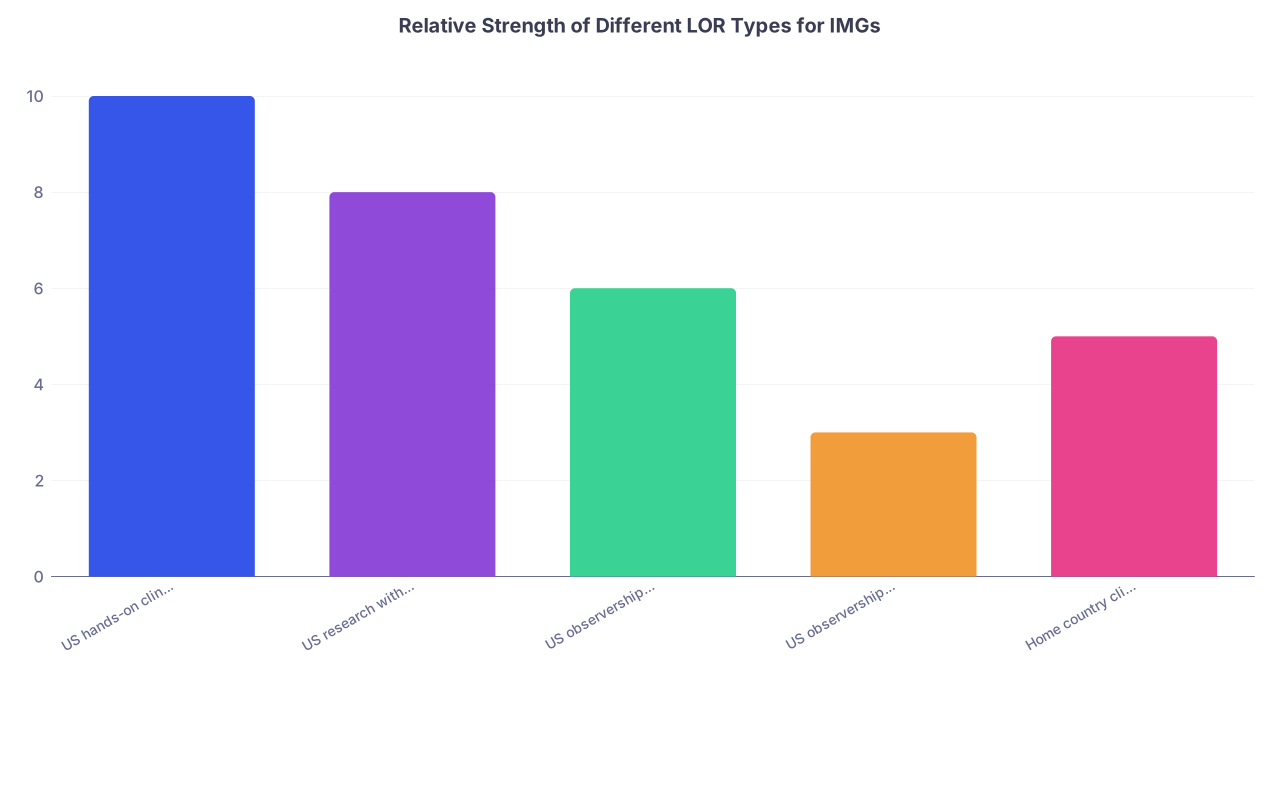
| Category | Value |
|---|---|
| US hands-on clinical | 10 |
| US research with clinical contact | 8 |
| US observership (long, engaged) | 6 |
| US observership (short, passive) | 3 |
| Home country clinical | 5 |
That’s not exact science, but you get the idea:
- Observership letters are not zero, but they’re mid-lower tier evidence.
- Your job is to push them toward the “6” range by being engaged, present, and useful.
Quick decision framework: Is your observership LOR “good enough”?
Use this mental checklist. If you can’t answer “yes” to at least 4 of these, the letter is probably weak:

| Step | Description |
|---|---|
| Step 1 | Observership LOR |
| Step 2 | Likely weak |
| Step 3 | Moderate to strong |
| Step 4 | Generic but usable |
| Step 5 | Moderate letter |
| Step 6 | Same attending for >= 4 weeks? |
| Step 7 | Saw you present or discuss cases regularly? |
| Step 8 | Any specific projects or initiatives you led? |
| Step 9 | Writer knows your story and goals? |
If you’re stuck mostly in “generic but usable,” you need to:
- Treat those as supporting letters
- Hunt for at least one experience that can generate a truly strong LOR
What you should do today
Don’t overthink this.
If you already did observerships:
- Email your attendings and ask if they’d be comfortable writing a strong LOR.
- If they agree, send them:
- Your CV
- Draft personal statement
- Bullet list of specific things you did with them
If you haven’t started yet:
- Stop signing up blindly for any observership.
- Focus on settings with:
- Consistent attending contact
- At least 4 weeks with the same team
- Potential for small projects or teaching involvement
Your goal is simple:
Turn a passive, low-yield observership into an active experience that gives someone a reason to remember you—and then write like they actually knew you.
FAQ: Can IMG Observerships Alone Generate Strong Enough LORs?

1. Can I match with only observership-based LORs and no hands-on USCE?
Yes, it’s possible, but your path is narrower. You’ll be more competitive for:
- Community programs
- Less competitive specialties (IM/FM vs derm/ortho) You’ll need to compensate with:
- Strong scores (Step 2, OET if required)
- A clear, focused application strategy
- Solid home-country clinical letters
2. Is a short 2-week observership worth getting a LOR from?
Usually no, unless:
- You worked closely with that attending daily
- You truly impressed them and they clearly remember you If you have limited letter slots, I’d prioritize:
- Longer observerships
- Any hands-on USCE
- Strong home-institution letters over ultra-short, vague USLORs.
3. What should I ask my attending to focus on in an observership LOR?
Ask them (politely) to highlight:
- Your professionalism and reliability
- Your clinical reasoning during discussions
- Specific cases or teaching points you handled well
- Initiative (reading ahead, presenting articles, helping the team) You’re not scripting the letter; you’re steering it toward concrete examples.
4. Does the prestige of the hospital matter for an observership LOR?
A bit, but not as much as people think. A generic “nice observer” letter from a top-10 place is less helpful than a specific, detailed, enthusiastic letter from a mid-tier community hospital where you were truly known and trusted.
5. Should I get multiple LORs from the same observership?
Ideally no. One strong, specific letter from the attending is enough. Three nearly identical letters from the same short observership look like you don’t have broader support. If you do get a second letter, make sure the writer actually had independent contact with you.
6. Are home-country LORs better than weak US observership LORs?
Sometimes, yes. A detailed, strong letter from:
- Your home PD
- Department chair
- Senior consultant who supervised you closely
…can be more persuasive than a very generic “observed for 4 weeks” US letter. Best case: you use both, but prioritize strength over geography if you have to choose.
7. How many observership LORs is too many?
For most IMG applicants:
- 1–2 observership LORs is fine
- 3–4 observership LORs with no hands-on or strong home letters looks weak
Aim for a mix: at least one letter where you had real responsibility and someone can honestly say, “I’ve seen this person function in a clinical role.”
Now, open your current LOR list and honestly label each one: strong, moderate, or generic. If your best letters are only “generic,” your next move is clear: you need at least one new experience this year that lets someone see you truly work.