
What If I Can’t Afford More USCE? Low‑Budget Options for IMGs
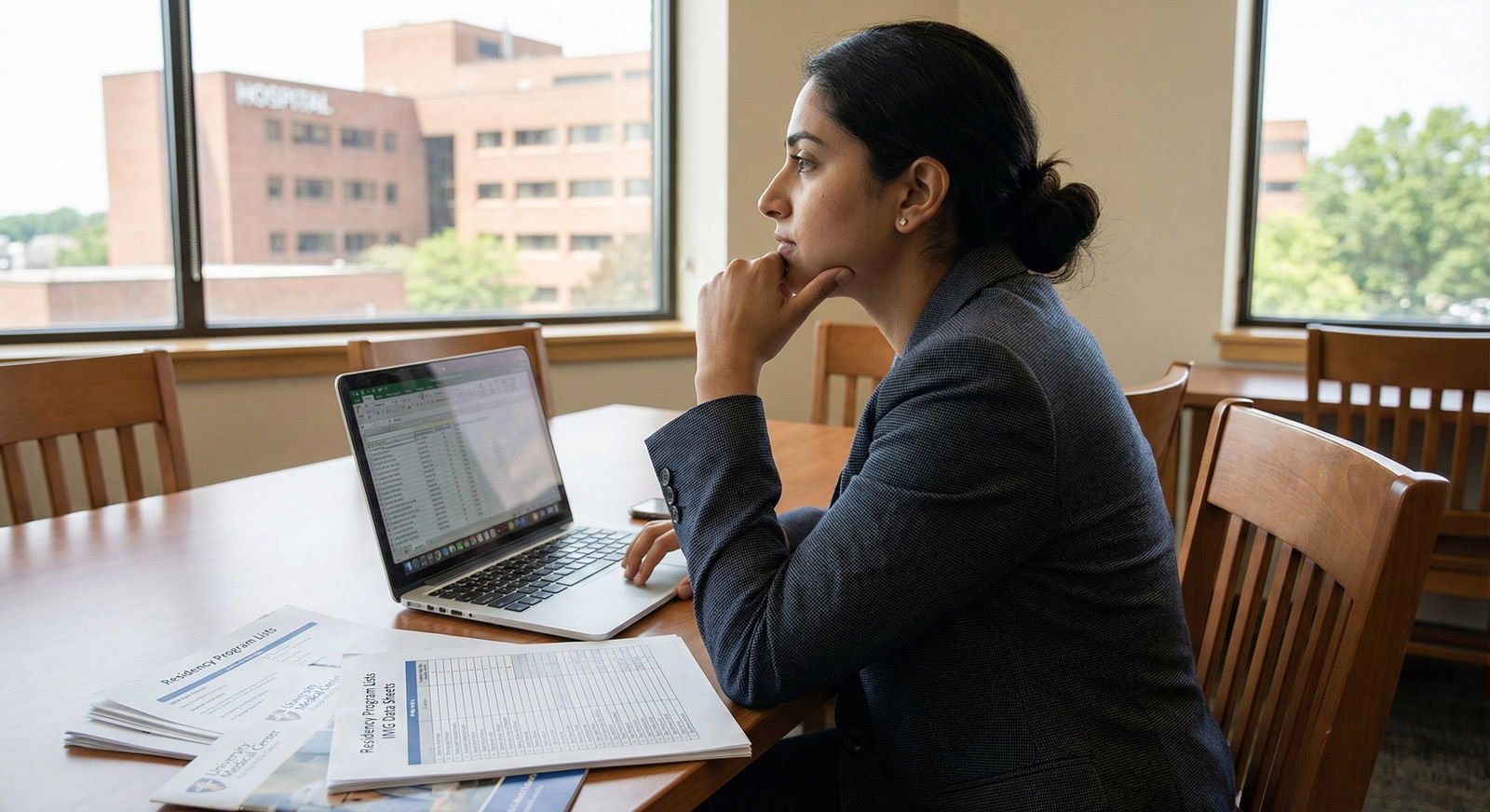
It’s 1:30 a.m. You’ve got your ERAS spreadsheet open on one side, your bank account on the other, and this awful, sinking realization in your stomach: you can’t afford another US clinical experience. Not a $3,000 observership in New York. Not a “famous” $4,500 externship in Chicago. Not even a $500 “online clerkship certificate” without messing up rent or visa fees.
And now your brain is doing that thing.
“What if this ruins my chances?” “What if every other IMG has 6 months of USCE and I have only 4 weeks?” “What if programs see my CV and just…close the file?”
Let me say the hard truth first: money does matter in this process. There are people who buy their way into 4–6 months of US rotations, fancy LORs, and big-name hospitals.
But here’s the other truth: a lot of IMGs match every year with very little formal USCE, or only 1–2 months total, and way less money than the “average” applicant on those online forums that make you feel like trash.
Your problem isn’t that you’re doomed. Your problem is that you can’t afford traditional, high-cost USCE. So the question becomes: how do you build something credible and strategic on a low budget so you don’t look empty on paper?
Let’s break this down like someone who’s scared but still wants a real plan.
Reality Check: How Much USCE Do You Actually Need?
Programs don’t sit there with a ruler measuring the exact number of weeks of USCE. They care more about:
- Do you understand the US system?
- Can you work in a team here?
- Do your LORs say you can function in a US hospital?
- Do you have something recent and relevant, not just random old stuff?
Where it gets confusing is that different programs expect different things.
| Program Type | Common USCE Expectation |
|---|---|
| Community IM (IMG-friendly) | 1–3 months preferred |
| University IM (mid-tier) | 2–4 months, strong letters |
| Top academic IM | 3+ months, strong US research |
| Transitional / prelim med | 1–3 months plus Step scores |
| Less IMG-friendly programs | USCE often “required” |
Is more USCE better? Usually yes. Is less USCE an automatic rejection? No.
If you already have:
- 4–8 weeks of any USCE (even observerships),
- plus maybe some research, remote work, or home-country experience,
you are not starting from zero. You’re starting from “OK, now how do I stretch this into a believable story without going broke?”
Low‑Budget Strategy: What Actually “Counts” As US Experience?
Here’s the key mental shift: you’re not trying to copy the rich IMG who did 6 months at Cleveland Clinic. You’re trying to show:
“I can function safely in a US‑style system, I’m teachable, and I’ve kept myself clinically engaged.”
That can come from a mix of things, not just paid USCE.
1. Squeeze Everything Out of What You Already Have
Most IMGs massively underuse their existing experiences.
Example: You did a 4‑week observership last year in internal medicine.
You can:
- Ask for an updated, more detailed LOR (politely, with a draft if needed).
- Stay in touch with that attending via email, send updates, ask small clinical questions (without being annoying).
- Put that experience on your CV with clear bullet points under Responsibilities and what you actually did.
Instead of:
“Observer in internal medicine department.”
Say something like:
“Participated in inpatient rounds, observed management of complex comorbidities, contributed to literature reviews for case discussions, and presented brief topic reviews to the team.”
Same experience. Better perceived value. Zero dollars.
2. Remote & Telehealth: Not glamorous, but real and cheap
If you can’t physically be in the US, tele-anything starts to matter more.
Things that are actually useful:
Telehealth shadowing / virtual clinics
Some US physicians (especially outpatient primary care, psych, telehealth startups) let IMGs sit in on visits via secure platforms. Is it perfect? No. Is it clinical exposure in a US setting? Yes.Chart review / virtual scribe–type roles
If you can get access to a remote “scribe” or assistant role, even part-time, that is gold. It shows:- EMR exposure
- Understanding of US documentation
- Real clinical workflows
You’d list it as:
“Remote clinical assistant / scribe – US-based telemedicine clinic”
Not fake. Not ideal. But respectable. And cheap.
3. Hospital Volunteering: The underrated, unsexy option
People sneer at volunteering because it’s “not hands-on.” But I’ve seen multiple IMGs match with:
- One short observership, plus
- 6–12 months of consistent US hospital volunteering.
Programs pay attention to:
- Commitment over time (not just 2 weeks to get a letter and run).
- Being embedded in a hospital environment.
- Evidence you can operate around US patients and staff.
Good targets:
- Community hospitals
- Safety-net hospitals
- Free clinics with MD supervisors
- Hospital-based volunteer departments (transport, patient ambassador, etc.)
You’re not doing procedures. But you’re:
- Learning systems
- Hearing sign-outs
- Watching EMR flows
- Seeing how nurses, residents, attendings talk and think
And sometimes, if you’re solid and reliable, volunteering leads to:
- Someone letting you unofficially shadow
- A physician agreeing to write you a letter
- A job offer (scribe, MA, research assistant)
Cost: transport + maybe a uniform. Way less than a $3000 observership.

Research: The “Second Currency” When You Can’t Buy USCE
If you can’t afford endless rotations, research can be your second major asset. Not everyone needs a Nature paper. You just need something that looks serious and US-linked if possible.
Realistic, low‑budget options:
1. Remote research with US faculty
Cold-email strategy actually works sometimes. Sloppy emails don’t.
If you send: “Hi sir/madam, I am IMG seeking research opportunity.”
Delete it. That’s spam.
A better version:
- Short.
- Specific.
- Shows you read their work.
- Offers something concrete (data cleaning, chart review, literature review).
You can aim at:
- Community hospital IM programs with basic QI projects.
- Mid-tier universities outside the usual “famous” ones.
- Faculty you met during a past observership.
Even a small role in:
- A QI project
- A retrospective chart review
- A case report or series can become:
- A poster
- An abstract
- A line on your CV under Research Experience
2. Home-country research with US‑style framing
If US-based research doesn’t work out, home-country research is not useless. Programs care about:
- Can you think scientifically?
- Do you understand evidence?
If you did any of:
- Local audit
- Case report
- Retrospective review
- Small prospective project
Frame it clearly:
- Define your role (not just “member”).
- Show structure: hypothesis, methods, results.
- Mention any poster/presentation, even if local.
Research isn’t a magic key, but it balances a shorter USCE record. It signals you’re engaged and proactive, not just passively waiting.
Side-by-Side: High-Cost vs Low-Budget Path
You’re probably comparing yourself to some imaginary “perfect IMG” in your head. Let’s put it in a table so your brain can calm down a bit.
| Aspect | High-Cost IMG Path | Low-Budget IMG Path |
|---|---|---|
| USCE | 3–6 months paid clerkships | 1–2 months observership + volunteer work |
| Research | 1–2 US institutions, multiple projects | 1 project (US or home-country), maybe 1 poster |
| LORs | 3 US letters from big names | 2 US letters (community) + 1 strong home letter |
| Cost | $10,000–$25,000+ | $500–$3,000 (mostly transport, exams, etc.) |
| Match chances | Higher at competitive sites | Realistic at IMG-friendly/community programs |
Is the low-budget applicant locked out of residency? No. But their target has to be smart: more community-heavy, more IMG-friendly, more realistic about geography and prestige.
Concrete Low‑Budget Moves You Can Make This Month
Let’s say you literally cannot pay for another formal USCE. What now?
Here’s a no-nonsense, low-cost playbook.
1. Fix your ERAS story around what you do have
Stop letting your mind say “I only have 4 weeks of USCE.”
Start framing it as:
- One focused US experience where you:
- Learned US EMR and team structure
- Observed inpatient/outpatient workflows
- Built a relationship with at least one attending
Then:
- Add volunteering
- Add research / QI
- Add home-country practice
and package all of that as:
“Ongoing clinical engagement across settings, with increasing responsibility.”
Story matters more than raw number of weeks. Programs see tons of “6 months USCE” applicants who still sound vague and generic.
2. Push hard for 1–2 more cheap letters instead of more months
If you can’t buy another month, focus on getting more value from the people you already know.
You want:
- 2 US letters is good
- 3 US letters is ideal for many IMGs, but not always necessary if home letter is strong
Write to your existing US contacts like this (rough structure):
- Brief reminder of who you are.
- 1–2 concrete examples of things you did (cases you discussed, patients you followed).
- Updates since you left (Step score, projects, etc.).
- Clear, polite request for a strong residency letter.
Sometimes an attending won’t remember you well. Then yeah, that letter will be weak. But sometimes they do. I’ve seen people surprised by how supportive an attending can be even from a short rotation.
3. Use low-cost credit: online CME, US-based courses, and certificates
No, CME certificates are not a replacement for USCE. But they do support your “I understand US guidelines / I’m staying up to date” narrative.
Look for:
- Free or cheap CME from major hospitals (Cleveland Clinic, Mayo, etc.).
- Online short courses in:
- EKG interpretation
- ACLS/BLS (if affordable)
- Chronic disease management (diabetes, HF)
You’re stacking signals:
“I may not have 6 months of USCE, but I am serious, current, and teachable.”
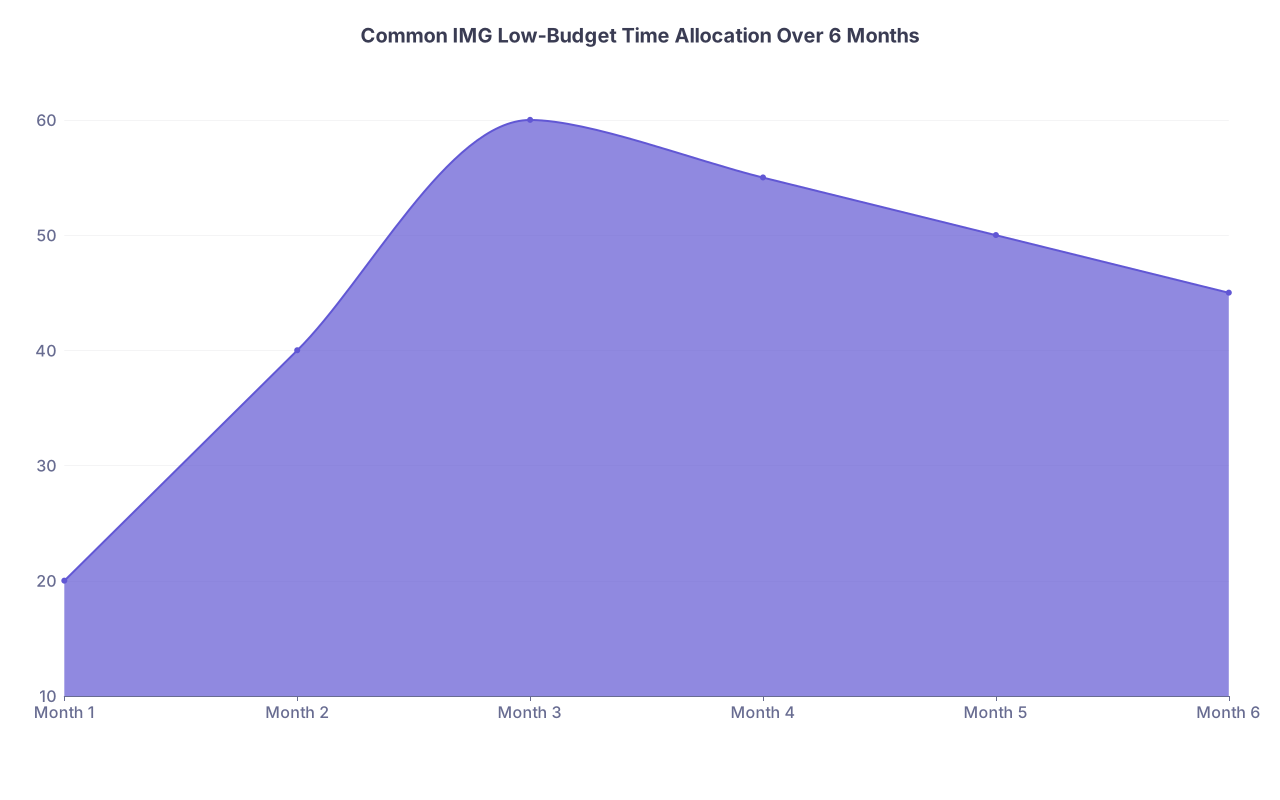
| Category | Value |
|---|---|
| Month 1 | 20 |
| Month 2 | 40 |
| Month 3 | 60 |
| Month 4 | 55 |
| Month 5 | 50 |
| Month 6 | 45 |
(Think of that curve as how much “portfolio value” you can build with consistent low-budget work over time, not just expensive bursts of USCE.)
Targeting Programs When Your USCE Is Light
Here’s where being realistic matters. If you have minimal USCE and no big-name research, and you apply mainly to:
- Top university IM programs
- Super competitive cities everyone wants
- Historically non-IMG-friendly places
Then yes, you’re probably setting yourself up for rejection.
Instead, prioritize:
- Community programs
- Programs that openly mention taking IMGs on their website
- Places where previous residents are IMGs from similar backgrounds
Use tools:
- FREIDA
- Program websites
- Resident bios
You’re trying to find programs where:
- 30–70% of residents are IMGs
- They list “USCE preferred” rather than “required”
- They’re located in less glamorous areas (Midwest, South, smaller cities)
That’s where a 4-week US observership + solid volunteering + research + okay scores actually has a shot.
Dealing With the Fear You’re Behind Everyone Else
Let’s talk about the ugly mental part.
You see some profile online:
- 260+ Step scores
- 6 months USCE
- 5 publications
Your brain: “Why even apply? I’m done.”
This is where you need to remember:
- People who flex on forums are a skewed sample.
- The average successful IMG is not a superstar. They’re solid, not magical.
- Many matched IMGs had:
- 1–3 months of USCE total
- 0–1 publications
- Decent but not insane Step scores
What usually separates the ones who make it from the ones who don’t:
- They aimed wisely (IMG-friendly programs).
- They applied broadly enough.
- Their application looked coherent, not random.
You cannot buy your way out of anxiety with more USCE. There will always be someone with more. At some point you have to say:
“I did as much as I could with the resources I had, and now I’m going to apply like I belong here.”
Because honestly, you do.
FAQ (Exactly 4 Questions)
1. Is it even worth applying if I only have 4–8 weeks of USCE?
Yes, if the rest of your profile is reasonable and you apply smart. If your scores are passable, you have at least 1–2 US letters, and you’re targeting IMG-heavy community programs, it’s absolutely still worth applying. You won’t be competitive at every program, but that’s not the goal. You just need enough interviews from places that actually consider applicants like you.
2. Are observerships basically useless compared to hands-on clerkships?
They’re not useless. Are they weaker than true hands-on experiences? Of course. But a well-used observership with an engaged attending, meaningful discussions, and a specific letter is more valuable than an expensive “hands-on” experience where no one knows your name. Many IMGs have matched with observership-based letters, especially at community and mid-tier programs.
3. Will programs judge me for not doing more USCE if I say I couldn’t afford it?
You don’t need to write an essay about money in your application, but you can subtly frame things. Focus on what you did do: volunteering, research, home-country practice, telehealth. In an interview, if it comes up, a simple, honest line like: “I maximized the opportunities I could realistically afford and stayed clinically engaged through volunteering and research” is enough. Most PDs know this process is brutally expensive.
4. Should I wait another year to save money for more USCE instead of applying now?
Depends. If you have zero USCE, no letters, and weak scores, taking a year to build something might make sense. But if you already have 4–8 weeks USCE, at least 1–2 US letters, and passing scores, “waiting for perfect” can become an excuse. Another year doesn’t guarantee a better outcome—especially if it leads to a bigger YOG gap. Often, a better move is: apply now with what you have, while slowly building more low-cost experiences on the side in case you need to reapply.
Years from now, you won’t remember the exact dollar amounts you couldn’t spend on USCE. You’ll remember whether you let that limitation define you, or whether you built something real and honest out of what you had and took your shot anyway.


