

The holiday season will not pause for your intern year—and the hospital will not pause for the holidays.
If you try to “wing it,” you’ll end up burned out, broke, and probably crying in a call room on December 24th. I’ve watched it happen every year.
Here’s the timeline version: what you should do month-by-month, week-by-week, and day-by-day to survive holiday coverage and still have a real life, including travel.
August–September: Understand Your Program’s Holiday Rules
At this point you should stop guessing and start gathering facts.
You’re still early in intern year. This is when you figure out the rules of the game for November–January.
Week 1: Get the actual policy, not hallway gossip
By mid-September you should:
- Pull your GME or residency handbook.
- Look for sections called “Holiday Coverage,” “Time Off,” or “Leave Policy.”
- Ask your chief residents directly:
“How do we handle Thanksgiving, Christmas, and New Year’s? Is there a rotation or seniority system?”
You want answers to these specific questions:
- Are Thanksgiving, Christmas, and New Year’s all treated as separate holidays?
- Are you guaranteed one “major” holiday off? Or none guaranteed?
- Is there a policy like “you work either Christmas or New Year’s, not both”?
- Can you request preferences? By when?
- Are travel days counted as vacation days or just days you’re off the schedule?
- Are there blackout dates for vacation between mid‑December and early January?
Write this down. Seriously. People “remember wrong” later.
| Program Type | Holiday Structure |
|---|---|
| Large IM Program | Guaranteed 1 major holiday off, rotate yearly |
| Surgical Program | Minimal guarantees, service needs first |
| EM Program | Point or shift-based system, seniority weighted |
| Small Community Program | Informal swaps, chief-managed |
| Pediatrics Program | Usually protects at least one winter holiday |
Week 2–3: Map your rotations to the holidays
By late September you should have your entire PGY‑1 schedule, even if it’s “subject to change.”
Now:
- Open a calendar with:
- Thanksgiving
- Christmas Eve/Day
- New Year’s Eve/Day
- Overlay your rotations.
Ask yourself:
- Am I on wards, ICU, nights, ED, clinic, or elective on each?
- Is that rotation typically busier or lighter around holidays?
- Do cross‑coverage or night float systems change around this time?
You’re not trying to “fix” anything yet. You’re just identifying risk.
Example:
You realize you’re on MICU for Christmas and ED nights for New Year’s. That’s a high‑risk combo for being completely miserable if you also try to travel far.
Late September–October: Lock in Preferences and Backup Plans
At this point you should be planning, not hoping.
Week 4–5: Submit holiday preferences
Most programs ask by October 1–15 for your holiday requests. If you missed the ask, bring it up now.
When you submit preferences:
- Rank ALL three: Thanksgiving, Christmas, New Year’s.
- Give a brief realistic reason, not an essay:
- “Partner deployed, only home Christmas week.”
- “Family gathering Thanksgiving only.”
- “Spouse and I alternate Christmas with our families; it’s my year.”
Do NOT:
- Write a sob story.
- Demand specific days “or else.”
- Try to game the system with fake emergencies. That backfires.
Basic rule: clear, concise, and honest wins.
Week 6: Build a coverage & swap strategy
You will almost certainly need to swap something. So you start now, before people freeze their plans.
Ask yourself:
- Who has kids, long-distance partners, or major religious holidays in December/January?
Those people are the least likely to give up certain days. - Who is from overseas and not traveling home this year?
They’re often more flexible if you treat them fairly.
Your goals this week:
- Figure out:
- “If I must be off Christmas Eve, what am I willing to work instead?”
Maybe Thanksgiving Day. Maybe New Year’s Eve overnight.
- “If I must be off Christmas Eve, what am I willing to work instead?”
- Decide your maximum swap radius:
- Are you willing to give up a golden call-free weekend in January to get December 24 off?
- If not, admit that to yourself upfront.
You want to enter November knowing: “If I get X, I’ll give Y.” Clear trade.
November 1–15: Travel Decisions and Tickets
At this point you should know your assigned holidays—or at least a solid draft.
If you still don’t, push:
Walk to the chief’s office:
“Hey, I’m trying not to buy refundable tickets last minute. Do we have a draft holiday schedule yet?”
Week 1 of November: Decide if you’re traveling
You don’t decide where yet. First: yes or no.
Ask yourself honestly:
- How many hours post‑call will I have before I’d need to fly?
- Am I on a rotation that commonly runs late (e.g., surgery, busy wards)?
- Do I have the stamina to fly across time zones and come right back into nights?
Here’s my blunt opinion:
If you’re working Christmas Eve night and post‑call on Christmas Day, cross‑country travel for a 24‑hour visit is foolish. You will spend more time in TSA lines than with your family.
Rule of thumb:
- If you have:
- A true post‑call day + two full days off + a light post‑holiday day → Travel is viable.
- Only one full day off between heavy shifts → Consider staying local and planning a bigger trip later in the year.
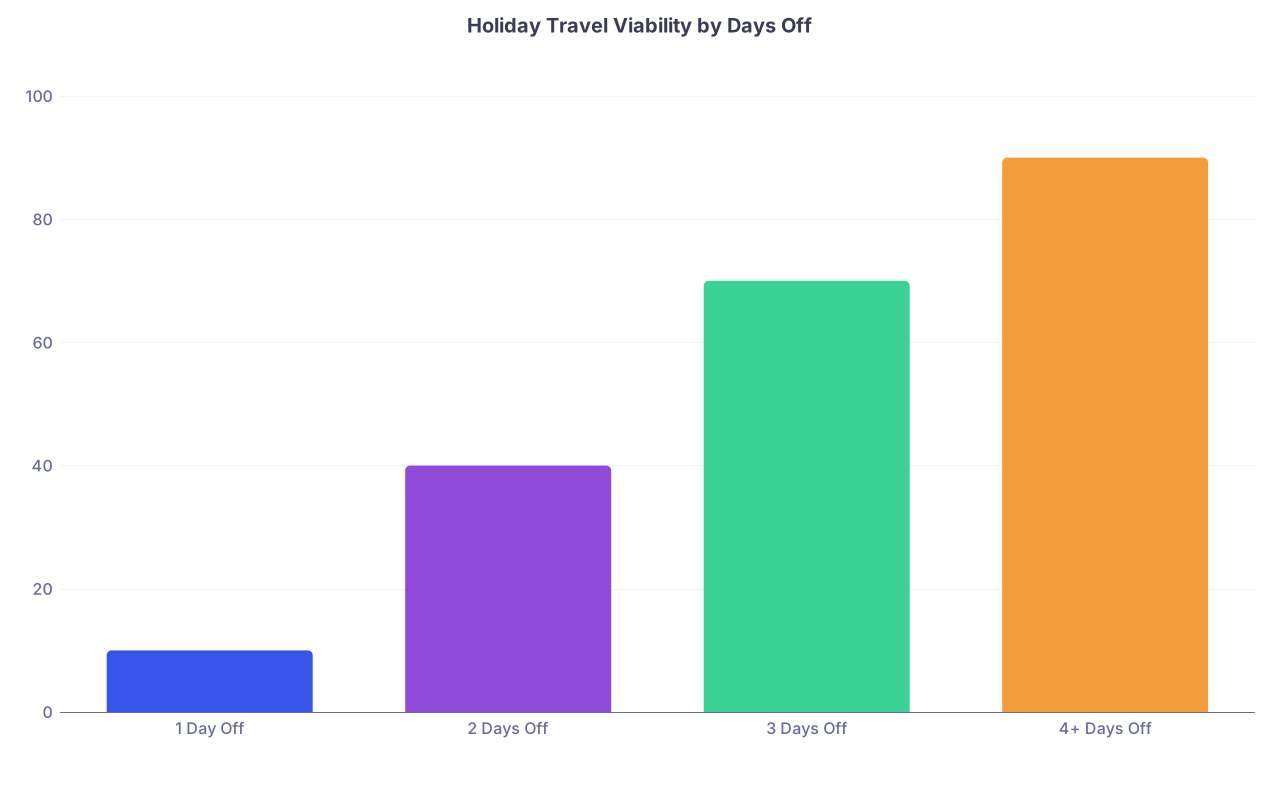
| Category | Value |
|---|---|
| 1 Day Off | 10 |
| 2 Days Off | 40 |
| 3 Days Off | 70 |
| 4+ Days Off | 90 |
(Values = rough “sane to travel” percentage, from experience.)
Week 2 of November: Book smart, not cheap
You now know:
- Which days you’re absolutely working.
- Which days you’re definitely off.
- Where swaps are possible.
So:
- Book flights that:
- Leave after noon if you’re post‑call that day.
- Return before 5–6 pm the day before a shift.
- Pay extra for:
- Refundable or at least changeable fares.
- Early boarding or seat selection if you’re coming off a 28‑hour call. Trust me.
Also:
- Coordinate with co‑interns:
“I’ll cover you New Year’s Eve if you can cover my December 26 clinic so I have one more day with my family.” - Lock these swaps in writing (email to chiefs/administrator). Verbal agreements evaporate.
Late November: Thanksgiving as the Dress Rehearsal
Thanksgiving is your trial run for winter holidays. At this point you should be testing your systems.
Week Before Thanksgiving: Plan the shift and the day
If you’re working:
- Ask seniors how the day usually runs:
- Are admissions lighter or heavier?
- Are some attendings more likely to cut early?
- Plan food:
- Does the hospital provide a Thanksgiving meal?
- Is it terrible? (Ask last year’s interns.)
- If so, coordinate a potluck or order delivery ahead of time.
If you’re off:
- Treat this as a test of:
- Travel time.
- Your physical tolerance for back‑to‑back travel and work.
- Family expectations with your limited hours.
Debrief with yourself after:
- Were you too exhausted to enjoy it?
- Did your flight risk getting you back late?
- Did your family understand your schedule or did they guilt‑trip you?
Use the answers to adjust Christmas/New Year’s plans.

Early December: Finalize Coverage and Personal Boundaries
By the first week of December, your holiday coverage should be crystal clear. If it’s not, you push hard now.
Week 1: Confirm the schedule and all swaps
At this point you should:
- Pull the official schedule (AMION, Qgenda, paper board—whatever your program uses).
- Verify:
- Every shift you think you’re working.
- Every swap you think you made.
- Call vs. night float vs. regular days.
If anything is wrong:
- Immediately email:
- The chief responsible for schedules.
- The person you swapped with.
- Subject line: “URGENT – Holiday Swap Clarification for Dec XX.”
You do not want to discover on December 24 that you’re “also” on call because the board never changed.
Week 2: Set expectations with family and friends
You owe them clarity. Not “I’ll try.”
You should:
- Send one clear message (text or email) to the group that cares:
- “Here’s my schedule: I work X, off Y. I cannot change these last minute. Travel is only possible between [dates]. I’ll probably be exhausted.”
- Be explicit about:
- “I may sleep a lot.”
- “I might miss parts of events.”
- “If I get called in or my shift runs late, that’s not me choosing work over you.”
If someone pushes back—
“I don’t see why you can’t just switch with someone”—
answer calmly: “We cover a hospital 24/7. There’s no extra person to pull from. If I don’t work, someone else loses their holiday.”
You do not need to apologize for that.
Mid–Late December: Day‑by‑Day Holiday Coverage Strategy
Now we zoom in. At this point you should be working off a detailed micro‑plan.
3–5 Days Before Each Holiday: Prep Like a Surgeon
Whether you’re working or traveling, these days matter.
If you’re working the holiday:
- Tighten your sign‑outs:
- Identify all borderline patients who might crash while skeleton staff is on.
- Pre‑place PRN orders (pain, nausea, fever) when safe.
- Clarify code status on anyone even slightly unstable.
- Talk to your senior:
- “Who are you most worried about if we get slammed with admissions?”
- “Any visits or procedures scheduled that we can cancel or move?”
- Prep your life:
- Laundry done.
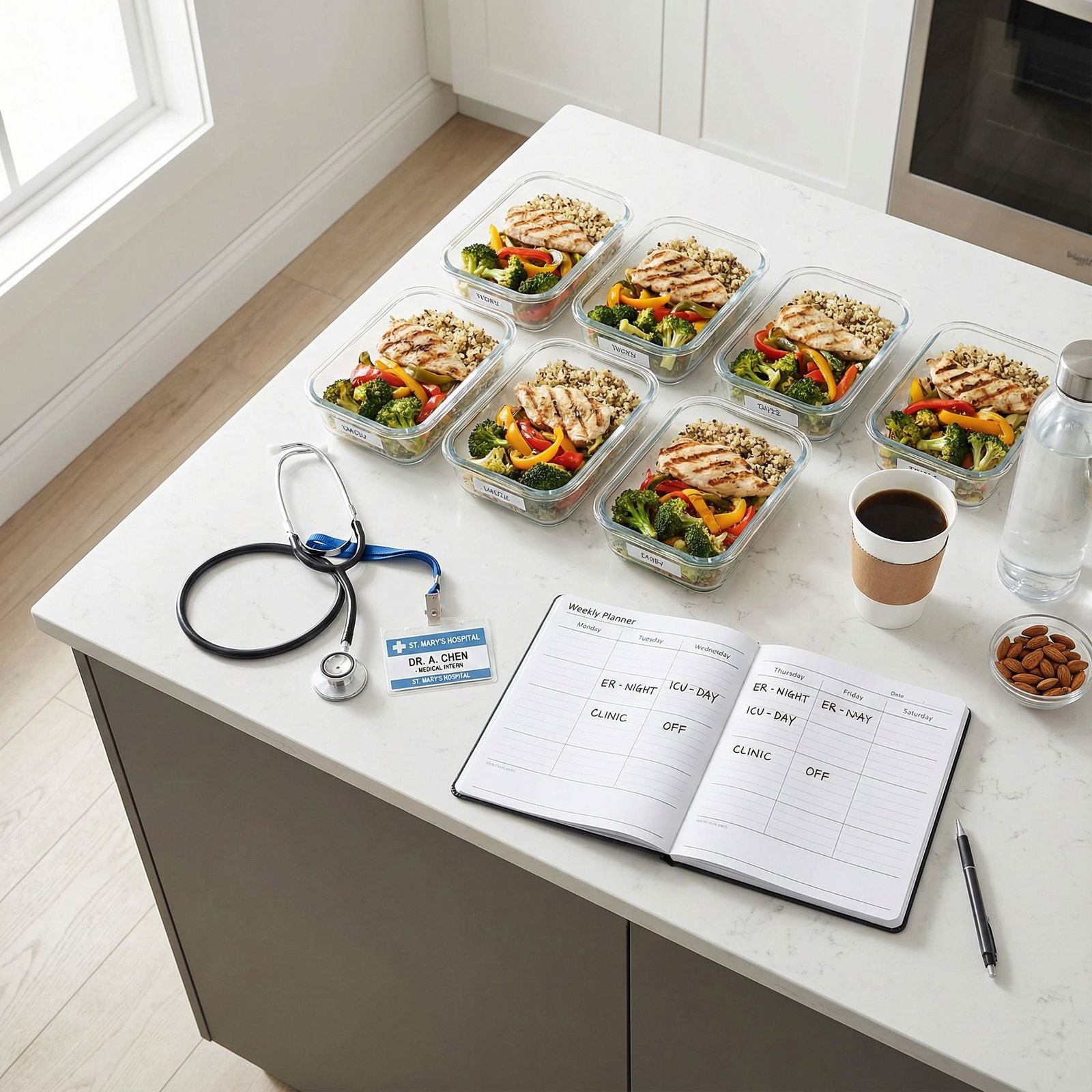
- Food prepped or delivery planned.
- Rides to/from work sorted if transit is limited or weather is bad.
If you’re off and traveling:
- Pack 1–2 days early. Not 1 a.m. before a 6 a.m. flight after a 28‑hour call.
- Set alarms and backup alarms. Post‑call you can sleep through anything.
- Screenshot your schedule and flights. Airports love bad wifi.
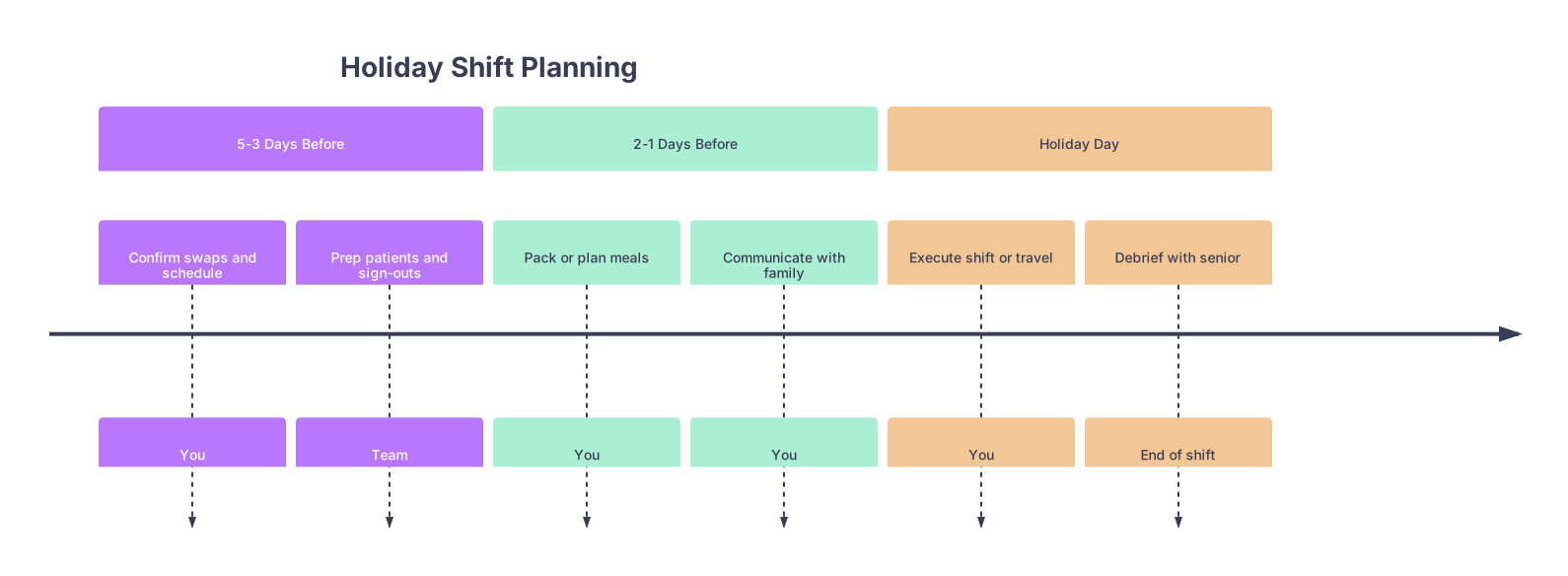
| Period | Event |
|---|---|
| 5-3 Days Before - Confirm swaps and schedule | You |
| 5-3 Days Before - Prep patients and sign-outs | Team |
| 2-1 Days Before - Pack or plan meals | You |
| 2-1 Days Before - Communicate with family | You |
| Holiday Day - Execute shift or travel | You |
| Holiday Day - Debrief with senior | End of shift |
Holiday Eve: Protect your bandwidth
If you’re on call/overnight:
- Eat before your shift. Cafeterias and local restaurants may close early.
- Bring:
- Extra snacks.
- A backup phone charger.
- Layers—some hospitals go weirdly cold or hot with holiday HVAC settings.
- Mentally prepare for:
- Fewer consult services physically in-house.
- Attending callbacks taking longer.
- Lab and imaging sometimes being slower.
Your mindset:
“I’m the front line for 12–28 hours. It might be rough, but it’s finite.”
If you’re post‑call and heading to family:
- Don’t drive yourself long distances. Huge mistake. You’re impaired.
- Plan a nap before social events, even if short.
- Set a time cap:
- “I’ll stay at dinner until 8 p.m., then I’m going to bed. Non-negotiable.”
Holiday Day: Coverage game plan
Working the day itself?
Your priorities:
- Keep people safe.
- Avoid unnecessary chaos.
- Find 2–3 small moments of humanity.
Operationally:
- Round efficiently:
- Group tasks geographically when possible.
- Anticipate discharge needs early (meds, rides, DME).
- Manage admissions smartly:
- Stabilize, prioritize, and do not over-document every line while the ED is drowning. You can clean notes later.
- Protect breaks:
- Tag-team with your co‑intern:
“I’ll cover your pager 20 minutes so you can eat. Then we switch.”
- Tag-team with your co‑intern:
Also: take 30 seconds to acknowledge patients stuck in beds on a holiday.
- “I know this is not where you wanted to be today.”
- “We’re going to do our best to take good care of you while you’re here.”
Small, but it matters.
Post-Holiday: Recovery and Reality Check
At this point you should be thinking about recovery, not catching up on every non-work obligation in your life.
The Day After: Minimal commitments
If you worked the holiday:
- Keep the next day as empty as possible. Don’t schedule:
- Dentist.
- Oil change.
- Major social events.
- Prioritize:
- Sleep.
- One decent meal.
- Light movement (a short walk does more than you think).
If you traveled and are back:
- Unpack quickly that evening.
- Lay out work clothes for the next day.
- Do a quick mental check:
- “What’s on my service tomorrow?”
- “Any pending labs, procedures, or family meetings I need to be ready for?”
One Week Later: Debrief and adjust for next year
Intern year is a test run. Learn from it.
Ask yourself:
- Did I travel too far for too short a time?
- Did I underestimate how depleted I’d feel?
- Was the trade I made (Thanksgiving for Christmas, etc.) worth it?
- How did my family react to boundaries?
Write down 3 bullet points for your PGY‑2 self:
- “Next year, do/don’t ______.”
- “Book travel by ______.”
- “Avoid working ______ if possible.”
You think you’ll remember. You won’t. Write it.
Special Situations: Nights, ICU, and Long-Distance Travel
A few high‑risk setups deserve their own section.
Holiday Nights
If you’re on nights over Christmas or New Year’s:
- Remember your “day” is flipped. Plan:
- Your “holiday meal” could be 8 a.m. post‑shift breakfast with friends.
- Family FaceTime in the afternoon before you nap.
- Protect your sleep window:
- Blackout curtains or sleep mask.
- Silence your phone except for true emergencies.
ICU or ED Holidays
These shifts are brutal but oddly bonding.
Strategy:
- Assume:
- More critical patients.
- Families more emotional.
- Fewer “can we just do this tomorrow?” options.
- Focus on:
- Clear communication in family meetings.
- Early goals‑of‑care discussions.
- Supporting nurses and staff—they’re exhausted too.
Sometimes the best part of a holiday ICU shift is a 10‑minute break with the nurse you’ve been grinding with all month. Don’t underestimate that.
Long-Distance or International Travel
My stance: high risk during intern holiday season unless you have a true multi‑day block.
If you insist:
- Build in 1 full buffer day before you’re back on service, not counting travel day.
- Avoid:
- Red‑eye flights landing the morning you work.
- Connections through weather‑disaster airports in December (you know the ones).
- Have a backup:
- A plan if your flight is canceled and you can’t get back on time.
- The number of your chief saved in your phone.
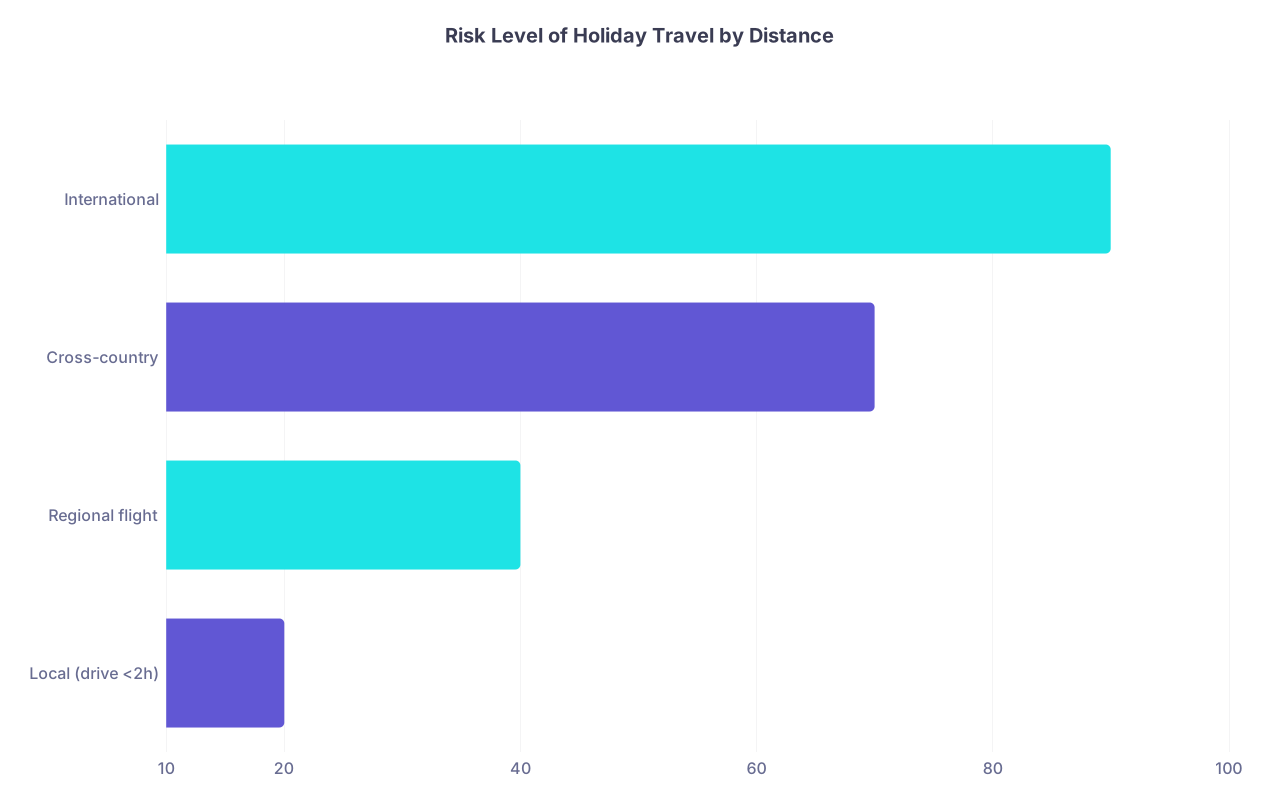
| Category | Value |
|---|---|
| Local (drive <2h) | 20 |
| Regional flight | 40 |
| Cross-country | 70 |
| International | 90 |
(Values = rough “risk of major disruption” during intern year holidays.)
Quick Gear & Logistics Checklist
At this point you should have a small, repeatable system. Here’s what that looks like.
For working holidays:
- Confirm schedule and swaps in writing
- Arrange transport (weather-safe, backup option)
- Prep 1–2 days of meals/snacks
- Charge all devices, bring spare charger
- Clarify any high‑risk patients with senior
- Set realistic expectations with family
For traveling holidays:
- Book changeable flights timed for post‑call reality
- Pack before your last heavy shift
- Share exact travel window with family
- Avoid being the driver for long hauls post‑call
- Leave one low‑demand buffer day, if humanly possible
Final Thoughts
Three big takeaways if you remember nothing else:
- Clarity beats hope. Know your program’s holiday rules early, confirm your schedule in writing, and stop assuming “it’ll probably work out.”
- Trade intentionally. Decide which holiday you care most about, what you’re truly willing to give up, and make swaps early and explicitly.
- Protect your future self. Build in realistic travel plans, buffer days when possible, and firm boundaries with family so you aren’t trying to be a full‑time intern and full‑time holiday hero at the same time.


