

The myth that “it’s crazy all year” during intern year is lazy thinking. The workload absolutely has peaks and valleys—and if you ignore that calendar, you will burn out.
I’m going to walk you month by month, then zoom down to week and day level, so you know when to push, when to protect, and when to quietly rebuild your life.
Assumptions:
- Typical PGY‑1 in IM, surgery, or similar hospital-heavy specialty
- Academic year: July–June
- Rotations ~4 weeks each, mix of wards, ICU, nights, electives, clinic
Adjust details to your program, but the shape of the year is almost always the same.
Big-Picture: The Intern Year Curve
First, see the whole arc before we dissect it.
- July–September: Steep learning curve, lots of floor time, emotional overload
- October–December: Slight competence bump, workload still heavy, holiday coverage hits
- January–March: ICU + winter surge + deep fatigue = peak risk of burnout
- April–June: Experience kicks in, some lighter/elective time, mental transition toward PGY‑2
Here’s what that looks like if you graph perceived workload (not just hours, but intensity):
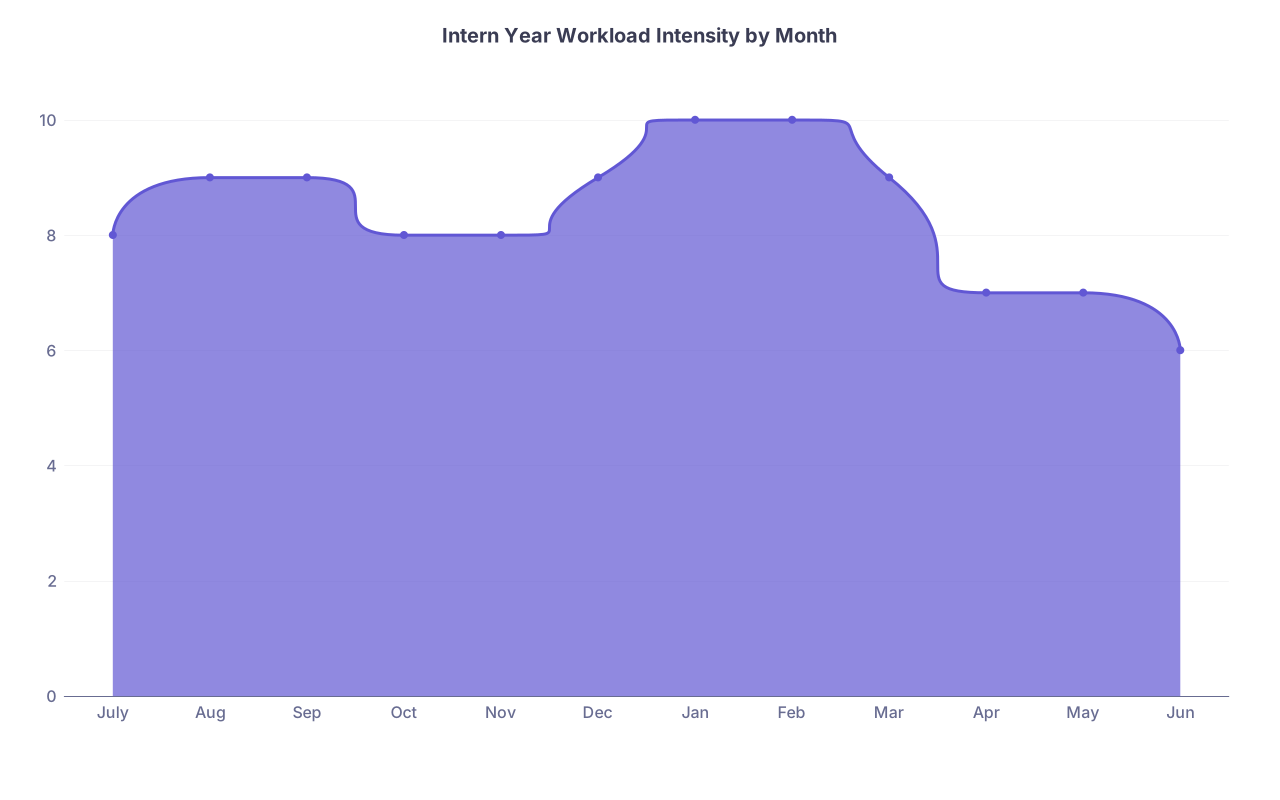
| Category | Value |
|---|---|
| July | 8 |
| Aug | 9 |
| Sep | 9 |
| Oct | 8 |
| Nov | 8 |
| Dec | 9 |
| Jan | 10 |
| Feb | 10 |
| Mar | 9 |
| Apr | 7 |
| May | 7 |
| Jun | 6 |
Scale: 1 = vacation, 10 = “I live in the hospital now.”
July–September: Survival Quarter
This is where your year is won or lost. Not by perfection. By setting sane patterns.
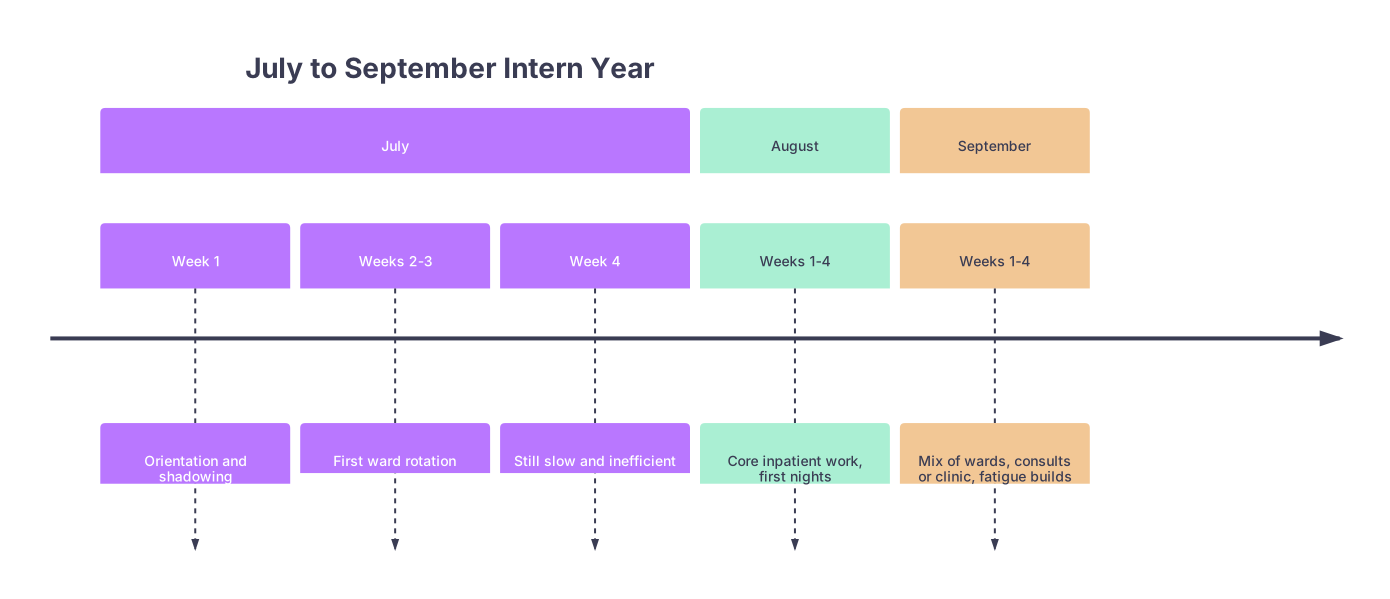
| Period | Event |
|---|---|
| July - Week 1 | Orientation and shadowing |
| July - Weeks 2-3 | First ward rotation |
| July - Week 4 | Still slow and inefficient |
| August - Weeks 1-4 | Core inpatient work, first nights |
| September - Weeks 1-4 | Mix of wards, consults or clinic, fatigue builds |
July: Shock Month
At this point you should:
Week 1–2: Orientation and First Real Days
- Expect:
- You’re slow. Every note takes an hour. Orders feel terrifying.
- Constant “hey doc” pages for stuff you’ve never thought about.
- Concrete moves this week:
- Build your personal templates: H&P, progress note, sign-out, admit checklist.
- Learn EXACTLY how to:
- Page a consult
- Call an RRT / code
- Place common orders (CT w contrast, heparin drip, insulin sliding scale)
- Collect phone numbers: chief resident, senior on call, pharmacy, respiratory, lab.
Week 3–4: First Full Wards Block Reality
- Workload peak factor: time, not complexity. Everything takes forever.
- Planning moves:
- Do not commit to big life events. No weddings you “have to fly to.” No board exams.
- Sleep is a project. Set a rule: in bed within 45 minutes of getting home post-call.
- Start tiny routines:
- One pre-packed snack bag in your locker
- One weekly laundry block (same day, same time)
At this point you should not:
- Volunteer for every committee, teaching session, or side project.
- Agree to switch into extra nights “to help out.”
August: You’re Still New (But People Forget That)
By now, expectations creep up. You’re still green, but attendings assume you can hang.
Early August: First Nights / Calls
- Nights are a different job:
- Cross-covering 40–80 patients with half the context
- Phone call gymnastics: nurse, senior, ED, consultant, family
- Before your first night block:
- Print or save night cross-cover cheat sheets (every program has them).
- Create your own “triage tier” list:
- Red: chest pain, SOB, hypotension, altered, rapidly rising lactate
- Yellow: fever, pain, agitation
- Green: constipation, sleep meds, “need a diet change”
- Decide your caffeine rules. Hard lines. (Example: No caffeine after 2 a.m.)
Late August: Subtle Burnout Starts
- You won’t call it burnout yet. You’ll just feel:
- Short-tempered
- Constantly behind
- Mild dread on days off thinking about going back
- At this point you should:
- Schedule something non-negotiable weekly:
- 30–45 minute call with one non-med friend or family member
- Standing brunch/coffee with co-intern after a post-call nap
- Ask senior residents which future rotations are killers and which are lighter. You’ll need this intel for planning the rest of the year.
- Schedule something non-negotiable weekly:
September: Efficiency vs. Exhaustion
This month, you get faster. But the new normal is “tired.”
- On wards:
- You should be able to pre-round on 6–10 patients in ~90 minutes.
- Notes: mostly done before noon (or at least before afternoon rounds).
- Danger spots:
- Skipping real meals. Living on crackers and coffee.
- Letting minor errors slide because “I’m too tired to double check.”
At this point you should:
- Lock in your daily time anchors:
- Morning: one non-negotiable 5–10 minute thing (stretch, prayer, journaling, whatever).
- Pre-shift: 5-minute mental run-through of your task list.
- Evening: 10-minute “reset” (dishes, layout clothes, check schedule for next day).
These anchors will save you from complete chaos when the year gets crazy.
October–December: Competent but Covered in Work
Now you’re functional. Unfortunately, that means people feel comfortable loading you up.

October: The “I Can Actually Do This” Month
You’ll feel a subtle shift:
- You anticipate issues before they explode.
- You know which nurses will call early vs. late.
- Your sign-out gets sharper.
Workload is still high, but efficiency buys back small pockets of time.
At this point you should:
- Start batching:
- Labs: review all your labs at one or two defined times, not randomly all morning.
- Notes: write 2–3 at a time instead of ping-ponging between tasks.
- Ask chiefs if you’re behind on anything mandatory:
- Evaluations
- Online modules
- Required clinics
- Pick one small professional goal for this quarter:
- Start a QI project (even just scoping an idea)
- Draft a case report
- Attend one grand rounds per week and actually stay awake
November: The Slow Emotional Grind
This is where the glamor fully wears off. You’ve seen some bad outcomes. You’ve watched families break down. And there’s still a long road ahead.
Workload:
- Many programs stack another inpatient or ICU-adjacent rotation now.
- You might get your first taste of a “string” of 6+ days in a row.
At this point you should:
- Audit your sleep:
- Track 7–10 days honestly.
- If you’re averaging <6 hours on most workdays, you’re doing damage.
- Make a change: earlier bedtime, drop non-essential screen time, block morning doom-scrolling.
- Decide holiday coverage strategy with co-interns:
- Who’s willing to work Thanksgiving for Christmas off, etc.
- Get swaps in early while people are still flexible.
December: Holiday Coverage and Hidden Peak
December feels paradoxical:
- Families are more emotional.
- Staffing is thinner.
- Electives appear, but so does brutal coverage.
Holiday weeks (Christmas/New Year especially) often feel like mini-disaster zones:
- Fewer ancillary staff, slower discharges, crankier consultants.
- Higher volume of “I want Mom home by Christmas” pressure.
At this point you should:
- Plan your holiday micro-rituals now:
- If you’re on call Christmas: bring cookies for the team, 5-minute FaceTime with family, something that marks the day.
- If you’re off: protect at least one day where you do nothing work-related.
- Close your Q4 admin loops:
- Make sure evaluations are submitted.
- Confirm vacation and elective blocks for the second half of the year.
January–March: Peak Load, Peak Risk
This is where interns crack. Not because they are weak, but because the system stacks everything: winter surge, ICU time, accumulated fatigue.
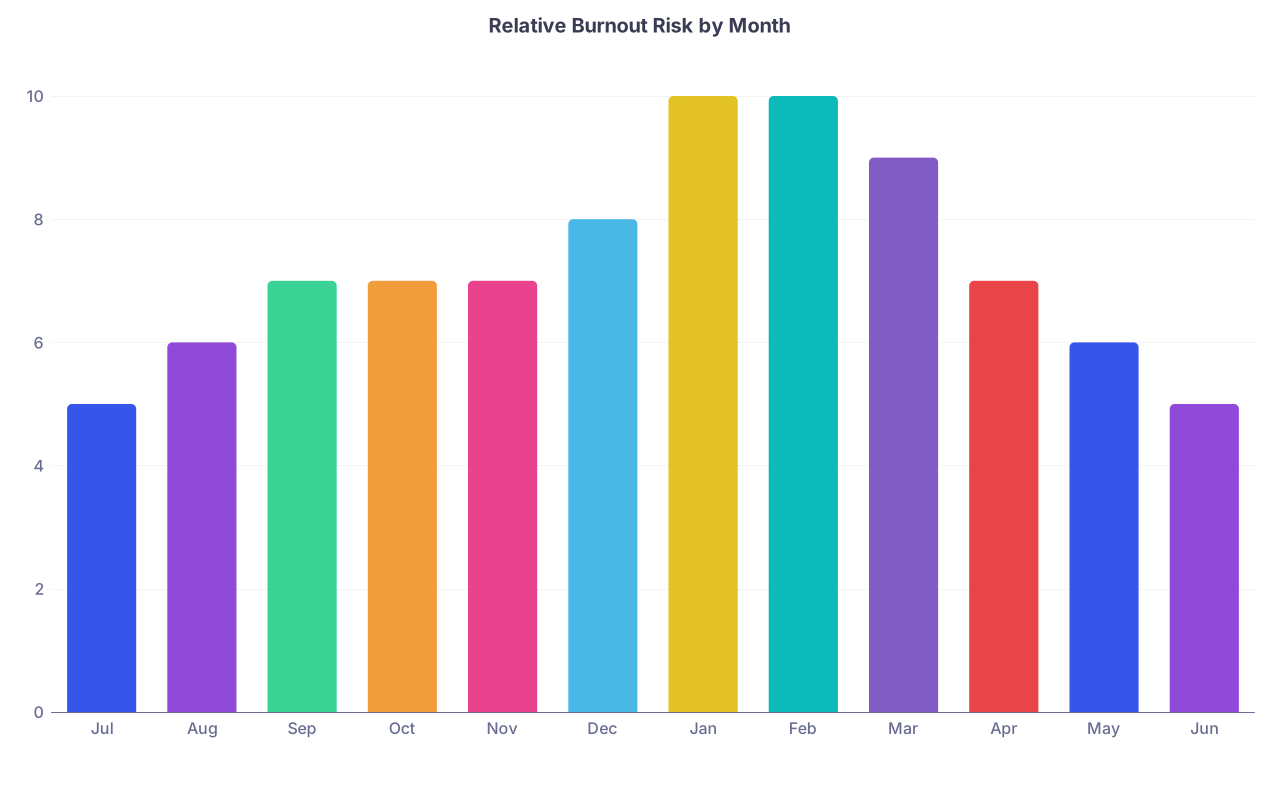
| Category | Value |
|---|---|
| Jul | 5 |
| Aug | 6 |
| Sep | 7 |
| Oct | 7 |
| Nov | 7 |
| Dec | 8 |
| Jan | 10 |
| Feb | 10 |
| Mar | 9 |
| Apr | 7 |
| May | 6 |
| Jun | 5 |
January: ICU + Flu Season = Maximum Overload
Many programs put you in the ICU now. Meanwhile, the hospital is full of RSV, flu, and COVID.
ICU intern life:
- 12+ hour days that feel like 20, even if duty hours are “compliant.”
- Constant procedures, vents, pressors, family meetings.
- Minimal control over your time. Everything is urgent.
At this point you should:
- Simplify your life ruthlessly:
- Auto-pay every bill you reasonably can.
- Prep 3–4 freezer meals before the rotation, or default to the same 2–3 takeout options.
- Stop pretending you’ll go to the gym 5 days/week. Aim for 2 short sessions or walks.
- Build an ICU pre-shift routine:
- 3-minute skim of overnight trends (vents, pressors, ins/outs).
- Identify 2–3 sickest patients before rounds. Start with them.
What you absolutely should not do:
- Commit to major projects, exams, or travel during an ICU block in winter. That’s masochistic.
February: The “Why Did I Do This?” Month
By now:
- The novelty of being a doctor is gone.
- The fatigue is no longer acute; it’s baked in.
- Depression and burnout screens, if you’re honest, might start flagging.
Workload often stays high:
- Another heavy ward block or ICU-lite service (stepdown, Heme/Onc, etc.).
- Hospital still crowded, discharges slow, ED backed up.
At this point you should:
- Do a mid-year health check:
- PCP? If you do not have one, get one. Book a visit on your next lighter month.
- Mental health: look at your EAP or resident wellness resources and actually send an email.
- Create your “bare minimum” survival rules:
- Sleep: at least 5 hours on worst days, 7 on most others.
- Food: one real meal per shift (not just snacks).
- Movement: 10 minutes of walking or stretching daily, even on call.
This is also when some people start questioning specialty choice. You don’t need to decide your whole life now. Just notice patterns:
- Do you hate the work or the hours?
- Do you like clinic more than inpatient or vice versa?
March: Slight Thaw, Still Heavy
Things start to feel marginally better, but you’re not out yet.
Possible schedule:
- One more tough month (wards, cards, ED-heavy month).
- Maybe an elective or lighter consult service tucked at the end.
At this point you should:
- Start planning for PGY‑2 transition:
- Ask seniors what responsibilities change.
- Identify 1–2 skills you want solid before July: running codes, procedures, complex discharges.
- Look ahead on the calendar:
- Where are your remaining ICU/ward blocks?
- Where are your golden months (electives, lighter rotations)?
This is the month to line up swaps or adjustments before everyone panics about summer coverage.
April–June: Rebuilding and Repositioning
You’re not the same intern who walked in last July. You’re faster, sharper, and much more cynical about hospital operations. Use it.

April: The “I Actually Know Stuff” Month
The work:
- Maybe another wards block.
- But you’re now one of the more experienced interns rotating through.
At this point you should:
- Teach more intentionally:
- Grab the med student before rounds, run through one patient together.
- Pick one topic per week you’ll be ready to discuss (DKA, cirrhosis, sepsis bundles).
- Start pruning:
- Old notes, clutter in your bag, dead apps on your phone, junk in your locker.
- The goal: less friction, less mental noise.
Also: review your duty hour and case logs. Fix gaps while people still remember what you did.
May: Strategic Positioning Month
Less chaos, more planning.
This is when you:
- Clarify career direction:
- If fellowship-bound: figure out research mentors, draft a rough project or at least book meetings.
- If hospitalist/primary care track: think about skill gaps (billing, outpatient management, procedures).
- Prep for end-of-year reviews:
- Know which attendings can honestly speak to your performance.
- Request feedback: “Before the year ends, is there one thing I should focus on improving as a PGY‑2?”
At this point you should:
- Look at your remaining lighter blocks:
- Protect one block for:
- Life admin (DMV, dentist, financial planning).
- Real rest (a short trip, extended weekend, visiting family).
- Protect one block for:
- Decide what you want your PGY‑2 reputation to be:
- The reliable night senior?
- The ICU beast?
- The outpatient machine?
Your planning now decides that.
June: Handoff and Reset
Last month. You’re juggling:
- Still doing real work.
- Training incoming interns.
- Low-grade anxiety about being “the senior” soon.
Workload may not be light every day, but your perceived load drops because you’re comfortable and the end is in sight.
At this point you should:
- Tighten your handoff to yourself for next year:
- Create a PGY‑2 “starter pack”:
- Best call room hacks
- Admission templates
- ICU note skeletons
- Tips for running a team (phrases you’ve stolen from good seniors)
- Create a PGY‑2 “starter pack”:
- Do clean closure:
- Thank the nurses who saved you all year.
- Send 2–3 short thank-you emails to attendings who actually taught you.
- Clear your inbox to zero or close to it. You don’t want last year’s chaos spilling into next.
Weekly Rhythm: Where the Peaks Hide
Across the year, certain days are almost always worse, no matter the month.
| Day | Relative Load (1-10) | Common Stressors |
|---|---|---|
| Monday | 9 | Full census, weekend backlog |
| Tuesday | 8 | Heavy admits, long rounds |
| Wednesday | 7 | Midweek clinics, procedures |
| Thursday | 7 | Discharges, family meetings |
| Friday | 8 | Weekend planning, handoffs |
| Saturday | 6 | Slim staffing, cross-cover |
| Sunday | 7 | Admits, Monday prep |
At this point each week you should:
Sunday Night or Last Day Off
- 20-minute weekly reset:
- Glance at your schedule
- Pack work bag (badge, steth, chargers, snacks)
- Choose 2 “must-do” personal tasks for the week (pay rent, call parent, workout twice)
Middle of the Week
- Quick energy check:
- If you’re dragging badly by Wednesday: sleep more, not less.
- Swap a gym day for a walk if needed. Don’t white-knuckle “the plan.”
Day Before Call / Nights
- Lighten your social commitments.
- Pre-pack:
- One full meal
- 2 high-calorie snacks
- Electrolyte drink or water bottle
Daily Flow: Intern-Proven Structure
If you ignore everything else, use this template and adjust:
Pre-Shift (15–20 min)
- Check schedule and patient list at home or on arrival.
- Identify your 2–3 highest-risk patients.
- Quick mental script: “If X decompensates, first step is Y, then I call Z.”
Morning
- Pre-round: vitals, overnight events, labs, quick exams. Short notes if you can.
- Rounds: write action items live. You’ll forget otherwise.
Midday
- Admit window / task crush:
- Batch pages when possible.
- Use your team: senior, co-intern, student. Ask explicitly: “Can you do X while I place these orders?”
Afternoon
- Close loops:
- Reassess anyone unstable earlier.
- Confirm critical labs are addressed.
- Finish notes before sign-out when humanly possible.
Evening / Post-Shift
- Minimum debrief:
- Jot down 1–2 “things I should look up” while still fresh.
- Let 95% slide. You can’t read on everything.
- Home routine:
- Same 3 steps every workday night (shower–eat–15 minutes of something non-med–bed).
Final Takeaways
- The workload peaks in two places: your first 2–3 months (July–September) and the winter ICU/surge period (January–February). Plan your life around those cliffs, not against them.
- At each point in the year, you should be doing one thing: early year = survival systems, midyear = health + boundaries, late year = positioning yourself for PGY‑2.
- You cannot smooth every peak, but you can blunt them. Anchor routines, ruthless simplification during heavy blocks, and early planning for rotations turn intern year from “barely hanging on” into “hard but manageable.”


