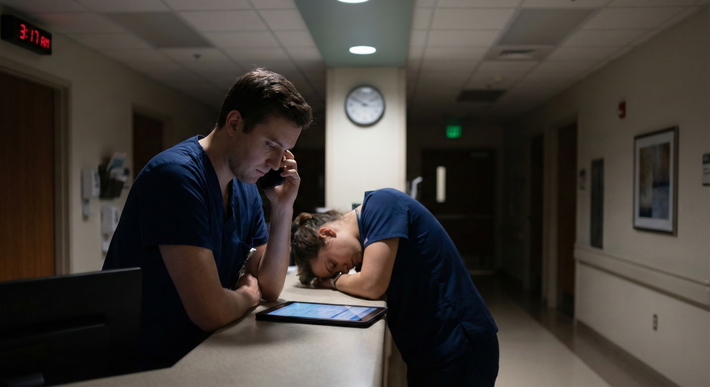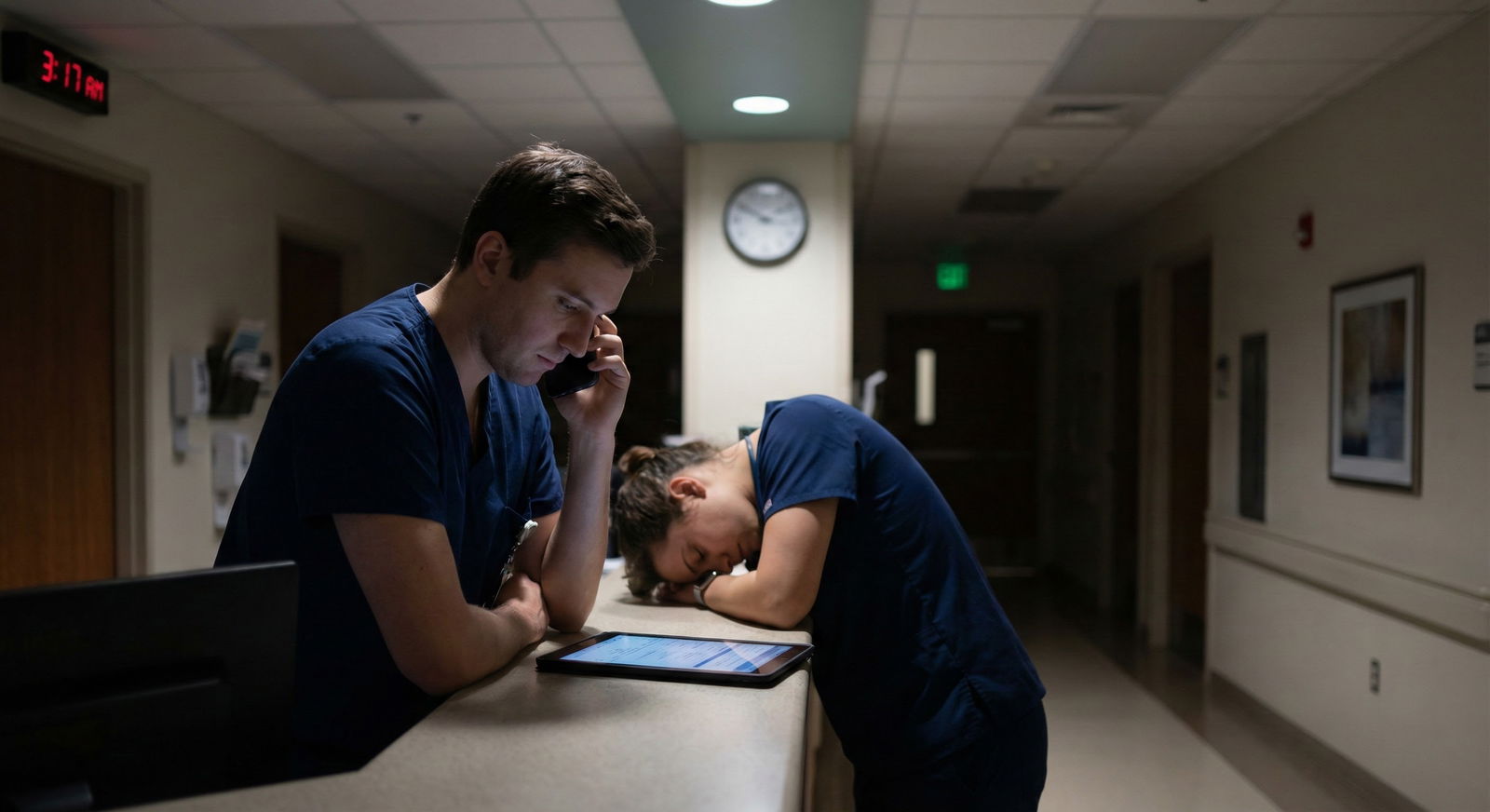
The horror stories you’ve heard about night float are exaggerated—but the fatigue is still no joke.
Let me say that straight up. People either romanticize it (“You get so many days off!”) or turn it into this trauma badge (“Night float broke me”). The truth sits uncomfortably in the middle, and if you’re anything like me, your brain is already spinning: What if I can’t stay awake? What if I make a mistake? What if I’m that intern crying in the stairwell at 3 a.m.?
Let’s walk through how bad the fatigue actually is, what it does to you, and how people survive it without completely falling apart.
What Night Float Actually Feels Like (Not The Instagram Version)
Night float isn’t just “working at night.” It’s your brain living in permanent jet lag while you pretend to be a functioning doctor.
Usually it looks something like this:
| Program Type | Shift Times | Block Length | Nights/Week |
|---|---|---|---|
| University IM | 7p–7a | 2 weeks | 5–6 |
| Community IM | 8p–8a | 1–2 weeks | 5–6 |
| Surgery | 5p–6a or 6p–6a | 1 week | 6 |
| EM (true nights) | 10p–6a or 11p–7a | Ongoing mix | 3–4 |
Not every program is evil. But here’s the part people gloss over when they say, “You adjust after a few days”:
You almost never fully adjust.
Your circadian rhythm doesn’t just politely flip because you’re now working 7 p.m. to 7 a.m. You end up in this weird half-life where:
- You’re not fully nocturnal
- You’re not fully diurnal
- You are fully tired
The first 2–3 nights? Honestly, they can feel almost exciting. New role. New pager. You’re seeing “real” stuff on your own. Your adrenaline and anxiety carry you. You’re hyper-alert, over-reading vitals, triple-checking orders.
Then around night 4–5, it hits. That deep, bone-level fatigue where your brain is working but feels like it’s moving through cold molasses. Your eyelids burn at 3 a.m., and your mood gets…weird. Irritable. Paranoid. Tearful over small things.
That’s the honest version.
How Bad Is The Fatigue Physically?
Let me be blunt: you will be more tired than you’ve probably ever been on a regular basis.
Is it survivable? Yes. Is it comfortable? No. Is it dangerous if you don’t respect it? Also yes.
This is what “night float fatigue” usually looks like in real life:
- You sleep 4–6 hours in the day, but it never feels as restorative as 7–8 hours at night.
- You wake up groggy, mildly nauseous, or with a headache from sleeping in the middle of the day.
- Your appetite is all over the place. Starving at 2 a.m., not hungry at 1 p.m.
- Caffeine stops working the way it used to. You’re wired but still foggy.
- Your body feels heavy climbing stairs at 5 a.m., like gravity increased.
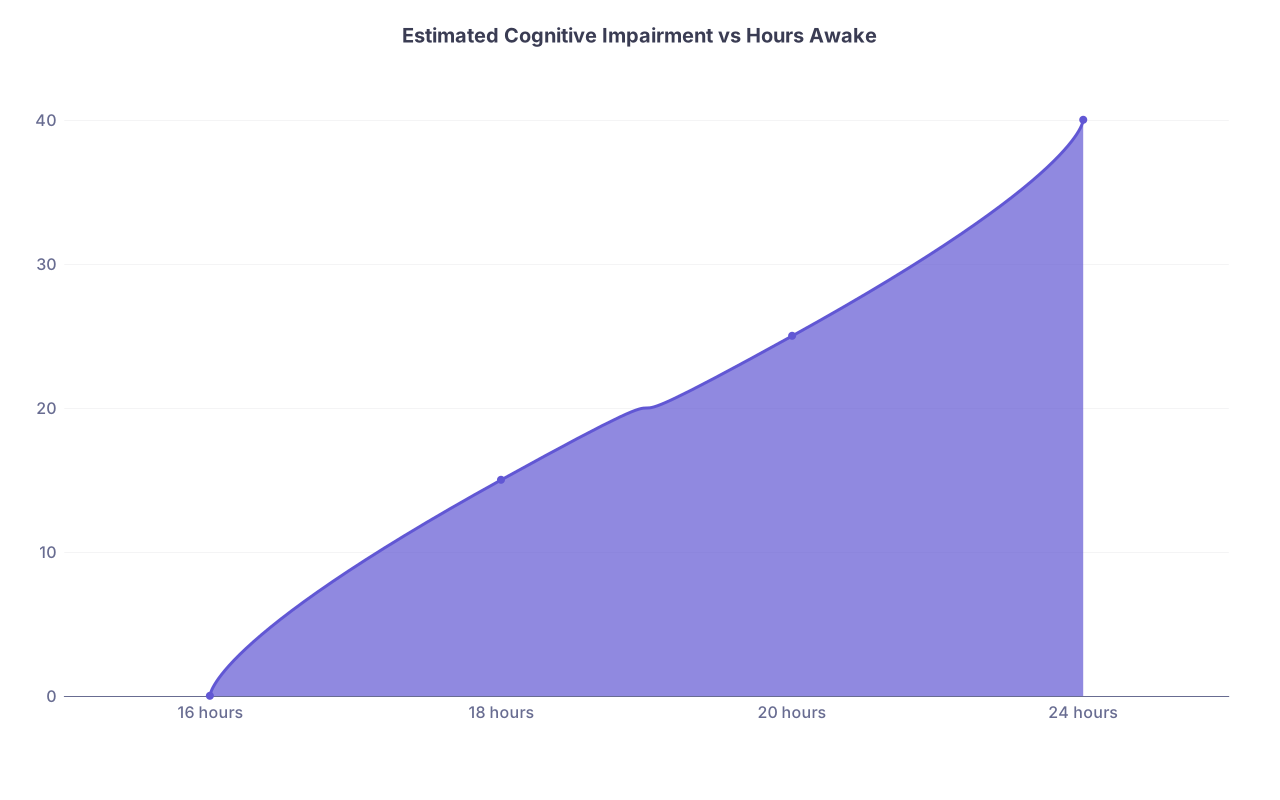
Here’s the sneaky part: your perception of sleepiness doesn’t always match your impairment. You think, “I’m okay, I’m just a bit tired,” but studies have shown your reaction time and cognitive performance are basically equivalent to being legally drunk after enough sleep debt.
| Category | Value |
|---|---|
| 16 hours | 0 |
| 18 hours | 15 |
| 20 hours | 25 |
| 24 hours | 40 |
That graph isn’t exact program data; it’s the general idea from sleep research: the more hours you’re awake, the more your brain quietly falls apart.
This is why the “I’ll just power through” mentality is garbage. You can’t just grit your way out of biology.
The Psychological Side: The 3–4 a.m. Collapse
The part that terrified me the most wasn’t just nodding off. It was: what if I mentally fall apart at 3 a.m. while something important is happening?
Let me describe what those hours really feel like.
From about 7 p.m. to midnight, you’re busy. Admissions, cross-cover calls, frantic pages: “Can you come look at this patient?” You’re wired, moving, thinking.
From midnight to 3 a.m., things slow down (usually). You catch up on notes, orders, maybe snack, start thinking, Okay, I might actually get through this.
Then 3–5 a.m. hits. This is the danger zone.
This is when:
- Your body temperature is at its lowest.
- Your natural circadian drive for sleep is peaking.
- The adrenaline from early-night chaos is gone.
This is where I’ve seen people staring blankly at the computer screen, reading the same potassium value six times. This is when your brain forgets simple words, you have to re-check your own order, and you question every decision: Did I write for the right dose? Did I click the right patient?
You are more emotional here too. A snappy nurse, a test not ordered, a snarky text from a co-resident—things that would bounce off you at noon feel like personal attacks at 4 a.m. You’re more likely to spiral into, “I’m a terrible intern; I shouldn’t be here.”
You’re not a terrible intern. You’re just awake at a time humans aren’t meant to be awake, making medical decisions while your brain is begging for a pillow.
Safety: Are You Going To Hurt Someone?
This is usually the worst fear under all of this: not “will I be tired?” but “will my fatigue hurt a patient?”
Here’s the uncomfortable truth: fatigue does increase the risk of error. That’s well-documented. You’re not imagining that.
But here’s the other side, which no one tells you when they’re trying to one-up each other’s misery stories:
You are not working alone in a vacuum.
Even on nights, there is structure:
- There’s usually at least a senior resident covering nights with you.
- There’s an attending on call or in-house who’s been doing this longer than you’ve been in medicine.
- Nurses, RTs, and pharmacists are often sharper to subtle changes than the sleep-deprived intern paging through UpToDate.
The system is imperfect, but it’s not designed around the assumption that a single exhausted intern is the sole defense between life and death.
Most night float safety actually comes from this combination:
- You triple-check yourself more when you’re tired.
- Nurses question weird or dangerous orders.
- Seniors review your admits and cosign decisions.
- You learn which things you should never “wing” at 4 a.m. (weight-based drips, weird electrolyte replacements, subtle EKG changes).
Is there still risk? Of course. But let’s be very clear: if fatigue alone were routinely killing people, residency programs would cease to exist. Institutional self-preservation is strong. They tweak the system enough to keep it barely on the safe side.
Will You Actually Fall Asleep On Shift?
The nightmare scenario in my head: nodding off during a rapid response. Or falling asleep at the computer while someone is crashing.
Reality is usually much less dramatic.
Most interns don’t fully fall asleep on shift unless:
- The census is unusually low
- The senior explicitly says, “Go lie down for an hour”
- The program has a call room culture where you’re expected to nap when possible
What does happen, a lot, is micro-zoning out:
- You stare at the EMR for a minute not processing anything.
- You reread your own note to remember what you just wrote.
- You walk to a patient’s room and forget why you went in there.
These moments are annoying, a little scary, and very normal.
If you’re truly at the point of “I might literally fall asleep at the wheel,” you say something. To your senior. To the nurse you trust. That’s not drama; that’s self-preservation and patient safety.
How People Actually Cope (Not The Instagram-Friendly Stuff)
You’ll hear a lot of cutesy advice about “self-care,” which is hilarious when you’re flipping days and nights and can barely remember your own address.
Let me give you the gritty version of what actually helps blunt the fatigue:
1. Ruthless Sleep Protection
You can’t treat sleep as optional daytime bonus. Daytime sleep is your night sleep now, and you have to defend it like an ICU bed.
- Blackout curtains, eye mask, white noise. Overkill is good.
- Phone on Do Not Disturb with a tiny whitelist (partner, chief, maybe your mom).
- No “just one errand” after work. That’s how you sacrifice 1–2 hours of sleep here and there and accumulate a disaster-level sleep debt.
2. Controlled Caffeine, Not Panic Caffeine
Chugging coffee at 2 a.m. feels logical. Then you get home at 8 a.m., stare at the ceiling until 11, and sleep three hours. Repeat. Spiral.
The people who look least destroyed by night float usually:
- Front-load caffeine early in the shift (like 7–11 p.m.).
- Avoid caffeine after 1–2 a.m. so their 8–9 a.m. sleep isn’t wrecked.
- Stick to smaller, regular doses instead of energy drink bombs.
3. Lowering The Bar For “Good Enough”
You’re not going to be your daytime, fully rested self. If you hold yourself to that standard, you’ll feel like you’re failing constantly.
On nights, “good enough” often means:
- Your notes are shorter, less beautifully phrased.
- You lean more on checklists and templates.
- You look things up more frequently instead of relying on memory.
- You ask your senior “dumb” questions rather than pretending you’re fine.
That’s not incompetence. That’s appropriate humility under fatigue.
The Social / Emotional Toll People Don’t Warn You About
The fatigue isn’t just about how your body feels; it’s also about how your life starts feeling temporarily fake.
- You’re awake when everyone else is asleep.
- You’re asleep when everyone else is living their lives.
- You miss dinners, events, daylight.
You start to feel very…off-cycle. You wake up at 4 p.m., scroll through texts from people who’ve already had a whole day, and you’re just gearing up. It’s isolating. And isolation amplifies anxiety.
This is where night float gets psychologically loud:
- “Is this what the rest of my career is going to feel like?”
- “If I’m this tired as an intern, what about fellowship? Attendings? Kids?”
- “Everyone else seems to be handling it better than me.”
They’re not. They’re just quieter about it.
You’re not uniquely weak for hating nights. Plenty of residents absolutely loathe night float and still function well enough, take care of patients, and then move on with their lives after the block ends.
Will Night Float Break You?
Here’s my honest answer as someone who obsesses over worst-case scenarios:
Night float will probably not break you. But it may expose cracks that were already there.
If you already struggle with:
- Anxiety
- Depression
- Insomnia
- Catastrophic thinking
Night float is like turning the volume up on all of that. Sleep deprivation is cruel to mental health. It makes small doubts feel huge and fixable problems feel permanent.
That doesn’t mean you can’t do it. It means you shouldn’t try to “tough it out in silence” to prove something.
The people who do best on nights are not the “strongest” or most stoic. They’re the ones who:
- Admit they’re struggling early.
- Text a co-intern, “Hey, this is rough—are you also dying?”
- Tell their senior, “I’m really tired and feeling foggy; can you double-check this with me?”
- Actually use days off to sleep and recover instead of punishing themselves for being behind on life.
It’s not a moral failure to find night float brutal. That’s just being human with a nervous system.
So How Bad Is The Fatigue… Really?
If I had to summarize the fatigue in one sentence:
It’s bad enough to scare you, but not bad enough to stop almost everyone from getting through it.
You will be:
- Tired in a way that feels unfair.
- Less sharp than your best self.
- Emotionally thin-skinned.
You will also:
- Adapt more than you think in the first few nights.
- Learn practical tricks to survive.
- Discover what you specifically need to function (some people nap before shift; some don’t, etc.).
And—this matters—it ends. Night float comes in blocks. They’re finite. You count down. You will not live like this forever.

| Step | Description |
|---|---|
| Step 1 | Pre-block Anxiety |
| Step 2 | Night 1-2 Adrenaline |
| Step 3 | Night 3-5 Wall |
| Step 4 | Partial Adaptation |
| Step 5 | End of Block Relief |
You’re probably staring at that “Night 3–5 Wall” part. Yes, that’s the ugliest section. But once you know it’s coming, it feels a little less like a personal failing and a little more like a predictable, temporary storm.
Quick Reality Check Before You Spiral
Let me answer the actual fear under your question:
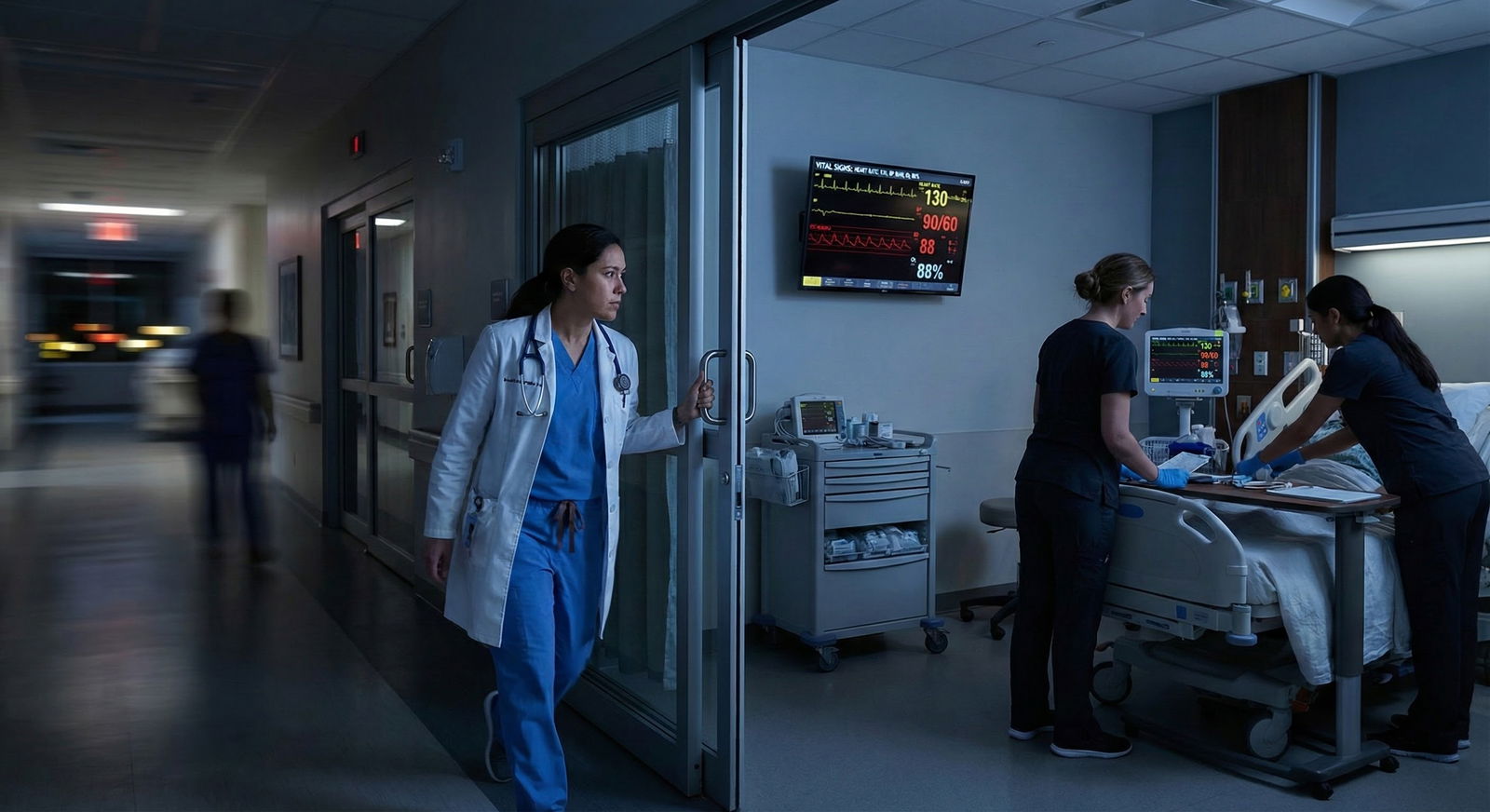
No, you’re probably not going to collapse on the floor from exhaustion. No, you’re probably not going to kill a patient because you yawned at 4 a.m. Yes, you’re going to feel more tired, fragile, and overwhelmed than is comfortable.
But you’ll also:
- Ask for help more than you think you’re allowed to now.
- Realize how much your team quietly catches and supports you.
- Get to the other side and think, “That was awful. But I did it.”
And honestly? That’s how a lot of residency feels. Not heroic. Not catastrophic. Just awful and survivable at the same time.
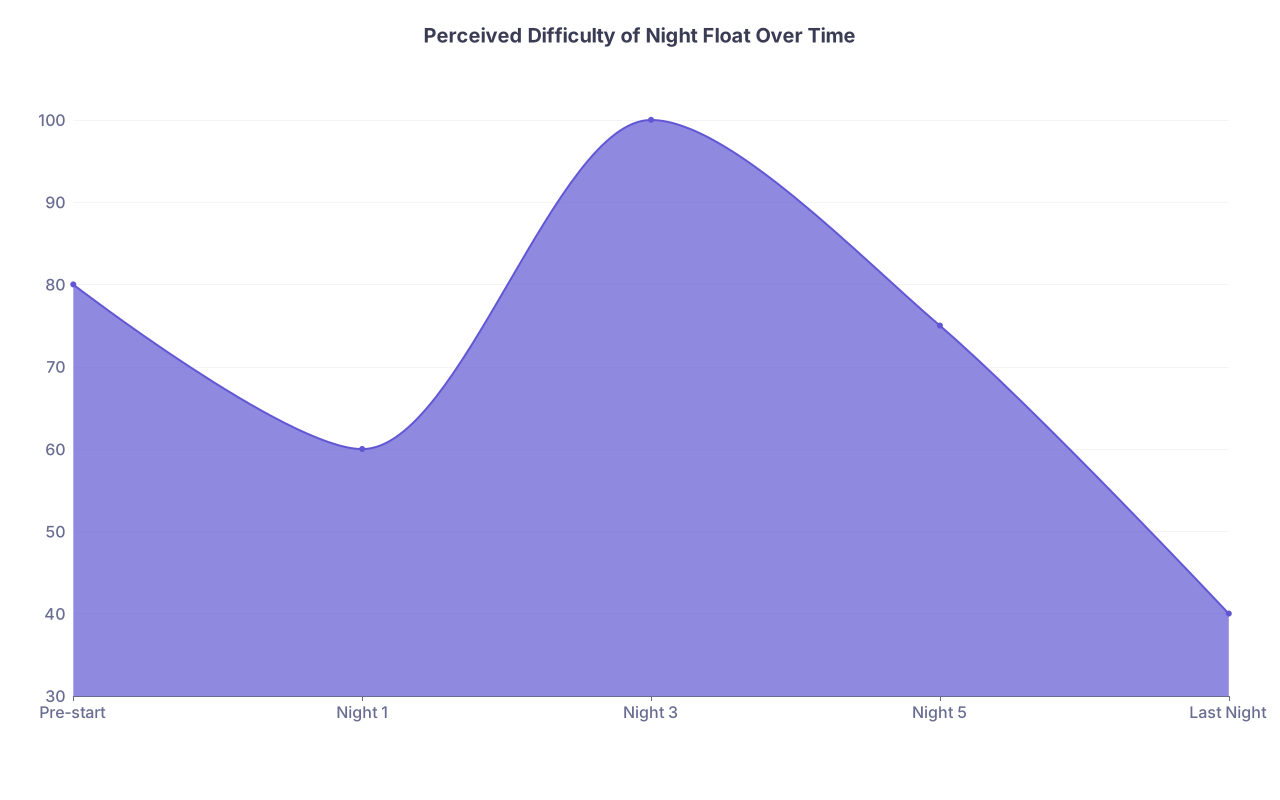
| Category | Value |
|---|---|
| Pre-start | 80 |
| Night 1 | 60 |
| Night 3 | 100 |
| Night 5 | 75 |
| Last Night | 40 |
FAQ (Exactly 4 Questions)
1. What if I literally can’t sleep during the day?
This is a big one. Some people just don’t knock out easily at noon. You’re not doomed, but you can’t ignore it. You try the basics first: blackout curtains, eye mask, white noise machine, cool room, consistent schedule. No caffeine after the middle of your shift. If you’re still getting less than ~4–5 hours regularly and feel wrecked, you talk to someone—your primary care, occupational health, maybe even your program leadership. Short-term sleep aids under supervision are sometimes used. The worst thing you can do is silently accumulate sleep debt and hope your body magically fixes it.
2. Is it safer to nap before a night shift or stay up?
Most people function better with some pre-shift sleep. A lot of interns do something like: go to bed around 3–4 a.m., wake up 11–12, then maybe a 1–2 hour nap 4–6 p.m. before heading in. The people who “stay up” all day and go straight into night 1 are usually barely functional by 4 a.m. If you’re anxious you “won’t be tired enough” to sleep, try just lying down in a dark room for an hour or two before your shift anyway. Even if you don’t fully sleep, you’re giving your brain and body some downtime.
3. How do I tell if I’m too tired to be safe?
If you catch yourself rereading the same line repeatedly, forgetting what you were doing mid-task, or feeling physically pulled toward falling asleep while sitting, that’s your red flag. Also: if you’re having trouble doing basic mental math, or feel emotionally out of control (on the verge of tears for no reason), your fatigue is not minor. That’s the moment you loop in your senior or attending and say, “I’m really exhausted and worried I’m not as sharp as I need to be. Can you double-check this with me or help with some tasks?” That’s not weakness. That’s responsible practice.
4. What if I already have anxiety and I’m scared night float will send me over the edge?
You’re not overreacting; sleep deprivation and anxiety are a nasty combo. But you’re also not automatically destined to crash and burn. The key is not waiting until you’re in crisis. If you already see a therapist or prescriber, tell them night float is coming. Make a plan. If you don’t, consider setting that up before internship or early on. During nights, be extra proactive about small stabilizers: eating something regularly, getting 10–15 minutes of daylight after your shift, texting a friend or co-intern before you sleep just to anchor yourself. And if your anxiety spikes—panic, intrusive thoughts, feeling like you can’t function—you ask for help. Programs would rather adjust or support you than have a resident silently imploding on nights.
Key points, no fluff:
- The fatigue on night float is real, ugly, and worse than anything you did in college—but it’s also temporary and survivable.
- You’re not alone up there at 3 a.m.; there are structural and human safety nets that make “catastrophic error every night” a lot rarer than your brain is telling you.
- The interns who do best are not superhumans—they’re the ones who aggressively protect their sleep, ask for help, and accept that “good enough while exhausted” is still good enough.