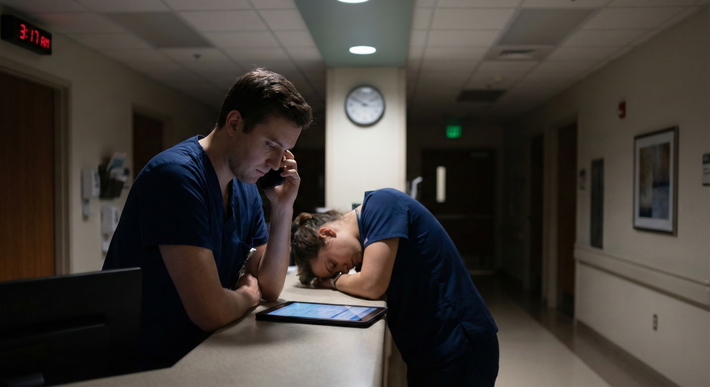
The idea that “everyone feels overwhelmed as an intern” is only half true—and the lazy way people say it is actually dangerous.
Because yes, high stress is common. But no, it is not some harmless rite of passage you just white‑knuckle through. The data is painfully clear: for a big chunk of interns, that “overwhelmed” feeling is a symptom of clinically significant anxiety, depression, or burnout. And pretending it’s just “part of the process” is how people slip through the cracks.
Let’s strip this down to what the research actually shows, not what the senior who “worked 120 hours a week back in the day” likes to brag about.
What “Normal” Actually Looks Like: The Hard Numbers
You are not the only one who feels like you’re drowning. But that doesn’t mean it’s fine.
Multiple large studies have followed residents—especially interns—and the numbers are ugly.
- A 2015 meta‑analysis in JAMA (over 17,000 residents) found a 28–45% prevalence of depression or depressive symptoms in residents, depending on the study and instrument used.
- In the Intern Health Study (big multisite cohort, mostly PGY‑1), rates of depressive symptoms jump from roughly 4–7% before internship to around 20–30% during.
- Burnout? Multiple surveys put burnout in residents around 45–60%, and it’s consistently worst in intern year.
Here’s a snapshot of what “normal” actually means in this context:
| Measure | Before Internship | During Internship |
|---|---|---|
| Depressive symptoms (moderate+) | ~4–7% | ~20–30% |
| Burnout (high) | ~25–35% | ~45–60% |
| Self‑reported severe stress | ~15–20% | ~40–50% |
“Normal” in this environment just means “common,” not “healthy” or “acceptable.”
You will hear people say “everyone feels like that” as if that ends the conversation. What they accidentally mean is: the system is built in a way that predictably generates distress. That’s not a character test. That’s a design flaw.
The Myth of “If You’re Struggling, You Don’t Belong”
Let me be blunt: the belief that struggling as an intern proves you’re weak or not cut out for medicine is garbage. And the data backs that up.
The biggest predictors of who struggles more as an intern are not “grit” or “dedication.” They’re things like:
- Pre‑existing depression or anxiety
- Certain personality traits (neuroticism, perfectionism)
- Social support (or lack of it)
- Long work hours and sleep deprivation
- Work environment toxicity
Not “this person isn’t tough enough.”
The Intern Health Study has repeatedly shown that baseline mental health strongly predicts who will develop depressive symptoms during internship. Want a contrarian twist? That doesn’t mean those people shouldn’t be doctors. It means residency is built like an amplifier: whatever vulnerability you walk in with gets turned up to 11.
And it’s not just “soft” outcomes. High stress and depression correlate with:
- More medical errors
- Lower empathy scores
- Higher risk of substance misuse and suicidal ideation
This isn’t about whether you “fit the culture.” It’s about whether the culture is compatible with basic mental functioning.
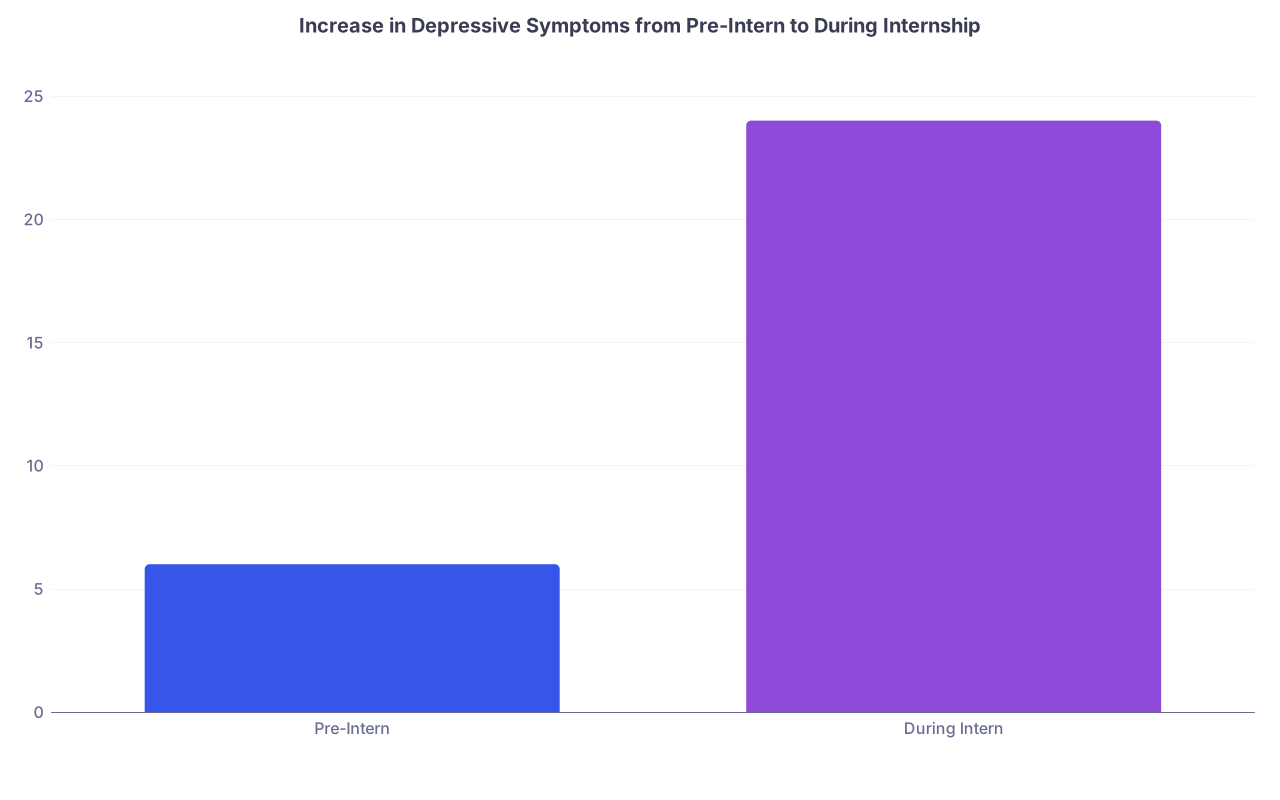
| Category | Value |
|---|---|
| Pre-Intern | 6 |
| During Intern | 24 |
That bar isn’t measuring who “belongs.” It’s measuring the cost of training as currently designed.
Not All Overwhelm Is the Same: Stress vs Breakdown
People toss “I’m overwhelmed” around like it’s one thing. It isn’t.
There’s a difference between:
Acute overload
- You’re on nights. You get three admits in an hour. The senior is scrubbed in. You’re behind on notes.
- You feel frantic, cognitively stretched, maybe a little panicky.
- Then it passes. You stabilize. You can still sleep later and reset.
Chronic strain
- You’re consistently working 70–80 hours, your pager never feels silent, and you’re always behind.
- You feel constantly keyed up, irritable, exhausted. Your baseline becomes “on edge.”
- Function is impaired but you’re still moving forward.
Pathologic distress
- You’re crying in the stairwell more days than not.
- You fantasize about walking out mid‑shift. You feel numb with patients or totally detached.
- You’re thinking about self‑harm. You dread every day and feel trapped.
The first is expected. The second is common but not benign. The third is a problem. And they all get lazily thrown under “overwhelmed.”
The data doesn’t finely separate these categories in every study, but when 30–40% of interns screen positive for depression or severe anxiety, we’re well past “man, this job is tough” territory.
What Actually Drives Intern Stress (It’s Not Just “Hard Work”)
People romanticize old‑school training: “We did Q2 call, you all have it easy.” That’s mythology dressed as toughness. Here’s what research and reality both point to as real drivers of intern distress.
1. Work Hours and Sleep Debt
Yes, duty hour regulations exist. No, they haven’t solved the problem.
Studies consistently show that sleep deprivation is one of the strongest contributors to mood symptoms and cognitive errors. When interns work 80ish hours, flip between days and nights, and carry an impossible page load, it’s not surprising that stress skyrockets.
A randomized trial (the FIRST trial in surgery, and similar in medicine) looked at flexible vs stricter duty hours. The punchline: dramatic changes in hours didn’t magically fix burnout. Why? Because hours are only one part of a badly structured system.
But at the individual level, your subjective sleep debt tracks closely with your stress. When you’re getting <6 hours most nights, expect your resilience to be cut in half.
2. Loss of Control and Constant Evaluation
Intern year is a perfect storm of low control + high stakes:
- You have massive responsibility, minimal autonomy.
- Everyone around you is silently (or loudly) judging your performance.
- Your future fellowship, letters, even your job prospects feel like they ride on each month’s eval.
Job strain models in occupational health are clear: high demand + low control + low support = high risk for burnout and depression. Intern year checks all three boxes in a lot of programs.
The myth is that if you were more “confident” this wouldn’t bother you. Reality: humans do poorly in systems where expectations are high and control is low. That’s not a personality flaw; it’s a predictable stress response.
3. Rotations Designed Without Basic Human Needs in Mind
I’ve seen this pattern over and over:
- A brutal ward month with 16 patients, nonstop pages, and 12‑hour days that are actually 14
- Followed by a “lighter” rotation that’s still 60 hours and disorganized
- Minimal time for exercise, relationships, or even laundry
This isn’t just “busy.” It’s poorly engineered work.
Programs that have actually tried to fix this—protected didactics that are truly protected, caps that are enforced, reasonable cross‑cover structures—see improvements in burnout and satisfaction. The problem isn’t medicine itself; it’s sloppy system design.
The “Just Tough It Out” Culture Is Part of the Problem
Let me say the quiet part out loud: a lot of the reassuring language you’ll hear (“It’s normal to feel overwhelmed”) is really about protecting the culture, not protecting you.
Why?
Because if we admit that 30–40% of interns are experiencing depressive symptoms, then the whole “this is just what it takes to be a doctor” narrative starts to look abusive instead of noble.
And once you see that, a few things become obvious:
- You are not weak for struggling in a system that predictably produces distress.
- Silence does not equal strength. It equals risk—of errors, of mental health crises, of people leaving medicine entirely.
- Seeking help is not optional self‑care fluff. It’s maintenance. Like hand hygiene for your brain.
I’ve heard attendings say, “We didn’t have wellness resources and we survived.” Some of them did. Some of their classmates did not. Survival is a terrible quality metric.
Concrete Signs Your “Overwhelmed” Is Not Just Normal Stress
Let’s draw a line. Because yes, some distress is expected. But here’s where data and clinical experience both say: this is not just “busy intern life,” this is a red flag.
You should take your state seriously (and talk to someone) if:
- Your sleep is wrecked for weeks—either can’t fall asleep, wake up constantly, or sleep 10 hours and still feel dead.
- You’ve lost interest in things you used to like, even on days off, for more than two weeks.
- You have persistent guilt or worthlessness—not “I made a mistake on rounds,” but “I’m a terrible doctor and everyone will find out.”
- You have intrusive thoughts like “If I got hit by a bus, at least this would all stop.”
- You’re using alcohol, benzos, or other substances regularly just to get through or to sleep.
- You’re making more mistakes than before, and not just because the work is complex—you feel foggy and detached.
Those are clinical symptoms, not character flaws.
And here’s the uncomfortable truth: studies show residents under‑report distress because they’re afraid of stigma, licensing questions, or career consequences. So relying on “If it’s really bad, someone will notice” is fantasy. People are very good at faking “I’m fine” until they aren’t.
What Helps (According to Data, Not Instagram Wellness Posts)
No, you’re not going to yoga‑pose your way out of a toxic call schedule. But some things actually do have evidence behind them.
1. Real Social Support, Not Superficial Venting
One of the strongest protective factors in multiple residency studies: perceived social support.
Not number of friends on paper. Not group chat volume. The feeling that you have 1–3 people who:
- Will not minimize what you’re feeling
- Get the job, or at least respect it
- You can text at 2 a.m. after a bad code
That kind of support consistently lowers risk for depression and burnout.
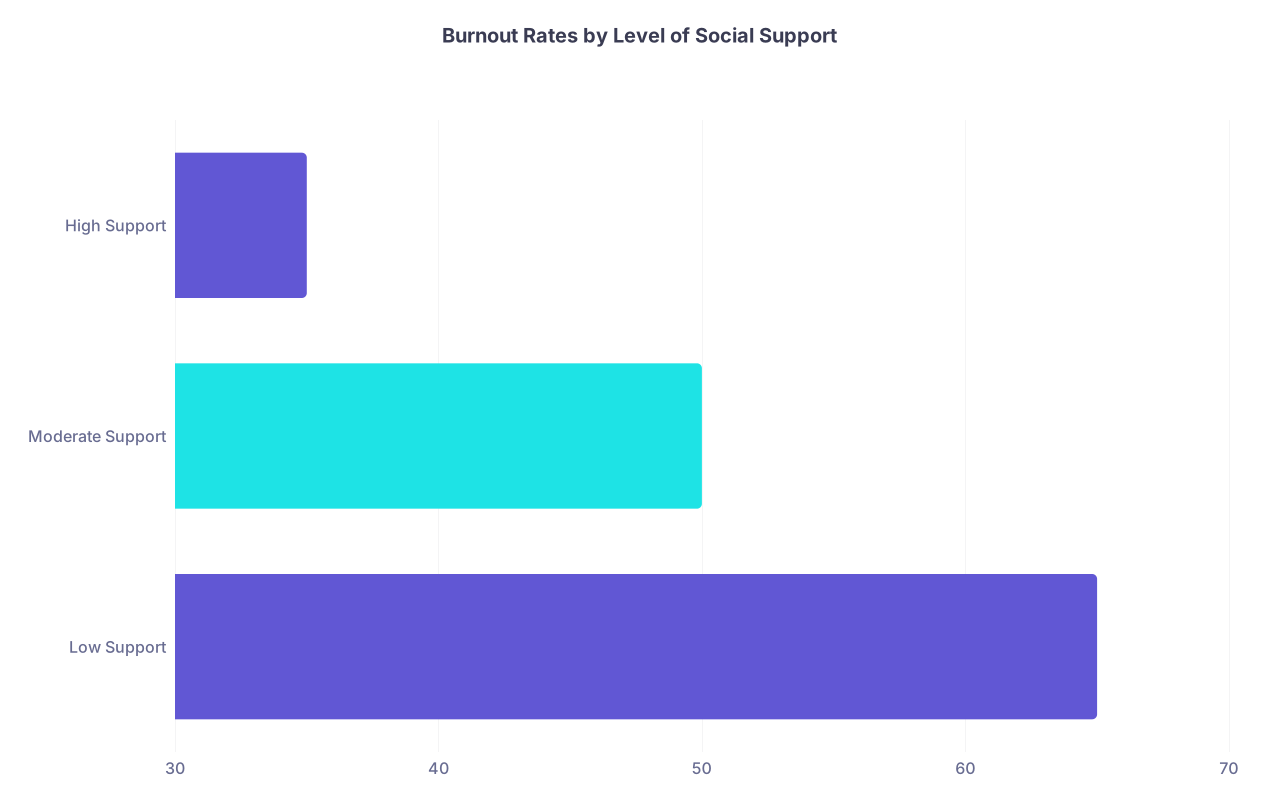
| Category | Value |
|---|---|
| Low Support | 65 |
| Moderate Support | 50 |
| High Support | 35 |
If you’re choosing between one genuine, unfiltered conversation and yet another “residency meme” scroll session, the first one wins every time.
2. Basic Physiologic Maintenance (Not Optimal—Just Non‑Catastrophic)
No, you won’t be meal‑prepping quinoa bowls on ICU nights. But there’s a massive difference between:
- Sleeping 4 hours, chugging energy drinks, and eating vending‑machine dinner for a week
- Sleeping 5.5–6.5 hours when possible, drinking water minimally, and eating something vaguely resembling food
Studies on residents show incremental improvements in sleep duration produce real reductions in depressive symptoms. This isn’t sexy. It’s boring. But it works.
If you want a rule: protect sleep first, then food, then movement. In that order. Heroics come last.
3. Evidence‑Based Mental Health Care
There’s good data that brief, structured interventions (CBT, mindfulness‑based stress reduction, coaching programs) can reduce symptoms in residents. Not cure the system. But improve your odds.
Program‑sponsored CBT‑style workshops, access to confidential therapy, even some app‑based interventions have all shown benefit. The catch is that they only help if you:
- Admit you’re not okay.
- Decide your career is not worth more than your brain.
- Actually show up.
And no, seeking help is not automatically a career‑ending act. Most states now have more reasonable physician health and licensing questions. Many programs provide off‑the‑record counseling resources. Ask directly about confidentiality if you’re unsure.
When the System, Not You, Needs to Change
One last myth to crush: that the solution to intern stress is purely individual—better resilience, better time management, better attitude.
The evidence says otherwise. The most powerful levers are structural:
- Realistic patient caps
- Thoughtful rotation design
- Adequate staffing (including APPs, scribes in some settings)
- Protected teaching that is actually protected
- Culture where asking for help is expected, not punished
Programs that tweak only the wellness window dressing (pizza nights, gratitude boards) and ignore workload and toxic behavior do not see meaningful drops in burnout. There’s published data on this. You’re not crazy if “wellness week” doesn’t move the needle for you.
You, as a PGY‑1, cannot fix ACGME policy. But you can stop internalizing systemic failure as personal weakness.
So, Is Feeling Overwhelmed Normal?
Three core truths.
Yes, feeling overwhelmed as an intern is extremely common—but that includes a disturbingly high rate of clinically significant depression, anxiety, and burnout. “Normal” here does not mean “healthy.”
Struggling does not mean you are weak or do not belong in medicine. It means you are a human being responding predictably to long hours, high stakes, low control, and often poorly designed work systems.
The right question isn’t “Is this normal?” It’s “Is this state sustainable, and what would it take to change it?” Sometimes that means better sleep and support. Sometimes it means therapy or meds. And sometimes it means acknowledging that the system, not you, is what’s broken.
You don’t have to pretend this is fine. The data is on your side.