
Extra moonlighting in PGY1 is usually a terrible idea—and the data backs that up far more than your co-intern’s “I’m making bank and it’s fine” narrative.
Let me be blunt. The culture of bragging about picking up extra shifts as a brand‑new intern is way ahead of the evidence. You’ve got people on Reddit and in the workroom talking like you’re leaving free money on the table if you do not moonlight early. Meanwhile, real numbers on sleep, medical errors, and burnout are painting a very different picture.
This is not “hustle culture vs laziness.” It’s risk–benefit. And for PGY1s, the balance is almost always skewed toward risk.
The Myth: “If It’s Legal Under 80 Hours, It’s Safe”
You’ve heard this one.
“If ACGME says 80 hours is fine, and I’m at 60–65, I can totally pick up a few extra shifts. It’s just maximizing my time.”
No. That’s not how human physiology, or risk, works.
First, some ground truth. The ACGME 80‑hour week cap is not a wellness guideline. It’s a political compromise between patient safety advocates, old-school attendings, and hospital systems that depend on cheap resident labor. The evidence that 80 hours is “safe” is shaky at best; it’s just less unsafe than 100+.
What the data actually shows:
- Sleep restriction to less than 6 hours a night, sustained over days, impairs performance about as much as a blood alcohol level of 0.05–0.1. That’s not “a little tired.” That’s functionally buzzed.
- Studies of traditional 30‑hour call vs night float show increased medical errors with prolonged shifts, especially in interns.
- Burnout rates in interns hover around 40–60% in many surveys—before adding side gigs or moonlighting.
Now add extra clinical hours on top of that and pretend this is just a “hustle”? That’s not savvy. That’s denial.
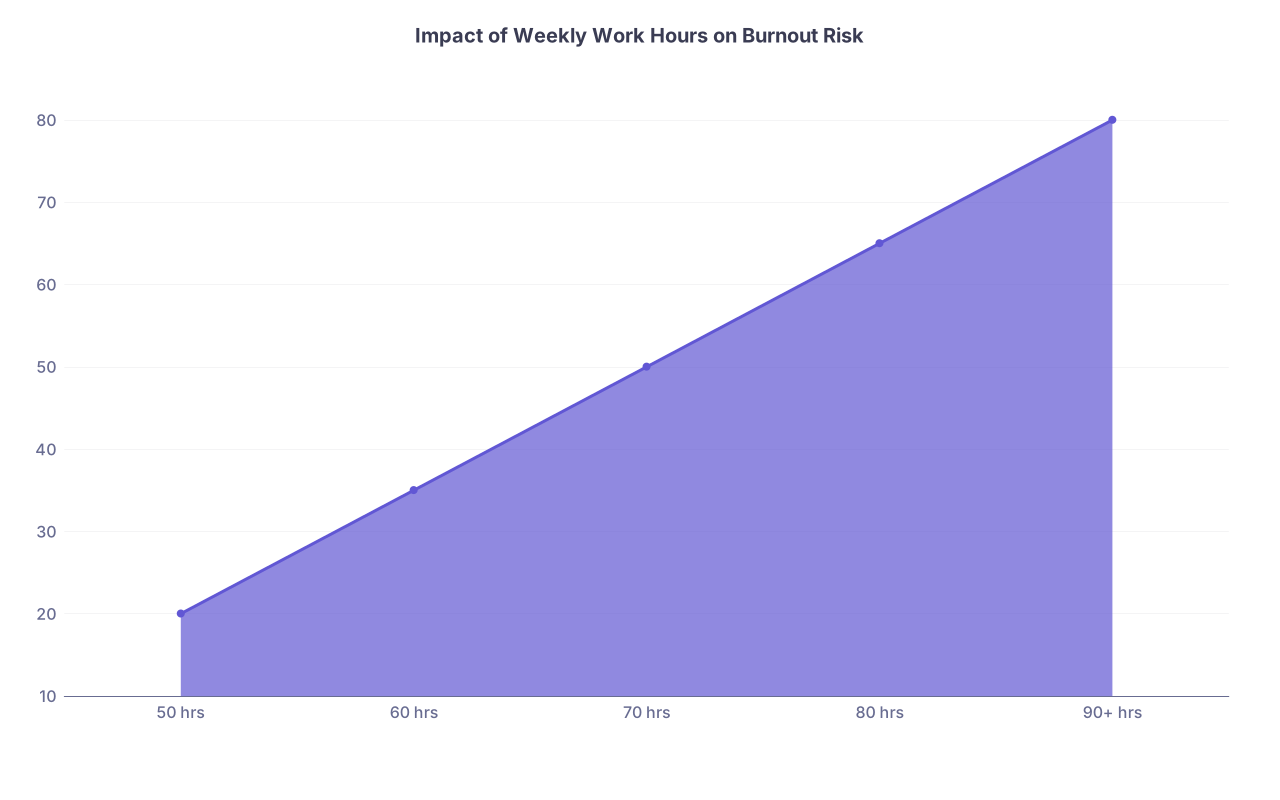
| Category | Value |
|---|---|
| 50 hrs | 20 |
| 60 hrs | 35 |
| 70 hrs | 50 |
| 80 hrs | 65 |
| 90+ hrs | 80 |
This simplified illustration matches what multiple residency and physician surveys keep finding: as weekly hours climb, burnout risk rises steeply. There is no magical plateau where “I handle it fine” makes you exempt from physiology.
Reality Check #1: Most PGY1s Cannot Even Legally Moonlight
Here’s the first inconvenient fact that gets ignored in the “grind” narrative.
Most PGY1s are prohibited from independent moonlighting. Not “discouraged.” Flat-out not allowed.
Program policies often state:
- No external moonlighting in PGY1.
- No independent practice until you’ve demonstrated competence and are at least PGY2.
- All hours count toward the 80‑hour rule anyway, so they have to track it.
And they do this for a reason. Interns are still learning basic systems: how to admit, how to cross-cover, how to not miss the obviously dying patient. The idea that you’re ready to safely manage patients independently for extra pay just months into internship is mostly fantasy, except in very structured, supervised setups.
So if you’re PGY1 and you’re hearing a lot about moonlighting, check the fine print:
| Program Type | PGY1 Internal Moonlighting | PGY1 External Moonlighting |
|---|---|---|
| University IM | Rare, highly restricted | Almost always prohibited |
| Community IM | Sometimes late PGY1 only | Usually prohibited |
| Surgery | Essentially never allowed | Prohibited |
| EM | Rare in PGY1, more PGY2+ | Usually PGY3+ only |
| Psych/Other | Occasionally limited | Prohibited in PGY1 |
If someone tells you they’re “killing it with moonlighting as a PGY1,” it’s often:
- Mislabeling extra paid call within their own system.
- Technically violating policy.
- Or just exaggerating.
The myth starts with an illusion of how common and acceptable this even is.
Reality Check #2: Extra Money Has a Very Steep Marginal Cost in PGY1
Yes, you’re underpaid. Yes, your loans are atrocious. Yes, attending salaries look like freedom.
But PGY1 is where time and sleep are worth more than the hourly moonlighting rate.
Let’s walk through what you’re actually trading.
Say your base schedule runs 60–65 hours a week. You pick up:
- 1 extra 8–10 hour urgent care shift on a “golden” weekend.
- Or a couple of 4–6 hour evening shifts covering some low-acuity service.
On paper, that could be an extra $400–$800 a week. Tempting. Especially when you do the depressing math on interest capitalization.
In reality, you’re paying with:
- The one weekend you might have slept more than 6 hours.
- The only day you could grocery shop, meal prep, call your family, or catch your breath.
- The mental bandwidth you needed to actually learn from your main job instead of just surviving it.
And there’s a non-trivial safety cost. Fatigue isn’t linear. When you’re already stretched, that one more shift doesn’t just make you “a bit more tired.” It can push you from “functioning” into “making real mistakes.”
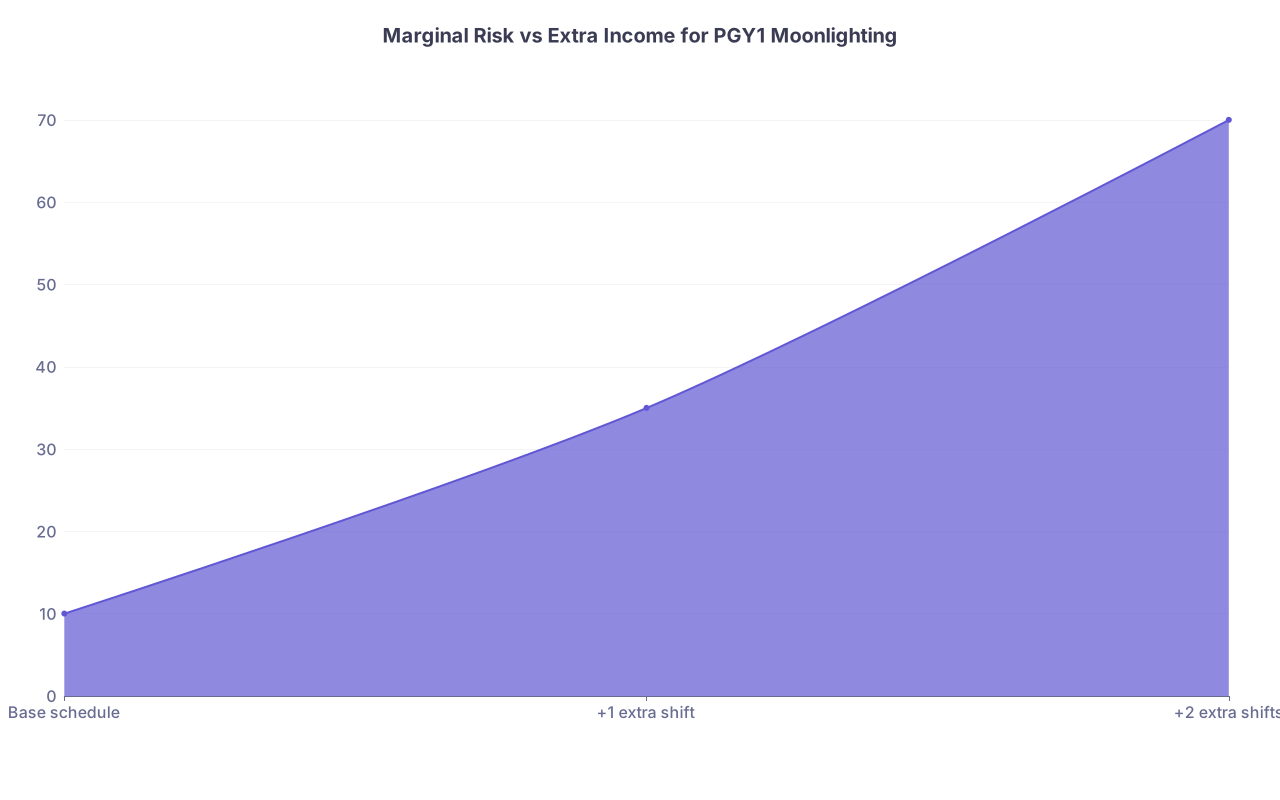
| Category | Value |
|---|---|
| Base schedule | 10 |
| +1 extra shift | 35 |
| +2 extra shifts | 70 |
Very rough model here—but the point stands. The first bump in hours brings a disproportionately large bump in fatigue and error risk when the base load is already high.
Money you can earn for the rest of your career. The PGY1 learning curve—you only get once.
Reality Check #3: Learning, Not Cash, Is the Real Compound Interest
This is the piece no one flexes about, because you cannot screenshot it for Instagram.
The real “hustle” move in PGY1 isn’t to monetize every spare hour. It’s to invest in what will make you both safer and more marketable later: skill, efficiency, judgment.
When I see interns chasing moonlighting early, I see a common pattern:
- They’re behind on notes and sign-outs.
- They’re chronically sleep-deprived.
- Their clinical growth plateaus earlier because they’re in constant survival mode.
- They start missing educational conferences, reading, or feedback because there’s simply no bandwidth left.
Contrast that with the intern who:
- Goes home and reads on their sickest admission.
- Spends a Saturday tightening up their workflow or learning keyboard shortcuts and templates.
- Uses a free afternoon to practice procedures with a sim lab, senior, or PA.
Which one is more likely to be a confident PGY2 who can then safely moonlight—and command higher rates—because they’re actually good?
Intern year is expensive in the short term. But the compound interest on competence is enormous.
Reality Check #4: Burnout Isn’t Just “Feeling Tired”
The way people talk about burnout in residency is usually wrong. They treat it like a vague mood issue or a weakness problem. Just toughen up. Everyone’s tired. Stop whining.
The data is uglier.
Burnout correlates with:
- Higher self-reported medical errors.
- Depression and suicidal ideation.
- Residents leaving medicine or switching paths entirely.
- Increased substance use and relationship breakdowns.
Interns are uniquely vulnerable. You’re new, you’re slower, you’re scared to say no, and you haven’t built internal boundaries yet. That’s the worst time to add more responsibilities driven by money and FOMO.
If your baseline schedule already has you:
- Waking up with dread more often than not.
- Snapping at nurses, co-interns, or family for minor things.
- Feeling emotionally numb with patients, especially at night or late in the block.
Then adding work for extra cash is not “ambitious.” It’s like pouring gasoline on a fire you’re pretending doesn’t exist.
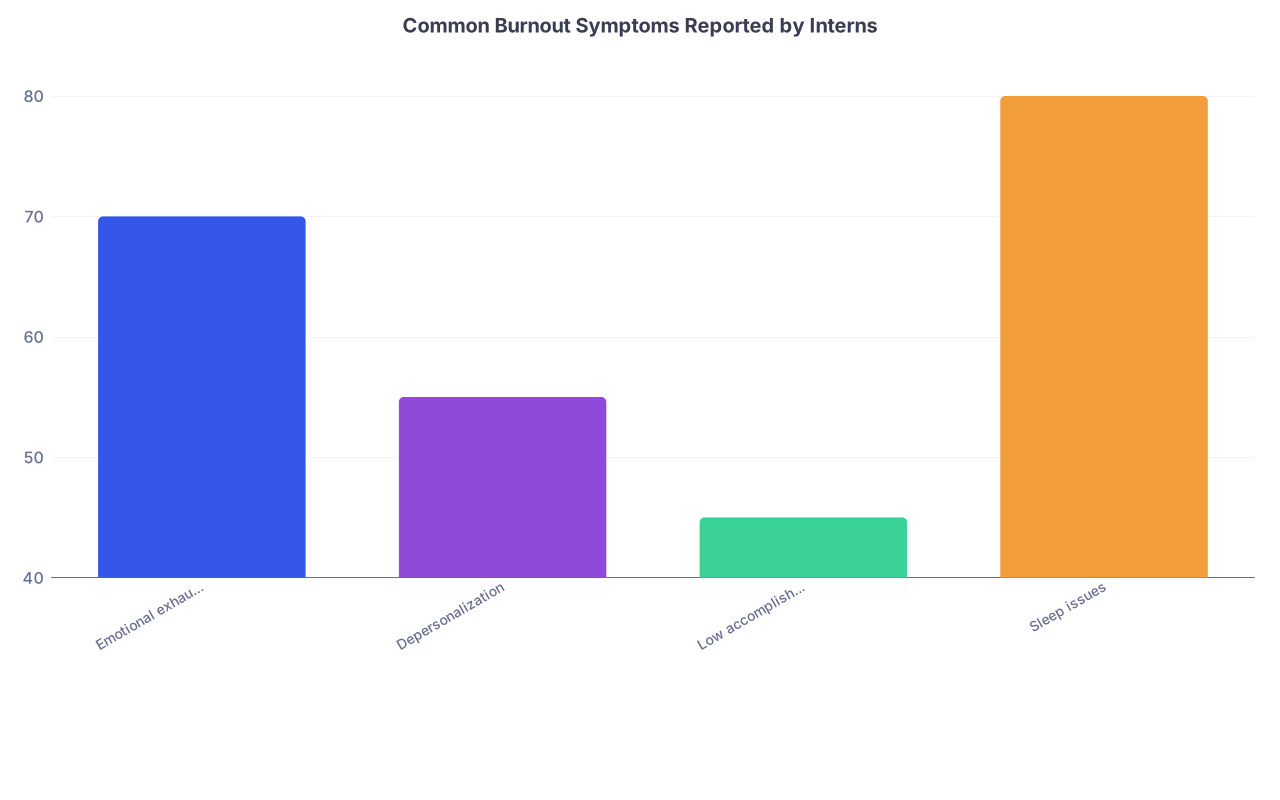
| Category | Value |
|---|---|
| Emotional exhaustion | 70 |
| Depersonalization | 55 |
| Low accomplishment | 45 |
| Sleep issues | 80 |
These percentages line up with multiple studies on resident burnout. Notice how high the sleep-related and emotional exhaustion categories are. Now imagine shrinking what little restorative time you have left.
Reality Check #5: Not All “Moonlighting” Is Created Equal
Here’s where nuance actually matters.
There’s a big difference between:
- Unsanctioned, external moonlighting in a high-liability urgent care or ED setting that you’re not trained to handle yet.
- Versus internal, supervised extra shifts that are effectively more of your residency work, just paid differently.
Some programs run structured, relatively safe setups: extra night coverage, observation unit shifts, infusion center coverage, etc. Often:
- They’re explicitly approved.
- They’re counted toward duty hours.
- They’re in an environment where you can easily escalate to an attending.
- They’re usually offered to upper levels first, if not exclusively.
Even then, as a PGY1, you have to ask uncomfortable but necessary questions:
- What’s my average weekly hours now, including documentation I do at home?
- How am I actually sleeping on call weeks vs “supposed to be off” weeks?
- Am I already behind on notes, studying, or just basic life maintenance?
- Am I actually bored and underworked, or am I just broke and panicking?
If you’re on a lighter elective, sleeping well, and truly functioning at a high level—and your program allows carefully structured, supervised extra shifts—you might do a very limited number without wrecking yourself.
But this is the exception. Not the rule. And pretending otherwise is how PGY1s get themselves into real trouble, ethically and clinically.

| Step | Description |
|---|---|
| Step 1 | PGY1 thinking about moonlighting |
| Step 2 | Stop - focus on training |
| Step 3 | High risk - avoid extra work |
| Step 4 | Consider very limited, supervised shifts |
| Step 5 | Reassess after each block |
| Step 6 | Program allows PGY1 moonlighting |
| Step 7 | Average hours under 55 and stable |
| Step 8 | Sleep, mood, performance stable |
Notice how many gates you have to pass before “Sure, pick up extra” becomes rational.
Reality Check #6: Your Future Self Does Not Care If You Made an Extra $5K as an Intern
Zoom out.
You’re about to spend decades earning an attending salary that absolutely dwarfs whatever PGY1 moonlighting you do. Whether you start your first real job with $210K debt vs $215K isn’t the thing that determines whether you feel trapped at 40.
What does?
- Whether you learned to protect sleep as a non-negotiable.
- Whether you burned out so hard early that you stopped caring about being good.
- Whether you built the spine to say “no” to unsafe expectations, even when they’re dressed up as opportunities.
You do not win by being the tiredest PGY1 with the biggest side income. No one cares. The job market doesn’t care. Fellowship PDs don’t care.
But you absolutely lose if you turn your formative training years into a blur of poorly-rested shifts and half-learned medicine.
Years from now, you will not remember the exact short-term hit your debt took because you chose sleep and learning over extra shifts. You will remember whether you still liked yourself—and the kind of doctor you were becoming—by the end of internship.