The fear of calling your senior at 3 AM is going to make you feel more incompetent than the actual call ever will.
Let me be blunt: every intern thinks this is how their career ends. One “stupid” 3 AM question and suddenly you’re branded as the weak one, the clueless one, the intern who “can’t handle nights.” I’ve heard this exact phrase whispered after sign-out: “I didn’t want to bother them, they already think I’m behind.”
You’re not crazy for being scared. You’re just new.
The 3 AM Nightmare Loop In Your Head
You know the loop I’m talking about.
You’re on call. Night float. Cross-cover. Whatever flavor of torture your program uses. It’s 2:47 AM and the nurse calls: “Hey, can you come see Mr. Lopez in 412? He doesn’t look right.”
Your brain does this:
- He doesn’t look right → what does that even mean?
- If I go and I don’t know what’s wrong, I’ll have to call my senior.
- If I call my senior, they’ll realize I’m incompetent.
- If they think I’m incompetent, they’ll tell the PD.
- If the PD hears, I’ll get labeled.
- If I get labeled, fellowship is dead.
- If fellowship is dead, my career is over. At 2:47 AM. Because of “he doesn’t look right.”
So you stall. You stare at the chart. You click labs again like they’re going to rearrange themselves into a diagnosis. You convince yourself to “wait for repeat vitals” because that sounds almost responsible.
And underneath all that “clinical thinking” is just one thing: I don’t want to make that call.
What Seniors Actually Think vs What You’re Afraid They Think
Here’s the ugly truth: some seniors are jerks. Some are exhausted. Some had abusive training and think “I suffered, so you should too.” I’m not going to pretend every senior is a saint who lives to teach.
But the story you’ve written in your head about what they think of you? It’s usually way off.
You think they’re thinking:
- “Why can’t this intern handle anything?”
- “Did we really match this person?”
- “I shouldn’t have to be bothered with this.”
What they’re more likely actually thinking (when they’re functional and not half-dead):
- “Is the patient okay?”
- “Did they already check the basics?”
- “Can we fix this fast so I can go back to sleep?”
- “At least they called instead of missing something dangerous.”
Do some seniors talk trash about “needy” interns? Yeah, I’ve heard it word for word. But almost every single time they still say, “But I’d rather they call than miss a GI bleed” or “At least they didn’t sit on it.”
There’s a hierarchy of sins as a trainee. And “calling too early” is near the bottom. “Not calling and letting a patient crash quietly” is very close to the top.
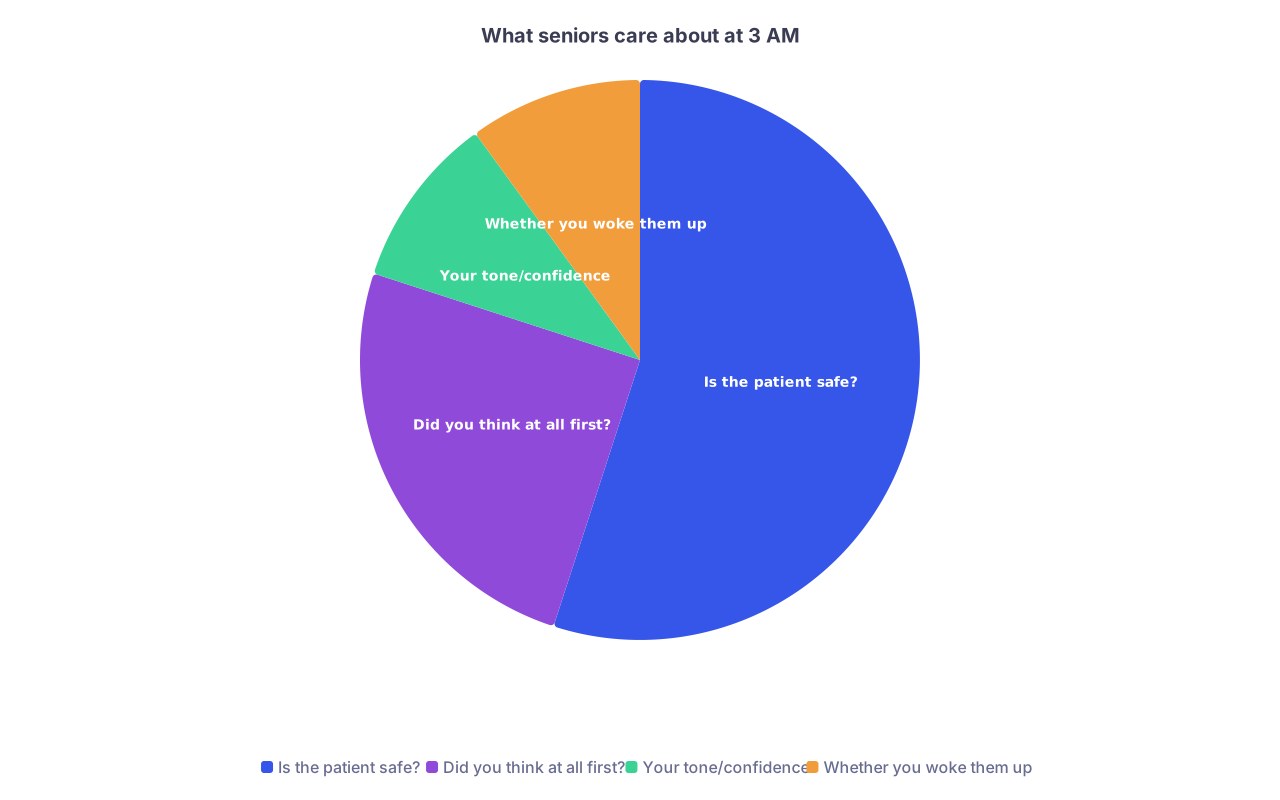
| Category | Value |
|---|---|
| Is the patient safe? | 55 |
| Did you think at all first? | 25 |
| Your tone/confidence | 10 |
| Whether you woke them up | 10 |
That last slice—“whether you woke them up”—feels huge to you. But clinically? It’s the least important. They’re allowed to be tired and annoyed. You’re required to keep patients alive.
The Real Worst-Case Scenario (It’s Not What You Think)
You’re probably catastrophizing like this:
Worst-case:
You call. They sound pissed. They sigh loudly. They say, “Why are you calling me about this?” You get flustered, your mind goes blank, and you forget the potassium you just looked up 8 seconds ago. You hang up and shake for 10 minutes and replay every second in your head.
Embarrassing? Yes.
Career-ending? No.
Even memorable a week later? Usually not.
Now compare this to the actual worst-case scenario:
You don’t call. You convince yourself it’s nothing. You “watch and wait” when you’re not trained to know what “wait” is safe. The patient decompensates. Code. ICU transfer that could’ve been prevented. Chart review. M&M. Someone eventually asks, “When did the nurse first call you?”
And there’s this awful silence when they realize: you sat on it. Alone. Because you were scared to seem bothersome.
That’s the real career-denting moment. Not being “the intern who calls,” but being “the intern who didn’t call.”
I’d rather you be the intern everyone gently teases for overcalling than the one they don’t trust at night.
How To Call at 3 AM Without Sounding Like You Have No Idea What You’re Doing
Your fear isn’t just about calling. It’s about sounding lost once they pick up.
So make the call predictable—for you, not just them.
Use a mental script. Not some rigid perfect SBAR recital, just a checklist you can cling to when your hands are shaking. Something like:
- Who you are and what service.
- Why you’re calling (1 sentence).
- What you actually know (vitals, exam, key labs/imaging).
- What you’ve already done.
- What you’re worried about or what you think you might need.
Example:
“Hey Dr. Smith, this is Alex, the intern on medicine nights. I’m calling about Mr. Lopez in 412. The nurse called because he ‘doesn’t look right’ and his BP dropped from 120s to 90/55 over the last hour.
I saw him just now—he’s awake but looks pale and diaphoretic. HR 115, RR 22, saturating 96% on 2L, temp 37.2. Lungs clear, abdomen soft but tender in the left lower quadrant, no obvious bleeding. His hemoglobin was 8 on admission, last checked yesterday at 8.5. I gave a 500 cc bolus and ordered a stat CBC and lactate.
I’m worried about possible early sepsis versus bleeding, and I’m not sure if I should be escalating him to a higher level of care or getting imaging now. Can you help me think through next steps?”
See what that does? You sound like someone who:
- Showed up
- Looked at the patient
- Did something reasonable
- Is worried about the right general zone
Even if your differential isn’t perfect, it shows your brain is turned on.

| Step | Description |
|---|---|
| Step 1 | Nurse calls |
| Step 2 | See patient yourself |
| Step 3 | Check vitals and exam |
| Step 4 | Do immediate basics - fluids, O2, labs |
| Step 5 | Call senior with brief summary |
| Step 6 | Still worried? |
You don’t need a perfect plan. You just need to show you made an effort before hitting their number.
“But What If They Really Do Think I’m Incompetent?”
Let’s sit in the worst-case anxiety for a second, because that’s what your brain is doing anyway.
Say you have a rough month. You’re slower than your co-intern. You call more. You get rattled on the phone. One senior makes a comment during feedback:
“They need a lot of guidance on nights. Calls me for things they should be able to manage.”
Intern brain translation: “I am stupid and doomed.”
Reality translation: “They’re early in their learning curve and I’m annoyed sometimes.”
People forget this: everyone has a labeled weakness early on. Always. Some people are “too slow.” Some are “too aggressive.” Some are “too hands-off.” Some “over-call.” Some “never call.”
You are not getting through residency without someone saying something about you in a room you’re not in. That’s how training works. It sucks, but it’s true.
The only thing that really sticks long-term is a pattern of being unsafe. Not uncertain. Not needy. Unsafe.
And “I call when I’m not sure at 3 AM” is actually the exact opposite of unsafe.
| Pattern You Show | How They Actually File You Away |
|---|---|
| Calls often, knows basics | Cautious but trying |
| Never calls, surprises on AM rounds | Worrying, possibly unsafe |
| Calls with zero data | Needs structure, but salvageable |
| Calls, owns gaps, improves | Trustworthy and growing |
You want that last category. Not “already perfect,” just clearly improving and not hiding problems.
You’re Supposed To Need Help. You’re an Intern, Not a Nocturnist.
Honestly, we’ve done a number on ourselves as a culture. We tell med students, “You’re not supposed to know everything.” Then somehow, on July 1, we act like interns should magically handle a GI bleed alone at 2 AM because they’ve been a doctor for… 36 hours.
Here’s a hard reset:
Intern year is not a competence exam. It’s a supervised crash course.
You’re not being tested on “Can you manage the floor alone?” You’re being tested on:
- Do you show up to the bedside?
- Do you recognize when something is wrong—even if you don’t know what?
- Do you freak out and go silent, or do you say, “I’m worried and I need help”?
- Do you learn from the last 3 AM call and do slightly better the next time?
No program expects their interns to function as independent hospitalists at night. If they act like they do, they’re either lying or dangerous.

Handling the Jerks (Because Yes, There Are Jerks)
We have to talk about this too. Not every senior is kind. Some will make you feel small on purpose. I’ve watched seniors say things like:
- “You woke me up for that?”
- “Did you even think before you called?”
- “You should know this by now.”
Three things here.
First, their reaction is about them, not you. Sleep deprivation, burnout, their own imposter syndrome. You are just the unlucky person holding the phone when it leaks out.
Second, you still did the right thing by calling. You protect patients first, your ego second.
Third, you can quietly defend yourself through preparation. Not by being perfect, but by doing your minimum due diligence before hitting call. A quick personal script right before dialing:
- “Have I seen the patient?”
- “Do I know the current vitals?”
- “Have I checked recent labs/imaging?”
- “Can I state in one line why I’m worried?”
If yes to those, you’re allowed to wake literally anyone.

If someone is consistently demeaning, talk to a chief or another trusted senior you actually like. Not to “snitch,” but to say, “I’m trying, I’m calling appropriately, and I’m getting shut down in a way that makes it harder to be safe.” You’d be surprised how often chiefs already know who the problem seniors are.
The Quiet Skill You’re Actually Building
Buried underneath all of this fear is a skill nobody really explains: judgment about uncertainty.
You’re not learning “when to never call” and “when to always call.” You’re learning how to live in the grey:
- The patient who might be fine but might be brewing something
- The lab that’s slightly off but not catastrophic
- The tachycardic patient with normal BP
- The “I just don’t like how they look, but I can’t put it in words yet”
You’re learning to trust that discomfort enough to share it with someone more experienced.
That’s not incompetence. That’s literally what seasoned attendings do in complex cases: “Something about this doesn’t sit right; let’s dig deeper.”
Right now, your version of that is, “I’m not sure, but I’m uneasy so I’m calling.” It feels like weakness. It’s actually the foundation of every “good clinical judgment” compliment you’re going to get later.
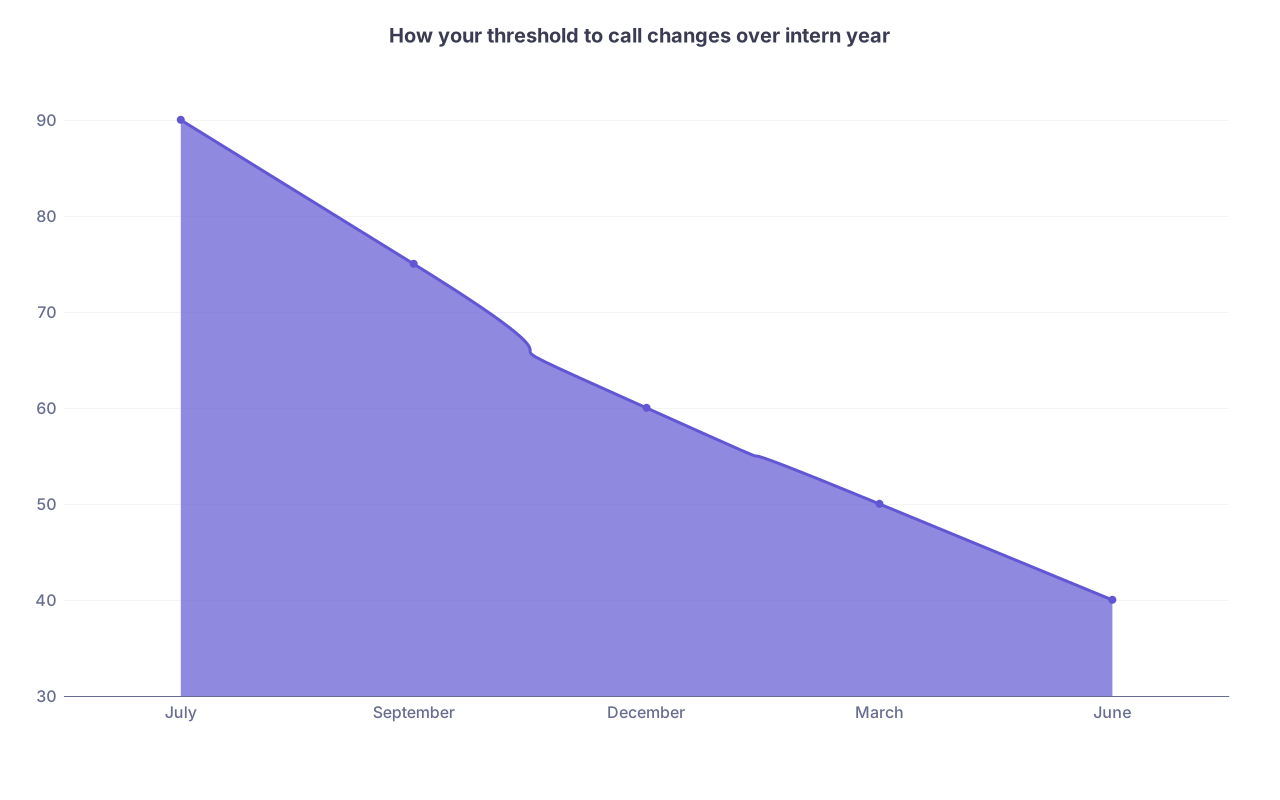
| Category | Value |
|---|---|
| July | 90 |
| September | 75 |
| December | 60 |
| March | 50 |
| June | 40 |
That line dropping isn’t you getting reckless. It’s you getting better at separating “totally fine” from “actually bad.” Early on, you’re right to call more. You don’t know where the cliffs are yet.
How to Practice This Before You’re Alone at 3 AM
Your anxiety is partly about not knowing what “normal” calling behavior looks like. So steal other people’s judgment.
On day shifts, ask your seniors straight up:
- “On nights, what kind of things do you want me to always call you about?”
- “What do you think interns under-call on?”
- “What do people usually over-call you for that you wish they’d manage alone—and how?”
Get concrete examples. Not vague “use your judgment” nonsense.
Then, after a scary night, debrief with someone safe. A co-intern, or that one reasonable senior you trust:
“I had X situation. Here’s what I did. Here’s when I called. Would you have wanted that call earlier, later, or was that about right?”
That feedback, repeated over a few months, is what actually rewires your calling instincts. Not quietly panicking alone and trying to guess what everyone wants.

FAQ (The Stuff You’re Probably Still Spiraling About)
1. What if I call, and it turns out to be nothing? Won’t I look stupid?
You’ll feel stupid. That’s different. Every single senior has done this earlier in their own training. Called a code that fizzled out. Overreacted to a lab. That embarrassment is part of learning. Programs don’t judge you for false alarms; they judge you for missing real ones. If you truly did a basic assessment and had a real concern, “it turned out fine” is not a failure. It’s just relief.
2. How many times is “too many” times to call the same senior in a night?
There’s no magic number, despite what your anxiety is trying to calculate at 3:12 AM. Three solid calls for three separate legitimate issues is fine. Ten calls for “I haven’t seen the patient yet but…” is a problem. Focus less on the raw count and more on: Did I see the patient? Do I have new, relevant info? Am I actually worried about something real? If yes, you call, even if it’s the fifth time.
3. Should I ever not call and just wait for morning?
If you’re asking this question in a pit-of-your-stomach way, that’s usually your answer: call. The only time “wait for morning” makes sense is for truly elective, non-urgent things—like asking about a med reconciliation puzzle that won’t affect tonight, or clarifying long-term plan stuff. Anything that involves new pain, new vitals changes, mental status change, bleeding, breathing, or your general sense of “badness”? That’s a night issue, not a morning one.
4. What if I freeze as soon as they answer and can’t remember anything?
Happens all the time. Anxiety blows a fuse and your mind goes white. This is why you write down a few bullet points before calling: room number, one-line reason, vitals, what you’ve done, what you’re worried about. Literally scribble it on scrap paper or type it in a note. If you panic, just read it. You don’t get extra points for sounding slick at 3 AM. You get points for being accurate and not hiding that you’re nervous.
Two things to walk away with:
- Calling your senior at 3 AM doesn’t make you incompetent. Letting fear of that call stop you from protecting a patient? That’s the only real incompetence here.
- You’re supposed to need help. The goal isn’t “no calls.” The goal is “smart calls, with effort behind them, and the courage to make them anyway when you’re scared.”
You’re not the first intern shaking over a phone at 3 AM. You won’t be the last. Pick it up anyway.