
Worried You Chose a Too-Intense Specialty? How to Reassess Intern Year
What if you’ve already chosen the wrong specialty and you’re only a few months into intern year?
That’s the thought, right? You’re sitting in the call room at 2 a.m., everyone else seems… not happy, exactly, but at least not spiraling. And you’re wondering, “Does everyone feel like this? Or is this my sign that I made a huge mistake?”
Let me just say it out loud for you: a ton of interns quietly ask themselves if they picked a specialty that’s too intense. Surgery, EM, OB/GYN, ICU-heavy IM, even malignant-feeling peds or psych programs. It’s not rare. You’re not weird for thinking it. The part that feels scary is: what do you do with that doubt when you’re already in it?
Let’s walk through this like someone who’s actually sat in those 3 a.m. “what the hell am I doing with my life” moments. Because I have.
First: Are You Burned Out, Or In The Wrong Specialty?
The most confusing part is that burnout and “wrong specialty” look almost identical from the inside.
You’re tired. You’re snappy. You cry in your car after call. You think about quitting on your walk from the parking garage. But that doesn’t automatically mean you picked the wrong field. It might just mean you’re a normal intern in a brutal system.
Here’s where I’d start: instead of asking, “Did I choose the wrong specialty?” ask, “Is this suffering about this specialty or about being an intern?”
A few concrete things to notice:
Pay attention to your best moments, not just your worst
Everyone obsesses over the awful days. But what about your least-awful ones? On a day where you’re still exhausted but not totally destroyed, what parts of the work feel:- Slightly interesting?
- Less soul-sucking?
- Maybe even… satisfying for 5 seconds?
If you’re in surgery, is there a moment in the OR where time passes faster? If you’re in EM, does the rapid decision-making energize you a little, even when you’re dead on your feet? If you’re in OB, does a delivery still light something up inside you—even if you’re hating postpartum rounding?
If nothing feels even remotely right, that’s data. But don’t trust only the days when you’re on hour 26 with no sleep.
Separate “too intense” from “wrong fit”
Some specialties are objectively intense: trauma surgery, EM, neuro ICU, OB. High acuity, long hours, unpredictable calls. But “too intense” can mean a few different things:- Too physically intense (you can’t keep up with the hours/nights)
- Too emotionally intense (every shift feels like constant crisis)
- Too chronically intense (you can’t see yourself tolerating this at 40)
Versus:
- Fundamentally not interested in the clinical content
- Don’t like the culture/colleagues/attendings in that field
- Don’t like what the attendings’ lives look like 10+ years ahead
Burnout screams “everything is bad.” You have to force yourself to be specific.
Don’t compare yourself to the loudest people on your team
Every program has that one senior who says, “I love this; I’d do it even if they didn’t pay me.” Good for them. But they’re not the norm. I’ve had seniors quietly admit: “I’m staying because I’m too deep in” or “I don’t love it, but I can tolerate it.”You’re not broken just because you don’t want to live in the hospital.
What Intern Year Is Supposed To Feel Like (vs What’s A Red Flag)
You keep asking, “Is this normal?” That’s the core fear.
So let’s be brutally honest. Some misery is expected. Some misery is a warning sign. And the system does a crappy job distinguishing them for you.
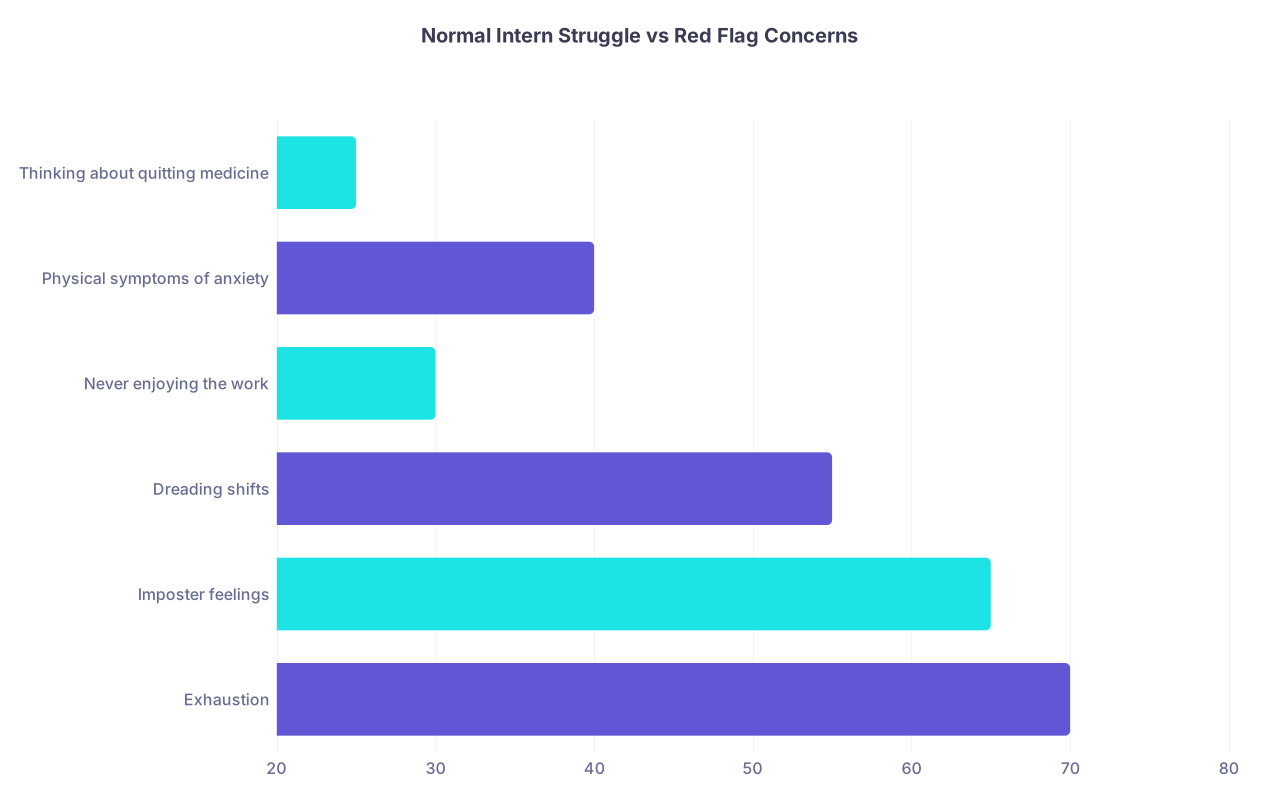
| Category | Value |
|---|---|
| Exhaustion | 70 |
| Imposter feelings | 65 |
| Dreading shifts | 55 |
| Never enjoying the work | 30 |
| Physical symptoms of anxiety | 40 |
| Thinking about quitting medicine | 25 |
Here’s how I mentally separate it:
“Normal for intern year” (awful, but common):
- Dreading call nights, but feeling okay-ish 1–2 days after
- Wondering at least weekly if you made a mistake, then having a few decent days
- Feeling stupid, slow, behind everyone else
- Crying sometimes after a really bad shift
- Not loving every rotation but tolerating most
Red flags that deserve serious attention:
- You never have days where you feel even mildly okay about the field
- You feel actual dread every single morning, not just before call
- Panic attacks before shifts or at the thought of certain tasks
- You’re fantasizing daily about walking out and never coming back
- You’re numb or detached in ways that scare you (“I don’t care if this patient dies” kind of numb)
If most of your distress is in the red-flag zone, this isn’t just “intern year is hard.” That’s your brain begging you to reassess.
How To Reassess Without Blowing Up Your Life Overnight
You don’t need to decide your entire future specialty at 3 a.m. on a random Tuesday. The stakes feel absolute right now—“If I’m wrong, I’ve ruined my life”—but your next step can be small and quiet.
Step 1: Do a brutally honest “pattern check”
Not when you’re post-call delirious. On a half-day off, sit somewhere away from the hospital and ask yourself three questions:
Across all rotations so far, when do I feel least miserable?
Specific: OR? Clinic? ED? ICU? Floor?Which parts of this specialty do I actually like on my better days?
Examples: Procedures, diagnostic puzzles, continuity, acute resuscitation, conversation-heavy visits, working with kids, working with older adults.What do I feel when I look at the attendings in my field?
Do you think: “I could grow into that” or “Shoot me before I end up like that”?
Write it down. It’s easier to see patterns on paper than in your own spinning head.
Step 2: Get data from rotations outside your specialty
If your program lets you rotate on off-service or electives during intern year, use those like reconnaissance missions.
You’re not cheating on your specialty by paying attention.
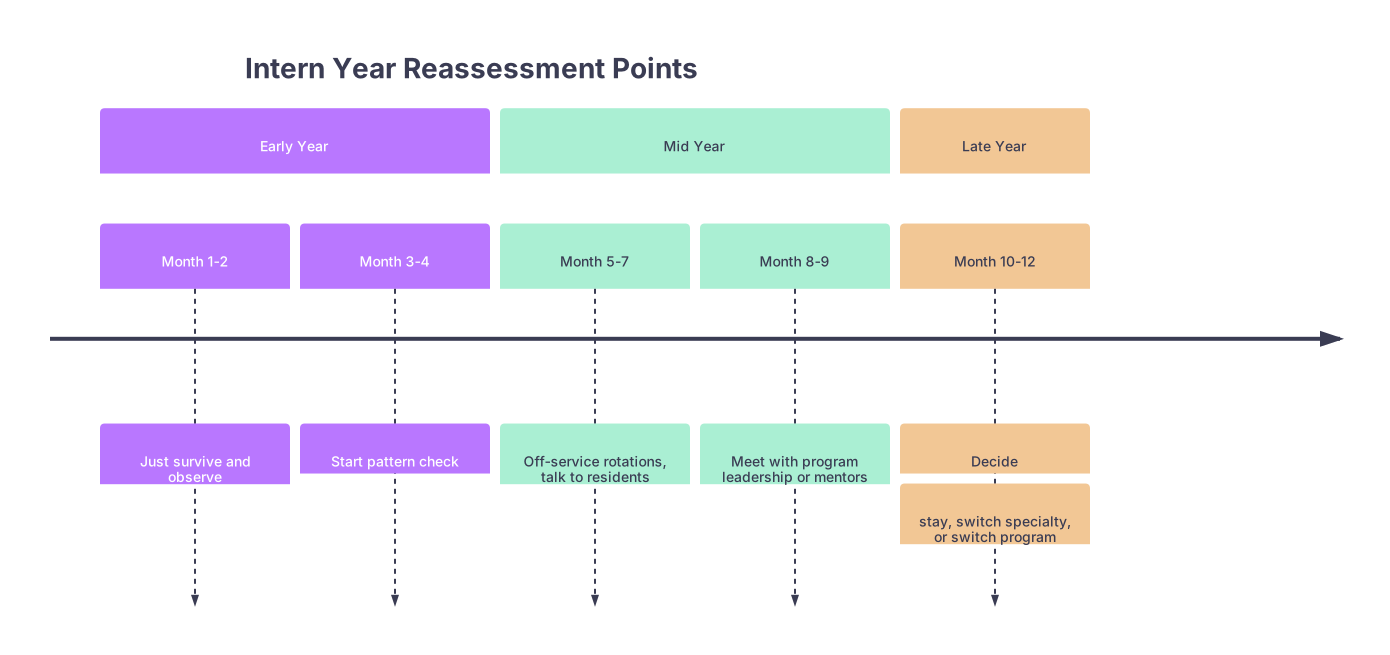
| Period | Event |
|---|---|
| Early Year - Month 1-2 | Just survive and observe |
| Early Year - Month 3-4 | Start pattern check |
| Mid Year - Month 5-7 | Off-service rotations, talk to residents |
| Mid Year - Month 8-9 | Meet with program leadership or mentors |
| Late Year - Month 10-12 | Decide |
On off-service rotations, ask yourself:
- Do I feel lighter here, even when it’s busy?
- Do I click more with these residents than “my own”?
- Can I picture doing this all day, every day, for years?
If you’re in a high-intensity field (surg, EM, OB) and then rotate through, say, outpatient IM or psych and suddenly your chest unclenches—that’s a sign.
On the other hand, I’ve seen people in IM go to the MICU and feel this weird, messed-up sense of “I kind of like this intensity,” which freaked them out, but it actually confirmed they were in the right ballpark.
Step 3: Talk to second- and third-years who almost left
You don’t actually want the chirpy “I love everything” senior. You want the PGY-3 who admits, “Yeah, I almost transferred after intern year.”
Every program has them.
Ask them:
- When did you question your choice the most?
- What made you stay or leave?
- Looking back, how did you know it was burnout vs wrong specialty?
- Do you regret your decision?
You will learn more in 15 honest minutes with a burned-out third-year than from 3 hours of doomscrolling Reddit.
What If You Really Did Pick The Wrong Specialty?
Let’s go straight into the fear: “If I leave, I’ll be a failure; I’ll never match again; I’ll be stuck.”
People do switch. Across fields. Across programs. Even after a full intern year. It’s just not loudly advertised because everyone’s embarrassed.
Here’s what I’ve seen actually happen (not theoretical, actual humans):
| Starting Field | Switched To | When | Outcome |
|---|---|---|---|
| General Surgery | Anesthesia | After PGY-1 | Matched CA-1 at same institution |
| EM | Psych | Mid-PGY-1 | Restarted as PGY-1, much happier |
| OB/GYN | FM | After full year | Got FM spot at community program |
| IM (malignant program) | IM (new program) | End of PGY-1 | Later matched cardiology fellowship |
| Peds | Neurology | After PGY-1 | Matched adult neuro, no year wasted |
Is it easy? No. Is it impossible? No.
The unglamorous realities of switching
If you decide the specialty really is wrong for you:
- You might have to repeat a year or part of a year.
- You might need to move cities.
- You might have to swallow your pride and ask attendings for letters that basically say, “They’re not a bad doctor; they just aren’t a fit for this field.”
- There might be a gap year. People do research, work as prelims, or take time off.
None of that is fun. But it’s still better than forcing yourself through 3–7 years of training for a job you’ll hate at 40.
How to explore switching without burning bridges
You don’t have to march into your PD’s office tomorrow and shout, “I want out.” You can do this gradual and strategic:
Quietly talk to a trusted faculty member who isn’t your PD
Someone who’s seen you work and isn’t going to panic. Lay it out: “I’m trying to figure out if this is intern-year hard or wrong-field hard.”Reach out to residents in the specialty you’re eyeing
“Can I ask you what you like and hate about your field? I’m trying to reassess where I fit long-term.” That sentence doesn’t commit you to anything.Learn the actual logistics
Ask how people have transferred in before. Off-cycle spots? Prelim-to-categorical? Second residency matches? This is where a GME office or mentor who’s been around helps.
If you do decide to switch, most PDs would rather you be honest early than resentful and disengaged for years. A good PD will help you, even if it’s awkward.
But What If The Specialty Is Fine And The Program Is The Problem?
Another nightmare scenario: “I don’t hate the field. I hate this place. These people. This culture.”
That’s not imaginary. Some programs are straight-up toxic. Malignant. Dehumanizing. They break everyone, not just “weak” interns.
So ask yourself: if you picture the same specialty but:
- Fewer hours,
- More support,
- Less screaming/humiliation,
- A city/life that doesn’t drain you…
Would it feel different?
Because sometimes the question isn’t “Is surgery too intense?” It’s “Is surgery at this program, with this call schedule and these attendings too intense?”
I’ve watched residents switch programs and become completely different people. Same field. Different environment. Suddenly they’re sleeping, they’re laughing, they’re not googling “nonclinical jobs for MDs” every week.
If that resonates, your reassessment should include:
- Talking to trusted seniors: “Is this considered a malignant program?” (They’ll tell you. They know.)
- Asking people who trained elsewhere what the culture is like outside.
- Considering a program change instead of a full specialty divorce.
Handling The Day-To-Day While You Figure It Out
The worst part is you’re trying to make huge life decisions while being sleep-deprived and emotionally wrecked. So you need some survival-mode strategies while you’re “in the investigation phase.”
Set a decision horizon
Don’t pressure yourself to decide this week. Say: “I’ll actively reassess for the next 3–6 months. At [month X], I’ll make a more concrete decision: stay, switch specialty, or switch program.”
Your brain calms down a little when it knows, “I’m not stuck forever; I’m just not deciding today.”
Make tiny, selfish improvements
You can’t fix the call schedule. But you can:
- Protect one small ritual (gym, walk, coffee with a friend) like it’s an order.
- Stop volunteering for extra shifts to “prove yourself” when you’re already at your limit.
- Be ruthlessly boring with your limited off time—sleep, food, 1 thing that makes you feel like a human.
That doesn’t solve the existential crisis, but it keeps you from completely disintegrating while you solve it.
Be honest with at least one person
Hiding it from everyone makes it 10x heavier. Tell:
- A co-intern who seems safe
- A therapist (if your hospital offers free counseling, use it)
- A mentor from med school
Say the scary sentence out loud: “I’m not sure I picked the right specialty.” You’d be surprised how many people respond with, “I felt that way too.”
If You Stay: How To Make Peace With An Intense Specialty
Let’s say you reassess and decide: yes, this specialty is intense, but no, it’s not wrong for me.
Then the work shifts from “Should I leave?” to “How do I survive this path long-term without burning out or becoming bitter?”
Some concrete ways I’ve seen people make it work:
- Choosing fellowships or jobs within the field that are less punishing (e.g., outpatient-heavy EM gig, less malignant surgical subspecialty, academic position with more teaching).
- Saying no early to toxic cultures—just because your residency glorifies martyrdom doesn’t mean your career has to.
- Being honest about your limits: you actually don’t have to be the hero who never calls in sick and volunteers for every extra overnight.
High-intensity doesn’t have to mean misery forever. But you have to be deliberate about designing a future that’s sustainable for you, not some imaginary “ideal resident.”
You’re Not Trapped. Even If It Feels Like You Are.
Right now, it probably feels like one bad decision at 25 locked in your entire life trajectory. It didn’t.
You have more levers than you think:
- Stay in the same specialty but change jobs, settings, or programs.
- Change specialties entirely, even if it costs you an extra year or two.
- Finish residency and then pivot—locums, part-time, nonclinical roles, a different pace.
None of those options erase the fact that intern year is brutal. None of them magically fix the next call night or the next code that shakes you for days.
But you’re not as stuck as your 2 a.m. brain is telling you.
Years from now, you probably won’t remember the exact admissions, the notes, the pagers that pushed you to the edge. You’ll remember that you were scared you’d ruined your life—and then you realized you were allowed to change your mind, reassess, and build something that actually fits the person you are, not the terrified student who filled out ERAS.
And how you handle that realization will matter more than whether you got your first specialty choice exactly “right” on the first try.
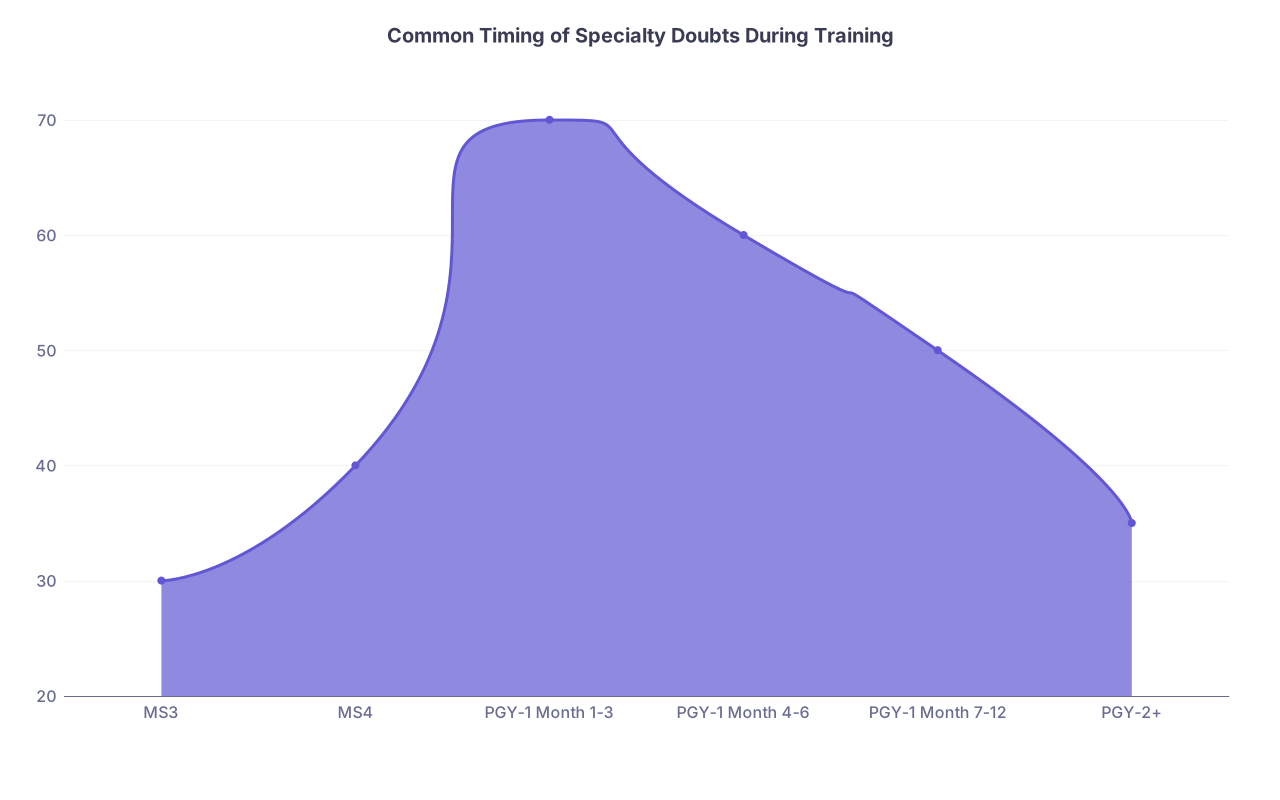
| Category | Value |
|---|---|
| MS3 | 30 |
| MS4 | 40 |
| PGY-1 Month 1-3 | 70 |
| PGY-1 Month 4-6 | 60 |
| PGY-1 Month 7-12 | 50 |
| PGY-2+ | 35 |


| Step | Description |
|---|---|
| Step 1 | Feeling wrong specialty |
| Step 2 | Monitor pattern for 3-6 months |
| Step 3 | Talk to trusted mentor |
| Step 4 | Consider program change or niche within field |
| Step 5 | Explore other specialties on rotations |
| Step 6 | Discuss options to switch or get support |
| Step 7 | Contact residents in other fields |
| Step 8 | Ever have OK days? |
| Step 9 | Like clinical content? |