

You are six weeks into your first basic sciences term on a Caribbean island. It is 11:42 p.m. Your exam is at 8 a.m. tomorrow. You have 220 Anki reviews left, 3 lecture recordings at 1.75x speed cued up, and your WhatsApp group is melting down because someone just realized renal physiology from “last block” is actually fair game for this exam too.
You thought you knew what a heavy course load felt like from undergrad.
You did not.
Let me break down what “curriculum density” really means in Caribbean accelerated programs, and what you should actually expect—day to day, week to week, and over the span of those first 16–20 months.
1. What “Curriculum Density” Really Means in the Caribbean Context
Curriculum density is not just “a lot of work.” Medical school everywhere is a lot of work. The Caribbean accelerated model adds three specific amplifiers:
- Compressed timeline
- Parallel content loading
- High-stakes dependency on exam performance (and progression policies)
Most U.S. and Canadian schools spread preclinical content across two academic years (roughly 18–22 months of instruction). Many Caribbean schools cram comparable or near-comparable content into 16 months, sometimes less, with fewer breaks and longer teaching weeks.
You feel it in three ways:
- The speed at which new material arrives
- The breadth of what is concurrently “live” in your brain
- The fragility of your buffer—how fast you fall behind if you stop paddling for even 3–4 days
At a big-name island school (think SGU, AUC, Ross, Saba tier), the first term usually hits you with:
- Anatomy ± embryology
- Histology
- Biochemistry
- Physiology (or “Foundations”/“Structure and Function” blocks that bundle these)
- A professionalism / ethics / research module
All at once. With integrated exams that assume you are tracking all of it together.
If you are picturing “four or five separate undergrad courses with spaced exams,” wipe that mental model now. The density is not additive. It is multiplicative.
2. Typical Weekly Load: Hours, Lectures, and Exam Cadence
Let us quantify this, because vague descriptions do not help you plan.
At many Caribbean accelerated programs, a “standard” basic sciences week looks like:
| Component | Approximate Amount per Week |
|---|---|
| Scheduled lectures | 18–24 hours |
| Labs (anatomy/histo) | 4–8 hours |
| Small groups/TBL | 2–4 hours |
| Required sessions total | 24–32 hours |
| Independent study | 30–45+ hours |
So you are in required activities ~5–6 hours per day, most days. Then you need another 5–7 hours of real studying layered on top.
The math is ugly but real: 60–75+ hours per week is normal if you want to be in the “safe” performance zone, especially your first two terms before you learn to triage.
Now add the exam structure:
- Major block exams every 3–4 weeks
- Quizzes / mini-assessments sprinkled in
- Anatomy lab practicals on a separate schedule
- Cumulative final each term that pulls from everything
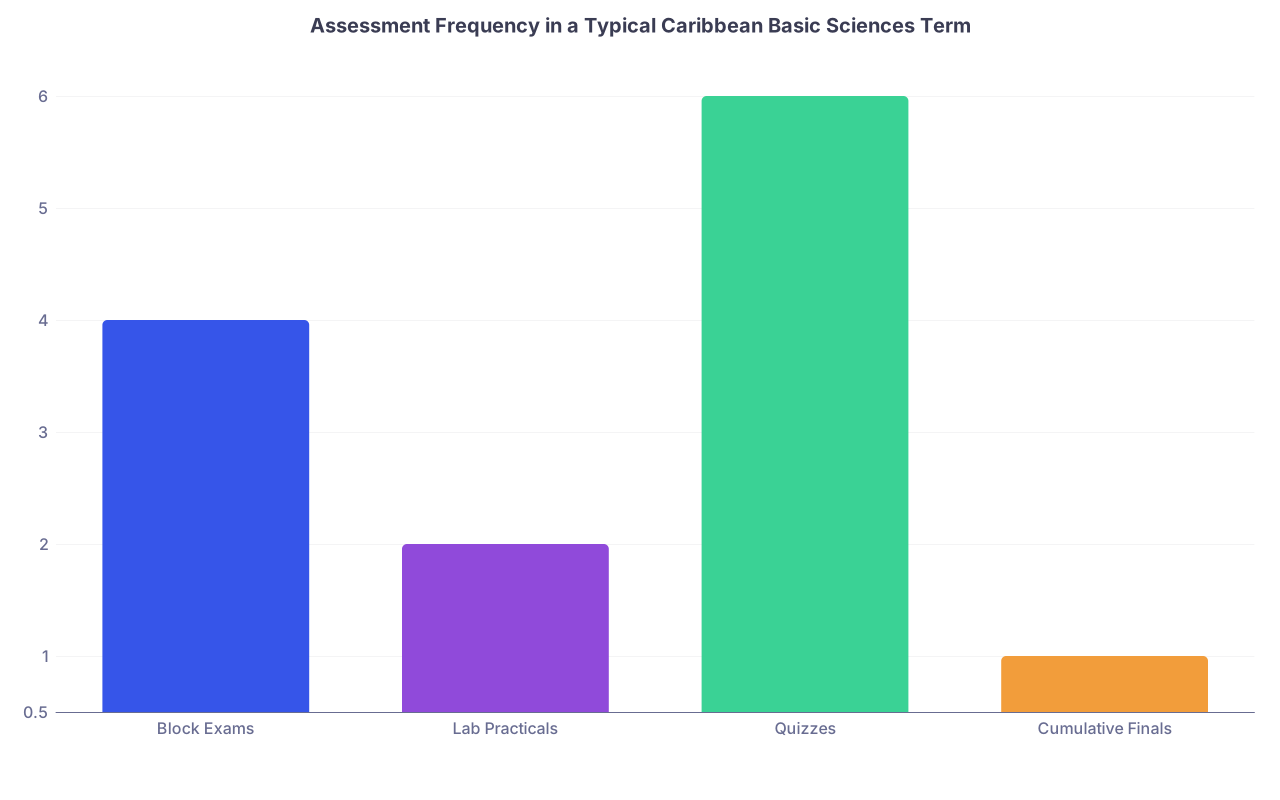
| Category | Value |
|---|---|
| Block Exams | 4 |
| Lab Practicals | 2 |
| Quizzes | 6 |
| Cumulative Finals | 1 |
You are never more than 10–14 days from something graded that can hurt your progression.
3. How Compression Changes the Learning Experience
What catches people off guard is not the total content (you know medical school is huge). It is the compression and sequence.
A. Integration vs. Firehose
Most Caribbean schools advertise “systems-based” or “integrated” curricula. On paper that means you learn anatomy, physiology, pathology, and pharmacology of, say, the cardiovascular system together.
In practice:
- You might have up to 4–6 hours of new lecture per day across multiple organ systems
- Integration is only as good as your ability to connect the dots under time pressure
- Lectures are designed to be Step-style dense from day 1—far less hand-holding than a classic “undergrad-style” course
Example from a real week in Term 2 at a large island school:
- Monday: 2 hours renal physiology, 2 hours neuroanatomy, 1 hour immunology
- Tuesday: 3 hours GI histology/anatomy, 2 hours pathology
- Wednesday: 3 hours cardio pharm + integration session
- Thursday: 2 hours neuro, 2 hours endocrine, 1 hour research / EBM
- Friday: 3-hour team-based learning case on sepsis touching micro, pharm, path
You are not “doing renal week” and then “neuro week.” You are doing everything, all the time.
B. Vertical and Horizontal Clutter
“Horizontal” density: multiple disciplines running in parallel in the same time frame.
“Vertical” density: content constantly building on content from 2–4 weeks ago that you never had time to fully consolidate.
So when you sit for a block exam:
- 30–40%: content from this block
- 40–50%: content from prior blocks in the same term
- 10–20%: “foundations” from previous terms that you were expected to already own
This is why many students feel like they are never purely “caught up.” At best, you are “caught up enough” to survive the next assessment.
4. Term-by-Term Density: How the Pressure Shifts
Not all terms are equally brutal, but several are deceptively bad in different ways.
Term 1: Shock and Systems Load
You are adjusting to:
- New country, housing issues, immigration paperwork
- Different teaching style, accents, pacing
- First anatomy lab (for most students)
- Learning how your program’s exam questions are written
Density here is cognitive shock plus volume. Many people burn absurd time re-watching every lecture at 0.75–1x. That is how you die academically.
By week 3–4 you realize: if you try to master every slide, you will fail everything.
Term 2: The “Real” Firehose
Once you survive Term 1, the school assumes you now know how to survive. Curriculum density usually increases:
- Physiology deepens
- Microbiology and immunology ramp up
- Pathology slides start creeping in
You now have memorization-heavy (micro, anatomy) layered over understanding-heavy (phys, path) content. Both are high-yield for board exams. You cannot ignore either.
Honestly, Term 2 is where I have seen the most attrition—either formal (fails / decels) or psychological (“I will never catch up”).
Term 3 and 4: Path + Pharm Crunch
By now, the curriculum is basically Step 1 with a Caribbean twist:
- Systems-based pathology in huge chunks
- Pharmacology of every system; drug lists feel infinite
- Sometimes behavioral science/ethics as a separate grind
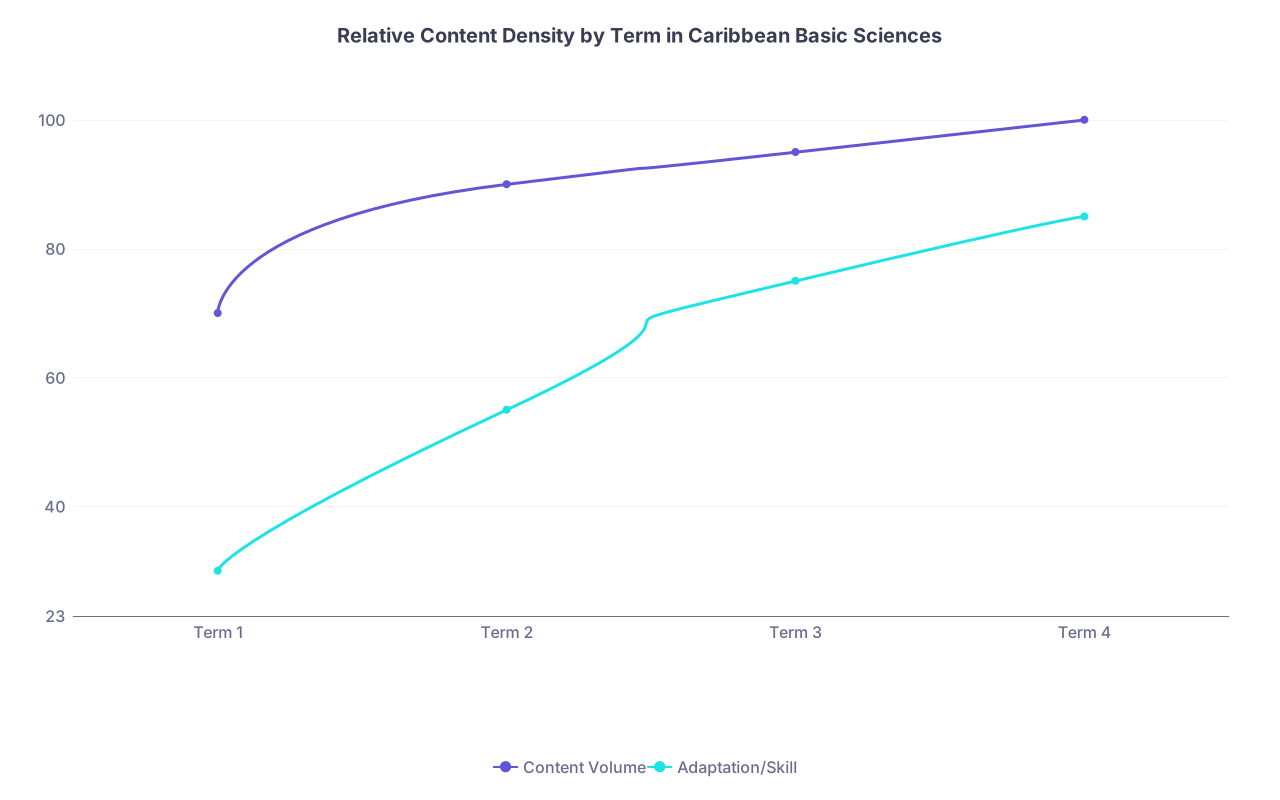
| Category | Content Volume | Adaptation/Skill |
|---|---|---|
| Term 1 | 70 | 30 |
| Term 2 | 90 | 55 |
| Term 3 | 95 | 75 |
| Term 4 | 100 | 85 |
Good news: your study skills are sharper. Bad news: exam stakes are higher, especially as schools now track “Step readiness” more aggressively. Fail a key term here, and promotions committees start whispering about your board prospects.
5. The Hidden Cost: Fail Policies, Remediation, and Attrition
You need to understand the policies behind the density.
Caribbean schools live and die by two metrics:
That drives behavior.
Common realities:
- High passing thresholds (70% is common, 80%+ for some integrated components)
- Class averages often engineered near that threshold (exams are written to spread scores)
- Multiple fails in a term can push you into:
- Remediation exams
- Course repeats
- Academic deceleration (extending your program, costing you another semester of tuition and living expenses)
- Dismissal in worst cases
| Number of Fails | Typical Consequence |
|---|---|
| 1 in a term | Remediation / warning |
| 2 in a term | Repeat term or deceleration |
| 3 in program | Academic review, risk of dismissal |
Curriculum density plus strict progression rules equals this: you do not just “take the C and move on” like undergrad. Falling below threshold has sharp teeth.
6. Time Structure: What a Realistic Day Actually Looks Like
Let me paint you a standard weekday on island when the curriculum is at full tilt.
Sample Day: Mid-Semester, Term 2
- 7:00–7:45: Wake, shower, scramble breakfast, scan today’s lecture objectives
- 8:00–12:00: Lectures (3–4 hours, maybe one hour break scattered in)
- 12:00–13:00: Grab food on campus, skim Anki or quick questions while you eat
- 13:00–15:00: Anatomy lab or small group / case-based learning
- 15:00–15:30: Walk back to housing, decompress briefly
- 15:30–18:30: Active review of today’s lectures (notes → Anki → question sets)
- 18:30–19:00: Dinner
- 19:00–23:00:
- Backlog lecture from yesterday
- 40–80 Anki cards from long-term decks
- 20–40 practice questions for upcoming block
- 23:00–00:00: Decide what to triage for tomorrow, minor panic, sleep
That is an average day. Before exam week.
During exam weeks, you may drop most new lecture review entirely and brute-force old content and questions for 10–12 hours per day.

| Step | Description |
|---|---|
| Step 1 | Mon-Thu: New Lectures |
| Step 2 | Thu-Fri: Integration & Review |
| Step 3 | Sat: Heavy Review & Questions |
| Step 4 | Sun: Cumulative Catch-up & Planning |
| Step 5 | Reduce New Lectures, Focus on Exam Prep |
| Step 6 | Block Exam |
| Step 7 | Exam Week? |
You can see why students talk about “just surviving each block.”
7. How This Differs from U.S./Canadian Preclinical Programs
I am not here to romanticize U.S. schools. They are intense. But the density profile is different.
Key differences I have consistently seen or heard from students who transferred or compared:
Holiday / break structure
- Caribbean: shorter breaks, sometimes only 1 week between heavy terms
- U.S.: longer winter/summer breaks, more genuine downtime for consolidation and Step prep
Pacing flexibility
- Caribbean: cohorts are large but progression paths are relatively rigid until you decel
- U.S.: more schools now have pass/fail preclinicals with slightly less harsh consequences for a single mediocre exam
Curricular support
- Island schools do offer academic support, but you are usually one of hundreds with similar issues
- Some U.S. schools have more individualized coaching and built-in Step prep time
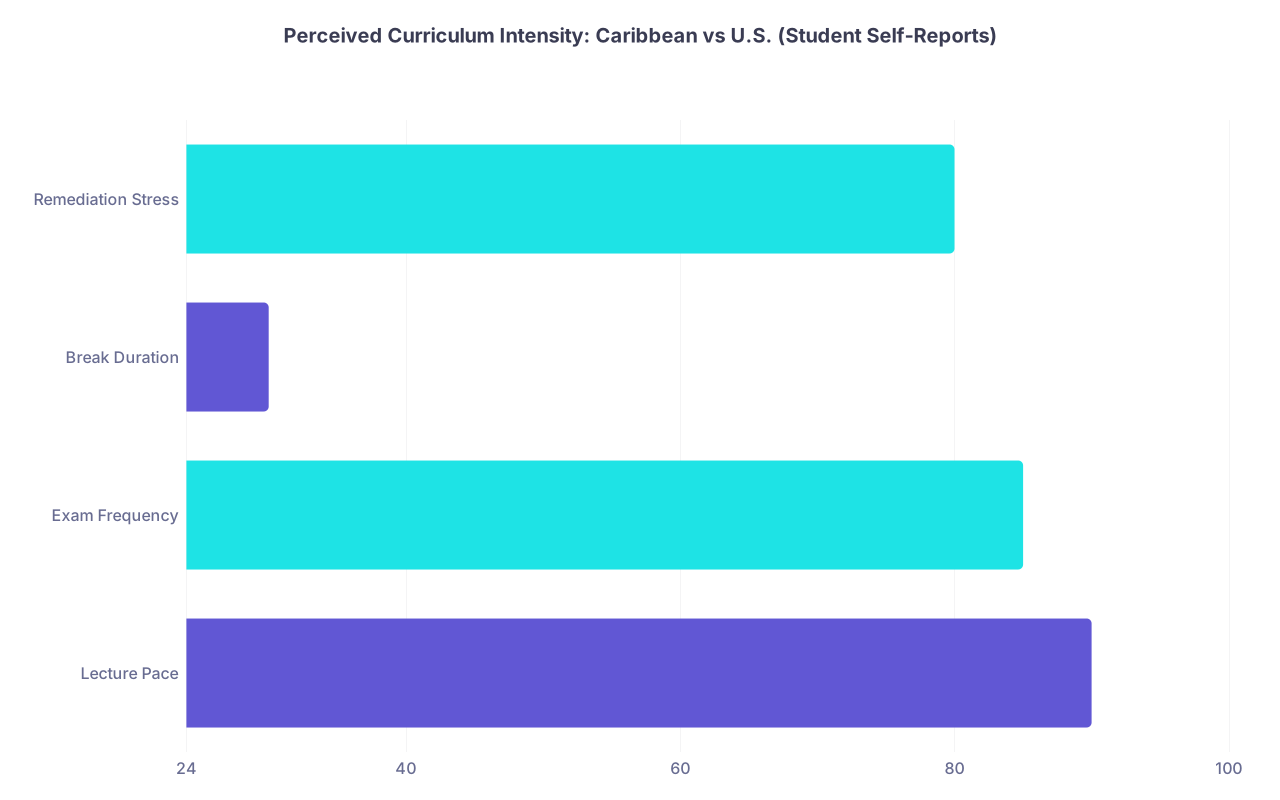
| Category | Value |
|---|---|
| Lecture Pace | 90 |
| Exam Frequency | 85 |
| Break Duration | 30 |
| Remediation Stress | 80 |
(Here, higher numbers reflect “more intense” for Caribbean relative to typical U.S. preclinical.)
Keep in mind: the Caribbean model is designed partly as a filter. They accept more people with “non-traditional” or lower-stat backgrounds, then use curriculum density plus exam cutoffs to identify who can realistically push through Step-level content. Cold, but true.
8. Practical Expectations: What You Must Be Ready For
Let us get concrete. If you are considering or committed to a Caribbean accelerated program, this is what you should realistically expect to do.
A. Treat It Like a Full-Time Job Plus Overtime
You can expect:
- 55–70 hours of weekly effort as baseline
- Sustained mental load that does not meaningfully drop until at least after second term
- Very limited flexibility for long trips, frequent visitors, or side hustles
If you go in thinking you will maintain heavy extracurriculars, part-time remote work, or constant travel, you will be an early casualty.
B. You Will Not Master Every Slide. You Will Need to Ruthlessly Triage.
There are three broad categories of students:
- The Transcript Maximalist: Tries to learn everything on every slide, rewatch every lecture, rewrite notes. Burns out or fails.
- The Strategic Realist: Focuses on objectives, question banks, high-yield concepts; accepts “good enough” mastery on low-yield details. Survives and often does well on boards.
- The Gambler: Skips too much “low-yield” content, underestimates internal exams, aces some blocks and bombs others. High stress, high risk.
You want to be #2. That means:
- Pre-reading objectives, not entire slide decks
- Learning from practice questions as much as from lectures
- Adapting quickly to your school’s exam style rather than assuming “NBME only”
C. Expect Emotional Whiplash
With tight spacing of exams and constant new content, your mood will ride your score reports. A few 68–72% scores in a row can feel existential.
You have to expect:
- Weeks where you study 60+ hours and still get an average score
- Peers dropping out or repeating, which messes with your head
- Faculty being blunt about Step statistics and “fitness for continuation”
This is where people break. And no, a sunny beach three bus stops away does not fix it.
9. What You Should Do Before You Enroll
This is the “premed” part of this discussion. If you are still in the planning phase, you should use what I just described as a filter, not just a warning.
Ask yourself:
- Have you ever truly sustained 50–60 hour study weeks for 3–4 months straight?
- Do you have an efficient active learning system already (Anki, question banks, concept maps)?
- Can you handle being physically far from your primary support system during that stress?
Then, before you write a deposit check, press the admissions office and current students on specifics:
| Topic | Specific Question |
|---|---|
| Contact hours | Avg. weekly required lecture + lab hours? |
| Assessment | Block exam frequency and cumulative coverage? |
| Progression | Exact fail/remediation policy by term? |
| Step support | Dedicated Step prep period or integrated only? |
| Attrition | % of cohort that finishes basic sciences on time? |
If a school will not give you straight answers on those, that is your answer.
10. How to Survive the Density If You Decide To Go
You cannot “lightweight” your way through an accelerated Caribbean curriculum. But you can make it survivable.
Here is the high-yield, density-specific strategy list that actually matters:
Front-load your study system before you arrive.
Learn Anki, question bank usage, and basic time-blocking in undergrad. The island is not where you want to beta-test your workflow.Measure in blocks, not days.
Do not panic over a single bad 24 hours. Did you move your understanding of this block’s core systems forward by the end of the week? That is the metric.Anchor everything to questions.
Use internal question banks, older exams (if legitimately provided), and reputable external resources. The goal is to learn how the knowledge is tested, not just absorb slides.Protect sleep during high-density stretches.
Mildly brutal truth: most people who “sacrifice sleep to catch up” perform worse on exams than if they had slept and cut 10–15% of their review.Control your comparison environment.
Island gossip is toxic. You need 2–3 serious classmates, not a 150-person WhatsApp echo chamber that cycles between despair and bragging about question counts.Know the failure triggers early.
Meet with academic advisors in week 1. Get precise answers: “What happens if I fail X course? Two courses?” Adjust your risk tolerance accordingly.
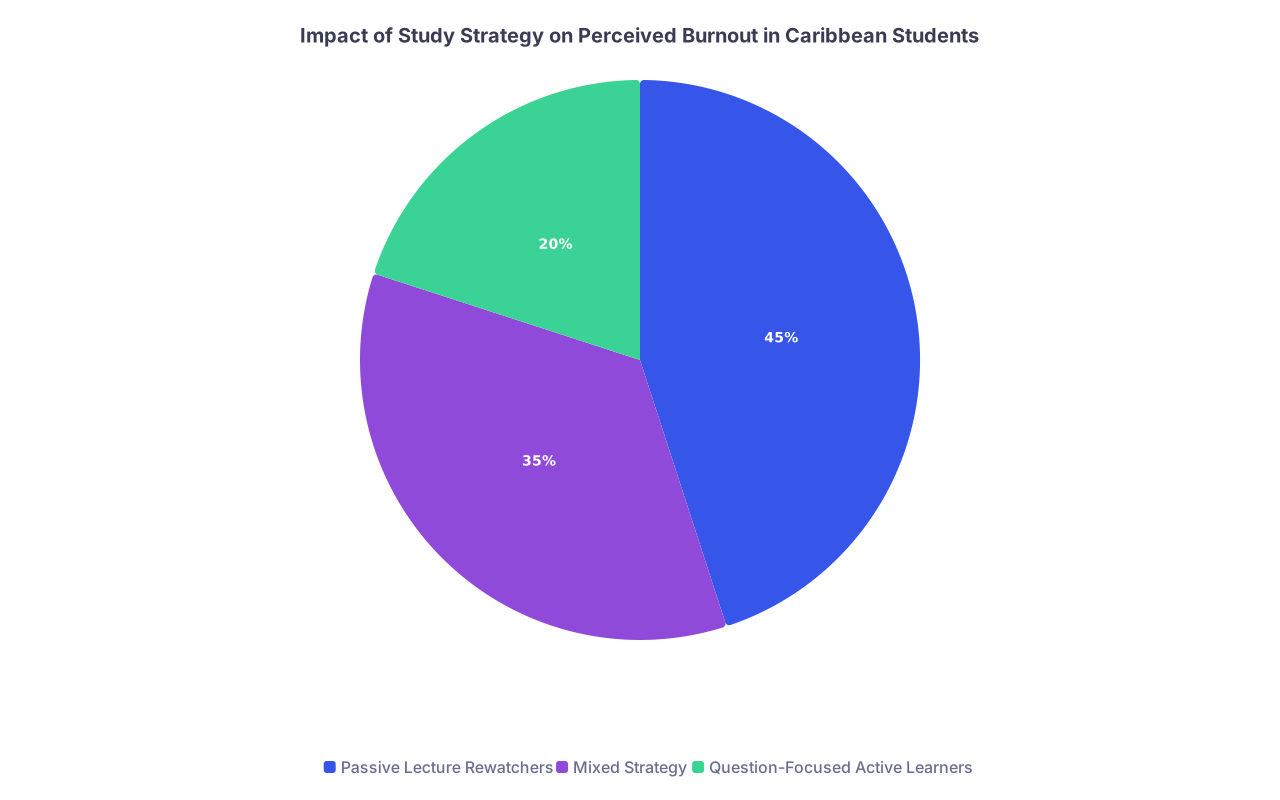
| Category | Value |
|---|---|
| Passive Lecture Rewatchers | 45 |
| Mixed Strategy | 35 |
| Question-Focused Active Learners | 20 |
That pie chart mirrors what you hear on island: the more passive and slide-focused your approach, the more crushed you feel by the density. Question-focused learners still struggle, but they are not drowning in the same way.
11. Who Actually Thrives in This Environment?
Because some people do.
Patterns I have seen among students who crush Caribbean accelerated programs:
- They are not perfectionists about notes. Their materials look messy but functional.
- They do not obsess over “finishing” everything. They prioritize active recall over coverage.
- They treat every internal exam as both a promotion gate and Step practice.
- They separate identity from exam scores better than most—one tough block does not send them into a spiral.
- They have boring, consistent habits. Same seat in the library. Same schedule most days. Almost no drama.
Bottom line: curriculum density rewards people who can tolerate incomplete control. If you need to feel “100% prepared” to walk into an exam, the Caribbean accelerated structure will eat you alive.
FAQ (Exactly 4 Questions)
1. Is the basic science curriculum in Caribbean schools actually equivalent to U.S. schools, or is it just more bloated?
Core content overlaps heavily because everyone is aiming at the same board exams. Where Caribbean programs feel “bloated” is often in two places: slide-heavy lecture culture (hundreds of slides per session, not all high-yield) and sometimes redundant faculty-driven material that is not tightly pruned. The end result is that you are exposed to roughly the same conceptual core, but in a more chaotic, denser package that demands you figure out what is actually important.
2. Can you realistically work part-time during a Caribbean accelerated program?
For 99% of students, no. The curriculum density and exam stakes are not compatible with regular part-time work. A few students pull off small, flexible remote gigs (5–8 hours per week) during lighter stretches, but it is risky and often not worth the marginal income when a single failed course can cost you another semester of tuition and living expenses.
3. How much Step 1 prep can you do during basic sciences with this schedule?
You are already doing Step prep if the curriculum is even halfway coherent—path, pharm, micro, and systems-based phys are all Step content. What you probably will not have is a long, separate “dedicated” period like many U.S. students. Most Caribbean students who do well integrate board-style questions from their first real systems term and ramp up UWorld/NBME usage in the last 6–9 months before Step, overlapping with their heaviest internal courses.
4. If I struggled with heavy course loads in undergrad, is a Caribbean accelerated program automatically a bad idea?
Not automatically, but it is a red flag. The gap between a 15–18 credit undergrad semester and Caribbean basic sciences is enormous. If your struggles came from poor strategy (cramming, passive reading), and you have since fixed that with active learning and time management, you might adapt. If your struggles were from consistently being overwhelmed by volume even with decent habits, walking into a compressed Caribbean curriculum is essentially choosing hard mode with minimal margin for error.
Key takeaways:
- Caribbean accelerated programs pack near-equivalent preclinical content into a shorter, denser, less forgiving structure. Expect 60–70 hour weeks and constant assessment pressure.
- You will not survive by trying to learn every slide. Dense curricula demand ruthless triage, question-centered study, and emotional tolerance for never feeling “fully prepared.”
- If you are still in the planning phase, interrogate schools about contact hours, assessment policies, and attrition. Decide whether you are choosing this environment deliberately—or sleepwalking into a firehose.


