
It’s 11:45 pm. You’re on call, charting in a dark workroom, and your co-intern just said, "Honestly, I just ranked Family as my backup in case EM didn’t work out."
And now you’re wondering: the “backup” specialty you keep throwing around on paper—could that actually be your real path? Or are you about to lock yourself into something you’ll quietly resent for the next 20 years?
Let me be blunt: using a “backup” specialty purely as a parachute is how people end up burned out, bitter, and switching careers at 40. But a backup that’s chosen intelligently can absolutely become a career you’re genuinely happy in.
Here’s how you figure out which category you’re in.
Step 1: Stop Calling It “Backup” And Get Honest About Why It’s On Your List
First thing: why is this specialty even on your radar?
There are a few common patterns:
- It’s objectively less competitive than your dream field (e.g., IM vs Derm, Psych vs Ortho).
- You liked some aspect of it on rotation, but didn’t feel “in love.”
- An advisor said, “With your scores, you should have a backup.”
- You’ve seen people in that specialty who seem… actually happy.
You need to separate “backup because lower risk” from “backup because lower ego hit.”
If you stripped away:
- Prestige
- What your classmates think
- Your Step scores
- Your school’s culture
Would you still consider this specialty?
If the only reason it’s on your list is “I might not match otherwise,” that’s a red flag. Not necessarily a deal-breaker, but you’re not allowed to stop the analysis there.
Step 2: Understand What “Least Competitive” Really Buys You (And What It Doesn’t)
Some specialties tend to be less competitive nationally. It changes over time, but things like:
- Family Medicine
- Psychiatry
- Pathology
- Pediatrics (non-competitive programs)
- Internal Medicine (community programs)
They’re often the “backup bucket” people toss around.
Here’s the mistake: assuming “less competitive” automatically means “settling” or “will be boring.” That’s lazy thinking.
What “less competitive” actually buys you:
- More flexibility in where you match
- More room for a non-perfect application (lower scores, fewer pubs)
- Easier to pivot late in the game
- More control over geography in many cases
What it does not buy you:
- Guaranteed happiness
- A cushy lifestyle by default
- A job where you don’t have to think
You can be absolutely miserable in a “non-competitive” specialty if it doesn’t match how you like to spend your time.
Step 3: Run The “Day-in-the-Life” Test, Not The “Vibes on Rounds” Test
Most students fall for this trap: they decide on a specialty based on what it felt like on a 4-week rotation. That’s like choosing a spouse after a good weekend trip.
You need to test your backup specialty this way:
Picture a normal Tuesday five years from now.
- What time are you waking up?
- Are you in clinic, OR, reading images, on L&D, at home on a laptop?
- How many patients are you interacting with face-to-face?
- How much of your day is procedures vs talking vs documentation vs thinking alone?
- When do you go home?
- What kind of calls/texts/emails do you get after hours?
If your backup is, say, Psychiatry:
- You’re mostly in clinic or inpatient units
- You’re talking. A lot
- Notes are long, but physical exams are short
- Crises are emotional, not procedural
If that makes you think, “Honestly, that sounds kind of nice,” pay attention. That’s the signal.
If your backup is Pathology:
- You’re at a scope/computer a lot
- Days are reading, diagnosing, occasional tumor boards
- Almost zero direct patient contact
- You matter a ton, but almost always behind the scenes
If the idea of not talking to patients all day sounds like a relief, don’t ignore that just because you imagined yourself as the “frontline hero.”
You’re not gauging respect. You’re gauging how you want your actual Tuesday to feel.
Step 4: Match Your Personality To The Work, Not The Label
Strip the label off the specialty and just look at what people actually do all day.
Here’s a quick mapping exercise.
| If you like… | Backup specialties that might fit well |
|---|---|
| Long talks, complex emotions | Psychiatry, Palliative, Primary Care |
| Brief visits, broad knowledge | Family Med, General IM, Hospitalist |
| Pattern recognition, solo focus | Pathology, Radiology |
| Procedures but not extreme hours | Anesthesia, PM&R, Certain IM subs |
| Kids and families, continuity | Pediatrics, Family Med |
Ask yourself:
- Do you get drained or energized after a day of clinic talking to 20 patients?
- Do procedures make you excited or anxious?
- Do you like being the one in charge in a crisis or the quiet expert in the background?
If your backup specialty aligns with your natural way of working—even if it’s less “impressive”—that’s a massive green flag.
Step 5: Look At The Medians, Not The Extremes
Every specialty has:
- Burned-out, miserable docs
- Happy, balanced docs
If you only look at the extremes, you’ll lie to yourself. “Oh, I met this one super-chill orthopedic surgeon who leaves by 3 pm,” or “This family doc hates their life, so FM must be misery.”
You care about the median lifestyle of that field in normal jobs, not the unicorns.
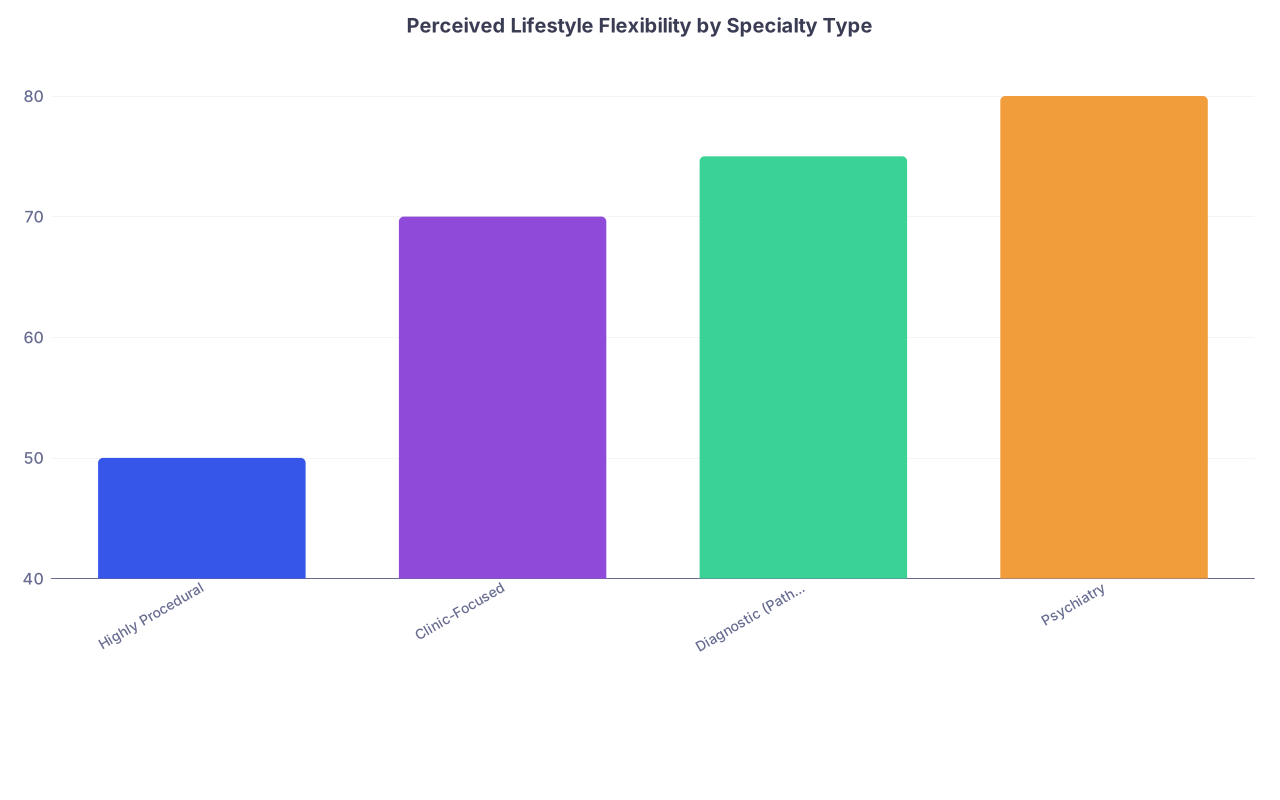
| Category | Value |
|---|---|
| Highly Procedural | 50 |
| Clinic-Focused | 70 |
| Diagnostic (Path/Rad) | 75 |
| Psychiatry | 80 |
If your backup specialty has, on average:
- More schedule flexibility
- More job options in different settings (rural, urban, telehealth, academic, private)
- Realistic part-time/4-day-week options
…that can outweigh some “dream specialty” that locks you into high-intensity call until age 60.
A good litmus test: Go on job boards (PracticeLink, hospital websites, LinkedIn) and see what entry-level attending jobs look like in that field.
- How many are there?
- What are the posted hours and call?
- Are there options that match how you actually want to live?
If you find multiple jobs in your hypothetical future city that look livable in your backup specialty, that’s another strong signal.
Step 6: Do A Brutal “Values vs Features” Check
People get stuck because they confuse features of a specialty (procedures, prestige, board scores) with values (autonomy, family time, intellectual challenge, income floor).
Make two columns on a piece of paper:
Left side: your 5 non-negotiable values for your career. Be specific. Example:
- I want to be home for dinner most nights.
- I want to feel intellectually challenged, not bored.
- I’m okay making less money, but not okay with constant financial anxiety.
- I want patient relationships that aren’t 2 minutes long.
- I can’t handle constant trauma/violence.
Right side: your backup specialty. For each value, write either:
- Strongly fits
- Somewhat fits
- Conflicts
If you’ve got 3+ “strongly fits” and 0–1 hard conflicts, your backup is a serious contender for long-term happiness.
If you’ve got multiple direct conflicts, you’re not choosing a backup—you’re choosing a short-term survival strategy that’s likely to backfire later.
Step 7: Test It In The Real World (Not Just In Your Head)
You can’t answer this entirely on paper. You need data from actual humans living the job.
Here’s how to pressure-test your backup specialty:
Shadow an attending on a “boring” day
Not their “best” day. Tuesday clinic. Path sign-out. Regular inpatient list. Watch when they’re smiling vs grinding.Ask them three blunt questions
- “What part of your day do you secretly dread?”
- “If your kid wanted to go into this specialty, would you be excited or try to talk them out of it?”
- “If you had to switch specialties today, where would you go and why?”
Talk to a resident who didn’t match their first choice
You will find them. Ask: “Are you glad you ended up here?”
Their answer will be very clarifying.Simulation: map your ideal week
Draw out a week schedule for yourself as an attending in that backup specialty: clinic blocks, call, admin, family time. Does that schedule make you feel calmer… or trapped?

| Step | Description |
|---|---|
| Step 1 | Consider Backup Specialty |
| Step 2 | Reconsider Backup Choice |
| Step 3 | Check Values Fit |
| Step 4 | Shadow and Talk to Attendings |
| Step 5 | Legit Career Option |
| Step 6 | Matches Daily Work Style |
| Step 7 | Can You See Yourself on a Tuesday |
If, after doing this, you catch yourself thinking, “Honestly, if I had ended up in this by accident, I’d probably be okay with that”… pay attention. That’s the feeling you’re looking for.
Step 8: Income, Loans, and The Money Question (Be Adult About It)
You’re not shallow for caring about money. You’re reckless if you don’t.
Least competitive specialties often have:
- Lower ceilings than ortho/derm/ent
- But much more predictable job markets
- And more control over hours vs income trade-offs
Look at realistic income ranges, not fantasies.
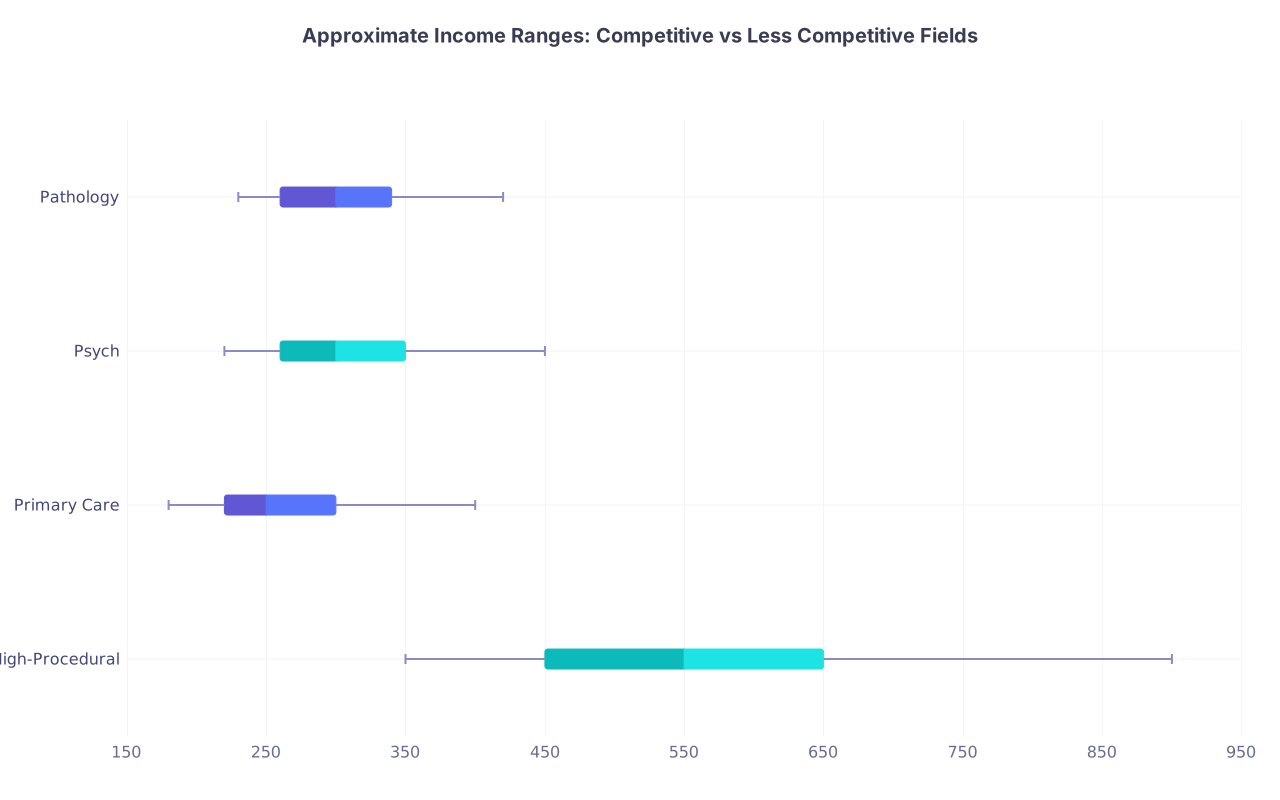
| Category | Min | Q1 | Median | Q3 | Max |
|---|---|---|---|---|---|
| High-Procedural | 350 | 450 | 550 | 650 | 900 |
| Primary Care | 180 | 220 | 250 | 300 | 400 |
| Psych | 220 | 260 | 300 | 350 | 450 |
| Pathology | 230 | 260 | 300 | 340 | 420 |
Then ask:
- With my loan burden, cost of living goals, and lifestyle expectations, does this range work?
- Would I rather make 20–30% less but have my evenings and sanity?
If the finances in your backup specialty are “good enough” to support the life you want, you don’t need the absolute top-paying field to be happy.
Step 9: Monitor Your Gut Reactions To Actual Work, Not Just To The Word
Here’s a quick psychological trick.
When you’re on a rotation in your “dream” specialty and in your possible backup, pay attention to these moments:
- End of a 12-hour day: In which specialty are you tired-but-satisfied vs drained-and-done-with-humanity?
- On a tough case: In which specialty do you find yourself wanting to read more afterward vs wanting to run away?
- When you see attendings: Whose life looks quietly appealing vs performatively glamorous?
Your body usually knows before your ego catches up.
If, on your Psych rotation, you ended days thinking, “I’m weirdly okay after 8 hours of talking about trauma,” don’t dismiss that because you once told everyone you were going into Surgery.
Step 10: Decide If You Could Be Proud To Introduce Yourself As That Specialist
Last filter. Simple, but powerful.
Picture yourself at:
- A high school reunion
- Thanksgiving with extended family
- Meeting your partner’s friends
Someone asks, “So what kind of doctor are you?”
You answer: “I’m a ___.”
If that sentence makes you feel quietly proud—even if you also feel a tiny pang for the road not taken—you’re fine. That’s normal.
If the imagined answer makes you feel ashamed, small, or like you’d need to over-explain or justify it… that’s not something you should ignore. You don’t need the world’s validation, but you do need internal alignment with your identity.
You’re going to say that sentence thousands of times in your life.
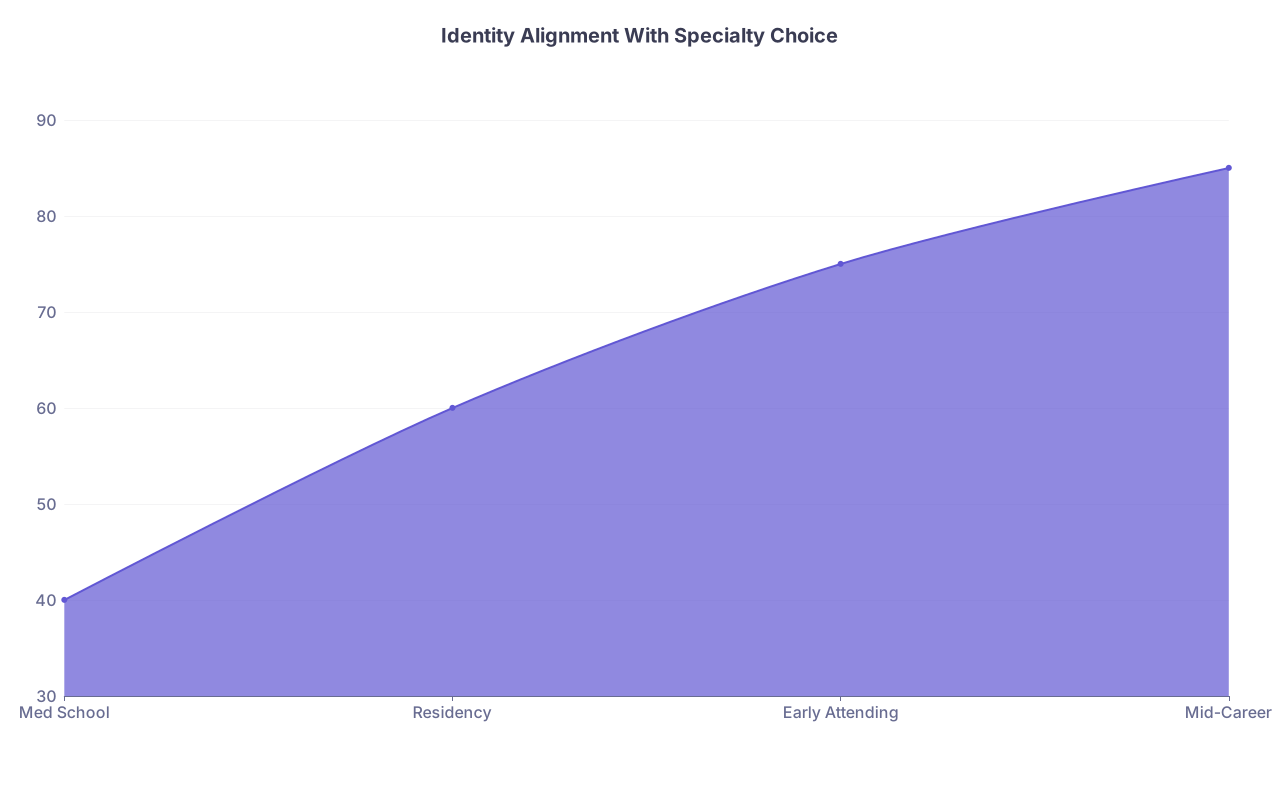
| Category | Value |
|---|---|
| Med School | 40 |
| Residency | 60 |
| Early Attending | 75 |
| Mid-Career | 85 |
If you can imagine growing into that identity and being genuinely okay—maybe even happy—with it, then your “backup” specialty isn’t a backup at all. It’s just another good option.
FAQs
1. Is it wrong to apply to a less competitive specialty mainly because I’m scared of not matching?
It’s not morally wrong. It’s just risky from a happiness standpoint if fear is your only driver. If you’re going to rank a backup specialty, do the work to make sure you could live with that outcome and not spend the next decade fantasizing about an exit. Fear can push you to consider other fields; it shouldn’t be the sole reason you choose one.
2. How many “backup” specialties should I realistically consider?
One. Maybe two at most. Once you start juggling three or four “backup” options, you’re no longer making a thoughtful choice—you’re just spraying applications at anything with a pulse. Pick one primary field and, if needed, one realistic alternative that you’ve actually evaluated using the tests above (day-in-the-life, values fit, real-world shadowing).
3. Can I switch into my dream specialty later if I match into my backup?
Sometimes, but counting on that is like planning your retirement on lottery winnings. People do re-train—FM to Anesthesia, IM to Cards, Psych to Neuro, etc.—but it’s a long, financially painful path. If your plan is “I’ll just switch later,” assume that’s unlikely and judge your backup as if you might stay in it forever. If that still feels acceptable, you’re safe.
4. What if I like my backup specialty more on paper but feel guilty not chasing the more prestigious one?
That’s ego talking. And med culture. If your actual day-to-day happiness, values, and mental health line up better with the “less competitive” field, choosing it is not settling—it’s being rational. I’ve seen plenty of people choose Psych over Ortho, FM over EM, or Path over Surgery and be visibly healthier and happier five years out.
5. My school looks down on certain specialties. How do I block that out when deciding?
Remember your faculty are biased by their own choices and culture. If you’re at a big academic center, anything non-procedural or non-competitive gets treated like a consolation prize. Actively seek out attendings and residents in your backup field—outside your institution if needed. Ask them about their lives. Their reality matters more than your class group chat’s opinion.
6. Bottom line: what’s the single clearest sign that a backup specialty could actually make me happy?
You can picture a totally ordinary Tuesday in that specialty—clinic, notes, calls, the annoying parts and the good parts—and your honest reaction is: “I could do that for a long time and still like my life.” Not “I could tolerate it,” but “I’d be okay, maybe even content.” If that feeling holds up after talking to real attendings and mapping your values, that backup isn’t second-tier. It’s a legitimate career path.
Key takeaways:
- Judge your “backup” by your real work preferences and values, not competitiveness or prestige.
- Pressure-test it in the real world—shadow, ask blunt questions, and run the ordinary Tuesday test.
- If you can see yourself honestly introducing, “I’m a ___,” and feeling okay—maybe even proud—that backup specialty can absolutely be a path to a happy career.