
The brutal truth: most residency letters of intent are either way too personal…or not personal at all. Both get ignored.
Let me give you the line in the sand:
If your “personal” content helps a PD trust you as a safe, motivated, low-drama resident who fits their culture? Keep it.
If it makes them worry about reliability, boundaries, or emotional volatility? Cut it.
That’s the whole game.
Now let’s break down exactly what that means so you know what’s safe, what’s risky, and what’s a hard no.
First, what a letter of intent actually needs to do
Programs don’t want your life story. They want answers to three questions:
- Are you really going to come here if we rank you highly?
- Do you actually understand what this program is about?
- Are you going to be a solid, low-maintenance resident we can trust with patients and nights?
“Personal” details are just one way to support those three points. They are not the point themselves.
Your letter of intent should mostly do this:
- State clearly that the program is your top choice (or very high on your list, if you’re not doing a true #1 letter).
- Give 2–3 specific reasons why (clinical training, culture, geography, niche opportunities).
- Show that your values and work style match what you’ve seen there.
- Reassure them that you’ll show up, work hard, and be stable.
Personal content is seasoning. Not the main dish.
The simple rule: Personal = grounded, relevant, and stable
Here’s the filter I use with students when we edit their letters:
If a personal detail…
- Explains a genuine, professional motivation
- Directly connects to the program
- Shows maturity and stability
…then it’s fair game.
If it…
- Demands emotional labor from the reader (“Feel bad for me”)
- Raises red flags (unmanaged health issues, chaotic life, unresolved trauma)
- Feels like a therapy session instead of a professional statement
…then it doesn’t belong in a letter of intent.
Let’s get concrete.
Safe personal content: What works well (and why)
These are the types of “personal” details that usually help you, if used briefly and tied to a program-specific point.
1. Values and motivation from lived experience
Examples that are usually fine:
- “Growing up in a rural town with no local specialists, I saw family members delay care because the nearest hospital was two hours away. That’s a big reason I’m drawn to your program’s strong rural outreach and telemedicine initiatives.”
- “As a first-generation college graduate, I’ve always valued programs that support trainees from non-traditional backgrounds. The resident mentorship structure you described on interview day really resonated with me.”
Why this works:
You’re not trauma-dumping. You’re giving a quick, clear link between who you are and why this specific program makes sense.
2. Geography and family ties (used sparingly)
Examples that are usually helpful:
- “My partner has already matched into pediatrics in the city, and we’re committed to staying here long term.”
- “My parents are aging and live 30 minutes from your hospital. Being close to them matters to me, and it’s one of the reasons I’d be thrilled to train here.”
These help answer the “Will they actually come?” question. Programs like people who are geographically anchored.
The key: keep it short and factual. Don’t overshare your family dynamics.
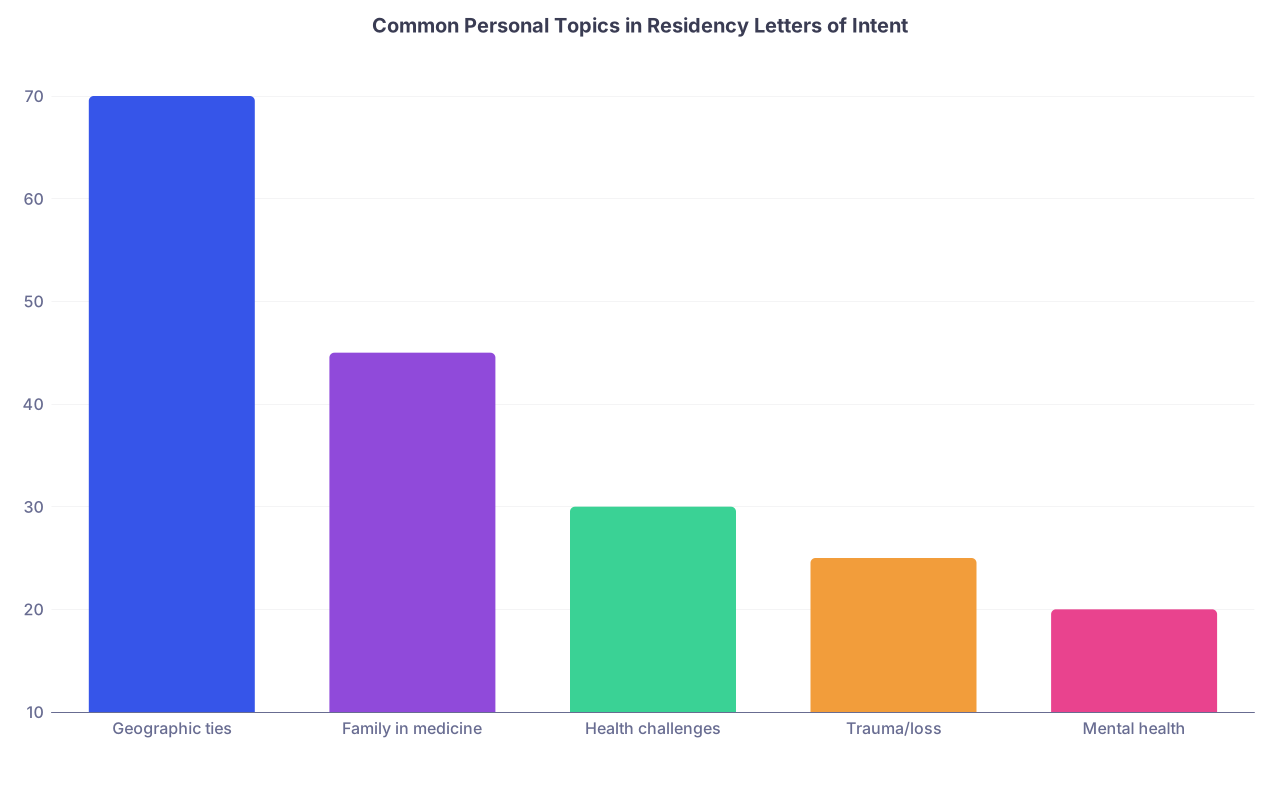
| Category | Value |
|---|---|
| Geographic ties | 70 |
| Family in medicine | 45 |
| Health challenges | 30 |
| Trauma/loss | 25 |
| Mental health | 20 |
3. Brief mention of hardship with clear resolution
This is the tricky one. Sometimes a personal hardship shows resilience. Sometimes it just makes a PD nervous.
What can be okay:
- “The semester my father was diagnosed with cancer, my grades dipped as I took on more responsibility at home. Since then, my performance has been consistently strong, and I’ve learned how to manage high stress while staying present for patients.”
That works because:
- The challenge is in the past or clearly under control.
- You directly link it to concrete growth.
- You don’t wallow in detail.
One sentence is usually enough. Two maximum. Then move on.
Risky personal content: Handle with extreme care
Not everything deeply personal is automatically off-limits. But some topics set off alarm bells fast.
Here’s where PDs’ brains actually go when they read certain types of content. I’ve heard versions of these comments directly in rank meetings.
1. Active mental health struggles
Example of what applicants often want to write:
- “I’ve struggled with depression and anxiety throughout medical school, but it’s made me more empathetic and understanding toward patients.”
What PDs sometimes hear instead:
“Is this person going to crash on nights? Will they need a lot of time off? Are we inheriting an unstable situation?”
That doesn’t mean you have to hide everything about your mental health history forever. But a letter of intent is the wrong place for a nuanced conversation.
If you absolutely feel you must address this (often you don’t), it should be:
- Past, not present.
- Very briefly mentioned.
- Clearly and concretely “treated and stable.”
But in most cases? Leave it out of a letter of intent. Handle support needs through your school’s advising office or directly with GME after matching, not here.
2. Unresolved trauma and loss
Examples that often go wrong:
- Detailed description of a sibling’s overdose.
- Vivid account of a traumatic patient death you can’t stop thinking about.
- Graphic retelling of your own near-fatal illness.
This is where people swing “too personal” very fast.
The problem isn’t that these experiences don’t matter. They do. Deeply.
The problem is that a PD is reading this at 11 p.m. after 40 other letters and trying to decide, in 30 seconds, “Can this person function on my ICU?”
If the trauma is:
- Recent
- Raw
- Central to your identity in the letter
…it looks like you’re still in the middle of processing it. And that’s not what they want in a brand-new intern.
You can say something like:
- “A serious illness in my early twenties exposed me to the patient experience from the other side of the bed. It sparked my interest in critical care and strengthened my commitment to clear communication with families.”
Then stop. No clinical details. No symptoms. No extended narrative.
3. Disability and chronic illness
This is a hard one, and the system frankly isn’t fair here.
Legally, programs can’t discriminate based on disability. Realistically, anything that makes them doubt your ability to meet the physical and cognitive demands of residency may hurt you.
If you choose to mention a disability or chronic condition:
- Focus on capability, not limitation.
- Emphasize accommodations already in place and your track record of functioning successfully on demanding rotations.
- Keep it brief and concrete.
If your question is “Will this specific wording about my health scare a PD?” the safest answer is usually: don’t put it in a letter of intent. Use your school’s disability office, GME, and formal channels instead.
Hard no’s: What doesn’t belong in a residency letter of intent. At all.
These are the things that almost always hurt you more than they help.
- Graphic medical or psychological details about yourself or family members
- Current legal issues, malpractice suits, or conflicts with prior institutions
- Political or religious rants
- Romantic relationship drama (“My fiancé and I are working through a difficult time…”)
- Financial hardship stories framed as “I need this for my survival”
The red-flag combo to avoid: emotional intensity + lack of resolution + unclear boundaries.
If you’re writing something and thinking, “This might be too much, but maybe it will show how much I’ve overcome…” it’s almost always too personal for this context.
A practical test: The three-readers rule
When I work with applicants, here’s the test I use.
Would you be comfortable with this detail being read by:
- Your program director
- Your future co-residents
- The hospital’s chief medical officer
If the answer isn’t a clean yes to all three, it doesn’t belong in a letter of intent.
And another sanity check:
If you removed this personal detail completely, would your core message about fit, interest, and reliability actually change?
If not, cut it. It’s fluff at best, a risk at worst.
How much “personal” is enough?
Your letter of intent isn’t your first impression. Programs already have:
- Your ERAS personal statement
- Your interview notes
- Your letters of recommendation
- Your application file
The LOI is a late-stage nudge. A signal of commitment and fit.
You don’t need a brand-new, dramatic personal angle. You need:
- 1–2 short personal touches that humanize you and explain your connection to the program or region.
- 80–90% of the letter focused on:
- Why this program (with specifics)
- Why you fit (strengths, goals, what you’ll contribute)
- Clear statement of interest/commitment
| Type of Detail | Generally Safe | Risky | Usually Inappropriate |
|---|---|---|---|
| Geographic/family ties | ✅ | ||
| Values from upbringing | ✅ | ||
| Past hardship, resolved | ✅ | ⚠️ | |
| Active mental health | ⚠️ | ✅ | |
| Graphic trauma details | ✅ | ||
| Romantic relationship | ✅ |
Example rewrites: Too personal vs. just right
Let me show you how this plays out.
Example 1 – Trauma
Too personal:
“When my younger brother died of an opioid overdose, I spent months in a dark depression, barely getting through classes. I still wake up thinking about the night I found him. This tragedy is why I want to go into psychiatry at your program.”
Better:
“Losing a close family member to opioid use disorder shaped my commitment to addiction psychiatry. Your program’s integrated addiction treatment track and strong community partnerships are exactly how I hope to train to care for patients and families facing similar challenges.”
Same core story. Less raw detail. No hint that you’re currently struggling to function.
Example 2 – Mental health
Too personal:
“I’ve had severe anxiety since childhood and had panic attacks during my surgery rotation. I’m in therapy and on medication now, which has helped, and I hope your program will be a supportive environment for me to continue working on these issues.”
Better (or honestly, usually better to omit entirely):
“I’ve learned how to function effectively in high-stress clinical environments while maintaining self-awareness and healthy coping strategies. My recent ICU and trauma rotations reflect that growth, and I’m confident in my ability to manage the pace and acuity of your program.”
The second version still communicates growth and resilience without inviting the PD to question your stability.
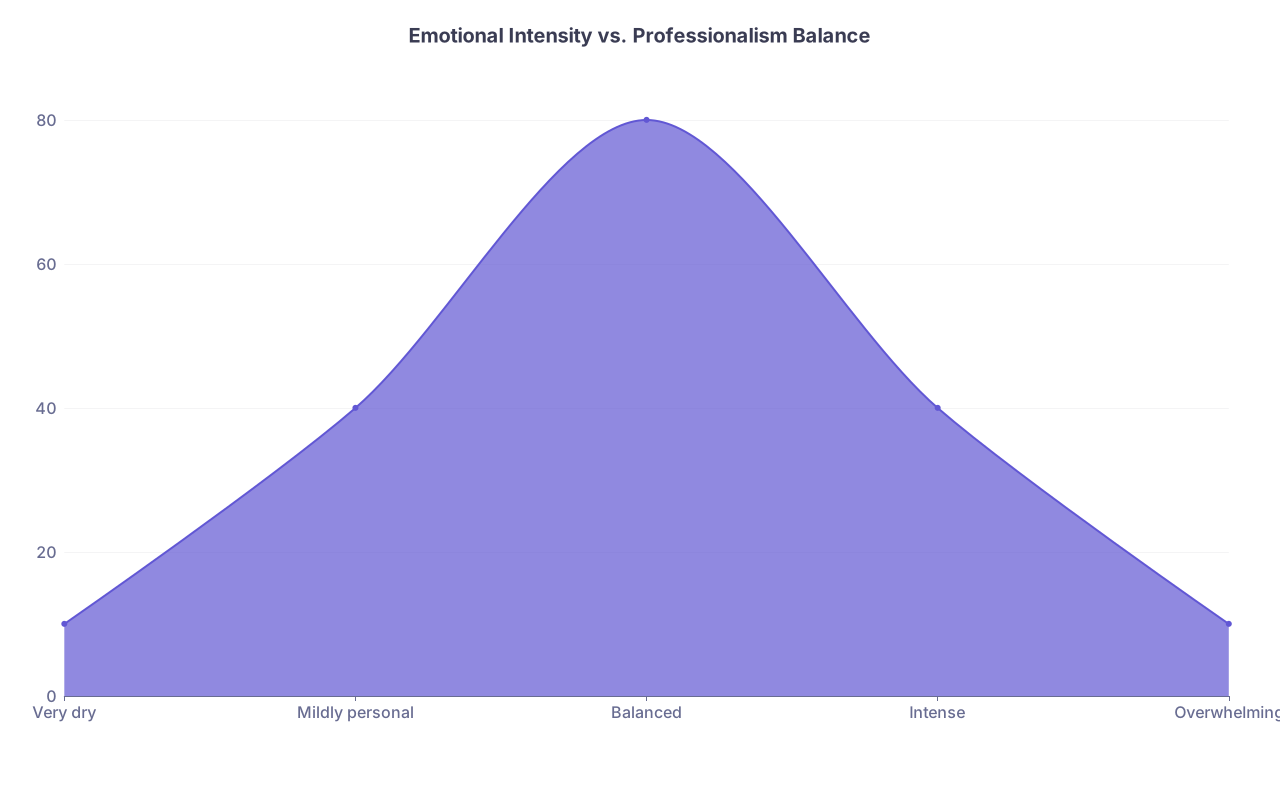
| Category | Value |
|---|---|
| Very dry | 10 |
| Mildly personal | 40 |
| Balanced | 80 |
| Intense | 40 |
| Overwhelming | 10 |
How to quickly audit your own letter
Here’s a 5-minute strip-down process I use with applicants:
- Highlight every sentence that’s about your personal life or emotions.
- For each highlighted sentence, ask:
- Does this directly support “why this program” or “why I’m a strong, stable fit”?
- Could a stranger misread this as instability or drama?
- Anything that fails both questions → delete.
- Anything that passes one question but feels a little raw → compress to one sentence and neutral language.
- Re-read the letter imagining you’re a PD on your fifth meeting of the day. Does anything feel heavy or distracting? If yes, trim more.
You’ll almost always end up with a cleaner, more focused, more effective LOI.

| Step | Description |
|---|---|
| Step 1 | Consider personal detail |
| Step 2 | Remove from letter |
| Step 3 | Reframe briefly or omit |
| Step 4 | Keep, 1-2 sentences max |
| Step 5 | Supports why this program or your fit |
| Step 6 | Could PD see this as instability or drama |
Bottom line: Where to draw the line
Keep this simple:
- Personal is good when it shows your values, motivation, and fit in a grounded way.
- Personal is bad when it asks the reader to manage your emotions, trauma, or current struggles.
- When in doubt, choose stable and specific over vulnerable and intense. You’re not being hired as a memoirist. You’re being hired to take care of sick people at 3 a.m.
If you can read your letter and confidently say, “This makes me look like a committed, sane, low-drama adult who genuinely wants this program,” you’re in the right zone.