
What exactly are programs expecting when you send a “letter of interest” vs a “letter of intent” – and can using the wrong one actually hurt you?
Let me answer that straight up: yes, using them wrong can absolutely make you look untrustworthy or naive. The concepts are simple, but people still mess this up all the time.
Here’s the breakdown you actually need.
Core Difference in One Sentence
A letter of interest says:
“I really like your program and want you to keep me in mind.”
A letter of intent says:
“If you accept me, I will come. You are my number one choice.”
That’s it. That’s the core. Everything else is details and strategy.
If your letter doesn’t clearly fit one of those two sentences, it’s probably muddled.
Definition, Purpose, and When to Use Each
Let’s go deeper so you don’t accidentally promise something you can’t deliver.
| Feature | Letter of Interest | Letter of Intent |
|---|---|---|
| Strength of commitment | High enthusiasm, no firm promise | Explicit commitment – “I will attend/match” |
| Use frequency | Many programs | One program only |
| Best timing | Pre-interview or post-interview | After interviews, close to decision deadlines |
| Goal | Stay on radar, show genuine interest | Nudge final decision in your favor |
| Risk if misused | You look generic or spammy | You look dishonest or unethical |
Letter of Interest – What It Really Is
Think of a letter of interest as a professional “I’m still here, and I’m serious about you.”
You use it to:
- Reaffirm interest after an interview
- Signal interest if you haven’t heard from them yet
- Provide meaningful updates (new grades, publications, awards, roles)
You do not use it to:
- Promise you’ll definitely attend
- Rank them as #1 (that’s intent territory)
- Blast the same generic paragraph to 40 programs
Tone: warm, enthusiastic, specific. But non-committal.
Letter of Intent – What It Really Is
A letter of intent is a promise. Not a vibe. Not a hint. A statement of commitment.
You use it to:
- Tell one program they are your clear top choice
- Say, in plain English, that you’ll go there if accepted (or, for residency, you’ll rank them #1)
- Give the program cover to advocate for you: “This applicant will almost certainly come here.”
You do not use it:
- For more than one program (this is where people blow their credibility)
- Before you’ve thoroughly compared your options
- If you’re not actually willing to follow through
If you wouldn’t be comfortable saying your statement out loud to their face in March when offers/match results are out, don’t write it in a letter of intent in January.
Exact Wording: What Each Should Say (and Not Say)
Let’s make this very concrete.
Core Phrases That Belong in a Letter of Interest
Good interest language:
- “Your program is one of my top choices.”
- “I remain very interested in joining your incoming class.”
- “I would be thrilled to have the opportunity to train at your program.”
- “I strongly believe I’d be an excellent fit for your program’s culture and mission.”
Phrases to avoid in an interest letter:
- “You are my top choice.”
- “If accepted, I will attend.”
- “I intend to rank your program first.”
Those push it into intent territory.
Core Phrases That Belong in a Letter of Intent
Good intent language (this is where you commit):
For med school:
- “I am writing to state clearly that [School] is my unequivocal first choice. If offered admission, I will accept and withdraw my applications from other schools.”
For residency:
- “I want to state explicitly that I intend to rank [Program] as my number one choice on my rank list.”
Notice the difference:
- “one of my top choices” = interest
- “unequivocal first choice” or “rank #1” = intent
Timing: When Each Letter Actually Makes Sense
There’s a rhythm to this. Throwing letters randomly at programs isn’t strategy, it’s anxiety.
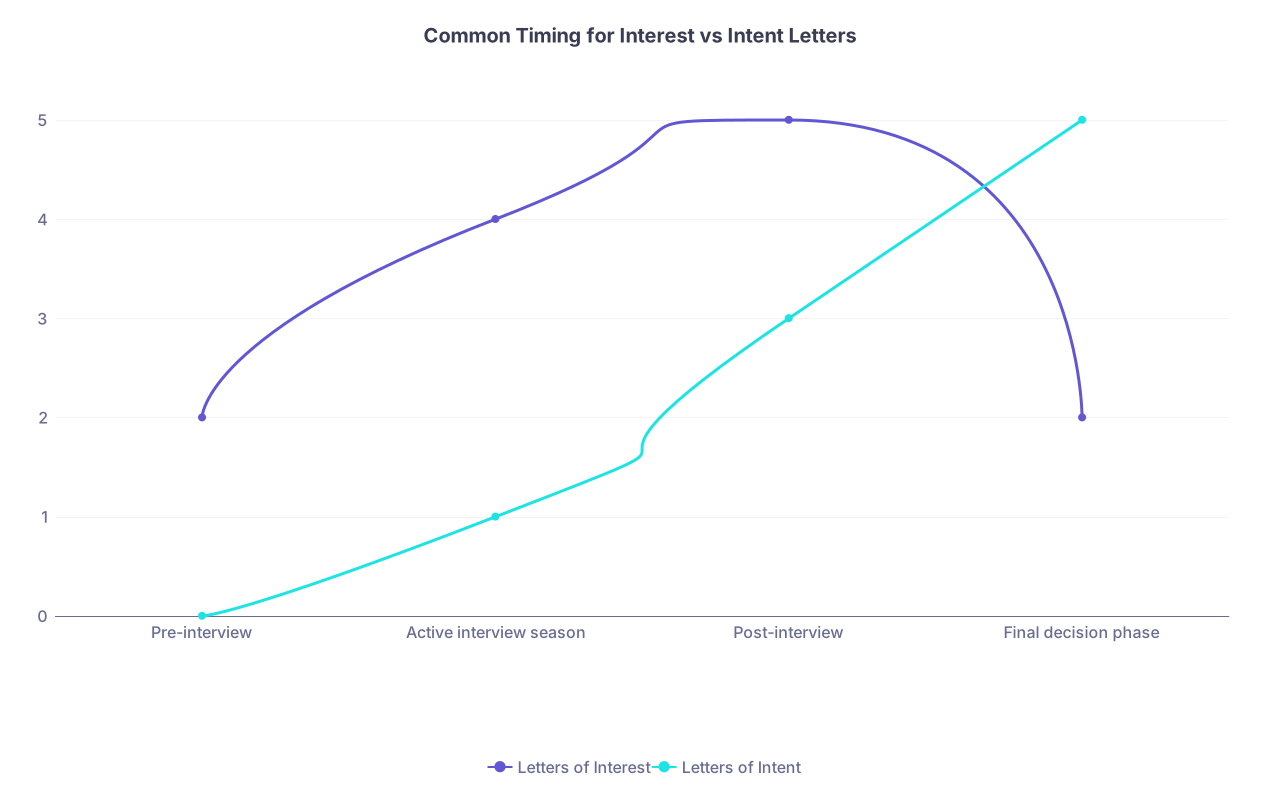
| Category | Letters of Interest | Letters of Intent |
|---|---|---|
| Pre-interview | 2 | 0 |
| Active interview season | 4 | 1 |
| Post-interview | 5 | 3 |
| Final decision phase | 2 | 5 |
Letter of Interest Timing
Use a letter of interest:
Pre-interview
If you haven’t heard anything and really like a program, you can send a short interest/update letter with meaningful new info (MCAT/USMLE scores, new publication, leadership role).Post-interview but before decisions
This is the sweet spot. You’ve interviewed, you liked them, and you want to stay on their radar. 1–2 weeks after your interview is fine; another brief update later if you have real news.On waitlist (for med school)
A strong, specific letter of interest with updates can help. It’s not magic, but I’ve seen it move people from “checklist applicant” to “we remember this person.”
Letter of Intent Timing
Use a letter of intent:
- After you’ve completed all (or almost all) of your interviews
- After you’ve genuinely compared programs and know your #1
- Within the typical decision/ranking window, not months earlier
Rough guideline:
- Medical school: usually between January–March, depending on the school’s timeline and when you receive other decisions.
- Residency: after you’ve seen enough programs to know your true #1, usually in the second half of interview season before rank lists are due.
Sending a letter of intent in, say, November before seeing half your interviews? That’s impulse, not strategy.
Ethical Boundaries: What’s Actually Okay vs Shady
This is where people get into trouble.
What’s Clearly Ethical
Sending multiple letters of interest to multiple programs
Totally fine. Just be honest and don’t call all of them “top choice.” Use “very interested,” “strongly interested,” or “among my top choices” if that’s true.Sending one letter of intent to one program
Yes. That’s the proper use. The whole concept assumes you have a single #1.Being precise in your language
If a program is top 3 but not #1, say “one of my top choices” or “a top choice.” Not “my top.”
What’s Unethical (and dumb)
Sending multiple letters of intent to different programs
Programs do talk. Faculty move between places. PDs and deans text each other. I’ve personally seen applicants get burned when their “exclusive” intent magically wasn’t exclusive.Using intent language you don’t mean
Saying “I will attend” or “I will rank you #1” when you’re not actually committed is lying. There isn’t a nicer word for it.Trying to be cleverly ambiguous
Some people write stuff like “I intend to give your program the strongest consideration on my rank list.” That just reads as slippery. Don’t be that person.
Stick to this rule:
If you wouldn’t be comfortable explaining your wording to the dean or PD on a recorded Zoom call, don’t write it.
How Programs Actually View These Letters
Reality check: these letters are nudges, not golden tickets.
What a Letter of Interest Does (When It Works)
- Reminds them you exist, with your name in front of them again
- Signals you’ll be more likely to accept an offer (med school) or rank them highly (residency)
- Gives them a reason to take a second look, especially if you add concrete updates: new Step score, publication, new leadership, significant life change
What it does not do:
- Turn a weak application into a competitive one
- Magically erase a poor interview
- Guarantee anything
Used right, it can move you from the middle of the pile to “worth a closer look.”
What a Letter of Intent Does (When It Works)
For med school:
- Can tip a borderline accept/waitlist decision toward “accept” if they believe you’ll come
- Helps them manage yield (schools hate offering to 100 people and getting 20 yes’s)
For residency:
- Can move you up a few spots on a rank list if they already liked you
- Gives them reassurance that ranking you high is “low risk” because you’re likely to rank them high too
What it does not do:
- Override a clearly stronger applicant they love more
- Fix a disastrously bad interview
- Guarantee matching/acceptance
It’s a small lever. Use it, but don’t expect miracles.
How to Decide Which One You Should Send
Here’s the clean decision flow.

| Step | Description |
|---|---|
| Step 1 | Do you have a clear #1 program? |
| Step 2 | Send letters of interest only |
| Step 3 | Are you 100 percent sure? |
| Step 4 | Send one letter of intent to that program |
| Step 5 | For all other programs use letters of interest or silence |
In plain language:
- If you don’t have a single, clear, no-doubt #1 → do not send a letter of intent yet. Use letters of interest.
- Once you have a true #1 and you’d be happy to commit → send one letter of intent.
- Everyone else gets either:
- A letter of interest, or
- No letter at all if you’re not that invested.
Quick Example Structures
You don’t need a template paragraph-by-paragraph, but here’s how each should roughly look.
Letter of Interest Skeleton
- Short intro: who you are and why you’re writing
- 1–2 specific things you liked about the school/program
- Concrete updates (if any): scores, research, roles, honors
- Clear statement of interest (but not commitment)
- Brief thank you and close
Letter of Intent Skeleton
- Short intro and gratitude for interview/consideration
- Clear, unambiguous statement they’re your #1 and you’ll attend / rank them first
- 2–3 specific reasons (fit, curriculum, culture, geography, career goals)
- Any important updates that strengthen your case
- Simple, professional closing
If it takes you 2 pages to say either one, you’re doing too much. One page max. Ideally 3–6 short paragraphs.
FAQs
1. Can I send more than one letter of intent if I change my mind later?
You can. You just shouldn’t. If you genuinely change your mind, technically there’s no legal rule stopping you, but ethically it’s messy and programs will feel misled. Better option: don’t send any letter of intent until you’re sure.
2. Is a letter of interest even worth it, or is it just noise?
Used generically, it’s noise. Used with real updates and specific reasons for your interest, it’s helpful. I’ve seen applicants pulled off waitlists or kept high in consideration because they stayed on a program’s radar with a strong, focused interest letter.
3. What if a school or program explicitly says not to send letters?
Then don’t send them. Some places say “no updates/letters” and they mean it. Ignoring that makes you look like you can’t follow directions, which is exactly what you don’t want on your file.
4. Should I tell other programs they’re “top choice” if they’re in my top 3?
You can tell them they’re a “top choice” or “among my top choices,” but don’t say “top choice” or “number one” if that isn’t true. The precise language matters. Reserve “first choice,” “number one,” “if accepted, I will attend” for your single letter of intent only.
5. Do I need my advisor to review these letters?
You don’t need it, but it’s smart. A good advisor or mentor will catch slippery wording, tone issues, or over-promising. At minimum, have one trusted person in medicine read your letter of intent before you send it.
Bottom line:
- Interest = enthusiasm without a promise. You can send to many.
- Intent = a commitment to your #1. You send to exactly one.
- Be specific, be honest, and don’t use intent language unless you’re prepared to live with it.