
Last winter, a PD forwarded me an email from an applicant. Subject line: “My Sincere Letter of Intent – You Are My #1.” Two days later, the same applicant’s almost-identical “You are my #1” email landed in the inbox of another PD I know. Same typos. Same “unique” story.
That applicant matched. But not at either of those programs. And yes, both PDs noticed. They talked. You have no idea how often that kind of thing happens behind the scenes.
Let me walk you through how letters of intent actually land on the other side of ERAS—and the quiet, subtle ways they hurt you more than they help.
What PDs Really Do With Your Letter of Intent
Here’s the part nobody tells you: there’s no standardized, official process for how programs handle letters of intent. It’s chaos, flavored by personality.
I’ve seen three main patterns:
- PDs who largely ignore them
- PDs who skim them, mainly looking for red flags
- PDs who occasionally use them as a tiebreaker
Notice what’s missing: “PDs who carefully weigh each letter and agonize over your heartfelt paragraphs.” That’s fantasy.
On a busy afternoon in February, a typical PD inbox looks like this:
- Committee emails
- GME compliance warnings
- Scheduling crises
- Angry patient complaints
- A dozen “quick questions” from residents
- And somewhere in there: your 800-word emotional manifesto about why they’re your “top choice”
You’re competing with the daily operational firehose. So what actually happens?
Most PDs will:
- Recognize your name (maybe)
- Skim the first 2–3 sentences
- Decide: “Normal” or “Problem”
- Move on
Is that harsh? Yes. Is it reality? Absolutely.
And here’s the dangerous part: letters of intent don’t usually help you much. But they can quietly hurt you in ways you never see—by triggering doubt, annoyance, or mistrust.
Quiet Backfire #1: You Accidentally Expose Your Rank List
The most obvious trap is also the least discussed: your letter of intent can reveal more about your actual rank strategy than you think.
PDs are not naïve. They’ve read thousands of these.
When you say, “I would be honored to train at your exceptional program,” that’s neutral. Polite fluff. Everyone says that.
But when you say, “I will be ranking your program highly,” that has a very specific translation in most PD minds:
- “Highly” = “Not #1. Probably not even top 3. I am hedging.”
Some PDs will literally say this out loud in committee:
“He sent us a letter saying we are ‘highly ranked.’ Translation: we are not his first choice.”
The subtle damage? You’ve just downgraded your perceived genuine interest compared to the applicant who said nothing but looked strong on paper and seemed enthusiastic on interview day.
Worse is when you mix vague language with exaggerated flattery. For example:
- “I’m deeply committed to training at your program and I cannot imagine a better fit, and I will strongly consider ranking you highly.”
That is word salad. And PDs smell the hedging.
If you’re not prepared to say, “I will be ranking your program #1,” you’re often better off sending nothing. The middle-ground, half-committed language quietly signals to them: “We are his/her backup.”
Quiet Backfire #2: You Look Dishonest in a Small, Gossipy World
You’ve probably been told: “Only send one true letter of intent, to your genuine #1.”
Here’s the part people leave out: PDs do compare notes. Not every day. Not systematically. But often enough to matter.
Let me spell out a very real scenario I’ve seen:
- Applicant A emails Program X: “You are my #1 choice. If offered the opportunity, I will absolutely rank you first.”
- Three days later, Applicant A emails Program Y: “You are my #1 choice. I will 100% rank your program first.”
- Programs X and Y are in the same region, same specialty. The PDs text each other. X: “We just got a strong letter of intent from Applicant A.” Y: “Funny, us too.”
- Screen-shotted. Forwarded. Compared. Identical commitments.
Now, what happens?
They do not call NRMP. They do not formally “report” you. They do something more damaging: they mentally label you as untrustworthy.
In rank meetings, you’ll hear things like:
- “He’s playing games.”
- “If he’s lying to multiple programs now, what’s he going to be like as a resident?”
- “We have plenty of strong candidates who aren’t doing that.”
Do all PDs care? No. Some shrug. But the ones who care really care. And those are often the ones driving the final list decisions.
That’s how a quiet backfire works: you’re not blacklisted. You’re just on the wrong side of a gut feeling when they’re choosing between two similar candidates.
Quiet Backfire #3: You Reveal Poor Judgment, Not Passion
A surprisingly common problem: tone-deaf letters that were meant to be heartfelt.
I’ve read letters that:
Aggressively begged:
“I know my Step 1 failure and low Step 2 score might scare you, but I promise you I am not a bad risk. Please give me this chance.”Over-shared personal trauma with no filter or framing.
Criticized other programs indirectly:
“Unlike other places I interviewed, your program doesn’t treat residents as cheap labor.”
Here’s what happens behind closed doors:
PD reads it. Sighs. Forwards it to one trusted APD or core faculty with a note:
- “This worries me.”
- “Red flag?”
- “Thoughts?”
They rarely say, “We absolutely will not rank this person.” They say:
- “We need residents with judgment.”
- “If this is how they communicate when anxious, what will they be like with patients, families, nurses?”
Your letter just reframed you from “strong but maybe slightly below our usual metrics” to “emotionally volatile,” or “lacks tact,” or “does not know what belongs in professional communication.”
And because everyone wants the letter to help, they don’t tell you it hurt. They just quietly slot you a little lower.
Quiet Backfire #4: You Sound Like Everyone Else—and Therefore Like No One
Most letters of intent are indistinguishable. PDs won’t tell you this, but by the end of January, they all blur together.
Standard template:
- “Thank you for the opportunity to interview.”
- “I truly enjoyed meeting you and your residents.”
- “I was especially impressed by [one generic program attribute: ‘camaraderie,’ ‘diversity,’ ‘strong training in…’].”
- “I believe your program is an excellent fit for my career goals.”
If your letter reads like that, it doesn’t actively hurt. It just wastes your shot at saying something that separates you from the pile. The quiet backfire here is opportunity cost.
Why does that matter? Because there are moments, especially near the end of rank meetings, when someone will say:
- “What about that applicant who wrote the really specific email about our community outreach clinic?”
Specific, credible detail anchors you in their memory. Vague generalities evaporate.
But trying to “stand out” the wrong way—overly flowery, weirdly intense, or performative—backfires, too. PDs have a very good radar for authenticity vs. desperation.
One PD I know literally keeps a folder of ridiculous letters and emails the funniest excerpts to trusted colleagues every year. You do not want to be in that folder.
Quiet Backfire #5: You Violate the NRMP Spirit and Make PDs Uncomfortable
This is subtle but important.
NRMP rules are built around the idea of an independent, fair match. Programs cannot ask you to state how you’ll rank them. They’re not supposed to solicit commitments. They know the rules. They’ve sat through the mandatory training.
So when you write something like:
- “If you rank me in your top 5, I will rank you #1.”
You’re not just being transactional. You’re shoving them into an ethically gray space they’ve been explicitly told to avoid.
Most PDs hate that.
They do not want:
- Quid pro quo language
- Negotiation vibes
- Explicit match “deals” written in black and white
So even if they liked you, that kind of letter can quietly flip their internal switch from “strong candidate” to “high-maintenance and clueless about professionalism boundaries.”
The match is not a bargaining table. The programs who respect the process resent being treated like you’re cutting a side deal.
Quiet Backfire #6: You Expose How Little You Actually Know About the Program
PDs can tell when you wrote one master template and sprayed it across 25 programs.
I saw a letter last cycle addressed to a mid-size community program saying:
- “I was incredibly impressed by your affiliation with [major academic center that had no connection whatsoever].”
The PD sent it to me with one line: “We are un-affiliated.” Followed by a laughing emoji.
Here’s what happens when you reveal you do not actually understand the program:
- They know you did not pay real attention on interview day.
- They suspect you’re sending the exact same “personalized” letter everywhere.
- They question how genuine your “top interest” really is.
The quiet consequence: you’ve just moved yourself into the large bucket labeled “generic applicant who wants a spot, not our spot.”
That doesn’t automatically kill you. But when they’re choosing between you and someone who can name one specific thing they loved that actually exists—your stock drops.
Quiet Backfire #7: You Create Expectation Mismatch—and Resentment
Here’s another angle you don’t hear about.
Let’s say you send a very strong, very clear letter of intent:
- “Your program is my number one choice. I will rank you first.”
No hedging. Totally unambiguous. And you mean it.
Now imagine this: they like you but don’t love you. You’re a mid-tier candidate for them. They rank you somewhere in the middle.
Match Day comes. You do not match there. You matched at a program you ranked lower, because they ranked you higher.
Guess how that feels on their side? Some PDs shrug. Others feel…awkward.
They think:
- “We were their #1, but we didn’t rank them that high.”
- “Did we misread this? Were they lying? Or did we just not believe in them enough?”
No one emails you that reflection. But the feeling lingers.
Does this matter to your career? Probably not directly. But be very clear: when you write a true LOI, you’re putting emotional weight and expectation into a process where the other side might not reciprocate—and occasionally, they feel like the jerk after the fact.
That’s why many seasoned PDs will say privately: “I prefer they just play the match straight and let the algorithm do its job.”
How Letters of Intent Do Help—When Used Correctly
I’m not anti-letter. I’m against sloppy, desperate, or dishonest letters.
Done right, a letter of intent or strong interest can do two things:
- Serve as a clean, honest signal of genuine preference
- Make you more memorable for specific, grounded reasons
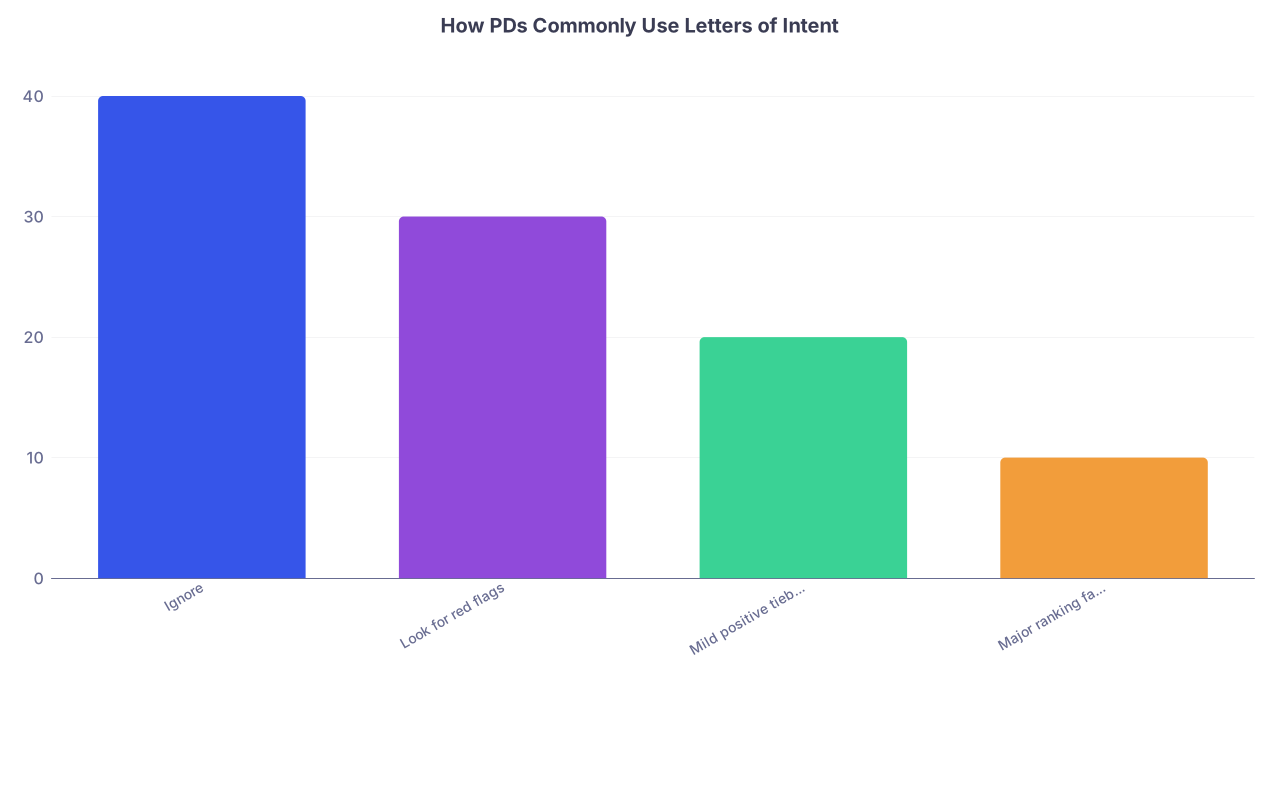
| Category | Value |
|---|---|
| Ignore | 40 |
| Look for red flags | 30 |
| Mild positive tiebreaker | 20 |
| Major ranking factor | 10 |
That chart sums it up: far more PDs are looking for problems than for reasons to dramatically bump you up.
So if you’re going to send something, structure it like this:
- Short. 2–3 concise paragraphs. This is not a personal statement sequel.
- Specific. Name one or two real features: a clinic, a curriculum track, a vibe you felt with residents.
- Truthful. If you say “#1,” mean it. If they’re just high on your list, call it a “strong interest” letter instead of a letter of intent.
- Professional. No bargaining. No emotional hostage-taking. No oversharing.
You want the PD to read it and think:
- “Seems grounded.”
- “Understands our program.”
- “Not manipulative.”
That’s it. Don’t chase drama.
Common Red-Flag Phrases That Make PDs Roll Their Eyes
There are certain lines that have just been overused to death. They don’t always hurt you overtly, but they chip away at your credibility.
| Weak / Problematic Phrase | Stronger Alternative |
|---|---|
| "I will rank you highly." | "Your program is among my top choices." |
| "You are my clear number one" (sent to many) | "Your program is my number one choice." (sent once) |
| "Perfect fit in every possible way." | "I see strong alignment between your [X] and my goals." |
| "Unlike other programs I interviewed at..." | "I particularly appreciated your focus on [specific X]." |
| "If you rank me, I will rank you..." | Omit. Do not negotiate rankings. |
You do not win points for dramatic language. You win points for clarity and sincerity.
A Simple Mental Model: Risk vs. Reward of Sending a Letter
Use this framework before you hit send.

| Step | Description |
|---|---|
| Step 1 | Considering Letter |
| Step 2 | Send clear LOI |
| Step 3 | Do not send or get help |
| Step 4 | Send short interest email |
| Step 5 | Do not send |
| Step 6 | Is this truly my #1? |
| Step 7 | Can I write a specific, professional letter? |
| Step 8 | Is this a strong interest program? |
If they’re not your true #1, don’t call it a “letter of intent.” That’s how you end up lying to multiple programs and quietly damaging your reputation.
If they are your #1 but you cannot articulate why in a specific, non-cringe way, your problem isn’t the letter. It’s that you may not actually understand the program well—so go back to your notes, website, interview memories, and fix that first.
The Future: Are Letters of Intent Losing Power?
Quietly, yes.
More PDs each year tell me some version of:
- “I barely look at them now.”
- “Too many students are gaming it.”
- “I prefer the data we already have.”
At bigger academic centers, the trend is especially clear. Rank meetings are increasingly driven by:
- Interview evaluations
- File review scores
- SLOEs / letters
- Institutional priorities (diversity, geographic ties, home/affiliate students)
Your emotional essay about how life-changing their noon conference schedule was doesn’t move that needle much.
Where letters still have modest value:
- Smaller programs where the PD personally knows most applicants by name
- Programs in competitive regions where true interest can matter (e.g., will this coastal applicant really come to our midwest community program?)
- Borderline cases where they’re deciding who to keep on the rank list vs. who to drop entirely
So: letters aren’t dead. But the fantasy that they’re your magic lever to jump 30 spots on a rank list? That’s gone.
How to Play This Smartly (Without Being Sleazy)
Here’s the strategy insiders actually respect:
- Pick your true #1. One program. Not three. Not “top tier.” One.
- If you can clearly explain to yourself why they’re your #1 in concrete terms, and you can do it in 2–3 tight paragraphs, send a genuine letter of intent.
- For 2–4 other programs you’d be thrilled to match at, you can send brief “strong interest” emails—no promises, no ranking language, just specific enthusiasm.
- Everyone else? Let your application, interview, and rank list do their job.
And through all of this: never, ever lie about your rank list. This field is smaller and pettier than you think. PDs move jobs. Faculty talk. Reputation follows.
FAQ (Exactly 3 Questions)
1. If a program asks me directly how I’ll rank them, can I answer?
Yes, you can, but be careful. They’re technically not supposed to ask. If they do and you’re comfortable, you can say something like, “You are one of my top choices, and I’d be very excited to train here,” without giving numeric ranking details. If it truly is your #1 and you want to say so, that’s your call—but do not say that to multiple programs. If you’re not sure or do not want to commit, you can pivot: “I’m still finalizing my list, but I had a very positive experience here and can absolutely see myself training here.”
2. Will not sending any letters of intent or interest hurt my chances?
For most applicants, no. Many residents in top programs never sent a single letter. Not sending a letter does not count against you. You’ll be judged on the same things that have always mattered most: your application, your interview performance, and your letters of recommendation. Where a letter occasionally helps is in borderline or tie-break situations, or with smaller programs that care a lot about genuine interest.
3. What’s the ideal timing for a letter of intent?
For categorical residencies, late January to very early February is the usual sweet spot—after you’ve completed all your interviews and have a realistic sense of your preferences. Sending something in November or early December labeled a “letter of intent” looks impulsive and naïve; your list will probably change. Wait until your mind is settled. Then send one clear, specific, honest LOI to your true #1, and let the algorithm and your entire body of work do the rest.
Years from now, you won’t remember the exact sentence you put in a letter of intent. You’ll remember whether you handled this process with integrity and judgment. That’s the part PDs are quietly grading, long before Match Day.