
The Question You’re Actually Asking
If you send a “you’re my top choice” letter to more than one program… are you lying, gaming the system, or just doing what everyone pretends they’re not doing?
Let me ruin the folklore up front: the current culture around letters of intent (LOIs) is a mix of hypocrisy, selective morality, and poor understanding of how the Match algorithm actually works.
The louder someone insists “you can ONLY send one LOI or it’s unethical,” the less they usually understand the data, the rules, or human behavior on the program side.
Let’s separate three things that keep getting blended into one vague guilt trip:
- What the NRMP rules actually say
- What the Match algorithm rewards
- What’s ethically defensible vs. performative purity
You are not a bad person because you’re trying to survive a broken signaling ecosystem.
What the Rules Actually Say (Not What People Claim)
First, the only entity whose ethics code actually matters for the Match is the NRMP. Not your friend’s attending. Not a random PD on Twitter. Not your school’s “professionalism committee” that still thinks pagers are a good idea.
Here’s the core NRMP policy relevant here (summarized, not sanitized):
- You can express interest or intent to programs.
- You cannot make or demand binding commitments outside the Match.
- You shouldn’t say anything you know is false about your actions (e.g., “I will rank you #1” and then rank them #5 knowing that as you type).
So is it literally against NRMP rules to send LOIs to multiple programs? No.
What is prohibited:
- Dishonest binding statements you do not intend to honor
- Attempting to coerce or be coerced into commitments outside the Match
The gray zone is here:
- “You are my number one choice.”
- “I will rank you to match.”
If you tell five programs they’re your locked-in #1, and you know that’s impossible, you’re crossing from “strategic signaling” into flat-out lying. That’s not folklore. That’s just dishonesty.
But the existence of more than one LOI? Not inherently unethical. Depends entirely on what you say.
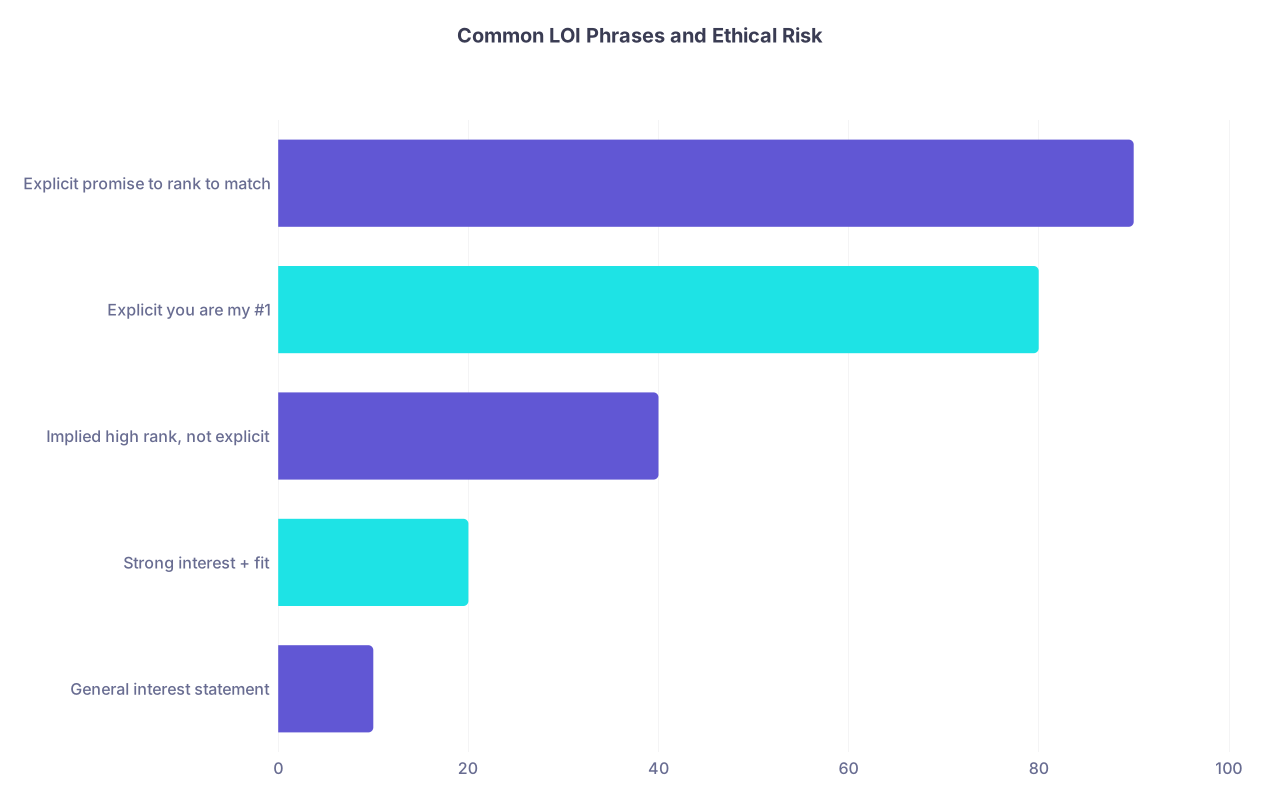
| Category | Value |
|---|---|
| General interest statement | 10 |
| Strong interest + fit | 20 |
| Implied high rank, not explicit | 40 |
| Explicit you are my #1 | 80 |
| Explicit promise to rank to match | 90 |
(Higher value = higher ethical and practical risk.)
LOIs vs. The Match Algorithm: They Don’t Work How You Think
If you misunderstand the algorithm, you’ll misjudge the ethics.
The Match algorithm is applicant-optimal. Translation:
You should rank programs in the true order you want, regardless of where you think they’ll rank you.
Key implication:
Any “promise” about your rank list that doesn’t reflect what you’d actually do if no one were watching is both pointless and dishonest.
Scenario I keep seeing:
- Applicant sends an LOI to Program A: “You’re my top choice. I will rank you #1.”
- Then gets a late interview at Program B that they like more.
- They panic: “If I change my true #1, am I breaking an ethical rule?”
No. You’re just realizing you made a promise about the future you shouldn’t have made. The ethical failure wasn’t changing your mind; it was making a definitive ranking promise in the first place.
Better approach:
- Never promise a specific rank position unless it’s actually final and you’re prepared to live with it even if a “dream” late interview arrives.
- Use language that reflects reality: “I can see myself ranking your program very highly” or “I’m strongly considering ranking your program first.”
The algorithm doesn’t reward lying. It rewards honest preference ordering. LOIs don’t override that.
The Big Myth: “You Must Only Send One LOI”
This dogma usually comes in two flavors:
- “Sending more than one LOI is unethical.”
- “Programs talk; if you send more than one, you’ll get caught and blacklisted.”
Let’s dismantle both.
1. The “One LOI Only” Morality Play
Where does this even come from? It’s not NRMP.
It’s cultural — a kind of honor-code cosplay applied to a system that’s already full of asymmetries and hidden behavior.
Programs:
- Mass-email “you’re a highly competitive candidate and we’re excited to consider you” to hundreds of people they’ll never rank realistically.
- Tell 40 candidates on interview day that they’d be a “great fit here; we hope you’ll rank us highly.”
- Sometimes hint or outright say, “If you rank us highly, we’re confident you’ll match here,” even when they have a huge list and no special protection for that applicant.
Students:
- Are told they’re morally suspect if they send more than one “you’re my top choice” email.
That’s not ethics. That’s asymmetry.
Here’s a more honest rule:
- One explicit “You are my #1 and I will rank you first” letter max, if you choose to do that at all.
- Multiple non-deceptive “You are one of my top choices / I am very interested” communications are fine.
Ethics is not about counting emails. It’s about whether what you say is actually true.
2. “Programs Talk and You’ll Be Caught”
Do programs ever talk? Yes.
Is there some national LOI registry where PDs compare your love letters? No.
Real-world reality:
- PDs are overwhelmed; most do not have the time or interest to coordinate LOI policing.
- The majority of communication never leaves the program’s inbox.
- When programs do talk, it’s generally about applicants with red flags, insane behavior, or rockstar applicants they’re trying to recruit hard — not “this person sent us a nice email.”
Could you theoretically get caught telling multiple programs “You are my #1 and I will rank you first”? Yes. Does it happen? Rarely. Would it matter? Possibly to that program’s opinion of your integrity.
But the worst-case scenario is not a multi-LOI apocalypse. The worst case is you being caught in an obvious lie, not you sending multiple interest letters with honest, non-absolute language.
So Is It Lying to Send More Than One LOI?
Here’s the actual answer, stripped of folklore:
- Sending more than one LOI = not inherently lying.
- Sending more than one exclusive, absolute commitment (“you are my #1”) = yes, that’s lying.
- Sending multiple letters that accurately express strong interest and genuine fit without false exclusivity = ethically fine.
So the better question is:
What exactly are you saying in those letters?
If you write to three programs:
- “I loved your residents and teaching culture. Your program is one of my top choices, and I could see myself thriving here.”
That can be true for three places at once. No deception.
If you write to three programs:
- “Your program is my clear #1, and I will be ranking you first.”
You know that can’t be true simultaneously. That’s not “strategy.” That’s dishonesty in slow motion.
What Actually Matters to Programs (More Than Your LOI Math)
This isn’t talked about enough: most programs don’t give LOIs the magical power students think they have.
I’ve watched ranking meetings. LOIs come up, but more like:
- “This applicant sent us a strong interest email; bump them if we’re on the fence?”
- “They told us we were #1 — might move them up 5–10 spots, but not above obviously stronger files.”
They do not:
- Rebuild the rank list around your LOI
- Override glaring score gaps, red flags, or mediocre interviews
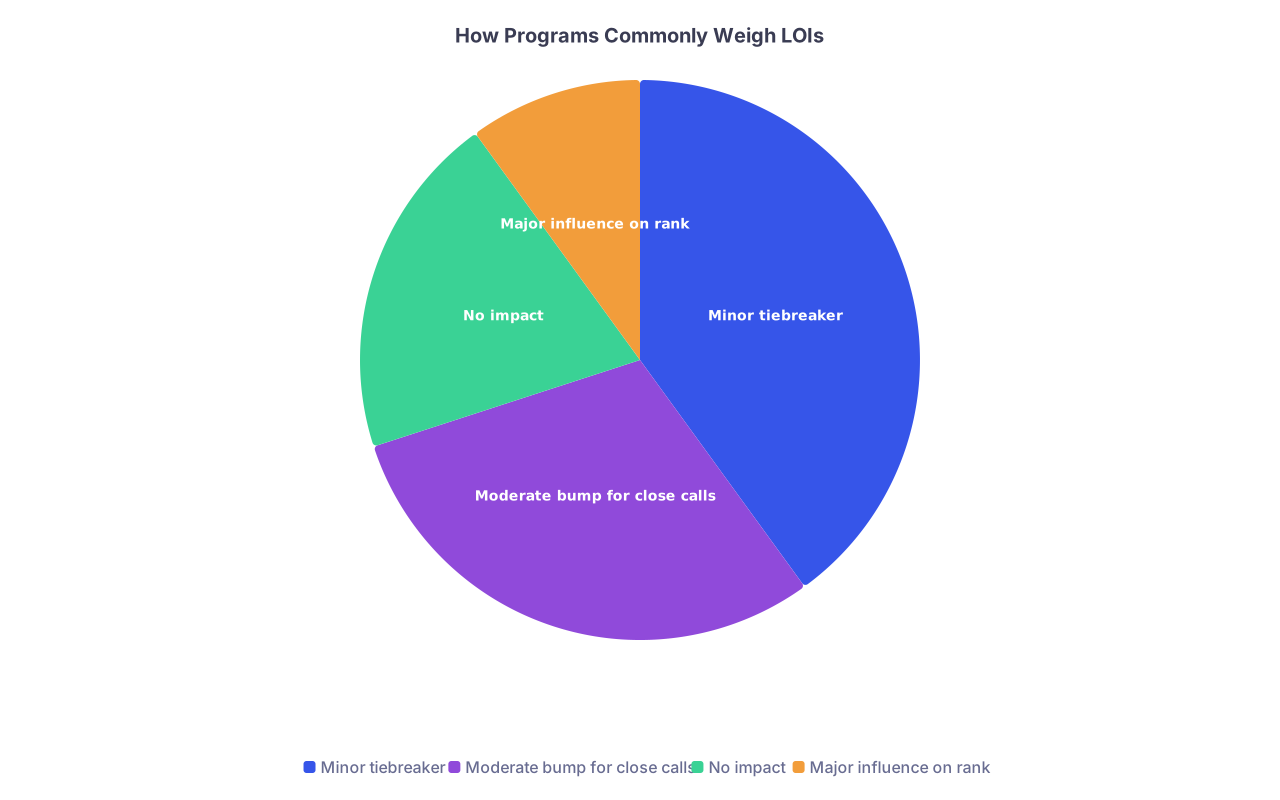
| Category | Value |
|---|---|
| Minor tiebreaker | 40 |
| Moderate bump for close calls | 30 |
| No impact | 20 |
| Major influence on rank | 10 |
Notice that “major influence” is the smallest slice.
So ethically torturing yourself over whether you can send “one true LOI” is misaligned with reality. Focus more on not lying, and less on mythical LOI power.
How to Write LOIs Without Lying (Even If You Send Several)
You want to maximize signaling without crossing ethical lines. That’s doable.
Here’s a clean structure that scales:
Open with genuine appreciation
- Refer to specifics: a resident, a case discussion, a unique curriculum element. Show you actually paid attention.
State strong interest without fake exclusivity
Phrases that are honest yet strong:- “Your program is one of the few where I truly see myself thriving.”
- “I anticipate ranking your program near the very top of my list.”
- “Your program is among my top choices because…”
Connect your goals to their strengths
- “Your X rotation and Y research focus align with my interest in Z.”
- This is where you sound like a human, not a spam bot.
Close with clear, non-deceptive intent
Examples:- “I’m very excited about the prospect of training at [Program] and expect to rank you highly.”
- “Thank you again for the opportunity to interview; your program remains one of my top choices.”
You can send this kind of letter to multiple programs and sleep at night. Because it can all be true.
If you truly have a single, clear #1 that’s stable and you’re willing to lock it in no matter what happens next, you can add one more line to that single program:
- “I have decided that [Program] will be ranked first on my list.”
Just do not spray that sentence around town. That’s where ethics breaks.
| Type | Example Line |
|---|---|
| Safely honest | "I anticipate ranking your program very highly." |
| Strong but honest | "Your program is among my top choices." |
| Risky but defensible (to one program) | "I have decided to rank your program first." |
| Clearly dishonest if repeated | "You are my undisputed #1 and I will rank you first." |
Timeline Reality: Your Feelings Change
A big reason the “only one LOI” purity culture fails is this: you do not know your true #1 early in interview season. Almost nobody does.
Your brain goes through a pretty predictable arc:
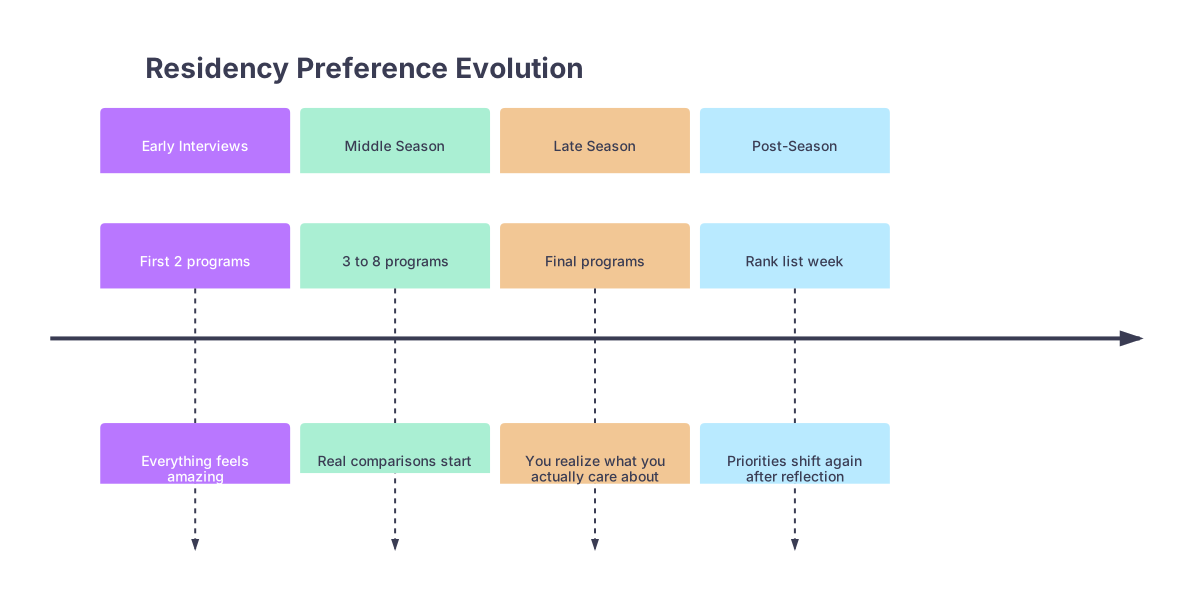
| Period | Event |
|---|---|
| Early Interviews - First 2 programs | Everything feels amazing |
| Middle Season - 3 to 8 programs | Real comparisons start |
| Late Season - Final programs | You realize what you actually care about |
| Post-Season - Rank list week | Priorities shift again after reflection |
So when someone says, “Pick your one true love program in November and pledge eternal loyalty via LOI,” they’re basically encouraging you to lie to your future self.
Ethically smarter move:
- Wait until late season when you actually have real data and a clearer sense of your preferences.
- Don’t commit in writing to “you are my #1” unless the season is basically done and you’ve wrestled with the decision.
And again: you never have to send a true #1 promise LOI. Many people match fine without ever doing it.
The Harsh Truth: LOI Culture Is More Broken Than You Are
The system is the problem, not you.
- There is no official, limited, transparent signaling mechanism in most specialties (a few are experimenting with preference signals; most are not there yet).
- Programs send mass, vague, feel-good interest notes that aren’t binding.
- Applicants are pressured to act like medieval knights swearing single-program fealty in a system that doesn’t actually respect that same precision from the other side.
You trying to signal genuine interest to multiple places is not unethical. The lying starts only when your words stop matching reality.

So What Should You Actually Do?
Practical, non-folklore approach:
Decide early what you will never promise.
Personally, I’d avoid “I will rank you #1” altogether. Too rigid, too easy to break unintentionally.Send multiple honest interest letters.
If you’re truly enthusiastic about 4–6 programs, tell them. With clear, truthful language.If you must send a “true #1” LOI, send exactly one — late.
After your interviews are done or nearly done. And mean it.Rank programs in your true order.
Ignore any implied obligation from past emails. The most ethical and rational thing you can do for the Match is submit an honest list.Accept that signaling is probabilistic, not magical.
Your LOI might bump you a little. It will not fix a poor interview or transform you into a superstar candidate.
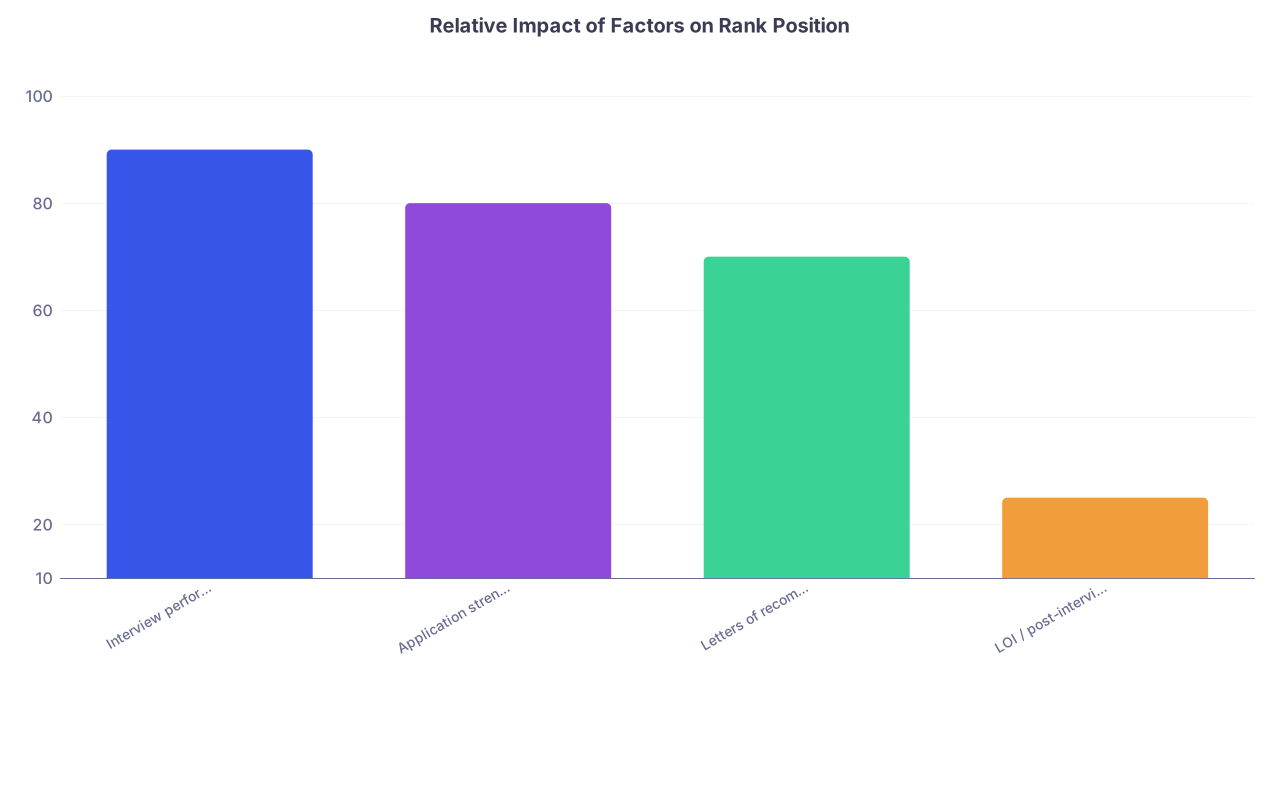
| Category | Value |
|---|---|
| Interview performance | 90 |
| Application strength | 80 |
| Letters of recommendation | 70 |
| LOI / post-interview emails | 25 |
LOIs are a weak lever. Use them honestly, but don’t worship them.

Ethics vs. Folklore: The Bottom Line
Three takeaways, without the drama:
Number of LOIs ≠ ethics.
You can send multiple LOIs ethically if the content is true. The lie isn’t the count; it’s claiming exclusivity you don’t actually give.Avoid absolute promises about rank order.
The Match algorithm already protects your real preferences. Don’t box yourself into dishonest commitments you’ll regret when your true #1 changes.Use LOIs as honest, minor signals — not as oaths.
Tell programs you’re very interested, tell a few that they’re among your top choices, and if you absolutely must, tell one program (late, and truthfully) that they’re #1. Anything beyond that is performative mythology, not ethics.