
The belief that letters of intent guarantee your match is not just wrong. It is delusional. And people cling to it because it feels better than accepting how uncertain the Match actually is.
Let me be blunt: a letter of intent is a weak signal in a noisy system dominated by your application metrics, interview performance, and a program’s internal politics. If you’re treating it like a golden ticket, you’re setting yourself up for a very public, very painful Lesson on Match Day.
Let’s dismantle this myth properly.
What Letters of Intent Actually Are (Not What You Wish They Were)
A letter of intent, in residency world, is you telling a program: “You are my number one. If you rank me, I will rank you first.” Some people try to be clever and say “top choice” or “very highly” as if programs don’t see through that.
Here’s the quiet part nobody says out loud: programs know these letters are cheap talk.
They cost you nothing. There’s no enforcement mechanism. NRMP rules explicitly say:
- Programs can’t ask you how you’ll rank them.
- You can tell them whatever you want voluntarily.
- Nothing you say or write is binding.
So programs treat letters of intent the same way attendings treat “I read about this on UpToDate” from a brand-new intern: maybe you did, maybe you didn’t, but I’m not betting the patient on it.
Occasionally, very occasionally, a letter of intent may nudge a borderline decision. But that’s a far cry from “guarantee.”
What the Data and Match Rules Actually Say
The NRMP has hammered this point for years: the Match algorithm favors the applicant’s true preferences if programs rank independently of what applicants say they’ll do.
Reality is messier, but the core point stands: outcome is driven overwhelmingly by:
- Whether you got an interview
- How the program ranked you after interviews
- How you ranked them
Letters are a side dish, not the entrée.
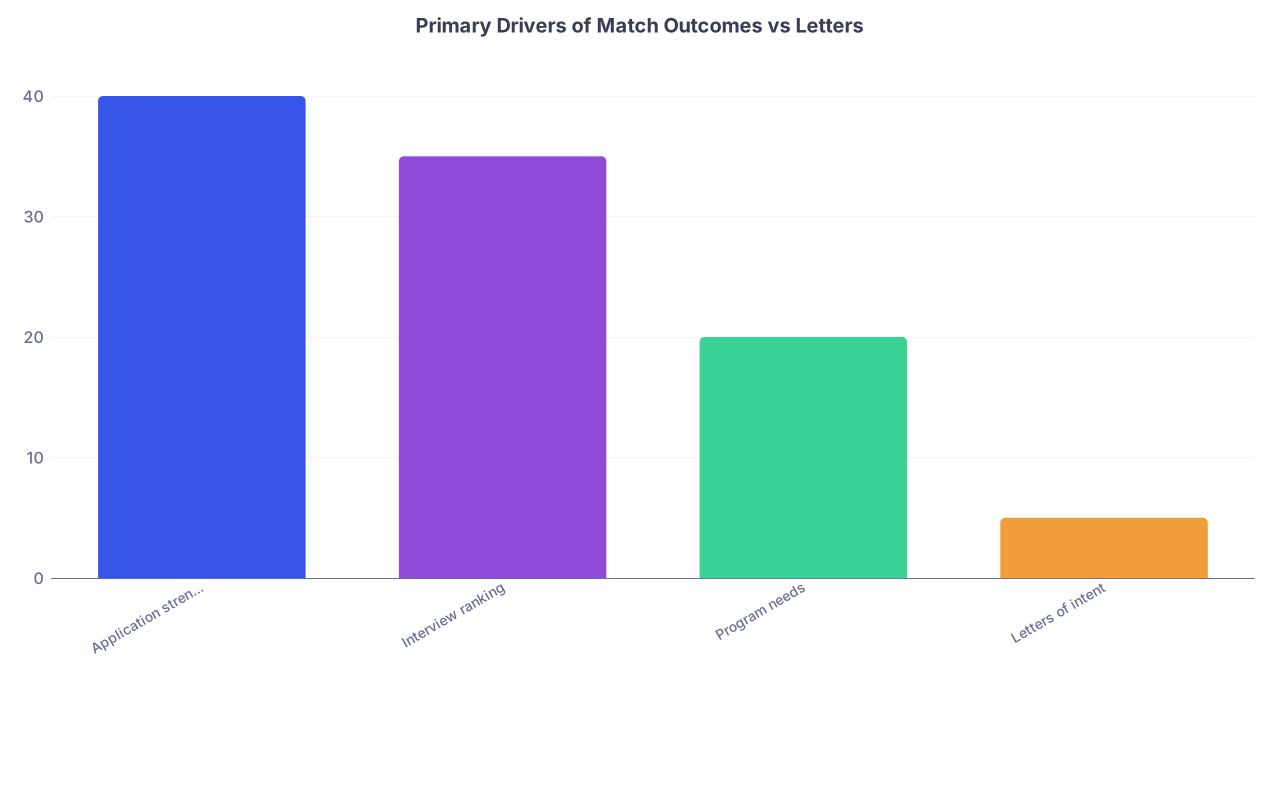
| Category | Value |
|---|---|
| Application strength | 40 |
| Interview ranking | 35 |
| Program needs | 20 |
| Letters of intent | 5 |
Are those exact percentages? No. But that’s roughly the weight programs implicitly assign when you listen to PDs at APDIM/APGO/AAIM conferences or read their survey comments. I’ve heard versions of this sentence so many times it’s practically a script:
“A letter of intent is nice. It’s never the reason we rank someone higher than we otherwise would.”
The NRMP Program Director Survey backs this up indirectly. When PDs are asked what affects interview offers and rank list decisions, you see things like:
- USMLE/COMLEX scores
- MSPE
- Letters of recommendation (not intent)
- Interview performance
- Clerkship grades
- Fit and professionalism
“Letters of intent” doesn’t show up as a major factor. Because it isn’t one.
The Most Dangerous Myth: “If I Send a Letter, They’ll Rank Me To Match”
Here’s the fantasy version many applicants carry around:
- Crush the interview at Dream Program.
- Email PD: “You are my number one.”
- PD reads it, smiles, nudges you way up the list.
- Match Day: confetti, Instagram story, life complete.
Here’s what actually happens more often:
- You had a solid but not standout interview.
- You send a letter of intent.
- PD or coordinator glances at it, logs it mentally as “likes us.”
- You stay exactly where you were on their list, maybe moved one or two spots at best.
- Whether you match depends mostly on which applicants above you rank that program and how many of them end up there.
Programs start from a rank list built on interview impressions, file review, and internal discussions. A single email doesn’t override a faculty committee that decided you were #25 and there are only 10 spots.
And programs absolutely have been burned before. I’ve sat in rank meetings where someone said, “Applicant X says we’re number one.” And another faculty member shot back, “He told Y he’d come there too. He’s playing the game.” That’s how quickly your magical letter turns into background noise.
Why Programs Don’t Trust Letters of Intent (And They’re Right Not To)
Programs aren’t naive. They’ve seen how applicants behave across cycles.
Common patterns:
- Applicants send “you’re my top choice” to multiple places.
- Applicants change their minds after a late “dream” interview.
- Applicants feel pressured to say something enthusiastic and think wording tricks will save them.
Program directors talk to each other. Informally. At conferences. Over email. On listservs. They share stories of the same applicant declaring them “#1” at three different places.
Once you see that a few times, you downgrade the credibility of all letters.
So the rational PD stance becomes:
- Use letters as a weak tie-breaker: between two very similar applicants, they might slightly favor the one who wrote a clear, credible note.
- Never use letters to override your actual judgment of ability, fit, professionalism, or faculty impressions.
If you’re counting on your letter to make up for poor fit, lukewarm interviews, or mediocre evaluations, you’re asking it to do something it simply doesn’t do in practice.
Where Letters of Intent Can Matter (A Little)
Now let’s be fair. Letters of intent aren’t completely worthless. They’re just overhyped.
They have some limited, specific uses:
1. Clarifying Genuine First Choice in a Close Call
If a program has you and another similar applicant clustered together on their rank list, and your metrics, narrative, and interviews are genuinely comparable, your letter stating “You are my clear #1 and I will rank you first” might be the 1–2 spot bump that moves you just above that other person.
That is not a guarantee you’ll match there. It just slightly improves your odds if you were already competitive and in the running.
2. Reassurance for Smaller or Less Famous Programs
Community programs or newer academic programs sometimes do care a bit more about reciprocity. If they fear being used as a “safety” and ending up with a long chain of unfilled spots, a sincere letter can reassure them you’re not just shotgun-applying.
Again, still not binding. But the psychology is different when a place isn’t Mayo or MGH.
3. Demonstrating Professionalism and Communication
A well-written, concise, respectful email (note: not a 1,000-word essay) shows you understand professional tone, follow-up, and clarity. That shouldn’t move you five ranks up. But in borderline professionalism/fit cases, it might keep you from sliding down.
None of these scenarios equal: “Send letter, secure spot.” They equal: “If you’re already solid, this might help a little.”
The Ethics Problem: Multiple Letters, Vague Wording, and Self-Sabotage
The myth around letters of intent creates a predictable mess: people start lying or playing semantics.
I’ve seen these three exact strategies from applicants—and seen them backfire:
The Multiple #1 Letters Play
Applicant sends “You are my top choice” to 3–4 programs, praying they never find out. PDs do, sometimes. Faculty work at multiple sites, talk, text. Once you’re labeled dishonest, you don’t drop two spots. You drop into the “do not rank” tier.The Weasel Word Letter
“You are one of my top choices” or “I will rank you very highly.” Programs read that as: “You’re not my number one.” That may be honest, which is fine, but don’t expect it to behave like a letter of intent. It’s a thank-you note, not a commitment signal.The Late Panic Letter
Applicant interviews at a more prestigious place in January, panics, and tries to “update” previous letters. I’ve literally heard PDs say: “We were their number one until X invited them. Now suddenly it’s ‘top choice.’ Okay then.”
If your “strategy” depends on technical truth but practical deception, you’ve already lost the professionalism war. PDs prize reliability. They all have stories of residents who say one thing and do another. They’re screening that out.
Letters of intent don’t exist in a vacuum. Your behavior around them teaches the program who you are under pressure.
What Actually Moves the Needle More Than Any Letter
If you want to stop obsessing over letters and start playing a game you can actually influence, focus here:
- How you interview: clear thinking, humility without self-erasure, curiosity, coherent story for your specialty choice.
- How your home institution talks about you. An enthusiastic call or email from your PD/Chair is infinitely more powerful than your own letter of intent.
- How your application fits their needs: ties to region, interest in their specific patient population, alignment with their strengths (research-heavy vs clinically heavy vs community-focused).
| Factor | Relative Impact |
|---|---|
| Interview performance | Very High |
| PD/Chair advocacy | Very High |
| Clerkship and sub-I evals | High |
| Program-specific fit | High |
| Letter of *recommendation* | High |
| Letter of *intent* | Low |
Notice what’s missing: “How dramatic my letter of intent was.”
If you have political capital with your home PD or a mentor well-respected in the field, that email or phone call is the real leverage move, not you sending a three-paragraph pledge.
Smart Use of Letters: Minimalist, Honest, Precise
You want a rational, non-magical way to use letters of intent? Here it is.
One program. Your true number one. That’s it.
A short email to the PD (and optionally CC the coordinator) with something like:
- 3–5 sentences
- Specific reasons that tie you to them (not generic “great training”)
- A clear, unambiguous line: “I will be ranking your program first.”
That’s it. No trauma essay. No bargaining. No begging. No attachments.
Then you drop it. You do not send semi-intent letters to three other places trying to hedge. You do not try to “update” if your feelings change after a late interview. You just accept that some uncertainty is baked into the process.
If your real number one is a hyper-competitive program where you’re clearly a long shot, fine—tell them anyway, but recognize that the marginal effect is probably basically zero. It still might matter at a smaller program you genuinely love.

The Future: Preference Signaling vs Old-School Letters
Here’s where the future of this whole mess is heading: formal, structured signals, not back-channel promises.
Many specialties are moving to preference signaling or “tokens” through ERAS:
- You get a limited number of signals (say 3–5).
- You send them to programs you’re truly most interested in.
- Programs see the signals in a standardized way, instead of sifting through a hundred almost-identical “you’re my top choice” emails.
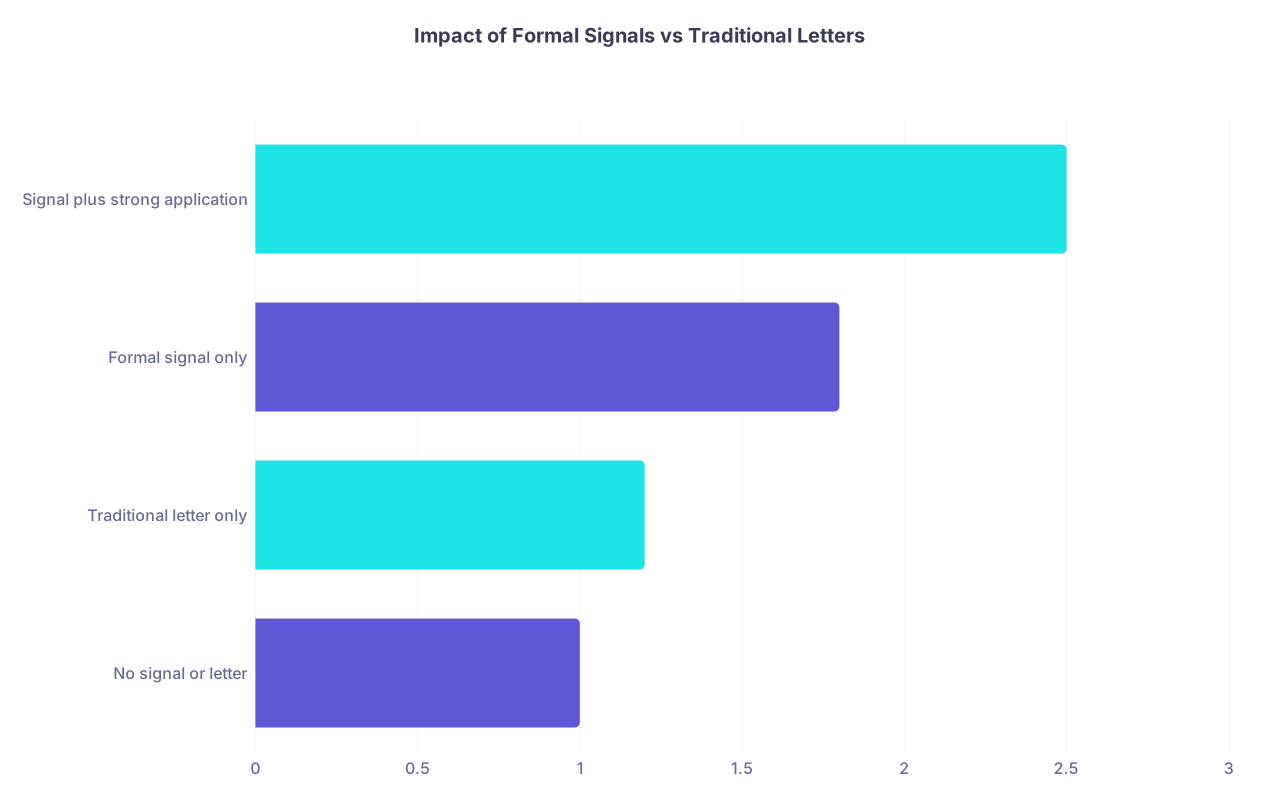
| Category | Value |
|---|---|
| No signal or letter | 1 |
| Traditional letter only | 1.2 |
| Formal signal only | 1.8 |
| Signal plus strong application | 2.5 |
Again, the numbers are illustrative, but the pattern is real: structured signals carry more weight because:
- You’re limited in number, so they’re costly to use.
- Everyone understands the rules.
- Programs can prioritize interview offers using them.
Letters of intent, in contrast, are cheap, unlimited, and unverifiable. In an ecosystem shifting toward transparency and structured signaling, their relative value is going down, not up.
My prediction: in 5–10 years, the serious “I love you and will rank you first” signal will mostly live inside these formal systems, and old-school intent letters will be treated as polite noise.
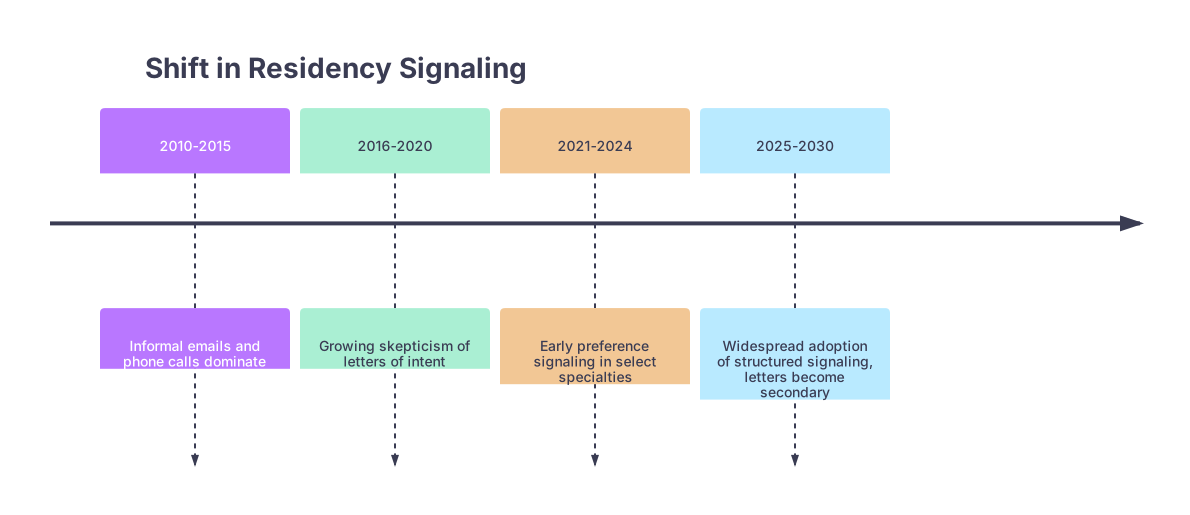
| Period | Event |
|---|---|
| 2010-2015 | Informal emails and phone calls dominate |
| 2016-2020 | Growing skepticism of letters of intent |
| 2021-2024 | Early preference signaling in select specialties |
| 2025-2030 | Widespread adoption of structured signaling, letters become secondary |
How Not to Lose Your Mind Over This
You cannot optimize your way out of all uncertainty. The Myth of the All-Powerful Letter exists because applicants are desperate for control in a chaotic process.
The reality is less dramatic and more uncomfortable:
- You do your best across four years.
- You interview as well as you can.
- You make a rational rank list based on fit, not fear.
- You send one honest letter of intent if you want.
- Then you live with the outcome.
You’ll hear stories of “I sent a letter and matched there!” Sure. But you’ll also find:
- People who sent letters and still didn’t match.
- People who never sent a single letter and matched at their #1.
- People who matched at a place they were sure they “had no shot at.”
The causality people assign to their letters after the fact is mostly superstition. Survivorship bias dressed up as strategy.

The Bottom Line: Three Things to Remember
- Letters of intent are not binding and absolutely do not guarantee a match spot. Programs treat them as a weak, often unreliable signal at best.
- Use them sparingly, honestly, and surgically—one true #1 program, short, specific, and professional—then stop gaming and focus on your rank list.
- Your match outcome will be driven almost entirely by your application strength, interview performance, and program needs, not by whatever poetic paragraph you send in February.