
The blunt truth: sending a new letter of intent when your preferences change is allowed, but it’s dangerous if you do it wrong.
You’re playing with three things at once: ethics, credibility, and strategy. Most applicants only think about the first one (“Is this lying?”). Programs care a lot more about the second (“Can we trust this person?”). And your match outcome depends on the third.
Let me walk you through when you should send a follow‑up LOI, when you absolutely shouldn’t, and how to do it without looking flaky or dishonest.
Quick Answer: Can You Send a New LOI If Your Preferences Change?
Yes, you can send a follow‑up LOI if your preferences change — but only in limited situations and with very clear intent.
Three core rules you should not break:
Only one true “You are my #1” LOI.
If you’ve already told Program A “I will rank you #1,” then tell Program B the same thing later, you’re lying to someone. That’s not “strategy”; that’s unethical.Your credibility matters more than your cleverness.
PDs talk. Faculty move between institutions. If a program director finds out you sent conflicting LOIs, that reputation can follow you.If your preference truly changes, you must be honest going forward.
You can change your mind. Life happens. But you don’t get to pretend you never said what you said. The new communication should reflect that evolution in a way that still respects the prior program.
So yes, you can send a follow‑up LOI. But not because you’re anxious and want to “hedge.” Only because your actual rank order has changed and you’re willing to act ethically about it.
What Counts as a “Change in Preference”?
Not every little wobble in your feelings counts. Feeling momentarily excited after a great interview day does not mean you should immediately blast out new LOIs.
A legitimate change in preference usually looks like:
New, substantive information about a program:
You discovered a specific research track, fellowship pipeline, or mentorship setup that better aligns with your goals.Meaningful life changes:
Partner match outcome, family needs, health issues, childcare, unexpected finances. These are real reasons to change your list.Updated career goals:
You realized you truly want a very specific subspecialty, academic path, or community focus, and one program clearly fits that direction better.
Here’s what doesn’t qualify as a solid reason to send a new LOI:
- “I liked them both, but after a week I kind of like Program B more.”
- “My friend said Program X is more prestigious.”
- “Reddit says this program is sliding / rising.”
- “I haven’t heard from Program A in a while and I’m panicking.”
Anxiety is not a strategy. Do not let your stress drive formal communication that programs will interpret as a major signal.
Types of Follow-Up Communication (Know the Difference)
People throw “LOI” around too loosely. Not every note you send is a letter of intent.
Here’s the hierarchy:
| Type | What It Really Says | Risk Level |
|---|---|---|
| Thank-you email | I appreciated the interview | Very Low |
| Letter of interest | I like you a lot / high on my list | Low–Med |
| Letter of intent (true #1) | I will rank you #1 | High |
| Follow-up LOI after change | My #1 changed, now it is you | Very High |
If your preferences change, you are usually choosing between two things:
- Sending a new statement of “strong interest” (without saying #1) to another program.
- Sending a true updated LOI where you explicitly say: You are now my #1.
Option 1 is safer.
Option 2 is higher impact — and higher risk — and must be done carefully and ethically.
Scenario Breakdown: Should You Send a New LOI?
Let’s go through the actual situations people get stuck in.
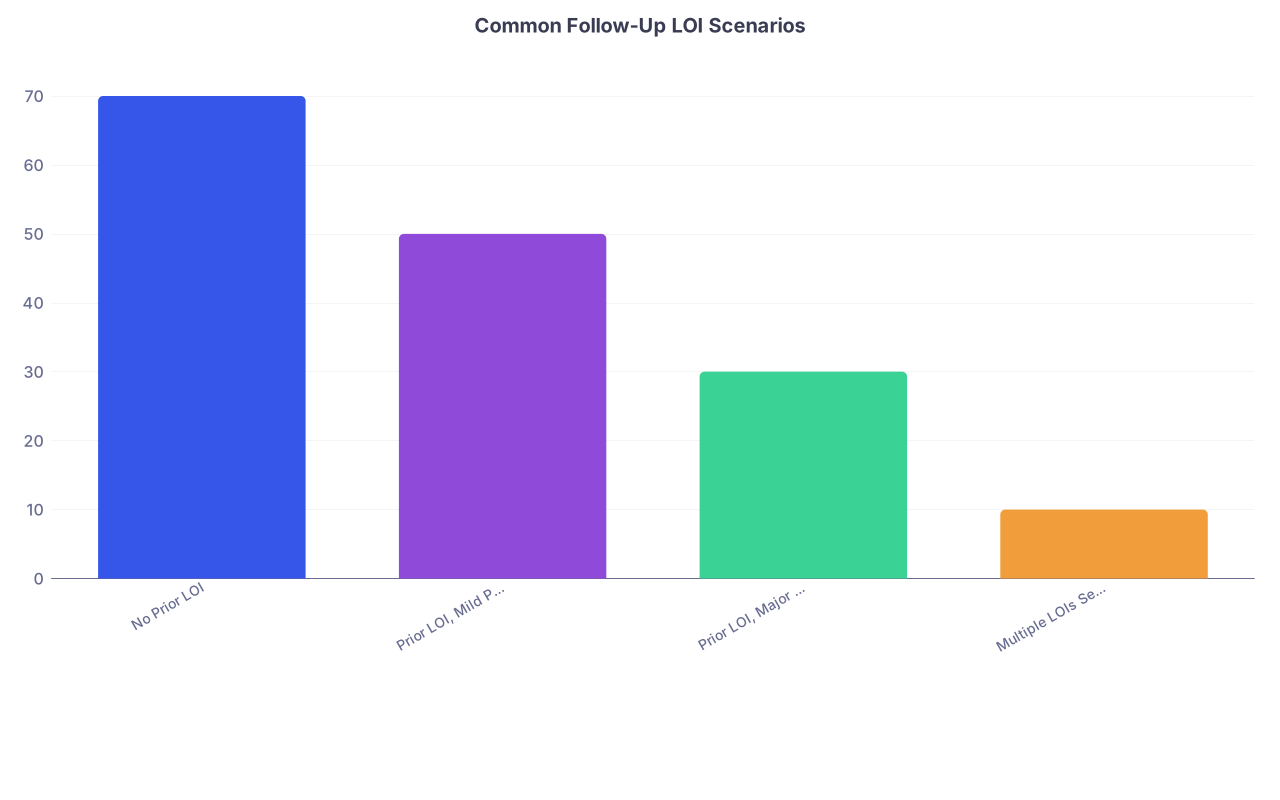
| Category | Value |
|---|---|
| No Prior LOI | 70 |
| Prior LOI, Mild Preference Shift | 50 |
| Prior LOI, Major Life Change | 30 |
| Multiple LOIs Sent Already | 10 |
Scenario 1: You Never Sent a True LOI to Anyone
This is the cleanest situation.
- You may have sent thank-you emails.
- You may have said “I’m very interested” at multiple places.
- But you have not told any program: “I will rank you #1.”
If your preference changes:
- You can send one LOI to your new #1 saying you will rank them first.
- Don’t send “you’re among my top choices” to ten programs with LOI-style intensity. That noise doesn’t help you and can actually backfire.
In this scenario, sending a follow-up LOI is just… sending your first real LOI. Go ahead, as long as you mean it.
Scenario 2: You Sent a Soft “We’re Very Interested” Note, But No Explicit #1
Example: You wrote to Program A saying, “You’ll be very high on our list,” or “I’d be thrilled to train here,” but you never said “I will rank you #1.”
Now you prefer Program B.
You have two decent options:
Option A: Send a true LOI to Program B only.
State clearly that you will rank them #1. You do not need to go back and “undo” anything with Program A, because you never promised them #1.Option B: Send both programs “strong interest,” but only one real #1.
Program B gets the clear “You are my #1” language. Program A gets a “You are very high on my list” letter if you still care about them.
Avoid: sending two LOIs that both look like #1 language. PDs know the code. “You’ll be very high on my list” vs “I will rank you #1” are not the same signal.
Scenario 3: You Already Sent a True LOI to Program A, Now You Like Program B More
This is where people get into trouble.
This is the high-stakes scenario:
- You told Program A clearly: “I will rank you #1.”
- You meant it at the time.
- Now something real has changed, and Program B is genuinely your #1.
Can you send a follow-up LOI to Program B? Technically yes. But you must accept:
- You are breaking your prior signal.
- If Program A ever finds out, you look untrustworthy.
- It’s not illegal under NRMP rules, but it is ethically muddy.
If the change is serious (partner match, family move, visa, health, major program change), here’s the more honest approach:
Update Program B with a clear, truthful LOI
“After further reflection and changes in my personal circumstances, I will be ranking [Program B] as my number one choice.”Decide how honest you want to be with Program A
Most applicants do not write Program A and say, “I changed my #1.” That’s the ethical ideal, but it’s also socially awkward and may not help you.
At minimum, don’t send Program A any further communication implying they’re still #1.
Would I personally send a new #1 LOI in this scenario?
Only if the reason is big and real — and only if I could explain it comfortably to both PDs if they magically compared emails.
If your reason is “I panicked and changed my mind,” then no — you should not be sending a new LOI. Adjust your rank list quietly and live with the discomfort.
How to Write a Follow-Up LOI Without Looking Flaky
If you decide a follow-up LOI is justified, the wording matters.
Here’s a simple structure that works:
Clear subject line
“Letter of Intent – [Your Name], [Specialty] Applicant”Brief re-introduction
One sentence: your name, where you’re from (school), and when you interviewed.Explicit updated intent
One sentence that leaves no doubt:
“After careful consideration, I will be ranking [Program Name] as my number one choice.”Concrete reasons that match their program
2–3 tightly focused points:- Fit with a specific track or patient population
- Faculty or mentorship you connected with
- Location/family alignment that is real, not generic
Professional closing
Thank them, reaffirm enthusiasm, and stop.
What not to do:
- Do not write a novella explaining your inner turmoil.
- Do not bash other programs.
- Do not overpromise beyond “I will rank you #1” (e.g., “I will definitely match with you” isn’t something you control).
How Programs Actually View Changing LOIs
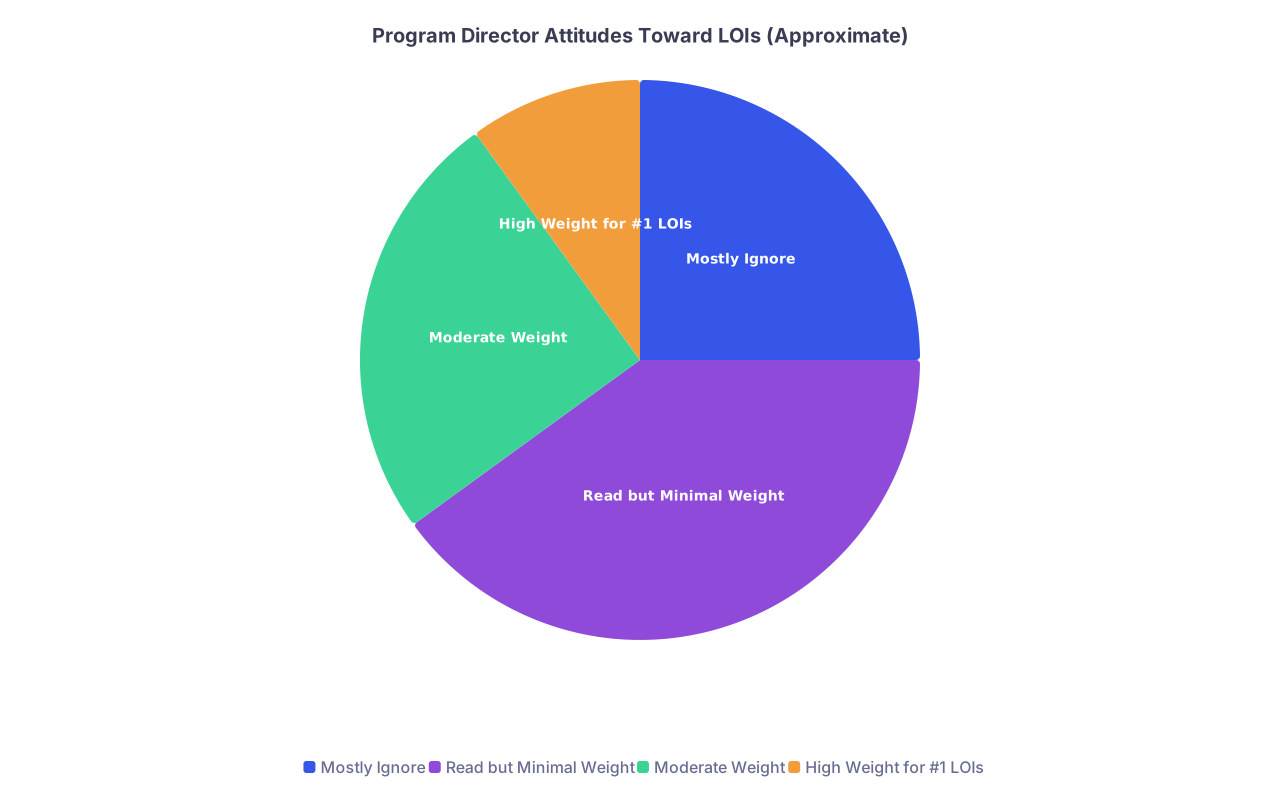
Here’s the uncomfortable reality: many programs don’t rely heavily on LOIs at all. Some PDs read them and shrug. Others scan them in 10 seconds for obvious red flags. A smaller group actually uses them as tie-breakers.
| Category | Value |
|---|---|
| Mostly Ignore | 25 |
| Read but Minimal Weight | 40 |
| Moderate Weight | 25 |
| High Weight for #1 LOIs | 10 |
Where changing LOIs really hurts you is not in some algorithmic penalty — it’s in human trust.
- If a PD senses inconsistency, desperation, or manipulation, your stock drops.
- If you look thoughtful, stable, and honest, a strong LOI can help when they’re on the fence.
The future of this whole LOI game is trending toward more skepticism. PDs are increasingly aware that students send multiple conflicting signals. Some institutions are already formalizing “preference signaling” and away from these vague, back-channel promises.
So your best long-term play? Guard your reputation like it will follow you for the next ten years — because it might.
Decision Framework: Should You Send a Follow-Up LOI?
Here’s a simple decision flow.

| Step | Description |
|---|---|
| Step 1 | Did you send a prior true #1 LOI? |
| Step 2 | Send one clear LOI to new #1 if you truly mean it |
| Step 3 | Has there been a major life or career change? |
| Step 4 | Do NOT send new #1 LOI. Adjust rank list quietly |
| Step 5 | Are you comfortable explaining change to both PDs? |
| Step 6 | Send new LOI to new #1 with clear, honest explanation |
If you land on “I’m not comfortable explaining this if the emails were ever compared,” that’s your answer: do not send a new LOI. Just fix your rank list in the system and move on.
Where This is Heading: LOIs and the Future of the Match
The LOI culture is already unstable, and it’s moving toward more structure:
- More specialties are adopting formal signaling tokens (like otolaryngology, dermatology, ortho) where you send limited, standardized “signals” instead of vague LOIs.
- Programs are increasingly explicit: some say on their websites “Letters of intent do not influence our rank list.”
Others say, quietly, “We strongly consider applicants who clearly state we are their top choice.”
In that environment, here’s the smart approach:
- Use LOIs sparingly and only when you can be 100% honest.
- Assume every written communication is permanent, shareable, and might be informally discussed.
- Focus 90% of your energy on being genuinely strong on paper and in person, not trying to out-game the signaling meta.
FAQ: Follow-Up LOIs When Preferences Change
1. I already told one program they’re my #1 but now I prefer another. Should I change my ERAS rank list even if I don’t send a new LOI?
Yes. Your rank list should always reflect your true preferences. The match algorithm works best when both sides are honest. You’re not contractually bound by an LOI. If you changed your mind, you rank according to how you genuinely feel now, regardless of what you wrote earlier.
2. Is it ever OK to send “You’re my #1” language to more than one program?
No. That’s lying, and people do get caught. PDs talk at conferences. Faculty from one program sometimes used to work at another. The risk is not just “I might not match there”; it’s “I’ll be remembered as the applicant who couldn’t be trusted.” One true #1 LOI. That’s it.
3. What if I regret sending an LOI too early and now feel stuck?
You’re not stuck. You’re just uncomfortable. Accept that you acted sincerely at that time, then rank according to your current true preference. I would not send a “I changed my mind” email unless there’s a major life change that actually explains it. Quietly correct the mistake in your rank list, learn from it, and avoid firing off LOIs impulsively in the future.
4. Do I have to send any LOI at all to match at my top program?
Absolutely not. Plenty of applicants match at their #1 every year without sending a single LOI. Strong application, good interviews, and appropriate program list matter far more. LOIs are seasoning, not the main dish. If you’re not sure, it’s safer to skip the LOI than to send something inconsistent or desperate.
5. What’s the safer move: a “strong interest” letter or a true LOI naming them #1?
A “strong interest” letter is much safer. You can honestly tell a few programs “You are very high on my list” without painting yourself into an ethical corner. A true #1 LOI should be reserved for the single program you are willing to back with your actual rank list. If you’re still waffling, you’re not ready for a true LOI yet.
Key takeaways:
Only send one true #1 LOI, and only when you mean it. If your preferences change, adjust your rank list first and only send a new LOI when there’s a real, explainable reason. When in doubt, protect your credibility — it’s worth more than one extra email.