
You probably didn’t “ruin” your career. But it does feel like that, doesn’t it?
You picked your letter writers, you trusted them, you submitted… and then the results came back: fewer interviews than your classmates, weird rejections, maybe silence from schools you thought were “safeties.” And now your brain is stuck on one brutal loop:
“I chose the wrong mentors. I messed this up. I can’t undo it. I’m cooked.”
Let me say this flat out: choosing less-than-ideal letter writers can absolutely hurt an application. Some letters are weak. Some are generic. A few are downright damaging. I’ve watched applicants get burned by “nice” professors who wrote them lukewarm, vague letters that might as well have said, “They existed in my class. That is all.”
But here’s the part your anxiety refuses to believe: it’s not too late to fix it for the next cycle. And your entire future isn’t determined by one round of slightly-bad (or even really-bad) letters.
Let’s talk through what realistically might have gone wrong, what you can actually do now, and how to stop replaying last cycle like a car crash in slow motion.
First: Were Your Mentors Actually “Wrong,” Or Are You Just Panicking?
Sometimes the letters were fine. What’s wrong is the narrative in your head.
You might be spiraling because:
- You didn’t get into your top choices.
- Friends with “worse stats” got in.
- You felt awkward asking for letters and now you’re convinced that awkwardness showed up in the letter.
That doesn’t automatically mean your letters were bad.
On the other hand, there are some red flags that your mentor choices might’ve hurt you:
- You never heard them say the magic words: “I can write you a strong letter.” They just said, “Sure, I can write one.”
- They barely knew you. Big lecture course, no office hours, they couldn’t pick you out of a lineup.
- They submitted late or you had to chase them repeatedly. Chronic flakiness tends to correlate with half-hearted letters.
- You had a gut feeling they weren’t fully in your corner. But you asked anyway because they were “big names.”
Let me make this painful but necessary point: prestige doesn’t fix a generic letter.
That fancy MD-PhD chief of whatever who barely knew you? Their letter can be less helpful than a detailed, specific letter from a community college professor who watched you grind through office hours and improve from a B- to an A.
If last cycle you prioritized “famous” or “impressive” over “knows me and likes me,” then yeah, your mentor selection probably hurt you.
But even then, it’s not fatal. It’s fixable.
How Bad Letters Actually Hurt You (And How They Don’t)
Your anxiety is probably going to extremes: either “letters don’t matter at all” (which is wrong) or “letters are everything and I’m doomed” (also wrong).
Here’s the uncomfortable middle truth.
Letters matter because:
- They’re one of the only places someone else vouches for your character, work ethic, and potential as a physician.
- Committees know students can “spin” stories in personal statements; letters show a different angle.
- A strong, specific letter can pull you up if your stats are borderline.
But letters usually don’t:
- Single-handedly destroy an otherwise solid application.
- Outweigh a low GPA or MCAT all by themselves.
- Override a disastrous interview.
Where they really hurt is when:
- They’re obviously generic (“X was a student in my class and got an A”).
- They’re faint praise (“reliable,” “quiet,” “completed assignments on time” and nothing stronger).
- They include coded red flags like “did what was asked” or “appropriate for a training program” with no enthusiasm.
I’ve seen files in committee rooms where a lukewarm letter made everyone’s shoulders drop. Not “reject immediately,” but definitely “ehhh, let’s see better candidates first.”
So if last cycle you had 2–3 letters like that? Yeah, that might’ve pushed you below the line at some schools.
But here’s what your brain keeps skipping: you get to pick new people this time.
Is It Too Late To Fix It For Next Cycle?
No. But you can’t just run the same play and hope for a different outcome.
If you’re reapplying, your letters basically fall into three buckets:
- Letters you should never use again
- Letters you can salvage or update
- New letters you need to build from scratch
Let’s walk through them.
1. Letters You Should Quietly Bury
These are the ones that were:
- From someone who barely knew you
- From a mentor who’s now distant, annoyed, or uninterested
- From a professor who submitted at the last possible second after ghosting your reminders
- From anyone who ever made you feel small or not good enough
If you suspect one of your past letters was weak, you’re not obligated to reuse it. You’re not required to reattach old mistakes to your new application.
Unless a program explicitly asks for the “same” letter writers for reapplicants (very rare), you can swap them out.
And honestly? If you didn’t explicitly hear “I can write you a strong letter,” I’d seriously consider replacing that letter with someone who actually knows and supports you.
2. Letters You Might Reuse or Refresh
Some letters last cycle might have been okay or even good, but not perfect.
For example:
- A PI who knows your work but hasn’t seen you since last year.
- A faculty mentor who liked you, wrote a solid letter, but your role/responsibility has grown since.
- A physician who supervised you briefly and was positive but didn’t have many concrete stories.
You can reuse letters if:
- They were written relatively recently (within 1–2 years).
- The writer truly knows you and liked working with you.
- You’re not switching from premed → residency or something that changes the whole scope.
But this time, I’d try to strengthen those letters instead of just hoping they’re fine.
You can reach back out and say something like:
“I’m reapplying this upcoming cycle and would be grateful if you’d be willing to write an updated strong letter of recommendation. Since your last letter, I’ve [completed X, taken on Y responsibilities, improved Z]. I’d be happy to send an updated CV and brief summary of what I’ve been doing this year.”
If they hesitate, seem lukewarm, or ignore you?
That’s your answer. Move them from “maybe reuse” to “quietly bury.”
3. New Letters You Need to Build
This is the part that feels impossible because you’re probably thinking, “I don’t have time. I already graduated. I don’t know who else to ask. I’m not even on a campus anymore.”
This is where you have to get uncomfortable in a different way: you have to be proactive.
Depending on your phase:
- Premed in undergrad: lean harder on people who actually know you—smaller classes, thesis advisors, lab mentors, premed advisors, clinical supervisors.
- Post-bacc / SMP: these programs exist for exactly this reason. Go hard on office hours, show up, be present, talk to professors about your goals. They expect to write letters.
- Gap year / reapplicant working: a supervisor in a clinical job (scribe, MA, EMT), research coordinator, volunteer coordinator, or PI is fair game.
You want letter writers who can say specific things like:
- “I watched them build rapport with patients who didn’t want to talk.”
- “They came prepared to every lab meeting and drove projects forward.”
- “They took feedback seriously and improved over the semester.”
Not just “they got an A.”
What You Can Do Right Now To Fix the Mentor Situation
Instead of just panicking, here’s where you actually claw back control.
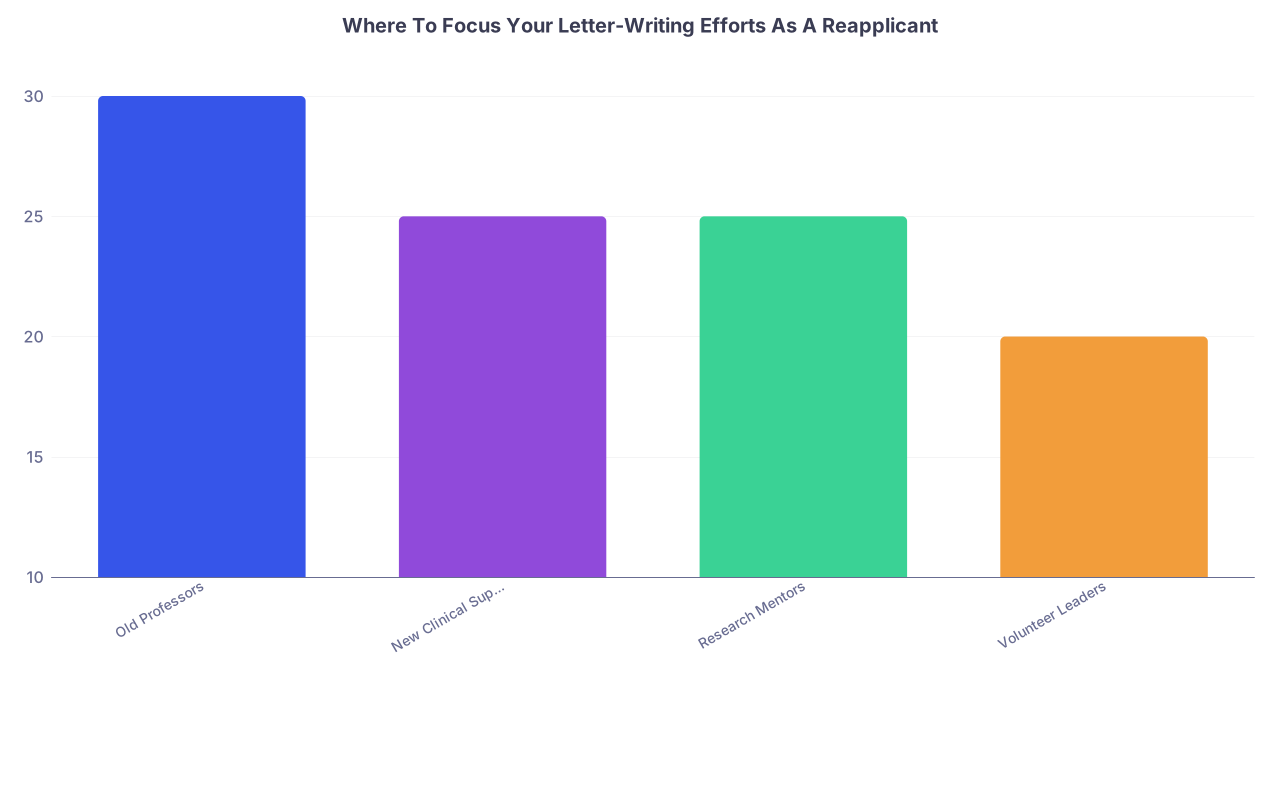
| Category | Value |
|---|---|
| Old Professors | 30 |
| New Clinical Supervisors | 25 |
| Research Mentors | 25 |
| Volunteer Leaders | 20 |
If I were in your shoes and worried I chose the wrong mentors last cycle, I’d do four things immediately:
Audit your last cycle letters honestly.
In your head, or literally on paper, list:- Who wrote for you
- How well they knew you (0–10)
- How excited they seemed (0–10)
- Whether you’d be proud to have them represent you
Anything under like a 7 in “knows me” or “enthusiasm”? That’s a risk.
Decide who gets cut and who gets a second chance.
Don’t cling to a big-name surgeon who barely remembers you. Swap them for the community college prof who loved you, or the physician you’ve been working with all year.Start repairing or building relationships now, not two weeks before letters are due.
Email, ask for a quick Zoom or coffee, update them on what you’ve been doing, ask for advice. Let them see you as a human, not just a request in their inbox.When you ask, be very direct.
Never again ask, “Can you write me a letter?”
Ask, “Would you feel comfortable writing me a strong, positive letter of recommendation for medical school?”The word “strong” matters. People who can’t write that kind of letter will usually back off or hedge. That awkward silence saves your application.
But What If One Of My Old Letters Was ACTUALLY Bad?
The nightmare scenario in your head is this: one of your mentors secretly tanked you. Wrote something subtly negative. Mentioned a conflict. Questioned your professionalism.
Here’s the unpleasant truth: you almost never get to see those letters. And you probably never get to know for sure.
But here’s what I’ve actually seen happen:
- True “poison” letters are rare. Faculty know that kind of thing can destroy someone’s future; most will just decline to write if they can’t be supportive.
- The real danger zone is the mild, noncommittal, boring letter that doesn’t hurt you loudly; it just doesn’t help when you needed a boost.
So what do you do if you’re convinced one letter was bad?
You don’t try to “fix” that same person. You cut them out of the next cycle and replace them with someone:
- Closer to you
- More enthusiastic
- More current in your life
You can’t scrub an old letter from last cycle. But you’re not locked into dragging that same anchor into the next one.
Will Schools Hold Last Cycle Against Me?
Reapplying already feels like wearing a giant neon sign: “Failed the first time.” Adding “and I had bad mentors” on top of that? Brutal combination in your head.
Reality is different.
Most med schools don’t sit there with last year’s file in front of them, reading line-by-line comparing it to your new one. They’re looking for evidence that:
- You grew
- You addressed weaknesses
- You didn’t just copy-paste and pray
That’s actually where your new mentors and letters come in. A new letter from a clinical supervisor saying:
“Over the past year, I’ve watched them step more confidently into patient care, ask better questions, and handle stress with maturity…”
…screams growth in a way that “reusing the same mediocre letters” never will.
You can even point to this shift in your reapplicant essay or update letter:
“Since my last application, I’ve sought out mentors who know me more deeply and can challenge and support my growth as a future physician. Working closely with Dr. X at [clinic/hospital/lab], I’ve taken on increased responsibility in [specific tasks], which has solidified my commitment to medicine.”
That shows insight instead of victimhood. You’re not throwing old mentors under the bus. You’re demonstrating you learned from a weak spot in your application.
Quick Reality Check: You’re Allowed To Change Your Mind About Who Represents You
Here’s the part nobody tells you as a premed: you don’t “owe” everyone a place in your letter lineup just because they helped you at some point.
You’re allowed to realize:
- “That attending intimidated me and never seemed to like me. Why did I let them write one of my core letters?”
- “My PI is brilliant but distant. My postdoc mentor actually knows my work way better.”
- “My org advisor loved me and has watched me lead for three years. They’d probably write a killer letter. Why didn’t I ask them?”
You get another chance to choose people who:
- Actually like you
- Actually know you
- Actually believe you’ll make a good doctor
That’s not gaming the system. That’s… the system.

| Step | Description |
|---|---|
| Step 1 | Last Cycle: Weak Mentors |
| Step 2 | Honest Audit |
| Step 3 | Find New Mentors |
| Step 4 | Request Updated Strong Letter |
| Step 5 | Build Relationship Over Months |
| Step 6 | Ask Directly for Strong LOR |
| Step 7 | Submit Stronger Application |
| Step 8 | Keep or Drop? |
FAQ (Exactly 4 Questions)
1. Should I tell a school I think one of my old letters was weak or harmful?
No. Absolutely not. Don’t point a spotlight at something they probably aren’t even thinking about. You don’t gain anything by speculating or throwing a previous mentor under the bus. Instead, show growth: new experiences, new mentors, stronger relationships. Let this cycle’s letters quietly replace whatever went wrong last time.
2. Can I reuse a letter from last year, or does it have to be new?
You can reuse if the letter was strong and the writer still reflects who you are now. But if you’re worried about your mentors from last cycle, I wouldn’t lean heavily on reusing. At minimum, ask those same people for an updated letter that includes what you’ve done since. If someone can’t be bothered to update it, that’s signal enough that you may be better off asking someone else.
3. What if I’m out of school and don’t have any new professors to ask?
Then your job is to make your current world count. Clinical supervisors, research PIs, volunteer coordinators, non-traditional jobs with serious responsibility (like managing people or projects) can all yield excellent letters. The key isn’t “professor” vs “non-professor”; it’s “knows me well, can speak in detail about my work, and actually supports me.” Build those relationships deliberately—show up early, ask for feedback, talk about your med school plans.
4. Is choosing the ‘wrong’ mentors last cycle enough to explain why I didn’t get in?
Probably not on its own. This is hard to hear, but usually it’s a combination: stats, timing, school list, personal statement, secondaries, interviews, and letters. Blaming mentors alone is tempting because it feels external and fixable. The healthy move is to treat letters as one part of a broader post-mortem. Fix the mentor/letter situation, yes—but also re-examine everything else with the same honesty. That’s where reapplicants become much stronger candidates.
Key points to walk away with:
- You didn’t permanently sabotage your career by picking mediocre mentors once. You get another shot—use it intentionally.
- Replace weak or distant letter writers with people who truly know and support you, and be blunt when you ask: “Can you write me a strong letter?”
- Don’t obsess over what you can’t see from last cycle; put your energy into building real relationships now that turn into the kind of letters that actually move the needle.