It is 30 days before your MCAT. Your last full-length score is staring at you from a spreadsheet. The date on your ticket is locked. Rescheduling now would cost money and pride. This next month makes or breaks how you walk into that exam room.
Here is the day-level, sleep-level plan I give students when the countdown hits 30 days.
Overall Structure: The 30-Day Framework
At this point you should stop “studying everything” and start running a tight, repetitive system:
- 4–5 full-lengths (FLs) total in this last month
- 1 FL every 5–7 days
- Review days after each FL that take just as seriously as the exam day
- Content review becomes targeted: driven only by what you miss, not by some vague idea of “weaknesses”
- Sleep and wake times fixed, especially in the last 10 days
Broadly, the month breaks down like this:
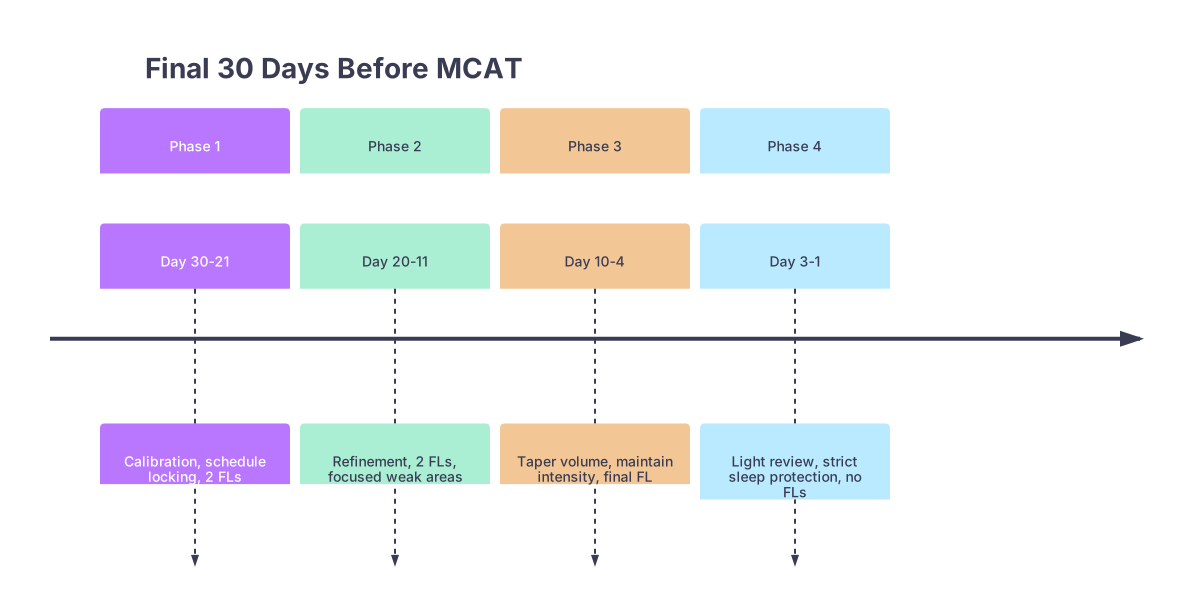
| Period | Event |
|---|---|
| Phase 1 - Day 30-21 | Calibration, schedule locking, 2 FLs |
| Phase 2 - Day 20-11 | Refinement, 2 FLs, focused weak areas |
| Phase 3 - Day 10-4 | Taper volume, maintain intensity, final FL |
| Phase 4 - Day 3-1 | Light review, strict sleep protection, no FLs |
Now we go phase by phase, then zoom into a precise daily and sleep schedule.
Phase 1: Days 30–21 – Lock Your System
At this point you should:
- Fix your test-day wake time
- Run 2 full-length exams under strict conditions
- Build your error log structure
- Kill any remaining “content gaps the size of craters”
Sleep and Wake Target (for the whole month)
Assume your MCAT is at 8:00 AM and check-in is 7:30.
Back-time from walking into the test center fully awake:
- Target arrival: 7:15
- Leave home: 6:45 (unless you live next door)
- Breakfast and bathroom: 6:00–6:30
- Wake time: 5:30 AM
That 5:30 AM wake time should be fixed by Day 14 at the latest. Earlier is better.
In Phase 1, move toward that gradually:
- Day 30–27: Wake 7:00, bed 11:00
- Day 26–23: Wake 6:15, bed 10:15
- Day 22–21: Wake 5:45, bed 9:45
Do not do heroic 4-hour nights. Chronic sleep debt wrecks CARS and attention long before it wrecks Anki streaks.
Example Weekly Layout (Days 30–21)
Pick real days. Let us say MCAT is a Saturday. Day 0 = Saturday of test.
Then:
- Day 30 = Wednesday
- Day 25 = Monday
- Day 21 = Friday
You want 2 FLs in this phase, spaced 4–5 days apart.
| Day (Before) | Day of Week | Main Focus |
|---|---|---|
| 30 | Wed | FL #1 |
| 29–27 | Thu–Sat | Review FL #1, targeted content |
| 26 | Sun | Light practice + rest |
| 25 | Mon | FL #2 |
| 24–22 | Tue–Thu | Review FL #2, targeted content |
| 21 | Fri | Consolidation + short mixed sets |
Day 30 and Day 25: Full-Length Exam Days
At this point you should replicate test day exactly:
Night before:
- Bedtime: 10:00–10:30 PM (do NOT start a new topic)
- No screens in the last 30 minutes; print your admission ticket, ID check, route check done earlier
Exam day schedule (mock MCAT):
- 5:30 – Wake, 5–10 minutes light stretching
- 5:45 – Shower, breakfast exactly like you will eat on real MCAT
- 6:30 – Sit at desk, set up materials
- 7:00 – Start FL (yes, 1 hour earlier than real check-in; you gain buffer for review later)
- 7:00–~1:30 – Full exam with breaks exactly as scheduled by AAMC
Afternoon (same day):
- 1-hour break after exam. Eat real food. Leave your workspace. No “I’ll just quickly check scores.”
- Then 3–4 hours of structured review:
- First: Review global performance (section by section, timing)
- Second: Go question by question for 2 sections (usually Chem/Phys + CARS on one day, Bio/Biochem + Psych/Soc next day)
Do not rush through review to “fit it all in one day.” You learn more from slow, brutal analysis than from “finishing the exam.”
Day 29–27 and Day 24–22: Review and Targeted Content
These are heavy review blocks.
Typical day in this phase:
- 6:15–6:30 – Wake (still shifting earlier), light movement
- 7:00–9:30 – FL review block 1 (finish reviewing 1 section in detail)
- 9:30–10:00 – Break
- 10:00–12:00 – FL review block 2 (second section)
- 12:00–13:00 – Lunch, short walk
- 13:00–15:00 – Targeted content:
- Build concrete notes from missed questions
- Watch or read focused explanations (e.g., resonance structures, endocrine pathways, random psych terms)
- 15:00–15:30 – Break
- 15:30–17:00 – 40–60 discrete practice questions (mixed)
- 22:30 – Hard cutoff for screens, bed by 23:00
You are training your brain: morning = deep work, exam-like effort. Afternoon = consolidation and targeted repair.
Phase 2: Days 20–11 – Refine and Stabilize
At this point you should:
- Have your final sleep window almost locked
- Know your consistent section weaknesses
- Transition from “big content” to pattern recognition and stamina
- Finish 2 more full-lengths (FL #3 and FL #4)
Sleep/Wake in Phase 2
By this point:
- Wake time: 5:45 → 5:30
- Bedtime: 9:45–10:15 PM
- Oversleeping to 8–9 AM “because I am tired” is not helping. It is teaching your body the wrong rhythm.
High-Level Weekly Rhythm (Days 20–11)
Again assuming Saturday MCAT:
- Day 20 = Saturday
- Day 15 = Thursday
- Day 11 = Monday
I like one FL on Day 18–17 and one on Day 13–12.
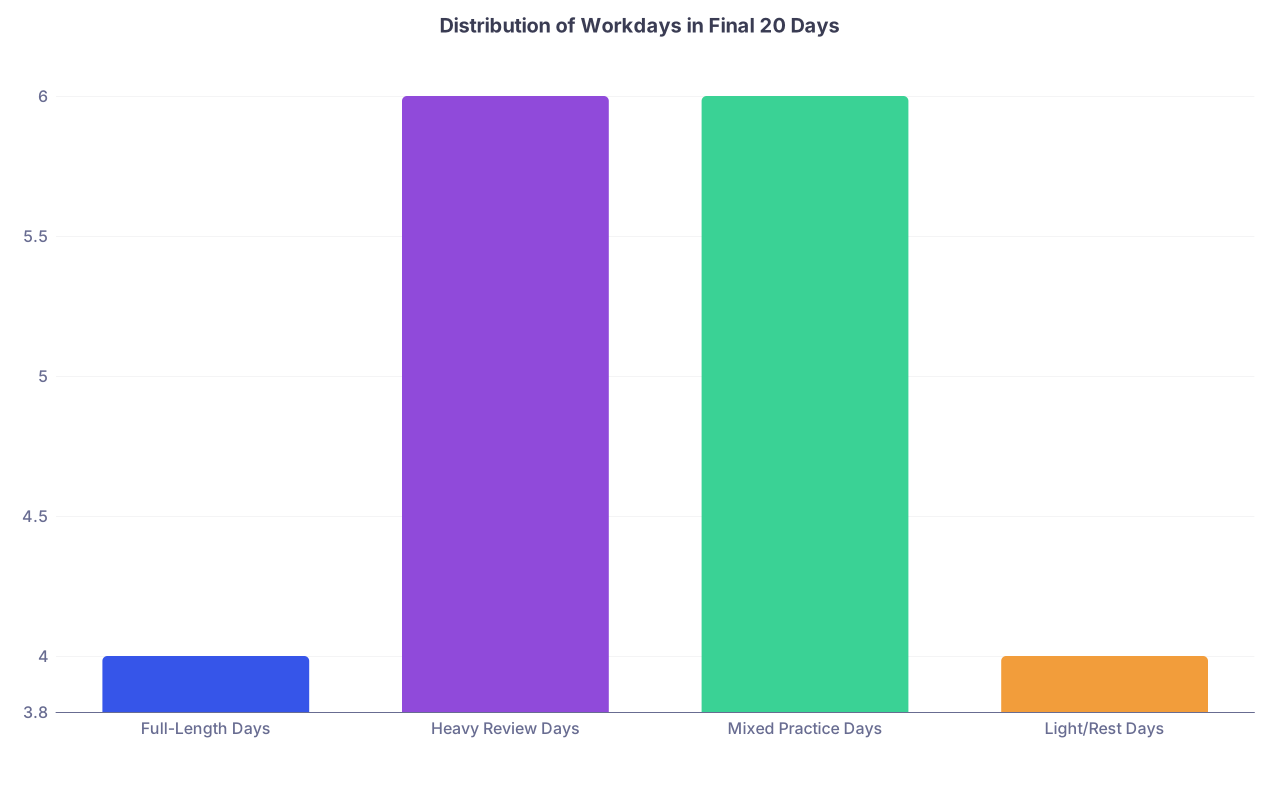
| Category | Value |
|---|---|
| Full-Length Days | 4 |
| Heavy Review Days | 6 |
| Mixed Practice Days | 6 |
| Light/Rest Days | 4 |
Sample Layout
- Day 20 – Consolidation + rest blocks (after Phase 1)
- Day 19 – Mixed practice sets (AM) + light content (PM)
- Day 18 – FL #3
- Day 17–16 – Review FL #3, targeted content
- Day 15 – Lighter day: 3-hour CARS + Psych/Soc focus
- Day 14 – Mixed sections, high-yield passages (e.g., UWorld, AAMC Section Bank)
- Day 13 – FL #4
- Day 12–11 – Review FL #4, finalize error patterns
A Typical Non-FL Day in This Phase
At this point you should be running days that look uncomfortably similar to test day in the morning, but not killing yourself at night.
- 5:45 – Wake, quick snack or small breakfast
- 6:15–6:30 – Start first work block
- 6:30–9:30 – “Section Simulation Block”:
- For example: 59-question Chem/Phys timed set (AAMC or high-quality Qbank)
- Short break (5–10 minutes)
- 53-question CARS timed set
- 9:30–10:00 – Break, walk, hydrate
- 10:00–12:00 – Review morning work, build error notes
- 12:00–13:00 – Lunch
- 13:00–15:00 – Targeted content (2–3 topics max)
- 15:00–16:00 – 30 discrete questions or 1 short passage block in your weakest section
- After 16:00 – Light exercise, normal life, no heavy new content
You are training consistency, not heroics.
Phase 3: Days 10–4 – Taper and Sharpen
At this point you should:
- Be done with your heaviest lifting
- Take your final full-length (usually around Day 8–7)
- Stop chasing massive score jumps and instead protect what you have built
If your exam is Saturday (Day 0), I would place:
- Last full-length around Day 8 (Friday week before) or Day 7 (Saturday week before)
Nothing later. A FL 3 days before your real exam is a fantastic way to wreck your confidence and your sleep.
Sleep/Wake: Exact MCAT Match
Days 10–4:
- Wake: 5:30 every single day
- Bed: 9:30–10:00 PM
- No late-night cramming. You are not in college finals week. You are in a sustained performance event.
Day 8–7: Final Full-Length
Treat this as a dress rehearsal.
Day 8 (or 7) – FL #5:
- Full test conditions
- Same breakfast, same clothing layers, same earplugs (if allowed), same everything
- After exam: 1–2 hours of high-level review only:
- Big timing issues?
- Did stamina crack in CARS or last section?
- Any consistent blind spots still showing?
Day 7–5: Focused Review, No New Huge Topics
Now the daily pattern shifts toward:
Morning:
- 1–2 targeted sections or mixed timed blocks
- Shorter, but perfectly timed (e.g., 30-question Chem/Phys, 3 CARS passages)
Afternoon:
- Error log review
- Formula sheet pass-through
- Quick re-reads of core AAMC explanations you have flagged
Evening:
- Light Psych/Soc flashcards
- Brief content flashes (e.g., amino acids, common equations, hormones)
You are reinforcing grooves, not digging new ones.
Phase 4: Final 3 Days – Protect the Machine
At this point you should stop pretending you will gain 5 points from a last-minute cram. You will not. But you can lose 5 points easily from poor sleep and panic.
Day -3: The Last “Real” Study Day
- 5:30 – Wake
- 6:30–9:00 – One focused block on your absolute weakest section (but NOT a full section). Think:
- 3–4 CARS passages if that is weak
- 30–40 Biochem questions if that is weak
- 9:30–10:30 – Review that work
- 10:30–12:00 – Error log / formula review
- Afternoon:
- Light active recall (flashcards, short notes)
- Possibly a 30-question mixed set if you feel calm
- Evening:
- Pack your bag: ID, snack, water, earplugs (if allowed), layers
- Lay out test-day clothes
No new practice test. No “just one more FL section.” That energy is better spent on stabilizing.
Day -2: Confidence and Routine
- 5:30 – Wake
- 6:30–8:00 – Very light review:
- Amino acids
- Key formulas (kinematics, logs, circuits, etc.)
- High-yield lists (phases of mitosis, major hormones, etc.)
- The rest of the day: non-demanding life tasks, light movement, no intense social drama
Do not have a 3-hour anxious phone call about scores and cutoffs. Protect your mood.
Day -1: Pre-MCAT
This is not a study day. It is a logistics and calm day.
- 5:30 – Wake
- Morning:
- 30–60 minutes: flip gently through a curated, short stack of notes (no more than 10–15 pages)
- Stop by mid-morning. Close it. You are done.
- Midday:
- Drive or walk the route to the test center if you have not yet
- Check traffic/parking situation, exact door location
- Afternoon:
- Light walk, podcast, show, reading – but nothing that spikes adrenaline
- Evening:
- Eat a standard, non-experimental dinner
- Screens off 1 hour before bed
- Bed by 9:30–10:00
People fight this. They study until midnight “because it matters.” I have watched those same people crash on CARS the next morning. Do not be that person.
A Concrete Day-Level Schedule Template
Here is what a “standard heavy study day” should look like in the middle 2 weeks (Days 20–11) with the correct wake time.
| Time | Activity |
|---|---|
| 5:30 | Wake, water, light movement |
| 6:00–6:30 | Light breakfast |
| 6:30–9:30 | Timed sections / long practice |
| 9:30–10:00 | Break, short walk |
| 10:00–12:00 | Detailed review of morning work |
| 12:00–13:00 | Lunch |
| 13:00–15:00 | Targeted content (2–3 topics max) |
| 15:00–16:00 | Short practice set in weak area |
| 16:00–18:00 | Free time / exercise |
| 21:30–22:00 | Wind-down routine, no screens |
| 22:00 | Bed |
You can flex the afternoon intensity depending on fatigue, but the morning block should be non-negotiable.
How to Use Your Error Log in the Final 30 Days
At this point you should have an actual system, not random screenshots.
Minimal but effective structure:
- Columns:
- Question ID / source
- Topic (specific: “SN1 vs SN2,” “renal phys,” “operant conditioning”)
- Type of error: content, reasoning, rushing, misread, math
- What I should have thought: one sentence
- Fix: what I will do differently next time
In the last 10 days, most of your “content review” should be walking through this log.
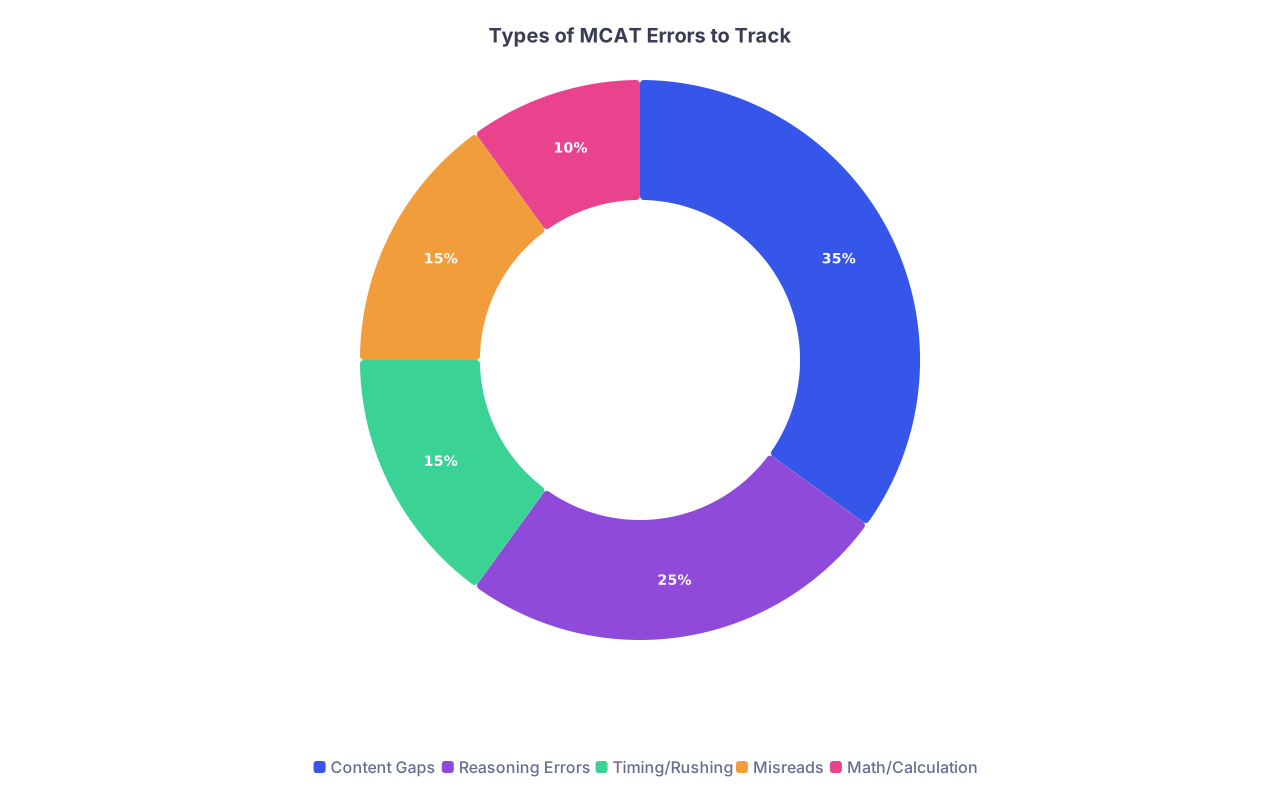
| Category | Value |
|---|---|
| Content Gaps | 35 |
| Reasoning Errors | 25 |
| Timing/Rushing | 15 |
| Misreads | 15 |
| Math/Calculation | 10 |
If 60–70% of your entries are “content,” fine, you are still catching up. If it is mostly timing and careless errors, stop adding more content and start training discipline.
Red Flags in the Final 30 Days (And What To Do)
I have seen these patterns tank scores:
Drifting sleep schedule
- Fix: Set an alarm for bedtime too, not just wake. Enforce it.
Panic-buying new resources
- Fix: Commit to what you have. No new books or Qbanks this month.
Dropping FL review because “no time”
- Fix: Fewer questions, more depth. Better to fully review 2 FLs than half-review 5.
Using caffeine as a main strategy
- Fix: Use the same caffeine pattern you will on test day. No surprises.
Final 72 Hours: Micro-Level Checklist
Here is a simple, brutal list for the last three days.
Day -3 (Study-leaning day)
- Wake at test-day time
- One moderate session in weakest section
- Error log pass-through
- Confirm ID validity and test center details
- Bed by 10:00
Day -2 (Hybrid day)
- Light formula + concept review (≤ 2 hours)
- Route / parking / building entrance confirmed
- Snacks and drinks prepped
- One non-academic activity that actually relaxes you
- No major social drama or late-night events
Day -1 (Protection day)
- Wake 5:30, same as test
- ≤ 1 hour of review, finished by mid-morning
- Bag packed and by the door
- Clothes chosen and laid out
- Phone charged, alarms set (primary + backup)
- Dinner finished at least 3 hours before bed
- In bed by 9:30–10:00, lights out
If Your Practice Scores Are Still Lower Than You Want
Blunt answer: 30 days is not the time to reinvent everything. But you can still make meaningful movement.
-
- 3–4 passages every morning, first thing, for the next 20 days. Timed. Always reviewed.
If Chem/Phys is killing you:
- One equation sheet pass daily + 20–30 questions focused only on your worst 2 subtopics.
If Bio/Biochem is clustered wrong:
- Short daily active recall sessions on metabolic pathways, amino acids, endocrine, genetics. No passive rereading.
If Psych/Soc feels random:
- Daily 30–45 minutes of terms flashcards + 15–20 practice questions. It adds up fast in 30 days.
Just stop trying to fix everything at once. That is how people spin out.
Core Takeaways
- In the final 30 days, your schedule and sleep are as important as your content. Fix your wake time and defend it.
- The morning is for exam-level work, the afternoon for review and targeted content, the evening for winding down. Not the other way around.
- The last 3–7 days are about stability, not miracles. Protect sleep, refine what you already know, and walk into the test center feeling like you are running a familiar routine, not a one-time performance.