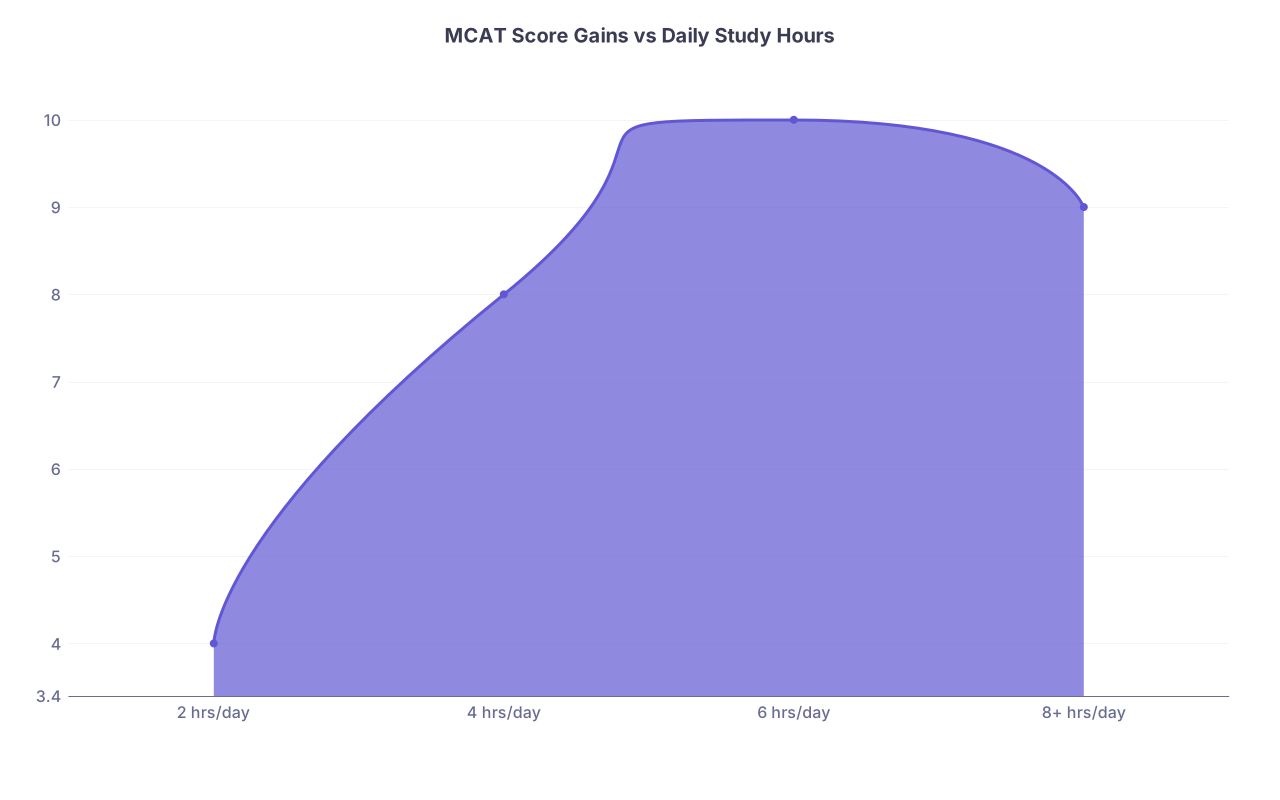
The biggest mistake MCAT takers make is not what they study. It is when they do things. The calendar beats the content.
Here is the reality: from MCAT registration to score release, you are on a fixed conveyor belt. Certain tasks done late are nearly useless. Done early, they are game‑changing. I am going to walk you through each phase, in order, with clear “at this point you should…” instructions so you do not waste weeks guessing.
Big Picture Timeline: Registration → Test Day → Score Release
Before we zoom in, anchor the full arc.
From registration to score release you are dealing with roughly:
- 3–6 months before test day: registration + main prep period
- Test day
- 4 weeks after test day: score release
| Phase | Typical Window |
|---|---|
| Registration & Setup | 3–6 months before test date |
| Content & Strategy Phase | 8–12 weeks before test date |
| Practice & Refinement Phase | 4–8 weeks before test date |
| Final 2-Week Lock-In | 0–2 weeks before test date |
| Test Day | Scheduled exam date |
| Score Waiting Period | ~30–35 days after exam |
You will move through each phase whether you plan it or not. The goal is to own the calendar instead of reacting to it.
Phase 1: Registration & Setup (3–6 Months Before Test Day)
At this point you should be setting the constraints of your entire prep. Date, location, schedule. No “I’ll see what’s available later.” That is how you end up driving 90 minutes to a terrible test center at 7 a.m.
Week 1: Lock the Date and Center
At this point you should:
Create a realistic MCAT date window:
- Working full-time or in a heavy semester? Plan 4–6 months of prep.
- Lighter semester / summer? 3–4 focused months can work.
Go to the AAMC registration system the day registration opens for your target month.
Pick:
- The earliest start time you can tolerate (most students perform best in the morning)
- The closest, quietest testing center—you want:
- Reliable parking or transit
- No horror stories from Reddit or SDN
Immediately block off:
- Your full test week on any work / school calendar
- The day after your test as “off” (no shifts, no obligations)
If you do not control your test date, everything downstream becomes damage control.
Week 2: Build the Skeleton Study Schedule
At this point you should stop fantasizing and write down a real plan.
Decide your weekly time budget:
- Light: 10–15 hours / week (slow but possible)
- Solid: 20–25 hours / week (most common)
- Aggressive: 30+ hours / week (usually only realistic in summer)
Roughly apportion your total study hours:
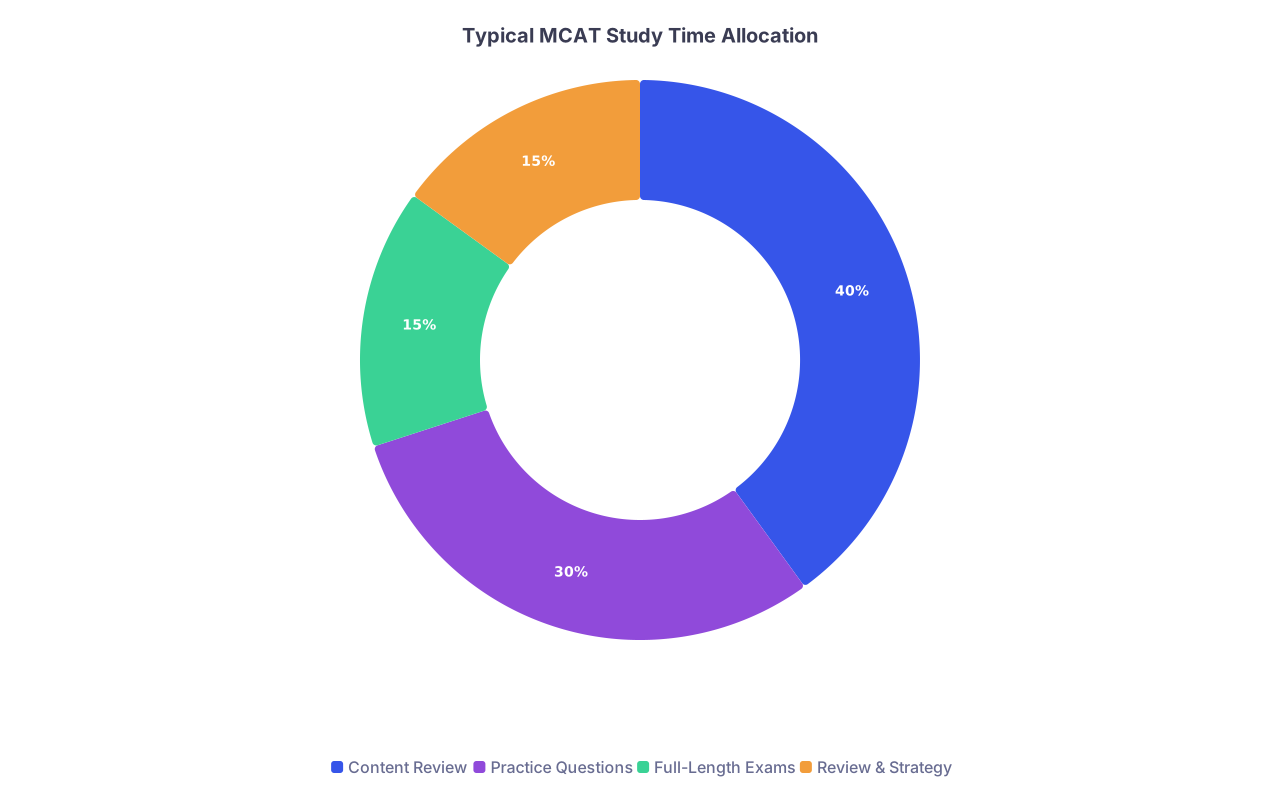
| Category | Value |
|---|---|
| Content Review | 40 |
| Practice Questions | 30 |
| Full-Length Exams | 15 |
| Review & Strategy | 15 |
Now, at this point you should:
Map weeks to goals, not vibes:
- Weeks 1–4: heavy content review + light practice
- Weeks 5–8: balanced content + more practice, start full-lengths
- Final 4 weeks: primarily full-length exams + review
Commit to specific study blocks:
- Example:
- Mon/Wed/Fri 6–9 p.m.
- Sat 10 a.m.–4 p.m.
- Sun 2–6 p.m.
- Example:
“Study MCAT whenever I have time” is code for “I will not study consistently.”
Week 3: Resources, Baseline, and Logistics
At this point you should stop surfing MCAT forums and actually choose your tools.
Lock in resources:
- One main content set (Kaplan, Princeton, Blueprint, etc.)
- One question bank (UWorld or Blueprint QBank)
- All AAMC materials (these are non‑negotiable)
Take a diagnostic:
- Full-length or shortened, but do it in one sitting
- Use any non-AAMC FL for this (save AAMC for later)
Use the baseline to decide:
- Content weaknesses (e.g., physics is a disaster, CARS is okay)
- Timing issues (are you not finishing? rushing?)
Handle admin:
- Confirm your name matches your ID exactly
- Read the AAMC MCAT Essentials once; you do not want test-day surprises
- Plan transportation and backup routes to your test center
At this stage, perfection is not the goal. Clarity is.
Phase 2: Content & Strategy (8–12 Weeks Before Test Day)
Now the engine turns on. At this point you should be building the “knowledge + habits” that will make practice exams useful later.
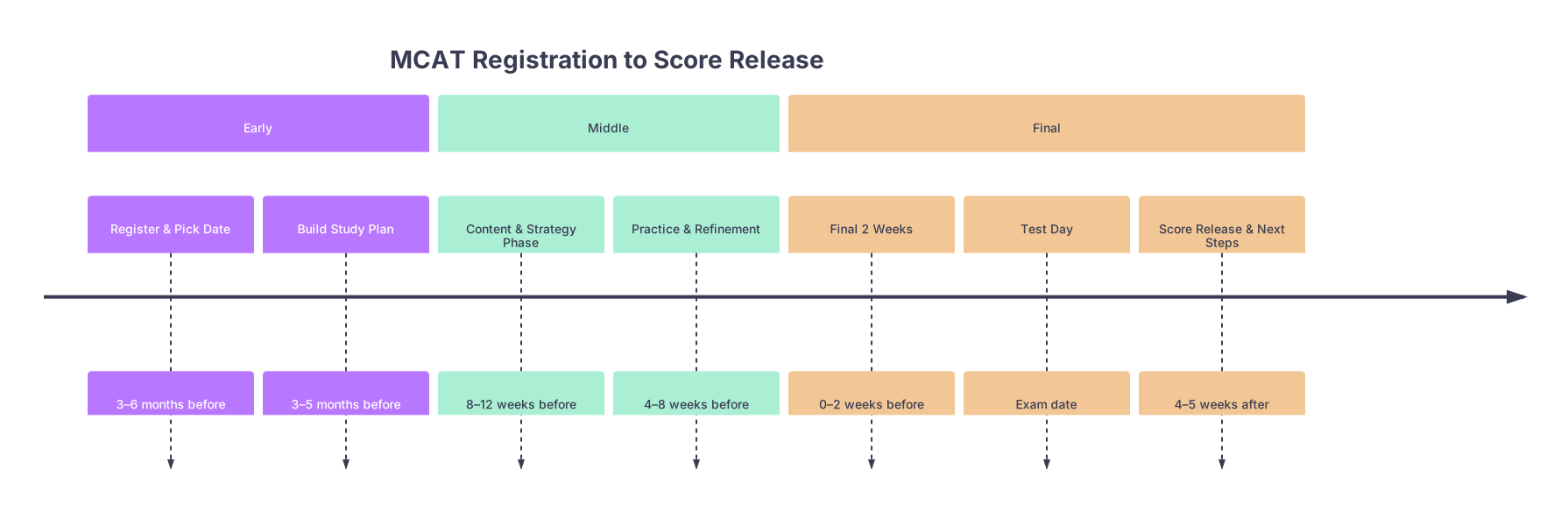
| Period | Event |
|---|---|
| Early - Register & Pick Date | 3–6 months before |
| Early - Build Study Plan | 3–5 months before |
| Middle - Content & Strategy Phase | 8–12 weeks before |
| Middle - Practice & Refinement | 4–8 weeks before |
| Final - Final 2 Weeks | 0–2 weeks before |
| Final - Test Day | Exam date |
| Final - Score Release & Next Steps | 4–5 weeks after |
Weeks 1–4 of This Phase (roughly 3 months out)
At this point you should:
Set section goals from your diagnostic:
- Example:
- CP: 124 → aim 128+
- CARS: 125 → aim 128+
- BB: 123 → aim 128+
- PS: 124 → aim 128+
- Example:
Structure each study block:
- 60–90 minutes: focused content on a single topic
- 30–45 minutes: targeted practice on that topic
- 15–20 minutes: review and error log
Begin your error log now:
- Columns: Question ID, Topic, Why you missed it, Correct reasoning, Fix
- If you are not writing this down, you are re‑paying for the same mistake every week
For CARS:
- At this point you should be doing 1–2 passages daily:
- Timed but not rushed
- Full explanation review of every question—even the ones you got right
- At this point you should be doing 1–2 passages daily:
For sciences:
- Focus on big systems each week:
- Week example:
- Week 1: Kinematics, forces, fluids, basic biochem
- Week 2: Electrochemistry, circuits, enzymes, metabolism
- Week 3: Genetics, transcription/translation, endocrine
- Week 4: Behavioral theories, research methods, statistics
- Week example:
- Focus on big systems each week:
Weekly Checklist in This Phase
By the end of each week, you should have:
- Covered 3–4 major content topics in some depth
- Completed:
- 80–150 practice questions (non‑AAMC)
- 7–14 CARS passages
- Updated your error log at least 3 days that week
- Adjusted next week’s targets based on what hurt the most
You are not “test ready” yet. You are building the scaffolding.
Phase 3: Practice & Refinement (4–8 Weeks Before Test Day)
This is where students either make the jump or stall. At this point you should be treating the MCAT like a sport: practice under game conditions, then analyze the film.
Week 1 of This Phase (About 7–8 Weeks Out)
At this point you should:
Schedule your AAMC full-lengths on specific dates:
- Example for a Saturday test:
- FL1: 6–7 weeks before
- FL2: 4–5 weeks before
- FL3: 3 weeks before
- FL4: 2 weeks before (optional based on fatigue)
- Example for a Saturday test:
Reserve entire days for full-lengths + review:
- Morning: exam, fully timed, exact breaks as on test day
- Afternoon/next day: systematic review
Start mixing:
- 60–70% practice
- 30–40% targeted content refresh
After Each Full-Length Exam
At this point you should not just glance at your score and move on. That is how people stay stuck at 504.
Break down results by:
- Section
- Question type (data interpretation vs concept recall)
- Topic
For every section, identify:
- 3–5 recurring weaknesses
- 1–2 strengths you can rely on
Deep review protocol for each FL:
- Mark:
- Questions you missed
- Questions you guessed correctly
- Questions that felt slow or confusing
- For each:
- Why was the wrong answer tempting?
- What clue in the passage or question stem pointed to the right answer?
- What will you do differently next time?
- Mark:
If you are not spending 8–12 hours reviewing a full-length, you are leaving points on the table.
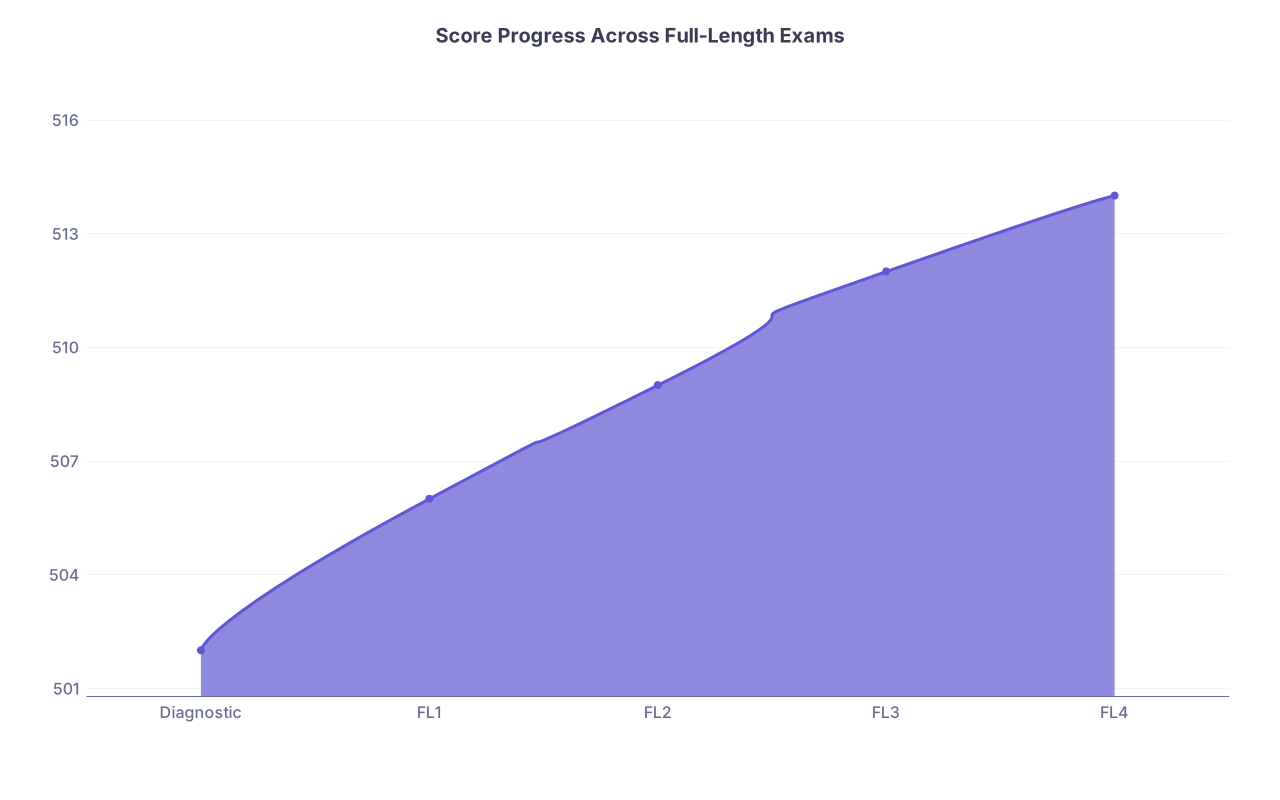
| Category | Value |
|---|---|
| Diagnostic | 502 |
| FL1 | 506 |
| FL2 | 509 |
| FL3 | 512 |
| FL4 | 514 |
The goal is not a perfectly linear climb. The goal is understanding why each bump or dip happened.
Weeks 2–4 of This Phase (4–6 Weeks Out)
At this point you should be:
Doing:
- 1 full-length every 1–2 weeks
- 30–50 practice questions on off days
- 3–5 CARS passages on most days
Tightening timing:
- Aim for 5–8 spare minutes per section by:
- Not rereading whole passages
- Skipping and returning to time-sink questions
- Aim for 5–8 spare minutes per section by:
Running mini-drills:
- 15-question sets in 25 minutes, then 30 minutes review
- CARS 3-passage blocks in 30 minutes, then 30 minutes review
Refining content:
- At this point you should not be starting brand new resources
- You should be:
- Re-reading your own notes / error log
- Revisiting especially weak chapters in your primary books
Phase 4: Final 2-Week Lock-In
This is where anxiety spikes and people do dumb things—like buying a new book or changing strategies entirely. Do not.
10–14 Days Before Test Day
At this point you should:
Take your last full-length:
- Treat it exactly like test day
- Use the same wake-up time, breakfast, timing, and breaks you plan to use
Shift your schedule:
- Align your sleep-wake cycle with test day:
- Wake up each day at the time you will on test day
- Do at least 1–2 hours of focused work in the morning that mimics a section
- Align your sleep-wake cycle with test day:
Make your logistics checklist:
- Printed or digital:
- Test registration confirmation
- Valid ID
- Approved snacks and drinks
- Comfort items: sweater, earplugs (if allowed), etc.
- Route + backup route to center, parking plan
- Printed or digital:
Final 7 Days
At this point you should not be trying to “learn everything you missed.” You will not. Focus on sharpening.
Days 7–4:
- Light practice:
- 20–40 practice questions / day
- 2–3 CARS passages
- Review:
- Error log
- High-yield topics you consistently miss (enzymes, circuits, renal physiology, behavioral theories, etc.)
- Light practice:
Day 3:
- Short half-day of review. No full exams.
- Walk yourself mentally through the test-day sequence.
Day 2:
- Very light:
- A few flashcards or notes if you must
- No timed practice sets
- Prep:
- Pack your bag
- Lay out clothes
- Confirm alarm(s) and backup (yes, plural)
- Very light:
Day 1 (Day Before Test):
- At this point you should stop grinding.
- Maximum:
- 30–60 minutes of calm review of formulas or high-yield facts
- Do:
- Something non-academic in the evening
- Go to bed at a reasonable time even if you do not fall asleep right away
You are not gaining 5 points the day before. You can lose them with panic and exhaustion, though.
Phase 5: Test Day
Test day is a script. At this point you should be following one you rehearsed, not improvising.
Morning of the Exam
At this point you should:
- Wake up at your practiced time
- Eat the breakfast you have tested on prior full-lengths
- Do a 5–10 minute warmup:
- 2–3 easy discrete questions per section
- 1 short CARS passage at a relaxed pace
Leave your ego at home. You are warming up, not testing yourself.
At the Testing Center
At this point you should:
- Arrive 30–45 minutes early
- Expect:
- Check-in, palm vein scans, photo, locker assignment
- Fingerprinting in some centers
During the exam:
Treat each section as its own world:
- One bad passage does not mean a bad section
- One weird section does not mean a bad exam
Use breaks religiously:
- Eat, hydrate, bathroom
- Do not discuss the test with anyone
- Do not check your phone for anything MCAT related
Your job on test day is not to feel like a genius. It is to execute your average performance.
Phase 6: Between Test Day and Score Release (About 1 Month)
This is the forgotten phase. At this point you should not be checking the AAMC website daily and spiraling.
First 3–5 Days After the Exam
At this point you should:
Stop post-mortem analysis:
- Do not count “guesses” and try to convert them into a score
- Do not obsess over that one passage with the weird graph
Write down (once) what happened:
- What went well:
- Timing?
- Anxiety management?
- Specific strategies that helped?
- What went poorly:
- Sleep?
- Nutrition?
- Specific content holes?
- What went well:
This is only for future planning in case you need a retake. Then close the document and walk away.
Weeks 2–4 After the Exam
At this point you should be pivoting back to the rest of your life and your application.
If you are applying this cycle:
- Work on:
- Personal statement
- Activities section
- School list (tailored to your GPA, trends, and projected MCAT range)
- Work on:
If you are not applying yet:
- Shift to:
- Research, clinical, volunteering, or shadowing
- GPA maintenance
- Longer-term planning
- Shift to:
Emotionally:
- Assume your score will land within ~2–3 points of your most recent AAMC full-lengths.
- Outliers happen, but they are rare.
Score Release Day: Interpreting and Deciding
Here is where people panic and either overreact or underreact.
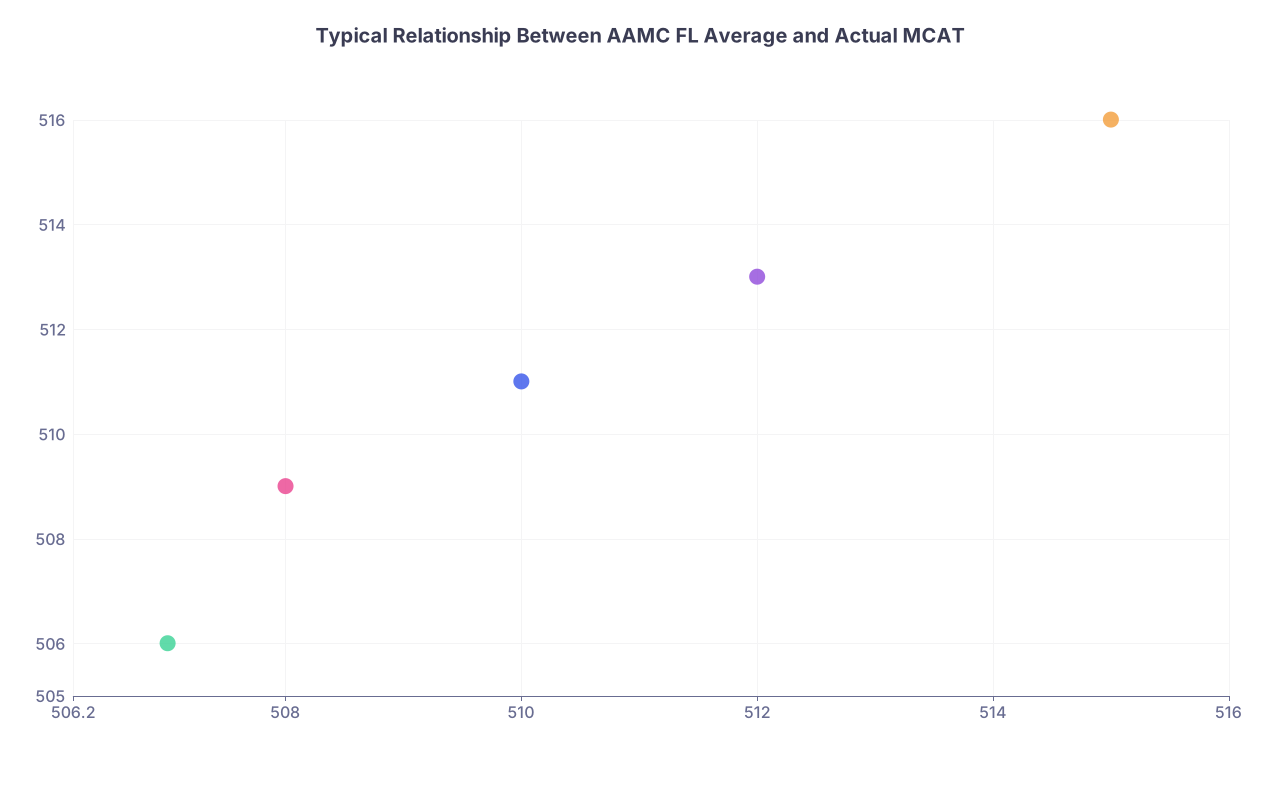
| Category | Value |
|---|---|
| Student 1 | 510,511 |
| Student 2 | 512,513 |
| Student 3 | 507,506 |
| Student 4 | 515,516 |
| Student 5 | 508,509 |
When Scores Drop
At this point you should compare:
- Actual MCAT vs:
- Average of your last two AAMC full-lengths
- The trend across FLs (were you plateauing? climbing? dropping?)
If the real score is:
Within 1–2 points of your FL average:
- This is normal. Use it as-is.
3–5+ points below:
- Ask:
- Was test day disrupted?
- Were practice conditions too relaxed compared to real test day?
- Did you cram too much late and burn out?
- Ask:
Then decide:
Retake if:
- Your score significantly undermines your school list goals
- You have concrete evidence you can correct the issues (and time to do it)
Do not retake reflexively:
- A 513 → 511 is rarely worth a retake
- A 509 with an upward test-day story plus strong GPA can still be fine at many schools
When Scores Match or Exceed Practice
At this point you should:
- Take 24 hours before changing any application plans. Let the adrenaline wear off.
- Re‑evaluate your school list:
- Maybe you can reasonably add a few reach schools
- Do not suddenly build a list of only top-10s because you hit 520 once
FAQ (Exactly 3 Questions)
1. How far in advance should I register for the MCAT to get my ideal date and center?
Register as soon as your testing month opens, ideally 5–6 months in advance. Popular dates (especially Saturdays in May–July) and convenient centers go fast, often within hours. If you are even 70% sure of your month, register. You can reschedule for a fee, but you cannot invent seats that are gone.
2. How many full-length practice exams should I take before my MCAT?
For most students, 5–7 total full-lengths work well, with 3–4 of those being AAMC exams. Fewer than 4 total and your endurance and timing will likely be underdeveloped. More than 8–9 and you risk burnout, especially if you are not doing deep review. The key is not just the count, but the quality of your post‑exam analysis.
3. If my score is lower than expected, how quickly should I plan a retake?
Do not auto‑schedule a retake the day you see your score. Take a week, review your prep, your full-length history, and test-day experience. If you decide to retake, give yourself at least 8–10 weeks of focused time with a different, sharper plan. Retaking 4–5 weeks later with the same strategy is how people end up with the same (or worse) score twice.
Key points:
- The single biggest determinant of your MCAT outcome is when you do critical tasks relative to your test date, not which brand of book you buy.
- Each phase—registration, content, practice, final two weeks, test day, and score wait—has specific jobs; do the right job at the right time and you stop wasting effort.
- From test day to score release, your main work is planning and emotional discipline, not endless over-analysis; protect your energy for whatever comes next.