
The way most medical students “unwind” after call is sabotaging their brains for the next one.
Let me break this down specifically.
We are not talking about vague self‑care or “remember to sleep and hydrate.” You already know that. You are asking a harder question: what do I do in the 2–6 hours after a brutal call so that my nervous system actually recovers instead of slowly frying over the course of a clerkship?
This is about deliberate emotional decompression. Not numbing. Not avoidance. Actual reset.
What high‑stress call really does to you
If your decompression does not match the physiology, it will not work. Or it will work once and then fail you.
On a hard call night you typically get some combination of:
- Acute stress (codes, crashing patients, angry families, getting grilled by residents)
- Chronic stress (pager every 15 minutes, constant “what did I forget?” hum in the background)
- Sleep deprivation
- Moral distress (you watched something that felt wrong, futile, or unfair and then had to keep going)
That cocktail pushes your nervous system into a prolonged sympathetic state: heart rate up, muscle tension, shallow breathing, buzzing thoughts, irritability, emotional reactivity. Even when you sign out, your body has not gotten the memo.
So if you go straight from “on guard” to Netflix autoplay, your body is still essentially on call. You just changed the scenery.
Effective decompression needs to intentionally walk you through three stages:
- Downshift your physiology out of fight/flight.
- Process or at least safely “park” the emotional load.
- Reconnect with a non‑medicine identity so your brain stops living “inside the hospital” when you are home.
Most students only do #3 halfway. Many do none of them consistently.
Stage 1: Get your nervous system out of attack mode
You cannot “think” your way out of a stress response. You have to use the body.
1. Reverse the call posture
Picture yourself at 03:40 on call: shoulders up, neck flexed, eyes strained at a computer, holding your breath while a senior reads your note or grills your plan.
Reverse that deliberately.
Do this the moment you are done with sign‑out, before you scroll your phone, eat a donut, or debrief for 40 minutes.
The 6‑minute physical reset (I have seen this change people’s whole day):
Jaw + shoulder release (1 minute)
- Clench your jaw hard for 5 seconds, then drop it and let your mouth hang open for 10 seconds. Repeat 3 times.
- Shrug both shoulders up to your ears for 5 seconds, then let them drop. Repeat 5 times.
Extended exhale breathing (2 minutes)
- Inhale through the nose for 4 seconds.
- Exhale slowly through pursed lips for 6–8 seconds.
- Do not force big breaths. Just lengthen the exhale.
- Aim for 10–12 breaths.
Spinal “un‑hunch” (2–3 minutes)
- Stand tall, feet hip‑width apart.
- Slowly roll your neck side to side.
- Gentle chest opening: hands on low back, squeeze shoulder blades together, small backward lean. Hold 10–15 seconds, repeat 3 times.
- If you are not in public, lie on the floor with your legs up on a chair or against the wall for 2 minutes. Massive parasympathetic signal.
This is not yoga. This is hacking the exact muscles and breathing patterns that have been screaming all night.
If you have literally one minute between “done” and the parking garage, do this instead:
- 10 deep, slow breaths with long exhale.
- 5 shoulder shrugs and drops.
- One big full-body stretch.
Not perfect. But much better than nothing.
2. Cold–warm contrast for stress reset
You will hear residents swear by “shower and sleep.” That is not wrong, but you can be more strategic.
Cold and heat change your arousal state fast.
At home:
- Option A: 30–60 second cold‑finish shower
- Take your normal warm shower.
- Last 30–60 seconds: turn the water to cool/cold (not torture level, just “uncomfortable”).
- Focus on slow exhale breathing while the water hits your upper back and neck.
The cold gives a jolt of noradrenaline that paradoxically helps stabilize mood and focus after you get out. I have seen it stop that “zombie but wired” feeling.
- Option B: Warm bath or very warm shower + dark room after
- If you are more anxious/jittery, a clearly warm shower or bath will vasodilate and cue “rest” to the body.
- Lights off or very dim after; your body will start drifting toward sleep.
If you have to nap before an afternoon exam, do not take a long hot bath. You will feel like soggy cotton. Go with a quick warm shower or the cold‑finish trick, then a short, timed nap.
3. The 10‑minute “discharge walk”
Walking is criminally underrated. Not for steps. For mental defrag.
If you are even moderately safe walking near home or around the hospital, try this:
- 5–10 minutes, no phone, no podcasts.
- Moderate pace, not a workout.
- Eyes looking at things in the distance, not at your feet. This horizontal eye movement and distance scanning sends “not in danger” messages up to the brain.
Use one simple anchor thought: “Shift from night to day” or “Call is over.” You are telling your brain: different context now.

Stage 2: Emotional decompression that actually processes, not avoids
Most students do one of two things after a rough call:
- They dump every detail on a partner or friend until both are exhausted.
- They say “it’s fine” and shove it into a mental closet that gets very full by the end of the rotation.
Both approaches backfire. You either re‑live the night with no resolution or you store it up as delayed burnout.
Let us make this concrete.
A. The 3‑box method for post‑call thoughts
You will have spinning thoughts: “Did I miss something?”, “I cannot believe that resident spoke to me like that”, “That family is going to lose their kid”, “I am not cut out for this.”
You do not need to process all of them fully when you are exhausted. You just need to sort them so your brain stops replaying everything on loop.
Grab a notebook, notes app, or scrap paper. 5 minutes max. Divide your page (or mental space) into three “boxes”:
Clinical follow‑up
- Things you genuinely need to check or learn from.
- “Look up management of DKA in kids.”
- “Ask intern how to interpret that troponin pattern.”
Interpersonal stuff
- Comments that stung.
- Conflicts, miscommunications, public embarrassment moments.
- “Resident rolled eyes when I presented. Ask for feedback when rested.”
Emotional residue
- Pure feeling statements. No analysis.
- “Sad about the code.”
- “Scared I will make a lethal mistake.”
- “Angry they kept that patient alive just for the family.”
Write short phrases under each. Then one of two actions:
- Box 1 (clinical) → schedule. Put 1–2 items into a calendar slot: “Tomorrow 16:00: read 30 minutes on DKA.” The rest you can drop.
- Box 2 (interpersonal) → decide if it needs address or release. If yes, jot: “Talk to resident X about feedback Friday.” If no, write: “Let this go. Everyone was exhausted.”
- Box 3 (emotional) → acknowledge only. Literally say (out loud or in your head): “Of course I feel ___ after last night.” No solving required.
This 3‑box method tells your frontal lobes: “I have captured the important stuff; I do not need to churn it all day.”
B. The 7‑minute trauma‑lite narrative
Not every call night is traumatic. But many have micro‑traumas: a bad outcome, a child in distress, someone dying in a way that sticks with you.
You can prevent some of the intrusive flashbacks by doing a short narrative once while you are still within 24 hours.
Here is the structure I have used with students who just walked out of a terrible shift:
- Set a timer for 7 minutes.
- On paper or on your phone, write in first person, present tense, very simply:
- “I am standing in room 12. The monitor is loud. The anesthesiologist says… I feel… I think…”
- Do not try to be poetic. Just record sensory details + your internal experience.
- Stop when timer goes off.
- Optional: underline 1–2 sentences that feel like “this is the core of why it hurt.”
What this does: it converts a chaotic, fragmented memory into something with a beginning, middle, and end. That is how our brains digest events instead of constantly re‑serving them as raw footage.
You do not have to do this after every call. Only when a specific event is clearly hanging on you, replaying during the day.
C. When (and how) to talk to someone
“Talk to someone” is meaningless advice unless we are explicit about who and how.
You have three distinct options. Use them differently.
| Option | Best Use Case | Depth |
|---|---|---|
| Co-student | Shared venting, dark humor | Light/medium |
| Trusted senior | Perspective, feedback, modeling | Medium/deep |
| Professional | Repeated distress, trauma, burnout | Deep |
Co‑student / peer
- Good for: “That was insane, right?”, gallows humor, quick vent.
- Bad for: repeated rehashing of the same painful story with no movement.
Boundaries that keep this healthy:
- “Can I vent for 5 minutes about that code and then we change topic?”
- Or even, “Do you have bandwidth for a debrief or are you fried too?”
Trusted senior (resident or attending)
- Good for: reframing (“this is normal, not a sign you are incompetent”), specific interpersonal issues, dealing with shame after a mistake.
- When: not immediately post‑call, usually after you have slept.
Language that actually opens the door:
- “Can I get your read on something that has been bothering me from last call?”
- “I am trying to figure out if I handled X reasonably or if I need to do something differently.”
Professional (counseling/therapy)
- Not a failure. A tool.
- Indications:
- You are dreading every call to the point of physical symptoms.
- You have intrusive images or nightmares from cases.
- You feel detached and numb most of the time.
- You find yourself drinking, using, or self‑harming more “to get through.”
Many schools have confidential mental health services. Use them before you are in flames, not after.
Stage 3: Rebuild a non‑hospital identity every post‑call
If you spend your entire post‑call day doom‑scrolling in bed with UpToDate and group chats, you did not leave the hospital. You just changed location.
You need to actively remind your brain: “I am more than someone who writes ‘per my last note.’”
1. The 3‑block post‑call template
Every rotation is different, but the pattern is the same. You get out anywhere from 08:00–12:00, then there is a stretch before your next obligation or sleep window.
I like to break it into three “blocks” so you do not accidentally spend 6 hours in a haze.
Block 1: Reset (physical + basic needs)
Block 2: Release (emotional + mental distancing)
Block 3: Re‑enter (gently touch the rest of your life)
Let us walk through a realistic version for a 24‑hour call where you get out at 09:30 with an exam the next day.
Block 1: Reset (first 60–90 minutes after leaving)
- 5–10 minute walk outside (even if it is just from hospital to parking and one extra loop).
- Quick food: protein + carb, low on grease. This is not the time for the 1,200‑calorie reward burrito. That will crush you. Think egg sandwich, yogurt + granola, or last night’s leftovers.
- Shower: warm with 30–60s cold finish.
- 5‑minute 3‑box method (capture clinical/people/emotional).
Once those are done, then you can look at your phone in bed.
Block 2: Release (next 1–3 hours)
This is the “do not accidentally trap yourself in hospital brain” window.
Pick 1–2 activities ahead of time (before the rotation even starts) that are specifically for this block. Examples that actually work:
- 20–30 minutes of mindless but embodied activity:
- Folding laundry with music.
- Watering plants.
- Light cleaning.
- Light creative outlet:
- Sketching.
- Playing guitar/piano.
- Baking something simple (banana bread, not a 3‑layer cake).
You want something where your hands are doing a thing and your brain gets to be a person, not a provider.
If you have an exam next day, this block is not for heavy studying. At most:
- 25–30 minutes of “maintenance” review on spaced repetition or key slides.
- One Pomodoro, then stop. Your fatigued brain cannot learn deeply, but it can keep things fresh.
Do not try to compensate for “lost” time on call by cramming. You will retain maybe 20% and deepen your exhaustion.
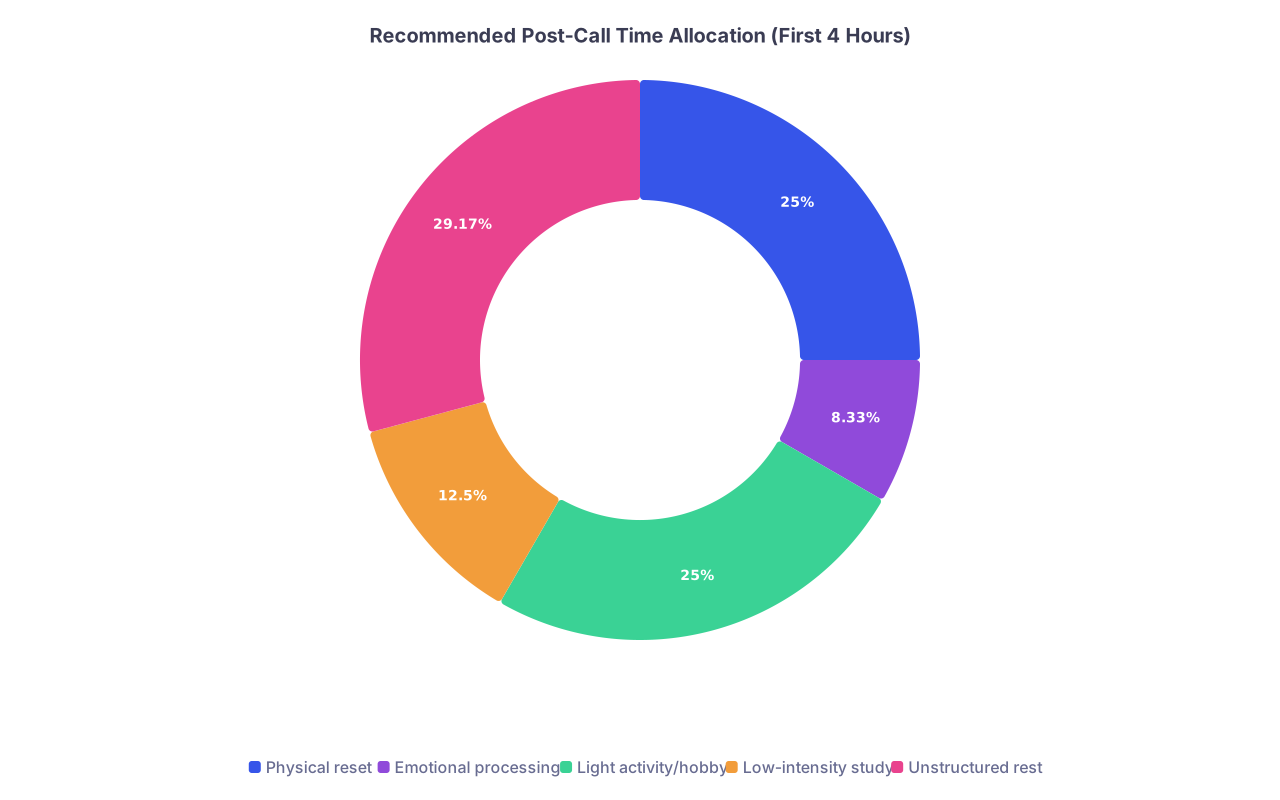
| Category | Value |
|---|---|
| Physical reset | 60 |
| Emotional processing | 20 |
| Light activity/hobby | 60 |
| Low-intensity study | 30 |
| Unstructured rest | 70 |
(Values in minutes – this is a shape, not a prescription. The important part is that you do not give all 240 minutes to scrolling and guilt.)
Block 3: Re‑enter (later afternoon/evening)
You have a choice: nap or push through. That choice should be strategic, not driven by guilt.
Basic rules:
- If you slept <3 fragmented hours on call → you get a nap.
- If your next day starts early, cap nap at 60–90 minutes and avoid after 17:00.
- If you have an exam next morning, a 60–90 minute nap in early afternoon dramatically improves recall.
After nap:
- Gentle re‑entry to “non‑medicine you”:
- Call family or a friend but do not let the whole call be about the hospital.
- Watch one episode, not six. Pick something that is not a hospital drama (unless you find those absurdly de‑stress you, in which case fine).
Aim for at least 30–60 minutes where your life looks like someone who is not in medicine. Cooking, reading fiction, playing with a pet, going to a park. No beepers, no telemetry alarms.
Micro‑techniques during call that reduce decompression load
This article is about after call, but let me be blunt: if you do zero emotional hygiene during call, you ask too much of your post‑call window.
Three simple in‑call habits lower the pressure so you are not exploding later.
1. One 60‑second breath break every 2–3 hours
Set a repeating alarm if you have to. When it goes off:
- Step away from computer/patient door if at all possible.
- 6 slow breaths with extended exhale.
- Shoulders down, jaw unclench, hands open.
Tell yourself: “This is repair, not laziness.” Because it is.
2. Name one emotion to yourself after each major event
After a code, bad family meeting, embarrassment in front of attendings:
You do not have time for a journal. Fine. 5 seconds internally:
- “That was scary.”
- “I feel small and stupid.”
- “That made me angry.”
You are tagging the file. It makes later processing dramatically easier.
3. Tiny peer check‑ins
If you are on with another student or intern:
- “That was rough. You ok?”
- “On a scale of dead‑inside to fine, where are you?” (I have heard this exact sentence used regularly.)
They answer. You answer. 20 seconds. Both of you feel less like ghosts.
Specific scenarios and how to adjust
Let us get granular, because clerkship life is not theoretical.
Scenario 1: Post‑call with mandatory afternoon teaching
You are post‑call from OB, dismissed 10:00, required for didactics 14:00–17:00.
What actually works:
- 10:30–11:00: Home, quick shower + 6‑minute physical reset.
- 11:00–12:00: Nap, even if you “do not nap.” Lie down, eyes closed, minimal stimulation.
- 12:00–12:30: Food + 3‑box method + 10–15 minutes of light review (if there is a quiz).
- 12:30–13:30: Commute + 10‑minute walk around building before didactics.
You will be tired in conference regardless. But you will not be totally hijacked by your nervous system.
Scenario 2: Post‑call before a shelf exam in 24–48 hours
The temptation: stay up and “make up” study time. The reality: you will read the same paragraph 6 times and remember none of it.
Strategy:
Day 0 (post‑call):
- Reset + Release blocks as described.
- MAX 60–90 minutes of very targeted review later in the day:
- Do 20–30 high‑yield questions, then stop.
- Review marked Anki cards only.
- Protect 7–9 hours of core sleep that night.
Day 1 (pre‑shelf):
- This is your heavy review day. Do your full plan here. You will learn more rested than you would half‑dead on Day 0.
Scenario 3: A call that went “fine” but you feel strangely numb
This is the slow‑burn danger.
Nothing awful happened. No codes. No direct humiliation. You just feel… blank. Like if someone cried in front of you, nothing might come out.
That is not resilience. That is early emotional shutdown.
Your decompression needs to be gentler and more “re‑connecting”:
- Prioritize Block 2 activities that put you in touch with something you care about:
- Text an old friend non‑medical memes.
- Watch a movie that actually makes you feel something (not mindless background noise).
- Spend 20 minutes on a hobby that used to spark joy before clerkships.
And be honest in a short check‑in with someone you trust:
- “I feel more numb than I want to be after that shift. I do not want to lose my capacity to care.”
Writing that sentence alone in your Notes app is already a start.
What to absolutely avoid in the first post‑call hours
You can do whatever you want with your life. But if your goal is emotional decompression and sustainable performance, these are landmines I have seen blow up over and over.
Starting a big life argument
- You are emotionally brittle and sleep‑deprived. This is not the day to fix your relationship, renegotiate roommate responsibilities, or call your loan servicer.
- Write down the issue. Revisit 24–48 hours later.
Using alcohol or sedatives as your default “off switch”
- One drink because you like the taste is different from “I cannot sleep without a drink after call.”
- If your first thought on leaving is “I need a drink or I cannot deal,” that is a red flag.
Doom‑scrolling medicine adjacent content
- Reddit threads of horror stories. Twitter arguments about medicine. Group chats replaying how toxic your program is.
- You are keeping your brain stuck in the exact world you are trying to exit for a few hours.
Catastrophic self‑assessment
- Deciding after a bad night: “I am not cut out for surgery/peds/IM/medicine at all.”
- Your internal evaluator is drunk at 09:00 post‑call. Do not let that version of you make career decisions.
Putting it together: a practical template you can actually use
Let me outline a simple “post‑call protocol” you can adapt. You can literally write this on an index card and stick it in your badge holder.
Post‑Call Protocol (Version 1.0)
Before Leaving Hospital (3–5 minutes)
- 10 slow breaths, long exhale.
- 5 shoulder shrugs and drops.
- One sentence to self: “Call is over. I am safe.”
First Hour Home
- Light food.
- Shower (warm with cold finish if tolerated).
- 3‑box method (5 minutes).
Next 2–3 Hours
- 20–30 minutes: embodied chore or hobby.
- 20–30 minutes: light review if exam soon (optional).
- 30–90 minutes: nap if sleep debt heavy.
Later Day/Evening
- Short connection with a non‑medical person or non‑medical activity.
- One check‑in with yourself:
- “What stuck with me from last night?”
- If answer = “nothing, I feel blank,” flag it and plan to talk to someone if it persists.
Adjust durations. Keep the order: body → brain dump → non‑medical self.
The bigger picture: why this matters beyond just surviving call
You are not “weak” for needing decompression after call. You are sane.
The people who brag “I never needed any of that, I just powered through” are often the ones you see two years later bitter, detached, or suddenly quitting a specialty they once loved. Or they turn into the residents who scream at students because they never learned to metabolize their own stress.
You are practicing skills now that will decide which kind of attending you become:
- The one who feels human and can sit with a patient’s fear without absorbing it all and burning out.
- Or the one who dissociates through every bad conversation and copes in ways that quietly destroy their health and relationships.
Emotional decompression after call is not extra. It is part of the work. Just like closing charts and signing orders.
Once you have these post‑call foundations semi‑automatic, you can tackle the deeper layer: building long‑term resilience, boundaries with toxic teams, and strategies for exam performance under chronic sleep disruption.
But that is the next phase of the journey.