
The biggest mistake students make in dedicated isn’t “not enough Anki” or “too few question banks.” It’s treating rest as optional.
If you do not plan recovery into a 6‑week dedicated block, your brain will do it for you—by force. As in: staring at a UWorld question stem for 5 minutes, rereading the same line, and retaining nothing.
I’m going to walk you through exactly how to build rest and recovery into a 6‑week dedicated schedule—week by week, then day by day. You’ll know what your days should look like, when to back off, and how to avoid the crash around Week 3 that I’ve seen over and over.
Big Picture: Your 6‑Week Rest Strategy
At this point, before you even touch a calendar, you need the framework. For a 6‑week dedicated block, think in three phases:
- Weeks 1–2: Build – ramp up, protect sleep, establish sustainable habits
- Weeks 3–4: Hold – peak volume, strict boundaries on rest, guard against burnout
- Weeks 5–6: Sharpen – maintain intensity but increase micro‑recovery, strategic taper before test day
Here’s how your recovery “budget” should roughly shift:
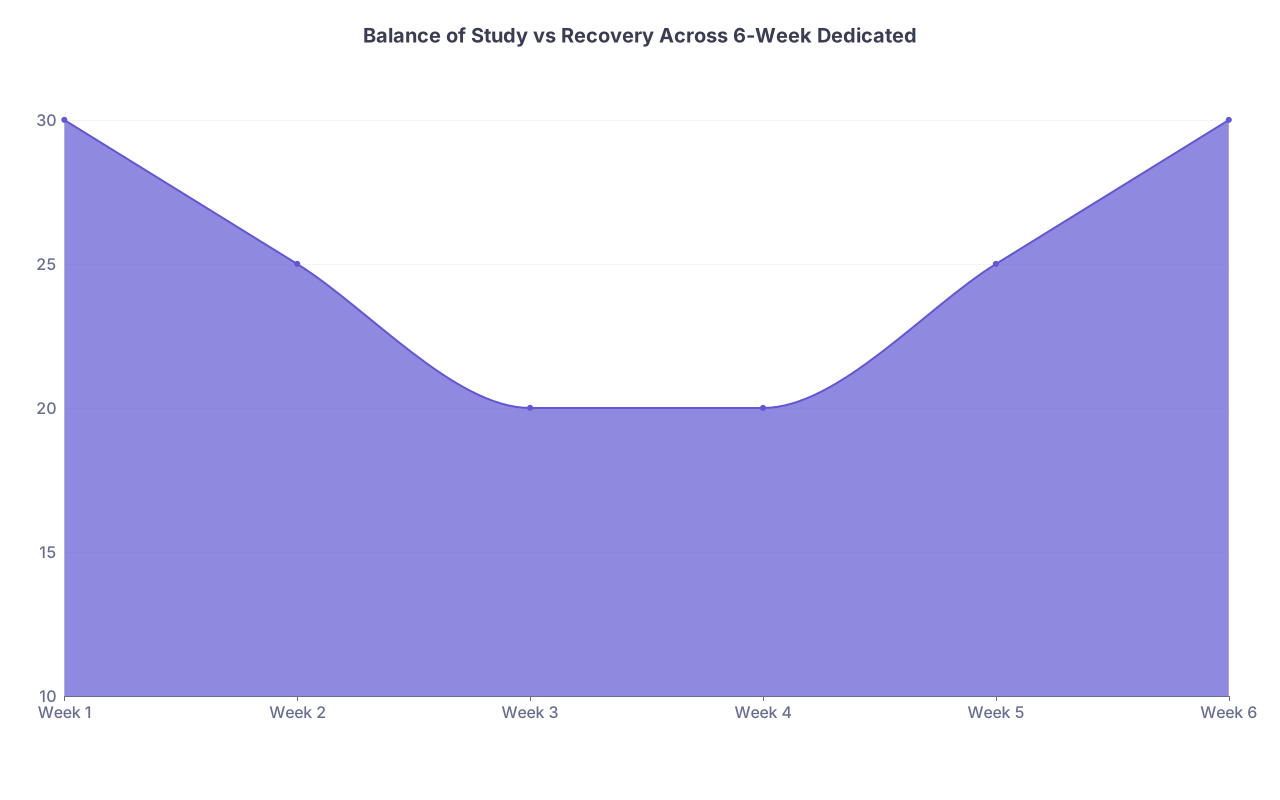
| Category | Value |
|---|---|
| Week 1 | 30 |
| Week 2 | 25 |
| Week 3 | 20 |
| Week 4 | 20 |
| Week 5 | 25 |
| Week 6 | 30 |
Interpret that as: relative need for explicit recovery time. You actually need more conscious recovery at the start and end than in the middle—otherwise you never adapt at the beginning, and you crack at the finish line.
Non‑negotiables across all 6 weeks:
- 7–8 hours of sleep, every night
- One light day per week (not a total zero, but ~50–60% of normal volume)
- Movement 4–6 days per week (even 15–20 min counts)
- Screens off at least 30 minutes before bed
Skip those and nothing else in this guide will save you.
Before Week 1: Set the Rules for Rest
At this point—about 3–5 days before dedicated starts—you should:
Decide your daily start and stop times.
Example:- Start: 8:00 AM first question
- Hard stop: 9:30–10:00 PM (no questions, no Anki after this)
Block your weekly light day.
Pick the same day every week if possible (e.g., Sunday). This is where you’ll cut volume and allow your brain to “defragment.”Pick your non‑negotiable anchors:
- Bedtime window (e.g., in bed 11:00–11:30 PM)
- Minimum walk / movement (e.g., 20 min walk after lunch)
- Meals off‑screen (at least 1 meal/day where you’re not scrolling or reviewing)
Tell the people around you.
Literally say:
“I’m in a 6‑week dedicated block. My light day is Sunday, and I’ll be mostly unavailable after 9 PM every night. If I don’t pick up, I’m probably doing questions or sleeping.”
This is you buying protection for your mental health in advance.
Week 1–2: Build the Foundation & Test Your Limits
Weekly Goal
At this point, your goal is not “maximal grind.” It’s finding a sustainable rhythm and testing how many high‑quality hours you can do without feeling wrecked the next day.
Aim for:
- 8–10 focused study hours/day
- At least 1 light day/week (6 hours or less)
- No experimental “all‑out” days yet
Sample Week 1 Structure
| Day | Study Volume Target | Recovery Focus |
|---|---|---|
| Mon | 100% | Walk + 30 min wind-down |
| Tue | 100% | Stretching + early bed |
| Wed | 90% | Longer evening break |
| Thu | 100% | Walk + screens off 45m |
| Fri | 100% | Short social call |
| Sat | 80–90% | Afternoon off-block |
| Sun | 50–60% (light day) | Laundry, groceries, reset |
Your Daily Template (Weeks 1–2)
At this point each day should look roughly like this:
Morning (3–4 hours)
- Full‑length block of questions (40–80)
- 5–10 minute micro‑break every 60–75 minutes: stand, water, quick stretch, no Instagram rabbit hole
Midday (1–1.5 hours)
- Lunch without study for at least 20 minutes
- 15–30 minute walk after you eat; headphones ok, but not hardcore review content
Afternoon (3–4 hours)
- Review questions + Anki
- One 20–30 minute break mid‑block where you leave your study area: shower, stretch, or just sit somewhere else
Evening (2–3 hours)
- Lighter work: flashcards, low‑stakes review videos
- Last 30–45 minutes before bed: no screens, no new content
- Options: stretching, light reading (non‑medical), journaling
Checkpoint at the End of Week 1
By Sunday night of Week 1, you should:
- Rate mental exhaustion after a “full” day: 1–10 scale
- Notice patterns:
- Are you dead by 4 PM daily?
- Are you useless after 9 PM?
- Adjust:
- If you’re consistently at 8–9/10 exhaustion, reduce by 1–2 hours/day
- If you’re around 5–6/10, you’re in a good zone
Do this again at the end of Week 2. If your exhaustion is trending up, you’re under‑recovering and it will hit you hard in Week 3.
Week 3–4: Peak Load Without Breaking
This is where most students fall apart. At this point, you’re in the “high stress + high stakes + novelty wearing off” window. Your schedule may be packed with:
- Full‑length NBME once a week
- 80–120 questions/day
- Content gaps revealing themselves
The instinct is to sacrifice sleep and breaks. That’s wrong.
Weekly Targets in Weeks 3–4
- 9–11 focused study hours/day (yes, really focused, not half‑scrolling)
- 1 light day/week still in place
- Micro‑breaks become mandatory, not optional
- At least 1 true mental off‑block per day (30–60 minutes where medicine is not allowed)
What Your Week Should Look Like
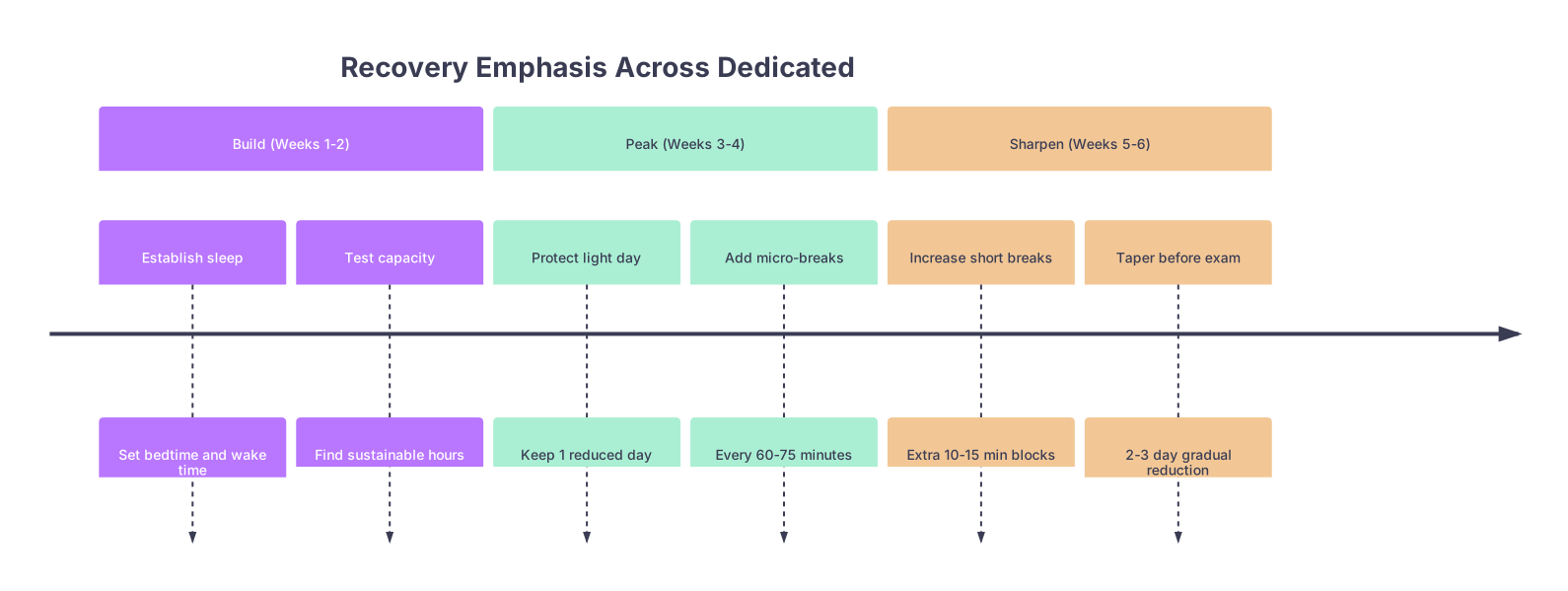
| Period | Event |
|---|---|
| Build (Weeks 1-2) - Establish sleep | Set bedtime and wake time |
| Build (Weeks 1-2) - Test capacity | Find sustainable hours |
| Peak (Weeks 3-4) - Protect light day | Keep 1 reduced day |
| Peak (Weeks 3-4) - Add micro-breaks | Every 60-75 minutes |
| Sharpen (Weeks 5-6) - Increase short breaks | Extra 10-15 min blocks |
| Sharpen (Weeks 5-6) - Taper before exam | 2-3 day gradual reduction |
Handling Full-Length Practice Tests
At this point you should be doing at least one full practice exam per week (NBME or UWSA). Treat it like this:
Day Before Full-Length (e.g., Friday)
- Drop volume to ~70–80%
- Earlier stop time (by 9 PM latest)
- Light dinner, no new high‑stakes content
Full-Length Day (e.g., Saturday)
- Exam in the morning, under test-like conditions
- Short decompression after: walk, snack
- Afternoon:
- Either rest or very light review (1–2 hours max)
- You do not brute‑force full review the same day; you’re fried and you’ll miss patterns
Day After Full-Length (e.g., Sunday)
- This becomes your light day:
- 3–5 hours reviewing the exam (focused on patterns, not obsessing over each question)
- No extra Qbank blocks
- Evening off by 8–9 PM
Trying to cram a normal day on top of a full-length is how people burn out exactly mid‑block.
Daily Recovery Non‑Negotiables in Weeks 3–4
At this point, you’re not “if I have time, I’ll…” You schedule these first:
- 10–15 minute walk outside before or after lunch, every day
- One 30–60 minute block of non‑medical activity (TV show, cooking, calling a friend, whatever doesn’t feel like work)
- A hard cutoff for heavy cognitive work (set a time where you stop new questions/content)
You can push content volume a bit here—but not at the expense of sleep or real breaks.
Week 5–6: Sharpen, Don’t Self‑Destruct
At this point you’re tempted to go full panic‑mode. Do not. People routinely tank their score by trying to sprint the last 10 days on fumes.
Your mindset now: keep the engine warm, don’t blow the gasket.
Week 5: Maintain Intensity, Add Cushion
Targets:
- ~8–10 focused hours/day
- Keep 1 lighter day, but start to make it mentally gentler: more review, fewer new things
- Last full‑length exam usually no closer than 7 days before test day (often 8–10 days out is ideal)
Recovery tweaks:
- Add one extra 10–15 minute break block in the afternoon (especially if you’re making dumb mistakes)
- Start practicing test‑day sleep schedule if you haven’t: wake time consistently matches exam day
Week 6: Taper Smartly
Here’s how the final week should look from a rest/recovery standpoint:
| Day Relative to Exam | Study Load | Recovery Focus |
|---|---|---|
| -6 / -5 | 80–90% | Shorter evening block |
| -4 | 70–80% | Longer walk + early bed |
| -3 | 60–70% | No new topics, more review |
| -2 | 40–50% | Mostly light review, lots of breaks |
| -1 (day before) | 20–30% | Minimal review, relaxation |
| 0 (exam day) | N/A | Routine, calm, no cramming |
Let’s walk it out:
Day −6 to −4
At this point:
- You’re still doing solid Qbank work and targeted reinforcement
- But you’re aggressively trimming:
- No more 80‑question new blocks late in the evening
- No new, obscure resources
Recovery specifics:
- Add one longer activity 2–3 times this week: 45–60 minute walk, yoga class, long cooking session. Your mind needs some off‑time to consolidate.
Day −3
Your brain is either:
- Wired and anxious, or
- Tired and foggy
Either way, you don’t solve this by sprinting.
Plan:
Content:
- Focus mostly on missed concepts, selected Anki, quick sheet review
- No full‑lengths, no ultra‑long new Qbank marathons
Recovery:
- Extend evening wind‑down to 60 minutes
- Solid, consistent bedtime
Day −2
At this point, you’re done with “real studying.” This is a confidence and freshness day.
40–50% volume:
- Short blocks (20–40 questions), mostly review / rhythm, not learning from scratch
- Light pass through formula sheets, key charts, whatever your high‑yield list is
Recovery:
- Build your test‑day kit: snacks, admission ticket, directions, timing
- Movement: 20–30 minute low‑intensity walk
- Social: limited; no drama conversations, no deep life talks
Day −1 (The Day Before the Exam)
You should feel mildly under‑studied. That’s correct. It means you protected your brain.
Study:
- 1–3 hours of very light review: familiar flashcards, maybe a few easy warm‑up questions
- Stop by mid‑afternoon
Recovery:
- Do something normal in the late afternoon: grocery run, coffee with a low‑stress friend, short movie
- Dinner 3–4 hours before bed, not huge, not super greasy
- Everything set out for the morning (clothes, ID, route) before 9 PM
- In bed on time with no medical content in the last hour
You don’t win points for suffering more the day before. You lose them.
Daily Rest Micro‑Structure: What to Do Within a Day
You’ve got the week‑by‑week. Now let’s plug rest into an actual day so it’s not “I’ll break when I feel like it.”
Here’s a concrete pattern that works for most people in dedicated:
Morning Block
- 8:00–10:00 – Qbank/NBME block
- 10:00–10:10 – Micro‑break: stand, refill water, bathroom
- 10:10–11:30 – Review questions
Midday Reset
- 11:30–12:00 – Lunch, no screens
- 12:00–12:20 – Walk outside (even just around the block)
Afternoon Block
- 12:30–2:30 – Anki + targeted content review
- 2:30–2:45 – Break: snack, stretch, brief check‑in with friend/family
- 2:45–4:30 – Additional questions or concept consolidation
Evening Taper
- 4:30–5:00 – Unstructured rest (lie down, scroll a bit, just don’t start a new deep task)
- 5:00–7:00 – Lighter review: path images, pharm charts, etc.
- Dinner break
- 8:00–9:30 – Final light review or flashcards
- 9:30 onward – Wind‑down (reading, stretch, shower, no new content)
You can slide the times earlier/later, but the pattern holds:
- Big push
- Short break
- Midday reset
- Afternoon push
- Evening taper
- Hard shutdown
How to Know When You Need More Recovery
At this point, you need a feedback loop. Not vibes. Data.
Watch for:
- Quality drop: Same number of hours, but
- More silly errors you never used to make
- Re‑reading the same sentence 3–4 times
- Emotional red flags:
- Crying over a single wrong question
- Feeling “what’s the point, I’m doomed” most days
- Physical signs:
- Headaches daily
- Sleep latency increasing (you’re exhausted but wired and can’t fall asleep)
When you see this for 2–3 days in a row:
- Cut the next day’s load by 20–30%.
- Protect sleep like it’s part of the exam.
- Move your body. Even a 15‑minute walk does more for your recall than another 15 minutes staring at Rapid Review.
You’re not being weak. You’re protecting your score.
What to Track (Without Going Overboard)
You don't need a 19‑color spreadsheet. But I do want you to track three things daily:
- Sleep: hours + rough quality (1–5)
- Study hours: focused (not just “at my desk”)
- Exhaustion rating at day’s end: 1–10
Every 3–4 days, glance back:
- If study hours are stable, but exhaustion keeps rising → add recovery
- If exhaustion is stable and scores are improving → keep going
- If exhaustion is very low and you’re coasting → you may be under‑challenging yourself
Final 3 Takeaways
- You plan rest first, then fit studying around it—not the other way around. Sleep, a weekly light day, and daily off‑blocks are not luxuries; they’re score protection.
- Each phase of the 6‑week block has a different recovery goal. Build and test in Weeks 1–2, hold with strict boundaries in Weeks 3–4, and taper intelligently in Weeks 5–6.
- Your brain will force rest if you refuse to schedule it. Choosing short, consistent recovery now is how you avoid the Week‑3 crash and the Week‑6 meltdown.