
The way most MS4s run interview season is a recipe for emotional exhaustion. You do not rise to the level of your intentions; you fall to the level of your systems.
What you need is not more “self-care” slogans. You need guardrails. Time-based, behavior-based, and boundary-based rules that keep you from driving yourself straight into a wall between October and February.
I am going to walk you through this chronologically: what to put in place before interview season starts, how to run things week by week, and how to handle the day-before, day-of, and day-after cycle so you finish the season tired but intact—not hollowed out.
3–4 Months Before Interview Season: Build Your Guardrails
At this point you should not be thinking primarily about “how do I get interviews?” You should be asking, “Who do I want to be by Match Day—and what system protects that version of me?”
1. Decide Your Maximums Up Front
The worst emotional crashes I see happen around December, from people who never set limits.
Set these before the first invite hits your inbox:
- Max total interviews you will accept (for most mid–high stats applicants, 12–15 in a single specialty is plenty; for very competitive specialties or SOAP risk, the number will be higher).
- Max interviews per week (3 is usually the upper limit for staying human; for heavy travel, 2).
- Maximum consecutive interview days (my rule: never more than 2 days in a row without a buffer day).
Write them down. Not in your head. On paper, in your phone, or in your calendar.
| Specialty Tier | Typical Safe Total | Max / Week (Travel Heavy) | Max / Week (Mostly Virtual) |
|---|---|---|---|
| Less Competitive | 8–10 | 2 | 3 |
| Moderate | 12–15 | 2 | 3 |
| Competitive | 15–20 | 3 | 4 |
| Very Competitive + Backup | 20–25 | 3 | 4 |
If a new invitation would break the rule, your default is no unless you explicitly renegotiate your guardrails (once, deliberately, not every week).
2. Build a Neutral Tracking System
You cannot rely on your brain to remember “how it felt” at each program when you are on interview #14. It will lie to you, especially when you are exhausted.
By this point you should have:
- A simple spreadsheet or Notion table with:
- Program
- Date
- Location / time zone
- Interview format (virtual / in-person)
- Pre-brief & debrief notes
- 1–10 Fit Score (your gut after the day)
- 1–10 Emotional Cost (how drained you felt)
This is not just for ranking later. It is a guardrail. When you see 3 “emotional cost = 9” weeks in a row, you stop booking extra interviews.
4–6 Weeks Before First Interview: Pre-Season Conditioning
At this point you should be lightly training for the emotional marathon, not trying to cram everything at the last second.
3. Standardize the Repetitive Stuff
Every unmade decision costs energy. You cannot afford that during peak season.
Create:
Interview Day Uniform
- 1–2 go-to outfits you do not think about.
- Shoes that are actually broken in. No “new shoes for interviews” nonsense.
Packing Template (for away / in-person)
- One master list saved in your phone:
- Clothing
- Toiletries
- Tech (chargers, backup battery, headphones)
- Documents (ID, hospital-required paperwork)
- You copy this list for each trip and check things off. No re-inventing.
- One master list saved in your phone:
Email Templates
- Thank-you email skeleton.
- Scheduling/rescheduling template.
- “Regretfully must cancel” template if you overbook.
This is not about being Type A. This is about not using frontal lobe power to remember socks at 4 a.m. in an airport.
When the First Wave of Invites Hits (Weeks -2 to +2)
The first two weeks of receiving invites are where people make their biggest emotional mistakes. They say yes to everything, then pay for it in November.
At this point you should switch from “application mode” to “air-traffic control mode.”
4. The 24-Hour Rule for New Invites
Your new guardrail: you do not respond to any new interview offer immediately.
Process:
- Log the invite in your tracker.
- Check:
- Does accepting this break your max / week or total-number guardrails?
- Does it cluster too tightly with travel-heavy days?
- Wait at least 4–24 hours before responding unless the timeline is truly urgent.
During that pause, you are choosing from a place of strategy, not adrenaline and fear.
5. Protect Two Non-Negotiable Anchors Each Week
By this early period, you must set fixed anchors in your schedule that do not move for interviews unless absolutely necessary.
Common options:
- One protected evening per week with zero medical tasks. No prep, no emails. Real life.
- One protected half-day (like Saturday morning) for physical reset: sleep, exercise, groceries, laundry.
These anchors do two things:
- They give your nervous system predictable rest.
- They serve as early warning: if you start sacrificing them every week, you know you are sliding toward burnout.
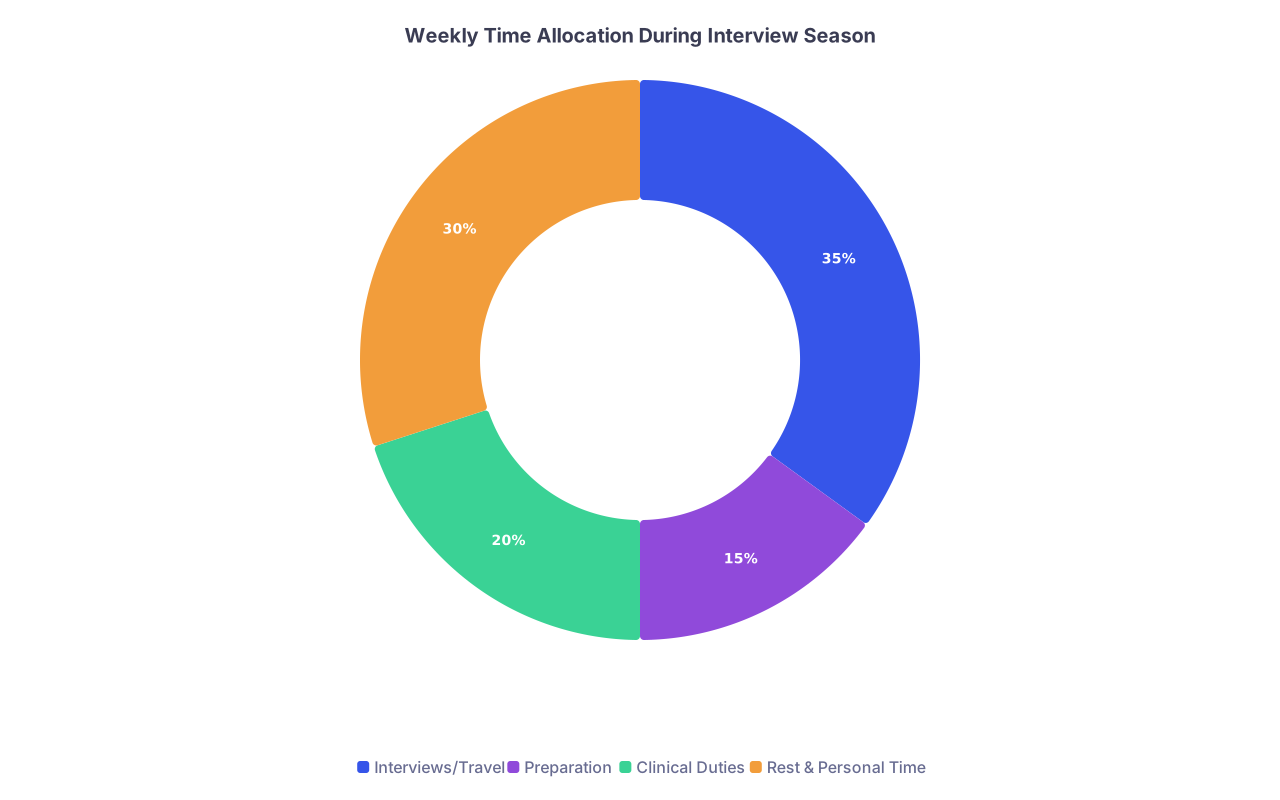
| Category | Value |
|---|---|
| Interviews/Travel | 35 |
| Preparation | 15 |
| Clinical Duties | 20 |
| Rest & Personal Time | 30 |
Typical Interview Month: Week-by-Week Guardrails
Let’s assume you are in peak season: mid-November through January. 4–8 weeks where things can go off the rails fast.
Week Structure Template
At this point you should design each week before it starts. Sunday night or Friday afternoon, you sketch the shape of the coming week.
Weekly checklist:
- How many interview days?
- Travel days?
- Which days are:
- High-output (interviews, long travel)
- Medium-output (prep, clinical)
- Low-output (recovery, admin)
Your rule: never have more than 3 high-output days in a row. If you do, you must schedule an intentional low-output block immediately after.
Sample 1-Week Rhythm (Moderately Busy)
- Monday
- Travel + light review in evening.
- Tuesday
- Interview (high-output).
- Wednesday
- Low-output morning (sleep in, exercise).
- Afternoon prep for next program.
- Thursday
- Virtual interview (high-output).
- Friday
- Administrative catch-up, brief debrief on both programs.
- Weekend
- Half-day real rest, half-day prep and logistics.
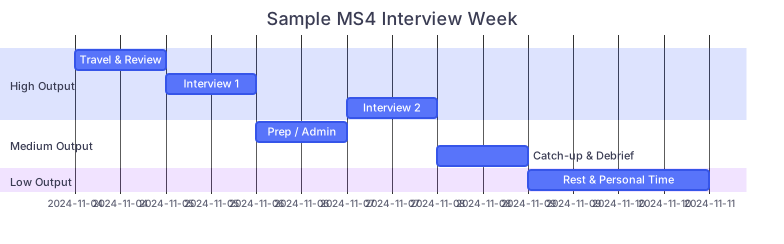
| Task | Details |
|---|---|
| High Output: Travel & Review | a1, 2024-11-04, 1d |
| High Output: Interview 1 | a2, 2024-11-05, 1d |
| High Output: Interview 2 | a3, 2024-11-07, 1d |
| Medium Output: Prep / Admin | b1, 2024-11-06, 1d |
| Medium Output: Catch-up & Debrief | b2, 2024-11-08, 1d |
| Low Output: Rest & Personal Time | c1, 2024-11-09, 2d |
If your week does not have a low-output block, you are not being “hardcore.” You are being reckless.
Day-Before / Day-Of / Day-After Guardrails
This is where the emotional damage actually happens—on the micro level. The repeated cycles of over-stimulation, over-analysis, and zero decompression.
The Day Before an Interview
At this point you should not be “cramming” the website at midnight.
Guardrail schedule (adapt as needed):
- Morning
- 60–90 minutes of structured prep:
- Rehearse 5–10 common questions out loud.
- Review your own application highlights.
- Scan the program’s basics only (do not memorize faculty rosters).
- 60–90 minutes of structured prep:
- Afternoon
- Logistics check: tech test (for virtual), route/parking (for in-person).
- Set out outfit, pack bag fully.
- Evening
- Hard stop for interview tasks 12 hours before wake-up time.
- Light, familiar dinner.
- 20–30 minutes of something non-medical, non-screen if possible.
Your rule: no new information the night before. Only review what you already know. Late-night deep dives into the program website are pure anxiety and add nothing.
Interview Day Guardrails
At this point you should be executing a script, not improvising your entire life around the interview.
Morning pattern:
- Wake with enough buffer that you are not rushed. (Rushing burns emotional fuel.)
- Light breakfast you know your body handles well.
- 5–10 minutes of grounding:
- Brief walk,
- Box breathing,
- Or a simple: “What do I actually want from a residency?” check-in.
During the interview:
- Micro-break rule: Between sessions, your job is not to scroll your phone. It is to reset:
- 5 deep breaths,
- Quick stretch,
- One sentence note: “How does this place feel right now?”
Your goal is not to give a perfect performance. It is to show up as the same human at 3 p.m. that you were at 8 a.m.
The 24 Hours After an Interview
This window is where people bleed out emotionally. The rehashing. The “I blew it” spirals. The compulsive group text post-mortems.
You need a hard structure here.
Immediately after the day (same evening):
- 10–15 minutes for a debrief form:
- 1–10: Gut fit.
- 1–10: How energized or drained did I feel overall?
- Top 3 “pros,” top 3 “concerns.”
- Notable moments (good or bad).
Then: you are not allowed to keep dissecting. Put it away.
Next day guardrail:
- No second-guessing the previous interview until at least 24 hours later.
- If you catch yourself spiraling:
- Open your debrief notes,
- Read them once,
- Remind yourself: “Future me will use this at rank-list time. Present me’s job is to recover.”

Managing Social Comparison and Constant Noise
At this point in MS4, your group chats and social media feeds can wreck your mental health more than any single interview.
Hard Limits on Interview Talk
Decide now:
- Which 1–2 people are your processing partners for this season? (Friends, partner, mentor.)
- Everyone else gets surface-level updates only: “Going pretty well, staying busy.”
Guardrails:
- No scrolling / posting in specialty-specific Reddit or discord on interview days.
- Mute group chats that constantly share “how many invites did you get?” screencaps.
- Weekly check-in with your processing partner where you talk honestly, then drop it.
I have watched people with 15 solid interviews convince themselves they are failing because one classmate got a “prestige” program invite. This is preventable if you control your inputs.
Emotional Monitoring: Weekly Self-Check
Your emotions will shift over the season. That is normal. Emotional exhaustion is different: flatness, dread, cynicism, and a sense that you just do not care anymore.
At this point you should be doing a 5-minute weekly scan. Literally set a recurring reminder.
Rate each 1–10:
- Sleep quality
- Physical tension / pain
- Emotional reactivity (snapping, crying, numbness)
- Hopefulness about Match
- Sense of meaning in what you are doing
If you see:
- Two weeks in a row of:
- Sleep < 5,
- Hopefulness < 4,
- Or emotional reactivity > 7,
then you do not “tough it out.” You adjust:
- Drop or reschedule 1–2 lower-priority interviews if possible.
- Add one more low-output block to the next week.
- Loop in someone: school counselor, trusted attending, therapist.
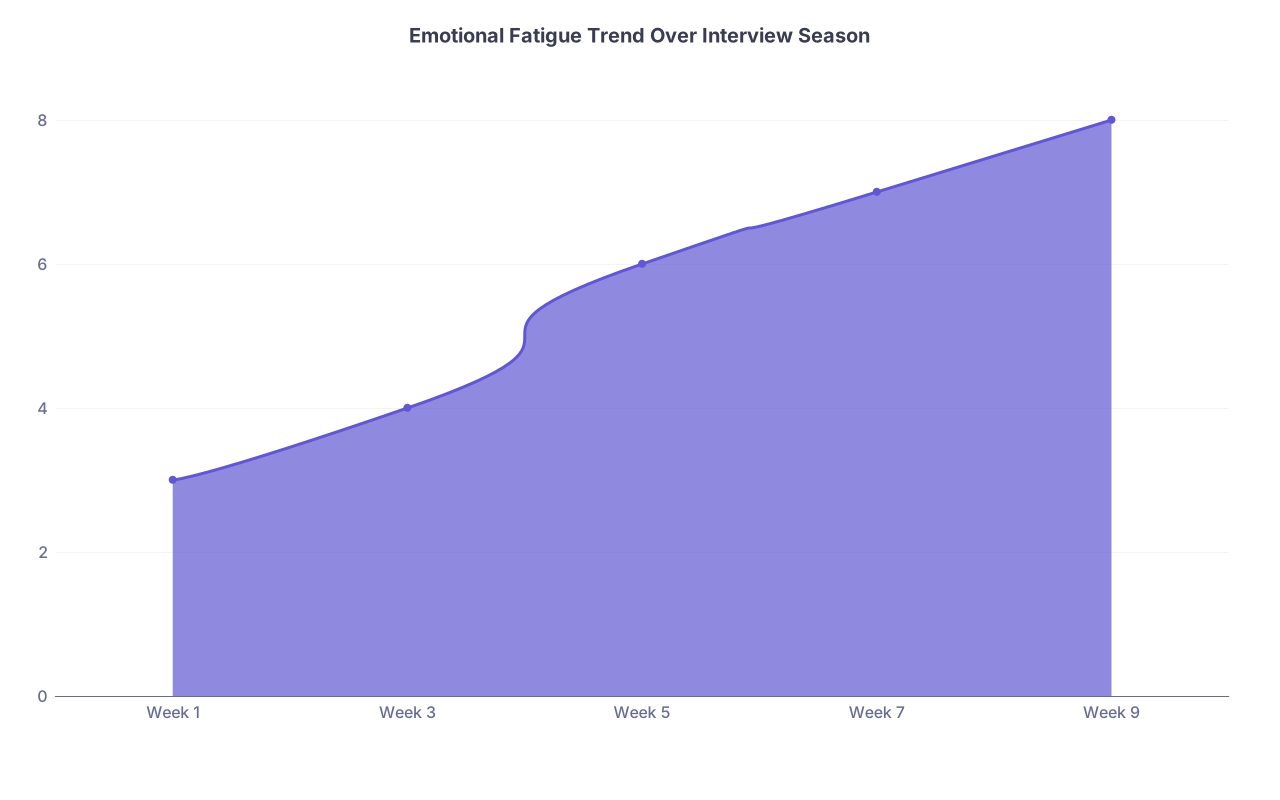
| Category | Value |
|---|---|
| Week 1 | 3 |
| Week 3 | 4 |
| Week 5 | 6 |
| Week 7 | 7 |
| Week 9 | 8 |
The worst emotional outcomes happen not because people feel bad. They happen because people ignore feeling bad for eight straight weeks.
Special Scenarios That Spike Emotional Exhaustion
1. The “Bad Interview” You Cannot Stop Thinking About
Guardrail procedure:
- Give yourself a strict 15-minute rant window with a trusted person or in a journal.
- Capture the data:
- What exactly went wrong?
- Is there anything to improve (content, tech, timing) for next time?
- Extract one lesson you will test in the next interview.
- Then, every time your brain replays it, you respond with:
- “We already processed this. The only job now is the next rep.”
You are allowed to feel disappointed. You are not allowed to let one program poison the next five.
2. Prelim / Backup Specialty Uncertainty
Double-application seasons are emotionally brutal because they double the indecision.
Your guardrail here:
- One pre-decided rule for which interviews you prioritize if dates conflict:
- Example: “Categorical IM > TY > Prelim medicine,” or “Primary specialty > backup unless the primary is community program I know I would never rank high.”
- Written ranking of categories before real interviews begin:
- Academic vs community,
- Geography,
- Fit factors (teaching culture, schedule, case mix).
Then when conflicts come, you follow the rule, not the fear-of-missing-out voice.
After the Last Interview: Controlled Decompression
The temptation after your final interview is to collapse completely or obsess about rank lists.
At this point you should plan a 2–5 day decompression window.
- One day of full rest (yes, actually do nothing meaningful).
- One day of non-medical social time or hobby.
- Then, a structured 2–3 hours to:
- Review all your debrief notes,
- Star the programs that clearly rose to the top or bottom,
- Delete any “I hate myself for what I said here” noise.
Then stop. Let things settle for a week before building your final rank list.

Practical Daily Checklist During Peak Season
On any interview or travel day, your emotional-guardrail checklist is short:
- Did I:
- Sleep at least 6 hours last night?
- Eat something real before noon?
- Move my body for at least 10 minutes?
- Have 5–10 minutes with no screens?
- Capture 3–5 bullet-point notes about today’s program?
If you hit 0–1 of these on multiple days, your system is failing. Do not wait for a total breakdown to correct course.
FAQ (Exactly 4 Questions)
1. How many interviews is “enough” so I can safely start declining without panicking?
It depends on specialty competitiveness and your application strength, but the pattern is consistent: most solid applicants overshoot. For a moderately competitive specialty, 12–15 interviews is usually more than adequate; match data backs this up year after year. Beyond that number, each extra interview adds far more emotional cost than match benefit. Once you have crossed that threshold and your mentor or advisor agrees your list is balanced, you can and should start declining lower-priority programs, especially if they would break your weekly guardrails.
2. What if my school or peers make me feel guilty for cancelling an interview?
Guilt is not a good strategic advisor. Programs over-invite because they expect cancellations; they will be fine. Your responsibility is not to maximize every possible opportunity at the cost of your mental health and performance. Your responsibility is to show up as a functional human at the interviews that actually matter for your career and well-being. A brief, polite cancellation email sent with reasonable notice is professional. Destroying yourself to attend every single invitation is not professionalism; it is poor self-management.
3. How do I handle interview season if I am already dealing with anxiety or depression?
You do not “white-knuckle” this. You front-load supports. That means: inform your therapist or primary care clinician that interview season is coming and schedule more regular check-ins; tell 1–2 trusted people specifically what warning signs they should watch for in you (withdrawal, irritability, insomnia, etc.); and lower your maximums (interviews per week, consecutive high-output days) compared with classmates. You are not weaker for doing this—you are more realistic. Match programs want you as a functioning resident, not as someone who burned out proving they could “push through” everything.
4. What is one concrete guardrail I can set today that will make the biggest impact?
Decide and write down your maximum interviews per week and your protected half-day of rest each week. Those two decisions force every other piece of the system to adjust: how you accept invites, how you schedule travel, and how much you sacrifice your own life for yet another “maybe” program. If you only do that right now—set those two guardrails clearly—you will already be ahead of most MS4s who drift into interview season with nothing but good intentions.
Open your calendar right now and block your weekly protected half-day from October through February. Treat it as sacred. Every other interview-season decision will be easier once that one guardrail is in place.