
It’s Sunday night. Again.
Your exam is in… what… 12 days? And this past week was a dumpster fire.
You got sick. Or call ran late. Or family drama exploded. Or you just… couldn’t. Whatever the reason, the net result is the same: your “perfectly planned” schedule is wrecked, Anki is screaming at you with 800+ reviews, you haven’t touched two lectures, and suddenly you’re googling “how much can I fall behind before I fail out of med school.”
So now the question running circles in your head is:
How bad is this really? Like objectively. Did I just tank the block? Step? My entire career?
Let me be blunt: one bad week feels catastrophic. It almost never is.
But we need to talk about when it’s actually bad, when it’s just your anxiety lying to you, and what you do next without making it worse.
First: Is This a Bad Week or a Pattern?
There’s a huge difference between:
- “This week was trash because life set itself on fire”
vs. - “This is what the last 5–6 weeks have looked like.”
But when you’re in panic mode, your brain doesn’t care about nuance. It jumps straight to: “I’m behind, therefore I’m doomed.”
Let’s get a little more objective for a second.
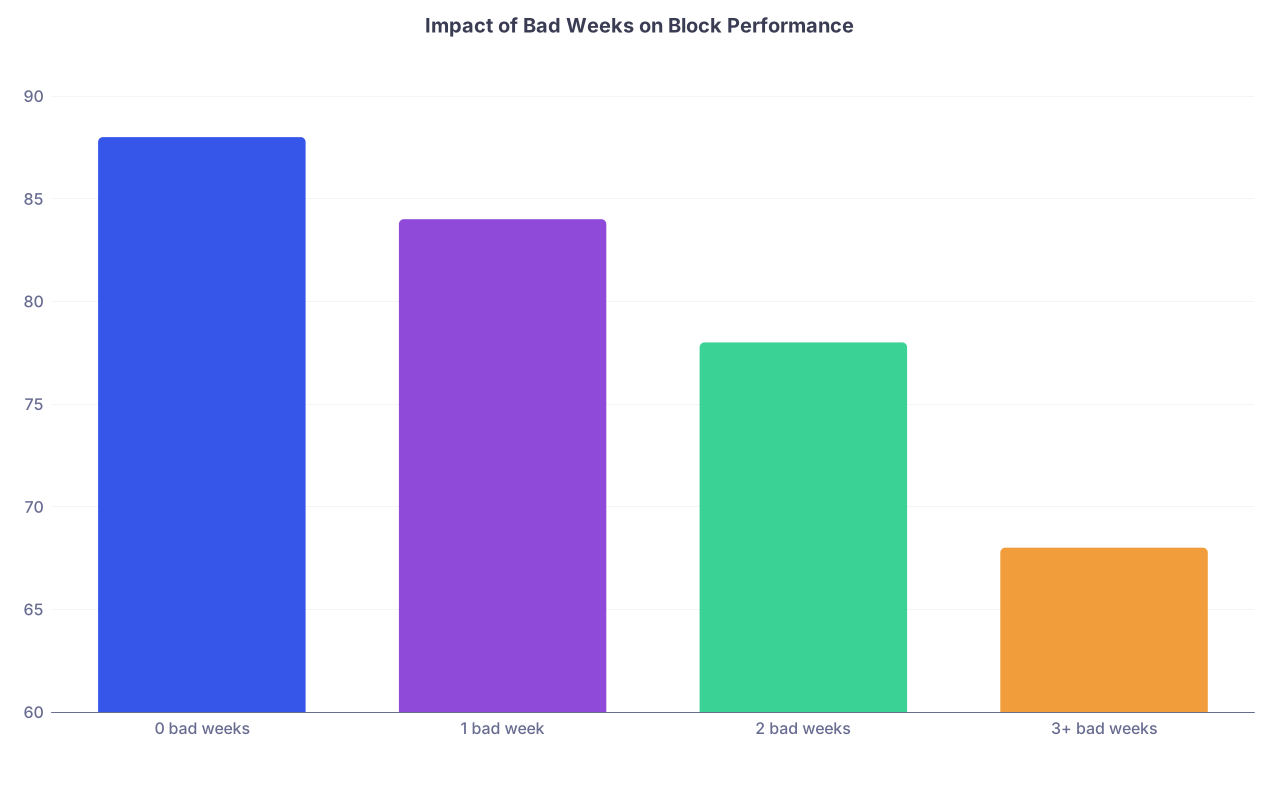
| Category | Value |
|---|---|
| 0 bad weeks | 88 |
| 1 bad week | 84 |
| 2 bad weeks | 78 |
| 3+ bad weeks | 68 |
I’ve watched students do this for years. Roughly:
- One bad week in a 6–8 week block? Annoying, stressful, but usually survivable.
- Two bad weeks? You start feeling it. You probably need to cut content and be strategic.
- Three or more bad weeks? Yeah, now we’re talking about real risk unless you correct hard.
So the first question isn’t “Did I ruin everything?”
It’s “Is this one bad week in an otherwise decent stretch, or is this the latest chapter in a long slow trainwreck?”
If it’s one week: you’re probably okay, even if it doesn’t feel like it.
If it’s a pattern: then the bad week is a symptom, not the root problem.
Either way, you don’t solve it by spiraling in your head.
How Far Behind Are You Actually?
Right now your brain is yelling “I’m so behind” like it’s a specific diagnosis. It’s not. It’s a vibe. And vibes are useless for planning.
You need numbers.
Do this on paper or in a doc. Not in your head. Your head is hostile territory right now.
List what slipped this week:
- How many lectures/videos?
- How many Anki reviews?
- How many new cards you planned but didn’t learn?
- Any practice questions you skipped?
Put real numbers to it.
Not “a ton,” not “everything.” Actual counts.Look at remaining time before the exam.
Days left. Hours you can realistically study each day if you’re not superhuman.
Now compare: “workload to catch up” vs “hours remaining.”
This is where a lot of people realize something important:
They’re not actually as behind as they feel.
Or they are behind, but not in a “catastrophic failure” way. More like “I can’t do my cute ideal plan anymore, now I need a gritty, stripped-down version.”
Here’s a simple example.
| Item | Planned | Done | Left |
|---|---|---|---|
| Lectures | 40 | 30 | 10 |
| Anki reviews | 1200 | 800 | 400 |
| New Anki cards | 400 | 250 | 150 |
| Practice questions | 200 | 120 | 80 |
You look at that and your brain screams. But if you have 10 days left, that “10 lectures, 400 reviews, 150 new cards, 80 questions” can be restructured. It’s not fun. But it’s not the end.
If you find your numbers truly don’t fit into the remaining time even if you trim and focus, then we’re in damage-control-and-triage territory. Still not doom. Just uncomfortable decisions.
The Real Danger Isn’t the Bad Week. It’s What You Do Next.
I’ve seen people survive brutal weeks — funerals, breakups, COVID, car accidents — and still pass comfortably.
I’ve also seen people have one mediocre week… and then mess themselves up by reacting badly.
The real traps:
All-or-nothing thinking.
“I’m behind so there’s no point in reviewing this week’s stuff well, I’ll just sort of skim and pray.”
That’s how you end up both behind and shaky on what you did cover.Magical future planning.
“I’ll just do double next week.” No, you won’t. You’re not suddenly becoming a robot with no sleep, no fatigue, and no life.Overcorrecting with punishment.
“I screwed up so I’ll study 16 hours a day now, no breaks, no meals unless I’m watching Pathoma while eating.” You last 2–3 days, crash, and now you’re more behind and burnt out.Avoidance disguised as “planning.”
Endlessly tweaking your schedule, color-coding tasks, watching “how I study 12 hours a day in med school” videos on YouTube… instead of just opening today’s work and starting.
The worst-case scenario path isn’t: bad week → automatic failure.
It’s: bad week → panic → self-sabotage → another bad week → now we have a problem.
Interrupt that chain here.
What Actually Matters Academically After a Bad Week
This is the piece no one says clearly: you’re not graded on how pretty your study plan looks. You’re graded on exam performance.
So the core question is: What gives me the highest score from this point forward?
Not: “How do I flirt with the fantasy of catching up on 100% of my original plan?”
Here’s how I’d mentally rank priorities, especially if you’re behind:
High-yield topics > touching everything.
On a systems block? Cardio, pulm, renal will almost always pay more dividends than rare diseases near the end of the syllabus. It feels wrong to “ignore” parts, but panic-studying all content equally is how you end up knowing nothing well.Practice questions + solid review beat endless passive content.
One focused block of 20–40 questions, reviewed properly, is more valuable than 3 hours of half-distracted lecture-watching while doomscrolling.Core spaced repetition (even if imperfect) > heroic cram then forget.
If your Anki is a disaster, you might need to:- Suspend truly low-yield decks
- Reset due dates on older, less relevant stuff
- Focus on current block + high-yield foundational decks (like pharm or micro)
Sleep is not optional if you’re behind.
Everyone tries this: “I’ll just shave 2–3 hours off sleep to catch up.” For 1 night, fine. For a week? Your recall, focus, and morale fall apart. You “gain” time but lose high-quality learning.
Here’s how study hours vs. sleep tends to work in reality, not fantasy:
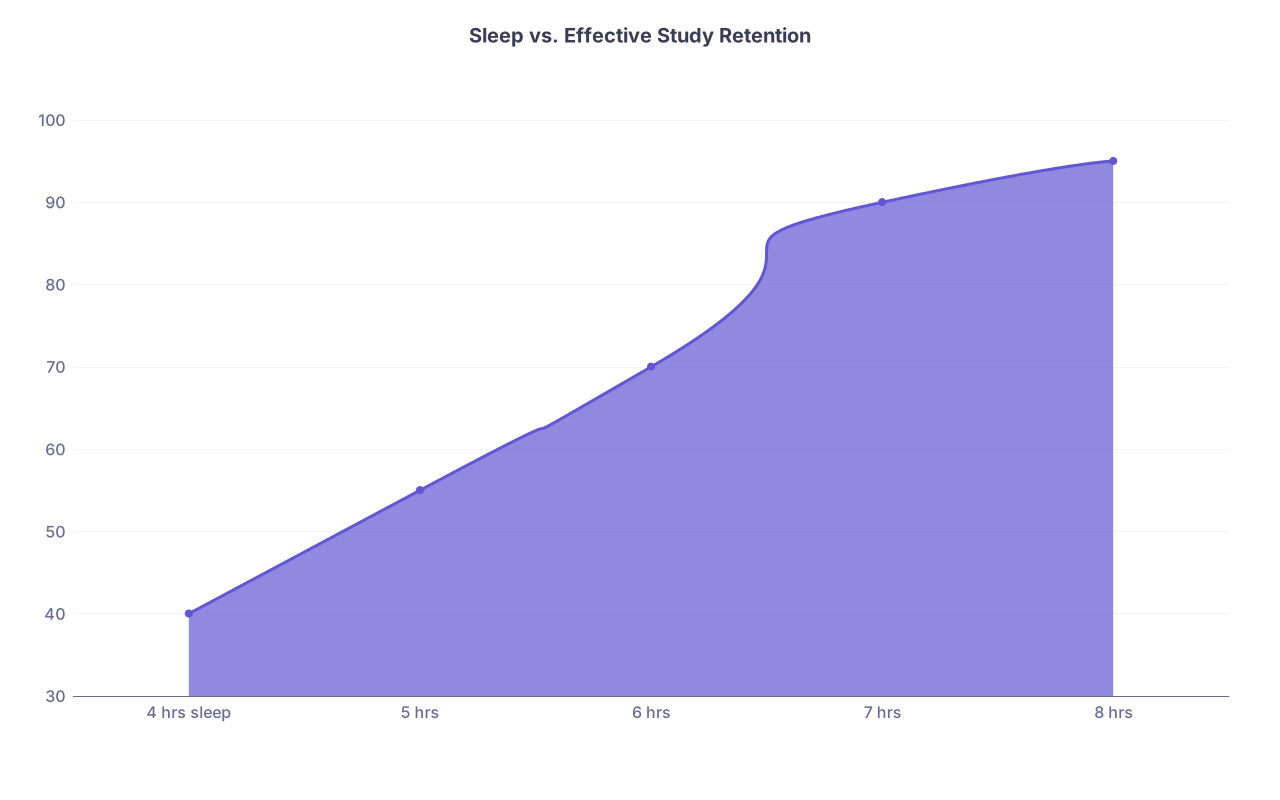
| Category | Value |
|---|---|
| 4 hrs sleep | 40 |
| 5 hrs | 55 |
| 6 hrs | 70 |
| 7 hrs | 90 |
| 8 hrs | 95 |
People who consistently sleep 4–5 hours don’t “gain” study time. They trade it for lower-yield, hazy work. So now you’re behind and inefficient.
Emotionally: This Feels Way Worse Than It Is
Let’s talk about the mental piece, because honestly, that’s probably what’s destroying you more than the missed lectures.
Your internal soundtrack right now probably sounds something like this:
- “Everyone else is on track but me.”
- “This is med school, I can’t afford to fall behind. Real doctors don’t do this.”
- “If I can’t even handle this block, how am I going to survive residency?”
- “This is who I really am: lazy, disorganized, not cut out for this.”
I’m going to say something you might not like but need:
You’re not special. In the best way.
Everyone falls behind.
Everyone has a bad week.
Everyone has a moment where they think, “Maybe I just faked my way here and now it’s catching up.”
What no one advertises on Instagram: the people at the top of your class? They’ve had trash weeks too. They’ve turned off their alarms. They’ve cried over Anki. They’ve stared at First Aid pages and retained none of it.
The difference isn’t “they never fell” — it’s that they didn’t decide the fall was their true identity.
I’ve watched students get 250+ on Step 2 after entire months of inconsistent studying because they course-corrected and stopped letting their worst week define them.
Med school exaggerates everything. A 3–4 day slump becomes “I’m fundamentally broken.”
Try to notice that distortion for what it is: brain static, not fact.
A Simple, Not-Perfect, 3-Day Reset Plan
You don’t fix a bad week in one heroic day. You stabilize first. Then you rebuild.
Here’s a simple framework I’d push someone toward when they’re spiraling:
Day 1 – Stabilize and Trim
Morning:
- Accept that the original perfect plan is dead. Mourn it if you must. Then open a clean page.
- List what’s left (lectures, Anki, questions) with real numbers.
Afternoon:
- Ruthlessly trim:
- Drop or defer obvious low-yield content.
- Consolidate similar tasks (“combine two light lectures and treat as one”).
- Cap your Anki load (for example, today: max 300 reviews, even if you have 900 due).
Evening:
- Do one reasonable, winnable study block (e.g., 20–30 questions + review). End the day with a small win, not an all-nighter trying to erase the past.
Day 2 – Prove You Can Still Execute
Morning:
- Start with Anki or questions — something active, not passive.
- Aim for 2–3 high-focus blocks of 60–90 minutes.
Afternoon:
- Tackle the highest-yield lectures/content you skipped. Don’t get cute. Go for probability: cardio, pulm, renal, micro, pharm — whatever is most tested for your current block.
Evening:
- Re-check your adjusted plan. Are you still wildly overbooked? Trim again. Be brutal, not aspirational.
Day 3 – Rebuild Confidence With Consistency
This day is less about catching up fully, more about proving to yourself: “I can show up again.”
- Wake up at a consistent time.
- Do 2–3 question blocks over the day, review carefully.
- Keep Anki moving at a sustainable rate.
- Get 7 hours of sleep minimum.
By the end of 3 days, one of two things should happen:
- You realize: “Okay, this is tight but doable if I stay disciplined.”
- You realize: “Even trimmed, this block is going to be rough. I may need to accept not crushing this exam, just passing it, and focusing long-term (Step, shelf, etc.).”
Both are survivable. Even option 2.
Here’s a very rough “stress vs. time left” arc that a lot of students follow:
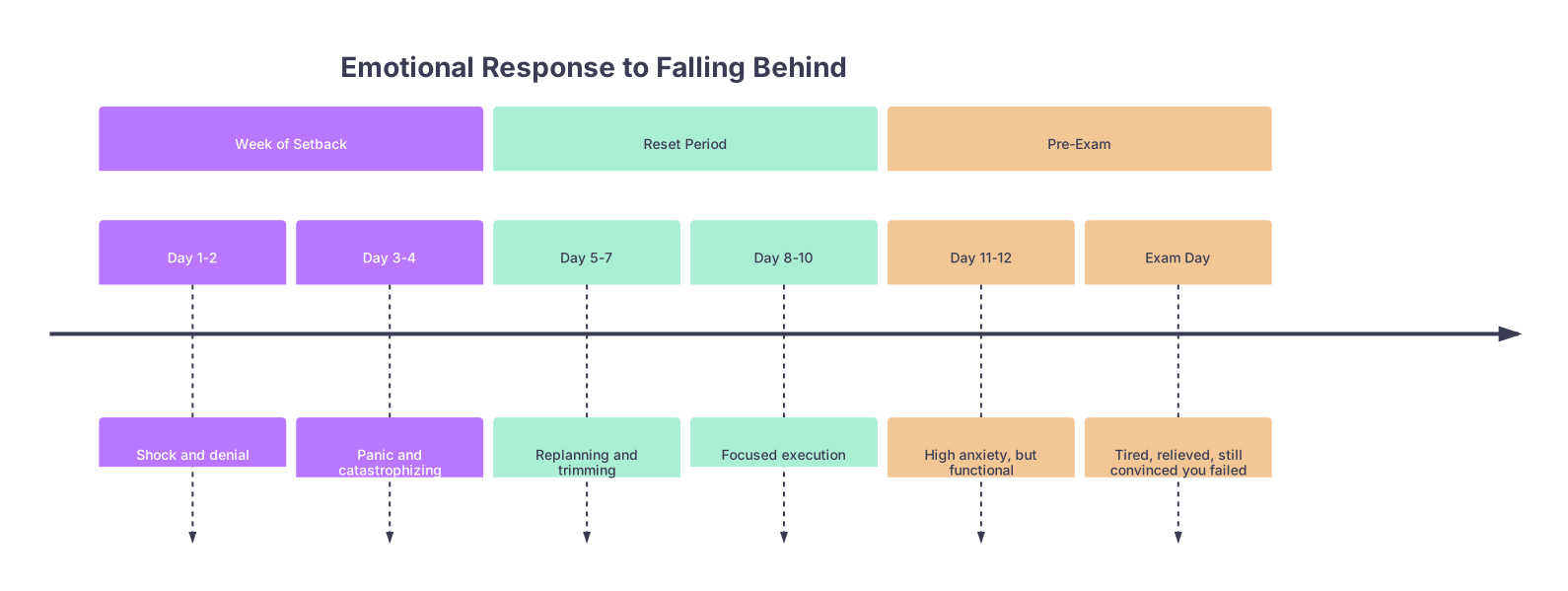
| Period | Event |
|---|---|
| Week of Setback - Day 1-2 | Shock and denial |
| Week of Setback - Day 3-4 | Panic and catastrophizing |
| Reset Period - Day 5-7 | Replanning and trimming |
| Reset Period - Day 8-10 | Focused execution |
| Pre-Exam - Day 11-12 | High anxiety, but functional |
| Pre-Exam - Exam Day | Tired, relieved, still convinced you failed |
You’re somewhere in that middle band. It feels permanent. It’s not.
When Is It Actually Time to Worry?
Not everything is “you’re fine, don’t worry.” Sometimes the anxiety is tapping on something real.
You should pay more serious attention and maybe loop in help (advisor, dean, mental health) if:
- This is your third or fourth block in a row where “a bad week” tanked your plan.
- You’re failing or barely passing multiple exams.
- Your “bad week” is actually depression, burnout, or anxiety so loud you literally can’t start tasks.
- You’re using unhealthy coping (no eating, or binging, or substances, or self-harm ideation).
- You’re having thoughts like “If I fail this exam I don’t want to be here anymore.”
That’s not a “you’re lazy” issue. That’s a “your brain is on fire and you need real support” issue.
I’ve seen people quietly crash alone for way too long because they were terrified to admit things weren’t okay. Guess what happened when they finally went to student health / therapy / an advisor?
They got accommodations, extensions, part-time plans, tutoring, actual structure.
Not immediate expulsion. Not “you don’t belong here.”
If your bad week was just life chaos — okay. Fix the plan.
If your bad week was your brain waving a red flag — don’t ignore it.
FAQ: The Stuff You’re Probably Still Spiraling About
1. Can one bad week actually make me fail a block?
Yes, if you were already barely keeping up or if you respond to it by mentally checking out. But if your baseline has been decently steady and you aggressively adjust your plan, one bad week on its own usually doesn’t sink you. The danger is turning that week into three weeks of “screw it, I already ruined everything.”
2. Should I try to 100% catch up, or cut content?
If truly everything barely fits time-wise and you’re willing to do a tough but realistic schedule, you can attempt full catch-up. But if you’re having to imagine superhuman productivity or sacrificing all sleep to “touch everything,” you’re better off cutting. Focus on high-yield topics, active learning (questions, Anki), and doing some things well rather than everything badly.
3. My Anki is destroyed — 1000+ reviews due. What do I do?
You do NOT brute-force all 1000 in one miserable day. Cap your daily reviews at a realistic number (maybe 250–350), prioritize current block tags and high-yield decks, and consider temporarily suspending or postponing older, low-yield cards. Getting back to a sustainable, daily Anki habit beats a one-day “Anki marathon” followed by 4 days of avoidance.
4. Is it better to pull an all-nighter to catch up or accept some gaps?
Almost always: accept some gaps. One last-ditch late night before an exam can be defensible. But routinely sacrificing sleep to “fix” a bad week backfires. Sleep-deprived you learns slower, forgets faster, and spirals harder. The exam tests what you truly know, not how long you stared at a screen half-awake.
5. Everyone else seems fine. Am I the only one falling behind?
No. You’re just the only one watching your own messy reality in 4K. Most people are posting their “good” days, not their panic in the library bathroom or the day they watched zero lectures and binged Netflix. I’ve seen honor students with color-coded notes cry over being behind. You’re not the exception. You’re just honest with yourself.
6. How do I stop this from happening every block?
You can’t prevent any bad week — life will always throw random punches. But you can build buffers: planning lighter days, front-loading studying in the first week or two, having a default “minimum habit” (like 100–150 Anki reviews + 20 questions) that you do even on chaos days. And if this is happening every single block despite effort, that’s your sign to talk to someone about workload, mental health, or study strategy — not your sign that you’re a failure.
Two things to walk away with:
- One bad week feels enormous in med school. It almost never defines your entire block or career unless you let it snowball.
- You can’t rewrite last week, but you have total control over whether this is the start of a downward spiral… or just a rough chapter you absorbed, adjusted for, and moved past.