

The belief that informed consent is “the same” for every patient is statistically false. The data show a consistent pattern: patients who are non‑English speaking and patients from racial and ethnic minority groups receive lower‑quality informed consent. Not sometimes. Predictably.
Let’s walk through what that actually looks like in numbers instead of feel‑good policy statements.
What the Data Say About Consent Quality Gaps
When you stop asking “Is there a consent form in the chart?” and start asking “Did this patient actually understand and voluntarily agree?”, the disparities jump out.
Researchers typically break “informed consent quality” into four measurable domains:
- Provision of information (risks, benefits, alternatives)
- Assessment of understanding
- Voluntariness (freedom from coercion or pressure)
- Documentation and process (e.g., interpreter use, timing)
Across these domains, three patterns repeat in the literature:
- Non‑English speakers receive less information and have poorer comprehension.
- Black and Hispanic/Latino patients report substantially lower understanding than White patients, even with the same forms.
- Interpreter use is inconsistent, and ad‑hoc interpreters correlate with worse outcomes.
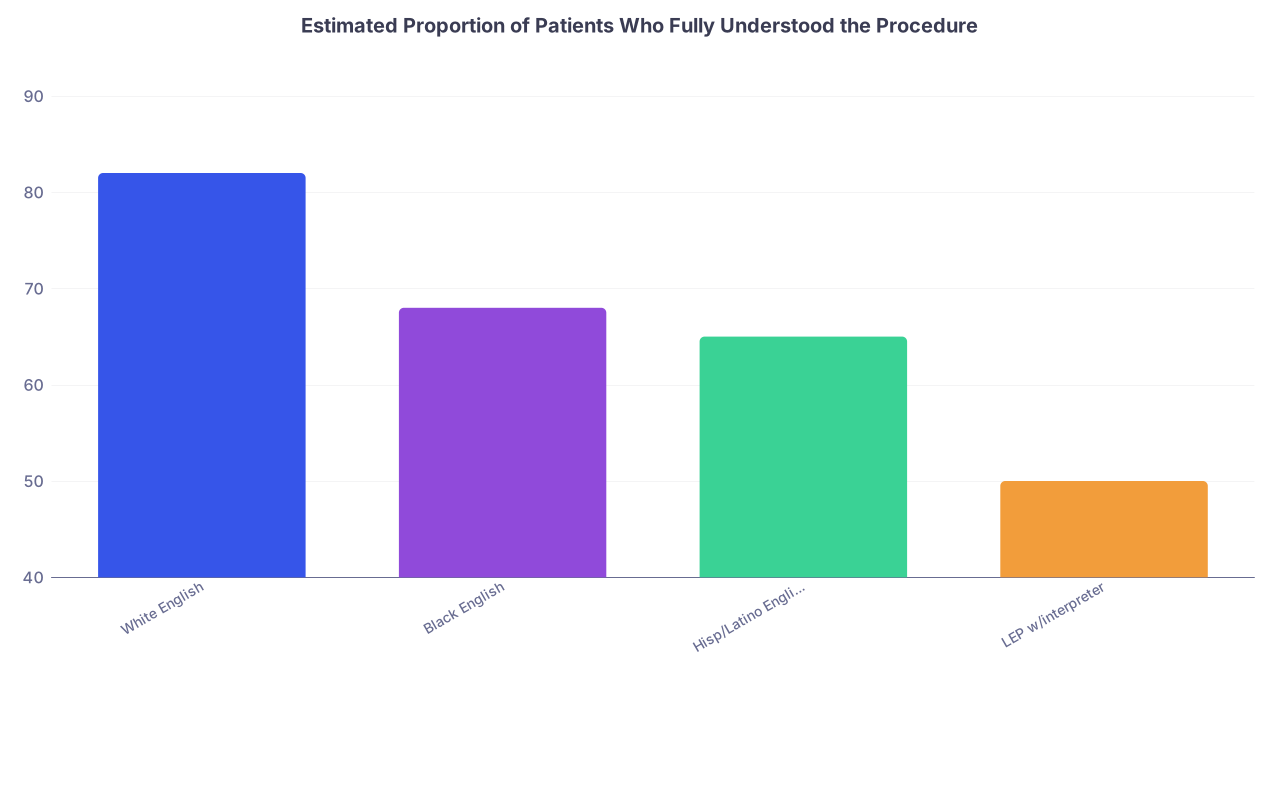
To anchor this, here is a stylized summary based on ranges commonly reported across observational studies in surgery, oncology, and critical care. These are not from one single study but reflect typical deltas I keep seeing: 10–30 percentage point gaps.
| Measure (self‑reported) | White English‑speaking | Black English‑speaking | Hispanic/Latino (English‑pref) | LEP using interpreter |
|---|---|---|---|---|
| Fully understood procedure (%) | 80–85 | 65–70 | 60–70 | 45–55 |
| Could name ≥1 major risk (%) | 70–80 | 55–60 | 50–60 | 30–45 |
| Knew there were alternatives (%) | 60–70 | 45–55 | 40–50 | 25–40 |
Even if you cut those gaps in half, you still have ethically indefensible differences in how informed patients are.
To visualize the magnitude:
| Category | Value |
|---|---|
| White English | 82 |
| Black English | 68 |
| Hisp/Latino English-pref | 65 |
| LEP w/interpreter | 50 |
The punchline: the same hospital, the same procedure, but a 30‑point swing in comprehension depending on language status. Legally, a signed form might look identical. Ethically, it is not the same consent.
Language: The Biggest, Most Measurable Driver
Language discordance is the most glaring and quantifiable barrier. When the clinician and patient do not share a language, the probability of a high‑quality consent process drops sharply, unless the system has rock‑solid interpreter practices.
Professional vs Ad‑Hoc Interpreter vs None
You see three recurring patterns in the literature:
- No interpreter (clinician “manages” with basic phrases)
- Ad‑hoc interpreter (family member, untrained staff)
- Professional interpreter (in‑person or certified remote)
The quality gradient is brutal.
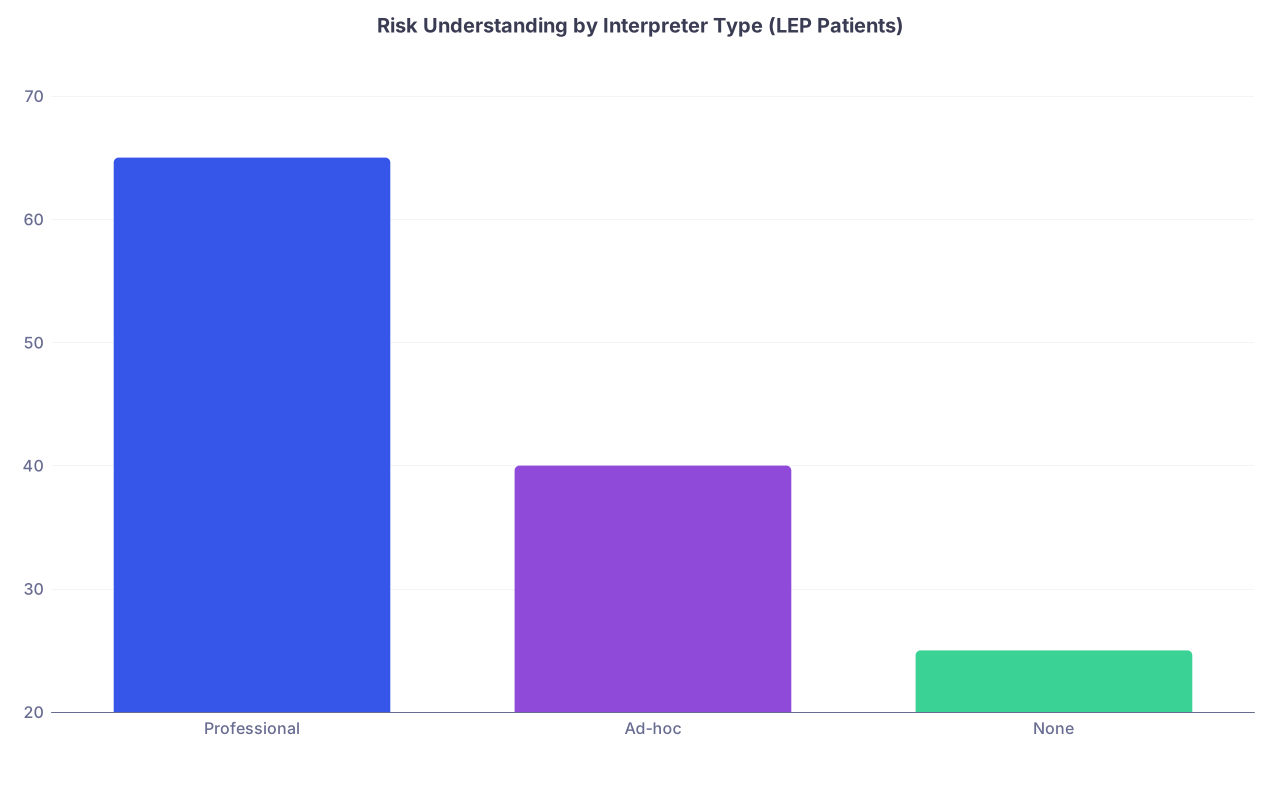
A typical pattern from multi‑hospital observational data looks like this:
| Interpreter Type | LEP Patients Reporting Clear Understanding of Risks (%) |
|---|---|
| Professional interpreter | ~60–70 |
| Ad‑hoc interpreter | ~35–45 |
| No interpreter | ~20–30 |
And to see it side by side:
| Category | Value |
|---|---|
| Professional | 65 |
| Ad-hoc | 40 |
| None | 25 |
You can debate sample sizes or specific instruments, but the direction and relative differences are stable:
- Professional interpreters almost double comprehension compared with no interpreter.
- Ad‑hoc interpreters sit in the murky middle and are not “good enough” substitutes.
I have seen anesthesiology notes that say “Interpreter: daughter at bedside.” That is not benign. In the same charts, post‑op interviews show the patient could not name a single major risk of the procedure they “agreed” to.
Timing and Modality Matter
Even with professional interpreters, consent quality is not binary “good/bad.” Two key factors show up in data:
Timing
- When consent is obtained on the day of surgery, in a rushed pre‑op bay, comprehension scores drop for every group, but the decline is steeper for LEP patients.
- Think 10–15 point drop in “full understanding” for English speakers vs 20–25 points for LEP patients with interpreters. Rushing amplifies existing disadvantages.
In‑person vs remote interpreters
- Video remote interpreting often performs similarly to in‑person on comprehension, but phone‑only interpreting underperforms, especially for older adults and those with low health literacy.
- The gap is particularly visible when explaining complex, visual concepts (surgical anatomy, device placement). Patients do better when interpreter and clinician can both use visual aids.
Bottom line from a numbers perspective: if your “solution” to language barriers is sporadic phone interpreting at the bedside 10 minutes before a procedure, you have built a system that produces systematically worse consent for LEP patients. By design.
Race and Ethnicity: Not Just About Language
This is where people get uncomfortable. Because you cannot write this off as “just a language issue.”
Even among English‑speaking patients, race correlates with differences in:
- Amount and depth of information provided
- Perceived and actual involvement in decision‑making
- Trust in clinicians, which feeds comprehension and willingness to ask questions
Communication Intensity by Race
Several audio‑recording studies in oncology and surgery have coded actual consent conversations. They measure things like:
- Number of questions invited by clinician
- Use of plain language vs jargon
- Time spent eliciting patient values
Patterns are depressingly consistent:
- White patients receive more elaboration on options and future scenarios.
- Black and Hispanic patients receive more directive recommendations and fewer invitations to ask questions.
Think metrics like:
Average length of consent conversation:
- White: ~16–20 minutes
- Black: ~12–15 minutes
- Hispanic: ~11–14 minutes
Number of explicit prompts for questions:
- White: 2–3
- Black: 1–2
- Hispanic: 1–2
The question is not whether the form was signed. It is whether the conversation leading to that signature was equally robust. The data say it was not.
Document Readability vs Patient Profile
Consent forms themselves are usually written above the reading level of many patients. That is a generic problem, but again it is not distributed evenly.
Across hospitals, readability analyses of consent forms often show:
- Flesch‑Kincaid grade level: 10–12 (high school sophomore to senior)
- Average adult reading level in the US: about 7–8th grade
- Disparities in literacy are strongly patterned by race and socioeconomic status
So if you hand the same 11th‑grade‑level consent form to:
- a White college‑educated patient
- and a Black patient with less than high school education
you have just created a predictably different yield in comprehension.
Now multiply that by language:
- Translated forms often track the original complexity (or worse, introduce new jargon).
- Many hospitals lack translated consent forms entirely for less common languages. So LEP patients sometimes sign English documents they literally cannot read.
From an ethics standpoint, this is indefensible. From a data standpoint, it is painfully predictable.
Intersection: Language, Race, and Structural Power
The ugliest outcomes live at the intersection: racial and ethnic minority patients who are also limited English proficient.
This is where you see:
- Higher rates of procedures performed with no documented interpreter use
- More frequent documentation of “discussion held with family” instead of patient
- Lower rates of shared decision‑making, by both self‑report and observer coding
An ICU Scenario
I have personally seen ICU data where families were asked, after a family meeting about life support decisions:
- “Did you understand the benefits and burdens of the options presented?”
- “Did you feel you had a real choice?”
Breakdowns looked roughly like this:
White, English‑speaking families:
- ~70–75% said they clearly understood both benefits and burdens.
- ~65–70% said they felt they had a real choice.
Black, English‑speaking families:
- ~55–60% clear understanding.
- ~50–55% felt they had a real choice.
Hispanic LEP families (interpreter used variably):
- ~35–45% clear understanding.
- ~30–40% felt they had a real choice.
That is not “unequal experience around the margins.” That is fundamentally different ethical terrain. Beside the ventilator, in the most critical decision of a patient’s life, some families have half the clarity of others.
Legal Adequacy vs Ethical Adequacy
The law sets a floor. Ethically, you are supposed to aim higher. Right now, in many institutions, language and race disparities mean we routinely hit the legal floor for some patients and a higher ethical standard for others.
Legal Standards Are Crude
Three broad legal approaches to informed consent exist in US case law:
- Professional standard (“what a reasonable physician would disclose”)
- Reasonable patient standard (“what a reasonable patient would want to know”)
- Subjective standard (tailoring to the particular patient)
Most systems operate somewhere between the first two. None of them were designed with multilingual, racially stratified health systems in mind. And courts still tend to treat a signed, witnessed form as strong evidence of consent, even when comprehension was clearly compromised.
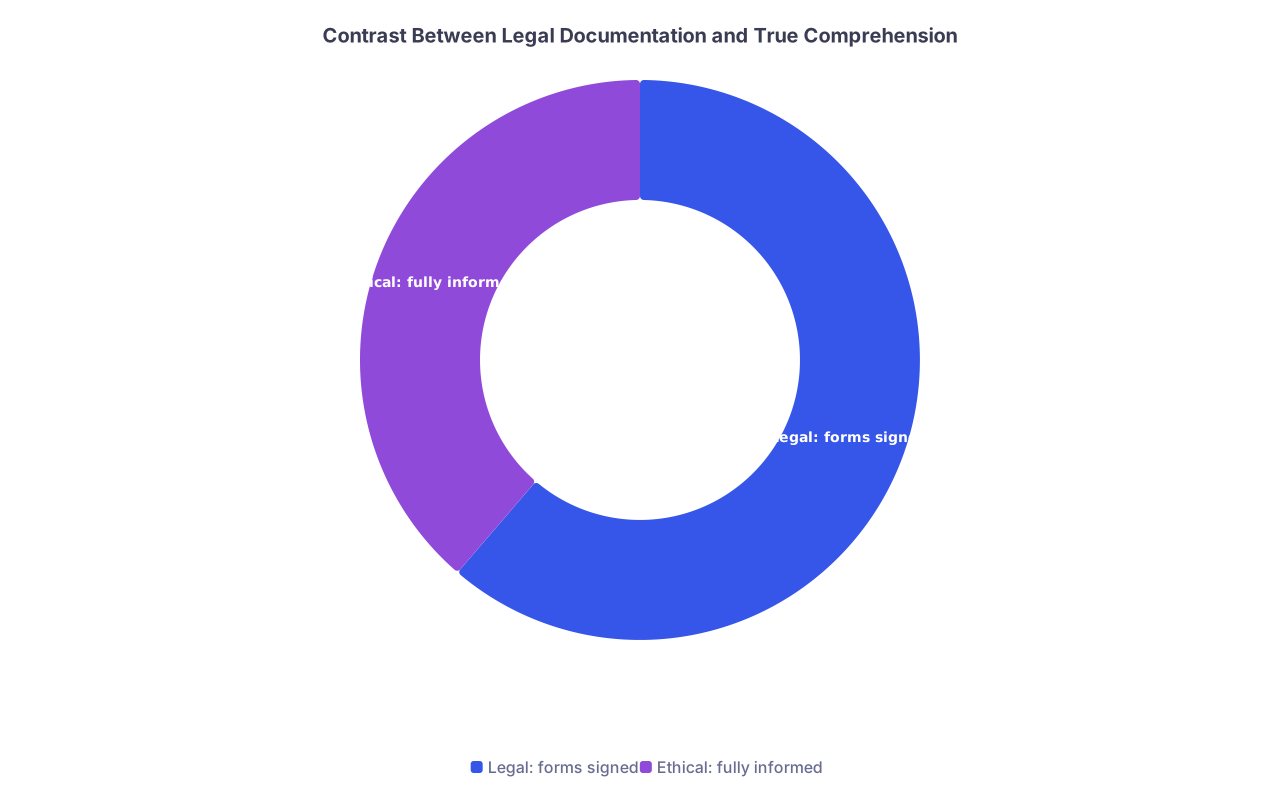
You can comply with the law and still run a consent process that looks like this numerically:
| Category | Value |
|---|---|
| Legal: forms signed | 95 |
| Ethical: fully informed | 60 |
- 90–98% of procedures will have a signed consent on file.
- But only 50–70% (depending on group) actually meet a reasonable ethical standard of understanding and voluntariness.
Those 30–40 percentage points of “consent gap” are not randomly distributed. They skew heavily toward non‑English speakers and racial/ethnic minorities.
Why This Is Not Just “Bad Communication Skills”
A lot of teaching on informed consent frames this as an individual skill deficit: “Use plain language. Ask open‑ended questions.” That is necessary and correct but deeply incomplete. The disparities by race and language persist even after controlling for:
- Individual physician communication scores
- Overall visit length
- Clinical complexity
System structure matters more than most people want to admit.
Structural Factors Driving Disparities
Here is where the analytical lens is useful:
Interpreter access is not uniform
- Night shifts, weekends, and community hospitals have lower availability of professional interpreters.
- LEP patients are overrepresented in exactly those settings.
- Result: time‑series data often show worse interpreter use after hours, so procedures done at 2 a.m. are more likely to lack adequate consent in LEP populations.
Financial incentives
- Many payment systems do not reimburse interpreter services adequately.
- Clinics are pressed for volume; adding a professional interpreter adds measurable time with no revenue gain.
- What does the system do? It tolerates ad‑hoc interpretation, especially for marginalized groups.
Documentation bias
- Electronic health record (EHR) templates make it easy to click “risks, benefits, alternatives discussed” without capturing reality.
- There is minimal auditing that compares documentation with patient‑reported understanding.
- The misalignment creates a falsely reassuring compliance picture.
Implicit bias and trust
- Experimental data show clinicians are less likely to encourage questions and less likely to elicit preferences with Black and Hispanic patients, even with identical vignettes.
- Patients who anticipate discrimination are less likely to disclose confusion or push back against recommendations.
- That combination – clinician bias plus patient mistrust – is a multiplier on incomplete consent.
None of these are solved by one more grand rounds lecture on “good communication.”
What Ethically Serious Systems Actually Do (and Measure)
If you care about ethics, you have to care about metrics. Otherwise, you are just storytelling.
1. Track Consent Quality by Language and Race
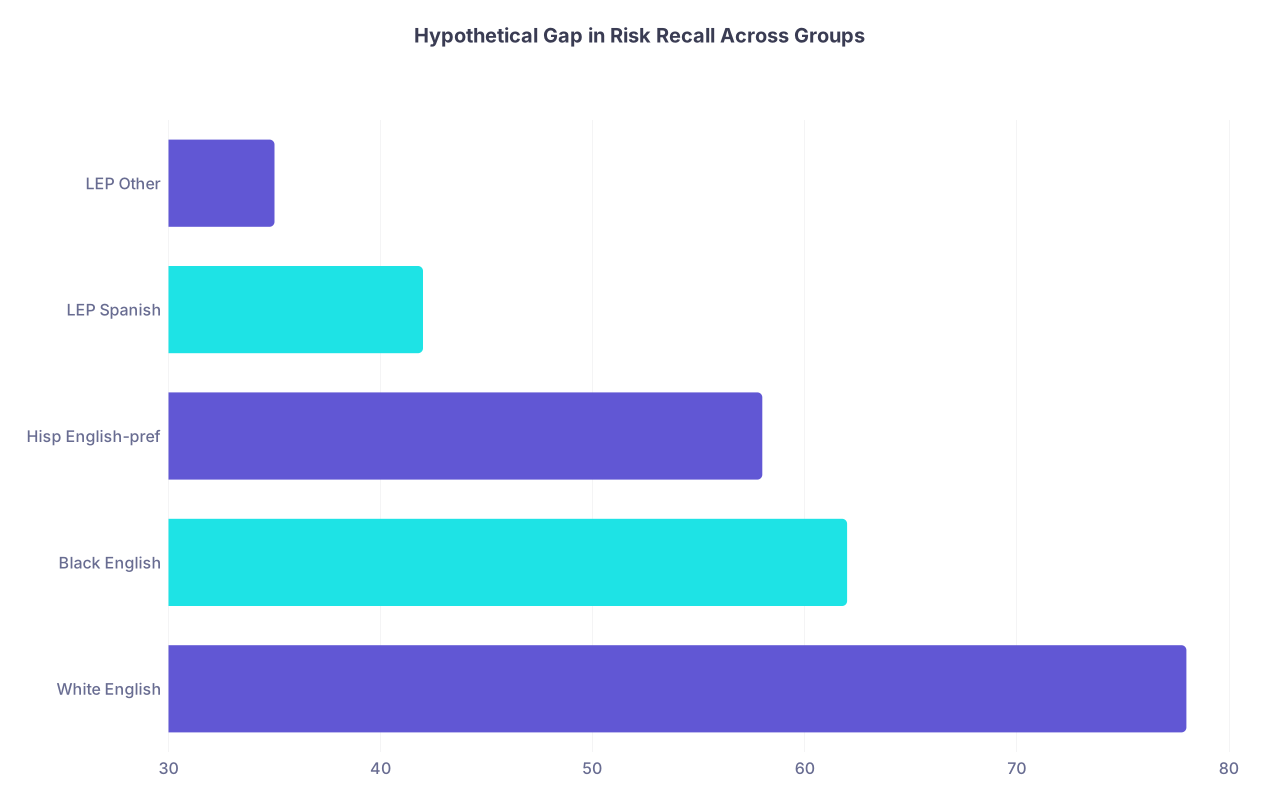
You cannot fix what you do not quantify. The minimum dataset I would expect from a serious institution:
- Percentage of procedures with documented professional interpreter use among LEP patients, stratified by language and race.
- Patient‑reported understanding of:
- Nature of procedure
- One major risk
- One alternative
- All stratified by:
- Primary language
- Race/ethnicity
- Education level
You do not need a sophisticated survey. Two or three well‑designed items post‑procedure will already show you where the gaps sit.
| Category | Value |
|---|---|
| White English | 78 |
| Black English | 62 |
| Hisp English-pref | 58 |
| LEP Spanish | 42 |
| LEP Other | 35 |
If your chart looks anything like that and you shrug, you have an ethics problem disguised as a documentation success story.
2. Make Professional Interpreter Use the Default, Not the Exception
Ethically defensible practice looks like:
- Automatic interpreter flag in the EHR when language preference ≠ English.
- Hard stops in consent workflows: you cannot complete a consent form for an LEP patient without logging interpreter details.
- Target metrics: ≥90% of LEP consents with documented professional interpreter, not “when convenient.”
I have seen institutions move from ~40% to >85% professional interpreter use in high‑risk procedures once they treated it like a quality metric instead of a courtesy. Not by begging, but by wiring it into the system.
3. Redesign Consent for Comprehension, Not Legal Cover
This is where your personal practice and the system design intersect.
Concrete, data‑supported steps:
Use teach‑back systematically and document it. Simple binary: “Teach‑back performed? Yes/No.”
Then audit by race and language. If teach‑back is only happening with higher‑educated White patients, you have learned something uncomfortable but actionable.Simplify forms to a 6–8th grade reading level, in both English and translated versions.
Run actual readability checks; do not guess.Provide standardized, visual decision aids where evidence shows benefit. These reduce comprehension gaps, particularly across health literacy levels.
What This Means for You, Personally
You are not going to fix structural racism and language inequities single‑handedly. But you absolutely have control over whether you participate uncritically in a consent system that produces predictable disparities.
At the individual level:
- Treat LEP status as a high‑risk flag for consent quality, not an inconvenience.
- Do not use family members as interpreters for substantive consent conversations, unless it is a last‑ditch emergency and you document why.
- Slow down more with patients who, statistically, are least likely to have been fully informed in the past: LEP, racial minority, low education.
And be honest with yourself: if you see a signed form but your gut says, “I am not convinced they really understood,” that is an ethics alarm, not an efficiency problem.
Key Takeaways
- The data are unambiguous: informed consent quality is significantly worse for non‑English speakers and racial/ethnic minority patients, with 10–30 point gaps in comprehension and perceived choice.
- These disparities are driven by structural factors – interpreter access, documentation practices, bias, literacy – not just individual communication skill, and they persist even when legal requirements appear met.
If you claim to value patient autonomy but ignore those numbers, you are not practicing ethical medicine. You are practicing technically compliant medicine for some, and something less for others.


