
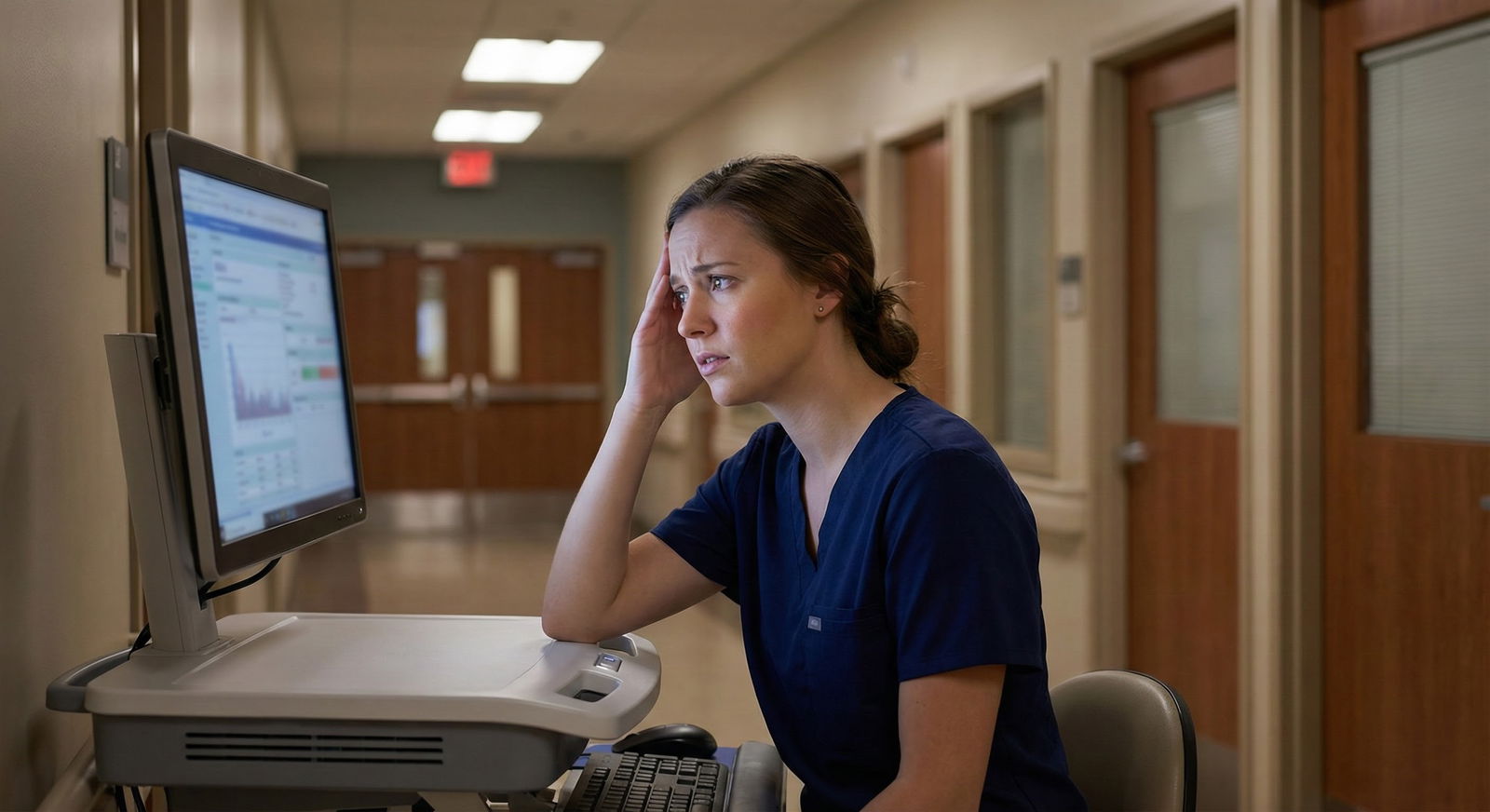
The biggest ethical mistake future clinicians make is waiting until they’re “100% sure” before acting.
The ugly truth about child abuse suspicions
You’re asking the question almost every medically minded person is secretly terrified to ask:
What if I suspect child abuse…but I’m not totally sure? What if I’m wrong? What if I ruin a family? What if I overreact and everyone thinks I’m dramatic and incompetent?
Here’s the uncomfortable reality that no one states clearly enough: in child abuse, you almost never get to be 100% sure at the moment when action matters most. The moment where you decide to speak up or stay quiet usually happens in a gray zone. A bruise that “could be” from a fall. A story that doesn’t quite add up. A kid who flinches when a parent raises their hand too fast.
And yet the law and medical ethics are very blunt on this point:
You are not required to be sure. You’re required to be suspicious.
Most states literally phrase it like this: you must report when you have “reasonable suspicion” or “reasonable cause to believe” that a child may be abused or neglected. Not proof. Not certainty. Not a full narrative with all the plot holes filled in.
Reasonable suspicion. That’s it.
I know what your brain is doing, because I’ve watched this play out with students and even residents:
- “What if I’m overreacting?”
- “What if I ruin their life and I’m wrong?”
- “What if my attending thinks I’m ridiculous?”
- “What if the parents find out it was me and they come after me?”
- “What if CPS does nothing and I made a big deal for no reason?”
But here’s the darker “what if” that doesn’t go away:
What if I say nothing, and the kid goes home and it’s worse next time?
Once you’ve seen that play out in real life even once, your entire risk calculus changes.
What the law actually expects from you (and what it doesn’t)
Let’s strip away the vague advice and talk specifics.
In the US, most healthcare workers are “mandated reporters.” That includes physicians, residents, med students in many settings, nurses, social workers, etc. Even if you’re “just a student,” if you’re in a clinical environment, your school and the hospital almost certainly treat you as a mandated reporter through policy, even if your state law is fuzzy about students.
Mandated reporting laws are built on one core idea:
You report suspicion; the state investigates.
Your job:
- Notice concerning signs.
- Honestly assess whether they could reasonably indicate abuse/neglect.
- Report if the answer is “maybe” or “I’m not comfortable with this.”
- Document what you saw/heard.
Your job is not:
- Prove abuse.
- Interrogate the child.
- Confront the caregiver aggressively.
- Decide whether the child should be removed from the home.
- “Solve” the whole situation alone.
That’s investigative work. That’s for child protective services (CPS), social workers, specialized child abuse teams, not you.
Here’s the twist most anxious applicants don’t realize:
You’re actually safer legally if you report a suspicion in good faith and it turns out to be nothing, than if you ignore a suspicion that later turns out to be real.
Most state laws give you immunity from civil and often criminal liability for good‑faith reports, even if they end up unfounded. But a failure to report when you reasonably should have known? That can become a legal and professional nightmare.
| Action | Legal Risk to You | Risk to Child |
|---|---|---|
| Report, suspicion OK | Very low | Lower |
| Report, suspicion wrong | Very low | Short-term disruption |
| Don’t report, abuse real | High | High, ongoing |
| Don’t report, suspicion wrong | Low | None |
So yeah, you might annoy someone. You might trigger an investigation that ends up closing with “unsubstantiated.” But that’s not a failure. That’s literally how the system is supposed to work.
“But I’m not sure” – decoding that feeling
When you say “I’m not 100% sure,” what you usually mean is one of three things:
- There’s some evidence but not enough for you to feel confident.
- You’re emotionally uncomfortable with the consequences of being wrong.
- You’re afraid of how others (attendings, team, family) will react.
All three are human. None of them change the ethical standard.
If you have no concern, you don’t even ask this question. You don’t sit there replaying the encounter in your head hours later. The fact you’re ruminating already tells me something: your gut noticed something your rational brain is trying to argue away.
Common “gray zone” flags I’ve watched trainees talk themselves out of:
- Patterned bruises in non-ambulatory infants, explained away as “they bump into things.”
- Delayed presentation for serious injuries (“he fell down the stairs three days ago, we thought he was okay”).
- Stories that change slightly every time the caregiver retells them.
- A kid who looks to the parent in fear before answering even basic questions.
- Caregivers who are oddly detached or over-the-top performative.
None of these guarantee abuse. But a few together? That’s textbook “reasonable suspicion.”
Here’s a mental shortcut I like:
If I’d feel guilty reading about this kid in the news tomorrow with a worse injury or death, knowing I stayed quiet, that’s enough to report.
What you actually do in the moment
This is the part nobody rehearses with you, so when it happens you freeze.
Imagine: you’re a student on pediatrics. A 4-year-old comes in with a spiral fracture of the humerus. The parent says, “He fell off the couch.” The mechanism doesn’t fit the injury. Your resident’s busy. Your attending looks rushed.
Your brain starts screaming, This doesn’t feel right, and also, I’m just a student, I’m probably overthinking this.
Here’s the order of operations that actually works in real clinical life:
Notice and name it to yourself.
“I’m concerned about possible non-accidental trauma.” Say it in your head in clear words. No euphemisms like “it’s kind of weird.” Concrete language helps you act.Tell someone up the chain.
Resident. Fellow. Attending. Charge nurse. Social worker. It doesn’t matter who first, but you don’t keep it to yourself.
Literally: “I’m concerned about possible abuse or non-accidental trauma because [specific thing]. Can we talk about whether this should be reported?”Ask about institutional procedure.
Most hospitals have a clear policy: who calls CPS, how to document, when to involve social work or a child protection team. As a student, you typically don’t call CPS alone, but you are absolutely allowed to raise the alarm.Document objectively.
Not “I think the parent is lying.” Instead: “Caregiver reports child fell from couch approximately 2 feet; injury is [describe]. Story changed from initial description where caregiver stated child ‘slipped off while sleeping.’”Let the team and CPS do their jobs.
You don’t have to orchestrate the whole thing. You triggered the process. That’s your ethical requirement.

| Step | Description |
|---|---|
| Step 1 | Notice concerning sign |
| Step 2 | Tell resident or attending |
| Step 3 | Discuss suspicion level |
| Step 4 | Follow policy and report |
| Step 5 | Document and monitor |
| Step 6 | CPS evaluates |
| Step 7 | Name concern to yourself |
| Step 8 | Reasonable suspicion? |
If your resident or attending dismisses your concern out of hand—“Nah, this is fine, don’t worry about it”—and your gut is still churning, you are allowed to go higher or sideways: talk to another attending, a nurse who’s been around, the hospital social worker, or your clerkship director.
Will that feel uncomfortable and risky as a student? Yes. But if you’re asking this question now, that probably means you’re the kind of person who would rather be uncomfortable than complicit, if you fast‑forwarded ten years and looked back.
The fear of being wrong and “ruining a family”
Let’s drag this fear into the light.
The nightmare scenario in your head probably looks like this: You report. CPS storms in, rips a sobbing child from loving parents based on your flimsy suspicion, and years later everyone learns there was no abuse and it was all your fault.
Reality is slower, messier, and frankly, less dramatic.
Most CPS responses, especially in borderline cases, are:
- An investigation and home visit.
- Interviews with the child and caregivers.
- Review of medical and school records.
- Sometimes voluntary services or monitoring.
Kids are not instantly removed on the basis of a single vague phone call from a student. There are thresholds. Judges. Documentation. Patterns over time.
On the flip side, I’ve seen the other nightmare:
A kid with “suspicious but not definite” injuries, brushed off as “probably fine,” returns weeks or months later with catastrophic harm. Then suddenly everyone cares whether the earlier team documented, reported, followed policy.
Between those two nightmares, I know which one I’d rather own.
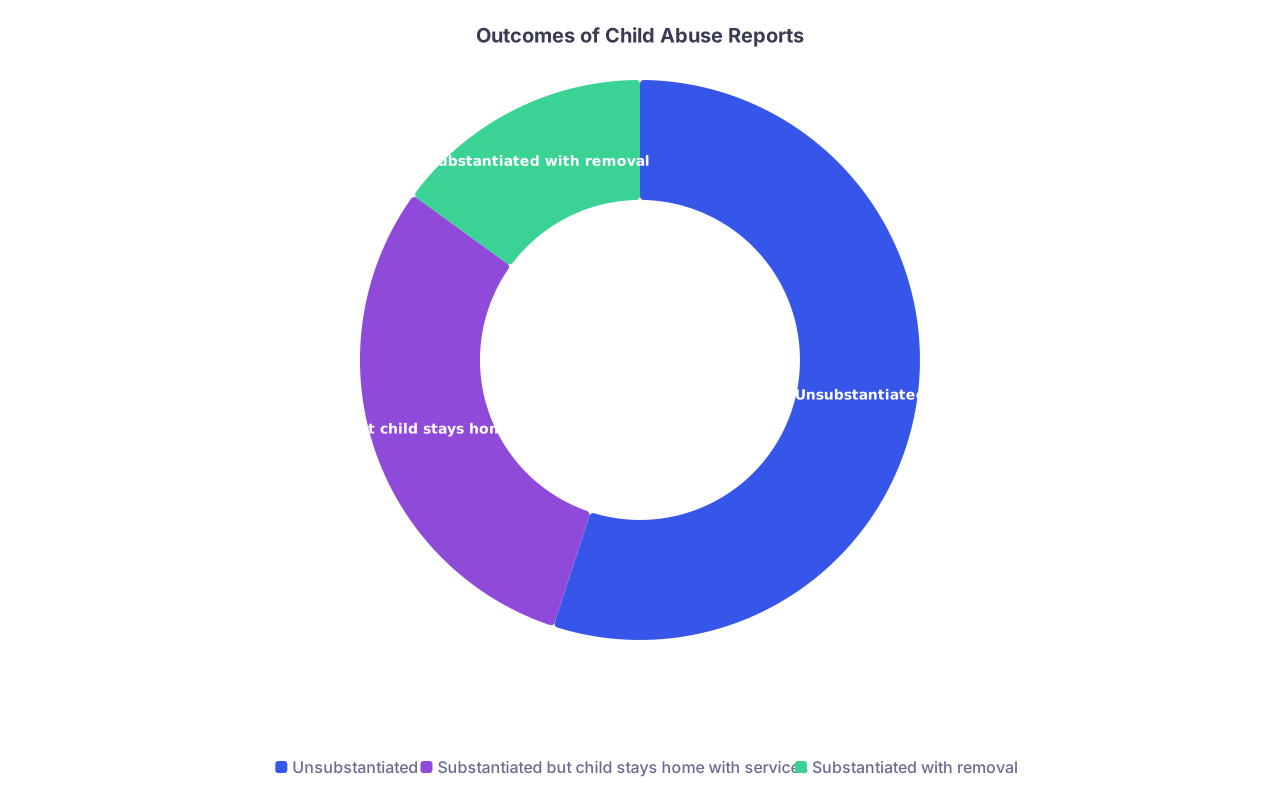
| Category | Value |
|---|---|
| Unsubstantiated | 55 |
| Substantiated but child stays home with services | 30 |
| Substantiated with removal | 15 |
Numbers like these (rough ballpark, varies by jurisdiction) show most reports don’t lead to removal, and even substantiated cases often aim to keep families together with support.
You’re not “ruining” a family by raising a concern. You’re creating a paper trail and triggering professional oversight.
What if I’m in training and everyone outranks me?
This is the most realistic fear as a pre‑med, med student, or even early resident: power dynamics.
You’re thinking:
- “Who am I to question this attending who’s been a pediatrician for 20 years?”
- “What if they label me as the ‘dramatic’ student who overcalls everything?”
- “What if this affects my evaluation?”
Blunt answer: sometimes you will annoy people by being the person who says, “I’m worried this could be abuse.”
But here’s the quiet truth I’ve heard from more than one attending later:
They remember the students who were brave enough to say the uncomfortable thing. The ones who were more afraid for the patient than for their eval.
If you phrase it like this, you’ll usually be okay:
“I might be overthinking this, but I’d rather be wrong on the side of safety. I’m concerned about possible abuse because [X, Y, Z]. Can we talk about whether this meets the threshold for reporting?”
That shows:
- You respect their experience.
- You’re aware you could be mistaken.
- You’re prioritizing the child.
If, after that, you still feel dismissed and uneasy, talk to someone outside the direct power line—clerkship director, program director, ethics office, risk management, or the hospital child advocacy team if one exists.
Is that scary as hell? Yes. But you will sleep better years from now knowing you at least tried.
Emotional fallout: how to live with the “what ifs”
Nobody tells you about the emotional hangover that comes after you make a report—or after you decide not to.
You will replay the case. You’ll check the chart weeks later. You’ll wonder if you did too much or not enough. Sometimes you’ll never know what happened to that kid.
Here’s what helps:
Write down what you knew at the time and why it reasonably rose to suspicion. If you can look at that and say, “Any reasonably cautious clinician would have worried,” then you did your job. Even if the investigation goes nowhere. Even if the family is furious. Even if your resident sighs and rolls their eyes.
Or, if you didn’t report and the case still haunts you, let it change you. Let it tighten your threshold for action next time. That’s not failure, that’s growth.
You’re not going to come out of medicine without scars. This is one of the first.
FAQs
1. What exactly counts as “reasonable suspicion” for child abuse?
Reasonable suspicion isn’t some mystical legal standard. Practically, it means: based on what you see, hear, and know, a typical clinician in your role would think, “This could be abuse or neglect.” Not “this is abuse”—just “could be.”
Things that often push a situation into “reasonable suspicion”:
- Serious injuries with explanations that don’t fit the developmental stage (a 3‑month‑old “ran into a table”).
- Multiple injuries in various stages of healing.
- Patterned marks (belt, cord, handprint).
- Caregiver behavior that’s aggressively evasive, inconsistent, or oddly unconcerned about a serious injury.
- Reports from the child about being hit, burned, or hurt, even if vague.
One flag alone might not convince you. Several together usually should.
2. Can I get in legal trouble for reporting if I turn out to be wrong?
If you report in good faith—meaning you honestly believed there might be abuse based on what you saw—then in almost every US jurisdiction, you’re protected by law. That protection typically covers civil and sometimes criminal liability.
You get into legal danger not for being wrong, but for:
- Intentionally making a false report with malicious intent, or
- Failing to report when you had clear reasonable suspicion, especially if harm occurs later.
So your actual legal risk is usually higher if you don’t report a solid concern.
3. As a student, do I personally have to call CPS, or is telling my attending enough?
Policy varies. Many hospitals prefer that the attending, resident, or social worker make the official report, often with you present or documented as the observer. But ethically, “I told someone” only covers you if that person actually follows through.
Safer pattern:
- Tell your supervising resident/attending clearly: “I think this might meet criteria for mandatory reporting.”
- Ask explicitly: “Who is going to make the report, and can I be involved so I learn the process?”
- If you’re brushed off and still worried, escalate: social work, another attending, clerkship director.
Your obligation is to make sure the concern doesn’t die quietly at the level of a casual comment.
4. What if the family finds out it was me and gets angry or threatening?
This is a real fear, and it happens sometimes. Technically, reports are usually confidential, but in practice, families often figure out who raised the concern based on who asked questions or documented certain things.
If you’re in a hospital or clinic, you are not alone. If there’s any hint of anger or threat:
- Tell your attending and charge nurse immediately.
- Involve security if you feel unsafe.
- Make sure the incident is documented.
It’s not your job to handle an enraged caregiver solo. And if your fear of confrontation is the only thing stopping you from reporting, remember this: you have an entire institution behind you, and that institution is a lot more comfortable defending a trainee who reported in good faith than one who stayed silent.
Years from now, you won’t remember every normal pediatric visit or every perfectly happy family you saw. You will remember the handful of kids who made your stomach drop and forced you to choose between your comfort and their safety.
You don’t get certainty in those moments. You get a choice about what kind of clinician you’re going to be.


