

What do you actually say when a coughing, miserable patient looks you in the eye and says, “I need antibiotics,” and you know they absolutely do not?
You’re not dealing with an abstract ethics question here. You’re tired, you’re behind, and this is the fourth viral URI of the morning. But this one is angry, or scared, or both, and they’re already hinting they’ll “go somewhere else and get what they need” if you say no.
Here’s how you handle that situation without:
- Caving and prescribing something inappropriate
- Escalating conflict
- Burning your own emotional energy to the ground
And yes, we’ll talk about what to do when they threaten complaints, bad reviews, or “calling my lawyer.”
Step 1: Mentally anchor your non‑negotiables
Before you open your mouth, you need an internal rule set. If you improvise from scratch every time, you will eventually cave. Usually on a Friday afternoon.
Your internal non‑negotiables should look something like this:
- I do not prescribe antibiotics when they are clinically unnecessary.
- I do not lie in the chart.
- I do not “document around” reality to justify inappropriate treatment.
Why so rigid? Because your license is on the line, not theirs. And the ethical principle is straightforward:
Prescribing an unnecessary antibiotic is not “being nice,” it’s causing harm.
Harm to them (side effects, C. diff, allergic reactions, resistance for their future self). Harm to everyone else (community resistance, medicalization of minor illness). This isn’t fuzzy ethics. You’re either practicing medicine or doing customer service cosplay with a prescription pad.
Remind yourself of that before you start the conversation. It makes it easier to tolerate the awkwardness to come.
Step 2: Get very clear on the actual clinical question
First, you need to be sure you’re not the one cutting corners.
Quick mental checklist:
- Did I take a real history, or did I assume “just another viral”?
- Did I actually examine them? (Throat, lungs, ears, vitals as appropriate.)
- Did I ask the right “red flag” questions? (SOB, chest pain, focal symptoms, immunocompromise, recent hospital stays, etc.)
You want to be rock‑solid that antibiotics are unnecessary. Because once you say, “You don’t need antibiotics,” and later realize you missed a pneumonia, that’s a problem.
If you’re in a rush, resist the temptation to shortcut your evaluation and jump straight to the antibiotic debate. That’s how you get in trouble both medically and ethically.
Step 3: Use a clear, confident opening statement
Don’t argue first. State your medical judgment clearly.
Something like:
- “I’ve reviewed your symptoms, examined you, and checked your vitals. This is a viral infection. Antibiotics will not help it get better and can actually cause harm.”
- “You’re sick and miserable, but this isn’t a bacterial infection. Antibiotics won’t speed your recovery and I’d be putting you at risk for side effects.”
Notice what I did not say:
“I don’t think you need antibiotics” or “It seems like this is viral.”
Hedging invites them to negotiate your opinion. Say it the same way you’d say “Your blood pressure today is 128/76.” Calm. Clear. Non‑apologetic.
Then stop talking. Let them react.
Step 4: Understand what they’re really asking for
Most patients aren’t actually asking for “amoxicillin 875 mg BID x 7 days.” They’re asking for:
- Relief (I feel awful; do something)
- Validation (Take me seriously; I’m not weak)
- Control (I don’t want to just wait and suffer)
- Safety (I’m scared this will turn into pneumonia / sepsis / something catastrophic)
If you only argue about antibiotics and ignore the underlying need, you’ll lose them.
So after your statement, say something like:
- “Tell me what you’re most worried about with this illness.”
- “What’s making you feel like you really need antibiotics today?”
Then shut up and listen. Two minutes of listening often calms 80% of the resistance.
You’ll hear versions of:
- “Last time they gave me a Z‑Pak and I got better in two days.”
- “I can’t miss work; I need to get over this.”
- “My [relative] got pneumonia from a ‘cold’ they didn’t treat.”
Now you know the real problem you need to address.
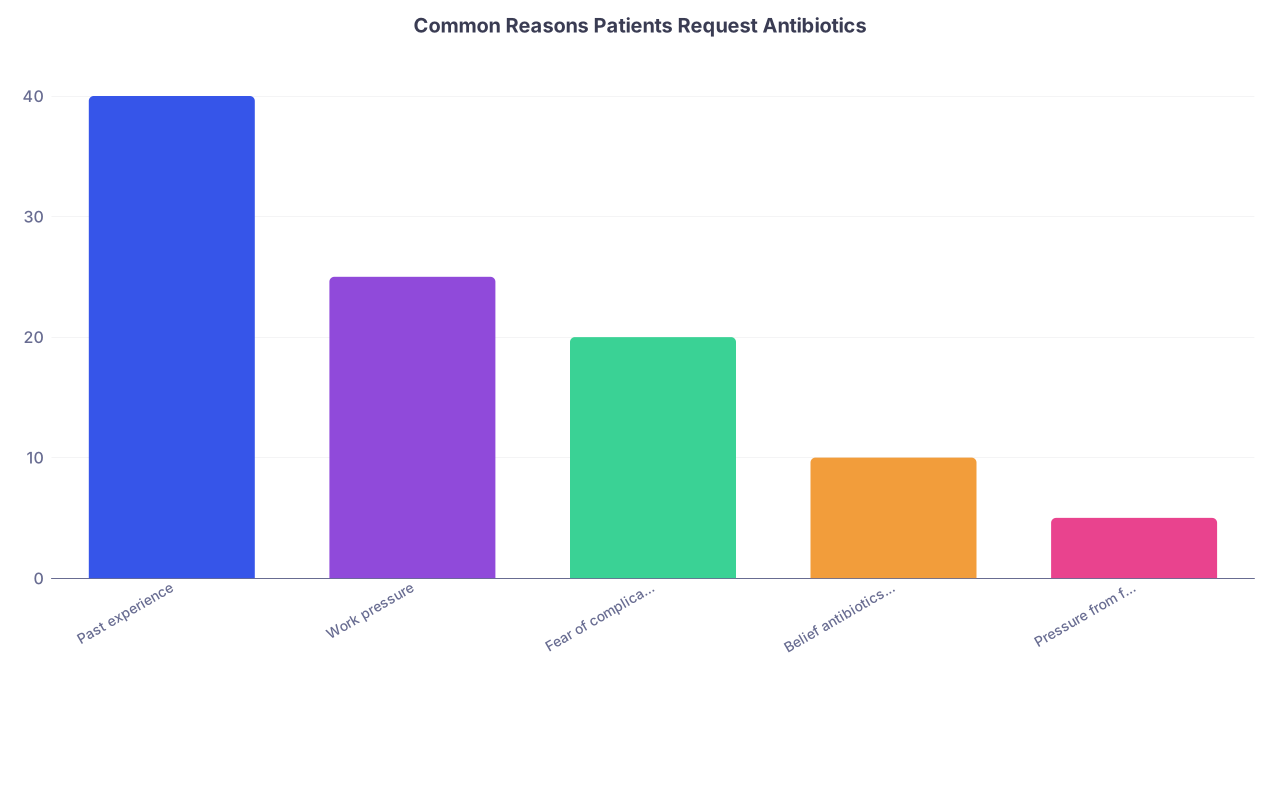
| Category | Value |
|---|---|
| Past experience | 40 |
| Work pressure | 25 |
| Fear of complications | 20 |
| Belief antibiotics = strong care | 10 |
| Pressure from family | 5 |
Step 5: Validate the suffering, then separate that from the antibiotic
You can absolutely be empathetic without giving them what they want.
Try a sequence like this:
Validate feeling
- “You are clearly feeling awful. You’re not overreacting.”
- “It makes total sense you’d want anything that might speed this up.”
Separate feeling from the antibiotic request
- “Wanting to feel better fast is 100% reasonable. The only problem is that antibiotics don’t do that for this kind of infection.”
Pivot to what you can do
- “Here’s what actually will help you over the next few days…”
In practice, that sounds like:
“You’re right to be frustrated. You’re coughing, not sleeping, and you’ve got to be at work. Anyone in your position would want a quick fix. The issue is that antibiotics only work against bacteria, and what you have is a viral infection. So if I give you antibiotics, I’m not helping you get better, I’m just giving you a chance at diarrhea, a rash, or worse. Let’s talk about what will actually help and what to watch for.”
You’ve acknowledged their misery. You’ve respected their reasoning. Now they’re more likely to hear you.
Step 6: Explain risk honestly and concretely (not vaguely)
“Antibiotic resistance” is abstract. Most people don’t care about some theoretical bacteria in 20 years. You have to bring it close.
Use specific, short, concrete examples:
- “Every time you take an antibiotic you don’t need, you train your bacteria to ignore it next time. So if you ever get a serious infection, we may not have a strong drug that works for you.”
- “We see people end up hospitalized with severe diarrhea from antibiotics they never needed. I’ve admitted those patients. It can be ugly.”
- “I’ve seen patients get life‑threatening allergic reactions to antibiotics. I’m not risking that for something that doesn’t help you.”
Pick one or two lines and say them plainly. Not like a lecture. Like a warning you’d give a friend.
What you’re doing here is rebalancing their mental equation:
Before: “Antibiotics might help, worst case they do nothing.”
After: “Antibiotics won’t help, and they absolutely might hurt.”

Step 7: Offer a concrete alternative plan, not just “watch and wait”
Patients hate “you just have to let it run its course” when that’s all they hear. It sounds like abandonment.
You need an actual plan. With steps.
Examples for a viral URI:
- Symptom control:
- “For the next 3–5 days, your main job is comfort. I’m recommending [specific OTC meds, dosing, timing] plus [humidifier / nasal saline / honey for cough if appropriate].”
- Course of illness expectation:
- “Day 3–5 is often the worst. If you’re not starting to improve at all by day 7, that’s when we worry about something else developing.”
- Clear red‑flag triggers:
- “Call or come back immediately if you get short of breath, chest pain, trouble keeping fluids down, or a fever over X that lasts more than Y days.”
Say it like you’re giving them a treatment plan, not a consolation prize.
You can also say:
“I’m not doing nothing. I’m choosing the safest, most effective treatment, which in your case does not include antibiotics.”
That sentence lands well. It reframes non‑prescribing as an active clinical decision, not laziness.
Step 8: Know how to respond to common pushbacks
Let’s go through the ones you will hear verbatim.
“Last time I got antibiotics, I got better right away.”
Your answer:
“I hear that a lot. What actually happens is most viral infections start to improve around day 3–5 on their own. If you took antibiotics during that time, it looks like they ‘fixed’ things, but they didn’t change the virus. If I thought there was a real chance antibiotics would help you today, I’d prescribe them. In your case, they won’t.”
If they push:
“I treat what I see in front of me today, not what someone else did before. Today this is viral, and antibiotics would be the wrong tool.”
“I can’t afford to be sick. Just give them to me.”
Answer:
“If I thought antibiotics would get you back to work faster, I’d be all over it. They don’t for this. What will help most is [sleep, hydration, symptom meds]. I can write a work note for X days and we can aim to get you functional with [meds] while your body clears this.”
If they escalate:
“I won’t prescribe a medication that’s not medically appropriate. What I can do is everything within my power to control your symptoms and support you getting back on your feet quickly.”
“Urgent care always gives them. Why won’t you?”
Answer:
“Different clinicians have different practice styles. My responsibility is to practice evidence‑based, safe medicine with your long‑term health in mind. That means not prescribing antibiotics when they won’t help and could hurt you. I’m not going to match someone else’s bad habit just to keep you happy in the moment.”
Harsh? Maybe. But true. You can soften the tone if needed.

Step 9: When they threaten complaints, bad reviews, or “I’ll go somewhere else”
This is where your ethical backbone gets tested.
Here’s the line to remember:
“You’re always free to get another opinion. My responsibility is to provide safe, appropriate care, and that does not include antibiotics today.”
If they say, “I’ll report you,” you say:
“You’re absolutely allowed to file a complaint if you feel you need to. My chart will reflect my medical findings and my reasoning, and I’m comfortable standing by that.”
Keep your voice calm and a little slower than usual. Do not get defensive. Do not argue about Yelp.
You’re not trying to win an argument; you’re protecting your license and your standards.
And yes, sometimes they leave angry. Let them. Losing the 5–10% of patients who only want a rubber stamp is better than corrupting your practice for them.
Step 10: Document like someone will read it in court
Any time there’s a conflict about antibiotics, assume someone may pull that chart later. Risk management 101.
Document:
- Your findings that support a viral/non‑bacterial diagnosis
- Key negatives (no SOB, lungs clear, afebrile or low‑grade only, etc.)
- That you discussed why antibiotics were not appropriate
- That you discussed risks of unnecessary antibiotics
- That you provided a symptomatic treatment plan and return precautions
- If they were upset or requested antibiotics explicitly, document that neutrally:
- “Patient requested antibiotics; discussed that antibiotics not indicated for suspected viral URI; patient expressed frustration, declined further questions.”
Do not write emotional commentary (“patient was rude, entitled”). It makes you look unprofessional if this ever comes up.
| Item to Document | Example Phrase Snippet |
|---|---|
| Clinical assessment | "Findings consistent with viral URI" |
| Key negatives | "No SOB, lungs clear, no focal signs" |
| Patient request | "Pt requested antibiotics" |
| Your explanation | "Discussed abx not indicated, risks" |
| Plan and precautions | "Symptomatic tx; strict return precautions" |
Step 11: Protect your own sanity and moral injury
Saying “no” all day is draining. If you’re not careful, you start to resent patients, or worse, you start giving in “just this once” to cope.
Some blunt realities:
- You will not convince everyone. That’s fine. Your job is to offer appropriate care, not win all debates.
- You will sometimes be rated poorly for doing the right thing. If your group leadership doesn’t understand that, that’s a leadership problem, not a you problem.
- You’re allowed to feel annoyed. What matters is how you act.
What helps:
- Script and rehearse 2–3 stock phrases so you’re not inventing language fresh when you’re tired.
- Debrief with a colleague after especially bad encounters. Everyone has the “guy who yelled at me for not giving Augmentin for allergies” story. Share it.
- Mentally reframe: “I protected that patient from harm today,” not “I argued with another person about Z‑Paks.”
If you feel yourself starting to prescribe inappropriately because “it’s easier,” that’s a red flag for burnout and moral injury. Pay attention to it. That’s not just an ethics issue; it’s a you‑might‑need‑help issue.

| Step | Description |
|---|---|
| Step 1 | Patient requests antibiotics |
| Step 2 | Clinical assessment |
| Step 3 | Prescribe appropriate antibiotics |
| Step 4 | Explain viral diagnosis |
| Step 5 | Validate concerns and symptoms |
| Step 6 | Offer symptom treatment plan |
| Step 7 | Document discussion and plan |
| Step 8 | Reiterate reasoning and boundaries |
| Step 9 | Offer second opinion option |
| Step 10 | Document refusal and concerns |
| Step 11 | Bacterial infection likely? |
| Step 12 | Patient accepts plan? |
Step 12: Teaching yourself to be firm early in training
If you’re a student or resident, this is where you set your default. Because attendings differ. Some are strict; some are notoriously “just give them the script” people.
As a trainee:
- Ask attendings why they’re prescribing antibiotics when you suspect it’s unnecessary. Not confrontationally. “Can you walk me through your thinking on giving antibiotics here?”
- Practice saying the tough lines out loud in low‑stakes situations (friends, peers). You don’t want the first time you say, “I’m not going to prescribe antibiotics because…” to be with a furious patient.
- Keep a short reference in your pocket/phone (IDSA or local guidelines) so when you’re pressured, you can lean on guidelines, not just your gut.
Your own ethical backbone gets built case by case. This is one of those recurring tests.
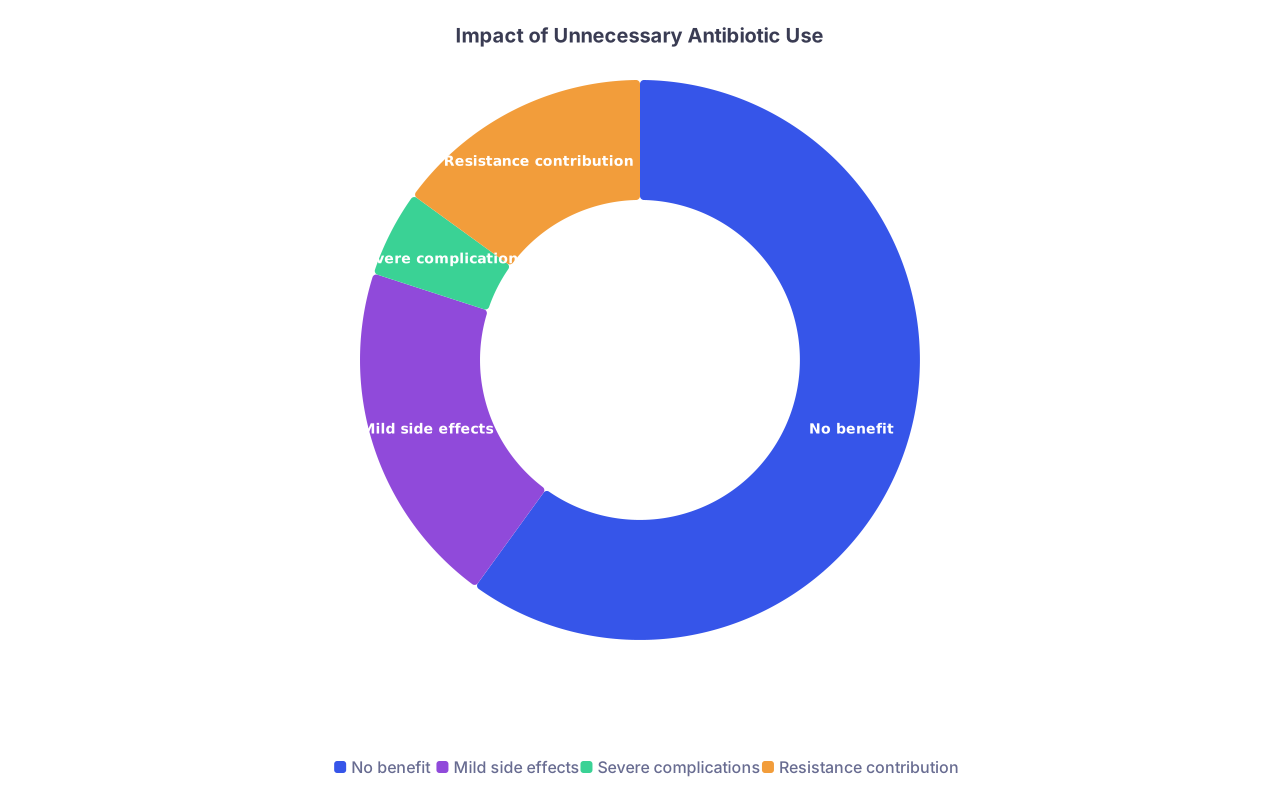
| Category | Value |
|---|---|
| No benefit | 60 |
| Mild side effects | 20 |
| Severe complications | 5 |
| Resistance contribution | 15 |
FAQ (exactly 4 questions)
1. What if I’m honestly on the fence about whether antibiotics are needed?
Then it’s not the scenario we’re talking about. If you’re genuinely uncertain, that’s a clinical judgment call, not a purely ethical one. In that case, use guidelines, consider the patient’s risk factors, and sometimes shared decision‑making is appropriate: “This could go either way. Here are the pros and cons…” But do not hide behind “shared decision‑making” to get the patient to choose an antibiotic you already know is wrong.
2. Is it ever okay to give a “just‑in‑case” antibiotic prescription?
For most outpatient viral‑type illnesses, no. “Pocket scripts” for things like traveler’s diarrhea or in extremely remote settings are a different conversation with stricter criteria. But in normal primary/urgent care, handing out antibiotics “in case it gets worse” is lazy medicine. If it gets worse, they need reassessment, not a pre‑approved drug for an unknown future diagnosis.
3. What if my employer pressures me to keep patients happy, even if that means more antibiotics?
That’s where professional ethics collide with business stupidity. You’re still the one whose name is on the prescription and the chart. Protect your license first. If your numbers are questioned, document that your lower antibiotic rates reflect guideline‑concordant care. If leadership doesn’t back evidence‑based practice, start planning your exit. You can’t “personal‑development” your way out of a toxic system forever.
4. How do I explain this quickly when I’m already running behind?
You need a 60‑second script you can rattle off cold. Something like: “You feel terrible and want to get better fast, which makes sense. The good news is your lungs/sinuses/throat don’t show signs of a bacterial infection. This is viral, and antibiotics won’t help and can actually cause side effects. Here’s what will help over the next few days: [1–2 meds/strategies]. If you get [red flags], call or come back and we’ll reassess. I’m not doing nothing; I’m choosing the safest, right treatment for you.” Say it, write the symptom plan, move on.
Key points to leave with:
- Unnecessary antibiotics are harm, not kindness. Treat them that way in your own head.
- Be clear, firm, and empathetic: validate the misery, explain your reasoning, and give a real alternative plan.
- Protect yourself: document well, tolerate some anger, and don’t sell out your standards to keep a few demanding patients happy.


