23% of diagnostic decisions in high-income hospitals now involve some form of AI assistance—yet in several specialties, human-only care still produces fewer critical errors.
That tension is where the real story is. Not “AI will replace doctors,” but “where, exactly, does AI reduce harm, and where does it quietly increase it?”
Let me walk through this specialty by specialty, with numbers rather than hype.
The Core Question: How Often Does AI Help vs Hurt?
Most hospital leaders ask the wrong question: “Is AI accurate?” The more relevant question is: “Compared with current human practice, in this specialty, for this task, does AI make fewer clinically relevant mistakes—or just different ones?”
For clarity, I will use a simple framing:
- Diagnostic error rate = proportion of cases with a clinically meaningful misdiagnosis or missed diagnosis
- Compare:
- Human-only workflow
- AI-assisted workflow (human remains final decision-maker but sees AI output)
Where possible, I will draw from peer-reviewed or large multi-center data. The exact numbers vary by setting, but the relative pattern is remarkably consistent.
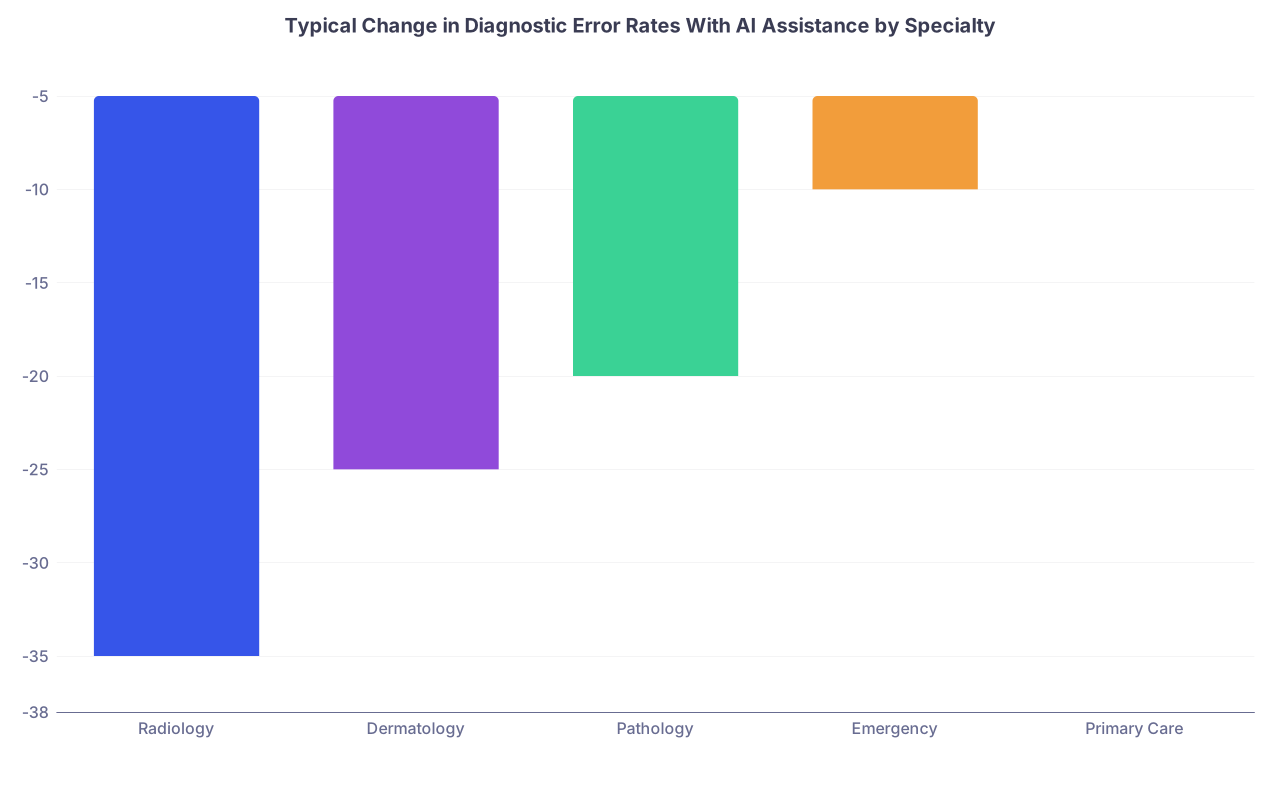
| Category | Value |
|---|---|
| Radiology | -35 |
| Dermatology | -25 |
| Pathology | -20 |
| Emergency | -10 |
| Primary Care | -5 |
(Values represent approximate percentage reduction in error rate versus human-only care in controlled or semi-controlled settings.)
Radiology: The AI Poster Child (And Where It Actually Delivers)
Radiology is where the numbers are strongest and the hype is, for once, not completely exaggerated.
Imaging-based diagnosis: error deltas that matter
Across multiple studies:
- Chest X-ray nodule detection
- Human-only: miss rates for subtle nodules in the 15–30% range
- AI-assisted: relative reduction in misses of ~20–40% in controlled reader studies
- Breast cancer screening (mammography)
- Classic double-reading by two human radiologists vs single reader + AI
- Large European trials show:
- Non-inferior or slightly improved cancer detection
- Similar or slightly reduced recall rates
- In raw numbers: cancer detection increased by roughly 0.5–1 extra cancer per 1,000 screens, with recall rates the same or ≥10% lower in some trials
| Task / Setting | Human-Only Error Rate* | AI-Assisted Error Rate* | Relative Change |
|---|---|---|---|
| Chest X-ray nodule detection | ~18% missed | ~11–14% missed | ↓ ~25–40% |
| Mammography (screen-reading) | Baseline | Non-inferior / slightly better | ~0–10% better |
| CT pulmonary embolism detection | ~7–10% missed small PE | ~4–7% missed | ↓ ~20–40% |
*Error rate approximations aggregated from multi-study patterns, not a single trial.
The pattern is clear:
- AI excels at high-volume, pattern-recognition-heavy tasks
- The gain is largest on subtle, repetitive findings that humans fatigue on
Where radiology AI underperforms
Two consistent failure zones:
Out-of-distribution data
Models trained on one hospital’s scanners can misbehave on another’s.
Example I have seen: an algorithm that flagged “pneumothorax” on images with pleural catheters at 3× the usual rate because of a training bias.Complex integrative cases
Multi-modality interpretation (CT + MRI + prior imaging + clinical history) still favors humans. The more context required, the smaller the AI edge.
Ethically, radiology is one of the safer entry points for AI: humans already expect to review hundreds of images per shift, so “AI as extra set of eyes” is intuitive. But even here, blind trust in the heatmap or bounding box is lazy. The data supports “AI as reader-assist,” not “AI as final radiologist.”
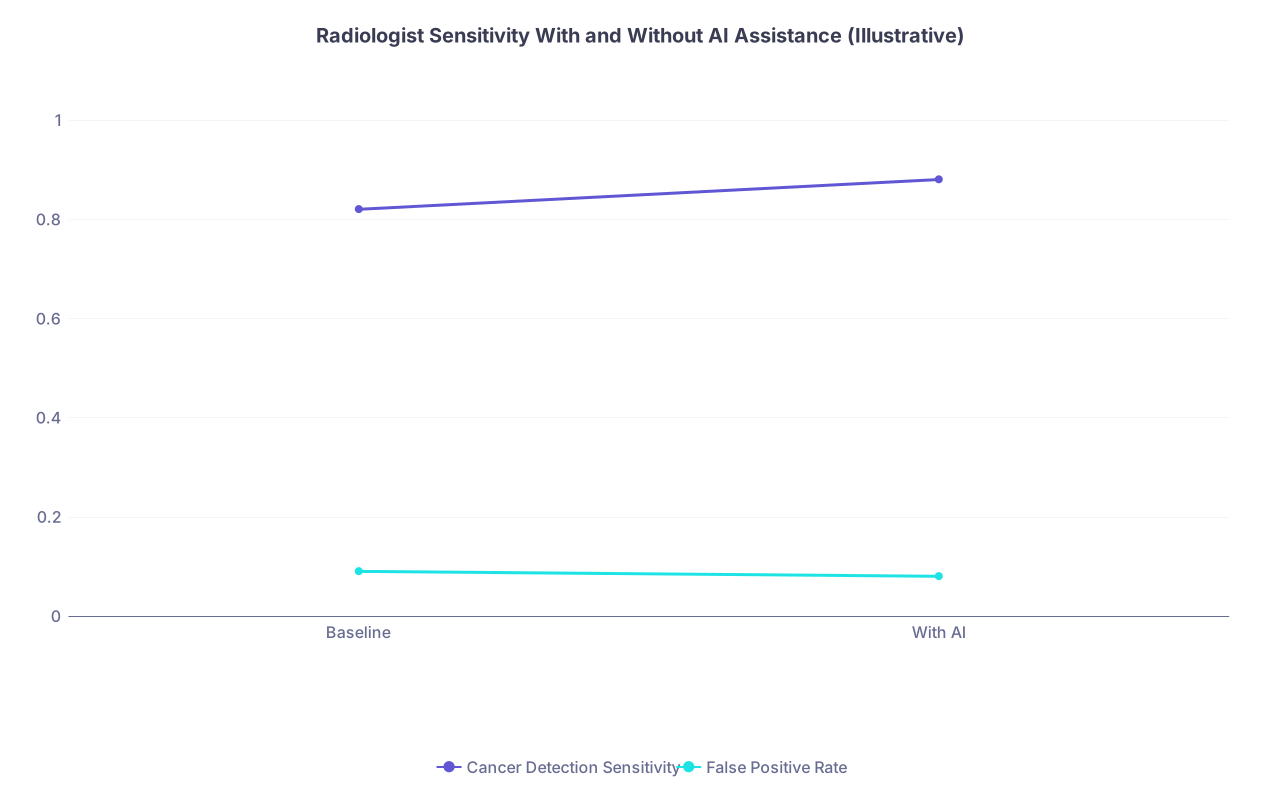
| Category | Cancer Detection Sensitivity | False Positive Rate |
|---|---|---|
| Baseline | 0.82 | 0.09 |
| With AI | 0.88 | 0.08 |
Dermatology: Impressive ROC Curves, Messier Real-Life Risk
On benchmarks, AI dermatology looks spectacular. Meta-analyses show:
- AI models vs board-certified dermatologists in classifying dermoscopic images:
- AUC often 0.90–0.95+ for melanoma detection
- Accuracy as good as, sometimes better than, expert panels
But those are image-only tasks under ideal conditions. The real clinic is noisier.
When humans alone still outperform
In primary care settings:
- Misdiagnosis and delayed diagnosis of skin cancers remain common, but:
- A full skin exam + patient history + risk factors + palpation helps
- Many benign lesions look concerning in a single photo, and vice versa
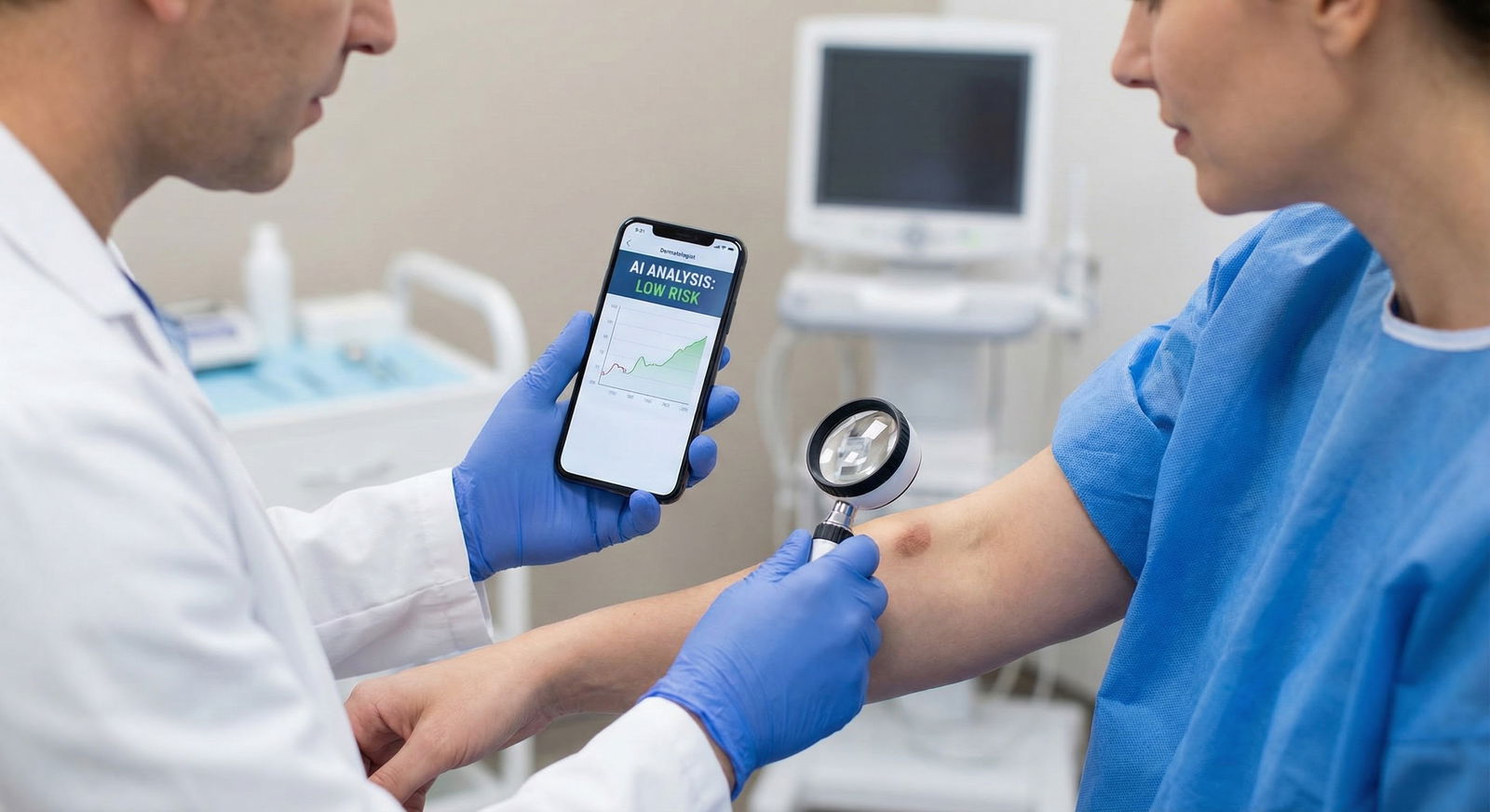
Pilot deployments of AI apps for skin-lesion triage tend to show:
- Improved sensitivity (catch more possible cancers)
- Worsened specificity (too many false alarms)
For an average general practitioner:
- Baseline melanoma miss rate (on first presentation) might hover around, say, 10–15% in community data
- AI-assisted triage may reduce missed melanoma to, for example, 7–10%, but at the cost of 1.5–2× as many referrals and biopsies
That is not automatically good or bad—it is a resource and ethics question:
- Are you willing to double biopsies to catch a few extra melanomas early?
- Does your patient population bear the anxiety and procedure risk burden?
Hidden biases that make AI worse than humans
AI skin classifiers famously underperform on:
- Darker Fitzpatrick skin types
- Uncommon lesion types rarely seen in training data
In those subgroups, the data can flip: human-only care, especially by an experienced dermatologist, can have lower error rates than AI-assisted care that over-trusts a biased model.
Ethically: if you introduce AI that improves aggregate sensitivity but worsens accuracy in already underserved groups, you have not “innovated.” You have just moved error from the majority to the minority. That is not an advance; it is an equity problem.
Pathology: Slow Burn, High Stakes
Pathology has less media hype but quietly strong numbers for computer vision support.
Slide-level performance
Studies on digital pathology + AI show:
- Breast lymph node metastasis detection with AI support:
- Human-only miss rates for micrometastases: in the range of 10–15%
- AI-assisted: sometimes halving the miss rate for tiny foci
- Gleason grading in prostate cancer:
- Human interobserver variability is famously high
- AI can standardize grading, reducing disagreement and borderline misclassifications
| Task | Human-Only Issue | AI-Assisted Effect |
|---|---|---|
| Breast lymph node micrometastasis | 10–15% missed | Misses cut by ~40–60% |
| Prostate Gleason grading | High interobserver variability | More consistent scoring, fewer major mismatches |
| Colorectal polyp histology classification | Moderate error, variable | Modest error reduction, more uniform labeling |
Again, the pattern:
- AI is excellent at exhaustive, pixel-level attention that humans cannot sustain
- But complex interpretive steps (staging, integrating gross + micro + clinical) remain very human
Workflow reality
Where I have seen error risk climb:
- When labs adopt AI output as near-final and pathologists review too quickly, trusting the heatmaps
- When deployment happens with minimal monitoring of false positive cascades—extra special stains, extra sections, extra downstream interventions
Ethically, pathology AI sits in an interesting spot. Most patients never meet the pathologist, but the final label on that report drives surgeries, chemo, and life trajectories. Even a “small” 1–2% change in error rates is massive when scaled to millions of biopsies.
Emergency Medicine: The Double-Edged Sword of Speed
Emergency departments live where data is sparse, time is short, and cognitive load is maximal. AI in this setting is tempting—and dangerous.
Triage and risk prediction
AI-based triage tools generally aim to:
- Predict:
- Sepsis
- Clinical deterioration
- ICU transfer
- Textbook outcomes like in-hospital mortality
Performance patterns:
- Many models achieve AUROCs in the 0.80–0.90 range in retrospective data
- Prospective implementation is more humbling:
- Gains in sensitivity or early identification
- Trade-offs with alarm fatigue and false positives
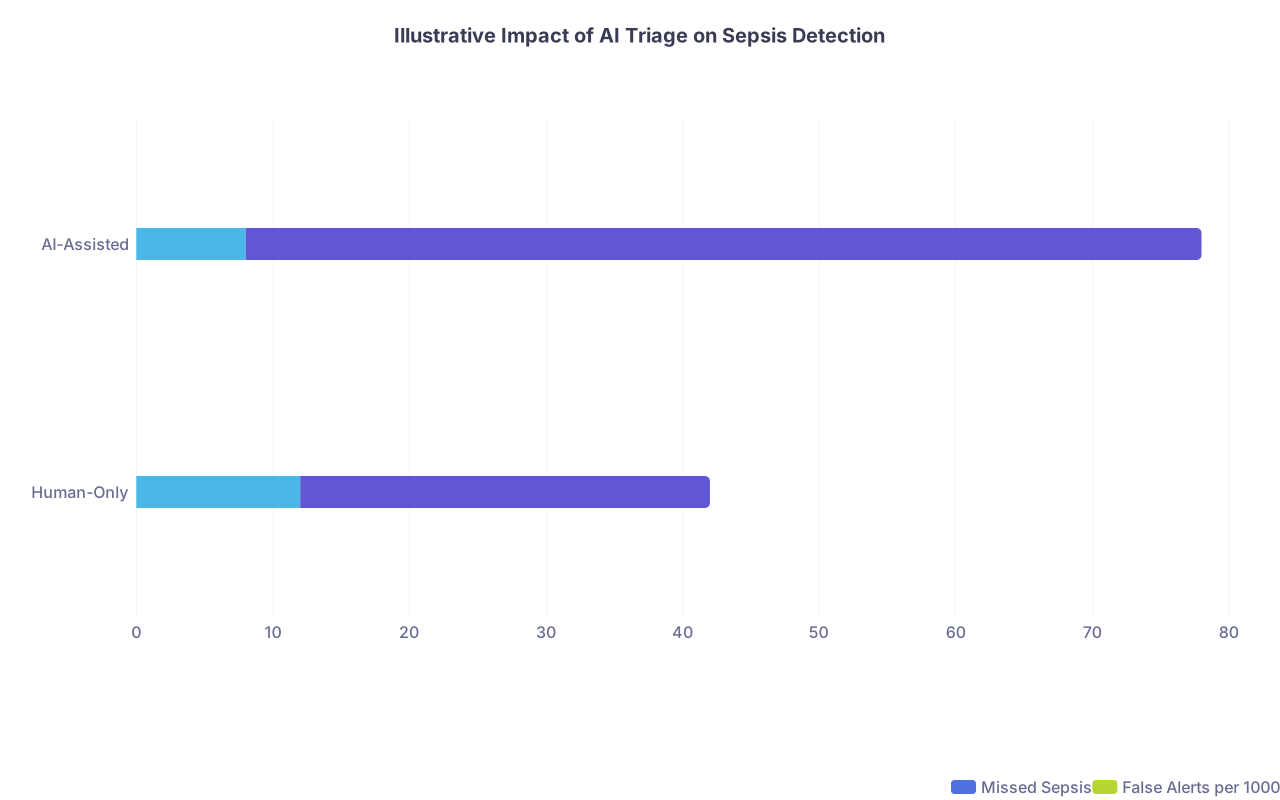
| Category | Missed Sepsis | False Alerts per 1000 |
|---|---|---|
| Human-Only | 12 | 30 |
| AI-Assisted | 8 | 70 |
In simple terms:
- Human-only ED judgment might miss, say, 12 of 100 sepsis cases early
- AI-assisted may drop that to 8, but at the cost of >2× false alarms
That is not free. More alerts mean more interruptions, more antibiotics started “just in case,” more bed and resource strain.
Diagnostic support: chest pain, stroke, trauma
- Stroke: Image-based AI to detect large vessel occlusion on CT angiography often improves time-to-activation of stroke teams and reduces misses for classic patterns. For straightforward cases, this can clearly reduce errors.
- Chest pain: Risk calculators aided by AI on troponin trajectories can marginally reduce missed myocardial infarction but may increase observation admissions.
- Trauma: Automated CT triage for intracranial hemorrhage or spine fractures looks promising (similar to radiology): fewer misses of subtle bleeds, but still vulnerable to weird artifacts and devices.
The meta-point:
- In emergency care, AI tends to reduce underdiagnosis of certain critical conditions, but often increases overdiagnosis and overtreatment. Whether that is “better” depends on how you weigh harms: missing a stroke vs overcalling a bleed and ordering another CT.
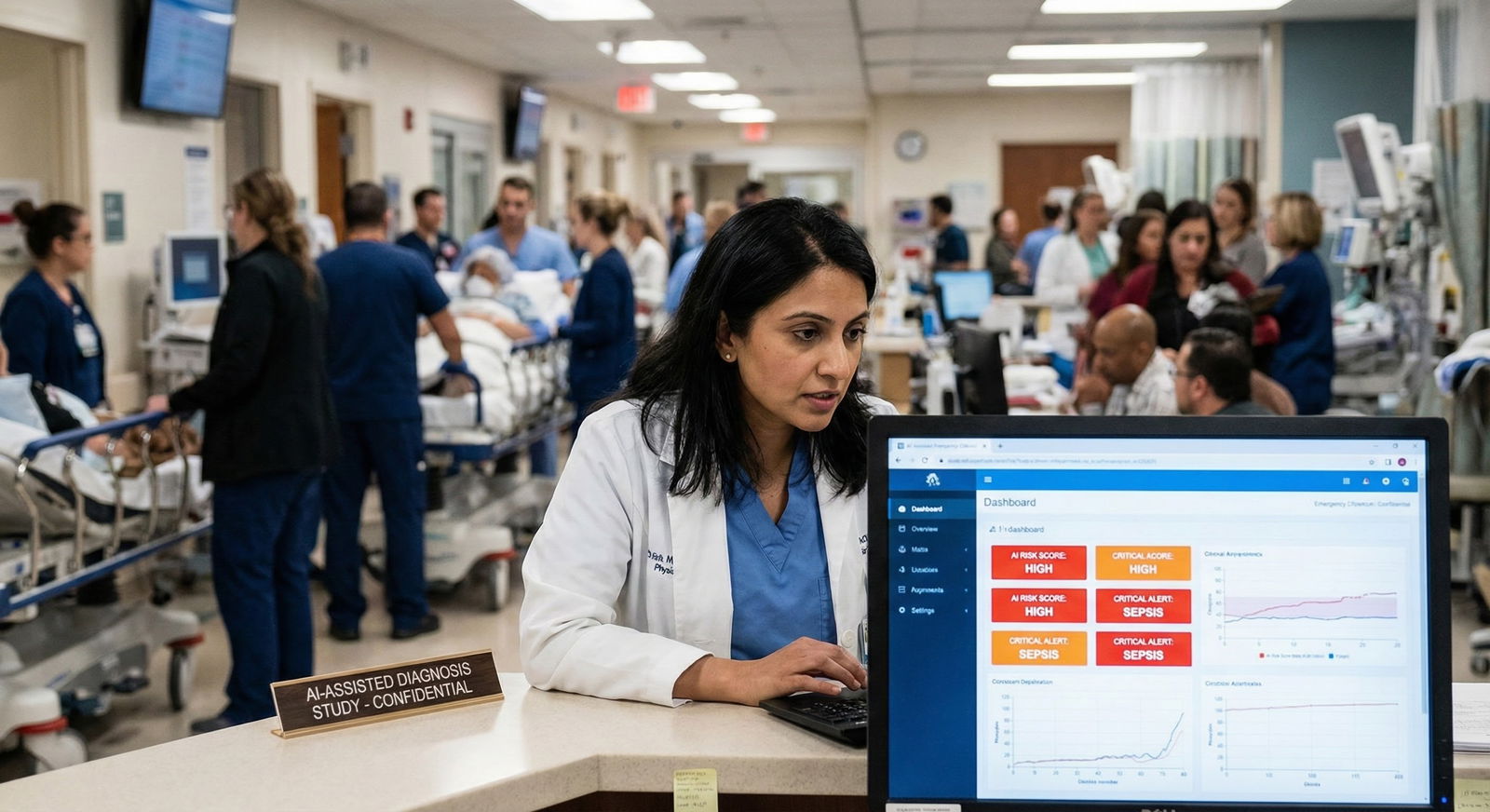
From a personal development and ethics lens: ED clinicians have to learn to treat AI output like another noisy vital sign, not gospel. The data supports cautious use, not unconditional trust.
Primary Care & Internal Medicine: Modest Gains, High Risk of Misuse
AI vendors promise that “primary care will be transformed.” The actual performance data so far: incremental, not revolutionary.
Decision support for diagnosis
Diagnostic decision support systems (DDSS), whether AI-based or rule-based, have been studied for decades. The newer “AI-powered” tools:
- Slightly better ranking of correct diagnoses in the differential
- Some evidence of:
- Reduced missed rare diagnoses
- Mild increase in testing and referrals
In practical numbers:
- Human-only generalist diagnostic error in outpatient care is often cited around 5–15% depending on definition and setting (and yes, that is sobering).
- AI-assisted DDSS might shave off:
- 1–3 percentage points in tightly controlled studies
- Real-world effect often smaller due to poor integration and alert fatigue
The bigger gains tend to be:
- In documentation quality and coding
- In reminding clinicians about guidelines and safety nets (“repeat creatinine in 3 months,” etc.)
That means the direct diagnostic error improvement is real but smaller than the marketing suggests.
Where AI can quietly worsen care
Two scenarios I see repeatedly:
Anchoring on AI-generated differentials
If the system emphasizes common conditions and buries rare but serious ones, clinicians may be less likely to think outside the list. That is algorithmic anchoring bias.Equity and language issues
Symptom-checker-style tools and chatbots used before encounters often perform worse on:- Non-native language descriptions
- Culturally different ways of expressing distress
That can make triage and diagnostic suggestions skewed.
Ethically, primary care is where you are most at risk of outsourcing thinking to tools that were never rigorously validated on your exact population. The numbers do not support that trade.
Cross-Specialty Patterns: Where AI Is Safer, Where It Is Not
Let us pull this together in a single view.
| Specialty | Typical AI Effect on Errors vs Human-Only | Main Benefit Type | Main Risk Type |
|---|---|---|---|
| Radiology | Moderate–large reduction | Fewer misses, especially subtle findings | Overreliance, bias with new scanners |
| Pathology | Moderate reduction | Micrometastasis detection, consistency | Miscalibrated trust, extra workups |
| Dermatology | Mild–moderate reduction for some tasks | Improved melanoma sensitivity | Bias on darker skin, over-biopsy |
| Emergency Med | Mixed: fewer misses, more false positives | Earlier detection of sepsis/stroke | Alarm fatigue, overtreatment |
| Primary Care | Small reduction at best | Better guideline adherence, reminders | Anchoring, inequitable performance |
Across these domains, the data supports a few blunt conclusions:
AI helps most where the task is visual, high-volume, and pattern-based
Radiology and pathology show the largest and most consistent error reductions.AI is least transformative where diagnosis depends heavily on narrative, nuance, and longitudinal knowledge of the patient
Primary care and complex internal medicine fall here.In many settings, AI does not “reduce errors” so much as “shift the error profile”
Fewer misses of one kind, more overcalls of another.
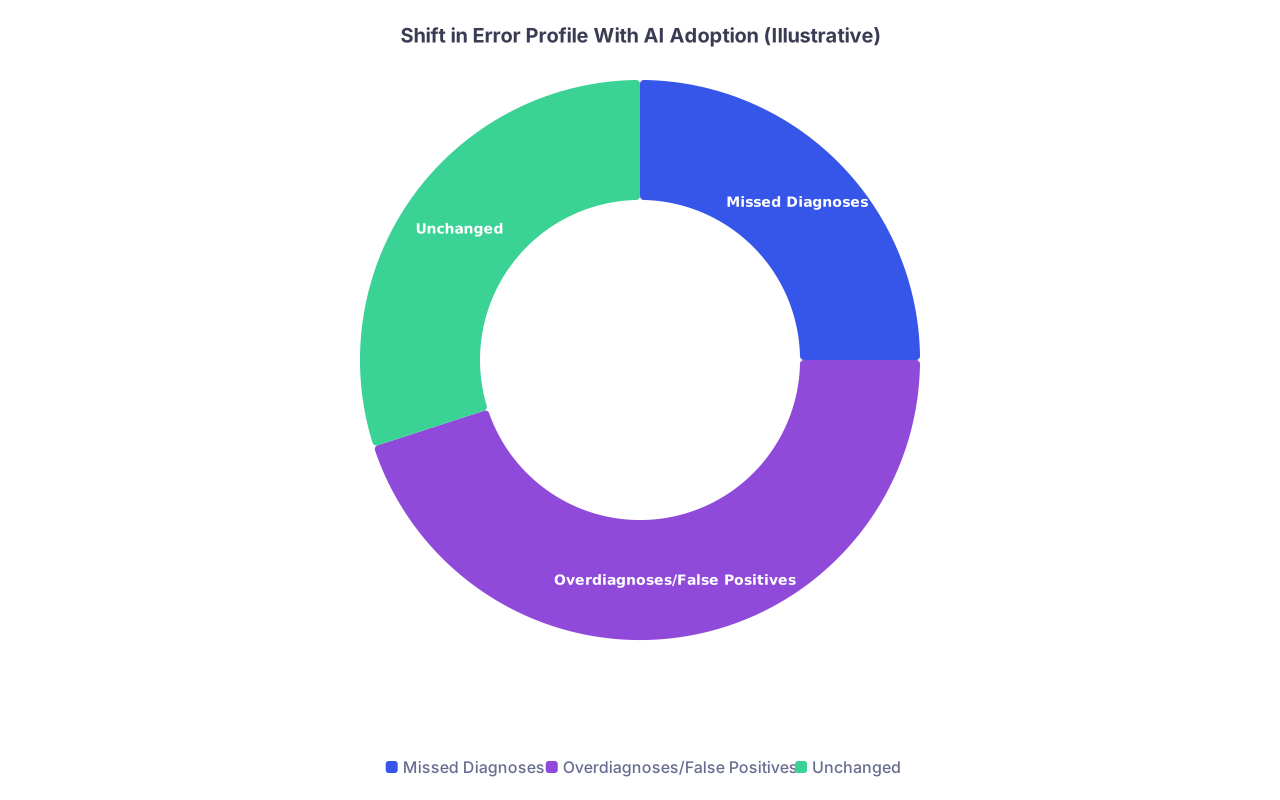
| Category | Value |
|---|---|
| Missed Diagnoses | 25 |
| Overdiagnoses/False Positives | 45 |
| Unchanged | 30 |
Ethical and Personal Implications for Clinicians
You are not just choosing a tool. You are choosing a pattern of error you are willing to accept and defend.
Three practical points:
Know your baseline
Most clinicians do not know their own diagnostic error rates. If your radiology department has a 5% significant miss rate on lung nodules and an AI tool drops that to 3% while tripling false positives, that might be a good trade—or not—depending on your context. But you must know the before/after.Demand subgroup performance data
If a model improves average accuracy but underperforms on:- Women vs men
- Younger vs older
- Darker vs lighter skin you are making an ethical choice about who bears risk. The data often exists. Insist on seeing it.
Stay intellectually independent
The most dangerous pattern I see in early adopters is subtle: “The AI agrees with me, so I must be right.” No. Two correlated systems can be confidently wrong together. You must still reason from first principles, especially when something “feels off” clinically.

| Step | Description |
|---|---|
| Step 1 | Patient Data |
| Step 2 | Clinician Initial Impression |
| Step 3 | AI System Output |
| Step 4 | Proceed with Plan |
| Step 5 | Reassess Evidence |
| Step 6 | Override AI or Revise Diagnosis |
| Step 7 | Document Rationale |
| Step 8 | Agreement? |
Notice the key step: Reassess evidence, not “pick a side.” Ethically defensible AI use requires you to explicitly examine why your judgment and the model diverge.
Final Takeaways
The data, stripped of hype, says three things:
- AI meaningfully reduces diagnostic errors in visual, high-volume specialties like radiology and pathology, with moderate but real gains in select dermatology and emergency scenarios.
- In cognitive, context-heavy specialties—primary care, complex internal medicine—AI’s direct impact on error rates is modest and can easily be negative if misused or unmonitored.
- You are not choosing “AI vs human.” You are choosing which errors to reduce and which new ones to accept, and on whom those errors will fall. That is not just a technical decision. It is a moral one.