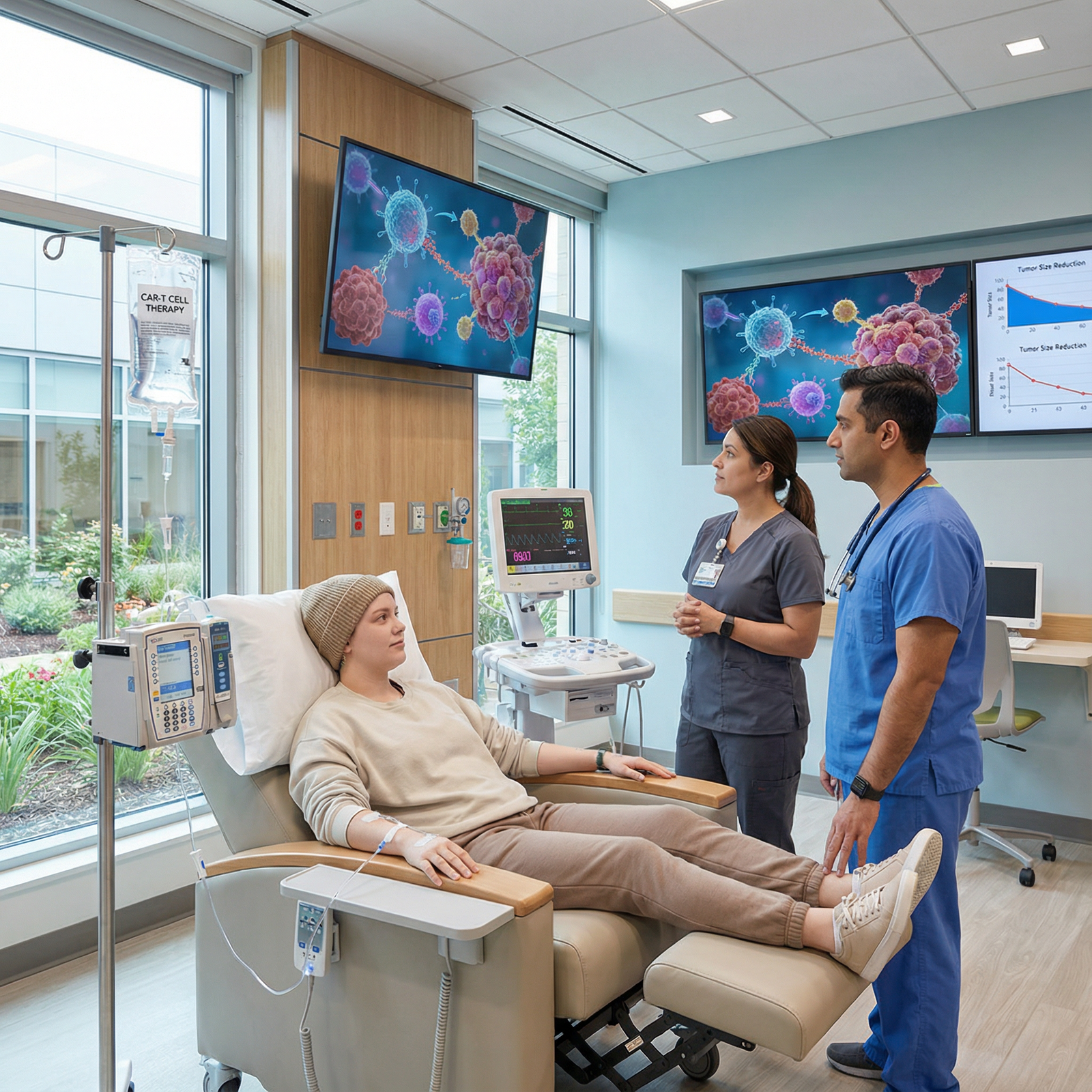
The biggest mistake with CAR‑T toxicities is pretending you can “wing it” based on general ICU instincts. You can’t. If you do, you will either overtreat and blunt efficacy, or undertreat and miss a salvageable patient.
Let me walk you through a practical, decision‑tree way to handle neurotoxicity and CRS that actually matches real patients at 2 a.m., not guideline fantasy at noon conference.
1. The Only Sensible Starting Point: A Shared Mental Model
CAR‑T toxicities are not random chaos. They follow patterns. If your whole team shares a simple mental framework, everything downstream becomes faster and safer.
Think of it in three layers:
- Timing
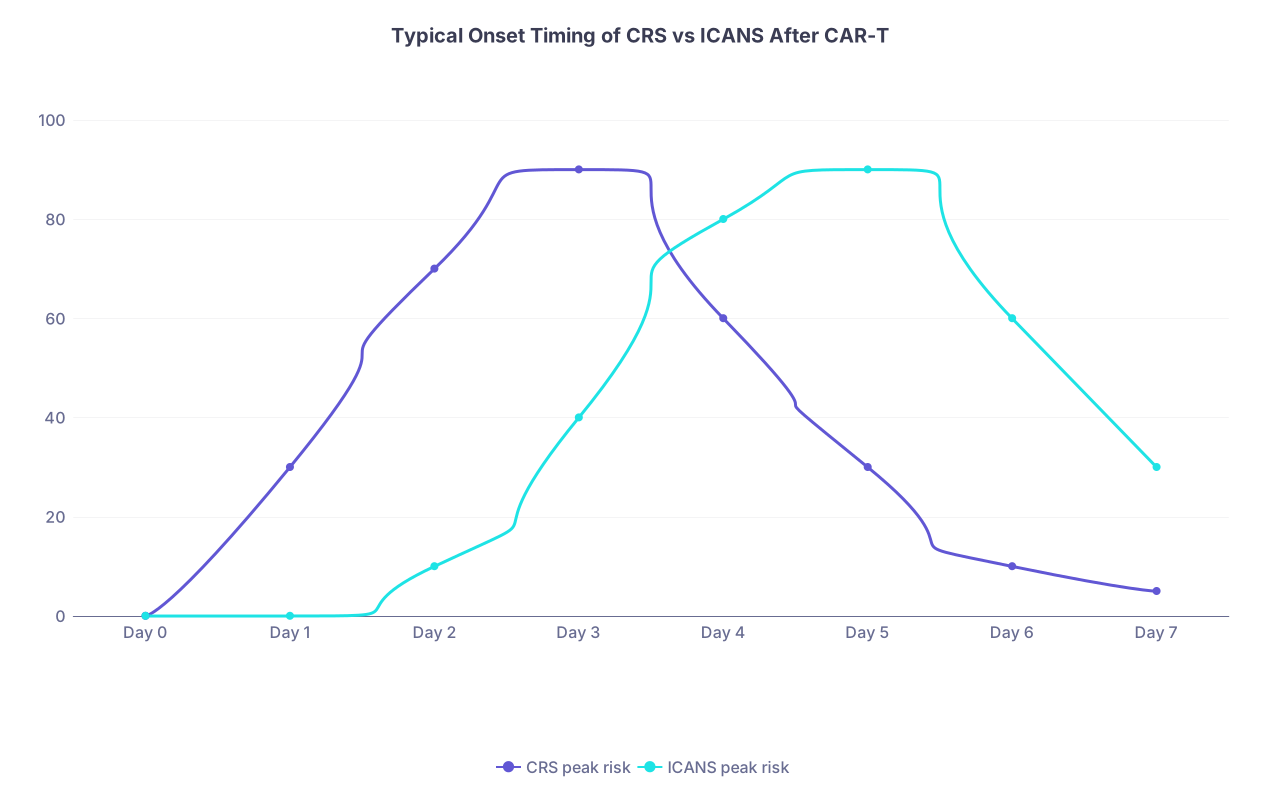
- CRS usually first: days 1–5 after infusion.
- ICANS (neurotoxicity) often lags: days 4–10, sometimes overlapping with CRS.
- Two main syndromes
- Cytokine Release Syndrome (CRS): systemic inflammation, hemodynamics, oxygenation.
- Immune Effector Cell–Associated Neurotoxicity Syndrome (ICANS): language, level of consciousness, seizures, cerebral edema.
- Grading drives treatment. Always.
- You should be able to grade CRS and ICANS in under 60 seconds at the bedside.
- Hesitation here is what kills time, and sometimes patients.
Quick pattern you must internalize
- CRS = “sick septic oncology patient with a normal lactate and clean cultures” Fever, hypotension, tachycardia, maybe hypoxia. Looks like sepsis. Cultures are negative. It is cytokines.
- ICANS = “encephalopathic transplant patient with a normal CT and angry EEG” Language gets weird, handwriting disintegrates, attention collapses, seizures or subclinical activity on EEG. CT head and CSF look deceptively normal.
You cannot fix what you do not recognize. So let us formalize recognition.
2. The Core Decision Tree: Stepwise Approach From the Doorway
Use this as your internal flow every time you are called to a post–CAR‑T patient who “does not look right.”

| Step | Description |
|---|---|
| Step 1 | CAR-T patient looks unwell |
| Step 2 | Check vitals and neuro status |
| Step 3 | Suspect CRS |
| Step 4 | Assess for other causes |
| Step 5 | Suspect ICANS |
| Step 6 | Grade CRS 1-4 |
| Step 7 | Grade ICANS 1-4 |
| Step 8 | Treat based on CRS grade |
| Step 9 | Treat based on ICANS grade |
| Step 10 | ICU if hypotension or hypoxia |
| Step 11 | Fever 38 or higher? |
| Step 12 | Neuro change or ICE decline? |
You are doing two things simultaneously:
- Rule out obviously reversible non–CAR‑T causes
Hypoglycemia, sepsis, stroke, intracranial bleed, medications (opiates, benzos). - Rapidly grade CRS and ICANS
Because treatment thresholds are grade‑based, not “gestalt gut feeling”.
Let us detail each branch properly.
3. CRS: A Brutally Simple Inflammatory Storm
CRS is not subtle. But mis-grading it is common. People either under-call hypotension (“he was usually hypertensive at baseline”) or ignore rising oxygen needs.
CRS grading – keep it in your head
I will condense the ASTCT schema into something you can actually remember on rounds.
| CRS Grade | Fever (≥38°C) | Hypotension | Hypoxia |
|---|---|---|---|
| 1 | Yes | None | None |
| 2 | Yes | IV fluids only | Low-flow O2 (nasal cannula) |
| 3 | Yes | One vasopressor | High-flow O2 or non-invasive |
| 4 | Yes | Multiple vasopressors | Intubation/mechanical vent |
If there is no fever, be careful about reflexively calling it CRS. Look for infection, PE, hemorrhage. You can have “atypical” CRS, but do not let that be your default.
Stepwise decision tree for CRS management

| Step | Description |
|---|---|
| Step 1 | Suspected CRS |
| Step 2 | Apply CRS grading |
| Step 3 | Supportive care, monitor |
| Step 4 | Tocilizumab, fluids, +/- steroids |
| Step 5 | ICU, tocilizumab, high dose steroids |
| Step 6 | Reassess every 4-6 hours |
| Step 7 | Grade 1? |
| Step 8 | Grade 2? |
| Step 9 | Grade 3-4? |
Now the specifics, because this is where people get nervous about “hurting efficacy.”
Grade 1 CRS: Fever only
Typical scenario: Day 1–3 post infusion, T 39.2°C, HR 110, BP normal, oxygenation normal.
Management:
- Full sepsis workup: blood cultures, CXR, urine, lactate, basic labs. Do not skip this.
- Start broad‑spectrum antibiotics. Yes, even if you are “sure” it is CRS.
- Antipyretics, IV fluids as needed, close monitoring.
- No tocilizumab yet in a stable, truly grade 1 case.
- Reassess frequently (q4h at least). These can escalate fast.
The mistake I see: people either blow it off as “expected” and under‑monitor, or they give tocilizumab reflexively at the first fever. Both are wrong.
Grade 2 CRS: Fever + fluid‑responsive hypotension and/or mild hypoxia
Scenario: T 39.5°C, BP 88/50 that corrects with 1–2 L IV fluids, now 92/60, requiring 2–4 L NC O2.
Here you pull the tocilizumab trigger.
Management:
- Tocilizumab 8 mg/kg IV (max 800 mg), usually 1 dose to start.
- Continue antibiotics and cultures.
- Consider low‑dose steroids if:
- Symptoms persist or worsen after 12–24 hours, or
- There is concurrent grade ≥2 neurotoxicity.
- Floor vs step‑down vs ICU depends on your institution, but I lean heavily toward monitored or ICU for borderline patients. They can slip to grade 3 rapidly at 2 a.m.
The “I’ll wait one more hour and see” approach is how you buy yourself a crashing patient with multi‑organ dysfunction.
Grade 3–4 CRS: This is ICU territory
Scenario: Requiring a vasopressor. On high‑flow nasal cannula, BiPAP, or intubated.
Management is non‑negotiable:
- ICU admission
- Tocilizumab immediately. If no improvement, may repeat q8h up to 4 doses total.
- High‑dose steroids
- Methylprednisolone 1–2 mg/kg/day IV, or pulsed doses (e.g., 1000 mg/day) per protocol.
- Full organ support:
- Vasopressors, mechanical ventilation, renal replacement therapy if needed.
- Keep reevaluating for other causes (sepsis, PE, cardiogenic shock). CRS and infection can coexist.
Do not delay immunomodulation waiting for cultures to come back “to prove it’s not sepsis.” You treat both.
4. ICANS: The Neurologic Trap That Punishes Sloppy Exams
Neurotoxicity is where even solid ICU teams struggle, largely because the findings are “soft” at first and documentation is sloppy.
You need three things:
- A standardized bedside tool (ICE score).
- A short, repeatable neuro exam.
- A low threshold for EEG and neuroimaging in moderate–severe cases.
ICE score – you should be able to do this in one minute
ICE is a 10‑point bedside tool used in adult patients:
- Oriented to year, month, city, hospital: 4 points (1 each).
- Naming three objects: 3 points.
- Following simple commands: 1 point.
- Writing a standard sentence: 1 point.
- Counting backward from 100 by 10s: 1 point.
Score range: 0–10. Lower = worse.
Very simplified ICANS grading (ASTCT‑based):
- Grade 1: ICE 7–9, awake, no seizure, no papilledema.
- Grade 2: ICE 3–6, awake but significantly impaired; no severe somnolence.
- Grade 3: ICE 0–2, obtunded or stuporous; or any seizure requiring IV meds.
- Grade 4: Coma, signs of cerebral edema, or life‑threatening seizures.
Neurotoxicity decision tree you should actually use

| Step | Description |
|---|---|
| Step 1 | Neuro change in CAR-T patient |
| Step 2 | Obtain ICE score |
| Step 3 | Assign ICANS grade |
| Step 4 | Frequent neuro checks, no steroids yet |
| Step 5 | Start dexamethasone, consider EEG |
| Step 6 | ICU, high dose steroids, EEG, imaging |
| Step 7 | Monitor q2-4h |
| Step 8 | Grade 1? |
| Step 9 | Grade 2? |
| Step 10 | Grade 3-4? |
Now, what that means in actual practice.
Grade 1 ICANS: “Their handwriting looks weird…”
Common presentation: patient is slightly disoriented to date, struggles with serial 10s, handwriting deteriorates from pre‑CAR‑T sample.
Management:
- No steroids yet if it is truly isolated grade 1 and no CRS ≥2.
- Very frequent assessments:
- ICE score q4h at minimum.
- Document handwriting changes. Keep samples.
- Rule out:
- Metabolic derangements: Na, glucose, ammonia.
- Medication effects: opioids, gabapentin, sedatives.
- Infection: meningitis, encephalitis, sepsis.
- Very low threshold to escalate if ICE continues to decline or new focal signs appear.
The mistake: “They are just tired / post‑ICU / on narcotics.” If you are saying that without documented ICE scores, you are guessing.
Grade 2 ICANS: This is your steroid threshold
Scenario: ICE 3–6, patient is confused, language impaired but still arousable, no seizures.
Management:
- Dexamethasone 10 mg IV q6h is a common starting regimen (check your institutional protocol).
- Neurology consult.
- Consider EEG, especially if any suspicion for non‑convulsive seizures.
- MRI brain if focal deficits, rapidly worsening exam, or concern for edema.
- ICU vs monitored bed depends on trajectory and resources. I lean toward ICU for rapidly changing ICE scores.
Timing matters: if you delay steroids here “because we are worried about efficacy,” you are playing roulette with long‑term cognitive function and risk progression to cerebral edema. Most modern practice accepts early steroids at ICANS 2.
Grade 3–4 ICANS: ICU, continuous EEG, aggressive management
Scenario: unarousable, or severe obtundation, or any seizure requiring IV benzodiazepines or continuous infusions. Possibly signs of raised ICP (hypertension, bradycardia, irregular respirations).
Management:
- ICU admission mandatory.
- High‑dose steroids:
- Dexamethasone 20 mg IV q6h, or
- Methylprednisolone 1000 mg/day IV in some severe cases or with edema.
- Continuous EEG monitoring.
- MRI brain urgently. If unstable, at least CT head to assess for gross edema or bleed.
- ICP‑oriented care if cerebral edema suspected:
- Elevate head of bed.
- Hyperosmolar therapy per neurocritical care (hypertonic saline, mannitol).
- Neurology and neuro‑ICU involvement.
A key nuance: tocilizumab does not treat ICANS, and may worsen CNS cytokine trapping in some contexts. It is used for concomitant CRS, not for isolated neurotoxicity. Do not reflexively give more tocilizumab for worsening ICANS without CRS.
5. Putting It Together: Overlap, Gray Zones, and Real‑World Nuances
Here is where it gets interesting. Many patients will have both CRS and ICANS to some degree. You will need to triage which syndrome you are targeting with which drug.
Overlap scenarios: how to think
- CRS 2 + ICANS 1
Tocilizumab for CRS. Monitor ICANS closely, no steroids yet unless neuro worsens. - CRS 2 + ICANS 2
Tocilizumab + dexamethasone. Treat both. This is common and not controversial anymore. - CRS 3 + ICANS 1
ICU, tocilizumab, consider early steroids because of high CRS severity and risk of neuro progression. - CRS 0–1 + ICANS 3–4
Steroids and neuro‑ICU care. Tocilizumab does nothing for pure ICANS.
| Category | CRS peak risk | ICANS peak risk |
|---|---|---|
| Day 0 | 0 | 0 |
| Day 1 | 30 | 0 |
| Day 2 | 70 | 10 |
| Day 3 | 90 | 40 |
| Day 4 | 60 | 80 |
| Day 5 | 30 | 90 |
| Day 6 | 10 | 60 |
| Day 7 | 5 | 30 |
Seeing this pattern a few times makes the overlap more predictable.
A simple combined decision skeleton
When in doubt:
- Grade CRS.
- Grade ICANS.
- If CRS ≥2, give tocilizumab.
- If ICANS ≥2, give steroids.
- If either is grade 3–4, move to ICU and escalate support.
That simple. You can refine per protocol, but that backbone keeps you from freezing.
6. Systems, Personal Development, and Ethics: What Good Teams Actually Do
You wanted this under “PERSONAL DEVELOPMENT AND MEDICAL ETHICS,” so let us be blunt: this is not just pharmacology. It is about how you function as a physician on a high‑stakes service.
Personal development: skills you must deliberately build
Pattern recognition discipline
You need to see enough cases, but you also need to force yourself to do the full grading every time early in your learning curve. No shortcuts. That repetition wires the patterns.Communication under pressure
Being able to say to a family at 3 a.m.:
“Your father is experiencing what we call ICANS, a known brain‑related side effect of this therapy. Here’s what we are seeing, and here is what we are doing”
without jargon, without sugar‑coating, without panic. That is a skill.Bounded confidence
You should be decisive in grading and initial management. You should also know when you are out of your depth and call neuro, ICU, or the CAR‑T attending. Arrogant solo cowboy behavior in this space is not brave. It is unethical.
Ethical tensions that actually show up at the bedside
There are three big ones I see repeatedly.
1. Efficacy vs early intervention
The old fear: “If we start steroids or tocilizumab too early, we might blunt the antitumor effect.”
Updated reality:
- Data increasingly show that timely treatment of CRS/ICANS does not meaningfully compromise response in most modern CAR‑T platforms, especially when used appropriately.
- Delayed treatment, on the other hand, can lead to permanent neuro deficits, prolonged ICU stays, or death.
Ethical bottom line: your primary duty is to the person in front of you, not a theoretical marginal gain in response rate that is not well supported by evidence.
2. Autonomy and informed consent
Here is the uncomfortable truth. Many pre‑CAR‑T consent conversations are rushed, and toxicity discussions are abstract: “fever, low blood pressure, confusion, seizures.” Patients nod, but they rarely grasp what grade 3 ICANS looks like.
Better practice:
- Use concrete descriptions:
“There is a real chance you could become so confused you cannot speak or recognize family for several days. That is usually reversible, but it can be terrifying.” - Involve family early as partners in watching for subtle changes:
“If you feel something is ‘off’ with their personality or speech, even if the nurse is not worried yet, speak up.”
Respecting autonomy here means honest specificity, not vague generalities.
3. Equity and access
CAR‑T is not offered equally.
- Patients at large academic centers get multidisciplinary CAR‑T teams, standardized pathways, and experienced ICU support.
- Patients in smaller centers may be managed by teams who have seen two CAR‑Ts in their career.
If you are in the latter environment, you have a moral obligation to:
- Push for standardized, written CRS/ICANS pathways.
- Advocate for tele‑ICU or tele‑hematology support.
- Know your limit and transfer early when a case is heading into grade 3–4 territory.
Pretending “our hospital can manage this” when you have no EEG, limited ICU staff, and no on‑site neurology at night is not stoicism. It is gambling with someone else’s life.
7. Practical Tools: What You Should Have at the Bedside
If you want a checklist approach, here is what I advise new fellows and hospitalists covering these patients.
Minimum bedside data you should insist on
- Vital signs trend: last 24 hours of BP, HR, RR, SpO2.
- Oxygen requirement trend: room air → nasal cannula → HFNC/BiPAP.
- ICE scores documented at least q4h while at risk window.
- Fluid balance and urine output.
- Labs:
- CBC, CMP, CRP, ferritin.
- Lactate.
- Blood cultures if febrile.
- Troponin and BNP if any cardiopulmonary concern.
| Parameter | Why It Matters |
|---|---|
| CRP | Correlates with CRS load |
| Ferritin | Severe elevation in HLH-like states |
| Lactate | Helps distinguish sepsis/shock |
| ICE score | Tracks ICANS trajectory |
| O2 needs | CRS grade and escalation |
Trend matters more than any single value. A CRP jumping from 50 to 200 over 24 hours with rising fevers is not subtle.
Documentation habits that protect your patient (and you)
Do this every time:
- Explicit grade for CRS and ICANS in each daily or significant event note.
- ICE subcomponents listed at least once per day.
- Clear statement of your reasoning:
- “CRS 2 treated with tocilizumab due to fluid‑responsive hypotension and 4 L NC requirement.”
- “ICANS 2, started dexamethasone 10 mg IV q6h, neurology aware, EEG ordered.”
This is not just medicolegal hygiene. Good notes force good thinking.
8. A Quick Visual Summary: What to Do When
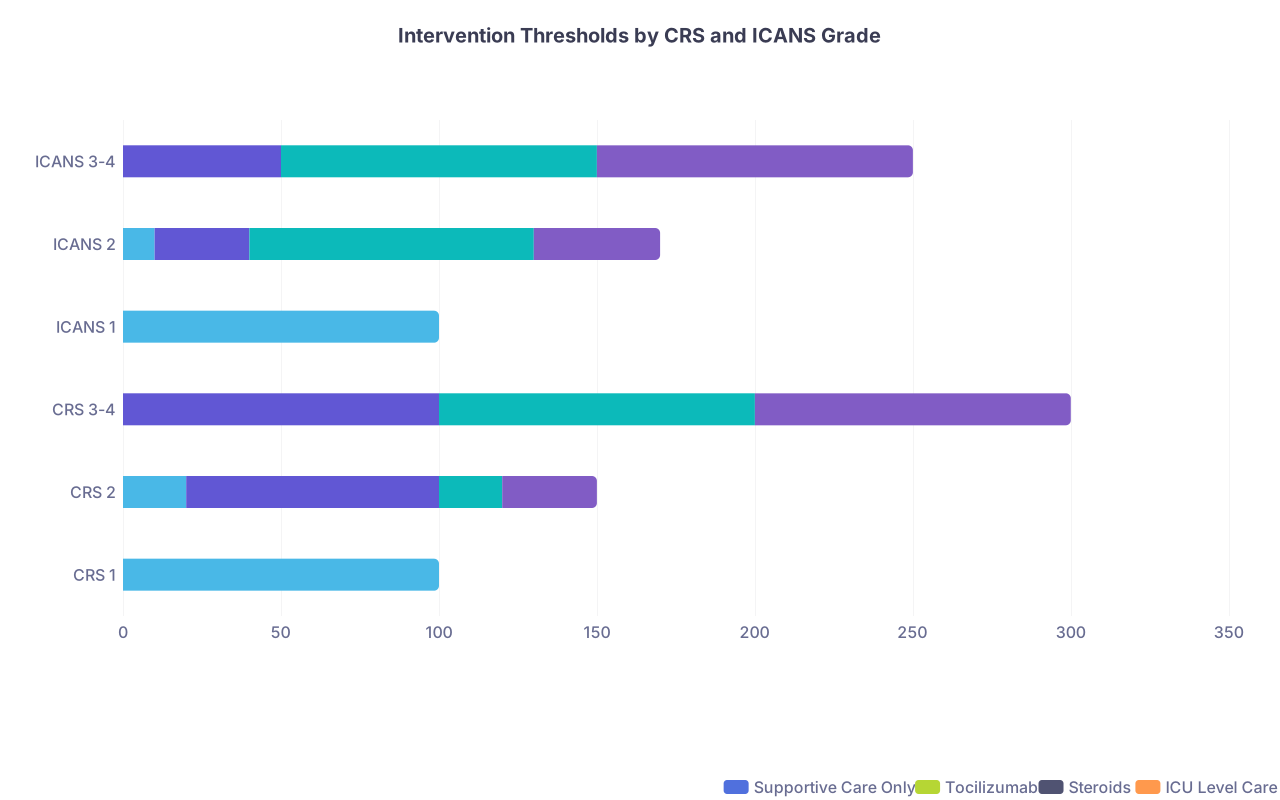
To lock it in, here is a rough “action threshold” snapshot.
| Category | Supportive Care Only | Tocilizumab | Steroids | ICU Level Care |
|---|---|---|---|---|
| CRS 1 | 100 | 0 | 0 | 0 |
| CRS 2 | 20 | 80 | 20 | 30 |
| CRS 3-4 | 0 | 100 | 100 | 100 |
| ICANS 1 | 100 | 0 | 0 | 0 |
| ICANS 2 | 10 | 30 | 90 | 40 |
| ICANS 3-4 | 0 | 50 | 100 | 100 |
You are not expected to memorize the entire ASTCT guideline line by line. You are expected to:
- Grade quickly.
- Act consistently.
- Escalate appropriately.
9. Where Personal Mastery Meets System Design
Here’s the hard truth: excellent CAR‑T toxicity management is not about one heroic fellow making perfect calls. It is about:
- A unit culture where nurses know ICE scoring and are empowered to call you for subtle changes.
- A protocolized response: order sets for “suspected CRS/ICANS,” built‑in grading tools in the EMR.
- Regular simulations: mock codes for grade 4 CRS, rapid response for grade 3 ICANS heading to cerebral edema.
Your personal development task is to become the person who:
- Knows the decision tree cold.
- Can teach it in 10 minutes on rounds.
- Has the guts to insist on it when the team tries to cut corners.
And the ethical overlay is simple: these patients exchanged months or years of life expectancy for a shot at cure. They did not sign up to die from unrecognized grade 3 ICANS because the covering night team “was not sure about the grading schema.”
FAQ (exactly 4 questions)
1. Does early use of tocilizumab or steroids actually reduce CAR‑T efficacy?
Current evidence suggests that appropriately timed tocilizumab and corticosteroids, given based on standard toxicity grades, do not significantly compromise CAR‑T anti‑tumor efficacy in most settings. The theoretical concern came from early preclinical work and very limited clinical data. Real‑world experience from large centers has shifted practice toward earlier intervention, especially for CRS ≥2 and ICANS ≥2, because the trade‑off in morbidity and mortality is unacceptable otherwise. That said, “blanket prophylaxis” for everyone is still debated, and each CAR‑T construct and trial protocol may differ.
2. How do I distinguish ICANS from other causes of encephalopathy in a complex ICU patient?
Start with a structured approach: get an ICE score, basic labs (electrolytes, renal/hepatic function, ammonia, glucose), medication review (sedatives, opioids, anticholinergics), infection workup, and neuroimaging if focal findings are present. ICANS classically appears in the CAR‑T toxicity window (days 4–10), often with language dysfunction, attention deficits, and writing changes out of proportion to other metabolic or sedative explanations. EEG frequently shows diffuse slowing or subclinical seizures. You do not need perfect certainty before starting steroids at ICANS 2 or higher, but you should aggressively chase reversible contributors in parallel.
3. When should I involve neurology and neuro‑ICU in CAR‑T neurotoxicity?
For any ICANS grade ≥2, neurology consultation is strongly advisable, especially if you do not manage CAR‑T patients routinely. For grade 3–4 or any seizures, neuro‑ICU level care, continuous EEG, and close neurocritical monitoring are appropriate. I have seen avoidable disasters when teams kept grade 3 ICANS on a floor bed “just overnight” without EEG, only to find them in non‑convulsive status the next morning. Err on the side of earlier specialist involvement rather than late, heroic salvage attempts.
4. What does good pre‑CAR‑T counseling about CRS and ICANS actually look like?
It involves concrete, specific examples, not vague lists. For CRS: “You could have high fevers, low blood pressure requiring ICU medications, and need oxygen or even a ventilator for a few days.” For ICANS: “You might temporarily lose the ability to speak clearly, write, or recognize people, and in rare cases can become comatose. We have treatments, and most patients improve, but some can have lasting effects.” You also explain that rapid reporting of symptoms matters because timing influences outcomes. That level of honesty respects autonomy more than a sanitized description that hides how violent these syndromes can be.
Key points to carry forward:
- Always grade CRS and ICANS explicitly, then let the grade drive treatment: tocilizumab for CRS ≥2, steroids for ICANS ≥2, ICU for grade 3–4 of either.
- Use a structured decision tree and ICE scoring instead of gestalt. It makes you faster, safer, and more teachable.
- Treat this as both a clinical and ethical responsibility: patients chose a high‑risk, high‑reward therapy; your job is to match that courage with disciplined, protocol‑driven toxicity management.