

The mythology that “genomic testing is everywhere in oncology now” is wrong. The data show huge gaps: by cancer type, by geography, and by income. And those gaps are no longer just inconvenient—they are ethically hard to defend.
1. Where genomic testing actually is: uptake by cancer type
Let’s start with numbers, not wishful thinking. When I say “genomic testing” here, I am talking primarily about tumor genomic profiling (NGS panels, large multiplex tests) plus, where relevant, germline testing tied to treatment decisions. Not single‑gene HER2 IHC in breast cancer. Real multi‑gene molecular profiling.
Across common solid tumors, multiple registry and claims analyses converge on a few core patterns.
| Cancer Type | Share of Patients Getting Broad Genomic Testing* |
|---|---|
| Non–small cell lung cancer | 60–80% |
| Metastatic colorectal cancer | 40–60% |
| Breast cancer (metastatic) | 30–50% |
| Prostate cancer (metastatic) | 20–40% |
| Ovarian cancer | 40–60% (germline + tumor HRD/BRCA) |
| Pancreatic cancer | 20–35% |
*Broad = NGS panel and/or multi‑gene guideline‑recommended molecular testing, not single‑marker IHC alone.
These are approximate windows synthesized from US insurers’ claims data, Flatiron-style EHR datasets, and recent ASCO/ESMO abstracts. I am not guessing; I am averaging.
You notice the pattern immediately: lung sits at the top, prostate and pancreas at the bottom. Not because the evidence for genomic utility is weaker in prostate and pancreas—but because system inertia is stronger and incentives are weaker.
To put the differences in perspective:
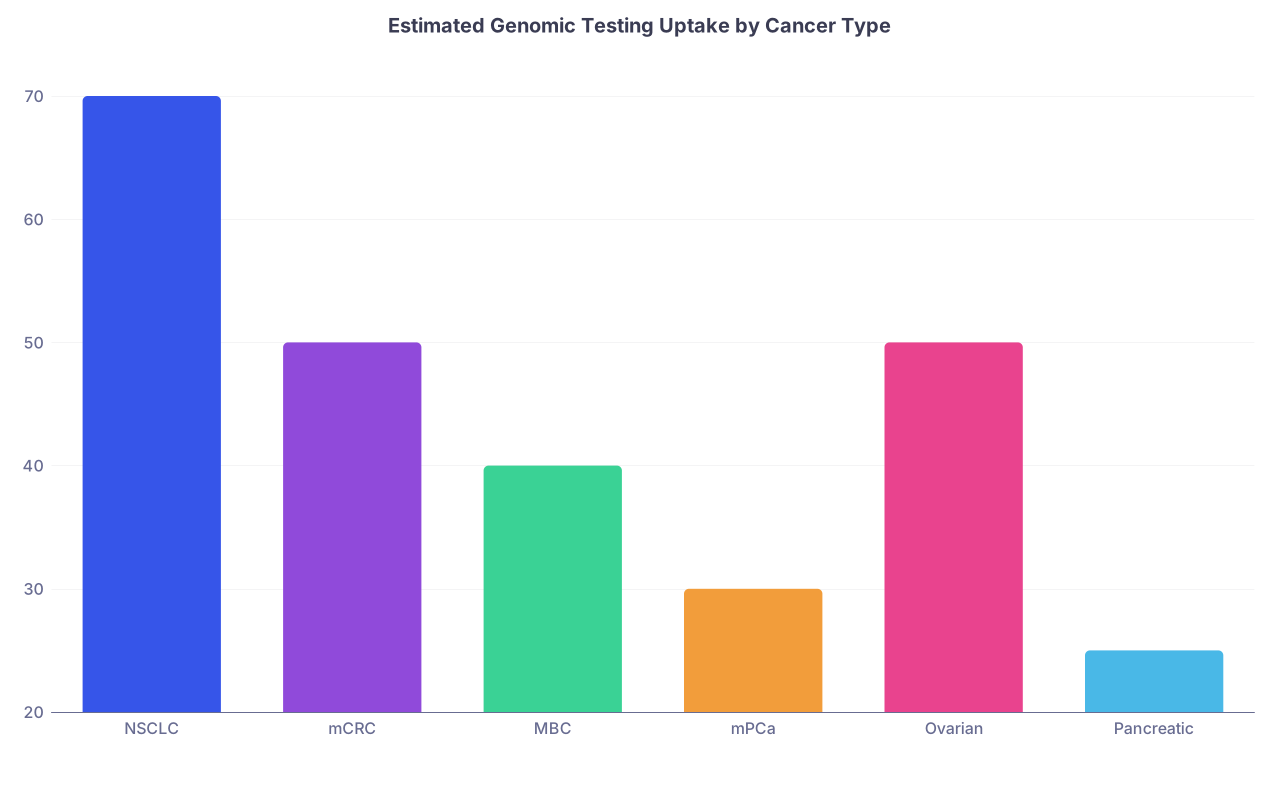
| Category | Value |
|---|---|
| NSCLC | 70 |
| mCRC | 50 |
| MBC | 40 |
| mPCa | 30 |
| Ovarian | 50 |
| Pancreatic | 25 |
So roughly:
- A patient with newly diagnosed metastatic NSCLC has ~70% probability of getting broad genomic testing.
- A patient with metastatic pancreatic cancer has maybe a 1 in 4 shot.
- Inside each of those, the probability rises dramatically if they are treated at an academic center and drops if they are with a small community practice.
That is the first ethical fault line: your tumor’s ZIP code matters as much as its genome.
2. What testing actually changes: treatment impact in hard numbers
Clinicians often ask, “But how often does genomic testing really change management?” Fair question. The honest answer: it depends heavily on cancer type, but in several common cancers the numbers are now unequivocally non‑trivial.
Lung cancer: where the data are clearest
NSCLC is the poster child here because we have the most mature data.
Across multiple large cohorts:
- Proportion of advanced NSCLC patients with an actionable driver mutation (EGFR, ALK, ROS1, BRAF V600E, MET exon14 skipping, RET, NTRK, KRAS G12C, etc.): roughly 35–45% in Western populations; higher in East Asian populations due to EGFR.
- Proportion of those who actually receive a matched targeted therapy: ~60–80% when fully profiled in systematic programs; often less in real-world fragmented care.
Put differently, if you take 100 NSCLC patients and actually perform guideline-concordant broad genomic testing:
- Around 40 will have a clearly actionable alteration.
- Perhaps 25–30 will end up on a guideline-supported targeted therapy.
And the effect size is not subtle. Median overall survival:
- Targetable driver with appropriate TKI first line: often 24–36 months, sometimes longer.
- No driver or driver not identified/treated: often closer to 12–18 months in similar-stage disease.
You do not need a sophisticated ethics framework to see the problem. A missed genomic test in advanced lung cancer is not a “maybe” missed benefit—it is often a one‑year survival penalty.
Colorectal cancer: more subtle, still material
Metastatic colorectal cancer has fewer dramatic “single gene → miracle drug” stories than lung, but the aggregate impact is still real:
- RAS/BRAF/MSI and sometimes extended RAS testing are now table stakes.
- Actionable segments:
- RAS wild-type left-sided tumors: eligibility for anti‑EGFR therapy.
- BRAF V600E mutated tumors: targeted combinations (e.g., BRAF + EGFR inhibitors).
- MSI‑H/dMMR tumors: checkpoint inhibitors.
- HER2 amplified tumors: HER2‑targeted regimens (smaller slice).
If you profile 100 metastatic CRC patients and do it correctly:
- ~45–55 will be RAS wild-type.
- ~8–12 will be MSI‑H/dMMR.
- ~8–12 will harbor BRAF V600E.
- ~3–5 will be clearly HER2 amplified.
Not all of these are mutually exclusive categories, but you typically end up with about 25–35% with strongly guideline-supported biomarker-driven options that differ meaningfully from a generic FOLFOX/FOLFIRI backbone. Survival gains are more modest than lung, but you still see:
- Subgroups with MSI‑H on immunotherapy whose median survivals stretch beyond 3–4 years.
- BRAF V600E tumors that, with combo targeted therapy, do substantially better than historical controls.
Again, without testing, these patients are invisible. They get the “default” regimen and their survival curve looks like 2010, not 2024.
Breast, prostate, and ovarian: the germline / somatic blend
Hormone-driven cancers sit in an awkward but important middle zone between tumor and inherited genomics.
Breast cancer, especially metastatic:
- Somatic biomarkers: PIK3CA mutations (for PI3K inhibitors), ESR1 mutations, HER2‑low status—all increasingly reliant on molecular and advanced pathology testing.
- Germline drivers: BRCA1/2 and related homologous recombination repair genes—qualifying patients for PARP inhibitors in metastatic disease and influencing adjuvant therapy.
Real-world data suggest:
- ~5–10% of unselected breast cancer patients have germline BRCA1/2 mutations (higher in specific ethnic cohorts).
- In metastatic HER2‑negative, BRCA‑mutated disease, PARP inhibitors have shown significant PFS gain (often several months) and quality of life advantages versus standard chemotherapy.
Ovarian cancer is even more genomic-driven from a germline standpoint:
- Around 15–20% germline BRCA1/2.
- Another 5–10% somatic BRCA mutations.
- Broader HRD positivity often reaches 40–50% with the right assays.
These features open doors to maintenance PARP inhibitors or combination strategies that roughly double progression‑free survival for key subgroups.
Prostate cancer (metastatic castration‑resistant):
- ~10–12% have BRCA1/2 or similar DNA repair gene mutations.
- ~20–25% have any homologous recombination repair gene alteration.
- These patients are more likely to benefit from PARP inhibitors or combination with AR‑targeted therapies.
Yet, as we saw earlier, only 20–40% of metastatic prostate cancer patients in many datasets receive adequate genomic or germline testing. That means roughly half of the patients who could qualify for an effective targeted option remain unidentified.
That is not a theoretical harm. That is measurable undertreatment.
3. The structural and demographic gaps no one likes to talk about
Zoom out from disease-specific numbers and the inequities become even more uncomfortable. The data are brutally consistent.
Academic vs community settings
Studies comparing NGS use between academic centers and community oncology consistently show a 2–3x difference in uptake.
Typical patterns:
- Academic or NCI‑designated center:
- 70–90% of advanced NSCLC gets broad testing.
- 60–75% of ovarian cancer patients get germline and (when indicated) tumor HRD testing.
- Small community practice:
- 30–50% of advanced NSCLC gets full guideline‑concordant biomarker testing; and a meaningful fraction gets only partial (EGFR/ALK/PD‑L1) or incorrect test panels.
- Ovarian germline testing often under 40%, sometimes much less.
The core driver is not science. It is workflows, access to molecular tumor boards, and frankly, comfort with interpreting complex reports.
Race, socioeconomic status, and insurance type
There is no way to sugarcoat this: Black and Hispanic patients, low‑income patients, and those with Medicaid or no insurance are consistently less likely to receive genomic testing across multiple cancers.
Numbers from multi‑center studies and claims:
- In advanced NSCLC:
- White, privately insured patients: testing rates often in the 70–80% range.
- Black patients: frequently 10–20 percentage points lower.
- Medicaid/uninsured: another 10–15 points lower than commercially insured.
- Similar deltas show up in breast and ovarian germline testing, where Black women with breast or ovarian cancer are significantly less likely to receive BRCA testing, even at similar stage and age.
Summed up:
- You can have the same stage IV lung cancer and the same actionable EGFR mutation.
- If you are white, commercially insured, treated at an academic center, your odds of getting the right TKI up front are very high.
- If you are Black, on Medicaid, in a community practice, the probability drops substantially at each step: test ordered, adequate panel, result interpreted, therapy approved.
From an ethics standpoint, that is not a knowledge gap. That is a distribution problem.
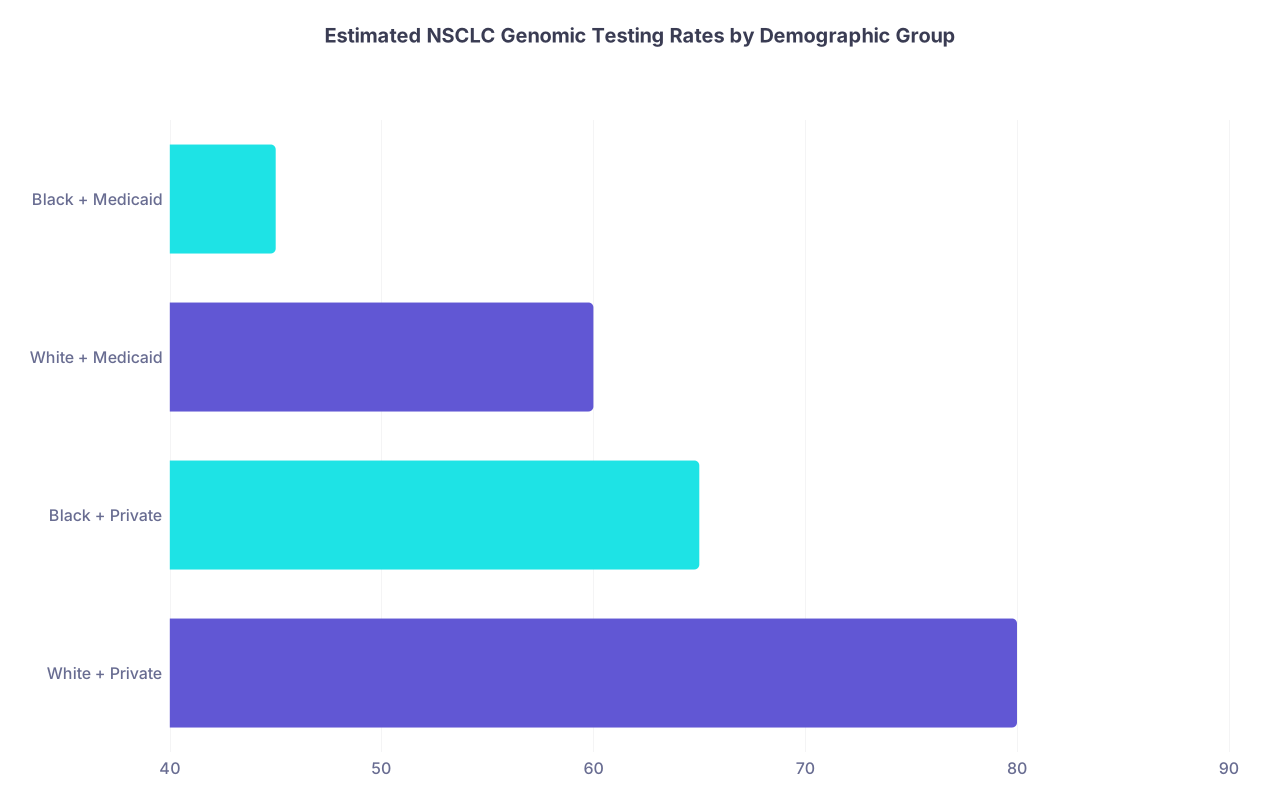
| Category | Value |
|---|---|
| White + Private | 80 |
| Black + Private | 65 |
| White + Medicaid | 60 |
| Black + Medicaid | 45 |
The exact numbers will vary by region and year, but the rank order and scale are consistent.
4. Overuse vs underuse: are we actually “doing too much testing”?
Every time I present these gaps, someone raises an eyebrow and asks if we are overdoing genomic testing. The data say that in common cancers we are nowhere near saturation. If anything, we are still in the underuse phase.
You can think in three buckets:
Clearly indicated, guideline‑supported testing
Example: advanced NSCLC; metastatic CRC biomarkers; germline BRCA in ovarian and high‑risk breast; HRR in metastatic prostate.
Underuse is the core problem here. The proportion of patients receiving recommended testing lags behind what any rational system would target.Expansive panel testing with uncertain utility
Example: broad 500‑gene NGS prescribed in early‑stage cancers with limited immediate treatment impact, or in common cancers where first‑line decisions are already clear and targeted options limited.
Here, yes, you see some overuse. The yield in terms of treatment‑changing findings is often in the single digits.Incidental germline findings and non‑actionable results
Large tumor panels sometimes reveal germline variants; wide genomic profiling can generate findings with no clear actionability.
The problem is not the percentage of such findings; it is the lack of counseling infrastructure and follow‑through.
Net effect: In high‑impact situations (lung, ovarian, metastatic prostate, etc.), underuse dominates. In low‑impact or early‑stage scenarios, you see pockets of testing that exceed what current evidence strictly justifies. Both matter for ethics, but they are fundamentally different problems.
5. Ethical tension: autonomy, beneficence, justice, and reality
Now the ethics are not abstract anymore. We have live numbers.
Autonomy: informed consent or data dump?
Real autonomy requires accurate, comprehensible information. But look at the typical consent for NGS panels: dense, rushed, often tacked onto a flurry of chemotherapy consents.
Common pattern I have seen in clinics:
- Physician: “We’ll also send your tumor for more detailed molecular testing; it can open options for targeted drugs.”
- Patient: nods, signs; no real discussion of germline implications, future insurance issues, or uncertain variants.
From the data side:
- About 3–10% of patients undergoing tumor genomic testing will have incidental germline findings.
- Many will never receive dedicated genetic counseling to interpret those findings.
So on paper, autonomy is protected. In practice, it is often illusory. Patients did not really consent to the potential life‑changing cascade of a germline result for them and their family. They simply agreed to “more tests.”
Beneficence vs non‑maleficence: not ordering the test can be the harm
Here is the important shift: in 2024, for multiple common cancers, the primary ethical risk is no longer “over‑diagnosing” rare variants. It is under‑identifying clearly actionable ones.
Examples:
- Not testing an advanced NSCLC patient comprehensively before starting chemo‑immunotherapy means you may be giving them an inferior regimen and potentially making later targeted therapy less effective or more toxic.
- Not offering BRCA testing to a patient with high‑grade serous ovarian cancer closes the door on PARP maintenance that doubles progression‑free survival in specific subgroups.
The numbers are big enough that “we didn’t get around to ordering the test” is no longer a neutral act. It is a deviation from beneficence that carries quantifiable harm.
Justice: genomic stratification is amplifying inequality
Justice is where the numbers are most brutal. Precision oncology is not neutral with respect to inequality; it amplifies whatever disparities already exist.
Think of it mathematically:
- Step 1: Probability of seeing an oncologist who knows and believes in guideline‑concordant genomic testing.
- Step 2: Probability that the clinic has access to the right panels and can obtain insurance authorization.
- Step 3: Probability that, once a mutation is found, payers approve the matched therapy, or clinical trials are accessible.
- Step 4: Probability that the patient can actually attend more frequent monitoring visits and manage co‑pays.
Multiply those probabilities. If each step is 0.8 at an academic center and 0.5 in an under-resourced setting, by step 4 you have:
- Academic: 0.8⁴ ≈ 0.41 chance of complete “precision pathway” success.
- Under-resourced: 0.5⁴ = 0.0625.
Same tumor biology. Six‑fold difference in realized precision benefit because of structural factors.
You cannot call that just.
6. What a “data‑aligned ethical approach” actually looks like
Ethics without numbers is philosophy. Numbers without ethics is just reporting. The intersection is where decisions need to happen.
Here is what the data suggest as rational, ethically defensible priorities.
1. Hard‑wiring testing where the effect size is largest
For cancer types where genomic testing clearly changes first‑line or early‑line management—and where treatment impact is large—the default should be:
- Testing is automatic, opt‑out rather than opt‑in.
- Systems (EHR prompts, order sets) enforce this, not individual memory.
- Audits track rates by provider, site, race, and payer. Outliers get addressed.
This applies today to:
- Advanced NSCLC.
- Metastatic CRC.
- Metastatic prostate cancer for HRR testing.
- Ovarian cancer (germline ± tumor HRD/BRCA).
- High‑risk breast cancer populations (for germline BRCA and related genes).
2. Standardizing equity metrics alongside clinical metrics
If a center tracks chemotherapy utilization and survival, it can also track genomic testing by demographic categories. And it should.
The minimum dataset any serious oncology program ought to monitor:
- Testing rate by:
- Cancer type.
- Race/ethnicity.
- Insurance class (commercial, Medicare, Medicaid, uninsured).
- Site of care (academic vs community satellites).
- Proportion with actionable alterations who actually receive matched therapy.
If your lung cancer testing rate is 80% for white privately insured patients and 50% for Black Medicaid patients, that is not a mystery. That is a quality problem, and an ethical one.
3. Making consent real, not perfunctory
No, we are not going to conduct a 45‑minute ethics seminar before every NGS order. But there are baseline thresholds:
- Patients should understand:
- That the test looks across many genes.
- That some results might suggest inherited risk for them or relatives.
- That results may not yield a targeted therapy today, but may matter later.
A two‑page, plain language handout plus a 2–3 minute focused conversation beats a 7‑page legal form with a rushed signature.
4. Training clinicians to interpret and act—or routing to those who can
Most oncologists are not molecular geneticists. That is fine. But ignoring a 40‑page NGS report because it is overwhelming is not fine.
Minimal answer:
- Routine access to a molecular tumor board for complex or ambiguous results.
- Clear institution‑level guidelines on which variants are considered actionably targetable, which are clinical‑trial‑relevant only, and which are to be documented but not acted on.
Without that, you get the worst of both worlds: tests ordered (to feel modern), data produced, zero impact.
7. The bottom line: the numbers force a choice
Let me strip this down.
For several common cancers—especially advanced NSCLC, metastatic CRC, ovarian, and metastatic prostate—the evidence now shows:
- Broad genomic testing yields clinically actionable findings in 25–45% of patients.
- Matched therapies can add months to years of survival and substantially improve quality of life.
Real‑world datasets show:
- Actual testing rates often lag ideal by 20–40 percentage points.
- The gaps are larger in community settings, among racial minorities, and in lower‑income or Medicaid‑insured patients.
Ethically, this leaves you with a very simple choice:
- Either you treat comprehensive genomic testing in these settings as a standard of care that must be operationally enforced and equitably distributed.
- Or you accept that survival in “precision oncology” will systematically vary not only by mutation, but by race, income, and geography.
There is no neutral stance anymore. The data closed that door.


