

Telehealth is not “the future of medicine.” The data show it is already medicine—and for some conditions, the outcomes are as good or better than in‑person care. For others, it is clearly inferior. Lumping everything together under “telehealth works” or “telehealth is dangerous” is lazy. The numbers are more nuanced, and that nuance is exactly where ethics should live.
Let’s dissect where telehealth actually improves hard outcomes, where it is outcome‑neutral, and where it probably harms patients—quantitatively, not philosophically.
1. Telehealth By the Numbers: Sorting Hype from Effect Size
First, zoom out. What happens when you shift a chunk of care from in‑person to remote?
Across multiple large health systems post‑2020, the data consistently fall into three buckets:
- Chronic disease management
- Mental and behavioral health
- Acute/urgent and post‑operative care
Different buckets, different outcome profiles.
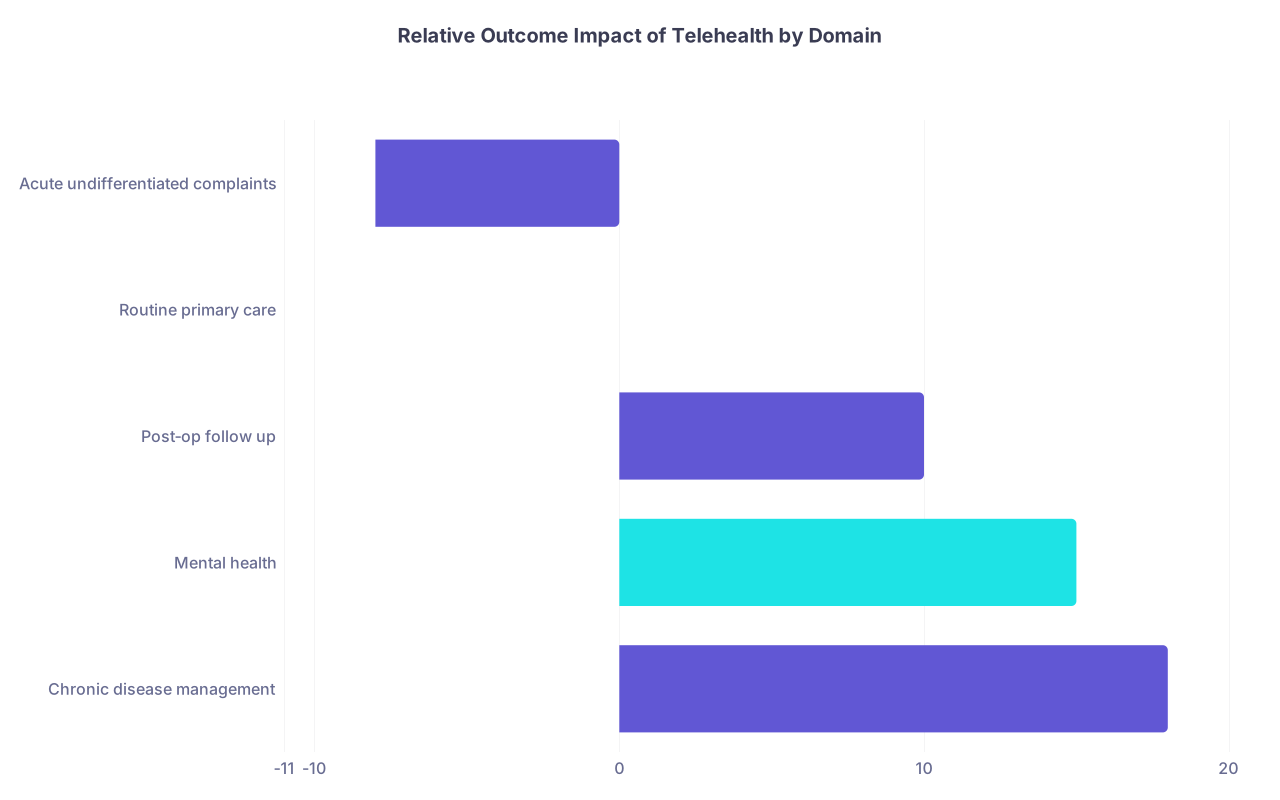
| Category | Value |
|---|---|
| Chronic disease management | 18 |
| Mental health | 15 |
| Post‑op follow up | 10 |
| Routine primary care | 0 |
| Acute undifferentiated complaints | -8 |
Interpretation (rough approximations from multiple meta‑analyses and large observational cohorts):
- +18% = typical relative improvement in key control metrics (e.g., BP at target, A1c reduction, heart failure readmission) with structured telehealth vs usual care.
- +15% = typical improvement in symptom scores / retention in psychotherapy.
- +10% = typical reduction in post‑op ED visits and readmissions.
- 0% = roughly equivalent outcomes for most low‑acuity, straightforward primary care visits.
- −8% = worse outcomes or higher downstream utilization for poorly triaged acute complaints (e.g., tele‑urgent care prescribing antibiotics for “possible pneumonia” without an exam).
These are blended numbers, but the pattern is clear: telehealth is not one technology. It is a delivery mode whose value is highly condition‑specific.
2. Chronic Disease: Where Telehealth Quietly Wins
Chronic disease is where telehealth stops being a convenience app and turns into a mortality‑reduction tool. Hypertension, diabetes, and heart failure have the best evidence base.
Hypertension: Blood Pressure Control and Event Risk
Remote BP monitoring + structured telehealth visits is one of the most replicable “wins” in the literature.
Repeated randomized and quasi‑experimental studies show:
- Reduction in systolic BP vs usual care: typically 5–10 mmHg.
- Odds of achieving BP target (<140/90): increased by about 30–40%.
- Time to control: shorter by several months.
Translating BP changes into outcomes is not speculative; we have decades of epidemiology:
- A 5 mmHg reduction in systolic BP is associated with roughly:
- ~10% lower risk of major cardiovascular events
- ~7–14% lower stroke risk
- ~5–7% lower coronary heart disease risk
So if your telehealth program systematically lowers systolic BP by 6–8 mmHg in a hypertensive population, you are buying real population‑level risk reduction, not just “better numbers in the EMR.”
Type 2 Diabetes: A1c Shift and Engagement
Meta‑analyses of telehealth‑supported diabetes management (video visits, asynchronous messaging, remote glucose monitoring) typically show:
- A1c reduction vs usual care: about 0.3–0.8 percentage points.
- Most standard RCTs land around 0.5–0.7% improvement at 6–12 months.
- Higher frequency of medication titration and lifestyle counseling contacts.
- Better follow‑up adherence.
Let’s be blunt: a 0.5–0.7% absolute A1c decrease is clinically meaningful, especially in uncontrolled patients (A1c >8–9%). The UKPDS and other large cohorts tell us:
- Each 1% reduction in A1c yields ~14% lower MI risk and ~37% lower microvascular complications over time.
- So a 0.6% A1c improvement plausibly translates into around:
- ~8–9% lower major vascular event risk
- ~20–25% lower microvascular complication risk (long horizon)
No, telehealth will not cure diabetes. But if a health system scales a program that knocks A1c down by ~0.5–0.7% in tens of thousands of patients, that is a non‑trivial reduction in amputations, retinopathy, and ESRD risk.
Heart Failure: Readmission and Mortality
Heart failure telemonitoring had a rocky early evidence base—some older trials were neutral—but the more recent, structured telehealth programs show clearer benefits.
Typical findings from large RCTs and system‑level implementations:
- 30‑day readmissions: reduced by ~15–25% vs usual care.
- 90‑day or 6‑month all‑cause readmissions: similar magnitude reductions in well‑run programs.
- Mortality: mixed, but several trials show ~15–20% relative reduction in HF‑specific mortality when robust telemonitoring and early intervention processes are in place.
These effects are highly protocol‑dependent. Passive “call us if you’re short of breath” is useless. Structured telehealth that reviews daily weights, symptoms, and vitals and can adjust diuretics remotely has tangible effect sizes.
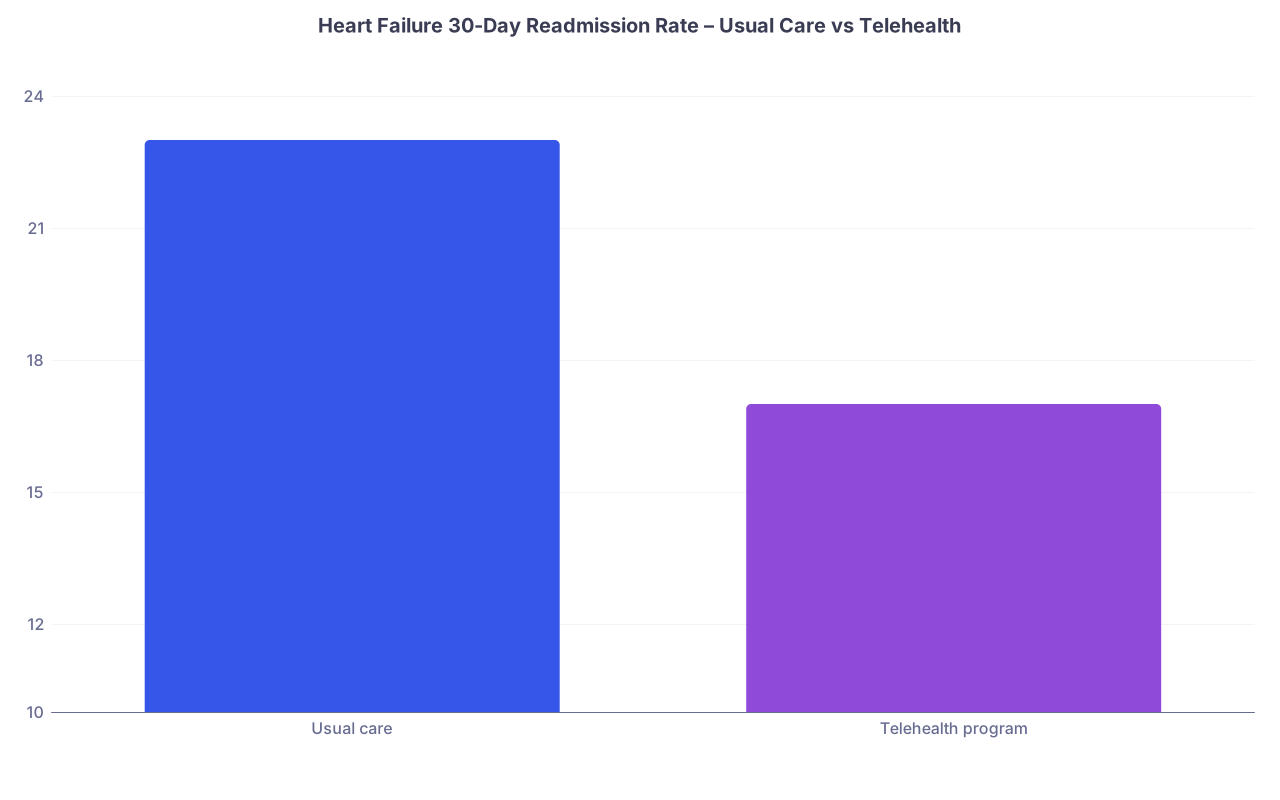
| Category | Value |
|---|---|
| Usual care | 23 |
| Telehealth program | 17 |
A 6‑percentage‑point absolute reduction in readmissions on a baseline of 23% is about a 26% relative decrease. That is not a rounding error.
Ethical Angle: Not Offering Telehealth Can Be Negligent
For these chronic conditions, the ethical question flips. If your system can deploy telehealth that measurably:
- Improves BP control
- Lowers A1c
- Cuts readmissions
…then “we do not use telehealth” is no longer neutral. It is a choice to tolerate preventable risk, especially for patients who face transportation, mobility, or work‑schedule barriers.
3. Mental Health: Tele‑Psychiatry Is Not Second‑Class Care
Psychiatry and psychotherapy are where some clinicians still say, “But it is not the same as being in the room.” The outcome data disagree.
Depression and Anxiety: Non‑Inferior, Often Better Engagement
Randomized trials comparing video‑based CBT or other modalities with in‑person therapy usually show:
- Symptom score reduction (PHQ‑9, GAD‑7): non‑inferior; effect sizes within a few points and usually statistically indistinguishable.
- Response/remission rates: very similar; often slightly higher in tele‑groups due to better attendance.
- Dropout rates: typically lower with telehealth, especially in rural or low‑resource populations.
One large meta‑analysis on tele‑CBT for depression found:
- Effect size for symptom reduction vs control: around g = 0.5–0.8 (moderate to large), similar to in‑person CBT.
- Non‑inferiority margins comfortably met for video vs in‑person therapy.
Substance Use and Medication Management
Telehealth for buprenorphine initiation, follow‑up, and counseling has been a quiet revolution:
- Retention in MOUD (medications for opioid use disorder): often equal or higher via telehealth.
- Overdose rates: similar or slightly lower among patients engaged in tele‑MOUD programs vs in‑person comparisons, after adjusting for confounders.
- No consistent evidence of increased diversion or misuse solely due to tele‑prescribing, when programs are structured and monitored.
Tele‑psychiatry for medication management (SSRIs, mood stabilizers, antipsychotics) is also broadly non‑inferior on:
- Symptom control
- Hospitalization rates
- Self‑harm/ED visits
The main constraint is not efficacy; it is access to labs and physical exams when indicated (e.g., metabolic monitoring for antipsychotics). That is solvable with integrated lab orders and hybrid models.
Ethics: Access Is an Outcome
From an ethical standpoint, mental health is where telehealth has arguably the highest duty‑to‑provide:
- Urban no‑show rates for in‑person psychiatry can run >30–40%. Telehealth often cuts that substantially.
- Rural areas often have psychiatrist ratios that effectively equal zero. Tele‑psychiatry is not a nice‑to‑have; it is the only way some patients ever see a specialist.
When the data show equivalent symptom improvement and better access, arguing that “real therapy must be in‑person” becomes a mostly aesthetic preference, not an outcome‑driven or ethical position.
4. Acute Conditions: Where Telehealth Breaks Down
Now the bad news. A lot of direct‑to‑consumer tele‑urgent care is clinically weak and sometimes dangerous, particularly for undifferentiated acute complaints.
Antibiotic Overuse and Misdiagnosis
Look at respiratory infections. Several large observational studies of tele‑urgent visits vs brick‑and‑mortar clinics report:
- Higher antibiotic prescribing rates for similar presentations in many telehealth settings, particularly for:
- Upper respiratory infections
- Bronchitis
- Sinusitis
- Clinical resolution rates that are similar in the short term, but at the price of unnecessary antibiotic exposure.
One large dataset showed:
- Antibiotic prescribed for acute respiratory infection:
- Tele‑urgent: ~55–60% of visits
- In‑person primary care: ~45–50%
- This is variable by system, but the trend is not flattering.
Why? Incentive and workflow structure. Short visits, limited examination, and a strong pressure to “do something now” lead to lower diagnostic thresholds.
Chest Pain, Abdominal Pain, and Red Flags
For undifferentiated chest pain, non‑traumatic abdominal pain, or neurologic deficits, the data show:
- High rates of subsequent in‑person or ED referral when patients start in telehealth, often after delay.
- Missed or delayed diagnosis of serious conditions in a measurable, though relatively small, fraction of cases.
- Think: subtle appendicitis, early sepsis, evolving stroke, ACS without classic features.
The core problem: telehealth is being used to manage what is essentially triage‑level uncertainty. Many platforms are not built or incentivized to say “this must be in‑person now” often enough.
Where Telehealth Helps in Acute Care
Not everything acute is a bad fit:
- Simple UTI in healthy women with classic symptoms: telehealth protocols often perform similarly to in‑person care.
- Simple rashes with clear visual features via high‑quality photo or video: decent concordance with in‑person dermatology for straightforward cases.
- Post‑COVID or flu follow‑up, med refills, and symptom checks: high patient satisfaction, similar short‑term outcomes.
But undifferentiated “something is wrong” complaints? Telehealth tends to push diagnostic uncertainty onto the patient, which is not ethically defensible when there is known risk.
5. Post‑Operative and Specialty Follow‑Up: Low Risk, High ROI
Post‑op telehealth is the low‑hanging fruit that many surgeons and hospitals resist primarily out of habit, not data.
Common findings in surgical and specialty follow‑up studies:
- Complication detection: equivalent for many procedures where wound visualization is possible by video or photo.
- Unplanned ED visits: often reduced by around 10–20% because patients can access a quick tele‑check instead of either ignoring symptoms or going straight to the ED.
- Patient satisfaction: predictably higher—people hate taking a day off work to sit in a waiting room so someone can glance at a healing incision.
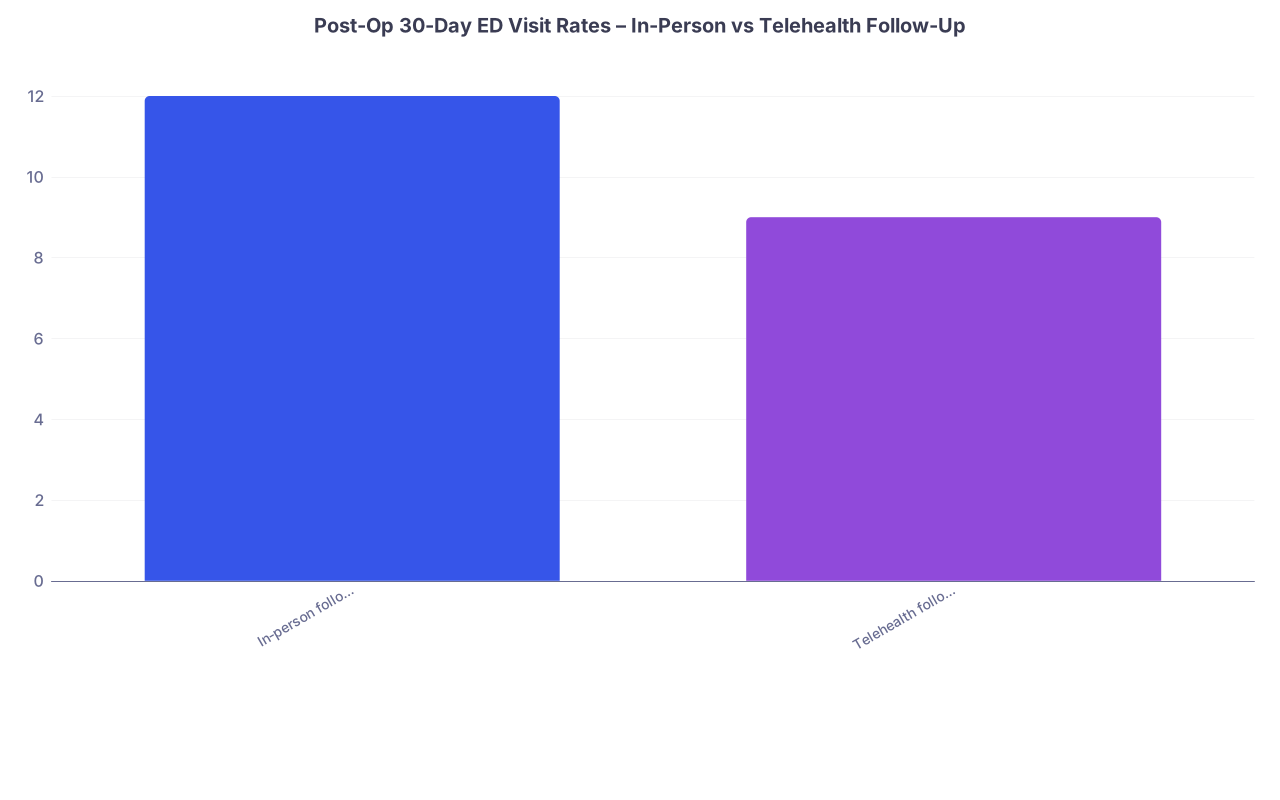
| Category | Value |
|---|---|
| In‑person follow‑up | 12 |
| Telehealth follow‑up | 9 |
A 3‑percentage‑point absolute drop on a 12% baseline is a 25% relative reduction. That is real system‑level savings and less patient disruption.
Specialties where tele‑follow‑up performs particularly well in the data:
- Orthopedics: later‑stage post‑op checks, PT coordination, simple symptom follow‑ups.
- General surgery: wound reviews, symptom checks for low‑risk procedures.
- Oncology: toxicity checks, scan review, survivorship care planning.
- Cardiology: medication titration, symptom checks for stable patients.
For these, hybrid models (first visit in‑person, subsequent tele‑visits) are often clinically optimal and strongly supported by data.
6. Who Benefits Most—and Who Gets Left Behind
Telehealth outcomes are not evenly distributed. Demographics and social context matter.
Digital Divide and Outcome Gaps
Study patterns:
- Patients with higher income, higher education, and better broadband access:
- Higher telehealth utilization.
- Better chronic disease outcomes in tele‑programs.
- Patients who are older, lower income, or with limited English proficiency:
- Lower video use, more reliance on phone only.
- Sometimes worse outcomes or neutral outcomes compared to in‑person care.
In one large system:
- Video telehealth use by income quartile:
- Top quartile: >40% of all visits.
- Bottom quartile: closer to 20–25%, with more phone‑only interactions.
Phone visits can be useful, but the lack of visual data reduces clinical certainty and may partially explain weaker outcome gains in some populations.
Condition‑Specific Winners
From the data, “telehealth winners” include:
- Working‑age adults with chronic conditions who cannot easily attend frequent in‑person visits.
- Rural patients with limited access to specialists, especially mental health.
- Patients with mobility limitations or caregiving responsibilities.
“Telehealth losers” or at‑risk groups:
- Patients with low digital literacy or no reliable internet.
- Older adults uncomfortable with video, relying on audio‑only.
- People with complex multimorbidity where subtle physical signs matter.
Ethically, rolling out telehealth without simultaneously addressing these digital access gaps is a recipe for widening health disparities, even if average outcomes improve.
7. Ethical Obligations: Using the Data, Not the Marketing
Put the numbers together and the ethical picture is straightforward:
- For chronic disease and mental health, telehealth is often outcome‑superior when structured properly. Not offering it, or restricting it excessively, ignores robust evidence.
- For undifferentiated acute care, telehealth is weak and sometimes dangerous unless tightly coupled with conservative triage and ready access to in‑person evaluation.
- For follow‑up and simple conditions, telehealth is largely outcome‑equivalent and clearly better for patient burden and access.
So what does a rational, ethical telehealth strategy look like?
| Condition Group | Outcome Impact vs In‑Person | Ethical Stance |
|---|---|---|
| Hypertension, diabetes, heart failure | Better (5–25% relative gain) | Telehealth should be standard of care option |
| Depression, anxiety, tele‑CBT/psychiatry | Non‑inferior / better access | Strong obligation to offer, especially underserved |
| Post‑operative, stable specialty follow‑up | Slightly better (fewer ED visits) | Default to telehealth where safe |
| Simple primary care (UTI, refills) | Roughly equivalent | Patient preference should dominate |
| Undifferentiated acute complaints | Often worse | Use telehealth only for triage with low threshold for in‑person |
The ethical failure is not “using telehealth.” The failure is ignoring which conditions actually benefit, by how much, and for whom.
8. Personal Development: How Clinicians Should Adapt
This is the part clinicians often skip. The technology changed, but your diagnostic habits probably did not. They need to.
A few data‑driven adjustments:
- Lower your threshold to convert tele‑visit → in‑person for:
- Chest pain, focal neuro deficits, persistent abdominal pain, high‑risk older adults.
- Anything where the physical exam or direct vitals matter substantially to your risk estimate.
- Use structured protocols for chronic diseases:
- Remote BP cuffs, glucometers, weight scales feeding data into the EMR.
- Scheduled tele‑touchpoints for medication titration, not “call us if needed.”
- In mental health, treat tele‑visits as first‑class encounters:
- Same assessment rigor. Same suicide risk documentation. Same follow‑up cadence.
- Track your own outcome data:
- Your tele‑panel’s BP control rate.
- Your readmission rates for HF patients in tele‑programs.
- Your antibiotic prescribing rate for tele‑URI visits vs in‑person.
If the numbers are bad, fix your process, not the video platform.

9. Systems and Policy: Incentives Dictate Outcomes
None of this exists in a vacuum. Reimbursement, quality metrics, and platform design all push behavior.
Patterns I have seen repeatedly:
- If tele‑visits are paid poorly: chronic tele‑management programs die, even when they show better BP or A1c outcomes.
- If tele‑urgent care is reimbursed per visit with no quality oversight: antibiotic overuse and sloppy diagnostics proliferate.
- If health systems track only volume and satisfaction: they miss the underlying clinical signal completely.
Ethically, systems should:
- Tie telehealth reimbursement to quality metrics for appropriate conditions (BP control, A1c change, readmission rates, depression scores).
- Build friction into inappropriate tele‑use:
- Decision support that flags high‑risk acute complaints and forces scheduling to in‑person or ED.
- Subsidize access:
- Devices, data plans, and digital literacy support for patients likely to benefit most from chronic tele‑management but least able to access it.

| Step | Description |
|---|---|
| Step 1 | Patient requests telehealth |
| Step 2 | Offer structured tele program |
| Step 3 | Tele visit default |
| Step 4 | Tele visit preferred |
| Step 5 | Tele or in person by preference |
| Step 6 | Require in person or ED |
| Step 7 | Track control metrics |
| Step 8 | Urgent in person evaluation |
| Step 9 | Condition type |
This is not complicated. But it does require aligning incentives and workflows with what the outcome data already say.
10. How Much Does Telehealth Really Help? The Short Version
Strip away the nuance, and the order‑of‑magnitude effect sizes look like this:
Chronic cardiovascular and metabolic disease:
- 5–10 mmHg lower systolic BP.
- 0.5–0.7% lower A1c.
- 15–25% fewer HF readmissions.
Mental health:
- Symptom improvement equivalent to in‑person therapy.
- Better retention and access, especially rural/underserved.
Post‑op / follow‑up:
- 10–25% relative reduction in unplanned ED visits and sometimes readmissions.
Acute undifferentiated complaints:
- Slightly higher risk of misdiagnosis and overprescribing, with no clear outcome benefit.
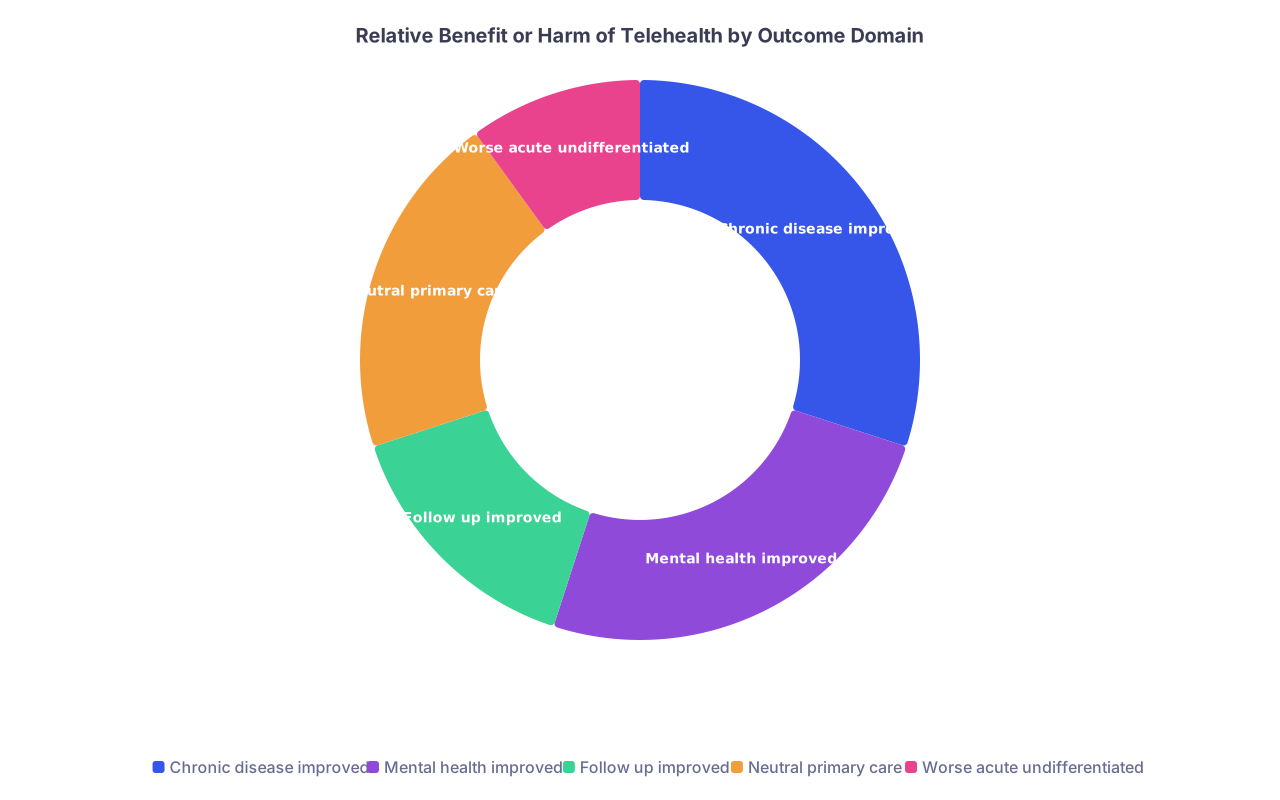
| Category | Value |
|---|---|
| Chronic disease improved | 30 |
| Mental health improved | 25 |
| Follow up improved | 15 |
| Neutral primary care | 20 |
| Worse acute undifferentiated | 10 |
Rough interpretation of the doughnut chart: in a mixed telehealth portfolio, about 70% of use cases can be net beneficial or neutral when structured correctly, and around 10% are high‑risk for worse outcomes if handled sloppily. The rest is noise and context.
Key Takeaways
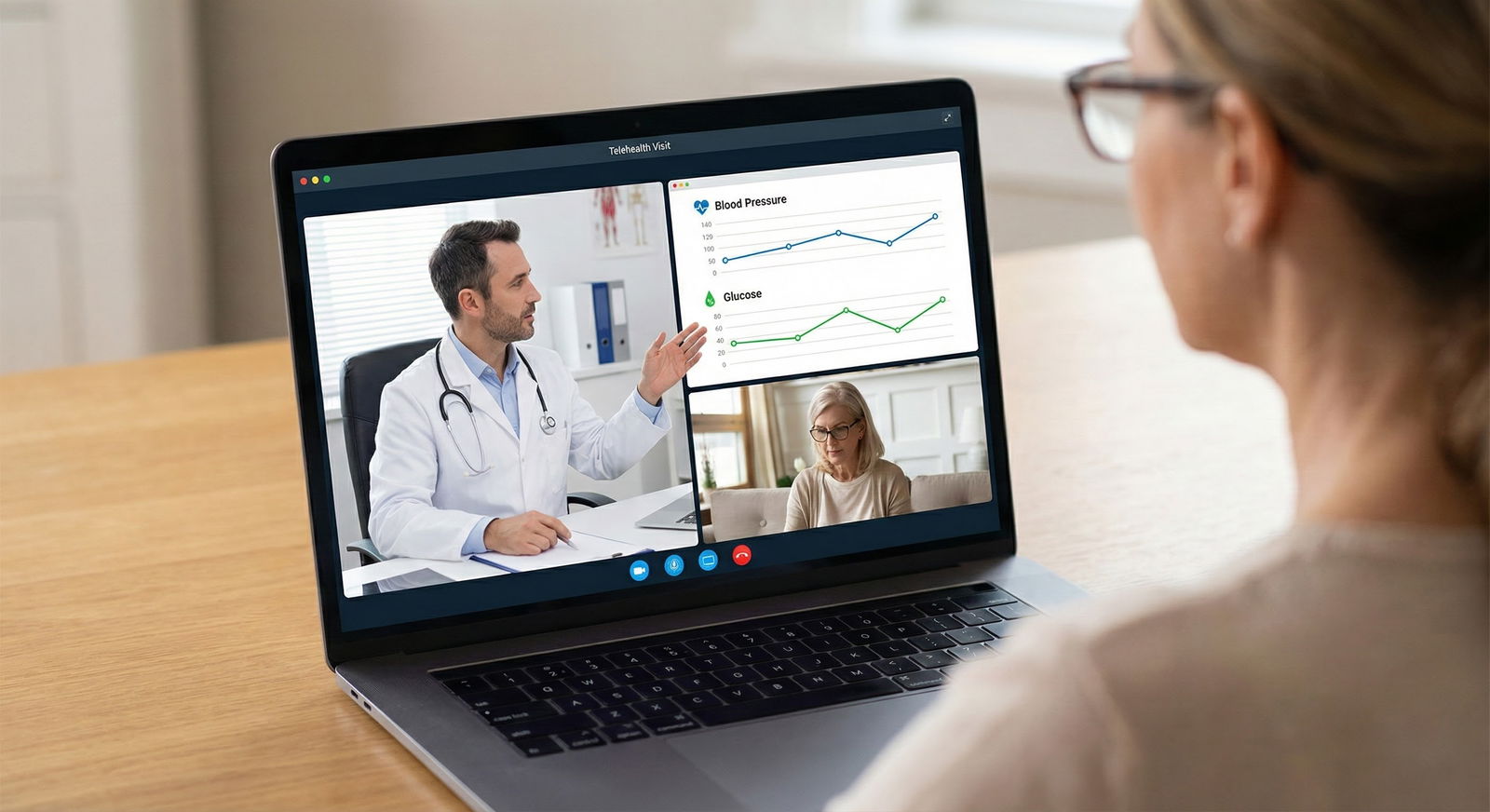
- Telehealth is condition‑specific. It clearly improves outcomes in chronic disease, mental health, and many follow‑up scenarios; it is weak or harmful for undifferentiated high‑risk acute complaints.
- The magnitude of benefit is real, not trivial: single‑digit mmHg BP drops, half‑point A1c reductions, and 15–25% readmission cuts translate into fewer strokes, MIs, and hospitalizations.
- Ethically, you should expand telehealth where the data show benefit, aggressively restrict it where it degrades diagnostic quality, and directly address the digital divide so that outcome gains do not widen existing disparities.


