
The most dangerous thing about liquid biopsy in solid tumors is not a false negative. It is blind faith.
You are being sold a seductive idea: one tube of blood, all the answers. That is wrong. Liquid biopsy is powerful, but it is absolutely not a universal surrogate for tissue. You need a mental framework for when the result is actionable, and when ignoring it is the ethical choice.
Let me walk you through this in a way that matches how decisions are actually made in clinic rooms and tumor boards, not in glossy reviews.
1. What “Liquid Biopsy” Really Is (And What It Is Not)
Liquid biopsy is not magic. It is a set of technologies that detect tumor‑related material in body fluids, mainly blood. Think specifically about:
- Circulating tumor DNA (ctDNA) – fragmented DNA shed from tumor cells
- Circulating tumor cells (CTCs) – intact cells in the bloodstream (less commonly used in routine solid tumor care)
- Sometimes exosomes / cfRNA – still more research than routine clinical use
For solid tumors, when people say “liquid biopsy” in practice, they usually mean plasma ctDNA NGS panels. Guardant360, FoundationOne Liquid, Signatera, RaDaR, etc. Different platforms, but the same core idea: sequence tumor‑derived DNA fragments in plasma and infer:
- Actionable driver mutations (EGFR, ALK fusions, BRAF, HER2, KRAS G12C, etc.)
- Resistance mutations (EGFR T790M, C797S, ESR1, MET amplification, etc.)
- Minimal residual disease (MRD) or molecular relapse
- Tumor mutational burden (TMB) or MSI status (on some assays, with caveats)
What it is not:
- It is not a histologic diagnosis. You cannot call something lung adenocarcinoma, small cell, lymphoma, or sarcoma from ctDNA alone.
- It is not a perfect quantitative measure of tumor burden. Trends help, but absolute levels mislead you if you overinterpret.
- It is not guaranteed to see every driver mutation. Biology and technical limits create blind spots.
So from day one, you should frame it correctly: liquid biopsy is a complementary tool, not a replacement for tissue. Any lab or colleague who suggests otherwise is either naïve or selling something.
2. The Core Problem: Shedding Biology and Pre‑Test Probability
If you want a one‑liner on when to trust ctDNA: trust positives in high‑shedding disease, be skeptical of negatives in low‑shedding disease.
Tumors differ dramatically in how much DNA they shed into the circulation. That one fact explains 80% of the confusion clinicians have with liquid biopsy.
High‑shedding scenarios:
- Advanced, bulky metastatic disease
- Highly vascular tumors
- Visceral and liver metastases
- Rapidly progressive disease
Low‑shedding scenarios:
- Early‑stage disease (I–II)
- Oligometastatic disease
- Purely intracranial disease (brain metastases behind an intact or semi‑intact blood–brain barrier)
- Certain histologies (e.g., some indolent tumors, some mucinous GI cancers)
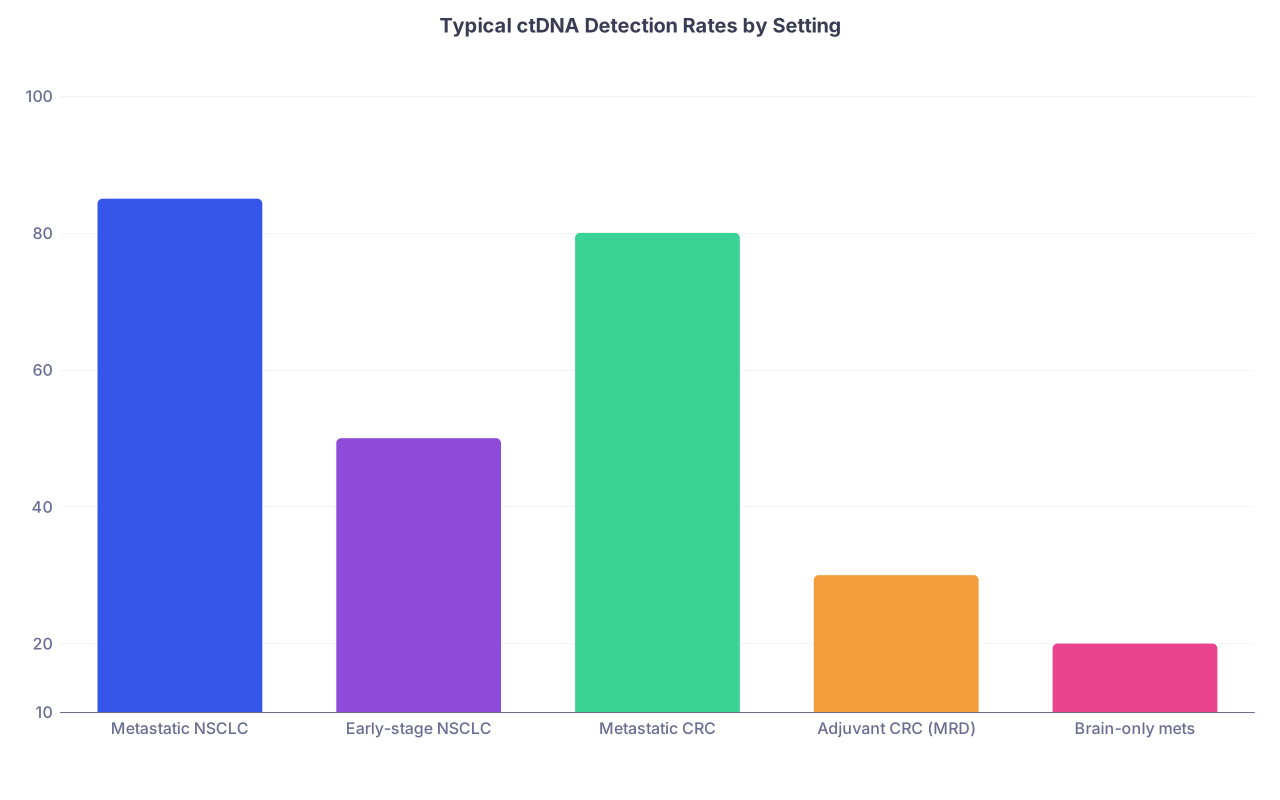
| Category | Value |
|---|---|
| Metastatic NSCLC | 85 |
| Early-stage NSCLC | 50 |
| Metastatic CRC | 80 |
| Adjuvant CRC (MRD) | 30 |
| Brain-only mets | 20 |
Numbers above vary by study and platform, but the pattern is stable: more tumor, more shedding, better sensitivity.
You must pair this with pre‑test probability. A negative ctDNA for EGFR mutations in a never‑smoker Asian woman with metastatic lung adenocarcinoma does not mean she is EGFR wild‑type. That is a bad interpretation of a test with known sensitivity limits.
Ethically, if the clinical phenotype strongly suggests a targetable driver, you cannot “rule out” the mutation with liquid biopsy alone. You still owe that patient tissue testing.
3. When You Can Trust a Liquid Biopsy Result
Let me be very clear: liquid biopsy is not fragile in all settings. When used correctly, some results are highly trustworthy and enable faster, safer care than waiting for tissue.
3.1 A clearly positive actionable mutation in a plausible context
This is the cleanest scenario.
Examples:
- Metastatic lung adenocarcinoma, heavy disease burden, ctDNA shows EGFR exon 19 deletion at high allele frequency
- Hormone receptor–positive metastatic breast cancer progressing on aromatase inhibitor, ctDNA shows ESR1 mutation
- Metastatic colorectal cancer, ctDNA shows KRAS G12D and NRAS wild‑type
In these situations:
- The mutation is biologically plausible for the tumor type
- Disease burden is high, so shedding should be robust
- The detected mutation is a well‑validated therapeutic target or resistance marker
You should treat on this basis. Waiting for tissue confirmation can be harmful if it delays appropriate therapy, and guidelines increasingly support starting targeted therapy based on ctDNA in such metastatic settings.
This is especially true in rapidly progressive disease where time to treatment matters more than academic neatness.
3.2 Emerging resistance mutations on therapy
Another strong use case.
You started an EGFR TKI, patient responded, now progressing. ctDNA shows EGFR T790M (for older TKIs) or C797S, or MET amplification. Or in ALK‑positive disease, you see ALK secondary mutations on ctDNA at progression.
Those resistance alterations emerging under selective pressure are exactly what liquid biopsy is good at catching – often earlier and more comprehensively than a single new biopsy from one progressing lesion.
Do you need tissue to “confirm” every such resistance pattern? No. Often you cannot even biopsy the relevant metastatic site safely. Here, the ethical decision is to act on high‑quality ctDNA rather than wait for perfect but infeasible information.
3.3 MRD rising after a prior negative result – dynamic trends
For MRD in colorectal cancer or other early‑stage tumors, a single low‑level positive ctDNA can be tricky. But a rising pattern after surgery or adjuvant therapy is strongly predictive of relapse and often precedes radiographic recurrence.
If:
- You had a baseline ctDNA that became undetectable after resection
- Then it turns positive and rises in serial draws
You can trust that trend as biologically real. It is not noise. It reflects clonal expansion of residual disease.
Acting early (intensified surveillance, trial enrollment, or even preemptive systemic therapy in the future) is likely to become standard. Already in some centers, MRD positivity is used to stratify clinical trial eligibility.
3.4 High VAF driver mutation concordant with tissue
If you already have tissue NGS and you run ctDNA for monitoring, and you see the same driver mutation at a reasonably high variant allele frequency (VAF), you can trust it is real and track it over time.
This is where liquid biopsy and tissue really complement each other. Tissue gives you the baseline genomic architecture; liquid lets you watch it evolve.
4. When You Absolutely Should Not Trust It (Or Should Be Very Cautious)
Now the other side: scenarios where taking a liquid biopsy result at face value is intellectually lazy and ethically hazardous.
4.1 A negative result in a setting where sensitivity is limited
Classic traps:
- Early‑stage (I–II) NSCLC: ctDNA negative for EGFR, ALK, etc. You cannot conclude “no driver mutation.”
- Oligometastatic lung or colorectal cancer: ctDNA negative; small volume disease may not shed enough DNA.
- Intracranial-only metastatic disease: ctDNA negative while CSF or tissue might be positive.
In all these, a negative ctDNA is basically “we did not see it, but the test may not be sensitive enough.” That is not the same as “it is not there.”
If the patient’s clinical picture or epidemiology strongly suggests an oncogenic driver, you must pursue tissue testing regardless of ctDNA.
Ordering ctDNA in such low‑shedding settings is fine if you know its limits and communicate them honestly to the patient. The ethical failure is declaring that “your blood test shows you do not have targetable mutations.”
You simply do not know that.
4.2 Using liquid biopsy instead of a diagnostic tissue biopsy
Another serious misconception: ctDNA cannot establish a cancer diagnosis or subtype. You cannot diagnose:
- Lymphoma vs lung carcinoma
- Small cell vs non–small cell lung cancer
- Sarcoma vs carcinoma
- Primary vs metastatic origin
based on ctDNA alone. You need histology, immunohistochemistry, sometimes special stains or RNA fusion panels. And you need morphology.
So for an undiagnosed mass, you do not “replace” biopsy with ctDNA. If someone is medically inoperable for lung biopsy, you might use ctDNA to find an EGFR mutation and start an EGFR TKI – but you do that knowing you are operating in a gray zone, often as a last resort.
This is where medical ethics and shared decision‑making matter. If you cannot make a histologic diagnosis safely, and the patient fully understands the uncertainty, then liquid biopsy–driven empiric therapy can be reasonable. But do not pretend you are practicing standard, guideline-concordant care in those edge cases.
4.3 Low VAF oddball variants with no tissue correlation
You will occasionally get back a ctDNA report with a laundry list of “variants of unknown significance” at 0.2–0.5% VAF, some in genes that make no sense for that tumor type.
This is contamination from:
- Clonal hematopoiesis of indeterminate potential (CHIP) – age‑related mutations in blood cells that masquerade as tumor signal
- Background sequencing noise
- Rare passenger events with no predictive or prognostic value
Blindly acting on these is a mistake. You do not switch therapy because a 0.3% VAF JAK2 V617F shows up on a lung cancer panel in a 78‑year‑old with anemia, or because a random non‑canonical TP53 variant appears.
Ethically, your obligation is to filter signal from noise, not to chase every letter on the report as if it is destiny.
4.4 Tumor mutational burden and MSI from liquid biopsy – very shaky ground
Some ctDNA platforms report:
- TMB (Tumor Mutational Burden)
- MSI status
The analytical reality: these are much harder to call accurately from low‑input, fragmented plasma DNA. Concordance with tissue is improving but still not perfect, and thresholds borrowed from tissue assays may not translate cleanly.
If a ctDNA assay says “MSI‑High” in a tumor where that would be surprising (for instance, classic EGFR‑mutant lung adenocarcinoma), you should question it and confirm on tissue if possible before saying “you qualify for immunotherapy based on MSI.”
Same with borderline high TMB. Acting solely on a plasma TMB of “10 mut/Mb” without tissue context is weak practice today. Some regulators allow it, but scientifically it remains less robust than tissue-based metrics.
4.5 Overinterpreting lack of MRD signal as “cure”
MRD‑negative ctDNA after surgery or adjuvant therapy is comforting. Patients latch onto it. You might be tempted to speak too confidently.
The right framing: MRD negativity decreases the short‑term risk of microscopic residual disease, but it does not guarantee cure. Sensitivity is imperfect; biological behavior is variable.
Discharging someone mentally with “your liquid biopsy shows you are cancer‑free” is unethical. They are at lower risk, not no risk. They still need surveillance.
5. Knowing the Assay: Platform Differences Actually Matter
If all you know about a liquid biopsy is that “a panel was done,” you are not yet qualified to interpret it confidently.
Different ctDNA platforms differ in:
- Breadth (number and types of genes covered; fusions vs SNVs vs copy number)
- Depth (coverage, sensitivity at low VAF)
- Use of unique molecular identifiers (UMIs) and error correction
- Their ability to distinguish CHIP from true tumor mutations
- Regulatory status (LDT vs FDA‑approved companion diagnostic)
| Clinical Scenario | ctDNA Role | Reliability for Negatives | Reliability for Positives |
|---|---|---|---|
| Metastatic NSCLC, high burden | Driver detection | Moderate | High |
| Early-stage CRC post-op (MRD) | MRD detection | Low–Moderate | High (if serially rising) |
| Brain-only metastases | Driver detection | Poor | Variable |
| Metastatic CRC RAS/BRAF status | Predictive marker | Moderate | High |
| HR+ MBC on endocrine therapy | ESR1 resistance | Moderate | High |
Ask yourself:
- Does this platform detect fusions well (e.g., ALK, ROS1, NTRK), or is it mainly SNVs?
- What is its validated limit of detection (0.1%, 0.4%, 1% VAF)?
- Does it use peripheral blood mononuclear cells to subtract CHIP mutations?
- Is it validated as a companion diagnostic for the drug you are considering?
That knowledge changes how strongly you trust a negative result. For example, using a ctDNA assay without robust fusion calling to “rule out” ALK rearrangement is poor thinking.
6. Clinical Scenarios: Trust vs Skepticism in Real Life
Let me make this concrete with real‑world style cases.

| Step | Description |
|---|---|
| Step 1 | ctDNA Result |
| Step 2 | Generally trust and act |
| Step 3 | Check tissue or rebiopsy |
| Step 4 | Correlate with tissue / phenotype |
| Step 5 | Do not rule out drivers, pursue tissue |
| Step 6 | Stage / Burden |
| Step 7 | Result type |
| Step 8 | Result type |
Scenario 1: Metastatic NSCLC, sick patient, no tissue yet
Patient: 62‑year‑old, 40 pack‑year smoker, multiple bilateral lung nodules, liver metastases, symptomatic. Interventional radiology can biopsy in a week; pathology turnaround another week. You send ctDNA now.
Result 5 days later: KRAS G12C at 12% VAF, TP53 mutation, high ctDNA fraction.
Do you start a KRAS G12C inhibitor while tissue is pending?
Yes, I would. The biology fits. High burden disease, classic smoker, plausible driver mutation. Delaying for tissue confirmation in a deteriorating patient is not good medicine.
Ethically, you explain uncertainty but make a rational, evidence‑aligned choice.
Scenario 2: Never‑smoker Asian woman with lung adenocarcinoma, limited bone metastases
You suspect EGFR or ALK. You send ctDNA and tissue NGS from a bronchoscopic biopsy.
ctDNA returns “no actionable mutation detected.”
You do not interpret this as “no EGFR/ALK.” You wait for tissue NGS or push for adequate tissue if initial sample is scant.
If tissue cannot be obtained safely and ctDNA is negative, then and only then you might be forced into empiric therapy (e.g., platinum doublet) while continuing to search for a molecular target. But you do not falsely reassure yourself that you have definitively excluded drivers.
Scenario 3: Resected stage II colon cancer, considering adjuvant chemo
Surgery done, pathology clean margins, 0/18 lymph nodes. ctDNA at 4 weeks post‑op is positive for the original KRAS mutation and two additional variants.
That is a high‑risk molecular signature. You can trust this one. The probability of recurrence is markedly higher. If you were on the fence about adjuvant chemo, this pushes you strongly toward recommending it and possibly intensifying.
Now, if that same test were negative, could you skip chemo altogether? That is less clear right now. Trials are ongoing, but outside of a trial I would not base a “no adjuvant therapy” decision solely on a single negative MRD ctDNA. You fold it into the overall risk discussion.
Scenario 4: HR+ metastatic breast cancer, slow progression on AI
You send ctDNA and get ESR1 mutation at 1.2% VAF, PIK3CA mutation at 0.8%. Disease is otherwise indolent.
These are believable. They match known resistance patterns. Switching to an oral SERD or adding CDK4/6 or PI3K inhibitors based on these is rational. You do not need rebiopsy to “prove” ESR1.
Scenario 5: Brain-only progression in an EGFR‑mutant patient on osimertinib
Systemic disease is controlled; only brain lesions are growing. You send ctDNA to look for resistance.
Result: negative for new EGFR alterations, no MET amplification.
Do you conclude “no resistance”? No. This is a low‑shedding intracranial progression scenario. The ctDNA is underpowered. Here, CSF ctDNA or brain lesion biopsy would be more informative. If you act as if plasma ctDNA is definitive, you will miss actionable alterations confined to the CNS.
7. Personal Development: How to Think Like a Grown‑Up About Liquid Biopsy
If you are a trainee or early‑career oncologist, your goal is not to memorize platforms. It is to internalize a way of thinking.
Here is the mindset I want you to cultivate.
First: Always ask four questions before you believe a ctDNA result:
- What is the clinical context (stage, burden, histology, sites of disease)?
- What is the pre‑test probability of the finding (e.g., EGFR in never‑smoker lung adenocarcinoma)?
- How good is this particular assay at detecting what I care about (mutations, fusions, MRD)?
- Does this result change management in a way that helps the patient now?
Second: Stop worshiping tests. Cancer care is still clinical medicine. If the patient phenotype and imaging scream “targetable driver,” and your ctDNA is negative, you do not simply shrug and say “well, the test says no.”
Third: Develop the habit of pattern recognition. The more you see real reports, the more you will recognize:
- Common, targetable drivers → high confidence
- CHIP patterns (DNMT3A, TET2, ASXL1 in older patients) → likely background
- Noisy VUS lists at very low VAF → mostly ignorable
That sort of pattern literacy is personal development. It is what separates someone who recites guidelines from someone who practices nuanced medicine.

8. Medical Ethics: Where Liquid Biopsy Can Go Very Wrong
Liquid biopsy sits right at the intersection of innovation and ethics. The technology races ahead; thoughtfulness lags.
There are at least four ethical failure modes here.
8.1 Misrepresentation of certainty to patients
Telling someone:
- “Your liquid biopsy shows you do not have targetable mutations.”
- “Your blood test shows the cancer is gone.”
when you know the limits of sensitivity and biology is not just oversimplification. It is misleading. You are overstating certainty because it is simpler than explaining nuance.
You owe patients better than that. They can handle: “This blood test is a very sensitive marker, but it is not perfect. A negative result lowers risk; it does not drop it to zero.”
8.2 Using cost and convenience as an excuse to skip tissue
There is a subtle pressure, often from administrators or even lazy clinicians, to say: “Biopsy is invasive and expensive. Let us just do the blood test.”
That logic is upside‑down. The right order is:
- What information do I truly need to decide the best treatment?
- What is the safest, most reliable way to get it?
- Where does liquid biopsy fit as an adjunct?
If tissue biopsy is reasonably safe and clinically indicated, you should not use liquid biopsy to avoid doing your job. Cutting corners in diagnosis because a blood draw is easier is bad medicine dressed up as innovation.
8.3 Data overload without adequate counseling
Modern ctDNA panels spew out enormous amounts of information, some clinically relevant, some noise, some incidental (germline variants, CHIP, etc.). Dumping this on a patient without proper framing or genetic counseling is irresponsible.
The patient hears “many mutations” and thinks: “My cancer is terrible.” Or they hear “BRCA variant” on a somatic panel and are not counseled on germline implications.
You have to know when to bring in genetics, when to say “this is not actionable,” and when to shield patients from confusing minutiae that do not change care.
8.4 Equity and access
Let us be honest: ctDNA testing is expensive. Access is uneven. Some insurance plans deny it; others approve it selectively. Wealthier, more health‑literate patients often end up with more sophisticated molecular monitoring than those with fewer resources.
As a clinician, you cannot fix the entire system. But you should:
- Prioritize liquid biopsy where it meaningfully alters management, not as a reflex for every visit.
- Advocate for coverage when it is clearly indicated.
- Avoid building care plans that depend on expensive serial ctDNA in ways that are unrealistic for many of your patients.
Ethical practice means not creating a two‑tier system where only privileged patients benefit from early relapse detection or rapid molecular profiling.
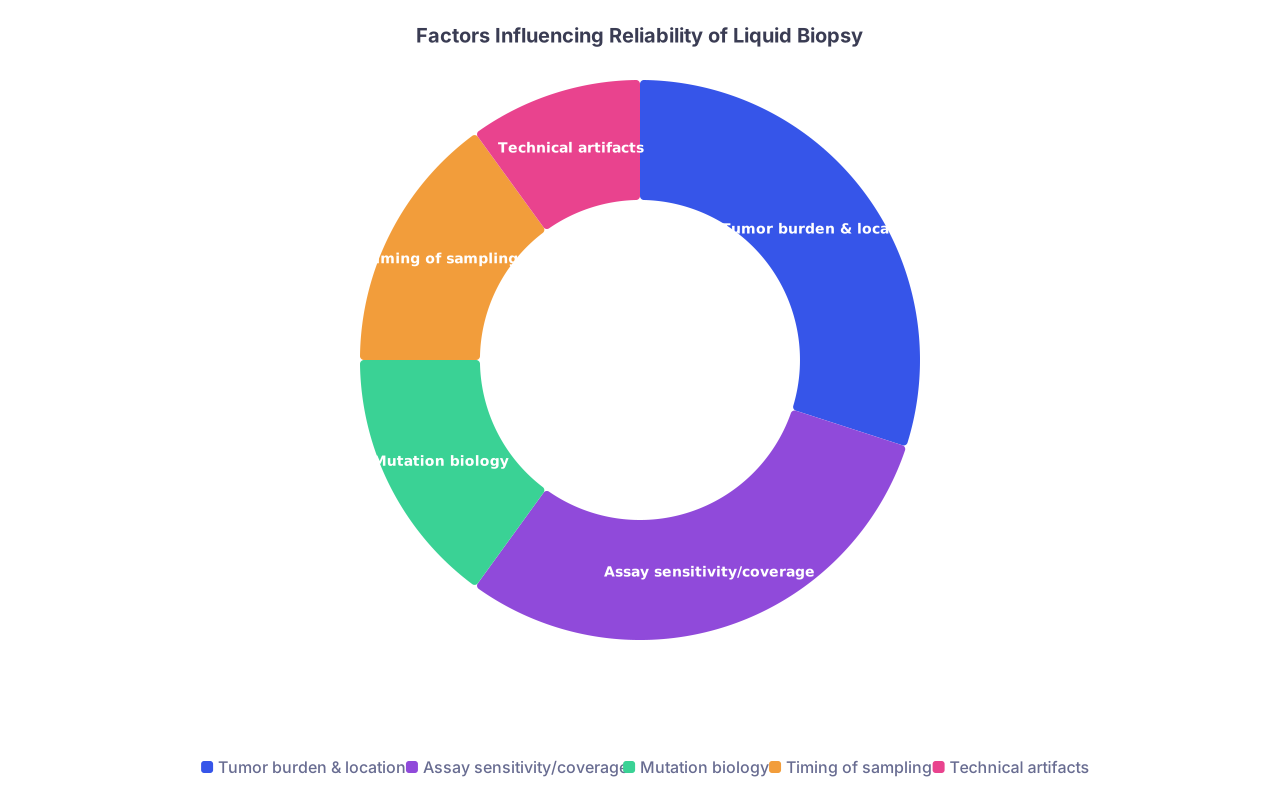
| Category | Value |
|---|---|
| Tumor burden & location | 30 |
| Assay sensitivity/coverage | 30 |
| Mutation biology | 15 |
| Timing of sampling | 15 |
| Technical artifacts | 10 |
9. Practical Rules of Thumb You Can Actually Use
Let me condense this into a few blunt rules you can remember on call.
- Metastatic, high‑burden solid tumor + clear positive actionable mutation on ctDNA that fits the phenotype → you can usually trust it and treat.
- Negative ctDNA in early‑stage or low‑burden disease never rules out a driver mutation. Get tissue.
- Never use ctDNA instead of a diagnostic biopsy when histology is unknown and a safe biopsy is feasible.
- Be skeptical of isolated low‑VAF oddball variants, especially CHIP‑associated genes in older patients.
- Interpret MRD results probabilistically: positive rising → serious; negative → reassuring but not a discharge from surveillance.
- Always ask: “Would I make the same decision if this were my family member, knowing the test’s blind spots?”

FAQ (Exactly 6 Questions)
1. Is liquid biopsy accurate enough to replace tissue biopsy in advanced solid tumors?
No. It can complement or occasionally substitute for tissue when biopsy is unsafe or impractical, but it does not replace histology, staging, and tissue‑based profiling. For metastatic NSCLC, a positive ctDNA for an expected driver (EGFR, ALK, ROS1, BRAF V600E, KRAS G12C) is often actionable, but you still need tissue at some point in the disease course for full characterization.
2. How should I counsel a patient about a negative liquid biopsy result?
Tell them the test did not detect circulating tumor DNA or specific mutations, but that does not absolutely rule out their presence. Emphasize that liquid biopsy is more sensitive in advanced, high‑burden disease and less sensitive in early or low‑burden settings. Frame it as one piece of the puzzle, not a definitive all‑clear.
3. When is it reasonable to start targeted therapy based only on ctDNA findings?
It is reasonable in a metastatic, high‑burden solid tumor where the ctDNA shows a clear, guideline‑supported actionable mutation that matches the clinical phenotype, especially when tissue results are delayed or biopsy is risky. Typical example: metastatic NSCLC with EGFR exon 19 deletion at high VAF. You should not do this in early‑stage disease or when the mutation is marginal or biologically implausible.
4. Can ctDNA reliably detect minimal residual disease after surgery?
ctDNA can detect MRD with high specificity: a clearly positive and rising signal post‑op is strongly associated with eventual relapse. Sensitivity is imperfect, so a negative MRD result decreases but does not eliminate recurrence risk. Right now, MRD ctDNA is best used to identify high‑risk patients and for clinical trial enrollment, not as the sole basis to omit adjuvant therapy outside trials.
5. How do I handle incidental CHIP findings on liquid biopsy reports?
CHIP (e.g., DNMT3A, TET2, ASXL1, JAK2 in older adults) often appears on ctDNA panels but usually reflects clonal hematopoiesis, not tumor. Do not alter solid tumor therapy based solely on these findings. Consider confirming with peripheral blood sequencing or hematology referral if clonal hematopoiesis or a myeloid neoplasm is suspected based on blood counts or clinical context.
6. Is it ethical to use liquid biopsy instead of biopsy in a frail patient who cannot tolerate invasive procedures?
Yes, in select cases, if you are transparent about the uncertainty and involve the patient in shared decision‑making. For example, using ctDNA to identify an EGFR mutation and starting a TKI in a frail patient with radiologically clear lung adenocarcinoma but prohibitive biopsy risk can be ethically justifiable. You must document the rationale, explain limitations, and avoid presenting ctDNA as equivalent to a full histologic diagnosis.
Key points:
Liquid biopsy in solid tumors is powerful when positives appear in the right clinical and biologic context, especially in advanced, high‑burden disease and for resistance monitoring.
Negative or ambiguous results in low‑shedding settings, early disease, or odd clinical scenarios are frequently misleading if overtrusted and must be backed up by tissue and sound clinical judgment.
Your job is to treat liquid biopsy as a sharp but limited tool—integrated with histology, imaging, and patient values—rather than as a shortcut that replaces real thinking.