
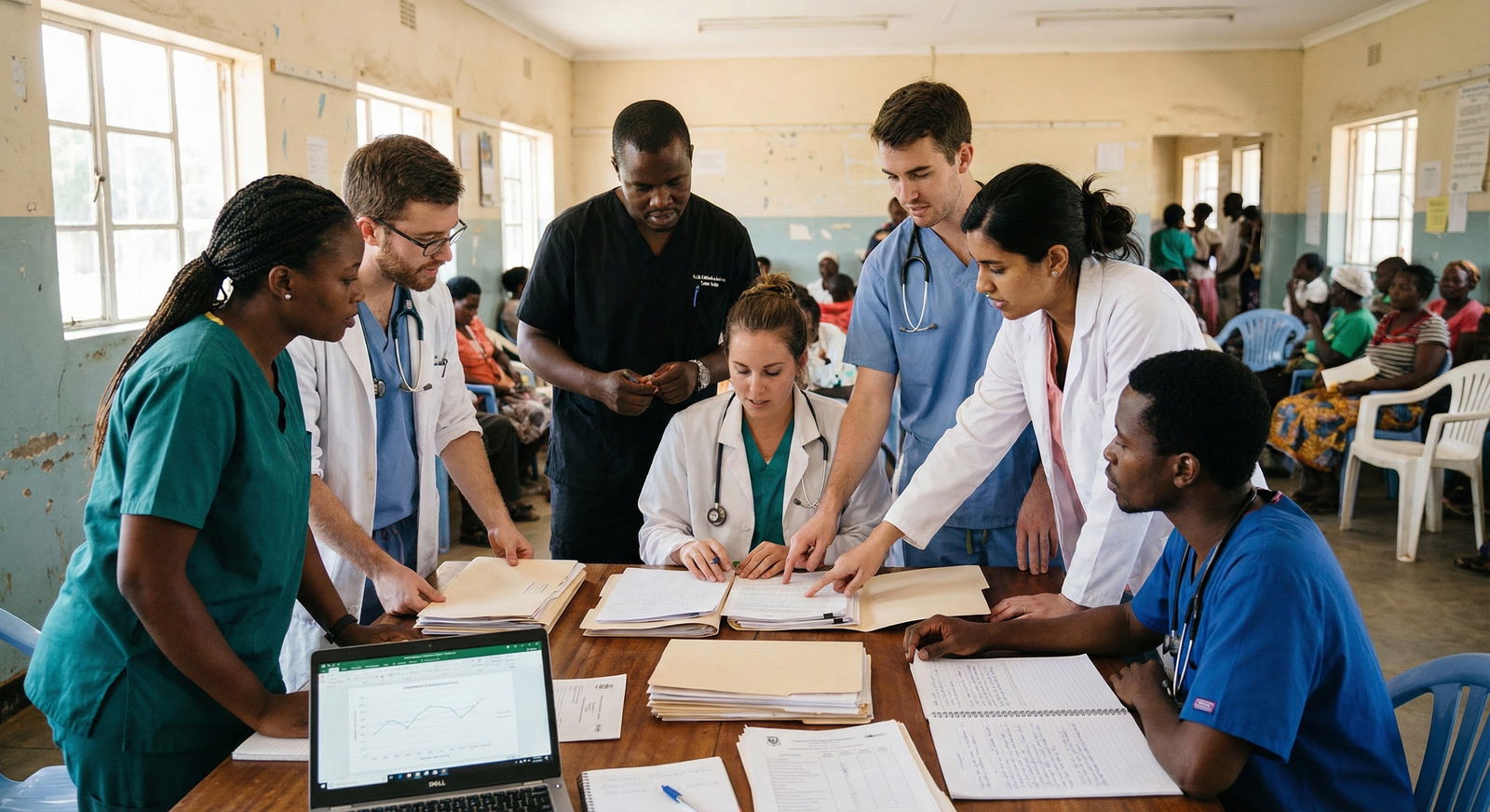
Faith-based medical missions are not “less academic.”
They’re usually less organized, less supervised, and less evaluated—and people confuse that mess with a lack of rigor.
Let me be blunt: the idea that secular = academic and faith-based = soft, emotional tourism is lazy thinking. The data—when you bother to look at it—does not support such a clean split. What does show up over and over is something else: structure, duration, integration with local systems, and supervision level. Those are what drive actual educational outcomes, not whether someone prays before clinic.
You want to know if going on a Christian, Catholic, or other faith-based trip is “less academic” than going with a big university-branded global health elective or NGO. Good. Because most students ask this question in whispers after they’ve already sent a deposit.
Let’s pull it out into the open.
What People Think “Academic” Means – And Why They’re Wrong
Here’s the script I keep hearing in med school hallways and pre-clinical global health electives:
- “The church trips are more about evangelism, the university trips are about learning.”
- “I want something that will strengthen my CV, so I should avoid faith-based stuff.”
- “Faith-based missions don’t have real curricula, they’re just ‘serve and feel good’ weeks.”
The problem? “Academic” gets used as a vague compliment. People throw it around without defining it. So let’s define it the way actual education researchers and global health programs do.
When we ask whether an experience is academically robust, we’re usually talking about things like:
- Clear learning objectives (clinical, cultural, ethical)
- Supervised practice at an appropriate training level
- Integration into local health systems, not parallel “pop-up clinics”
- Reflection, feedback, and some kind of assessment or evaluation
- Evidence of impact on learner skills, attitudes, or knowledge
None of those require a secular logo.
And here’s the uncomfortable truth for both sides:
Most short-term medical missions—faith-based or not—fail a lot of those criteria.
What the Research Actually Shows About Short-Term Missions
Most published data lump short-term medical trips together, whether run by churches, universities, or NGOs. When you read beyond the abstracts, three patterns show up:
- Educational outcomes are highly variable.
- Problems are structural, not theological.
- Faith-based and secular trips share the same weak spots when they’re poorly designed.
A few examples from the literature (summarizing broad findings, not cherry-picking one glowing paper):
- Systematic reviews of short-term medical missions repeatedly highlight:
- Poor pre-departure training
- Minimal evaluation of learner outcomes
- Little to no long-term follow-up in host communities
- Surveys of residents and students on global health experiences report:
- Gains in cultural humility, diagnostic skills with limited resources, and teamwork
- But also frequent reports of working beyond their competence, lack of supervision, and ethical “unease”
Most of these studies do not find huge differences based purely on whether the trip was faith-based. You see bigger differences based on:
- Was it tied to a formal training program with defined competencies?
- Was there on-site, accountable supervision by licensed clinicians?
- Was the host institution actually in charge, or was it a visiting-team show?
Church trip, university elective, secular NGO—it does not matter. If you put unprepared students into high-volume clinics with no clear goals, no feedback, and no integration with local systems, you get a bad “academic” product and questionable ethics.
Where Faith-Based Missions Actually Shine (And Where They Really Don’t)
Here’s the non-sanitized version.
Strengths I keep seeing in well-run faith-based missions
- Longitudinal presence
A lot of faith-based groups return to the same sites for years or decades: same hospital compound, same community clinics, same partners. That creates:
- Better continuity of projects and patient follow-up
- Deeper understanding of local systems and politics
- More honest feedback from local staff who actually know the visiting teams
That kind of longitudinal relationship can create a killer learning environment—if someone bothers to structure it.
- Exposure to ethics in real pressure-cooker situations
Faith-driven frameworks often force explicit discussion of:
- Suffering and justice
- Dignity when people are poor, stigmatized, or terminally ill
- What “service” versus “saviorism” actually looks like
Students on faith-based trips frequently report very intense reflection on:
- Why am I here?
- Am I helping or feeding my ego?
- What does “do no harm” look like when the system is this broken?
Those reflection and ethics conversations are precisely what many so-called “academic” electives claim to foster but often rush past between case presentations.
- Holistic care focus
Like it or not, faith-oriented programs often model:
- Attention to family dynamics
- Grief and spiritual distress
- Community networks and social support
This doesn’t automatically equal quality—but it does often mean learners are pushed beyond narrow biomedical thinking. That’s not less academic. That’s expanded scope.
Where faith-based missions fall flat—badly
Let’s not romanticize. I’ve seen—and the literature confirms—some spectacular failures:
- Evangelism under the cover of “free care,” which erodes trust and ethics.
- Teams doing procedures they’d never be allowed to do at home “because it’s needed here.”
- No clear learning objectives; just “you’ll see a lot and help where you can.”
- Minimal or zero written protocols, outcome tracking, or structured debriefing.
None of that is “less academic” because it’s religious. It’s less academic because it’s sloppy, unsafe, and unaccountable. Swap the church logo for a university crest and it would still be bad.
The Real Drivers of Academic Quality: Structure, Not Branding
Strip away the marketing, and four factors predict whether your mission trip will be academically serious or just chaos with a stethoscope.
| Factor | High-Quality Experience |
|---|---|
| Pre-departure training | Required, structured, case-based + ethics-focused |
| On-site supervision | Consistent, qualified, accessible |
| Integration with hosts | Local leadership sets priorities |
| Evaluation & reflection | Formal debrief, feedback, and documented outcomes |
None of these care whether there’s a chapel on the compound.
Programs that score high on those four are sometimes faith-based, sometimes secular. Programs that score low are boringly similar: poorly prepared students, vague goals, heroic posturing, and almost no data.
Academic Outcomes: What Trainees Actually Gain (And Don’t)
Let’s talk concrete outcomes. What do students and residents actually get from these experiences, and do faith-based trips differ?
Skills that consistently improve when the program is structured
Across multiple studies and program evaluations, well-designed global health or mission electives—faith-based or not—tend to improve:
- Comfort with undifferentiated complaints (fever, abdominal pain, respiratory distress)
- Physical exam skills without heavy imaging support
- Clinical reasoning under resource constraints
- Cultural humility and communication through language barriers
And no, the faith label doesn’t consistently change those outcomes. What does change them:
- Case mix
- Supervision quality
- Opportunities to present, reflect, and get feedback
Where “faith-based vs secular” actually shows a signal: ethics and motivation
The biggest difference that shows up in self-reports and qualitative data isn’t knowledge—it’s framing.
Trainees on explicitly faith-based trips are more likely to talk about:
- Calling, vocation, and long-term service
- Moral distress and guilt about leaving
- Tension between charity and justice
Trainees on secular or school-branded electives are more likely to emphasize:
- Career planning (global health fellowship, residency applications)
- Skills-building and future academic work (abstracts, posters)
- Systems-level thinking (health policy, financing)
Neither of those is inherently superior. But they shape what you pay attention to and what you remember. If your goal is personal ethical formation and wrestling with motivation, faith-based environments often make that front and center. That is part of academic development in medical ethics whether people like that language or not.
The Ethics Question: Is Faith-Based Automatically More Problematic?
People love to say, “Faith-based trips are ethically worse because of proselytizing.” Sometimes that’s true. Sometimes the opposite is true.
Let me separate the myths from the real problems.
Myth: “Secular missions are neutral; faith-based missions are biased.”
Reality: Every mission is operating from a value system—most secular groups just name it less explicitly.
- Secular NGO: human rights, equity, capacity building.
- Faith-based group: compassion, service, dignity, sometimes evangelism.
- University: education, reputation, research output, partnership.
The crucial ethical question isn’t “Do they have values?” It’s:
- Are those values transparent?
- Do they respect patient autonomy and local culture?
- Are they willing to limit their own role to do less harm?
I’ve seen faith-based groups bend over backwards not to tie care to belief, precisely because they know the risk. I’ve also seen them blow it completely. Same for secular programs pushing research agendas nobody on the ground actually asked for.
Real red flags (for any mission, faith-based or not)
If you see these, your “academic” and ethical alarms should go off:
- No clear scope-of-practice boundaries for trainees.
- Care dependent on participation in any religious or ideological activity.
- Host partners excluded from planning and evaluation.
- No protocol for complications, follow-up, or handoff to local providers.
- Vague answers when you ask, “How do you know this trip is useful?”
Notice how none of those require a Bible to be a problem.
How to Evaluate a Faith-Based Mission for Academic Rigor
You want to know if a specific faith-based trip will help you grow clinically and ethically, not just give you dramatic stories for interviews. Ask harder questions.
Here’s a practical filter. Use it on faith-based programs, then use the exact same filter on secular ones and watch the sacred cows fall.
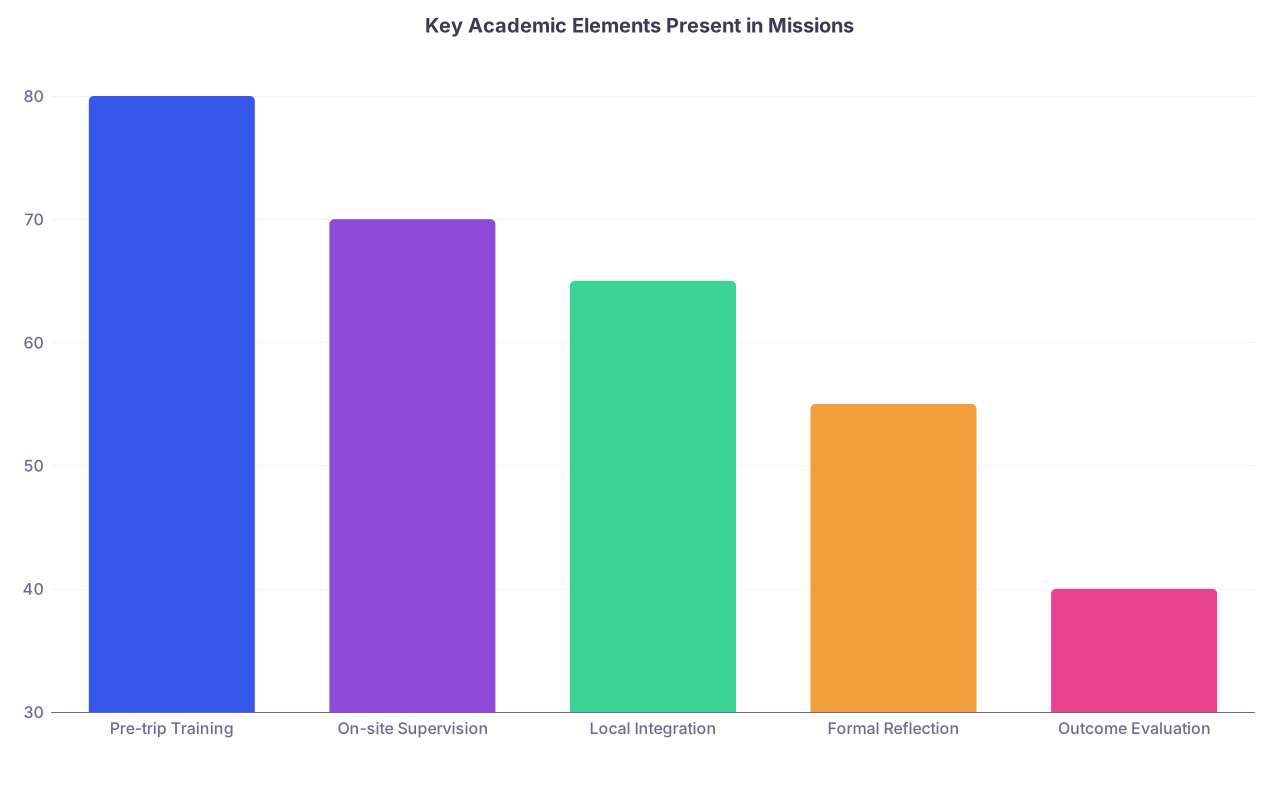
| Category | Value |
|---|---|
| Pre-trip Training | 80 |
| On-site Supervision | 70 |
| Local Integration | 65 |
| Formal Reflection | 55 |
| Outcome Evaluation | 40 |
Those numbers are illustrative, but the relative pattern matches what many program reviews report: training and supervision show up more often than rigorous evaluation.
Now, for the specific questions:
Training and objectives
- “Do you have a written pre-departure curriculum? Can I see it?”
- “What are the explicit learning goals for students/residents?”
- “How is cultural humility and ethics taught before we go?”
Supervision and scope
- “Who will supervise me onsite, and what is their responsibility to the local system?”
- “What am I not allowed to do as a trainee?”
- “Have you turned students away from doing procedures before?”
Host control
- “Who invited this team? What do local clinicians say they want from us?”
- “How long have you been working with this site? How often do you return?”
Reflection and evaluation
- “Is there a required debrief or reflection assignment when we return?”
- “Have you published or presented outcomes—clinical or educational—from this partnership?”
- “How have you changed the program based on host feedback?”
If a faith-based mission can answer those clearly, you’re not looking at a “less academic” option. You’re looking at one of the few serious programs out there. If they dodge those questions, walk away. Same advice for secular NGOs and university-branded electives.
Where Faith-Based Missions Fit in Your Development as a Clinician
One more myth to kill: that your training path has to be either “hardcore academic” or “faith and service.” That’s nonsense.
The best clinicians I know who work in global health straddle both:
- They publish data on outcomes.
- They run or partner with faith-based hospitals or networks.
- They mentor trainees in both rigorous analysis and deep ethical reflection.
The question is not:
“Will a faith-based mission ruin my academic credibility?”
The question is:
“Does this specific mission—faith-based or not—treat patients, hosts, and learners with seriousness, humility, and accountability?”
If it does, it can be an outstanding environment to:
- Stress-test your motivations
- Grow clinically in constrained settings
- Wrestle with real-world medical ethics instead of casebook hypotheticals
And yes, that is academic development. Even if it happens in a church-run clinic.
The Bottom Line: Fact vs Fiction
Let me cut it down to the essentials.
- “Faith-based = less academic” is a lazy stereotype. The real driver of academic value is program structure: clear objectives, solid supervision, host integration, and real evaluation.
- Well-run faith-based missions can be more intense academically in ethics and personal development than some generic “global health electives” that are basically supervised tourism.
- You should judge every mission—faith-based or secular—by the same hard questions about safety, ethics, educational design, and accountability. If it passes those, the logo on the banner matters a lot less than people think.


