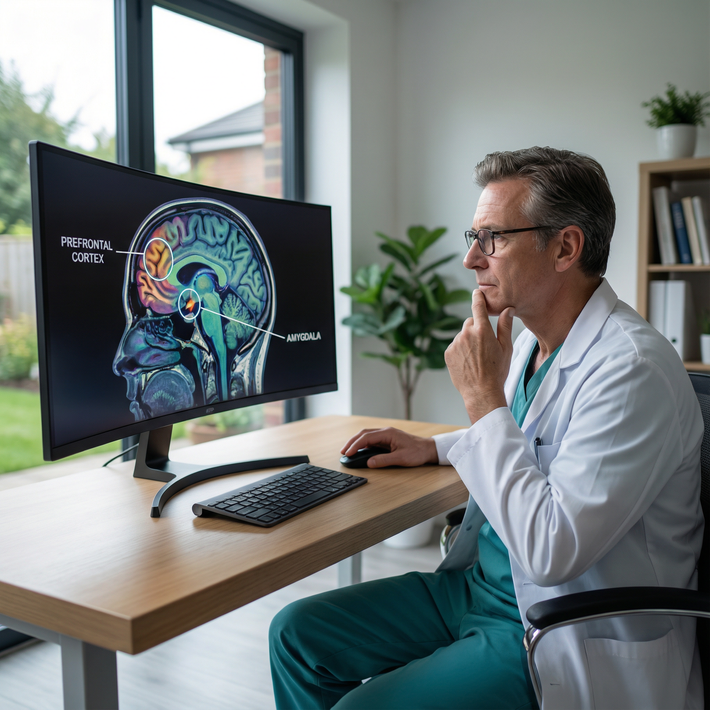
Mindfulness is not making doctors “too soft” or less objective. The data, if you actually read it, points in the opposite direction.
The fear goes like this: if clinicians get too into mindfulness, they’ll become overly emotional, less detached, more biased by feelings, and less able to make hard decisions. I hear versions of this from med students, interns, even grizzled attendings who roll their eyes at any “wellness” initiative.
Let me be blunt: that’s not what the evidence shows. At all.
What we actually see in studies is that properly taught mindfulness tends to sharpen attention, reduce cognitive bias, and improve judgment under pressure. The problem isn’t that mindfulness undermines clinical objectivity. The problem is that most people have no idea what “mindfulness” actually is in the context of medicine—and they confuse it with sentimentality, vague spirituality, or “being nice.”
Let’s dismantle the myths and stick to what’s been measured.
What Mindfulness Actually Trains (And What It Doesn’t)
First misconception: mindfulness is about “feeling more.”
Wrong. That is not the core skill.
Clinically relevant mindfulness training usually targets three things:
- Sustained attention – noticing where your mind is and bringing it back on purpose.
- Meta-awareness – noticing your thoughts, emotions, and impulses as events in the mind, not as commands.
- Non-reactivity – a slightly longer gap between stimulus and response, so you choose instead of reflexively reacting.
Notice what’s missing. There’s nothing about “trust all your feelings,” “follow your heart,” or suspending judgment. Mindfulness is not emotional floodgates. It’s more like mental triage.
In clinical practice, this can look like:
- Catching the “this patient is drug-seeking” thought in the first 10 seconds and labeling it as a hypothesis rather than a fact.
- Noticing that you’re pissed off at the fifth late-arriving patient of the afternoon, and not letting that irritation leak into your pain management decisions.
- Realizing your brain is halfway through composing a discharge summary while your patient is still explaining their chest pain—and pulling your attention back.
Those are not anti-objectivity skills. Those are the basic building blocks of objectivity.
What Studies Actually Show About Mindfulness and Clinical Judgment
Let’s get concrete. There’s now a decent pile of studies on mindfulness in clinicians and trainees. Most of them weren’t designed to answer “does it wreck objectivity,” but if it did, we’d see performance getting worse somewhere: diagnostic accuracy, error rates, cognitive tests, biases. We don’t.
Attention, Working Memory, and Cognitive Performance
Several trials in healthcare professionals and trainees have tested variations of MBSR (Mindfulness-Based Stress Reduction) or short mindfulness programs.
Patterns you see again and again:
- Improved attention and working memory on standardized tasks after mindfulness training.
- Better performance under time pressure or stress (e.g., simulation labs).
- Reduced “mind wandering” and lapses in focus.
You want to talk about objectivity? Start with attentional stability. If your mind is half on the last patient, half on your pager, and one-third on your own exhaustion, your “clinical judgment” is fiction. You’re guessing with a fuzzy lens.
Mindfulness, when done halfway correctly, cleans that lens up a bit.
Diagnostic Reasoning and Error
Direct RCTs on mindfulness and diagnostic error are rare, but we do have related evidence:
- Experiments showing mindfulness training reduces cognitive biases like anchoring and premature closure in decision-making tasks.
- Data from non-clinical settings where mindfulness reduces confirmation bias and improves performance on tasks requiring flexible thinking and perspective shifts.
Does that map to medicine? Very likely. Because anchoring, premature closure, and confirmation bias are exactly the thinking errors that lead to “missed MI,” “it’s just anxiety,” or “frequent flyer, nothing serious.”
If anything, the worry should be: why are we not systematically teaching cognitive debiasing and mindfulness-linked meta-awareness in every residency?
Emotion Regulation Without Emotional Flooding
The “mindfulness makes you too emotional” line falls apart fast when you actually look at emotional regulation metrics.
Healthcare mindfulness studies routinely show:
- Lower levels of emotional exhaustion and depersonalization.
- Increased sense of personal accomplishment.
- Better self-reported emotion regulation—less being jerked around by anger, frustration, or anxiety.
That’s not more emotional chaos. That’s more emotional control. Less “I just snapped at the nurse because I’m exhausted,” more “I noticed I wanted to snap and decided not to.”
And that matters for objectivity. Because when you’re burned out, cynical, and depersonalized, you’re not more objective. You’re biased—just in a colder, uglier direction.
The “Too Compassionate to Be Objective” Myth
Here’s the part that really bothers people: mindfulness training often boosts empathy and compassion measures. And some clinicians jump straight to: “Great, now I’ll care too much and won’t be able to make hard calls.”
This is a false dilemma. More compassion does not equal less objectivity. It equals less cruelty and less indifference. Different thing.
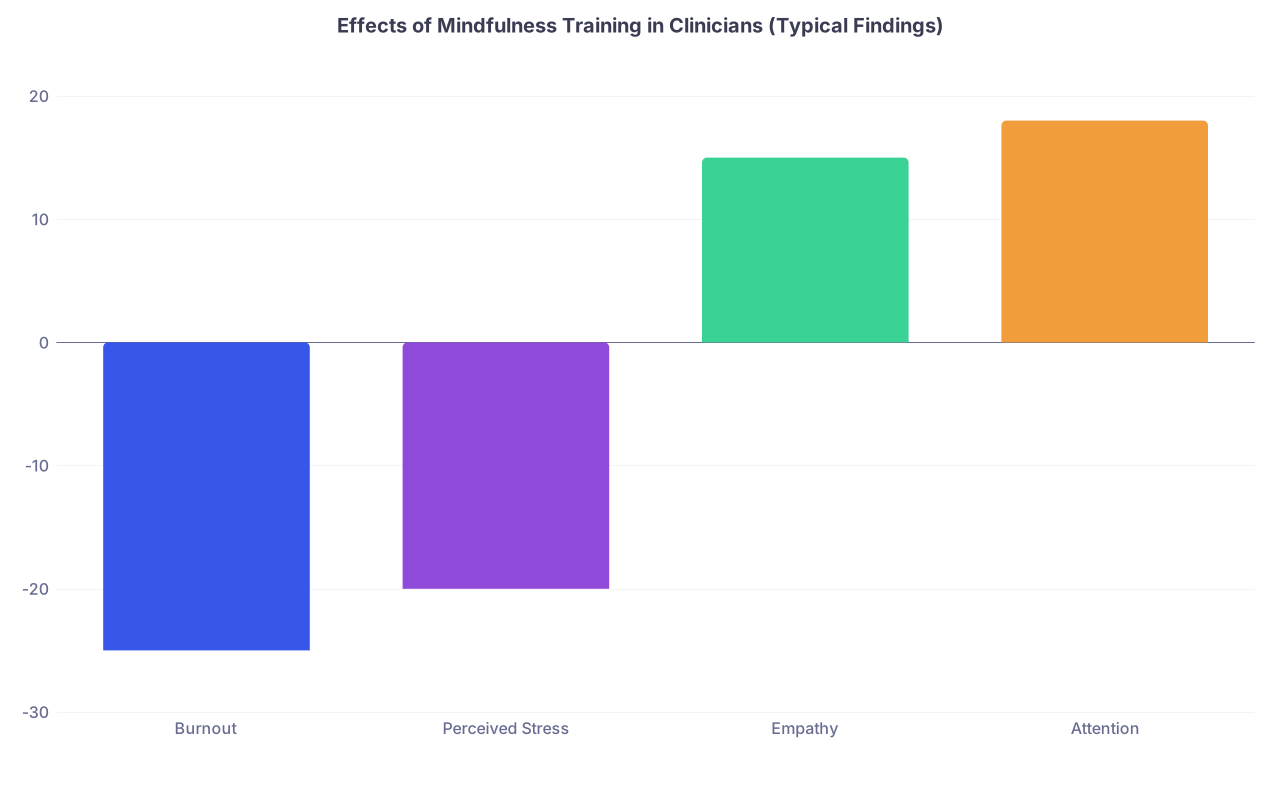
| Category | Value |
|---|---|
| Burnout | -25 |
| Perceived Stress | -20 |
| Empathy | 15 |
| Attention | 18 |
(Values are typical directions of change in percentages or effect sizes reported across multiple studies—burnout and stress down, empathy and attention up.)
Let’s be precise about what studies show:
- Mindfulness programs in physicians, nurses, and trainees often increase empathy scores and patient-centered communication.
- At the same time, they reduce burnout and distress, which are known to impair decision-making and increase medical errors.
Compassion grounded in awareness doesn’t usually look like “I’ll order every test because I feel bad.” It looks like:
- Actually listening to what hurts instead of auto-piloting to your favorite diagnosis.
- Having the bandwidth to explain risk, benefit, and uncertainty without snapping.
- Being willing to deliver bad news clearly rather than sugar-coating it into dishonesty or avoidance.
Mindfulness doesn’t make you incapable of saying “no” to demands for antibiotics or unnecessary CT scans. It makes you more aware of your own discomfort when you say “no”—so you don’t unconsciously cave or overcompensate.
Where the Skepticism Comes From (And Where It’s Actually Justified)
Some of the suspicion around mindfulness in medicine is understandable. Because what gets marketed under “mindfulness” is often garbage.
I’ve seen:
- Ten-minute “mindfulness” videos tacked onto mandatory burnout modules with no follow-up.
- Apps sold to hospitals as a cheap band-aid while workloads stay insane.
- Administrators using “resilience” and “mindfulness” as coded language for “cope better with impossible conditions.”
You’re right to be wary of that. That version of mindfulness absolutely undermines something important—not objectivity, but trust.
However, this is a systems problem, not an inherent flaw in mindfulness as a cognitive and emotional skill set.
There are valid critiques:
- Poor-quality interventions – one-off sessions with no practice requirement don’t build real skills. Those shouldn’t be expected to change objectivity in any direction.
- Selection bias – early studies often draw self-selected volunteers already open to this stuff; they’re not the hard skeptics.
- Measurement problems – relying heavily on self-report questionnaires (attention, empathy, bias) instead of hard behavioral or patient-level outcomes.
But notice what’s missing from the critique: evidence that meaningful mindfulness practice makes clinicians worse at diagnosing, treating, or reasoning.
I’ve looked. The data just isn’t there.
How Mindfulness Interacts With Bias and Objectivity in Real Life
Step out of the abstract for a moment. Think about your last call shift or busy clinic.
Real threats to objectivity are boring and predictable:
- Fatigue
- Time pressure
- Emotional overload
- Prior assumptions about the patient
- Irritation, disgust, fear, or attraction you never acknowledge
You’re not a blank slate machine. You’re a constantly shifting bundle of biases and mood states pretending to be a neutral decision engine. That’s just the human brain.
Mindfulness—again, I mean the real practice, not the poster—does three clinically relevant things here:
Makes implicit states more explicit
You notice “I’m already irritated at this patient” earlier. That gives you an actual shot at correcting for it.Slows your cognitive snap
You still have the thought “this is just anxiety,” but you catch yourself anchoring and remember to re-check the basics.Reduces ego threat
You’re a little less fused with “I am a good doctor who doesn’t miss things,” so you can tolerate uncertainty and doubt without immediately shutting it down.
That’s not mysticism. That’s a skill. And it cuts toward objectivity, not away from it.
Where Mindfulness Could Go Wrong Clinically
Now, to be fair—and I mean actually fair, not performatively balanced—there are ways mindfulness can be misused or misinterpreted that would hurt clinical judgment:
Confusing acceptance with passivity
If someone is taught “accept your feelings and circumstances” without the crucial step of wise action, they may become less likely to challenge bad systems or advocate strongly. Good mindfulness training explicitly distinguishes acceptance of internal states from passivity about external problems.Over-identifying with “calmness”
If you start clinging to feeling serene as your new identity, you may avoid difficult conversations or necessary confrontation because they disturb your calm. That’s not mindfulness, that’s spiritualized avoidance.Using mindfulness to self-blame
“If I were more mindful I wouldn’t feel this burned out.” No. If your workload is abusive, contemplative practice is not the core fix. When misframed, mindfulness can be weaponized against clinicians.
But notice: these are problems of bad teaching, bad framing, and bad systems, not something inherent in paying attention to your present-moment experience.
There’s no serious evidence that properly taught, evidence-based mindfulness training makes clinicians sloppy thinkers or emotionally overinvolved.
Practical Takeaways if You Actually Care About Objectivity
If you want a genuinely more objective mind in clinical work, here’s the unsexy reality:
- You need better attention.
- You need more awareness of your own biases and emotional states.
- You need enough emotional regulation not to be hijacked by anger, disgust, or fatigue.
- You need the courage to re-open closed diagnoses.
Mindfulness, when practiced with some discipline (not just scrolling a wellness app twice a month), helps those capacities.

| Step | Description |
|---|---|
| Step 1 | Mindfulness Practice |
| Step 2 | Improved Attention |
| Step 3 | Meta Awareness |
| Step 4 | Emotion Regulation |
| Step 5 | Better Data Gathering |
| Step 6 | Bias Detection |
| Step 7 | Less Reactivity |
| Step 8 | More Accurate Assessment |
| Step 9 | Improved Clinical Objectivity |
If you strip away the hype and the fluff, mindfulness in medicine is not about making clinicians “gentler souls.” It’s about upgrading the observing equipment—the mind that’s doing the diagnosing, prescribing, and talking.
That doesn’t undermine objectivity. It’s the only shot we have at anything close to it.