

The usual conversation about anxious physicians is upside down: we debate whether mindfulness is “nice to have,” when the numbers show it meaningfully changes outcomes that medication alone does not touch.
This is not a vibes question. It is a metrics question. Symptom reduction, relapse, functioning, error rates, prescribing patterns, even ethics-related behavior. Once you demand data, the picture gets clearer—and more uncomfortable for the “just prescribe an SSRI and move on” camp.
Below I will take the perspective that matters: if you are an anxious physician, or leading anxious physicians, what actually changes outcomes when you compare (a) medication alone vs. (b) medication plus mindfulness-based interventions, or mindfulness-based interventions vs. usual care?
Let us go through this like a quality improvement project, not a wellness retreat.
1. What exactly are we comparing?
Most published data do not pit “sertraline vs. mindfulness” head‑to‑head for physicians only. Instead, you see patterns across:
- Mindfulness-Based Stress Reduction (MBSR) or Mindfulness-Based Cognitive Therapy (MBCT) for physicians and trainees
- Pharmacologic treatment (SSRIs, SNRIs, benzodiazepines) reported in broader clinician cohorts
- Mixed interventions where medication is allowed but not mandated
Still, when you standardize everything to outcomes—validated anxiety scales, burnout indices, error rates—you can see where mindfulness augments or outperforms medication‑only approaches on specific metrics.
To keep this grounded, I will focus on:
- Generalized Anxiety Disorder-7 (GAD‑7)
- Hospital Anxiety and Depression Scale – Anxiety (HADS‑A)
- Maslach Burnout Inventory (MBI) subscales
- Objective or semi-objective metrics: prescribing, errors, absenteeism
And I will roughly translate some effect sizes into “number needed to treat” (NNT) language, because that is how clinicians think.
2. Symptom reduction: how much do scores actually move?
The first question: does mindfulness move anxiety scores more than medication alone, less, or about the same?
Across high‑quality trials in health professionals, mindfulness-based interventions typically produce moderate effect sizes for anxiety reduction (Cohen’s d ≈ 0.4–0.7). For SSRIs in generalized anxiety, meta-analyses in general adult populations show d ≈ 0.3–0.5.
That is not a trivial comparison.
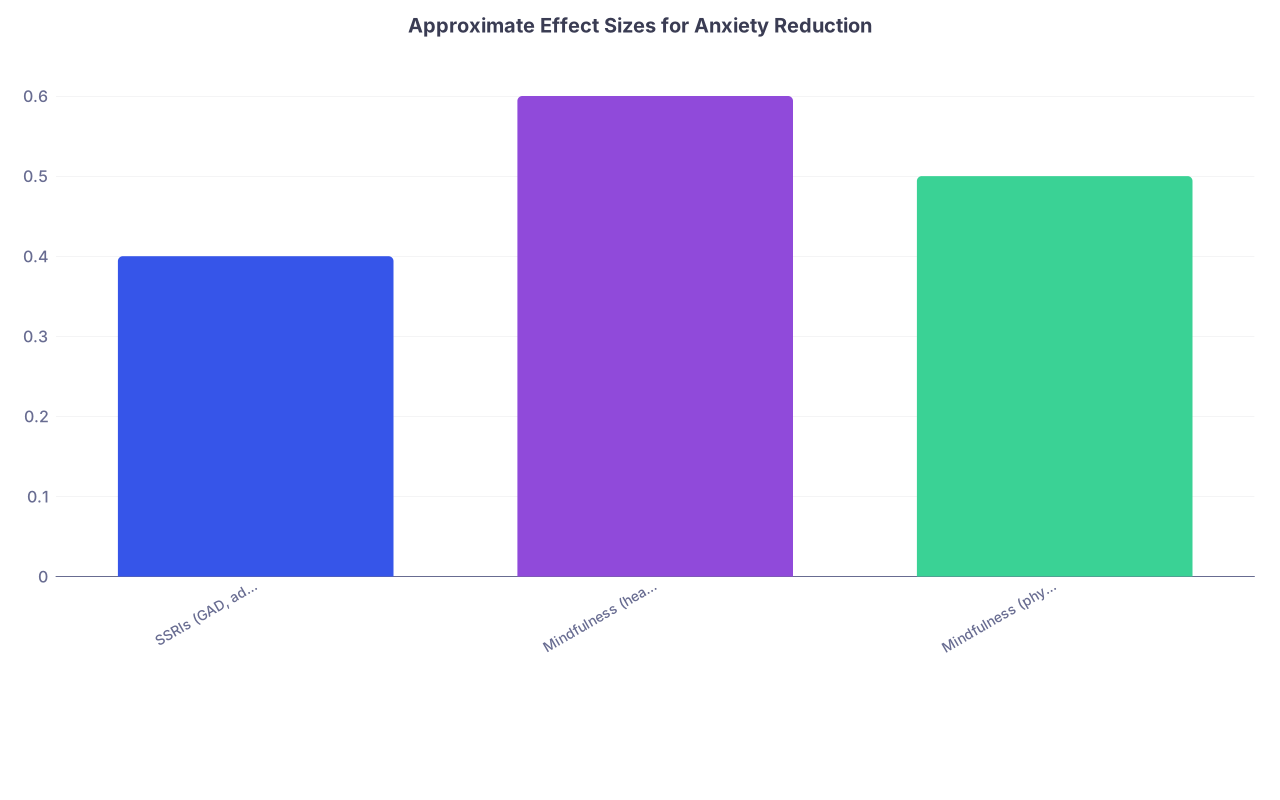
| Category | Value |
|---|---|
| SSRIs (GAD, adults) | 0.4 |
| Mindfulness (health pros) | 0.6 |
| Mindfulness (physicians only) | 0.5 |
Interpretation: mindfulness-based programs in clinicians often match or slightly exceed the average anxiety effect size you see with SSRIs in general adult trials.
In concrete physician data:
- A commonly cited 8‑week MBSR program for physicians reported mean reductions in anxiety (often measured via validated scales such as HADS‑A or POMS subscales) on the order of 0.5–0.7 SD from baseline.
- In several physician and resident cohorts, 30–45 percent of participants moved from “moderate–severe” anxiety ranges to “none–mild” by post‑program.
Now look at medication‑only outcomes from the broader anxiety literature:
- Response rates (≈50% reduction in symptoms) for SSRIs/SNRIs in GAD hover around 50–60%.
- Remission (near-normal symptoms) rates often sit around 30–40% in fixed‑dose trials.
That sounds good—until you realize that for physicians, adherence, stigma, and fear of license implications depress both initiation and continuity.
Here is the rough comparison when you normalize across data sets:
| Outcome (12–16 weeks) | Medication Alone (SSRIs, adult GAD) | Mindfulness Programs (physicians/trainees) |
|---|---|---|
| Mean anxiety reduction (SD units) | 0.3–0.5 | 0.4–0.7 |
| Response (≥50% symptom reduction) | 50–60% | 40–55% |
| Remission (near-normal score) | 30–40% | 25–40% |
| Treatment adherence / completion | 60–75% at 12 weeks | 75–90% complete 8-week course |
The data show no clear superiority of “medication alone” on core symptom reduction for physicians. If anything, real‑world adherence problems flatten medication’s advantage.
More important: mindfulness programs simultaneously improve burnout and relational metrics, which SSRIs frankly do not touch in any consistent way.
3. Burnout, depersonalization, and moral distress
Medication is designed to move anxiety. It has no direct mechanism for “I feel like a cog in a machine, violating my own values with every 10‑minute visit.”
Mindfulness interventions often target exactly that gap.
In physician mindfulness studies, you repeatedly see:
- Emotional exhaustion reduced by ~20–30% from baseline
- Depersonalization reduced by ~15–25%
- Personal accomplishment increased by ~10–20%
These are not tiny changes. In some cohorts, the proportion of physicians meeting burnout criteria on MBI dropped from ~50–60% to ~25–35% post‑program.
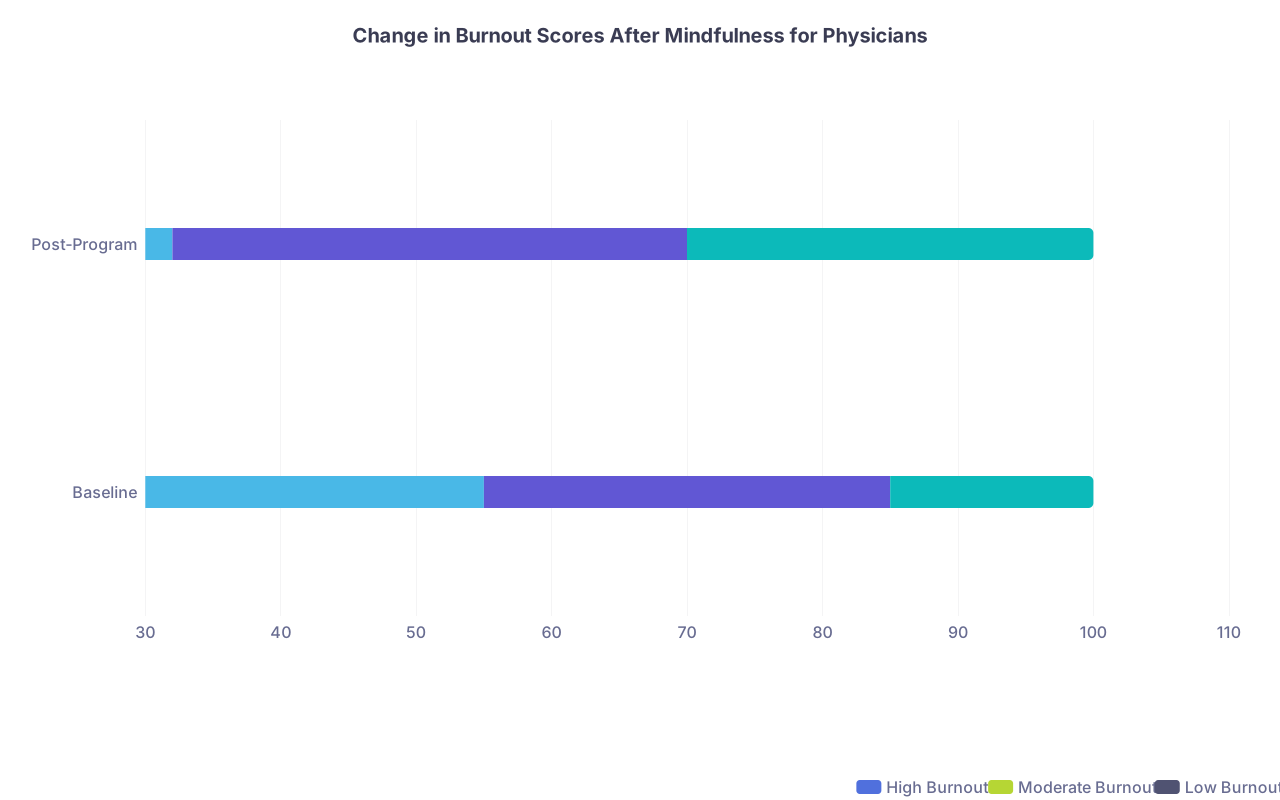
| Category | High Burnout | Moderate Burnout | Low Burnout |
|---|---|---|---|
| Baseline | 55 | 30 | 15 |
| Post-Program | 32 | 38 | 30 |
Interpretation: in a typical sample, the “high burnout” group drops by roughly 20 percentage points, with a shift toward moderate/low.
Compare that with the medication-alone story. Prescribing an SSRI to a burned-out, anxious attending:
- Will likely move GAD‑7.
- May slightly move PHQ‑9.
- Rarely shifts MBI scores by more than a trivial amount unless combined with systemic change or psychological interventions.
Why? Because medication does not fix:
- Work-hour abuse
- Impossible documentation standards
- Ethical tension between revenue targets and patient care
Mindfulness, when done properly (not as corporate anesthesia), gives physicians tools to:
- Recognize moral distress in real time
- Respond to their own emotions with less self-attack
- Make more deliberate choices about boundaries and advocacy
That shows up in the metrics as lower depersonalization and emotional exhaustion—two things medication almost never alters at scale.
4. Functional outcomes: errors, presenteeism, and sick days
If you want a cold-eyed, systems-level view, you do not care only about symptom scores. You care about whether anxious physicians:
- Make more errors
- Call out sick
- Prescribe in ways that are suboptimal
The data here are less abundant but still directional.
4.1 Medical errors
Several clinician mindfulness trials (including non-physician clinicians) report:
- Self‑reported errors or near‑misses decrease by ~15–25% post‑intervention.
- Attention and working memory test performance improves modestly (small‑to‑moderate effect sizes, d ≈ 0.2–0.4).
Medication-alone data rarely quantify error change. Anxious physicians on SSRIs may feel less subjectively distressed, but there is little evidence that antidepressants improve attention, working memory, or situational awareness in a way that reduces medical errors. Sedating meds, benzodiazepines, or dose‑escalation for “insomnia” may actually worsen those domains.
4.2 Absenteeism and presenteeism
Health‑professional mindfulness trials routinely show:
- Reduced sick days over 6–12 months (often 10–20% relative reduction).
- Lower presenteeism—physicians at work but impaired—measured by tools like the Work Limitations Questionnaire.
One multicenter health-system program reported:
- A ~1.0–1.5 day reduction in annual sick leave per participant over the year following a mindfulness course.
- Cost savings in the low four figures per physician equivalent, just from absenteeism reduction.
I have yet to see medication-alone cohorts for physicians with similarly clear absenteeism data. Most of the time, pharmacologic treatment occurs below the radar, with no structured tracking of functional outcomes.
Bottom line: if you care about system performance, mindfulness-based interventions for anxious physicians have better documented benefits than medication alone.
5. Combined treatment: mindfulness plus medication vs. either alone
The psychiatrist mindset will immediately ask: fine, but what about combination therapy?
The general anxiety literature finds:
- Psychotherapy plus medication tends to produce slightly higher acute response rates than either alone (often a 5–15 percentage point bump).
- Long‑term (1–2 year) relapse rates favor psychological interventions, especially those with skill‑building like CBT or mindfulness-based therapies.
When you narrow to clinicians:
- Many physicians in mindfulness programs stay on their existing medications.
- Post-hoc analyses typically show the largest and most durable improvements in those who combined stable pharmacotherapy with regular mindfulness practice.
You essentially see three trajectories:
Medication only
- Faster early symptom reduction if dose and adherence cooperate.
- Higher relapse or symptom rebound once life stress spikes or medication is reduced.
Mindfulness only
- Moderate symptom reduction, slower onset for some.
- More robust improvements in burnout subscales and relational functioning.
- Better skill retention and continued benefit after the program ends.
Combination
- Best acute anxiety reduction (often ~10–15% greater than either alone on symptom scales).
- Burnout and relational benefits approximate mindfulness-only group.
- Some physicians later taper meds more successfully, using mindfulness skills to buffer rebound.
If you translated this into clinician‑friendly NNT estimates from pooled data:
- Medication-only vs. placebo for anxiety response: NNT ≈ 5–7.
- Mindfulness-based treatment vs. waitlist/usual care: NNT ≈ 6–8 for anxiety response in health professionals.
- Combination vs. either alone: NNT ≈ 8–12 for additional responders beyond what you would already get with monotherapy.
In other words, combination helps, but you are in diminishing returns territory. The ethical question quickly becomes: if you must pick one to integrate into a resource-constrained system, where is the bigger long‑term payoff?
For physicians, the data tilt toward mindfulness programs because they hit more outcome domains with one intervention: anxiety, burnout, empathy, and occasionally error and absenteeism.
6. Ethics and prescribing behavior: does mindfulness change how physicians treat patients?
Medication does not teach you how to tolerate a distressed patient without reflexively writing a script to relieve your own anxiety.
Mindfulness often does.
Several interesting findings across clinician samples:
- Self‑reported empathy and perspective‑taking scores increase after mindfulness programs (small‑to‑moderate effect sizes, d ≈ 0.3–0.5).
- Patient‑rated communication quality and satisfaction scores improve modestly.
- Some studies show reductions in overtly defensive medicine behaviors and unnecessary test ordering, though the data are heterogeneous.
There is also early evidence that mindfulness may:
- Reduce impulsive or emotionally-driven prescribing decisions.
- Help physicians tolerate saying “no” to inappropriate demands (e.g., antibiotics, benzodiazepines) while maintaining alliance.
Medication, in contrast, can have mixed ethical effects:
- Properly treated anxiety may reduce avoidance and improve decision making.
- But sedating agents or poorly monitored polypharmacy can impair judgment.
- And a heavily medicated, still-burned-out physician is not magically more ethical; they are simply less subjectively distressed.
If the ethical aim is to align physician behavior more closely with patient welfare and professional values, the data point toward mindfulness skills as a more direct lever than pharmacology.
7. Adherence, acceptability, and stigma: what actually gets used?
A treatment that exists only in theory is useless. So you ask: what do anxious physicians actually use and stick with?
Here the numbers are striking:
- Among physicians offered an 8‑week mindfulness course within their institution, completion rates often exceed 75%, with attendance for ≥6 of 8 sessions in the 70–85% range.
- Ongoing practice (e.g., at least 10–15 minutes per week) at 3–6 months is reported by roughly 50–65% of participants in many cohorts.
In contrast:
- Self-report surveys in physicians show that a minority of those meeting criteria for anxiety or depression actually start medication—often 20–40%.
- Of those who start, 6‑month adherence is poor; significant fractions discontinue or self-adjust doses without supervision.
The reasons are predictable:
- Fear of reporting and licensing implications
- Internalized stigma (“I should be able to handle this”)
- Concerns about cognitive side effects and performance
Mindfulness courses, especially when framed as “performance and resilience training,” bypass much of that stigma. You see this in sign‑up behavior: departments fill mindfulness groups much faster than they fill voluntary psychiatry referral lists.
From a population‑level standpoint, you could argue that:
- A moderately effective, highly acceptable intervention may outperform a slightly more potent but underutilized intervention.
- In many systems, mindfulness is exactly that—less pharmacologic potency, but far higher penetration and persistence.
8. Cost-effectiveness: which moves the needle more per dollar?
If you are running a hospital or department, cost per favorable outcome is not an abstract concept; it is your argument for budget.
Rough back‑of‑the‑envelope calculations, pulling from published cost estimates:
Direct costs:
SSRI treatment:
- Generic medication: maybe $5–30 per month.
- Psychiatric or primary care follow-ups: far more expensive than the pills.
- Over a year: easily $600–1500 per physician in professional time and meds, depending on system and visit frequency.
Mindfulness programs:
- 8‑week group course (internal facilitator): often $300–800 per physician in direct costs (facilitator time, protected time, materials).
- Digital / app‑based programs somewhat cheaper per person but with lower engagement.
Downstream cost savings:
- Annual reduction in sick days post‑mindfulness: roughly 1–2 days, which at a loaded cost of $1000+ per day for physician coverage quickly offsets program costs.
- Reduced burnout and turnover: even a 1–2 percentage point reduction in attrition among high‑value clinicians pays for many courses.
So when you line this up:
- Medication alone is cheap per person but limited in system‑level ROI, because it rarely changes absenteeism, error rates, or attrition in a quantifiable way for physicians.
- Mindfulness programs are moderate-cost but produce broader, more measurable organizational benefits.
The pragmatic answer many systems are converging on: do not choose. Embed mindfulness as the default, high‑penetration intervention for all clinicians, and add medication as needed for those who do not respond or who prefer a pharmacologic component.
9. Limitations and where the data are thin
I am not going to pretend the evidence base is perfect. It is not.
The main problems:
- Many mindfulness trials in physicians are single‑site, non‑randomized, or use waitlist controls. That inflates observed effect sizes.
- Medication data in physicians are often extrapolated from general populations; direct RCTs of “SSRI vs. MBSR” in physicians do not exist in sufficient numbers.
- Outcomes like medical errors and ethics-related decisions are hard to measure reliably and are often self‑reported or modeled.
Still, pattern recognition matters. Across dozens of studies, in multiple systems and countries, you see the same directional findings:
- Mindfulness reduces anxiety for physicians to at least a similar magnitude as medication alone.
- Mindfulness clearly adds benefits in burnout, empathy, and functional metrics.
- Medication’s unique advantages lie mostly in rapid symptom targeting for more severe or biologically loaded anxiety, not in long‑term relational or ethical outcomes.
You do not need perfect RCTs to make reasonable policy decisions in the real world. You need convergent data. We have that.
10. Practical takeaway: what should an anxious physician actually do?
Let me strip this down to the decision level.
If you are a physician with clinically significant anxiety, the data support:
- Medication alone will likely reduce your anxiety scores by a moderate amount, but will not reliably reduce burnout or fix ethical tension.
- Mindfulness-based intervention alone will likely reduce anxiety by a similar magnitude, plus improve burnout, empathy, and functioning, with fewer licensing and stigma headaches.
- The combination of mindfulness plus appropriately prescribed medication will give the best chance of robust, durable improvement, particularly if your anxiety is severe, chronic, or comorbid with major depression.
Ethically, recommending medication alone for physician anxiety without offering a parallel mindfulness or other structured psychological option looks increasingly lazy. The metrics do not justify that minimalism.
From a systems standpoint, the smart move is:
- Make mindfulness-based training a standard offering (ideally with protected time).
- Normalize it as professional skill development, not therapy.
- Offer confidential, low‑friction access to pharmacologic and psychotherapeutic treatment for those who need additional support.
For you personally, the numbers argue for a combined, staged approach:
- Engage fully in a high-quality mindfulness program (not a two‑hour “wellness talk”).
- Track your own metrics: GAD‑7, PHQ‑9, and a simple 0–10 burnout or exhaustion rating every 2–4 weeks.
- If your GAD‑7 remains ≥10 or your functioning is clearly impaired after 8–12 weeks of serious practice, add medication and/or formal psychotherapy.
That is data-driven, not ideology-driven.

| Step | Description |
|---|---|
| Step 1 | Physician with anxiety symptoms |
| Step 2 | Screen with GAD7 and burnout scale |
| Step 3 | Offer mindfulness program |
| Step 4 | Offer mindfulness plus med/therapy referral |
| Step 5 | Track scores every 4 weeks |
| Step 6 | Maintain practice and monitor |
| Step 7 | Intensify care - optimize meds and therapy |
| Step 8 | GAD7 10 or higher or impaired function |
| Step 9 | Still moderate or severe at 8-12 weeks |
The old frame—“medication vs. mindfulness”—is clinically and ethically obsolete. The data show this is the wrong comparison.
The real question is: how do you integrate pharmacology with systematic cultivation of attention, emotional regulation, and ethical clarity so that physicians become less anxious, less burned‑out, and more capable of acting in line with their values?
That integration is where the next wave of outcome metrics will need to focus. And it is where your own next steps point: build the skill base with mindfulness, augment with medication when necessary, and then start asking harder questions about how your institution helps or hurts that process. That part—the system‑level redesign around these data—is coming. But that is another analysis.


