
Can Too Much Moonlighting Make Me Unsafe With Patients?
What if the extra moonlighting shift you pick up to pay your loans is the exact shift where you miss something and hurt a patient?
That’s the thought that sits in the pit of my stomach whenever someone casually says, “Oh, just moonlight, you’ll make bank. It’s easy money.”
The Real Fear Behind “Too Much Moonlighting”
Let me just say the quiet part out loud: I’m scared that I’ll be the resident who works one too many nights, pushes through one more 12‑hour moonlighting shift, and then makes That Mistake.
The one that ends up in M&M.
Or on a quality review.
Or in a lawsuit.
Or just… in my head, replaying at 3 a.m. for the next decade.
Here’s the dilemma we’re stuck in:
- Training salaries are bad, loans are massive, and moonlighting feels like the only way to breathe financially.
- But every extra shift is more sleep debt, more cognitive fatigue, and more chances to be just a little slower, a little foggier, a little less safe.
- And nobody draws a clear line for you between “reasonable extra work” and “you’re now a danger with a stethoscope.”
So you’re left guessing. And worrying.
What Actually Makes You “Unsafe” With Patients?
Let’s strip the emotion for a minute and look at it coldly: what actually moves you from “tired but functioning” to “genuinely unsafe”?
It’s not one single thing. It’s a toxic combo: fatigue, complexity, lack of backup, and your own experience level.
Most of the time, the danger doesn’t look like a dramatic code you totally botched. It looks like:
- Missing a subtle early sepsis case because your brain is running on fumes.
- Writing for the wrong dose at 4 a.m. because you’ve been awake for 20+ hours.
- Discharging someone too quickly because you didn’t have the energy to mentally walk through all the bad outcomes.
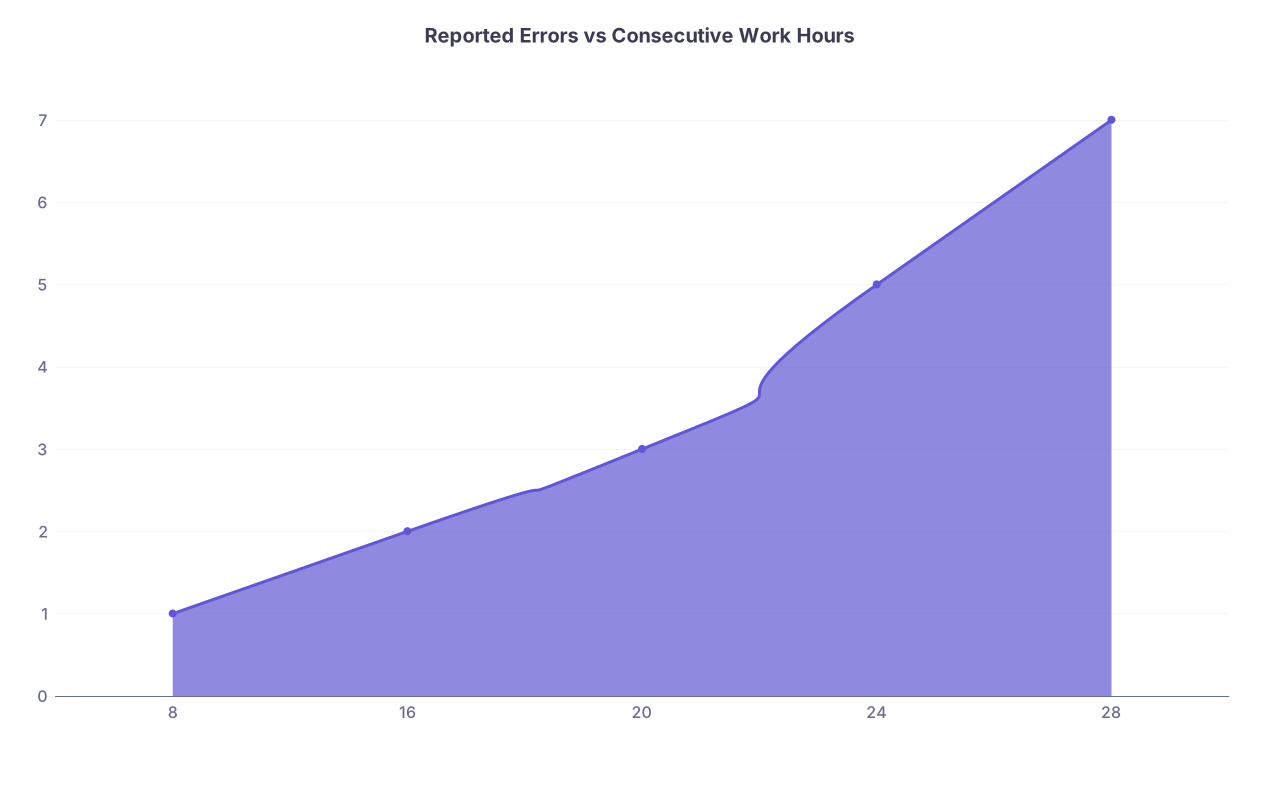
There’s decent data that sleep deprivation wrecks clinical performance. Residents after overnight call make more diagnostic and medication errors. Your working memory tanks, your reaction time slows, your vigilance drops.
And moonlighting often stacks on top of already borderline‑safe schedules. It’s not “just” 12 hours. It’s 12 hours after your regular 60–80 hour week.
| Category | Value |
|---|---|
| 8 | 1 |
| 16 | 2 |
| 20 | 3 |
| 24 | 5 |
| 28 | 7 |
Is this exact data? No. But the trend is real: the more hours you string together, the more your brain betrays you.
And here’s the part that scares me personally: when you’re that tired, your insight is trash. You think you’re functioning fine. That’s the worst combo—impaired but confident.
How Much Moonlighting Is “Too Much”?
You want a number. I want a number. We all want some magical: “Over X hours per month, you’re unsafe” rule.
Nobody will give you one. But I’m going to be more concrete than the usual fluff.
There are a few guardrails you absolutely can’t ignore:
- ACGME rules: You still have to stay under the 80‑hour work week averaged over 4 weeks, including moonlighting. If you’re blowing past that? You’re not just unsafe, you’re technically breaking accreditation rules and your program could get dinged.
- Consecutive hours: Once you start chaining 24+ hours of being “on” (clinical work + moonlighting + pseudo‑call), your brain is cooked. I’ve watched people fall apart at that point.
- Recovery time: If you never have a real day off—not a “day off but I’m moonlighting 10 hours”—that’s when your baseline fatigue just keeps climbing.
Let me put this side‑by‑side in something visual:
| Pattern | What It Looks Like | Risk to Safety (My Honest Take) |
|---|---|---|
| 1–2 shifts/month, post‑call avoided | Occasional extra weekend shifts | Low |
| 4–5 shifts/month, protected rest | Most weekends, no post‑call work | Moderate |
| Weekly shifts + heavy rotation | One extra shift almost every week | High |
| Multiple shifts on tough rotations | ICU + nights + moonlighting | Very high |
To me, “too much” moonlighting is any pattern where:
- You regularly hit or approach 80 hours/week.
- You feel physically ill looking at your schedule.
- You’re short‑tempered with patients or nurses because you’re exhausted.
- You’re catching yourself making small mistakes more often.
- You’re relying on caffeine and adrenaline instead of actual sleep.
If that’s your life and you’re adding moonlighting on top “because everyone else is doing it,” that’s not brave. That’s reckless.
Not just to patients. To your own career.
The Worst‑Case Scenarios We’re All Afraid Of
Let’s just walk through the nightmare reel, because pretending we’re not thinking about it doesn’t help.
Scenario 1: The Missed Diagnosis
You’re on a moonlighting ED shift. Volume is high, staffing is thin, and you’re on your 6th day of work in a row. A middle‑aged patient comes in with vague abdominal pain and normal vitals. You chalk it up to gastritis, send them home with a PPI.
They come back septic from a perforated viscus. Someone pulls your note. Retrospectively, the story and exam kind of pointed to something bad. But you were tired. You anchored early. You didn’t re‑examine. You didn’t think through the worst‑case.
Now there’s an M&M. Maybe risk management. Maybe litigation.
Would being fresh have guaranteed you’d catch it? No. But does fatigue make these misses more likely? Absolutely.
Scenario 2: The Medication Error
You’re moonlighting as a hospitalist, managing 20+ patients overnight. You meant to order 5 mg, you type an extra zero. The pharmacy doesn’t catch it. Nursing doesn’t catch it. The patient gets ten times the dose.
Most of the time, there’s no catastrophic outcome. But sometimes there is. And then everyone asks, “How many hours had the resident been working? How often were they moonlighting?” You do not want to be the case study.
Scenario 3: The “Unsafe Resident” Reputation
This one’s quieter, but almost worse long‑term.
You start making small, tired mistakes. A nurse complains that you’re always exhausted and slow to respond. An attending mentions you “seem stretched” or “burnt out.” Nobody says it directly, but the vibe becomes: you’re the resident people are a little nervous about.
You want letters for fellowship? Leadership roles? Chief? That reputation follows you.
This is what I’m terrified of. Not just harming a patient in the moment, but becoming “that” resident in people’s minds.

The Dark Side: People Will Minimize Your Concerns
Here’s the part that makes this even more confusing: the culture around moonlighting is often toxic.
You’ll hear:
“Everyone does it. You’ll be fine.”
“You’re young, you can handle it.”
“It’s just clinic, it’s easy.”
“Come on, it’s good experience.”
Translation:
“I survived abuse, so you should also.”
“I’m normalizing unsafe expectations because they benefited me financially.”
I’ve seen residents peer‑pressured into picking up shifts they had no business doing—post‑call, during brutal rotations, with no clear backup. Nobody wants to be the fragile one who says, “I’m worried this will make me unsafe with patients.”
But that’s not fragility. That’s insight.
A lot of people don’t have that insight. They confuse pushing through fatigue with being tough. They mistake adrenaline for competence.
They also don’t carry your name, your license, your malpractice risk.
| Category | Value |
|---|---|
| Pay off loans | 45 |
| Support family | 25 |
| Lifestyle expenses | 20 |
| Extra clinical exposure | 10 |
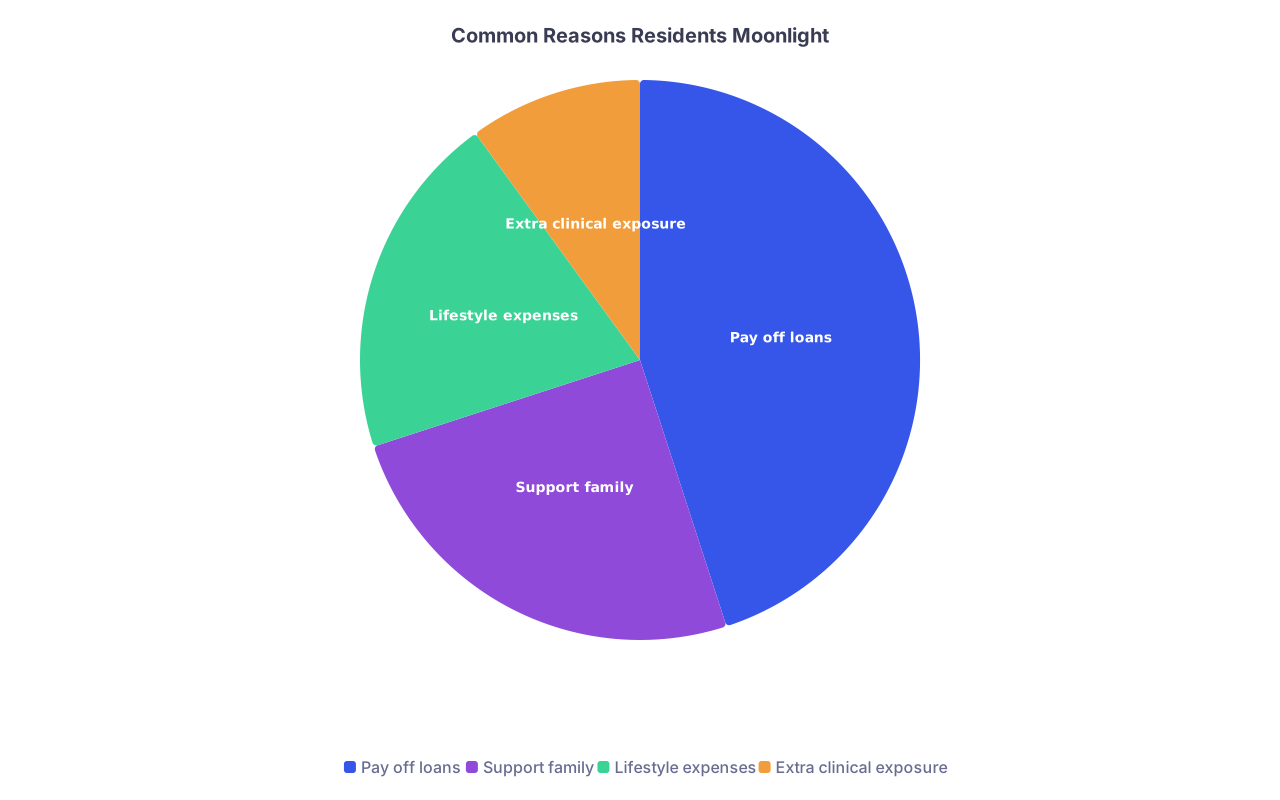
Most of us aren’t doing this for fun or “experience.” We’re doing it because we feel cornered financially. That makes it even harder to say no.
How To Moonlight Without Becoming Dangerous
Let me be practical for a second, because living in doom‑spiral mode 24/7 doesn’t help either.
If you are going to moonlight—and honestly, many people will—you need some brutally honest rules for yourself that protect patients and your future self.
Here’s the framework I use when I imagine doing this:
Hard red lines on timing
No moonlighting:- Post‑call
- On heavy ICU/CCU or tough ward months
- On weeks when I’m already averaging 70+ hours in my main program
If a shift offer violates those? It’s a no. Automatically. Even if the money is stupid good.
Sleep minimums
If I can’t reasonably get:- 6 hours of sleep before a moonlighting shift, and
- 6–8 hours within the next 24 hours afterward
I don’t take it. I assume my judgment will be worse than I think.
Scope of practice sanity check
I only take moonlighting roles where:- The work matches what I already do as a resident
- There’s a clear attending or backup available (even by phone)
- I’m not the sole decision‑maker in high‑risk settings beyond my training level
Needing money is not an excuse to pretend you’re an attending when you’re not.
Error‑watching as an early warning system
The minute I notice:- I’m rewriting orders often
- Nurses are clarifying things I usually get right
- I’m re‑reading my own notes because I can’t remember what I wrote
That’s a sign my cognitive margin is gone. That’s when I dial back moonlighting, not when I “get through this month.”
Program director honesty (annoying but necessary)
I hate this one, but it matters. Your PD knowing about your moonlighting:- Protects you from accidentally violating hour rules
- Gives you cover if a hospital tries to guilt you into insane shift loads
- Lets someone call it out if they see you slipping
Is this perfect? No. Could you follow all this and still make a bad error? Yes. That’s medicine. You could be well‑rested and still miss a PE.
But you drastically lower the odds of being unsafe by not pretending you’re a machine.

| Step | Description |
|---|---|
| Step 1 | Offered Shift |
| Step 2 | Say No |
| Step 3 | Consider Taking Shift |
| Step 4 | Will this exceed 80 hours week? |
| Step 5 | Post call or ICU month? |
| Step 6 | At least 6 hours sleep before? |
| Step 7 | Backup attending available? |
The Guilt Trap: Money vs Safety
Let’s talk about the other fear: if you say no to moonlighting, you fall behind financially. Loans grow. Savings don’t exist. You watch co‑residents buy houses, pay off $50k of loans in a year, build cushion.
You feel stupid and “too cautious” for not cashing in. That’s a real, ugly pressure.
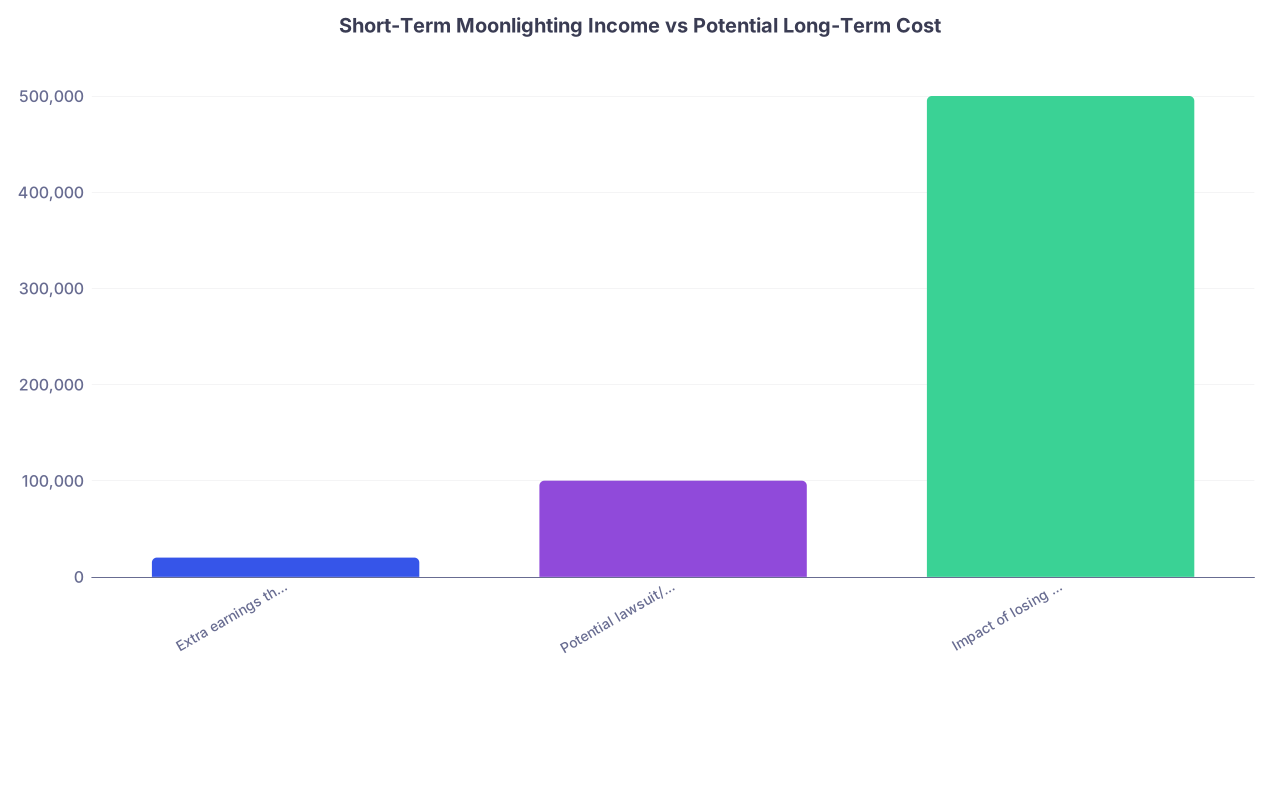
But here’s the calculation I force myself to stare at:
| Category | Value |
|---|---|
| Extra earnings this year | 20000 |
| Potential lawsuit/legal costs | 100000 |
| Impact of losing job/license | 500000 |
You can make $15–30k a year moonlighting. That’s huge when you’re broke.
But one serious adverse event tied to fatigue, one career‑altering mistake, one reputation hit that keeps you from matching into the fellowship you want? That can cost more than any moonlighting check you’ll ever cash.
Not just in money. In sleep. In self‑respect. In whether you can stand to keep practicing.
I’m not saying “never moonlight.” I’m saying don’t sell your future safety, and your patient’s safety, for an extra $600 this Saturday.
Where I Land On This (Reluctantly)
So, can too much moonlighting make you unsafe with patients?
Yes. Absolutely.
Not in some abstract “maybe” way. In the very real, very concrete sense that:
- Fatigue increases your error rate.
- Overload shrinks your cognitive bandwidth.
- Being stretched thin makes you miss subtle but important details.
And patients don’t care that your loans are crushing or that your program underpays you. They just experience the fallout if you’re not at your best and something slips.
At the same time, you’re not evil or selfish for considering moonlighting. You’re not automatically dangerous if you pick up a shift. You’re just playing with a narrower safety margin than attendings who go home after 4 p.m. and sleep.
The line between “safe enough” and “unsafe” isn’t bright and clean. That’s what makes this terrifying. But you can:
- Refuse to rationalize clearly unsafe schedules.
- Set non‑negotiable rules for yourself.
- Accept that saying “no” sometimes is actually you protecting your patients—not failing them.
If you’re asking this question at all, you’re already ahead of a lot of people. The scariest residents are the ones who never worry about this.