
What actually happens if a patient from your moonlighting shift sues you and you’re still “just” a resident or a new attending trying to survive?
Because that’s the nightmare, right? You pick up a few extra shifts to pay off your loans, think you’re covered, and then one day there’s a certified letter with your name in bold next to “Defendant.”
Let’s walk through what really happens, what’s most likely, and what can absolutely wreck you if you’re not careful.
First: Who Can Actually Get Sued When You Moonlight?
Here’s the part nobody explains during residency orientation: almost anyone connected to the patient can be named in a lawsuit.
In a moonlighting situation, that might include:
- You, individually
- The hospital/clinic/urgent care where you’re moonlighting
- The staffing or locums company (if there is one)
- Sometimes your training program or GME office (less common, but it happens)
Malpractice attorneys tend to cast a wide net. If your name is on the chart, your name can end up on the lawsuit.
What matters most for your survival is not “if” you can be sued, but who is paying to defend you and how big the policy is.
That’s where malpractice coverage details suddenly become very real.
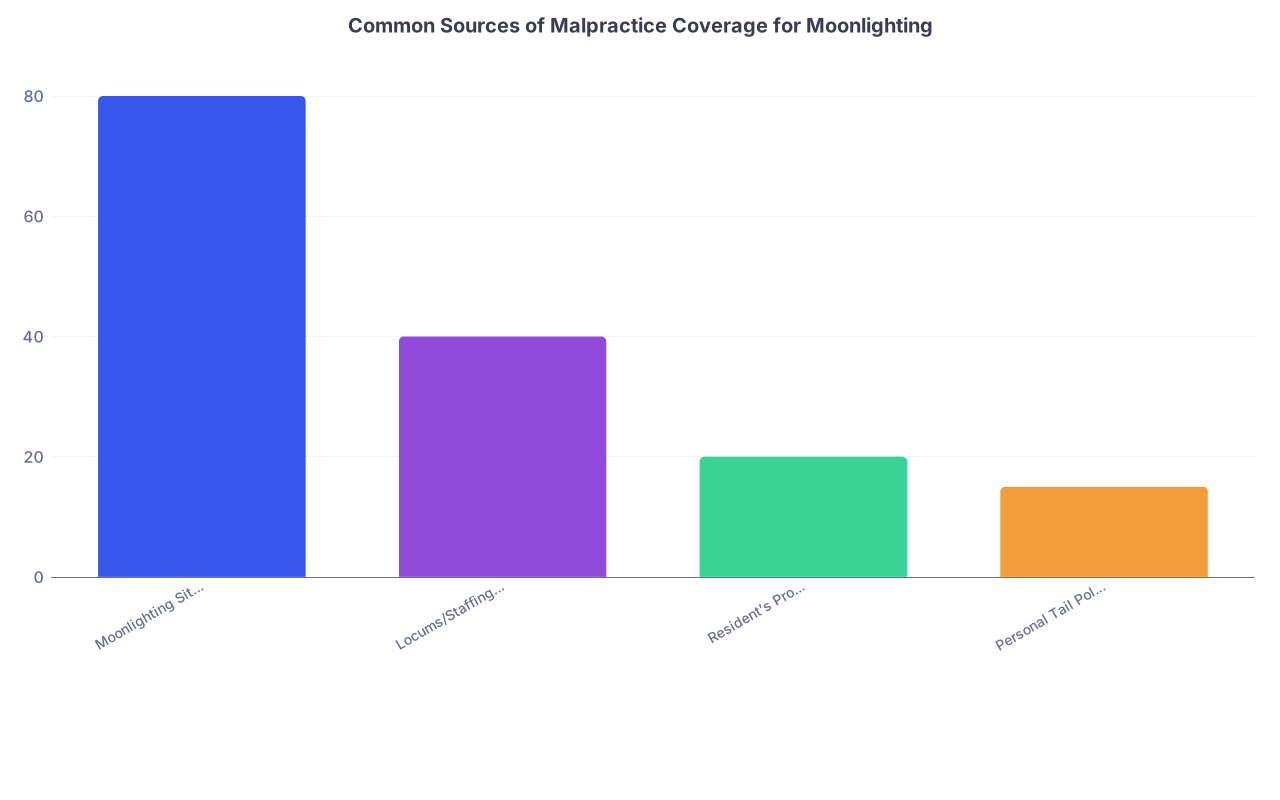
| Category | Value |
|---|---|
| Moonlighting Site Policy | 80 |
| Locums/Staffing Policy | 40 |
| Resident’s Program Policy | 20 |
| Personal Tail Policy | 15 |
Those numbers aren’t exact statistics; they’re more like how often I’ve seen each one actually matter in real life. The big one is the moonlighting site’s policy—that’s usually your main shield.
What Actually Happens Step‑by‑Step When There’s a Claim
You’re probably imagining someone handing you a lawsuit on the unit in front of your co-residents. That’s not usually how it goes.
Step 1: The “Oh Shit” Moment
You get something like:
- A certified letter
- An email from Risk Management
- A call from the hospital’s legal department
It might be a notice of claim, or you might be directly served as a defendant. You’ll feel that sinking-stomach, tunnel-vision panic. Totally normal.
The worst thing you can do right then? Start emailing people with apologies or explanations, or editing the chart. Don’t. Touch. The. Chart.
You contact:
- The malpractice insurer for your moonlighting site
- The medical staff office / risk management at that site
- Your own program director or GME office (yes, tell them; surprise is worse)
If the moonlighting site actually had you covered like they promised, their insurer usually assigns you a defense attorney. That attorney is now your person. You do what they say, not what looks good in a group chat.
Step 2: Chart Review and Narrative Building
Your lawyer (or the hospital’s lawyer) will get records and go through the chart with a fine-tooth comb. They’ll ask you:
- What was the call volume like?
- Who else was on?
- What did the patient say, exactly?
- Did anyone override your decision? Or did you override theirs?
This is the part where you start obsessively reliving the shift at 3AM, imagining all the ways you “should” have done something different. That self‑blame reflex? Normal. Also not super helpful.
Malpractice cases drag on. We’re talking months to years, not weeks. Your brain will want resolution immediately. It won’t get it.
Will This Destroy My Career?
The piece everyone is actually scared to ask.
Short version: One malpractice claim from a moonlighting gig almost never kills a career by itself.
Programs, credentialing committees, and future employers care about patterns, not one-off cases, especially early in training. What scares them more:
- Repeated similar allegations
- Clear negligence or criminal behavior
- Dishonesty or hiding things
What most of them expect at this point:
- Almost every practicing physician, especially in higher-risk fields, will face a claim at some point.
- Emergency, OB, surgery, hospitalist, urgent care, telemedicine—these are claim magnets. Moonlighting there doesn’t magically exempt you.
Where it can hurt you is in:
- State medical board applications
- Hospital credentialing packets
- Future job applications that ask: “Have you ever been named in a malpractice suit?”
You’ll probably have to check “Yes” and attach an explanation. That’s not the end of the world. A focused, honest, non-defensive explanation + evidence of no pattern usually satisfies them.
The real nightmare scenario isn’t “I had a claim.”
It’s “I had a claim and I wasn’t covered.”
The Specific Moonlighting Nightmares You’re Probably Imagining
Let’s walk through the common “what if” spirals.
1. What if my residency’s malpractice doesn’t cover moonlighting?
That’s actually the default. Most residency policies cover you only for activities within the scope of your training program. Moonlighting = outside that scope.
You need:
- A written agreement from the moonlighting site that you’re covered under their policy, or
- Your own individual policy if you’re doing independent contractor or telemed gigs
If you never checked this and you’re already moonlighting? Yeah, I’d be sweating too. You’re not alone; tons of residents sign contracts without understanding any of this.
Action move: ask in writing—email, not hallway conversation:
“Can you confirm in writing that I am covered under the facility’s malpractice insurance for my moonlighting shifts, including defense and indemnity?”
If they can’t or won’t answer that clearly, that’s a sign to either get your own coverage or get out.
2. What if it’s a claims‑made policy and I leave?
Claims-made vs occurrence is where things get nasty.
- Occurrence policy: Covers events that happened while the policy was active, even if the claim is filed years later.
- Claims-made policy: Covers claims only if the event and the claim happen while the policy (or its tail) is active.
So if you moonlight in 2026, leave in 2027, lawsuit gets filed in 2029…
No tail coverage for a claims-made policy = you might be personally on the hook.
| Feature | Occurrence Policy | Claims-Made Policy |
|---|---|---|
| Covers old cases after you leave | Yes | Only if tail |
| Needs tail coverage | No | Yes, usually |
| Safer for residents | Yes | Only with tail |
If your moonlighting site uses claims‑made, you need to know:
- Do they pay for tail if you leave?
- For how long?
- Is that in writing, not just “yeah we’ll take care of you”?
If it’s nowhere in the contract and they shrug when you ask about tail, that’s a red flag.
3. What if the policy limits are too low?
Imagine a catastrophic outcome: permanent disability, severe harm, wrongful death. The family sues for some huge number. The policy covering you has, say, $1M per claim / $3M aggregate.
Most medical malpractice cases, when they do settle, settle within limits. But not always. Especially in plaintiff-friendly states or with awful facts.
If the judgment or settlement goes beyond policy limits, theoretically they can go after personal assets. Are they going to empty your checking account as a PGY‑3? Probably not the first target. But you don’t want to be the uncovered or under-covered one in the group.
As a resident, the main move is: don’t work somewhere shady that skimps on coverage. If the pay is amazing and everything else is vague? That’s not a good sign.
How Does a Malpractice Claim Affect Daily Life in Training?
This is the less visible part. You’re still supposed to:
- Round at 6AM
- Study for boards
- Show up cheerful to clinic
Meanwhile you’re getting deposition prep emails, reminders you can’t talk about the case, and your sleep is wrecked.
A few practical realities:
- You’ll obsessively reread the chart in your head. That’s normal. Your brain is trying to rewrite history to make it less dangerous.
- You’ll feel defensive and ashamed. Also normal. You’ll assume everyone thinks you’re incompetent. They don’t. Most attendings have been there.
- You might get quieter in teaching. Because now every clinical decision feels like potential future evidence. It takes a while to loosen up again.
Tell a small number of people you trust: a co-resident, a mentor, maybe an attending you know has been sued before. You’re technically not supposed to talk about specifics, but you can say “I’m involved in a case and I’m freaking out” without violating anything.
How Do You Protect Yourself Before Anything Goes Wrong?
This is the part that actually changes your risk. Not magical defensive medicine or ordering 45 CT scans.
Read the damn moonlighting contract
Not just the rate. Look for:
- “Professional liability insurance”
- “Limits of liability”
- “Claims-made vs occurrence”
- “Tail coverage”
- “Independent contractor” vs “employee”
Independent contractor with no clearly stated malpractice coverage and no tail plan? That’s a risky setup unless you buy your own policy.
Clarify who is supervising you
If you’re still in residency, but moonlighting “as an attending,” the line can get blurry. Are you:
- Fully independent?
- Expected to call someone?
- Working with midlevels who can also see patients?
Plaintiffs love muddy responsibility lines. Clarity in your role helps.
Document like a person who might have to read this note out loud in five years
Not novels. Just clarity.
- Why you did what you did
- What the patient said yes or no to
- What you ruled out that’s dangerous, not just “no URI symptoms”
You’re not writing to win a lawsuit. You’re writing so that Future You, under oath, doesn’t have to guess what on earth Past You was thinking.
Worst‑Case Scenarios (Yeah, Let’s Go There)
Because your brain is probably here already.
Worst‑Case #1: You weren’t covered at all
You moonlighted at a tiny urgent care, got paid as a 1099 contractor, never got your own malpractice, and they never added you to their policy.
A bad outcome happens, you get sued, their insurer says, “We don’t cover this doctor.”
This is about as bad as it gets.
Realistically:
- A plaintiff’s attorney will still look for deeper pockets (the facility, corporate owner, supervising docs).
- You’ll still have defense costs, which can be brutal.
- Personal assets can be exposed depending on the state and how things play out.
If you’re in this boat now, stop taking shifts until you fix the coverage piece. “But the money is good” will not matter in five years if you’re in financial ruin over one case.
Worst‑Case #2: The program finds out and is furious
You didn’t have written moonlighting approval. Or you broke hour limits. Then there’s a claim.
Now your PD is worried not just about you, but about program liability, ACGME issues, and embarrassing phone calls from legal.
Could they discipline you? Yes. Anything from a meeting and warning to probation or worse if there’s a pattern of lying or unsafe practice.
What they hate more than anything isn’t that you moonlighted. It’s that you lied or hid risk from them.
The Stuff No One Tells You: Almost Everyone Survives This
Here’s the reality behind the horror stories:
- Tons of physicians get named in malpractice claims every year.
- Most of those cases get dropped, settled quietly, or end without a trial.
- Most of those doctors keep practicing. Many with zero impact on their careers beyond some extra paperwork and a nice case of insomnia.
The doctors who really get hammered long‑term are usually:
- Serial bad actors
- Dishonest on applications and credentialing forms
- Involved in egregious, obvious negligence
One moonlighting case where you made a reasonable judgment in a messy situation? That’s not career-ending. It feels like it in the moment. But it almost never is.
Quick Reality Check: What You Should Do Right Now If You Moonlight
No panic. Just a checklist.
- Pull your moonlighting contract and look for the malpractice section.
- Figure out: occurrence vs claims-made, limits, and tail.
- Get written confirmation you’re covered under their policy, including after you leave.
- If anything is unclear, call the site’s HR/credentialing or risk management and ask direct questions.
- Talk to your program leadership if you’re at all unsure what they know or approve.
If you’re already in the middle of a claim? Talk to your assigned attorney before doing anything. And stop doom‑googling at 2AM. Most of what you see online is either plaintiff‑side marketing or worst‑case anecdotes.
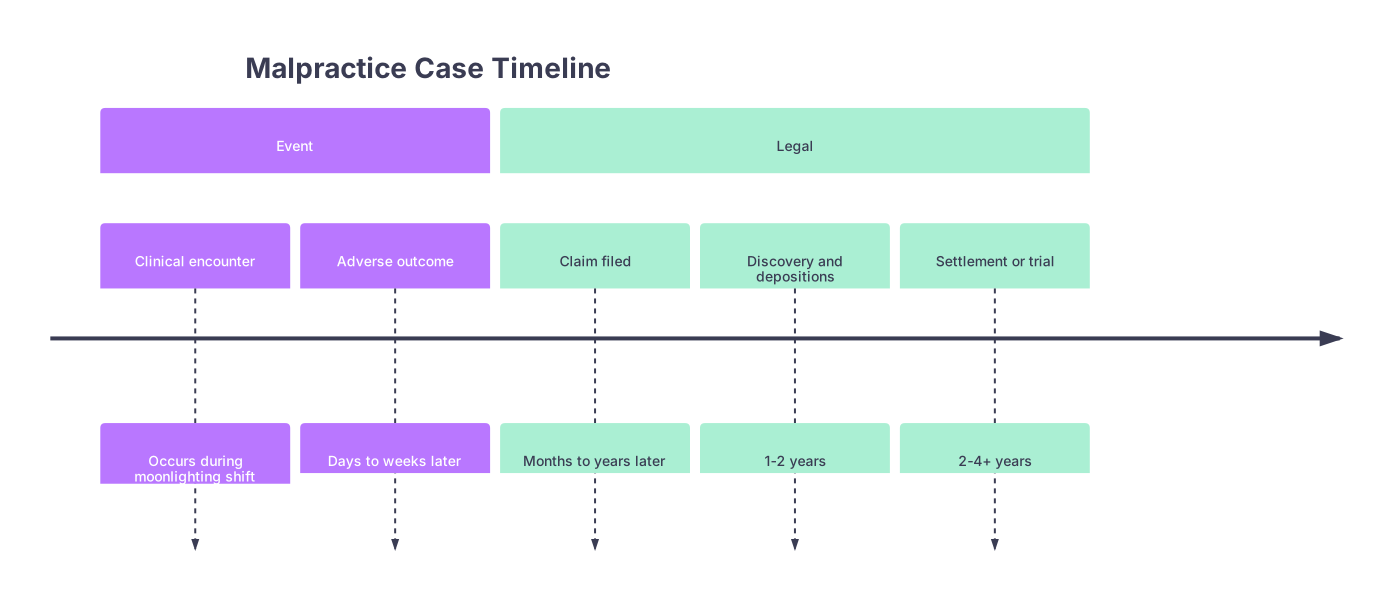
| Period | Event |
|---|---|
| Event - Clinical encounter | Occurs during moonlighting shift |
| Event - Adverse outcome | Days to weeks later |
| Legal - Claim filed | Months to years later |
| Legal - Discovery and depositions | 1-2 years |
| Legal - Settlement or trial | 2-4+ years |
FAQs
1. Will one moonlighting malpractice claim stop me from getting a job after residency?
Almost never by itself. Employers and hospitals are used to seeing at least one claim for people in higher-risk fields. What they care about is whether there’s a pattern, whether you were clearly reckless, or whether you tried to hide it. A single, well-explained case with no board action is usually a non-issue.
2. Do I have to report a moonlighting malpractice claim to my residency program?
You should. Many programs actually require it in their policies, even if they don’t emphasize it. They’d much rather find out from you early than from a hospital attorney or a future credentialing packet. Hiding it is worse than the claim itself.
3. If the hospital’s lawyer is “for” the hospital, who’s actually protecting me?
In many cases, the malpractice insurer assigns you your own defense attorney, or the same attorney defends both you and the institution if there’s no conflict. If you ever feel like your interests and the hospital’s diverge, you can and should ask about separate counsel. That’s exactly the kind of question you’re allowed to ask your lawyer.
4. Should I buy my own malpractice policy just in case?
If you’re doing any moonlighting that isn’t 100% clearly covered (in writing) by the site, it’s worth seriously considering a personal policy. Especially if you’re a 1099 contractor or doing telemedicine. It costs money, yes, but compare that to paying for a lawyer out-of-pocket in a worst-case scenario.
5. Can a moonlighting malpractice claim affect my medical license?
It can, but usually only if it’s severe, repeated, or tied to other issues (substance use, fraud, clear gross negligence). Some boards want to know about any claim; others only care about paid settlements or judgments. One claim without clear misconduct rarely leads to license action on its own, but you’ll have to report it honestly when asked on applications.
Key takeaways:
- The real disaster isn’t “I got sued,” it’s “I got sued and wasn’t actually covered.”
- One moonlighting malpractice claim almost never kills a career, but lying or ignoring coverage details can.
- The best time to protect yourself is before you sign the moonlighting contract—or right now, before anything happens.