
You do not owe your first attending job to the first hospital that waves a contract in your face. The “be grateful and sign anything” culture in medicine is financially toxic and professionally lazy.
Let’s kill this myth properly.
For years I have watched residents and fellows—sleep‑deprived, buried in loans, desperate to “finally be done”—sign the first attending offer they receive. They’ll tell me, “My PD said I should just take it,” or “Everyone in my class is signing already, I don’t want to be left behind.” Six months later: texts about unsafe staffing, RVU traps, non-competes, and regret.
Here’s the uncomfortable truth: the first offer is almost never the best offer. Often it’s not even a safe offer.
The Fear That Drives “First Offer” Thinking
The myth sounds like this:
- “Jobs are drying up; you should grab whatever you can.”
- “You’ll look ungrateful if you negotiate or wait.”
- “If you don’t sign early, the spot will go to someone else, and you’ll be unemployed.”
- “You have too much debt; you can’t afford to say no.”
Strip away the anxiety and what you’re left with is a power imbalance and a lack of data.
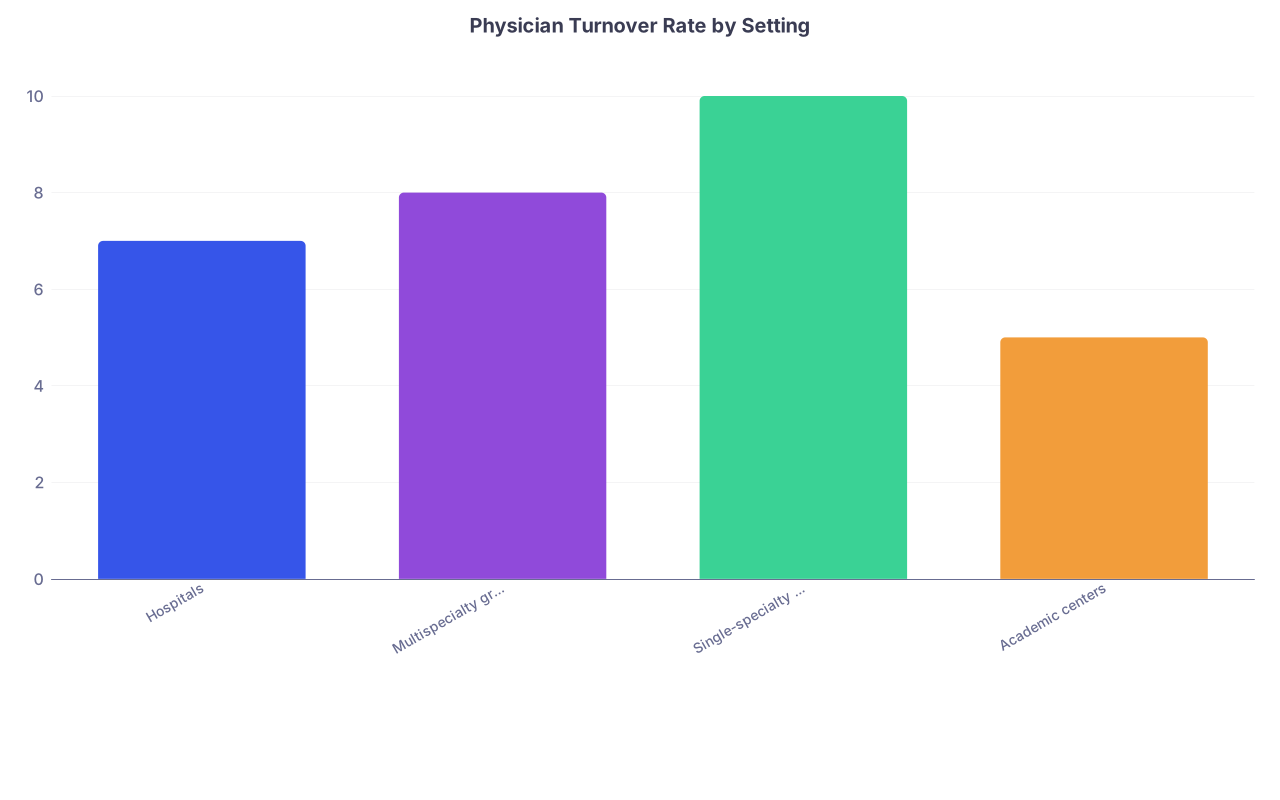
Because here’s what the actual numbers say.
| Category | Value |
|---|---|
| Hospitals | 7 |
| Multispecialty groups | 8 |
| Single-specialty groups | 10 |
| Academic centers | 5 |
Those percentages are approximate annual turnover rates (various MGMA/AMGA/consulting reports hover in this range). Translation: a huge chunk of physicians switch jobs within a few years of starting. Not because they planned to “career hop,” but because the first job was a bad fit or structurally broken.
So no, you’re not staring at a once‑in‑a‑lifetime opportunity. You’re staring at one data point in a market with chronic churn and documented shortages in many specialties.
What the Data Actually Shows About Your Leverage
Let’s drag this out of feelings and into numbers.
The Association of American Medical Colleges and multiple workforce projections keep repeating the same thing: physician demand exceeds supply in many fields—especially primary care, hospitalist medicine, psychiatry, anesthesia, and a good chunk of surgical subspecialties. Yes, there are local and specialty‑specific exceptions, but the macro‑picture is clear.
The job market for attendings is not like the match. It’s not a one‑shot binding ceremony with a SOAP panic at the end. It’s messy, continuous, and only partly rational.
Consider three simple realities:
- Most systems are permanently recruiting. They are constantly backfilling burnout, retirements, maternity/paternity leaves, and people leaving bad jobs. They will need your labor next month, next year, and five years from now.
- Your actual risk of long‑term unemployment as a board‑eligible/board‑certified physician is extremely low, especially if you’re willing to be flexible on geography or type of role (e.g., telemed, locums, hospitalist versus narrow subspecialty practice).
- Your downside risk from a bad contract is very real. Non‑competes, RVU‑only compensation, impossible call schedules, and vague “productivity expectations” can cost you hundreds of thousands of dollars and years of your life.
You’re overestimating the risk of waiting or negotiating and underestimating the cost of saying yes too fast.
The Hidden Cost of Accepting Too Quickly
I’ve seen this pattern repeatedly:
PGY‑3 or fellow signs in October for a job starting the following July. The contract has:
- A modest base salary “with opportunity to earn more based on productivity”
- Non‑compete blocking a wide radius (20–50 miles is common)
- Vague language about call and coverage
- “Bonuses” tied to opaque group performance
By the time they start, they’ve had exactly zero practical leverage for 9 months. During that gap, they:
- Stop looking at alternatives (because they feel “committed”)
- Miss better offers that land in March/April
- Lose any negotiation power—they already signed
Then reality hits:
- Clinic double‑booked, no MA support, 15-minute new patients
- Call 1:3 instead of the “typical” 1:5 they were verbally promised
- RVU thresholds set based on fantasy, not historical physician performance
Suddenly, all that “I just need a job, any job” energy turns into “How fast can I get out?” You know what limits their options now? That non‑compete they signed when they were terrified of being unemployed.
You didn’t avoid risk. You pre‑paid it.
Moonlighting: Your Built‑In Safety Net You’re Ignoring
Here’s the part almost no one tells residents plainly: moonlighting is your pressure release valve. It’s the bridge that lets you be picky with your first job instead of desperate.
If you’re in a specialty where moonlighting is at all realistic (hospitalist‑style shifts, ED, urgent care, telemed, nocturnist, some anesthesia, some psych), you have more leverage than you think.
You can:
- Stack extra shifts during the last year of residency or fellowship and build a cash cushion
- Arrange post‑graduation locums or per‑diem work for 3–6 months instead of signing a bad full‑time contract
- Test different systems and practice models before you commit long‑term

This is what buys you time to:
- Finish interviews later in the year
- Compare actual offers side by side
- Walk away from deals that look “fine” on paper but feel wrong in person
Is moonlighting perfect? No. It’s tiring, sometimes chaotic, and not everyone has equal access to it. But as a risk‑management tool, it’s miles better than signing a 3‑year contract in October because “everyone else is signing.”
The “First Offer” Is Usually a Test, Not a Gift
Another myth: “The offer must be fair; it’s standardized.”
No. It’s standardized to benefit them, not you.
Most groups and systems test you with the first offer:
- Will you accept RVU‑only with an “expected” volume that no one has actually hit?
- Will you swallow a 50‑mile non‑compete that makes you move your kids if you leave?
- Will you accept uncompensated call because “we all share the burden here”?
- Will you accept a starting salary that’s 15–20% below MGMA median for your specialty and region?
If you say yes immediately, you’ve just marked yourself as the easiest possible hire. They learn two things: you’re anxious, and you don’t know the market.
The physicians who do better are not magical. They just:
- Ask for the compensation structure in writing
- Request historical productivity data for the position they’re filling (RVUs, patient volumes, payer mix)
- Compare offers using national/regional benchmarks (MGMA, AMGA, specialty society surveys, etc.)
- Push back on non‑competes and indefinite call obligations
You don’t have to be a contract lawyer. You have to be willing to act like your time and license are valuable—which they are.
A Simple Comparison: “First Offer” Versus “Wait and Compare”
Let me show you what this actually looks like in practice.
| Feature | First Offer (October) | Later Offer (March) |
|---|---|---|
| Base salary | $260k | $310k |
| Bonus structure | RVU-only above high threshold | Mix of base + quality + RVU |
| Non-compete radius | 35 miles, 2 years | 10 miles, 1 year |
| Call | 1:3, no call pay | 1:5, paid call |
| Support | 1 MA for 2 docs | 1 MA per doc, scribe support |
I’ve seen variations of that table in real life, across IM, EM, cards, GI, hospitalist, psych. The attending who signed early never saw the March offer. They were already locked in and too burned out to restart the search.
Were they “lucky” to have any job? Or did they pay an annual penalty of $50k+ for years because they were panicked into saying yes?
Non-Competes: The Trap Hidden Behind “Just Be Grateful”
Non‑competes are one of the nastiest parts of rushing into your first job. They turn a bad decision into a geographic prison sentence.
Common patterns I see:
- 20–50 mile radius non‑compete
- Applies for 1–2 years after you leave
- Covers “any practice of medicine” in your specialty
- Sometimes counts any clinic/hospital in the corporate “network,” even outside your formal worksite
The party that benefits most when you quickly sign your first offer? The one that gets to block you from working across the street if the job is toxic.
If you instead:
- Moonlight or do short‑term locums
- Take a 1‑year contract with a softer or no non‑compete
- Negotiate narrower scope (“only applies to hospital X,” smaller miles, shorter duration)
You preserve your ability to leave without uprooting your entire life.
Some states are restricting or banning non‑competes in healthcare. Others are not. Until the law catches up where you live, your best defense is refusing to mindlessly sign the first contract tossed at you.
“But I Have Loans, I Can’t Afford to Wait”
I hear this constantly. It’s real. The debt is brutal.
But debt is a bad reason to lock in worse lifetime earnings and quality of life.
Here’s what people forget:
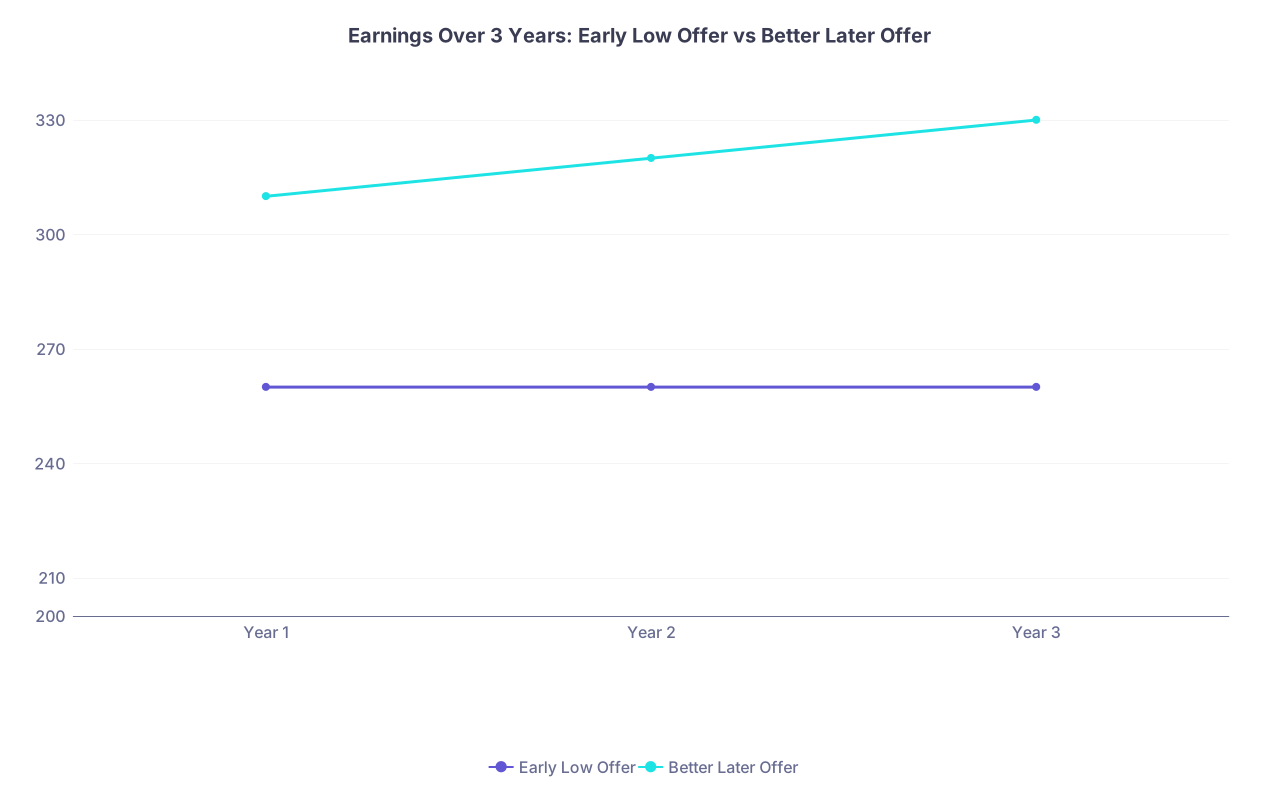
- The difference between a mediocre and a solid offer is often $30k–$80k per year when you include base, bonus, call pay, and benefits.
- Over even 3 years, that’s $90k–$240k. That’s basically another med school tuition, or the difference between drowning in loans and digging out.
- If moonlighting or a short locums stint covers 3–6 months while you get a better long‑term deal, you come out far ahead.
| Category | Early Low Offer | Better Later Offer |
|---|---|---|
| Year 1 | 260 | 310 |
| Year 2 | 260 | 320 |
| Year 3 | 260 | 330 |
All values in thousands. You don’t need to be a finance nerd to see which path actually helps you pay off loans faster.
Again: this is not about “hold out for perfection.” It’s about refusing to sign obviously lopsided deals because you’re scared and tired.
How to Delay Without Drifting
The counter‑myth is that if you do not accept early, you’ll just endlessly “analyze” and never decide. That can happen… if you’re passive and vague.
You avoid that by being disciplined:
- Set a decision window. For example: “I’ll interview from October to February, and I’ll choose by March 15.”
- Use moonlighting or locums to cover the gap if your start date ends up later than July.
- Compare offers objectively—total comp, non‑compete, schedule, call, support staff, culture. Put them in an actual spreadsheet.
- Get every important term in writing. Verbal “we usually do…” means nothing.
And—yes—if by your deadline the best offer you have is still mediocre but safe, you can choose to take it with open eyes. That’s very different from panic‑signing the first contract because your co‑fellow did.

When It Might Make Sense to Take the First Offer
Let me be clear: “You don’t have to accept the first offer” does not mean “Never accept the first offer.”
Sometimes the first offer really is:
- At or above market pay
- Reasonable call
- No or limited non‑compete
- In your preferred location
- From a group with a strong track record (you talked to multiple current and former docs)
If you’ve:
- Compared it against data
- Had a contract review (ideally by healthcare-savvy counsel)
- Asked hard questions about volume, support, and culture
- And you still like it
Then accepting—even if it’s technically the “first”—is fine. Because then it’s not about order. It’s about quality.
The myth I’m attacking is the reflexive sequence‑based obedience: “It’s the first one, I shouldn’t risk losing it.”
No. You should risk losing bad or unclear offers.
The Future of Medicine Favors the Attending Who Can Walk Away
Medicine is changing: telehealth, corporate consolidation, APP expansion, new payment models. None of that makes your first attending contract less important. It makes it more important.
Because your main power, in a system that increasingly treats physicians like replaceable cogs, is the ability to say: “No, this doesn’t work for me. I’ll keep looking.”
Moonlighting, locums, growing physician shortages, and workforce churn all push in your favor—if you’re willing to use them.
Years from now, you will not remember the exact date you signed your first contract. You will remember whether that job gave you room to breathe or made you hate medicine. Waiting for the right offer—rather than grabbing the first one—is often the difference.