
Waiting until PGY‑2 to understand your pay and moonlighting options is financial malpractice against yourself.
You do not have that kind of time buffer. By the time most interns “get around” to this stuff, they’ve already lost thousands of dollars and months of experience they can’t get back.
Here’s the truth:
If you do not plan your compensation and moonlighting conversations on a clear timeline, they’ll get swallowed by cross-cover pages, night float, and “just survive” mode.
I’ll walk you month‑by‑month through PGY‑1 and show you exactly when and how to bring up:
- Base pay and salary adjustments
- Call pay, differentials, bonuses
- Moonlighting rules and politics (formal and unwritten)
- Disability, 401(k)/403(b), and loan repayment benefits
This is not theory. This is what I see residents regret every single year.
Big Picture: PGY‑1 Compensation & Moonlighting Timeline
At this point, you need a map. Here’s the year in one glance.
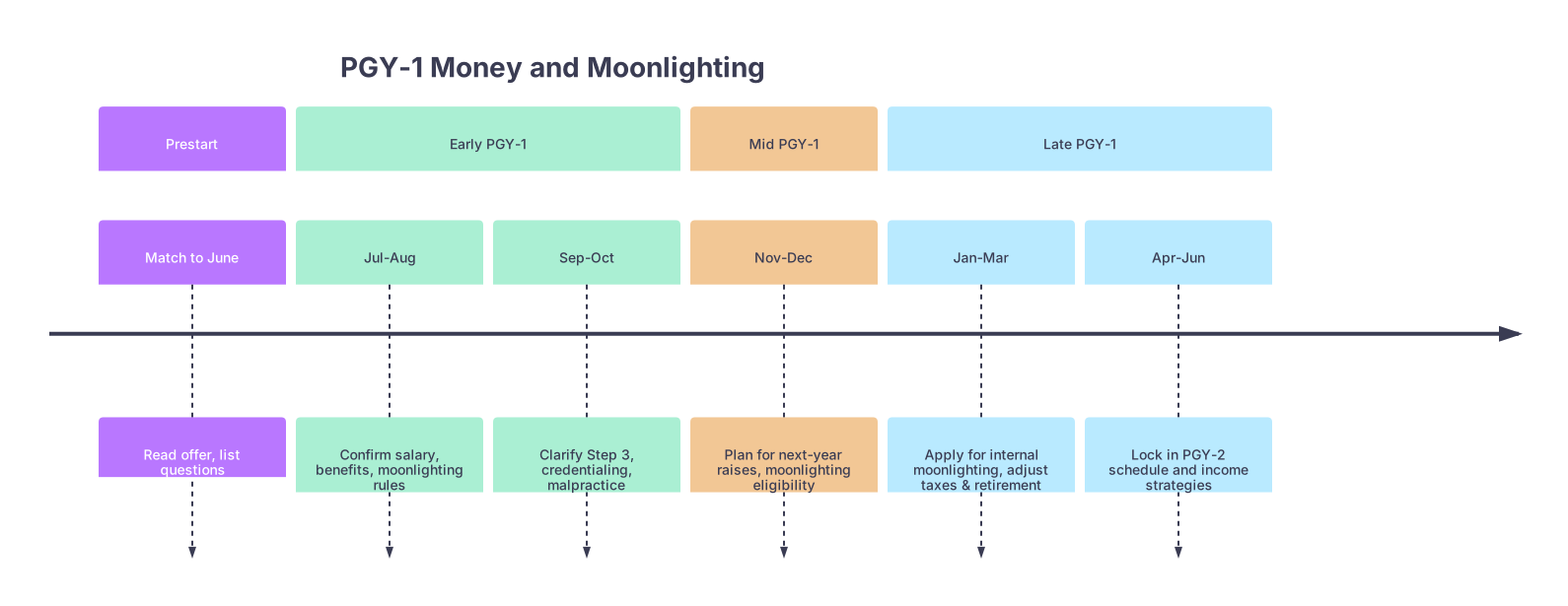
| Period | Event |
|---|---|
| Prestart - Match to June | Read offer, list questions |
| Early PGY-1 - Jul-Aug | Confirm salary, benefits, moonlighting rules |
| Early PGY-1 - Sep-Oct | Clarify Step 3, credentialing, malpractice |
| Mid PGY-1 - Nov-Dec | Plan for next-year raises, moonlighting eligibility |
| Late PGY-1 - Jan-Mar | Apply for internal moonlighting, adjust taxes & retirement |
| Late PGY-1 - Apr-Jun | Lock in PGY-2 schedule and income strategies |
Now let’s slow that down into what you should do when.
Before You Start: Match to June – Set Up the Money Questions
This is the window where you still have mental bandwidth. Use it.
1. Right after Match (March–April)
At this point you should:
Re‑read your contract and GME benefits guide. Not skim. Read. Make a one‑page “money snapshot”:
- PGY‑1 base salary
- Meal stipend / book fund / CME fund (if any)
- Call differential, night differential
- Relocation allowance
- Health, dental, vision premiums
- Retirement match (if any) + vesting schedule
- Disability insurance details
- Step 3 reimbursement and limits
- Moonlighting policy section and required approvals
Write down 10–15 concrete questions. Things like:
- “How is night float paid? Stipend or just part of salary?”
- “Does moonlighting count toward duty hours?”
- “Is malpractice for moonlighting covered by the hospital or me?”
- “Can I contribute to a Roth 403(b)? Is there a match?”
Identify your three key people:
- GME office contact
- Program coordinator
- A PGY‑2 or PGY‑3 who actually moonlights
You’re not asking them anything yet. You’re just organizing the attack.
2. May–June (4–6 weeks before start)
At this point you should:
Email GME for clarification on ambiguous items. One short, focused email:
- Confirm: “Is this year’s salary already updated for cost-of-living?”
- Ask how/when raises are applied (start of academic year vs calendar year)
- Confirm internal moonlighting eligibility (usually PGY‑2+, but some PGY‑1 night shifts count under supervision)
Build a simple budget using your real numbers.
Not aspirational. Real rent, real premiums, real student loan plan (even if in IDR). This tells you:- Whether you’ll need moonlighting PGY‑2+
- How urgent those conversations are
If your margin is under $300/month, moonlighting strategy is not optional; it’s infrastructure.
Months 1–2 (July–August): Survive… but Don’t Ignore the Basics
You’re drowning in EMR passwords and admitting septic shock. Fine. Still, there are a few compensation and moonlighting conversations you cannot postpone.
Week 1–2: Orientation and Early July
At this point you should:
Confirm the actual pay hitting your account.
- Check first paycheck:
- Base rate matches offer
- Correct tax withholding (no, 0 allowances + no extra withholding is not always smart)
- Retirement contributions turned on/off according to your plan
- If something’s wrong, email payroll immediately—errors are easier to fix early than 6 months later.
- Check first paycheck:
Listen carefully during benefits presentations.
Specifically note:- Retirement plan options and match schedule
- Disability: Own-occupation vs generic, coverage percentage
- Life insurance – often minimal, but you should know
- Step 3 reimbursement deadlines
- Any slide mentioning “outside clinical work” or “moonlighting”
Write down names of the HR/benefits reps. You’ll need them later.
- Ask your chief residents one question:
“If you were starting intern year again, what money/benefits thing would you fix in the first month?”
You’ll get gold:
“I’d enroll in the 403(b) from day one; I missed the match that first year.”
“I’d clarify how many Step 3 fees they actually reimburse.”
Late July–August: Quietly Map the Landscape
Once the hourly panic dials down to a dull roar, you focus.
At this point you should:
Clarify call and shift differentials. Ask your coordinator or a senior:
- “Which shifts pay differentials?” (nights, weekends, holidays)
- “Is that baked into salary or separate?”
- “Do we get paid to cover extra calls if someone’s out?”
Get the informal moonlighting rules.
From residents, not just GME. Ask a PGY‑2/3:- “Who actually moonlights here?”
- “Are there unwritten expectations? (like ‘don’t do X site’).”
- “What’s the political fallout if you moonlight a lot?”
You’re not applying for anything yet. This is reconnaissance.
Months 3–4 (September–October): Set Up Future Moonlighting
By now you’re less dangerous with the EMR and can form complete sentences again.
This is the time to lock in the prerequisites that will decide whether you can moonlight early PGY‑2 or not at all.
September: Step 3 and Credentialing Strategy
At this point you should:
Schedule or plan Step 3.
Many programs require:- Step 3 passed before:
- Internal moonlighting
- External moonlighting
- Or at least before the end of PGY‑1
So:
- Find out your program’s requirement this month.
- Book a test date that won’t be destroyed by months-long ward rotations.
- Step 3 passed before:
Ask your program coordinator:
- “Does the program reimburse Step 3 fees? How much and what’s the process?”
- “Is there protected time or a particular block people use?”
Missing Step 3 timing = delayed moonlighting by 6–12 months in some systems. I’ve watched this happen too many times.
October: Malpractice and Eligibility
At this point you should:
Clarify malpractice coverage. Go to GME or risk management and ask:
- “Does our malpractice cover internal moonlighting?”
- “What about external moonlighting at affiliate sites?”
- “Do I need my own policy for any of this?”
Confirm institutional moonlighting requirements in writing. Typically:
- PGY‑2 or higher
- In good standing
- Program director’s written approval
- Duty hours documented and within 80‑hr rule (moonlighting included)
- License status (post‑grad training license vs full license; varies by state)
Even if you can’t moonlight yet, you want a clear checklist so you can time things.
Months 5–6 (November–December): Build the PGY‑2 Money Plan
This is where you stop thinking “survive PGY‑1” and start thinking “set up PGY‑2 income stream.”
November: Talk to People Actually Moonlighting
At this point you should:
Have targeted 1‑on‑1 conversations with 2–3 moonlighting residents. Ask very blunt questions:
- “What’s the hourly rate and how are you paid (W‑2 vs 1099)?”
- “How many shifts/month do you realistically do without dying?”
- “Who approves your moonlighting forms and how long did it take?”
- “What’s the worst political mistake you’ve seen around moonlighting?”
Identify high‑value, low‑hassle sites.
You’ll hear patterns:- One site pays more but is chaotic
- One site pays less but is chill, easy charting, good nurses
- Some sites protect their own residents and screw everyone else on scheduling
You’re building a ranked list: “if I get to moonlight, I want these 1–2 options first.”
December: Year‑End Pay and Benefits Check
At this point you should:
Confirm when next year’s salary increase kicks in.
- Ask GME or chief: “When does the PGY‑2 salary start—July 1 or on our contract date?”
- Check for any mid‑year COLA (cost-of-living adjustment).
Audit your paystubs for the year.
- Are call differentials appearing correctly?
- Any time you were on holiday or night float not paid as expected?
- Are retirement contributions what you chose?
Fix errors now, not in June when everyone’s distracted.
- Ask about bonuses (if your system has them):
- Sign-on bonuses
- Retention bonuses for high-need services
- Any performance or quality bonuses that residents actually get (rare but real in some systems)
Months 7–9 (January–March): Formal Moonlighting & Tax Reality
This is usually when you’re starting to feel semi-competent…and also when fatigue peaks. So you have to be deliberate.
January: The Formal Ask
If your institution allows PGY‑2 moonlighting and you’re planning to do it, at this point you should:
- Talk to your program director directly. Not hiding it. Script:
“I’m planning ahead for PGY‑2. I’d like to do a small, sustainable amount of moonlighting—maybe 2 shifts a month—once I meet all your requirements. What do you need to see from me this year for you to be comfortable approving that?”
This does two things:
- Shows you’re responsible and thinking about safety, not just cash.
- Surfaces any hidden expectations: research productivity, exam scores, professionalism issues.
- Request the official moonlighting paperwork.
From GME:- Approval forms
- Duty hours documentation process
- Required licenses/credentials
- Any mandatory internal sites before external ones
Put it in a folder. You’ll be glad you did.
February: Taxes, Retirement, and Reality Check
At this point you should:
Model what moonlighting actually nets you after tax.
Especially for 1099 work. Quick rule-of-thumb:- Assume 30–40% effective hit (federal + state + self-employment tax if 1099)
- Decide if a $110/hour shift is worth it when it feels closer to $65–75/hour real.
Adjust your W‑4 and retirement contributions if needed.
- If you know you’ll pick up 1099 work PGY‑2, you may need to:
- Increase withholding on your main job
- Or set aside a fixed percent of moonlighting pay in a separate savings account for quarterly taxes
- Consider increasing 403(b)/401(k) contributions if your base pay plus moonlighting will push you into IDR payment recalculations or higher marginal tax brackets.
- If you know you’ll pick up 1099 work PGY‑2, you may need to:
This is the unsexy but crucial part. Doing this now avoids the April tax panic next year.
March: Revisit Loan Strategy with Moonlighting in Mind
At this point you should:
Run two scenarios on your student loans:
- No moonlighting, standard intern + PGY‑2 pay
- With realistic moonlighting (not fantasy 6 shifts/month when you’ll manage 2)
Decide:
- Will extra income accelerate payoff?
- Or will it just increase IDR payments and tax without much benefit?
For residents aiming for PSLF, aggressive loan payoff with moonlighting might be dumb. For others, it’s a weapon. Decide before you start chasing extra shifts.
Months 10–12 (April–June): Lock in PGY‑2 Plan and Avoid Last-Minute Surprises
This is your last window as a PGY‑1 to fix money issues before the chaos of “I’m a senior now” hits.
April: Schedule Power
At this point you should:
- Look at your PGY‑2 rotation schedule with a moonlighting lens.
Ask yourself:
- Which months are “no way” for extra shifts? (ICU, heavy wards, night float)
- Which months could handle 1–2 shifts? (clinic, electives, lighter rotations)
Then:
- Talk to your chief or scheduler early.
“Next year I’d like to keep [X month] a bit lighter on weekends so I can potentially do 1–2 internal moonlighting shifts—totally within duty hours. Is that workable?”
You won’t always get what you want, but early ask beats last-minute scramble.
May: Final Compliance Check
At this point you should verify, in writing if possible:
- Step 3 status (passed and logged)
- Any state license upgrades needed for moonlighting
- Malpractice coverage for the specific sites you’re considering
- PD’s expectations about:
- Max shifts/month
- Priority of clinical responsibilities over moonlighting
- What happens if performance slips
If they’re hesitant, better to know now than after you’ve mentally spent the money.
June: Clean-Up and Reset
End of PGY‑1. You’re tired. And you’re about to level up.
At this point you should:
Do a 30‑minute financial review:
- Actual spending vs your initial budget
- Emergency fund status (even $500–1000 counts)
- Any benefits you did not use: CME, book funds, reimbursements
Confirm PGY‑2 salary and new benefits.
- Some systems increase CME funds or call pay at PGY‑2+
- Check for new moonlighting opportunities that only open to PGY‑2 and above
Set a firm “moonlighting start date” or a rule. Examples:
- “If I feel clinically solid and not burned out by October PGY‑2, I’ll start with 1 shift/month.”
- Or “No moonlighting before I’m 3 months into being a senior.”
You want a rule that protects your sanity and safety when money looks tempting.
Quick Comparison: Internal vs External Moonlighting
| Factor | Internal Moonlighting | External Moonlighting |
|---|---|---|
| Credentialing | Faster, in-system | Slower, new system |
| Malpractice | Usually covered | Often yours to secure |
| Hourly Rate | Moderate | Often higher |
| Politics | More visible to PD | Less visible, but riskier |
| Duty Hour Tracking | Integrated | You must report back |
FAQs
1. I’m drowning as an intern. Isn’t it too early to worry about moonlighting?
No. You’re not doing moonlighting now; you’re setting up the prerequisites and information pipeline. Miss Step 3 timing, licensing, or PD relationship now, and you’ll pay for it PGY‑2 and PGY‑3 when you actually need the income.
2. My program “technically” allows PGY‑1 moonlighting. Should I do it?
Usually? Bad idea. You’re still learning medicine, workflows, and your own limits. If there’s a rare, supervised internal moonlighting gig that’s basically extra call with better pay, maybe. But unsupervised PGY‑1 moonlighting is how careers and sleep schedules get wrecked.
3. How many moonlighting shifts per month is realistic as a PGY‑2?
What I actually see:
- 0–1 shifts/month during heavy rotations
- 2–3 shifts/month on lighter blocks
Anyone claiming 6–8 regular shifts/month while being a functioning resident is either exaggerating or sacrificing something important—patient safety, their evaluations, or their health.
4. What’s the single biggest money mistake PGY‑1s make?
Tied between:
- Never learning their own benefits (missing thousands in retirement match, CME, reimbursements).
- Ignoring Step 3 and licensing timing, then finding out they can’t moonlight when they finally want to.
Open your PGY‑1 offer letter right now and highlight every line about pay, benefits, and moonlighting. Then start a one-page “PGY‑1 Money Plan” with three questions you’ll get answered this month.