
The idea that “hospital-employed jobs have better benefits” is lazy, outdated, and mostly wrong.
It was half-true in the 1990s. It’s a myth in 2026. And believing it is costing physicians real money, flexibility, and long-term security.
Let’s unpack it, because the details here matter a lot more than recruiters want you to think.
Where This Myth Came From (And Why It Lingers)
The story you’ve probably heard goes like this:
Private practice = risky, unstable, no benefits, you’re on your own.
Hospital employment = stable salary, rich benefits, great retirement, subsidized insurance, protected time, unicorns, rainbows.
I’ve sat in recruitment dinners where the HR rep literally said: “You’ll never get a better benefits package than what we offer here.” Then I saw the actual numbers.
Here’s the origin of the myth:
- Hospitals used to run old-school, defined-benefit pensions and ultra-generous health plans.
- Private practices often didn’t know how to structure competitive benefits.
- Academic centers wrapped everything in the language of “mission” and “stability,” and nobody read the fine print.
But over the past 20 years, hospitals have quietly shifted from “gold-plated” to “good-enough and cheap-to-administer.” Meanwhile, many large groups, independent practices, and even locums agencies have gotten very sophisticated about benefits and total comp.
You now have to measure, not assume.
What the Data Actually Shows About “Better” Benefits
Let’s stop talking vibes and talk numbers.
When someone says “they have great benefits,” you should immediately translate that to: “Show me the employer spend per FTE, and the effective value to me after taxes, fees, and restrictions.”
On average, hospital-employed physician jobs are middle of the pack on total benefit value, with tradeoffs that are very convenient for HR and often mediocre for you.
Take a look at a simplified comparison using real-world ranges I’ve seen across systems and groups:
| Employer Type | Annual Employer Benefit Spend (approx) |
|---|---|
| Large hospital system (employed) | $35,000 – $55,000 |
| Academic medical center | $25,000 – $45,000 |
| Large independent specialty group | $40,000 – $70,000 |
| Direct-care / concierge group | $30,000 – $60,000 |
| W2 locums agency | $20,000 – $40,000 |
That’s employer spend. Not what you actually get as usable value.
People get seduced by the branding: big HR booklet, multiple plan options, slick portal. They equate complexity with generosity. It isn’t.
I’ve gone through benefit booklets from multiple big-name systems: think national nonprofit chains, famous academic centers, and regional “destination” hospitals. The pattern is boringly consistent:
- 401(k) or 403(b) match that sounds good but caps quickly.
- High-deductible health plans with increasing cost-shares.
- Mediocre disability coverage buried in legalese.
- “CME” disguised as taxable income or offset by reduced base pay.
- No real flexibility for moonlighting without approval.
Private groups and well-run practices, by contrast, often quietly:
- Max out employer contributions to retirement (cash balance + 401(k) + profit sharing).
- Pay more toward premiums.
- Offer stronger long-term disability and optional buy-up.
- Allow or even encourage outside work.
So no, there’s nothing inherently superior about “hospital-employed” benefits. They’re just centralized and standardized. Great for admin. Not necessarily great for you.
Health Insurance: The Big Lie of “Hospital Coverage Is Best”
This is the most persistent myth: “If you’re hospital-employed, you’ll get amazing health insurance.”
Look under the hood.
What I actually see:
- Narrow networks (yes, even for physicians in the system).
- Growing deductibles and out-of-pocket maximums.
- Spousal surcharges.
- Dependent premiums creeping up every year.
- Precarious retiree health coverage (often nothing or extremely limited).
Compare that to independent groups and larger private practices that can negotiate with the same carriers and sometimes provide better employer premium contributions and lower employee cost share.
Here’s a realistic comparison for a physician with a family of four, mid-sized Midwest city:
| Employer Type | Your Premium Share | Typical Deductible | OOP Max (in-network) |
|---|---|---|---|
| Big hospital system | $8,000 – $12,000 | $3,000 – $5,000 | $9,000 – $14,000 |
| Academic center | $7,000 – $10,000 | $2,000 – $4,000 | $8,000 – $12,000 |
| Large private group | $4,000 – $9,000 | $1,500 – $3,000 | $6,000 – $10,000 |
| Direct-care / boutique group | $5,000 – $9,000 | $1,500 – $3,000 | $6,000 – $10,000 |
Nothing magical about the hospital here. In some markets, the large private group is clearly better.
I’ve watched hospital-employed physicians quietly keep their spouse’s corporate coverage because it’s simply superior. So much for “best in class.”
Retirement: The Hidden Weakness of Hospital Jobs
This is where the myth really falls apart.
Physicians hear: “We have a 403(b) with a generous match” and assume that’s the pinnacle of retirement planning. It’s not.
Hospital systems often structure retirement to be:
- Easy to administer.
- Predictable cost for the employer.
- Limited in upside for the high-earning physician.
Here’s the kind of spread I frequently see:
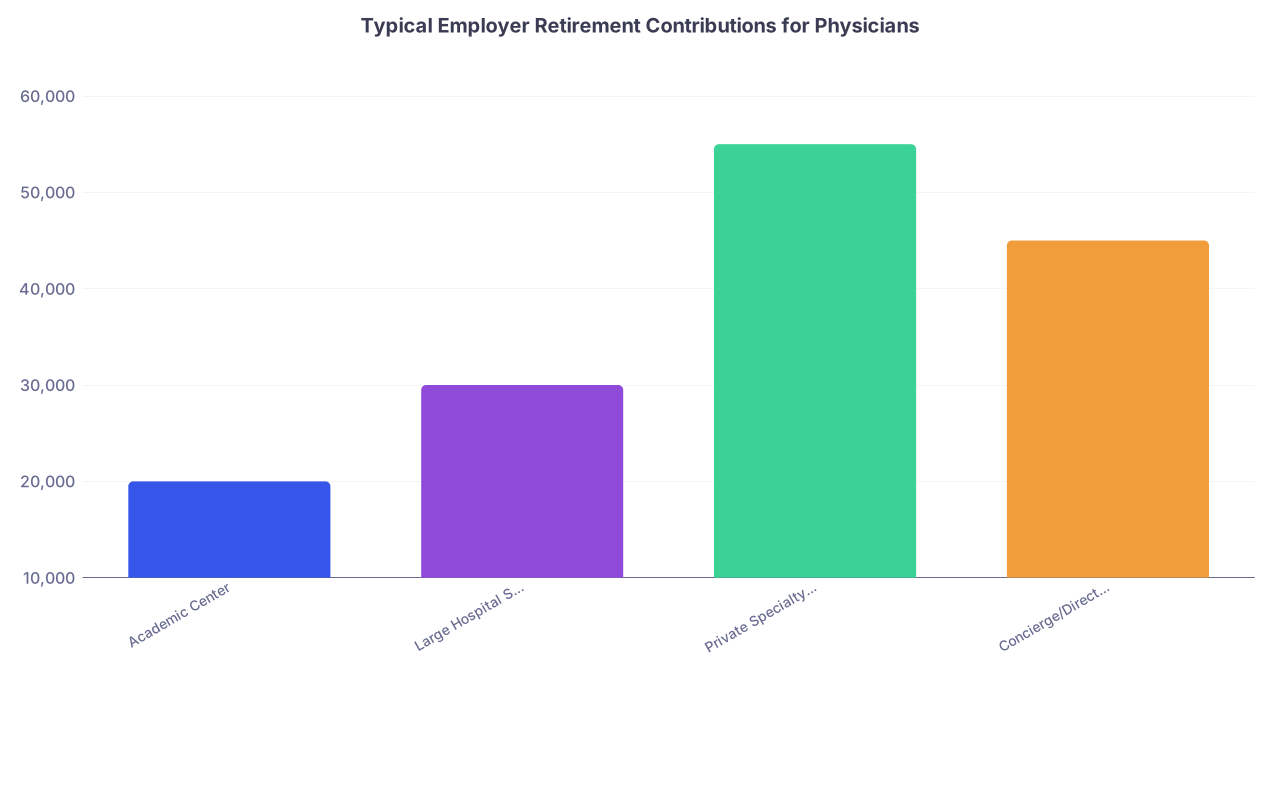
| Category | Value |
|---|---|
| Academic Center | 20000 |
| Large Hospital System | 30000 |
| Private Specialty Group | 55000 |
| Concierge/Direct Care | 45000 |
Let’s be more specific. Common hospital setups:
- 403(b)/401(k) match: 4–6% of salary up to a cap.
- Occasional discretionary contribution, subject to annual budget drama.
- Limited or no access to cash balance plans for physicians as a distinct group.
- Heavy use of vesting schedules (especially for system-level pension-type promises).
Now contrast that with a sophisticated private group. I’ve seen groups structure:
- 401(k) with max employee deferral.
- Employer profit-sharing to the plan cap.
- Cash balance plan allowing total tax-deferred employer contributions in the $60–$100k+ range per physician per year, depending on age and income.
Over a 20-year career, the difference compounds hard.
Let me spell it out in plain numbers:
- Hospital-employed: employer kicks in $25k/year.
- Private group: employer kicks in $55k/year.
Even ignoring growth, that’s a $600,000 difference in raw contributions over 20 years. Add compound growth at 5–7% and you’re looking at a seven-figure spread in retirement account balances.
But sure, tell me again how hospital employment “wins on benefits.”
Disability, Life, and the “We Cover You” Fantasy
This is where people get burned because they confuse “we have a plan” with “you’re actually protected.”
Most hospitals:
- Provide a group long-term disability policy that replaces maybe 60% of your base salary, often capped at a low amount that doesn’t reflect physician-level income.
- Base it on W2 wages, not including production bonuses, call pay, or incentives.
- Tie coverage to ongoing employment at that institution.
- Have definitions of disability that are less favorable (“any occupation” after a period, not true own-occupation).
That’s not a robust physician disability strategy. That’s a checkbox.
Many independent physicians are forced to think this through, which ironically leads them to better protection:
- Own-occupation individual policies.
- Higher benefit caps.
- Portability between jobs.
- Coordination with group coverage rather than reliance on a single employer plan.
Same story with life insurance:
- Hospital: small group term coverage (sometimes a multiple of salary), cheap for them, often taxable to you if over certain limits.
- Independent: they realize quickly they need a real life insurance strategy, not whatever HR tossed into the benefits booklet.
The “but my hospital gives me disability” line is one of the more dangerous myths. It lulls physicians into complacency until they actually need it.
Moonlighting and Side Income: The Unspoken “Benefit” Gap
Here’s where category and phase matter: MOONLIGHTING AND BENEFITS / MISCELLANEOUS AND FUTURE OF MEDICINE.
Future physicians will not live on a single W2 job forever. Income diversification is not a luxury; it’s survival.
This is where hospital employment quietly punishes you.
I’ve read the contracts:
- Non-compete covering wide geographic areas.
- Mandatory pre-approval for outside clinical work.
- Restrictions on telemedicine, consulting, speaking, and expert witness work.
- IP clauses that try to claim ownership over anything you create “related to your work” on “company time or equipment.”
In practice, that often means:
- You can moonlight, but only in system-affiliated sites, on their terms, at their rates.
- Outside locums? Often forbidden or heavily restricted.
- Starting your own direct-care or telehealth side project? Good luck getting legal to sign off.
Meanwhile, independent physicians and private groups often:
- Encourage moonlighting as long as it doesn’t conflict with call or compete directly.
- Don’t try to own your outside intellectual work.
- Have narrower or no non-competes.
Moonlighting income can easily add $30–$80k+ per year depending on specialty and schedule. Over a decade, that dwarfs the marginal differences in HR-defined benefits.
So if a hospital shaves a few hundred off your premiums but blocks you from $50k/year in extra income, are those “better benefits”? Not to any rational adult doing basic math.
The Psychological Trap: “Seems Safer, So It Must Be Better”
A big part of this myth is psychological, not financial.
Hospitals sell:
- Stability
- Uniformity
- “We take care of you”
- Large HR apparatus with portals and support
Private practices and independent setups feel “riskier” because you’re forced to think like an actual professional adult: you decide your retirement strategy, disability, insurance, and side income.
But here’s the reality: hospitals merge, get acquired, cut benefits during lean years, freeze matches, and change coverage terms with almost no warning. I’ve watched institution after institution tweak:
- Retirement contributions downward.
- Premium cost shares upward.
- PTO accrual policies.
- CME stipends and relocation assistance.
All while still marketing themselves as “best in class benefits.”
The risk isn’t whether the benefits are on a glossy brochure. The risk is whether you understand them and can adjust when they change. In that sense, hospital employment often breeds complacency, not security.
What Actually Matters When You Compare Benefits
If you strip away the mythology and HR spin, here’s how rational physicians should compare “benefits” between hospital employment and everything else.
You compare:
- Total employer spend on benefits plus how much cash comp you’re giving up for them.
- Actual retirement dollars going into tax-advantaged accounts annually.
- True cost and quality of health coverage for you and your family.
- Strength and portability of disability and life coverage.
- Freedom to moonlight, consult, and build outside income streams.
- Contract clauses that affect your future (non-compete, IP, restrictive covenants).
- Risk that benefits can be unilaterally worsened next fiscal year.
The future of medicine is not one W2 job until you’re 65. It’s a portfolio:
- Maybe part-time hospital work.
- Some independent contracting.
- A niche telemedicine role.
- Occasional procedures at an ASC.
- Teaching, consulting, content, or leadership roles.
In that world, clinging to the idea that “hospital-employed jobs have better benefits” is like insisting landlines are better because they used to be more reliable in 1998.
You need flexibility, not blind faith in HR.
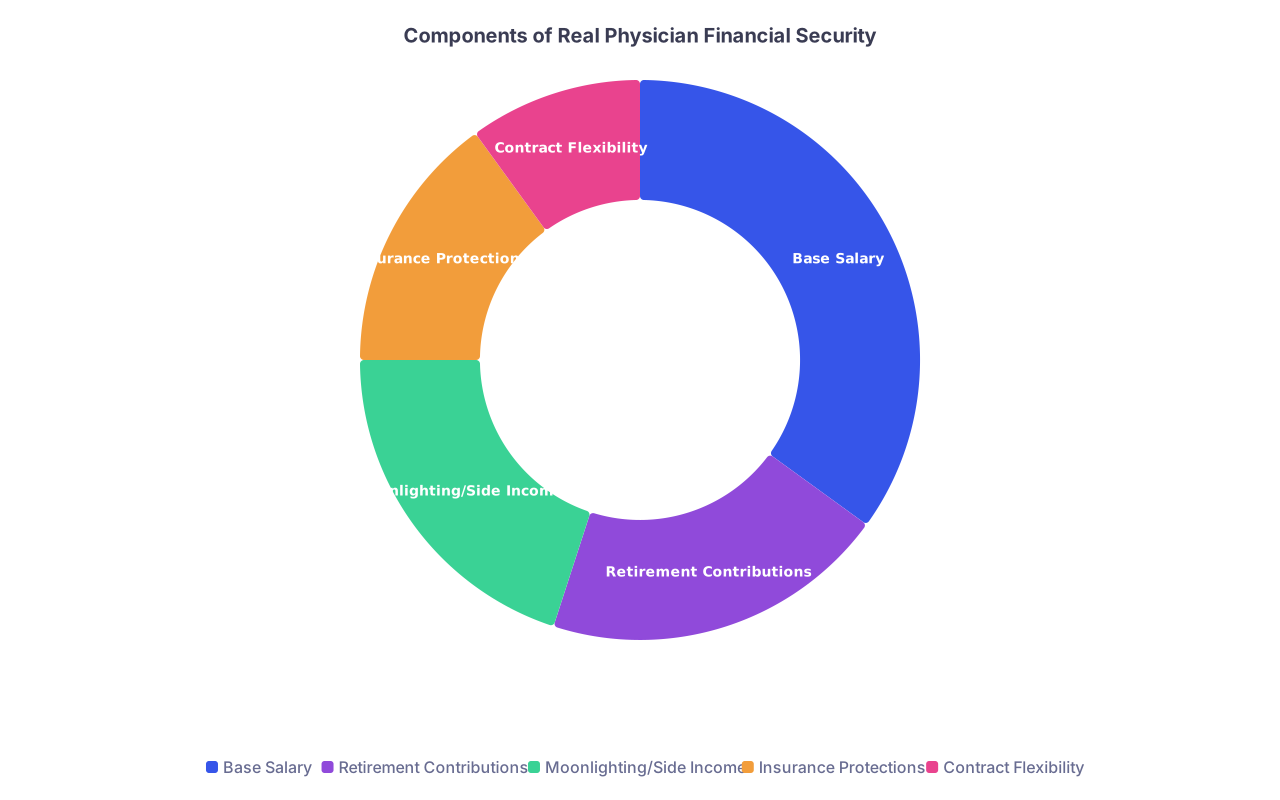
| Category | Value |
|---|---|
| Base Salary | 35 |
| Retirement Contributions | 20 |
| Moonlighting/Side Income | 20 |
| Insurance Protections | 15 |
| Contract Flexibility | 10 |

| Step | Description |
|---|---|
| Step 1 | Job Offer |
| Step 2 | High risk of underestimating cost |
| Step 3 | Evaluate total comp |
| Step 4 | Assess health cost and coverage |
| Step 5 | Review disability and life |
| Step 6 | Check moonlighting and non compete |
| Step 7 | Decide based on total picture |
| Step 8 | Only looking at salary and basic benefits? |
| Step 9 | Compare retirement contributions |
Bottom Line: Busting the Myth
Let me be blunt.
Hospital-employed jobs do not automatically have better benefits. That belief survives mostly because:
- Residents rarely see real numbers from private groups.
- Recruiters repeat the same lines unchallenged.
- Physicians conflate structure and branding with value.
Three key points to walk away with:
- “Better benefits” must be defined in dollars, flexibility, and long-term impact, not in adjectives. When you do the math, hospital employment is often average, not exceptional.
- Independent groups and well-run practices routinely beat hospital systems on retirement, often by tens of thousands of dollars per year in employer contributions alone, with more room for side income.
- The most underrated “benefit” isn’t in HR booklets at all: it’s your freedom to moonlight, build outside income, and control your own financial strategy. Hospital contracts are often the worst on that front.
Believe the branding if you want. But if you actually run the numbers and read the contracts, the myth collapses fast.