
The most common mistake with moonlighting is not doing too much of it, but stopping too late.
You think you can “just push through” boards, fellowship onboarding, or a new attending job while keeping those extra shifts. You cannot. Or more accurately: you can, but you will pay for it in performance, sanity, or both.
This is a timeline article. I’m going to walk you week by week and month by month: when to taper, when to stop, and what to say to schedulers so you do not burn bridges.
We’ll break it into three scenarios:
- Before a major board exam (USMLE/ABIM/ABEM/etc.)
- Before starting fellowship
- Before starting a new job as an attending
Global Rule: Your “Hard Stop” Backwards Plan
At this point you should forget vibes and “seeing how it feels” and instead set hard dates.
There are only three questions that matter:
- What is the exact date of the event? (exam, fellowship start, job start)
- What is the minimum “full-focus” period you personally need?
- How much recovery do you need between last shift and first big day?
Here’s the backbone I use with residents and fellows:
| Scenario | Conservative Stop | Aggressive Stop |
|---|---|---|
| Big Board Exam (certifying) | 8 weeks before | 4 weeks before |
| In-Training/Smaller Exam | 4 weeks before | 2 weeks before |
| Starting Fellowship | 4 weeks before | 2 weeks before |
| Starting First Attending Job | 6 weeks before | 3–4 weeks before |
You pick conservative vs aggressive based on your risk tolerance and baseline prep. But you pick now. Not “later when things calm down.”
Timeline Before a Major Board Exam
I’ll assume a high‑stakes board (e.g., ABIM, ABEM, ABP, ABS written). Adjust slightly if it’s in-training.
Let’s say your exam is on July 15. Here’s how your moonlighting decisions should look.
3–6 Months Before Exam (Mid‑Jan to Mid‑Apr for a July 15 exam)
At this point you should:
- Decide your stop date for moonlighting.
- Cap your monthly hours.
Target:
- Max 2–3 shifts per month, no pattern of back‑to‑back overnights.
- No new sites or complex credentialing that will suck time.
Concrete steps:
- Open your calendar and block a “Hard Stop: Moonlighting” date 6–8 weeks before the exam if you have previous test struggles; 4 weeks if you’re a strong test taker and already studying.
- Tell the scheduling person now:
“I’m happy to help through [date], but I’ll be unavailable for shifts from [stop date] through exam day because of boards.”
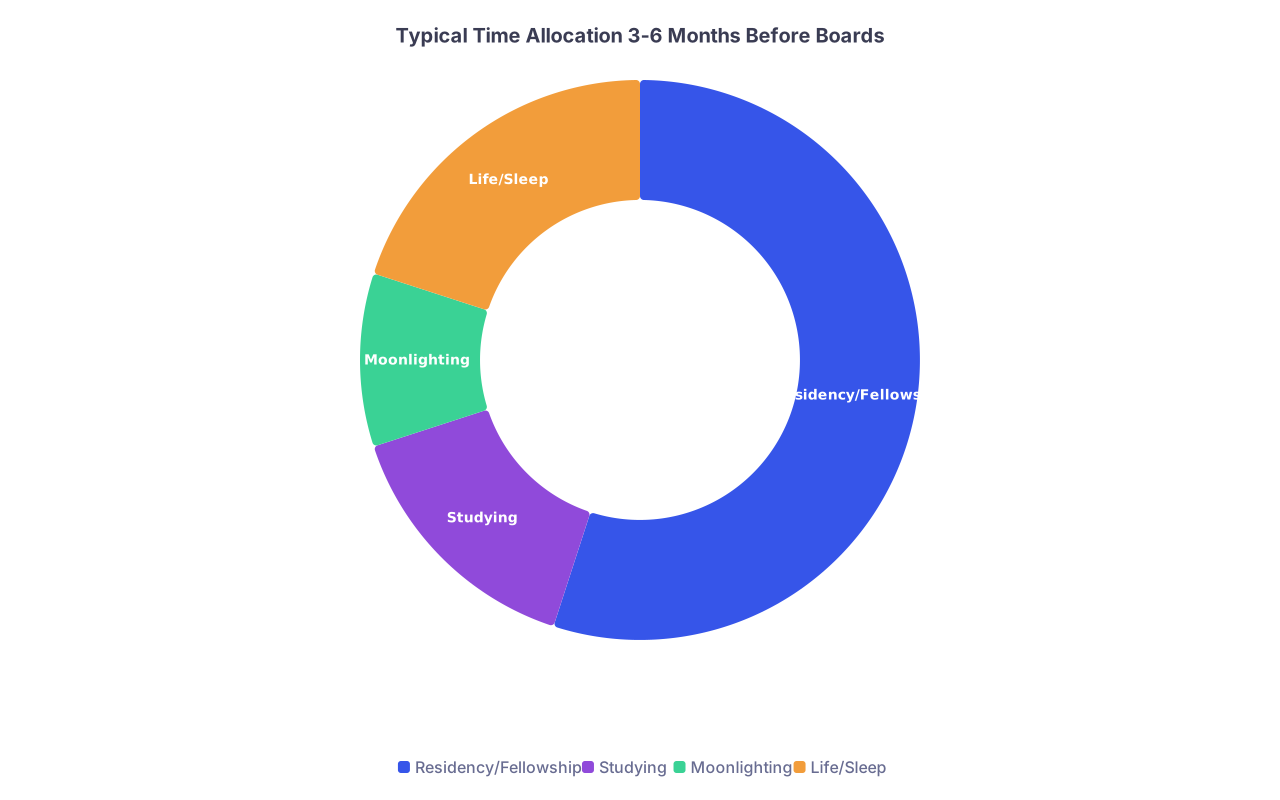
| Category | Value |
|---|---|
| Residency/Fellowship | 55 |
| Studying | 15 |
| Moonlighting | 10 |
| Life/Sleep | 20 |
What goes wrong here? People say, “I’ll just keep picking up and then cut back later.” Later never comes. Schedulers fill your calendar four months out and suddenly your “light” month is six 12‑hour shifts.
So during this phase:
- No recurring every‑other‑weekend commitments.
- No “sure, just put me down and I’ll cancel if I need to” (you won’t cancel).
8–10 Weeks Before Exam (Early‑May for July 15)
At this point you should:
- Begin an intentional taper.
- Protect one full weekend day per week from work.
Shift strategy:
- Drop to 1–2 shifts per month, ideally days or short evenings.
- Avoid nights that stack onto heavy clinical rotations or call.
Your calendar should show:
- No shifts scheduled within 4 weeks of the exam (aggressive) or 8 weeks (conservative) if you’ve failed or barely passed big exams before.
If you’re still fully booked in this window, you need to email/phone your scheduler this week:
- “I overcommitted with my board prep schedule. I need to release these shifts after [date]. I can help you find coverage and pick up earlier in the month, but I can’t safely keep those later dates.”
You’ll feel guilty. Do it anyway.
4–6 Weeks Before Exam (Early‑Jun for July 15)
This is your no‑moonlighting zone for most people.
At this point you should:
- Be off all external shifts.
- Have only residency/fellowship responsibilities plus studying and basic life.
Typical schedule I see for people who score well:
- Regular training schedule
- 3–5 hours dedicated board prep most days
- Zero moonlighting
If you insist on being aggressive:
- Absolute max: 1 short, low‑acuity shift more than 3 weeks before the exam.
- No nights. No 12s. No 24‑hour calls at outside hospitals.
Remember: cognitive fatigue is cumulative. The exam does not reward heroic endurance; it rewards consistent, sharp attention over 7–10 brutal hours.
Final 7–10 Days Before Exam
At this point you should:
- Have nothing on the calendar besides core clinical duties, studying, and rest.
- Have no moonlighting. Period.
If you still have shifts scheduled here, you’re gambling:
- Performance
- Risk of illness (you get sick more when you’re exhausted)
- Delays (flight issues if traveling, last‑minute crises)
Your last moonlighting shift should:
- End at least 7 days before test day.
- Be a reasonable intensity day/evening, not a destroy‑your‑brain overnight.
On the day you finish your last external shift, do one concrete thing:
Cancel availability for all dates between now and boards in whatever system the site uses.
Timeline Before Starting Fellowship
Different stress, same principle. The risk is walking into a new program already burned out or sleep‑deprived.
Assume fellowship start date: July 1.
4–6 Months Before Fellowship Start (Jan–Mar)
At this point you should:
- Decide whether you’ll keep moonlighting at all in your final months of residency.
- Be honest about your residency call schedule and vacations.
Guidelines:
- If you’re on a heavy spring schedule (ICU, nights, q3 call): cap moonlighting at 1–2 shifts per month.
- If you’re on a lighter spring schedule: you can push to 3–4 shifts per month, but not at the expense of time to wrap up projects, QI, and logistics.
Important:
If your current program expects you to function like a senior leader in May/June (most do), don’t sabotage it by over‑moonlighting.
8–10 Weeks Before Fellowship (Mid‑Apr)
At this point you should:
- Set your last moonlighting shift 2–4 weeks before July 1.
Why that window?
- You’ll need time for:
- Moving / housing paperwork
- Credentialing tasks
- Orientation modules
- Saying actual goodbyes and decompressing
So:
- Conservative: last shift by June 1.
- Aggressive: last shift by June 15.
Email to schedulers around this time:
- “I’ll be starting fellowship on July 1 and need to stop moonlighting after [last shift date]. I can’t take anything beyond that due to moving and onboarding.”
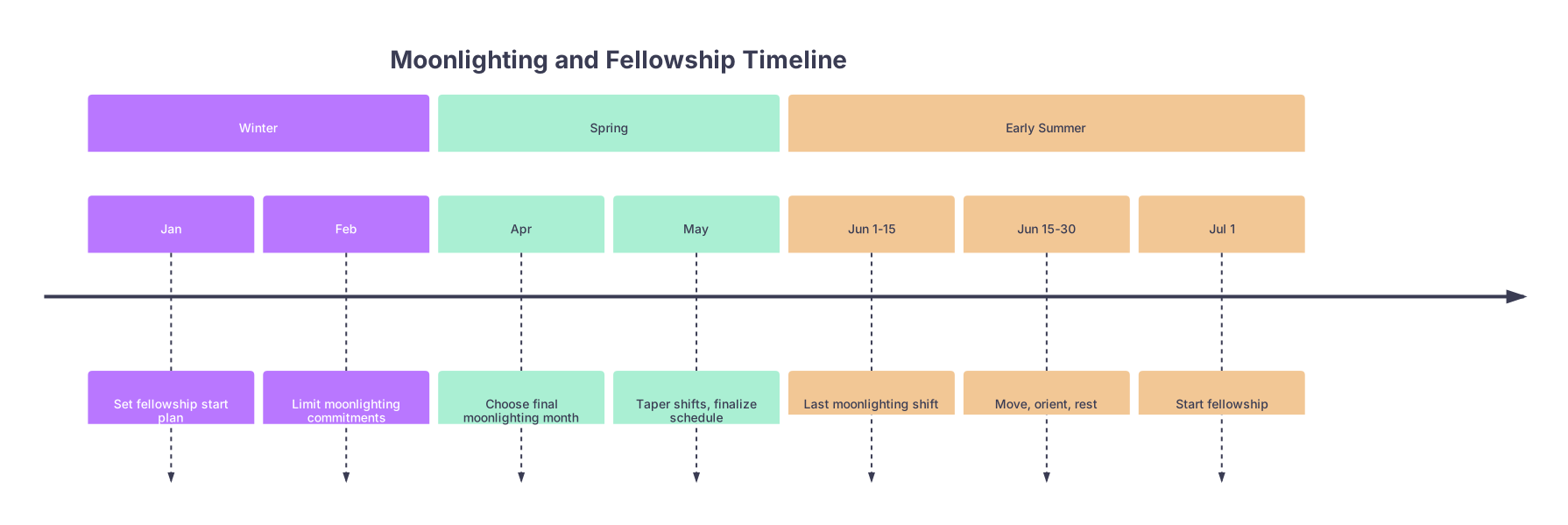
| Period | Event |
|---|---|
| Winter - Jan | Set fellowship start plan |
| Winter - Feb | Limit moonlighting commitments |
| Spring - Apr | Choose final moonlighting month |
| Spring - May | Taper shifts, finalize schedule |
| Early Summer - Jun 1-15 | Last moonlighting shift |
| Early Summer - Jun 15-30 | Move, orient, rest |
| Early Summer - Jul 1 | Start fellowship |
Final 4 Weeks Before Fellowship (June)
At this point you should:
- Be completely off extra shifts.
- Use time to:
- Rest
- Review basics of your new field (e.g., cardiology, heme/onc, EM, ICU)
- Handle HR, health screening, licensing, and logistics
What I’ve seen when people do not stop:
- They work up to June 28 or 29.
- They move over 1–2 days.
- They show up on July 1 wiped out, behind on orientation material, and already resentful.
Give yourself at least:
- 7 days with no clinical work (including residency) before you step into fellowship, if your schedule allows.
- If residency ends June 30 and fellowship July 1 (common), then your only buffer is what you build by stopping moonlighting early.
Timeline Before Starting a New Attending Job
Moonlighting as a resident or fellow is one thing. Moonlighting while you’re about to become the person legally responsible for everything is a different category.
Assume new job start date: August 1.
6–9 Months Before Job Start (Nov–Feb)
At this point you should:
- Decide your financial runway so you’re not pressured to work until the last second.
- Map out:
- Last day of residency/fellowship
- Gap before job start
- Any planned time off or travel
If you have loans and minimal savings, you’ll be tempted to pack June/July with moonlighting. Plan instead:
- Increase shifts moderately earlier (Jan–Apr).
- Protect the last few months (May–July).
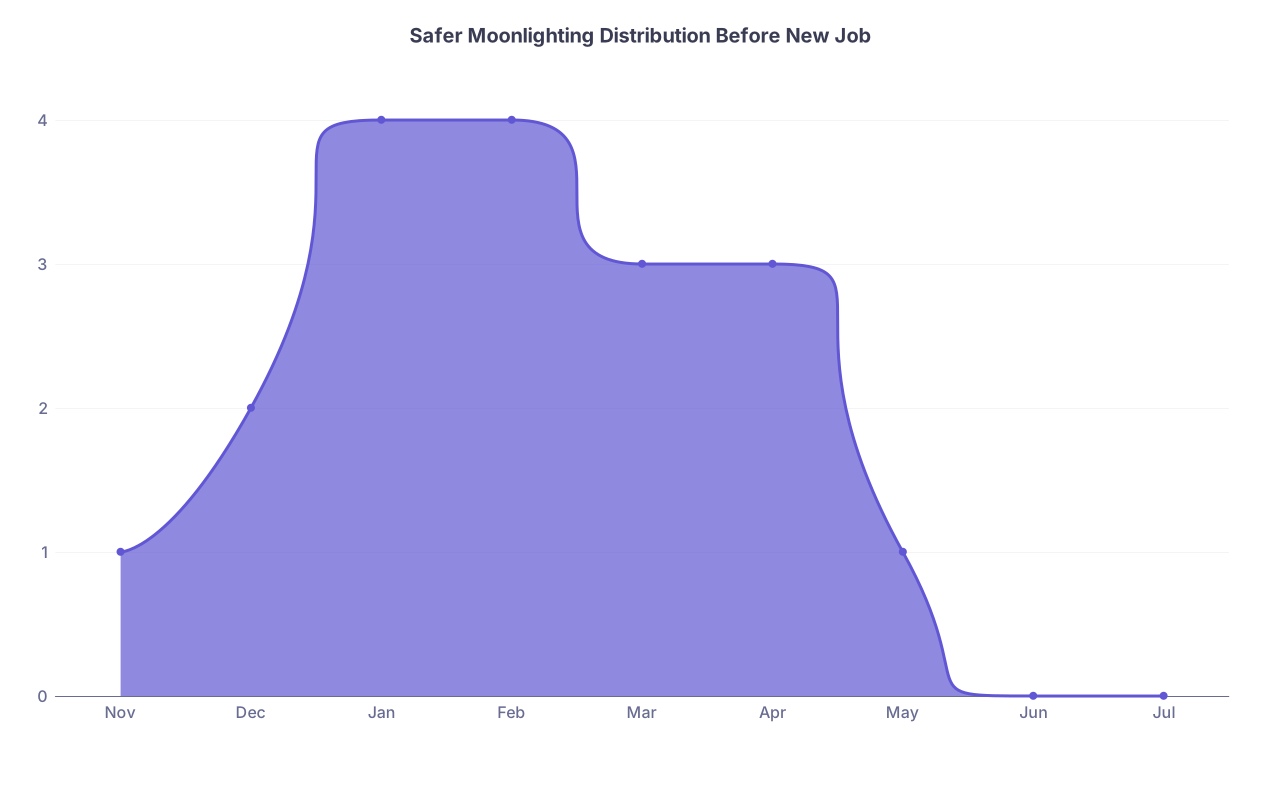
| Category | Value |
|---|---|
| Nov | 1 |
| Dec | 2 |
| Jan | 4 |
| Feb | 4 |
| Mar | 3 |
| Apr | 3 |
| May | 1 |
| Jun | 0 |
| Jul | 0 |
3–4 Months Before Job Start (Apr–May)
At this point you should:
- Choose your final month of moonlighting.
I recommend:
- Last shift 4–6 weeks before you start as an attending.
For an August 1 start:
- Conservative: last shift by June 15.
- Aggressive: last shift by July 1 (only if you are not also ending fellowship right then).
You also need to account for:
- Board exam timing if it’s around the same period.
- Licensing paperwork, DEA, hospital credentialing, malpractice forms.
- Moving and setting up a new city or new home.
Notify schedulers:
- “I’m starting my first attending job on August 1. My last date available for shifts will be [June 15/July 1]. I won’t be able to take any shifts within a month of my start date.”
Final 6–8 Weeks Before New Job (Mid‑Jun–Aug 1)
At this point you should:
- Be fully disengaged from all moonlighting.
- Focus on:
- Reviewing clinical topics relevant to your new practice setting.
- Onboarding materials (EHR training, protocols, orientation).
- Rest and mental reset.
You want to walk into your first attending day:
- Not exhausted
- Not juggling leftover moonlighting payments, credentialing issues, or site emails
- Not dreading medicine because you never got a break
A common disaster pattern:
- Last moonlighting shift July 25.
- Start as full‑time attending August 1.
- By September, burned out, behind on local workflows, regretting everything.
You avoid that by stopping too early, not too late. Money will come. A bad start to an attending job can stick to your reputation for years.
How to Taper: Month‑By‑Month and Week‑By‑Week
Let’s build a generic taper plan you can adapt to any of the three scenarios.
3 Months Out
At this point you should:
- Cap or decrease volume, don’t increase.
Example monthly shift pattern:
- If you were doing 5–6 shifts/month:
- Drop to 3–4.
- If you were doing 2–3:
- Drop to 1–2.
Week‑by‑week:
- No more than 1 shift per week.
- Prefer weekends that don’t directly follow 24‑hour calls or ICU blocks.
2 Months Out
At this point you should:
- Commit to your last shift date and clear any later offers.
Monthly goal:
- Total 1–2 shifts max.
- No new commitment past your planned stop date.
Week‑by‑week:
- Last back‑to‑back shifts should be >6 weeks before your big date.
- Prefer short/easy sites where you feel comfortable and efficient; no new hospitals.
Final Month
At this point you should:
- Have zero shifts if it’s a major exam or first attending job.
- For fellowship start, maybe 1 shift early in the month if you’re aggressive and not moving far. But still, I don’t love it.
Week‑by‑week:
- Last shift should be at least:
- 7 days before exam day
- 14 days before fellowship start
- 21–30 days before attending job start (ideal)
Red Flags You’re Cutting It Too Close
If any of these are true, you need to move your stop date earlier:
- You’re using post‑call days for moonlighting.
- You fall asleep unintentionally on days off.
- You’re behind on exam prep questions or fellowship/job onboarding modules.
- You’re snapping at staff or co‑residents because you’re stretched too thin.
- You’re thinking “I just need to survive until [big event]” instead of preparing to do well at it.

Handling Money Anxiety When You Stop Earlier
This is the quiet part nobody says out loud: a lot of you keep moonlighting too long because you’re scared about money.
Do this, now, before you argue with me in your head:
- Estimate:
- Monthly baseline expenses (rent, food, loans, etc.)
- Guaranteed income from residency/fellowship or signed attending contract
- Calculate:
- How many months of minimal savings or cushion you already have.
- Decide:
- “I need X extra dollars before I stop.”
Then work backward:
- How many earlier shifts (this month or next) can cover that, instead of loading them into the final month?
You shift the work forward, not into your most vulnerable window. Yes, it may make the next few weeks a bit tighter. That’s still better than walking into a career‑defining exam or job on fumes.
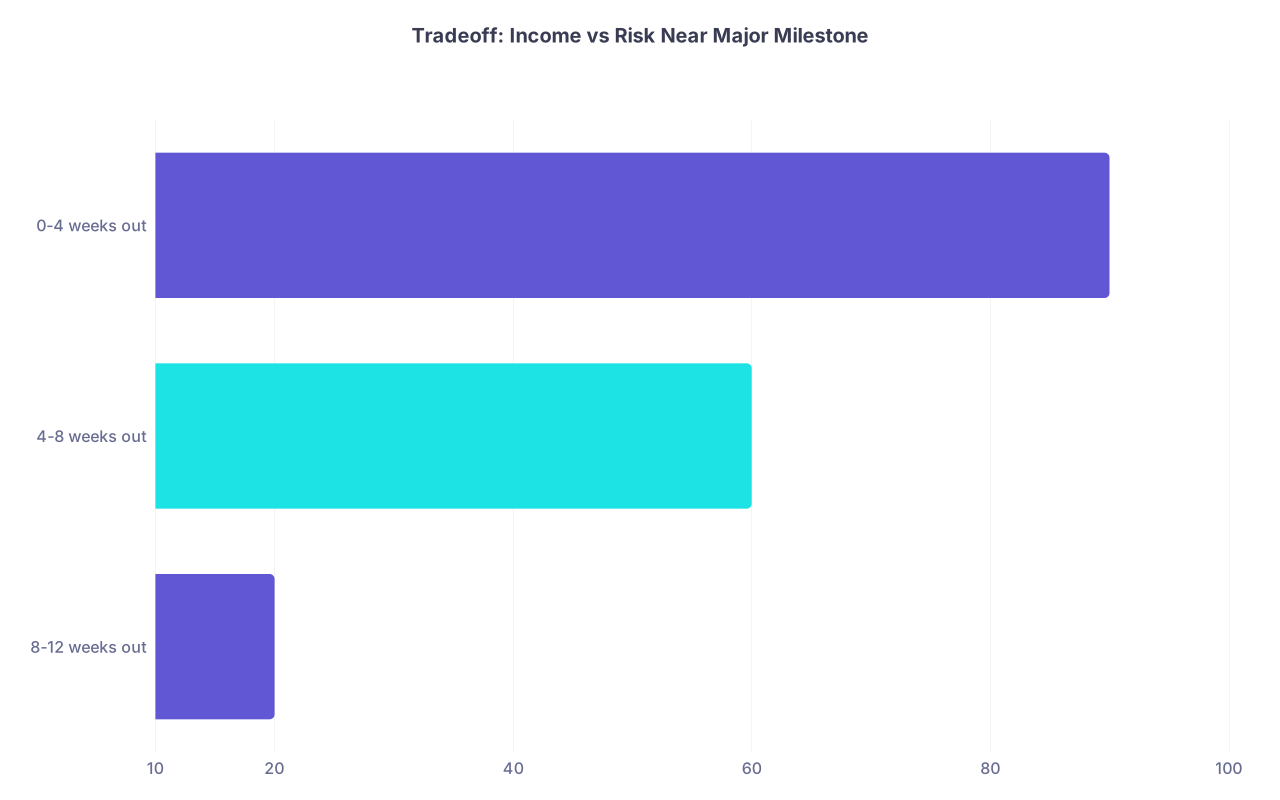
| Category | Value |
|---|---|
| 8-12 weeks out | 20 |
| 4-8 weeks out | 60 |
| 0-4 weeks out | 90 |
(Think of those numbers as “relative risk of regret” from working a shift in that window compared to further out.)
What To Tell Schedulers (Without Burning Bridges)
You don’t need a dramatic excuse. You need clear, respectful boundaries.
Phrases that work:
- “I’m locking down my exam prep schedule and can’t safely add shifts after [date].”
- “I’m transitioning to fellowship/attending role and need a clean break after [date].”
- “I’m consolidating sites and won’t be available after [date], but I’d be happy to help cover earlier in the month.”
What not to do:
- Ghosting or late cancellations.
- Accepting (“I’ll see if I can swap”) and then backing out a week before.
- Over‑explaining with personal drama. Keep it brief and professional.

Schedulers remember reliability more than volume. If you’re honest and consistent, most are fine with a clear stop date.
The One Thing You Should Do Today
Open your calendar right now and:
- Find the exact date of:
- Your next major board exam, or
- Your fellowship start, or
- Your new attending job start.
- Count backward:
- 4–8 weeks for big boards
- 2–4 weeks for fellowship
- 4–6 weeks for new attending job
- On that date, add an all‑day event titled:
“Last day I am willing to moonlight.”
That’s your line in the sand.
Now adjust your existing and future moonlighting shifts to respect that line—before someone else fills those weeks for you.