
It is February of your PGY-3 year. You just signed your graduation paperwork. The job contract is still “in review.” You know one thing clearly though: you want a break.
Not a long forever-break. A 3–6 month gap. Time to see your family, maybe travel, maybe just sit in silence without a pager. You mention it to a co-resident and they say the classic line: “Sounds amazing… but what about health insurance?”
This is where most people stall. They vaguely “plan to locums” or “live off savings” and then realize, two weeks before graduation, that their coverage ends June 30, their first attending paycheck is in late September, and COBRA costs more than their rent.
Let us not do that.
Below is a timeline guide. Month-by-month, then week-by-week, then what to do literally in the last 30 days before you walk out of residency and into your gap.
9–12 Months Before the Gap: Decide the Shape of the Break
At this point you should stop daydreaming and define the break in hard numbers.
1. Fix the basics: length, income, risk tolerance
Decide:
- Start date of your gap (usually July 1 after graduation)
- End date (3, 6, 9, or 12 months later)
- Whether you will:
- Not work at all
- Moonlight casually
- Do structured locums with real income
You do not plan finances around “I will probably pick up some shifts.” You plan around a baseline of zero income and treat any moonlighting as bonus.
Pick two numbers right now:
Monthly essential burn (bare minimum to keep your life intact)
- Rent / mortgage
- Food
- Utilities, phone, internet
- Minimal transportation (gas, transit, insurance)
- Minimum debt payments
- Health insurance premiums
- Required licensure/board fees
Monthly “realistic life” burn
- Essential burn
- Modest eating out
- Some travel / fun
- Replacement clothes / basic stuff
If you do not know your numbers, you are not planning a gap. You are gambling.
| Category | Conservative (Essentials) | Realistic Lifestyle |
|---|---|---|
| Housing + Utilities | $1,600 | $1,800 |
| Food | $400 | $700 |
| Transportation | $300 | $500 |
| Debt Minimums | $400 | $400 |
| Insurance (health etc.) | $450 | $600 |
| Discretionary / Travel | $0 | $700 |
Once you have that, multiply by the number of months off. That is your cash requirement for the gap, before we even talk cushion.
2. Clarify your coverage priorities
You need a stance on risk:
Non‑negotiable coverage items during the gap:
- Health insurance (you are one bike crash away from a $60k bill)
- Liability tail coverage (if not clearly covered by employer)
- Disability coverage (ideally own-occupation, but at least something)
Negotiable:
- Max retirement saving vs pausing contributions
- Life insurance amount
- HSA contributions
Decide early if you are someone who:
- Wants continuous, robust coverage, even if expensive
- Is willing to accept higher deductibles to shrink premiums
- Is okay with a brief uninsured window (I think this is a bad idea, but know which camp you are in)
6–9 Months Before the Gap: Build the Cash Plan
At this point you should turn numbers into accounts and deadlines, not vibes.
3. Build the “Gap Fund” target
Target =
(Realistic monthly burn × months off) + 3–6 months extra cushion
If your realistic burn is $4k/month and you want 6 months off:
- Base need: 6 × $4k = $24k
- Cushion (3 months): 3 × $4k = $12k
- Gap Fund target: $36k
That cushion is what keeps you from going back to work early because your car died or a family member got sick.
4. Set up a separate gap account
Open a dedicated high-yield savings account labeled “Gap Fund – Do Not Touch”. Automatic transfers from your residency paycheck go here.
Target: at least 70–80% of your Gap Fund saved by 2–3 months before graduation. Residents who wait to “save aggressively the last three months” almost never hit their target.
5. Coordinate with your partner (if applicable)
If you have a partner:
- Map their income timeline against your gap
- Decide whose coverage you will be on (if they have employer health insurance)
- Decide which expenses are joint vs yours
I have seen couples assume they will just “hop on the spouse plan,” only to find out there is no qualifying life event that lines up. The time to find that out is now, not June 29.
4–6 Months Before the Gap: Licensing, Locums, and Insurance Recon
At this point you should line up options. You may choose not to use them, but they must be ready.
6. Secure licensure and credentials for any income during the gap
If you might moonlight or do locums:
- Finish your permanent state license application early (these can drag for months).
- If doing locums:
- Talk to agencies 4–6 months before graduation.
- Target states with faster licensing if you are flexible.
- Clarify: will they provide malpractice with tail?
Do not count on being able to start paid shifts in July if you begin this process in May. The bureaucratic delay is real.
7. Get clear on your malpractice and tail exposure
This one is tedious but necessary:
For residency:
- Confirm that your GME coverage includes tail for your training years.
- Get this in writing from GME or risk management.
For moonlighting during residency:
- If you moonlighted under separate coverage, clarify who is paying tail.
- If the moonlighting gig expects you to buy your own tail when you leave, that can be thousands. You must know this before planning your gap budget.
For future locums or part-time work during the break:
- Confirm any malpractice is claims-made vs occurrence.
- If claims-made, who buys tail when you finish that contract?
You do not want a surprise $15k tail bill landing during your “carefree” six months off.
3–4 Months Before the Gap: Health Coverage Chess
This is where almost everyone gets tangled. You will not.
At this point you should map your coverage options month by month.
8. Understand your coverage end date precisely
Ask HR or GME:
- Does my health insurance end:
- On my last day of work (e.g., June 30)
- At the end of the month in which I terminate
- At the end of the pay period
Get the exact date. Put it on a calendar.
9. List every possible coverage path
You likely have one or more of these:
Option A: New employer coverage starts quickly
- Starting a job 1–4 weeks after residency with health benefits beginning day 1 or after 30 days.
Option B: Gap with no employer
- Needs COBRA or ACA marketplace coverage (or spouse/partner plan).
Option C: Partner employer plan
- You can join their plan at their next open enrollment or via qualifying life event (end of your coverage).
For a genuine gap (≥3 months without a job), you are in B or C.
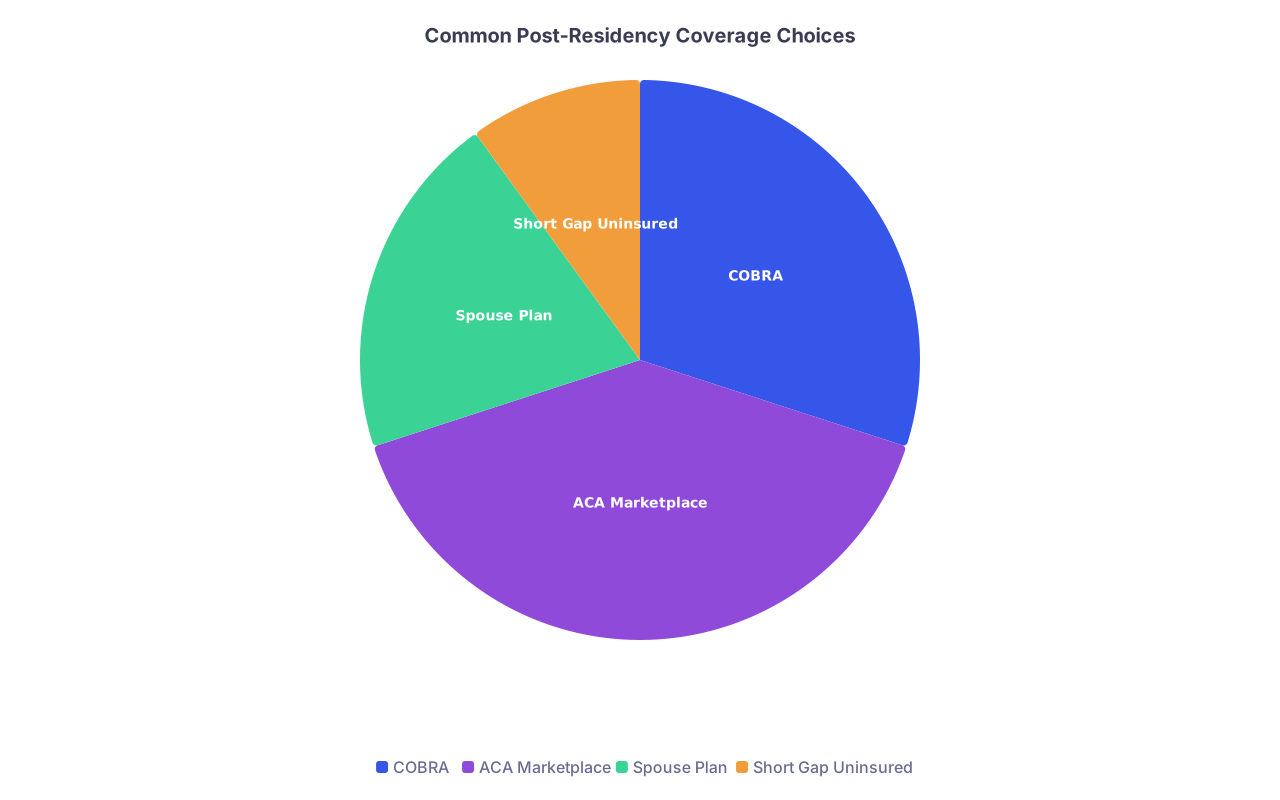
| Category | Value |
|---|---|
| COBRA | 30 |
| ACA Marketplace | 40 |
| Spouse Plan | 20 |
| Short Gap Uninsured | 10 |
10. Compare COBRA vs ACA vs spouse plan
Build a simple comparison:
| Coverage Type | Monthly Premium | Deductible | Notes |
|---|---|---|---|
| Residency COBRA | $520 | $1,500 | Same network as GME |
| ACA Silver Plan | $380 (with tax credit) | $4,000 | Different network |
| Spouse Employer | $260 | $2,000 | Must enroll by deadline |
General rules I see in the real world:
COBRA
- Often expensive but preserves your current network, medications, and ongoing care.
- Can be worth it for a short gap (1–3 months) or if you have ongoing complex care.
- Sometimes cheaper than you think if your residency program subsidized heavily.
ACA marketplace plan
- Often better for gaps of 4+ months.
- You may qualify for subsidies depending on expected annual income (your attending salary later in the year still counts; do not lie on this).
- Networks can be narrower; check your usual doctors and hospitals.
Spouse plan
- Usually the cleanest option if available.
- Coordinate enrollment windows early.
2–3 Months Before the Gap: Lock in Decisions and Timelines
At this point you should stop collecting information and start committing.
11. Make a month-by-month cash and coverage calendar
Do this on paper or a spreadsheet. Example for a 6‑month gap from July–December:
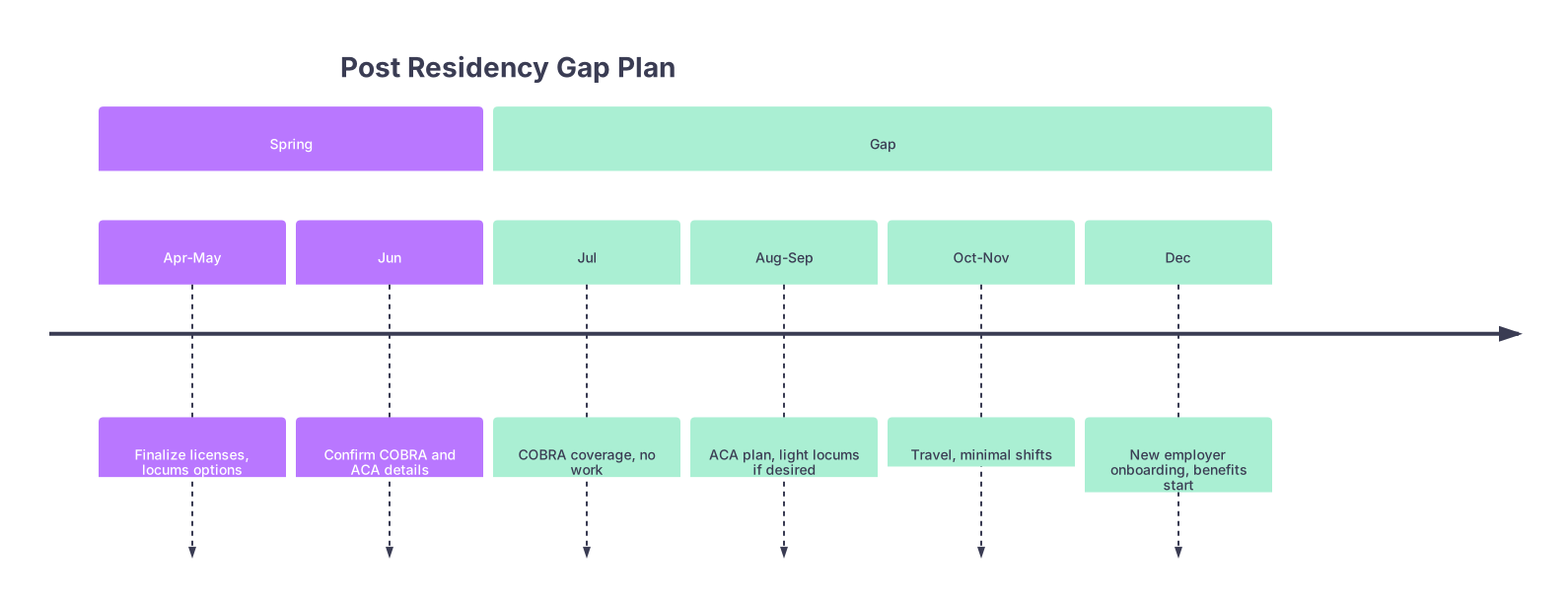
| Period | Event |
|---|---|
| Spring - Apr-May | Finalize licenses, locums options |
| Spring - Jun | Confirm COBRA and ACA details |
| Gap - Jul | COBRA coverage, no work |
| Gap - Aug-Sep | ACA plan, light locums if desired |
| Gap - Oct-Nov | Travel, minimal shifts |
| Gap - Dec | New employer onboarding, benefits start |
You want, for each month:
- Which insurance you will have
- Expected income (0, small, or estimated)
- Projected expenses
- Which account you will draw from
If you cannot sketch out all 6 or 12 months, your gap is not ready.
12. Confirm disability and life coverage
Most residents have coverage through their institution that ends with training.
At this point you should:
Review any individual disability policy you purchased in residency. Check:
- Premium amount after you are no longer a trainee
- Coverage start date (it should already be in force)
If you do not have disability insurance and you are going to be uninsured or lightly insured for income during the gap, strongly consider getting a policy before graduation. You are never more insurable than now.
Life insurance:
- If you have dependents, a term life policy that continues through the gap is non-negotiable.
- Group life from residency usually ends with employment.
These premiums must be built into your gap budget.
4–6 Weeks Before the Gap: Execute the Insurance Transitions
Now it is operational. Less theory, more forms.
13. Initiate COBRA or prepare ACA enrollment
You usually cannot fully enroll in COBRA or an ACA plan 2–3 months in advance, but:
COBRA:
- Watch for the packet from your institution’s benefits administrator.
- You typically have 60 days from the loss of coverage to elect.
- But if you want continuous coverage with no gap, you will elect and pay promptly.
ACA Marketplace:
- Your qualifying life event is “loss of other coverage.”
- You generally have 60 days before/after that event to enroll.
- Start your marketplace application in the 30 days before coverage ends so it can start the 1st of the following month.
Do not assume you understand premiums until you have seen them in black and white, with your age, zip code, and income.
14. Collect all needed documentation
Before you leave residency, download or print:
- Final pay stubs
- Benefits summaries (health, disability, life)
- Documentation of coverage end dates
- HR contacts and benefits administrator numbers
- Licensure and credentialing confirmations
This matters when some COBRA administrator “cannot find your employer record” and you are in another state with no access to your hospital intranet.
Last 2 Weeks of Residency: Tighten the Cash Flow Plan
At this point you should have no big unknowns left.
15. Build a literal spending plan for the first 90 days
First three months off are where people blow their budget.
Create a 90-day mini-budget:
Fixed:
- Rent/mortgage
- Insurance premiums
- Minimum loans
- Utilities, phone, internet
Variable caps:
- Food
- Travel
- Entertainment
Then decide:
- How much per month you will transfer from Gap Fund to checking
- What amount you will allow yourself for “fun” without guilt
You are trying to avoid the classic pattern: July feels like “finally free,” expenses spike, then by September you are suddenly anxious and looking for any PRN shift you can find.
During the Gap: Month-by-Month Course Corrections
Once you actually start your gap, your job is to not drift.
Month 1: Confirm all coverage is live
As soon as the new month starts:
- Log in to:
- COBRA portal or ACA insurer portal
- Check effective dates and ID cards
- Verify:
- PCP listed
- Pharmacy coverage for your meds
- Any automatic payments set up
If you changed plans, schedule a routine physical and baseline labs early in the gap. You actually have time now.
Month 2–3: Reassess cash burn and optional work
At this point you should:
- Compare actual spending to your plan
- Decide if you still want to:
- Stay completely off work
- Add low-frequency moonlighting
- Shorten or extend the gap
If you structured locums possibilities earlier, you can now choose on/off with less stress. That is the whole point of doing licensing early.
If your burn is higher than expected, you can:
- Trim discretionary travel
- Add a small number of shifts
- Consider moving from COBRA to ACA if the gap is longer than planned
2–3 Months Before Returning to Work: Transition Back Without Coverage Gaps
You are rested (ideally). Now you need to land this plane cleanly.
16. Align new employer coverage start date
Read your attending contract and benefits packet closely:
- Does health coverage start:
- Day 1 of employment
- First of the month after 30 days
- After a longer probation period
If you are starting the job mid-month and coverage only starts the first of the following month, you may need:
- 2–6 weeks of:
- COBRA
- ACA short month coverage
- Or spouse coverage
Back into a specific date where your COBRA/ACA ends the day before your employer plan starts.
17. If moving states, bridge coverage and care
If you are relocating:
- Find new PCP/specialists before you move.
- Avoid scheduling elective procedures in the coverage no-man’s land between plans.
- Make sure your new employer plan is active by the time you arrive, or plan a short COBRA/ACA bridge that covers you in both locations.
One Month Before Returning: Rebuild the “Normal” Financial Structure
At this point you should get ready to flip from burn mode to build mode.
18. Plan where your first attending paychecks will go
Before that attending money hits:
- Decide:
- How many months of expenses you want in emergency fund (post-gap)
- Whether you will replenish the Gap Fund back to 0, 3, or 6 months of burn
- When you will restart or increase retirement contributions
Avoid the “I took a gap and now my lifestyle jumped 2 levels the moment I became an attending” trap. Use the first 3–6 months of attending income to stabilize, not to explode spending.
Common Patterns That Go Wrong (And How Your Timeline Prevents Them)
Because I have seen these repeatedly:
The July Panic:
Resident finishes June 30, realizes July 2 their coverage ended July 1, COBRA packet is lost, and marketplace plan will not start until August 1. They are uninsured in July.- Your fix: You learned your exact end date 3–4 months early and lined up COBRA/ACA so it starts the day after.
The Tail Surprise:
Moonlighted heavily in PGY-3, leaves that gig, gets a $10–20k tail bill during their gap.- Your fix: You checked tail responsibility 6–9 months before and either avoided that structure or budgeted explicitly.
The Burn Miscalc:
“I thought $15k was enough for three months off,” then they add COBRA, one trip, and their car needs repairs.- Your fix: You built a Gap Fund with cushion, ran realistic monthly numbers, and watched spending in Month 1–3.
Two Big Things to Remember
- Treat the gap like a mini sabbatical project, not a vacation. Start 9–12 months early, fix your numbers, and lay out month-by-month coverage and cash.
- Never leave health insurance and malpractice as afterthoughts. You are one serious illness or lawsuit away from destroying the entire financial head start that residency and attending life are supposed to give you.