
It is July 1 of your final year of residency.
You just got your new badge with “PGY‑3” or “PGY‑5” printed on it. People suddenly call you “senior” in the hallway. But your brain is already six to twelve months ahead, stuck on one question:
“How do I not screw up my first attending contract and benefits?”
You are not wrong to worry. I have watched smart residents sign garbage non‑competes, leave $20–$50k on the table in unnegotiated CME and sign‑on bonuses, and lock themselves into call schedules that burned them out in year one. Not because they were dumb. Because they were late, disorganized, and reactive.
You are not going to do that.
You are going to run this like a project. Month by month. With a checklist. You are in your final year of residency: that is a 12‑month runway to gather data, line up offers, and negotiate benefits that actually support your life, not just your employer’s budget.
Below is a concrete, time‑based plan. Follow it as written and you will be ahead of 90% of your co‑residents.
Big‑Picture Timeline (July–Next June)
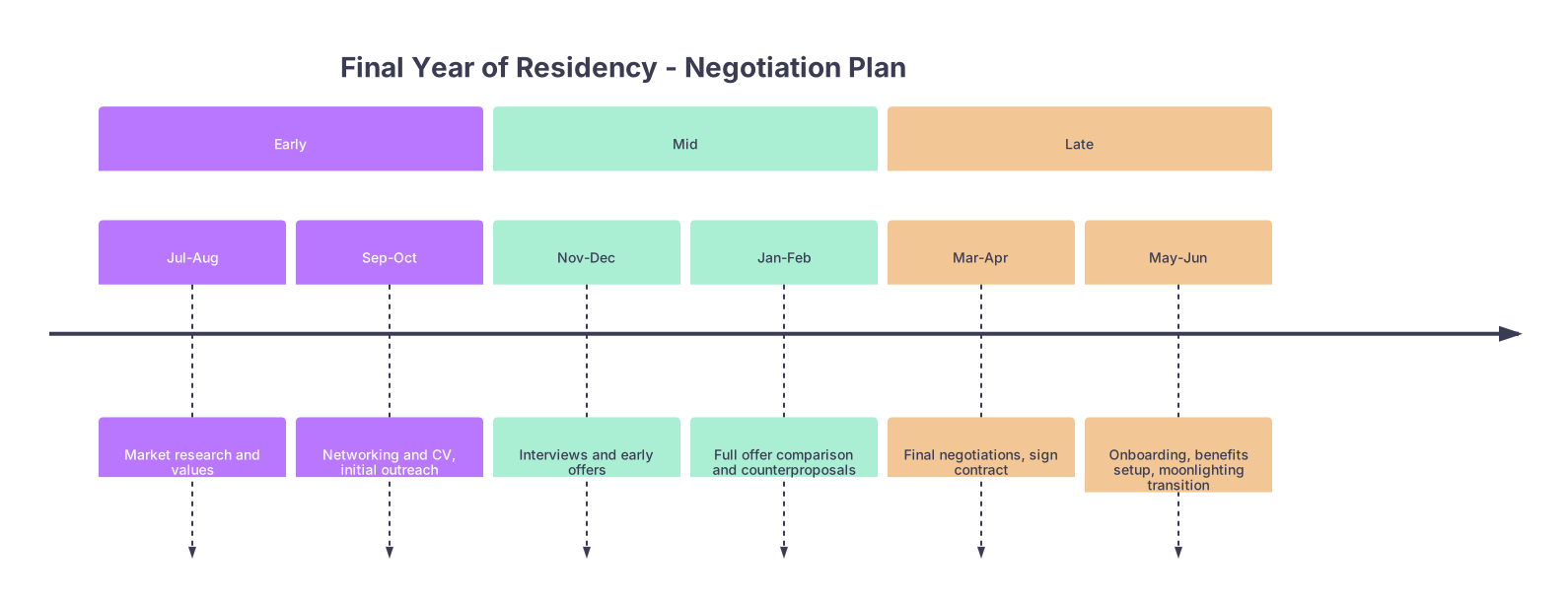
| Period | Event |
|---|---|
| Early - Jul-Aug | Market research and values |
| Early - Sep-Oct | Networking and CV, initial outreach |
| Mid - Nov-Dec | Interviews and early offers |
| Mid - Jan-Feb | Full offer comparison and counterproposals |
| Late - Mar-Apr | Final negotiations, sign contract |
| Late - May-Jun | Onboarding, benefits setup, moonlighting transition |
July–August: Foundation and Reality Check
At this point you should not be firing off job applications blindly. You should be building your negotiation foundation.
Week‑by‑week focus
Weeks 1–2: Know your market
This is the “shut up and gather data” phase.
Do this:
- Pull current compensation/benefits data for your specialty and region:
- MGMA (if you can access via your program / faculty)
- Doximity Residency Navigator salary and job posts
- Specialty society reports (ACEP, AAFP, ASA, ACR, etc.)
- Talk to recent grads from your program who are 1–2 years out
Track:
| Item | Example Target Notes |
|---|---|
| Base Salary Range | $240k–$310k |
| RVU Rate | $45–$65 per RVU |
| Sign‑On Bonus | $15k–$50k |
| CME Allowance | $2k–$5k / year |
| PTO | 3–6 weeks + CME days |
| Loan Repayment | $10k–$50k or PSLF eligibility |
You are not negotiating yet. You are building your “this is normal, this is generous, this is insulting” map.
Weeks 3–4: Decide what actually matters
You cannot negotiate everything. If you walk in trying to tweak 15 different items, you look unfocused and you lose leverage.
Rank your top 5 priorities:
- Total cash (base + bonus + moonlighting options)
- Time off (PTO, holidays, post‑call rules)
- Call schedule and nights
- Location / commute / partner’s job
- Loan repayment, PSLF, or buy‑down
- Visa sponsorship (if applicable)
- Moonlighting ability (inside or outside system)
- Partnership track details (if private group)
Write them down. Literally. Because in March you will be tempted by shiny numbers and forget that you swore you cared about time with your kids or avoiding Q3 call.
Month 1–2 To‑Do Checklist
- Collect 3–4 reliable salary/benefits data sources for your specialty
- Speak with at least 2 recent grads from your program about their offers
- List and rank your top 5 contract priorities
- Skim 1 basic physician contract book or resource (or a good blog series)
- Decide whether you will pay for a contract attorney later (you should)
September–October: Position Yourself and Start Quiet Outreach
Now you build your “on paper” self, and you quietly let the world know you exist.
September: Get your materials clean
At this point you should:
- Finalize a 1‑page CV (no nonsense, no CV bloat)
- Draft a simple, clean “interest” email you can reuse
- Clean up your LinkedIn and Doximity profiles
Your interest email template can be this simple:
“I am a PGY‑3 internal medicine resident at [Hospital], graduating June [Year]. I am interested in outpatient general internal medicine within [Region] starting [Date]. I would like to learn more about potential opportunities with your group.”
Do not write a novel. You are not applying to an MFA program.
October: Controlled networking, not desperation
Target:
- 2–3 practice settings:
- Academic center
- Large health system
- Private group / democratic group (for ED/anesthesia/rads)
- 1–2 geographic areas
Ways to reach out:
- Your attendings:
“Where did your last few grads go? Are they happy with their contracts?” - Recruiters (careful with exclusivity):
- Hospital recruiters for specific systems
- Reputable independent recruiters (ask recent grads who did not hate theirs)
- Job boards:
- Specialty society job boards
- Doximity, NEJM Career Center, PracticeLink
Your goal is not to sign anything. Your goal is to:
- Identify 3–5 potential employers that roughly match your priorities
- Get a sense of their benefits culture (generous vs bare‑minimum vs predatory)
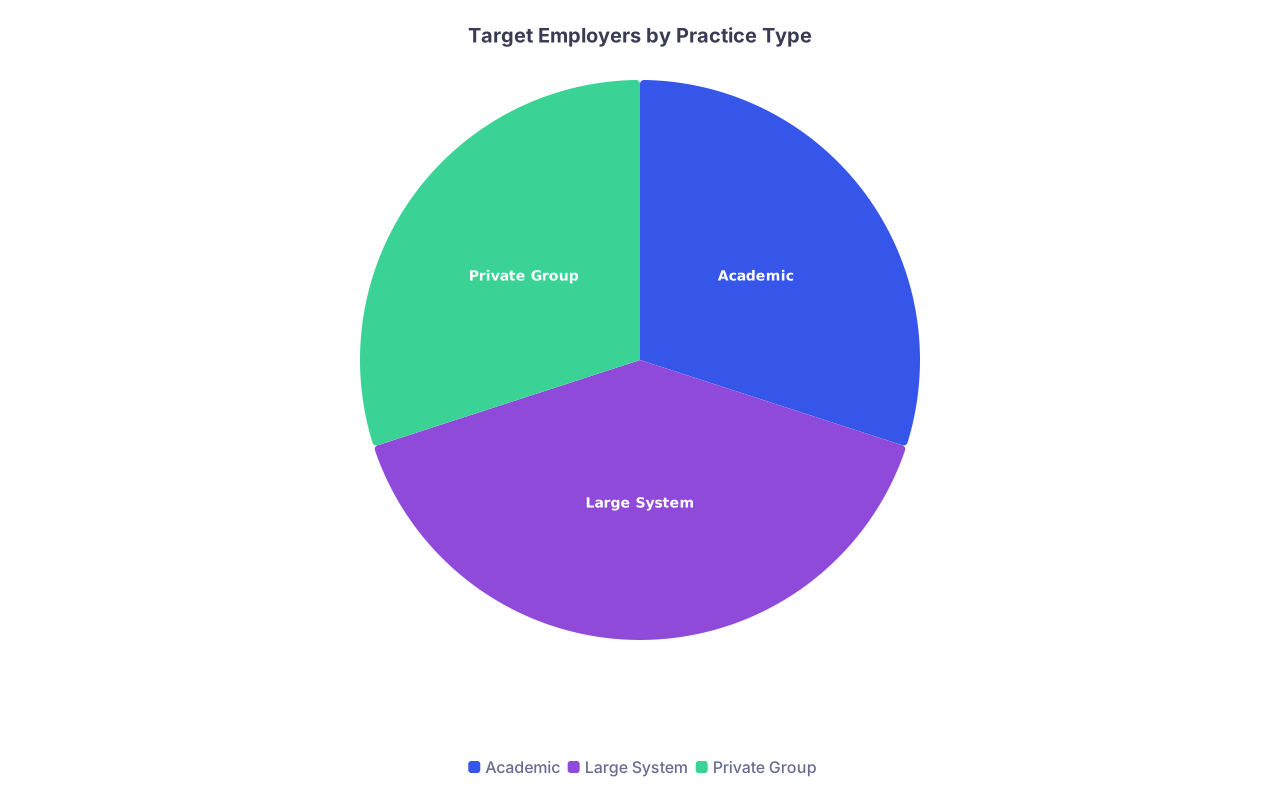
| Category | Value |
|---|---|
| Academic | 30 |
| Large System | 40 |
| Private Group | 30 |
Month 3–4 To‑Do Checklist
- Finish CV and have a faculty mentor glance at it
- Update LinkedIn/Doximity with “Available [Month, Year]”
- Send at least 5–10 initial interest emails
- Log responses and note rough salary/benefits patterns
- Identify 3–5 “realistic” employers you would seriously consider
November–December: Interviews and First Offers
This is where most residents start, which is already late. You are starting with three to four months of prep. Good.
November: First interviews, start spotting red flags
By now, you should be:
- Doing initial phone/Zoom interviews
- Getting invited for on‑site visits
- Hearing rough compensation numbers
During each interview, you should consciously ask about benefits and schedule, not just “culture.”
Key questions (that signal you know what you are doing):
- “How many days of PTO per year, separate from CME days?”
- “What is the call frequency and post‑call policy?”
- “Is there a non‑compete? If so, what is the radius and duration?”
- “Is moonlighting allowed inside or outside the system?”
- “What is the CME budget and how many CME days?”
- “Do you cover tail malpractice or is that on me if I leave?”
If they dodge these questions or “will get back to you” three times, that is data. It usually does not get better later.
December: First written offers and structured comparison
By late December, many residents see their first real written offer. They immediately panic, either:
- “This is amazing, I must sign before they change their mind.”
- Or: “This seems low, but I have no idea how low.”
You will not do either. You will put every offer in a comparison table.
| Component | Offer A (Hospital) | Offer B (Private) | Offer C (Academic) |
|---|---|---|---|
| Base Salary | $260k | $300k | $220k |
| Bonus Structure | RVU over threshold | Partnership profit | Small quality bonus |
| Sign‑On Bonus | $20k | $10k | $0 |
| CME Allowance | $3k + 5 days | $2k + 3 days | $4k + 5 days |
| PTO (excluding CME) | 4 weeks | 3 weeks | 5 weeks |
| Call | Q5, in‑house | Q4, home call | Q8, mixed |
You do not need final numbers for all cells. Start with what you know, then send follow‑up emails to fill in blanks.
Month 5–6 To‑Do Checklist
- Complete at least 2–3 serious interviews
- Ask the same benefit questions at each site and write down answers
- Obtain at least 1–2 written offers (even if “informal” PDFs)
- Build a comparison table for all offers
- Identify which offers are clearly below market and why
January–February: Deep Dive into Contracts and Benefits — And Your Counter
This is where the real benefits negotiation happens. Not in the first “we’d love to have you” call.
January: Contract review and “quiet” demands
At this point you should have:
- 1–3 written offers
- At least one full employment contract, not just a term sheet
Now you:
Hire a contract attorney.
Not your cousin who does real estate. A physician contract specialist. Expect:- $500–$1,500 for review and written comments
- More if you want hard‑core negotiation done for you
Worth it. Every. Single. Time.
Go line by line through benefits‑related sections:
- Compensation (base, RVU, collections, bonuses)
- PTO vs CME vs sick days (separated, or one sloppy bucket?)
- Health, dental, vision, disability, life insurance
- Retirement match (401k/403b/457b, vesting schedule)
- Loan repayment and PSLF eligibility language
- Malpractice (occurrence vs claims‑made, tail coverage)
- Non‑compete (radius, duration, triggers)
- Moonlighting and outside income policies
You mark:
- Hard red flags (deal‑breakers)
- Yellow flags (negotiable)
- Green (excellent, or at least standard)
Benefits items that are actually negotiable
Residents often try to negotiate the wrong things first. You have the most leverage on:
- Sign‑on bonus (amount and payout schedule)
- Relocation allowance (often under‑negotiated)
- CME budget and days
- PTO, sometimes (especially in non‑RVU salaried roles)
- Call frequency, especially in groups desperate for coverage
- Start date (earlier or later)
- Tail coverage responsibility (sometimes negotiable)
You have less leverage on:
- Health insurance plan design
- Retirement match formulas (often system‑wide)
- Core salary structure in large systems (but you can shift money into bonuses or sign‑on)
February: Crafting the counteroffer
You do not send back a 20‑item redline wish list. You pick 3–5 well‑justified asks that align with what you already know is reasonable for your market.
Example focused counter:
“Based on my research and conversations with peers, comparable positions in this region typically offer:
- Base salary in the $270k–$290k range
- CME funds of $3,000–$4,000 with 5 days
- 4 weeks of PTO plus 5 CME days
I am very interested in your group and believe this is a strong fit. If we can adjust the offer to a $275k base, $3,500 CME with 5 days, and 4 weeks of PTO, I would feel comfortable moving forward.”
Notice:
- You anchor in data
- You signal genuine interest
- You ask for specific changes, not “more everything”
| Category | Value |
|---|---|
| Base/Bonus | 1 |
| Sign-On | 1 |
| CME | 1 |
| PTO | 1 |
| Call/Tail | 1 |
Month 7–8 To‑Do Checklist
- Obtain full written contracts for at least 1–2 offers
- Pay for a real physician contract attorney review
- Identify 3–5 specific benefit/comp items to negotiate per offer
- Draft clear, data‑backed counter emails or have your attorney do it
- Send counters by late February at the latest
March–April: Final Rounds and Locking in Terms
By now, one of two things is happening:
- You have an offer you like that is being tweaked
- Or you are juggling multiple offers and mild decision paralysis
March: Last leverage and clarity
At this point you should:
- Have at least one “final” offer with your requested changes partially or fully accepted
- Know your internal ranking of offers (1st choice, 2nd, safe backup)
Be honest:
- If Offer A is clearly your top choice, but low on CME and PTO, that is your last leverage point:
- “I have another offer with 5 weeks PTO and $4k CME. If we can get closer to that, I can commit to signing with you.”
Do not bluff wildly. Employers usually can sense it. But if you truly have competing offers, say so directly.
Decision rules that actually work:
- If you are choosing solely on money, you will regret it. Period.
- If you are ignoring money completely, you are also making a mistake.
- Use a weighted approach:
- 40% clinical/colleague fit
- 30% compensation/benefits
- 20% schedule/call
- 10% long‑term opportunities (leadership, fellowship, partnership)
April: Signing — but only after checking the final version
I have seen this too many times:
- Resident negotiates excellent terms
- Employer “forgets” to reflect one or two changes in the final contract
- Resident signs anyway because they are busy on night float
Do this:
- Demand the revised final contract in writing (PDF or Doc)
- Cross‑check each negotiated point with your email trail:
- Base salary amount
- Sign‑on bonus and payout timing
- Call expectations
- PTO, CME, tail coverage
If it is not in writing, it does not exist. Verbal “we always do it that way” means nothing when the administrator who said it leaves.

Month 9–10 To‑Do Checklist
- Rank offers explicitly and write out why
- Use any real competing offers to refine your top choice’s benefits
- Receive and review the final, updated contract
- Confirm all negotiated items are written into the contract
- Sign only after all corrections are in place
May–June: Onboarding, Benefits Setup, and Moonlighting Transition
You have signed. Negotiation is done. But benefits are not “set” until you actually enroll and understand how to use them.
May: Onboarding and benefits enrollment
At this point you should:
- Be completing HR onboarding packets and benefits enrollment forms
- Get real numbers, not just “we offer a 401k”
Do this with HR or onboarding:
- Ask for plan summaries:
- Health plan options (deductibles, premiums, HSA eligibility)
- Disability and life insurance amounts and options to buy up
- Retirement match details and vesting schedule
- Confirm:
- When health coverage starts (watch for coverage gaps between residency and job)
- When retirement contributions start
- How CME funds are accessed (credit card, reimbursement, portal)
- Policy for unused CME/PTO (lost vs paid out vs roll over)
This is when you also line up:
- Your licensure and DEA timing
- Hospital credentialing (which can take months)
- Any tail coverage obligations from current moonlighting gigs
Moonlighting and income bridge
Category is “Moonlighting and Benefits” for a reason. Final year is often your peak moonlighting year. You need to integrate it with your benefits and contract.
Key checkpoints:
- Does your new employer allow outside moonlighting? If so:
- Written permission needed?
- Any conflict‑of‑interest rules?
- Does your new malpractice tail obligation affect when you stop moonlighting?
- Are you relying on moonlighting income to cover:
- Moving expenses beyond relocation allowance
- Gap between residency end and first attending paycheck (often 4–8 weeks)
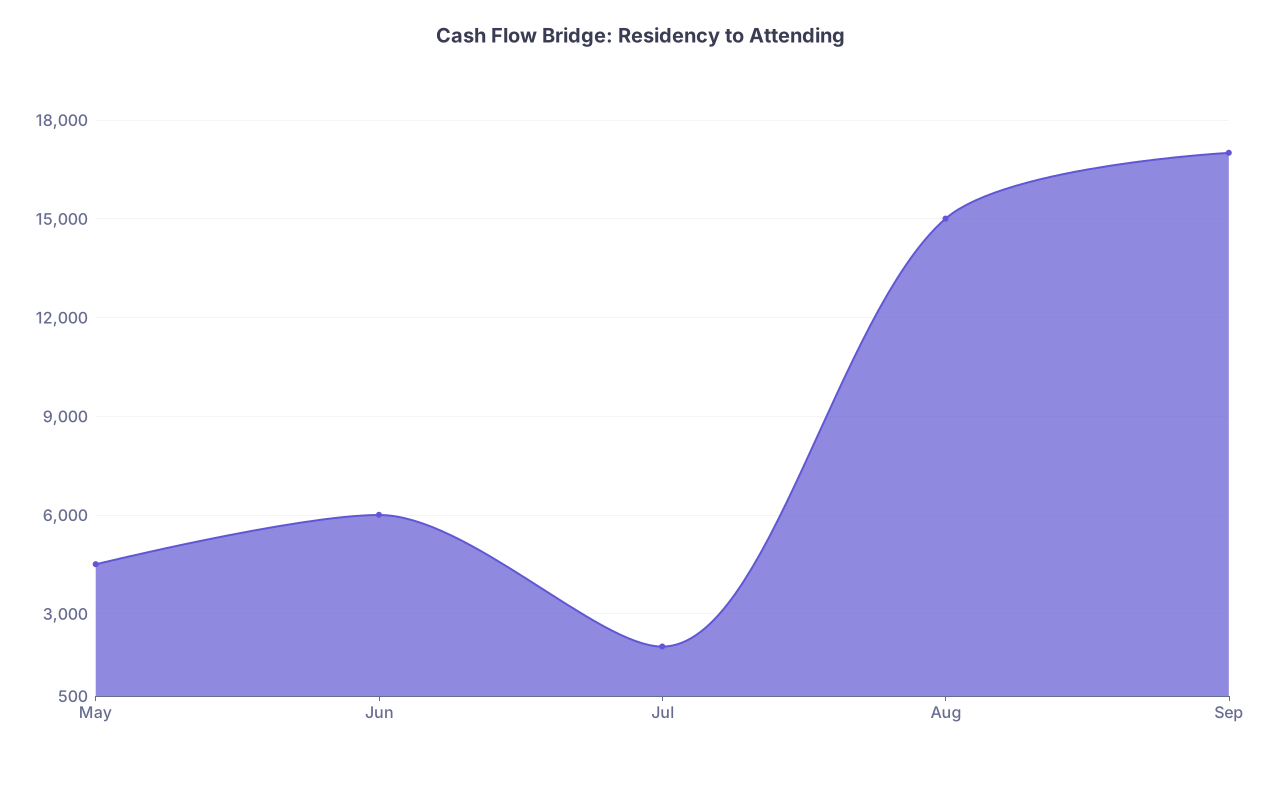
| Category | Value |
|---|---|
| May | 4500 |
| Jun | 6000 |
| Jul | 2000 |
| Aug | 15000 |
| Sep | 17000 |
You should build a simple 4‑month cash‑flow estimate. Residents routinely underestimate how tight July–August will be. Benefits are great, but rent still needs cash.
June: Final checks before you step into attending life
By the last month of residency:
- Your contract is signed
- License, DEA, credentialing are in progress or done
- Benefits elections are submitted
You also:
- Cancel or wind down any moonlighting that conflicts with your new job or could mess up malpractice coverage
- Keep a personal file (not on hospital computers) with:
- Final signed contract
- All email threads with negotiated items
- Benefits election confirmations
- Contacts for HR, credentialing, and your new department admin

Month 11–12 To‑Do Checklist
- Complete all benefits enrollments and keep confirmation PDFs
- Map out July–September personal cash flow with new salary start date
- Clarify moonlighting stop dates and malpractice tail implications
- Save all contract and benefits documents in a personal cloud folder
- Schedule a reminder 6–12 months into your new job to reassess satisfaction and renegotiation possibilities
Visual Summary: What You Negotiate, When
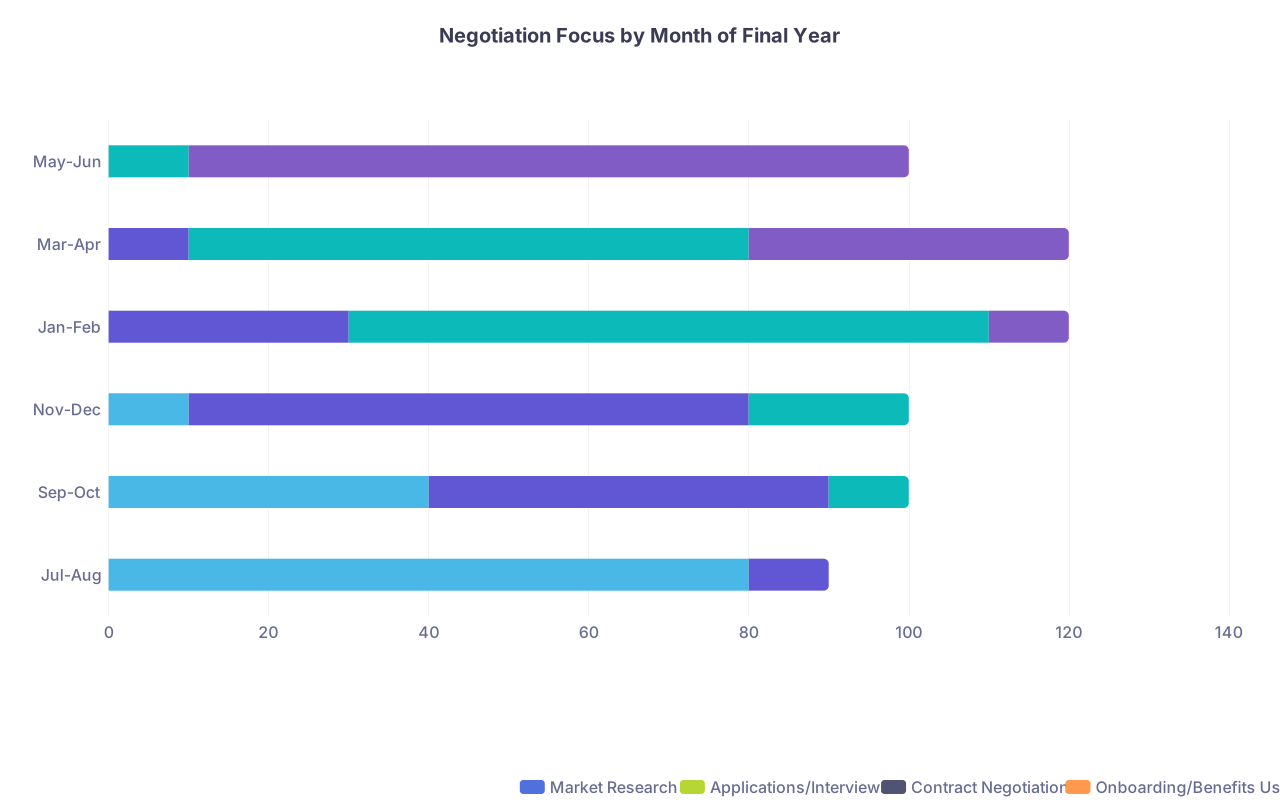
| Category | Market Research | Applications/Interviews | Contract Negotiation | Onboarding/Benefits Use |
|---|---|---|---|---|
| Jul-Aug | 80 | 10 | 0 | 0 |
| Sep-Oct | 40 | 50 | 10 | 0 |
| Nov-Dec | 10 | 70 | 20 | 0 |
| Jan-Feb | 0 | 30 | 80 | 10 |
| Mar-Apr | 0 | 10 | 70 | 40 |
| May-Jun | 0 | 0 | 10 | 90 |
Your Next Step Today
You do not need to finish all of this tonight. You do need to start.
Today, do one concrete thing:
Open a fresh document and create three sections labeled:
- “Market Data”
- “My Top 5 Priorities”
- “Potential Employers”
Then:
- Under “Market Data,” list where you will pull salary and benefits info from (MGMA, Doximity, specialty society, recent grads).
- Under “My Top 5,” write down your best guess at what matters most to you right now.
- Under “Potential Employers,” list at least two practice settings and one region.
That is it. Ten minutes. But once that document exists, you have a home for everything you will learn this year. And when the first shiny but mediocre offer hits your inbox, you will have something better than panic to guide you.