
Most physicians stay 1099 far longer than makes financial or lifestyle sense.
If you’re bouncing between locums gigs and “maybe I should just take a W‑2 job,” you’re not alone—and the chaos is predictable. The transition fails when there’s no timeline. You need one.
Here’s a structured, practical, month‑by‑month and then week‑by‑week plan to go from 1099 locums to stable W‑2 employment without wrecking your cash flow, malpractice coverage, or sanity.
6–9 Months Before Target Start Date: Decide If You Actually Should Go W‑2
At this point you should stop doing gigs on autopilot and do a real strategic review.
1. Clarify your “why” (otherwise you’ll pick the wrong job)
Write this down. Literally.
Top 3 reasons you want W‑2:
- Benefits (health insurance, 401(k) match, disability)
- Predictable schedule / location
- Loan forgiveness, academic title, leadership track, etc.
Top 3 things you’ll not give up:
- Minimum base salary (e.g., $320k)
- Max RVU burden or max shifts/month
- Geographic constraints (kids in school, partner’s job)
If you can’t fill that in, you’re not ready to search. Keep working locums, revisit in a month.
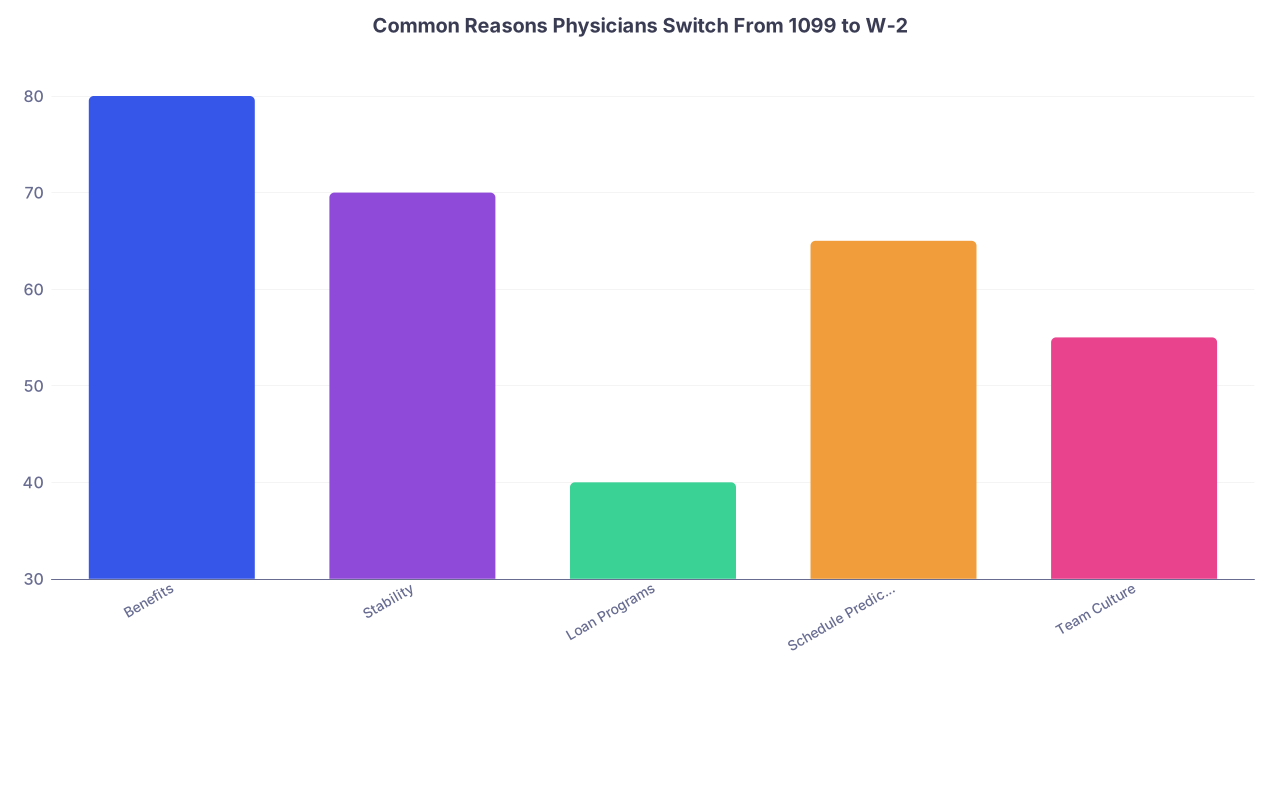
| Category | Value |
|---|---|
| Benefits | 80 |
| Stability | 70 |
| Loan Programs | 40 |
| Schedule Predictability | 65 |
| Team Culture | 55 |
2. Do a brutally honest financial comparison
You’ve probably been told “1099 always pays better.” Sometimes that’s a lie once you include benefits accurately.
At this point you should build a simple comparison sheet:
Annualized 1099 income (last 12 months). Include:
- Base hourly or per‑shift x shifts
- Stipends, call pay, bonuses
True cost of being 1099:
- Self‑employed taxes (extra ~7.65% on much of your income)
- Health insurance premiums
- Tail coverage cost if you had to buy it today
- Retirement contributions you fund alone
- Accounting + legal + CME + licensing + travel not reimbursed
Now compare to a typical W‑2 offer in your specialty/region.
| Category | 1099 Locums | W‑2 Employment |
|---|---|---|
| Gross Income | $420,000 | $350,000 |
| Self‑Employment Tax | $25,000 | $0 (extra piece) |
| Health Insurance | $12,000 | $3,000 |
| Retirement Match | $0 | $15,000 |
| Malpractice + Tail | $10,000 | Included |
You may still choose 1099, but now it’s an informed choice. If W‑2 looks reasonable, move on.
3. Pick a realistic target start date
From where you sit today:
- Add:
- 1–3 months for job search and interviewing
- 1 month for contract negotiation
- 2–4 months for credentialing and payer enrollment
Result: Most sane timelines are 6–9 months from “I’m serious” to first W‑2 paycheck. If you think you can do it in 60 days, you haven’t dealt with hospital credentialing committees yet.
4–6 Months Before Start: Active Job Search and Screening
At this point you should stop “keeping an eye out” and start running a process.
1. Define your job search box
Write down constraints:
- Geography: states or cities you’d actually live in
- Practice type: academic, large system, private group, hybrid
- Call / shift expectations: max nights, weekends
- Must‑have benefits: pension, PSLF‑qualifying 501(c)(3), daycare, etc.
Anything outside this box is “no” unless there’s a very good reason.
2. Build your professional packet
You should have these ready before a single application:
- Updated CV (2 pages if possible, 3 max)
- List of:
- State licenses
- DEA(s)
- Board certification(s)
- Malpractice history with explanations
- 3–5 references with current contact info
- Basic personal statement: 2–3 paragraphs about who you are, what you want
This makes later credentialing much faster.
3. Start talking to people (not just clicking apply)
For the first 4–6 weeks of this phase:
- Reach out to:
- Colleagues who left locums for W‑2
- Former attendings or chiefs
- Local recruiters you trust
Ask directly:
- “Who’s happy as W‑2 in our specialty?”
- “Which groups treat people like FTEs, not widgets?”
Then:
- Apply selectively (better: 5 good fits than 25 random applications)
- Say no early to bad fits (toxic call expectations, unclear comp, non‑transparent RVU schemes)
3–4 Months Before Start: Interviewing and Contract Negotiation
At this point you should assume you will get at least one offer and structure your locums life around that.
1. Plan interviews around your current schedule
Weeks 1–4 of this phase:
- Cluster interviews on strategically lighter weeks
- For each potential employer:
- Ask for a half‑day remote interview first
- Only travel for places that survive the first‑pass BS filter
Red flags you identify early save you weeks of wasted time and plane flights.
2. Compare offers side by side (not just “who pays more”)
Once offers start arriving, structure the comparison. Do not trust your memory.
| Feature | Job A (Hospital) | Job B (Private) | Your 1099 Now |
|---|---|---|---|
| Base Salary | $320k | $280k + bonus | $420k |
| RVU Threshold | 5,000 | 4,000 | N/A |
| Sign‑On Bonus | $20k | $10k | 0 |
| Health Insurance | Low premium | High premium | Self‑funded |
| Tail Coverage | Included | Not included | Your cost |
Ask blunt questions on a follow‑up call:
- “What did your last three physicians in this role do—are they still here?”
- “Who pays for tail if I leave at 2 years vs 5 years?”
- “Exactly how is production calculated and when is it reconciled?”
3. Enter real contract negotiation (1–4 weeks)
Do not rush to sign. At this point you should:
- Hire an attorney who regularly reviews physician contracts
- Push on:
- Non‑compete radius and duration
- Schedule expectations in writing (not just “typical”)
- Call burden
- Compensation structure clarity
- Tail coverage responsibility
During these 1–4 weeks of back‑and‑forth, keep booking locums only up to 90 days out. Don’t lock yourself into six more months you’ll regret.
2–3 Months Before Start: Lock It In and Rebuild Your Calendar
This is the point most people screw up. They sign a contract and then… keep doing locums like nothing changed. That’s how you end up double‑booked or cash‑strapped.
1. Set your actual W‑2 start date in stone
You and the employer should now agree on a specific date, contingent on credentialing:
- Example: “Target start: September 1, contingent on medical staff approval”
Immediately:
- Block that date in your personal calendar
- Work backward 4 weeks and mark: “No more overnight locums” (or whatever downtime you need)
2. Plan your locums wind‑down
The next 8–12 weeks should look like this:
- Weeks 1–4 after contract:
- Maintain current locums volume
- Stop accepting assignments beyond 60–90 days
- Weeks 5–8:
- Gradually peel back to 60–70% of your typical load
- Final 4 weeks:
- Only local or low‑stress gigs with minimal documentation burden
- No red‑eye travel
- Enough margin for onboarding, EHR training, paperwork
This avoids the “I started my W‑2 job already exhausted and behind” scenario I see constantly.
3. Coordinate malpractice coverage and gaps
At this point you should make a malpractice timeline:
- For each locums agency / facility:
- End date of your last shift covered by their policy
- Whether they provide tail or occurrence coverage
- For the W‑2 job:
- Start date of coverage
- Whether it’s claims‑made with tail, or occurrence
You want zero gaps. If you find a gap:
- Short gap (a few days): often acceptable if no clinical work
- Longer gap: talk to a malpractice broker about a short bridge policy
1–2 Months Before Start: Credentialing, Benefits Setup, and Financial Re‑Wiring
At this point you should be transitioning from “gig worker mindset” to “employee with a structured benefits environment.”
1. Move fast on credentialing documents
Credentialing delays are the number one cause of “unexpected extra months of locums.”
For 4–6 weeks you should:
- Respond to every credentialing email within 24–48 hours
- Have digital copies ready:
- License, DEA, board cert, vaccinations, TB test, photo ID, CV
- Malpractice history and any explanations
- Keep a simple spreadsheet with:
- Which hospital/plan has what
- What they’re waiting on
If you stall, your file goes to the bottom of multiple piles. That can cost you an entire month of W‑2 income.
2. Rebuild your personal finance system for W‑2
You’ve been living in 1099 land. Monthly estimated taxes. Huge swings in cash flow. Time to shift.
Over the 4 weeks before your start:
Meet with your CPA or financial planner and:
- Update projected W‑2 income
- Discuss ending or downsizing your S‑corp/LLC if appropriate
- Plan for final year of 1099 estimated taxes (you will still owe for those last locums months)
Adjust accounts:
- Set up direct deposit for W‑2 job
- Decide retirement contributions (401(k) / 403(b), 457 if available)
- Plan HSA/FSA elections if those are offered
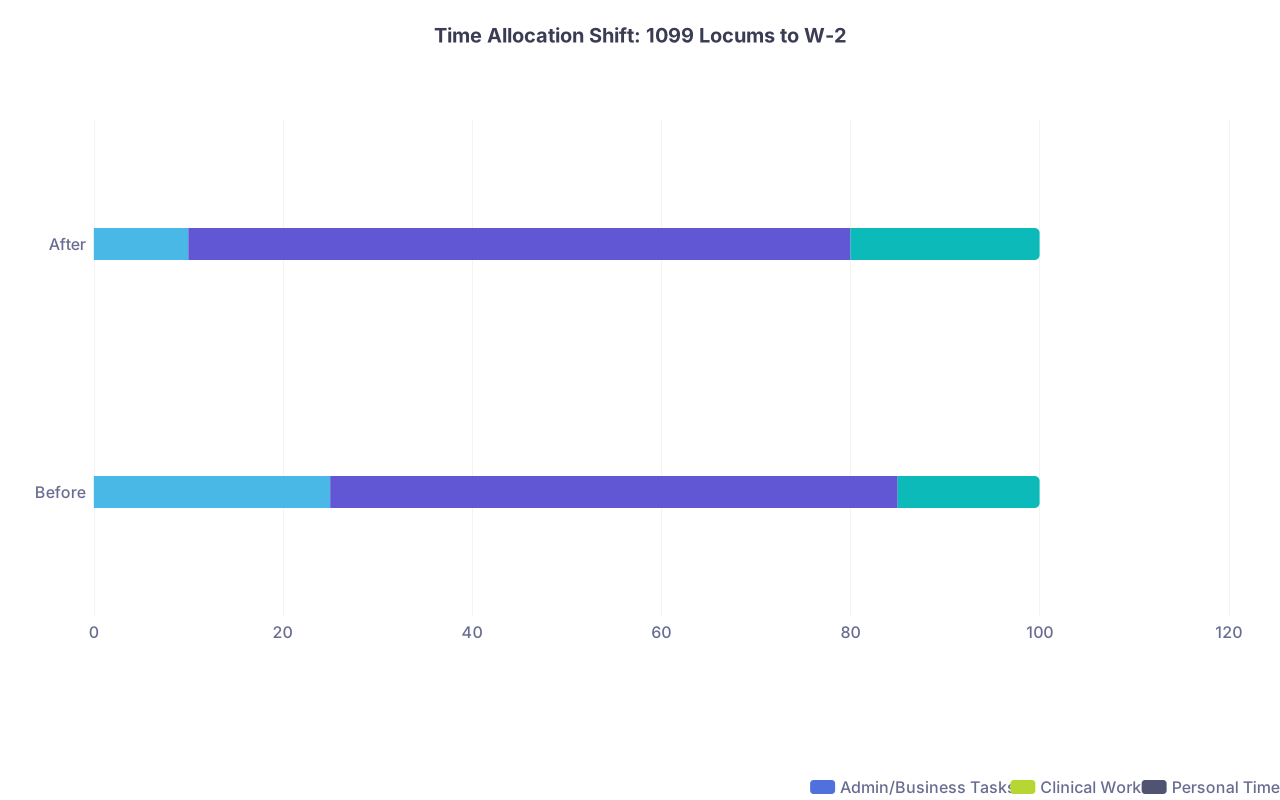
| Category | Admin/Business Tasks | Clinical Work | Personal Time |
|---|---|---|---|
| Before | 25 | 60 | 15 |
| After | 10 | 70 | 20 |
3. Decide what locums (if any) you’ll keep as W‑2 side work
Some W‑2 employers allow:
- External moonlighting
- Internal moonlighting
- Or none of the above
At this point you should:
- Read your contract’s outside work / conflict of interest section carefully
- If allowed, clarify in writing:
- Limits (hours/month, locations, competing systems)
- Who covers malpractice for moonlighting
- Decide now:
- “I’ll keep 2 weekend shifts a month at Hospital X”
- Or “No more locums for 6 months while I stabilize”
Do not wait until you’re exhausted in month 2 to make that decision.
Final 2–4 Weeks Before Start: Taper, Prep, and Protect Energy
This is your on‑ramp. Treat it like one.
Week ‑4: Last heavy locums block
At this point you should:
- Finish any travel assignments
- Complete documentation cleanly:
- No lingering charts or unsigned orders
- Clear communication with locums agencies about “last day” dates
Financially:
- Build a small buffer if possible (1 month of new‑job net pay)
- Expect that:
- First W‑2 paycheck may be 2–4 weeks after start
- Final locums payments may also lag
Week ‑3: Admin and benefits
You’ll probably get flooded with HR emails.
Your focus this week:
- Complete:
- I‑9, direct deposit, tax withholdings
- Benefits elections (do not procrastinate here)
- Actually read:
- Disability policy (own‑occ or not?)
- Life insurance options
- Retirement vesting schedules
If there’s an option for short‑term disability, strongly consider it. W‑2 is exactly when this becomes more useful.
Week ‑2: Cognitive reset
At this point you should start acting like this is your long‑term team.
- Learn:
- Names of your future partners and key staff
- Clinic or OR workflows (through any materials they’ve sent)
- Stop picking up extra locums “just this one last time.” That’s how you roll into day 1 already burned out.
Week ‑1: Margin and logistics
Your last week should be light.
- Clinical:
- If you work at all, keep it local, low‑stress, and documented in real time
- Personal:
- Rest
- Set up your commute
- Plan childcare/school logistics around your new schedule
- Mental:
- Define what “success” in the first 90 days means:
- Learning the EHR
- Meeting key colleagues
- Understanding compensation mechanics
- Not “proving you’re a superstar” on day 3
- Define what “success” in the first 90 days means:
First 90 Days as W‑2: Stabilize, Then Optimize
You’ve crossed over, but the transition isn’t done.
Days 1–14: Learn the system first, impress people later
At this point you should:
Prioritize:
- EHR proficiency
- Order sets, templates, documentation requirements
- Who actually gets things done (nurse manager, scheduler, chief)
Keep your schedule:
- As close to contracted FTE as possible (no “hero shifts” yet)
- No outside locums unless you absolutely must
You’re not here to be a temporary band‑aid anymore. You’re here to be sustainable.
Days 15–45: Reality‑check the contract vs reality
During this 1‑month block:
- Compare:
- Promised schedule vs actual schedule
- Promised support (APPs, scribes, techs) vs reality
- Actual patient volume vs what comp model assumes
If there’s a mismatch:
- Track specifics (dates, shifts, census)
- Schedule a calm, factual meeting with your supervisor:
- “Here’s what we agreed on. Here’s what the last 4 weeks looked like. How do we bring those closer?”
This is much easier to address at 30–45 days than at 18 months when everyone’s bitter.
Days 46–90: Decide your long‑term mix
By the end of 3 months you should deliberately decide:
- Am I doing:
- 100% W‑2 with no extra shifts?
- W‑2 plus structured moonlighting (x shifts/month, y sites)?
- Planning a future return to partial 1099 for specific reasons?
Cycle back to the reasons you made this change. If those aren’t being honored, don’t just grind and hope. Adjust.
FAQs
1. When is the “best” time of year to transition from 1099 to W‑2?
There isn’t one magic month, but fall starts (August–October) are often smoother. Credentialing committees meet reliably after summer vacations, HR isn’t swamped with new‑grad onboarding, and you avoid the end‑of‑year chaos where everyone’s trying to use PTO. The real key is giving yourself 6–9 months from serious search to start date, regardless of the calendar.
2. Should I keep my S‑corp or LLC after going W‑2?
Maybe, but not “just because.” If you’ll still earn meaningful 1099 income (telemedicine, occasional locums, consulting), keeping an entity may make sense. If you plan to be nearly all W‑2 with maybe one small moonlighting gig, the admin and accounting cost often isn’t worth it. Sit down with your CPA once you have a signed offer and map out both scenarios before you decide.
3. How long should I try the W‑2 job before deciding if it was a mistake?
Give it at least 6–12 months, unless there are major ethical or safety red flags. The first 90 days are always bumpy: new EHR, new culture, politics you haven’t learned yet. Use the first 3 months to stabilize and the next 3–9 to see if reality matches the sales pitch. If you’ve documented persistent misalignment after a year—and you’ve tried to fix it—you’ll be in a strong position to either renegotiate or plan an exit without panicking back into random locums.